

How Osteopathy Helps Manage Physical Stress
27/06/2026
Common pathologies supported by osteopathy
27/06/2026
In short thePost-operative osteopathy is a gentle approach that accompanies the Postoperative recovery After surgery, working on the mobility fabrics, circulation and the relaxation of tensions. Advantages and applications: it helps to quickly find the mobility, reduce pain and discomfort, prevent adhesions and promote effective healing, while completing medical follow-up. Operation: The practitioner acts gently and progressively, respects the healing time, and coordinates his actions with the medical team to optimize the security and the results. Note: Available at Mouvaux And in the Lille metropolis, this service is particularly suitable after orthopedic, abdominal or gynecological surgeries to improve the overall recovery and well-being of the patient. |
Optimize your post-operative recovery with osteopathy : A gentle and personalized support that completes the medical follow-up to regain mobility, comfort and energy more quickly.
- Mobility and tensions : gradually restore the mobility of the joints and release the tensions linked to immobilization and compensation.
- Scar and tissues : Targeted work on the tissues around the scar to improve vascularization and prevent adhesions, without directly affecting a fresh scar.
- Circulation and drainage : Support blood and lymph circulation to reduce edema and promote digestive recovery after abdominal surgery.
- Posture and breathing : Postural adjustments and stimulation of the diaphragmatic function to optimize breathing and comfort.
- Timing and security : Begin after validation of the surgeon, generally around 6 weeks depending on the procedure, and always in addition to the medical follow-up.
This article explains how Osteopathy can support a Postoperative recovery effective. After an intervention, the body undergoes tensions, compensations and immobilization. Osteopathic work provides additional support for medical follow-up, facilitates the mobility, helps prevent adhesions and supports the circulation and visceral functions, while respecting the healing and recommendations of the surgeon.
Understand the effects of surgery on the body
Any operation is an event that influences the whole body. Prolonged positioning, muscle reactions and postural adjustments can create tension and compensation. Post-operative immobilization may decrease the mobility and promote feelings of lasting discomfort if they are not taken care of. Tissues around the operated area and distant muscle chains can be stressed and require a gradual return to equilibrium.
The role of osteopathy after an operation
In addition to medical follow-up, osteopathy aims to restore mobility joints, to release compensatory tensions and to rebalance the muscle chains. It also helps to Optimize healing surrounding fabrics and to promote better circulation venous and lymphatic. The work focuses on the regions around the scar and on the connected structures, without altering the scar itself according to safety protocols.
course of a post-operative consultation
First session: overall assessment and recovery objectives. The practitioner evaluates the type of intervention, your feelings and your limits, while respecting the post-operative contraindications.
Personalized follow-up: The care plan can include 2 to 4 sessions, spaced 2 to 3 weeks apart, with postural advice and gentle movements adapted to your progress. Regular reassessment makes it possible to adjust the treatment and accompany the improvements in mobility and comfort.
Typical areas of intervention
Orthopedic surgeries: progressive work on the joints and spine, respecting the post-operative constraints and without soliciting the problematic areas too early.
Abdominal and gynecological surgeries: attention to pelvic mobility, balance of muscle chains and diaphragmatic and respiratory function.
Thoracic surgeries: Appropriate approach to restore costal mobility and respiratory function, while avoiding traumatic gestures on sensitive areas.
Practical advice and safety
Respect your surgeon’s instructions, favor a gradual resumption of activities and maintain adequate hydration to support healing. Listen to your body and avoid any acute pain during movement. Osteopathy does not replace medical follow-up; It is a complementary approach.
Contraindications and safety
In case of active infection, unclosed scarring or post-operative complications, seek the advice of your doctor before any session. If in doubt, contact your surgeon to obtain the agreement before starting the osteopathic accompaniment.
Resources and additional readings
To learn more, you can consult the following resources, which feature aspects of postoperative osteopathy and the associated perspectives:
Osteopathy adapted to active people
Duration of an osteopathy session
Carpal tunnels and rehabilitation
Medical Disclaimer: The information and advice provided on this site does not replace the health professional’s diagnosis or treatment. Please note that Dr. Sylvain Desforges osteopath is neither a doctor of medicine nor a doctor, and is not a specialist in a medical specialty as defined by the Collège des Médecins du Québec. Manual medicine, functional medicine and sports medicine as described on this site exclude any medical treatment or diagnosis made by a doctor or specialist doctor. Always consult your doctor for any medical questions. For more details, please read our full legal notice.
- Intervention axis : holistic and progressive approach
- Evaluation and security : validate healing and coordinate with the doctor
- Progressive mobility : Restore painless amplitudes
- Release of tensions : Reduce postural compensation
- Scar Care : Improve vascularization and tissue flexibility
- Circulation and drainage : lymphatic and mild venous stimulation
- Breathing and diaphragm : Support chest mobility
- digestive regulation : Accompany motility and post-operative drainage
- Practical advice : posture, graduated activity, hydration
- Collaboration : Work in addition to the medical team

This approach offers personalized post-operative osteopathic support to optimize the mobility, the circulation and the healing, while remaining in coordination with the medical team. It describes when to start, which techniques to use and what practical tips to adopt for faster and safer recovery.
Understanding the role of losteopathy in postoperative recovery
Surgical intervention is a trauma for the body. Osteopathy aims to limit compensation, reduce tension and support healing mechanisms, without acting on the operated area in a violent way. It can help restore a Global biomechanical function, to promote a better mobility and to prevent remote pain related to postoperative imbalance.

How osteopathy improves the quality of life of active people
In short In short, theosteopathy is a global approach that Optimizes mobility and the function of the body of ACTIVE PEOPLE, for a better quality of life. It helps prevent injury and reduce Musculoskeletal pain While promoting the Sports recovery.…
When to start osteopathic accompaniment after an operation?
Compliance with the healing time is essential. Wait for the surgeon’s agreement and stagger the interventions according to the type of intervention and location. In practice, we generally consider:
- 2 to 3 weeks after minor surgeries
- 4 to 6 weeks after major surgeries, with medical agreement
- 6 to 8 weeks after a caesarean section
This period can be adjusted based on your recovery and pain. The goal is to enter therapy when healing is compatible with a smooth movement.

Osteopathy and sports recovery: prepare the body for lasting performance
In short In short, Osteopathy and Sports recovery is one Global manual approach that sustainably prepares the body for the effort by restoring mobility and circulation After the effort. It is a discipline that acts on the sinews, the joints,…
How does a post-operative session take place?
The first session begins with a Personalized report To understand the intervention, feelings and your goals. the techniques used are sweet And adapted to your condition, without intervening on a fresh scar. The work is done from a distance On the surrounding structures when necessary and continues with a personalized follow-up plan, generally 2 to 4 sessions spaced 2 to 3 weeks apart.
Each session ensures a security And a progression adapted to your healing and your pain, with particular attention paid to the agreement of the attending physician.
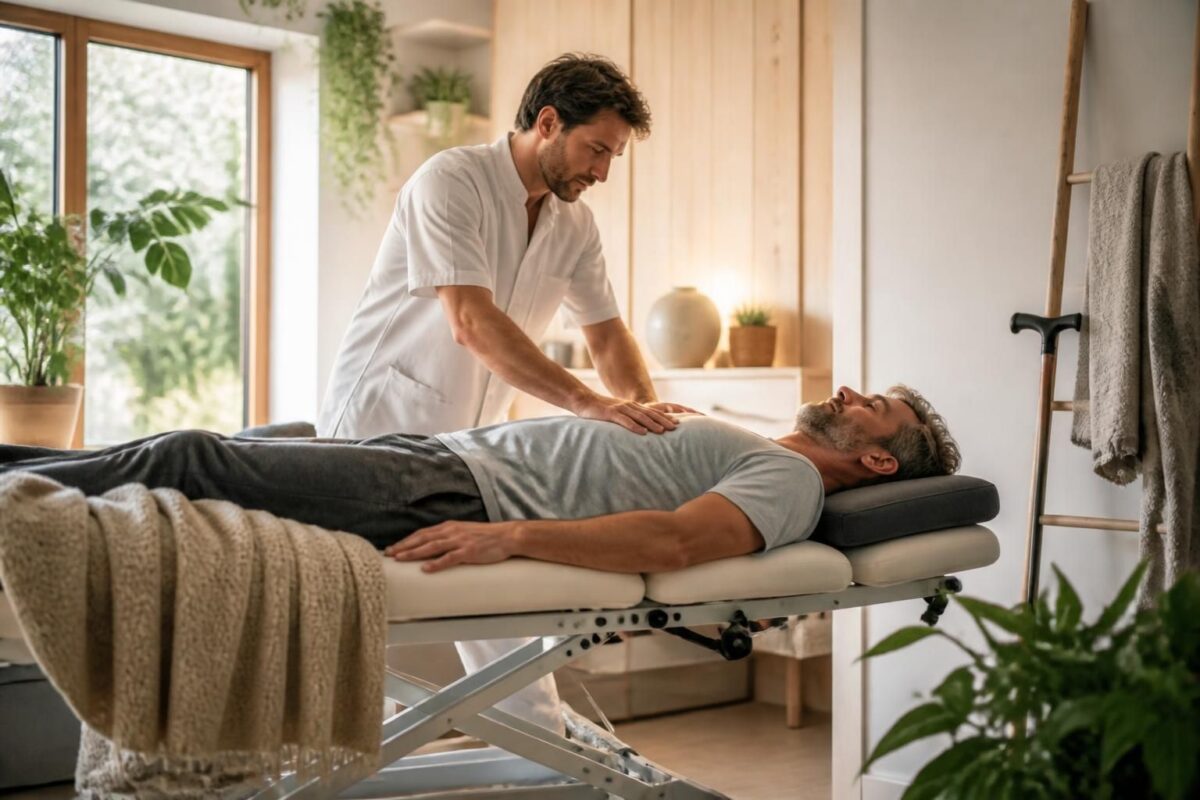
Why Osteopathy Is Essential For Recovery People
In short In short, Osteopathy in convalescence is an approach manual and holistic which helps to accelerate the recovery by restoring The balance, the mobility and a good circulation fabrics. it contributes to Reduce the pain, support the Back to…
Areas of intervention in post-operative osteopathy
Improvement of mobility and reduction of tensions
We seek to gradually restore joint mobility, to release compensatory tensions and to rebalance the overall posture to facilitate everyday gestures and the resumption of activities.
Scar and tissue management
Soft tissue work aims to improve the vascularization and the flexibility Tissues around the scar, prevent adhesions and limit tightness. The therapist favors techniques that respect post-operative protections and do not intervene directly on a recent scar.
Support for visceral and circulatory functions
After abdominal or gynecological surgery, the objective is to promote the digestive motility, lymphatic drainage and better venous circulation, while supporting the diaphragm and muscle chain balance.

Osteopathic manipulations to strengthen post-traumatic muscles
In short In short, Osteopathic manipulations for Strengthen post-traumatic muscles constitute a gentle manual approach aimed at restoring the mobility, reduce the pain and facilitate the Functional rehabilitation After a injury. What is Is it? A series of precise gestures…
Specific cases and adaptation
Orthopedic surgeries
Knee, shoulder, hip and spine benefit from progressive work to bring back joint function, without compromising post-operative stresses and sutures.
Abdominal and gynecological surgeries
Restoration of pelvic mobility, rebalancing of muscle chains and support of respiratory and perineal function after gynecological interventions or during postpartum follow-up.
Chest surgeries
Application adapted to restore costal mobility and improve respiratory function, with a gradual and painless approach.

Osteopathy and prevention of work-related musculoskeletal disorders
In short theosteopathy is one Manual approach that restores body balance and prevents MSD related to work. Its advantages: reduction of tension, improvement of mobility and prevention of chronic pain. She is preventive and healing, suitable for office and trades…
Practical tips for optimizing recovery
Respect the surgeon’s instructions, gradually resume your activities and stay hydrated to promote healing. Walk regularly according to your possibilities and listen to your body: do not force the pain. A good posture And controlled movements can reduce tension and accelerate recovery.

The benefits of osteopathy to treat muscle imbalances
In short theosteopathy is a manual approach to restore themuscle harmony and postural considering the body as a whole. Its main benefits include the reduction of aches and tensions, the improvement of the mobility and from the posture, and prevention…
Limitations and security
Post-operative osteopathy is an additional support and does not replace medical follow-up. In case of fever, infection, unclosed scar or unusual pain, contact your doctor promptly. Always discuss any new sign with your surgeon before continuing the sessions.
| Criterion | Concise description |
|---|---|
| Objective | Restore mobility and overall comfort while respecting scar and medical protocol. |
| Start time | Start after the surgeon has agreed and initial healing phase (4–6 weeks depending on the operation). |
| Approaches used | gentle techniques targeting mobility, voltages and circulation without requiring the fresh scar. |
| Focus on the scar | Improvement of the vascularization and from the flexibility Fabrics around, without touching the wound. |
| Pain and comfort | reduction of aches and tensions related to compensation. |
| Functional recovery | progression of daily gestures and Postural rebalancing. |
| Collaboration | Coordination With the medical team and the surgeon’s agreement. |
| contraindications | No response in case ofinfection, unclosed scar or fever; Check with the doctor. |
| Additional benefits | Support digestive and circulatory, prevention of adhesions and improvement of overall mobility. |
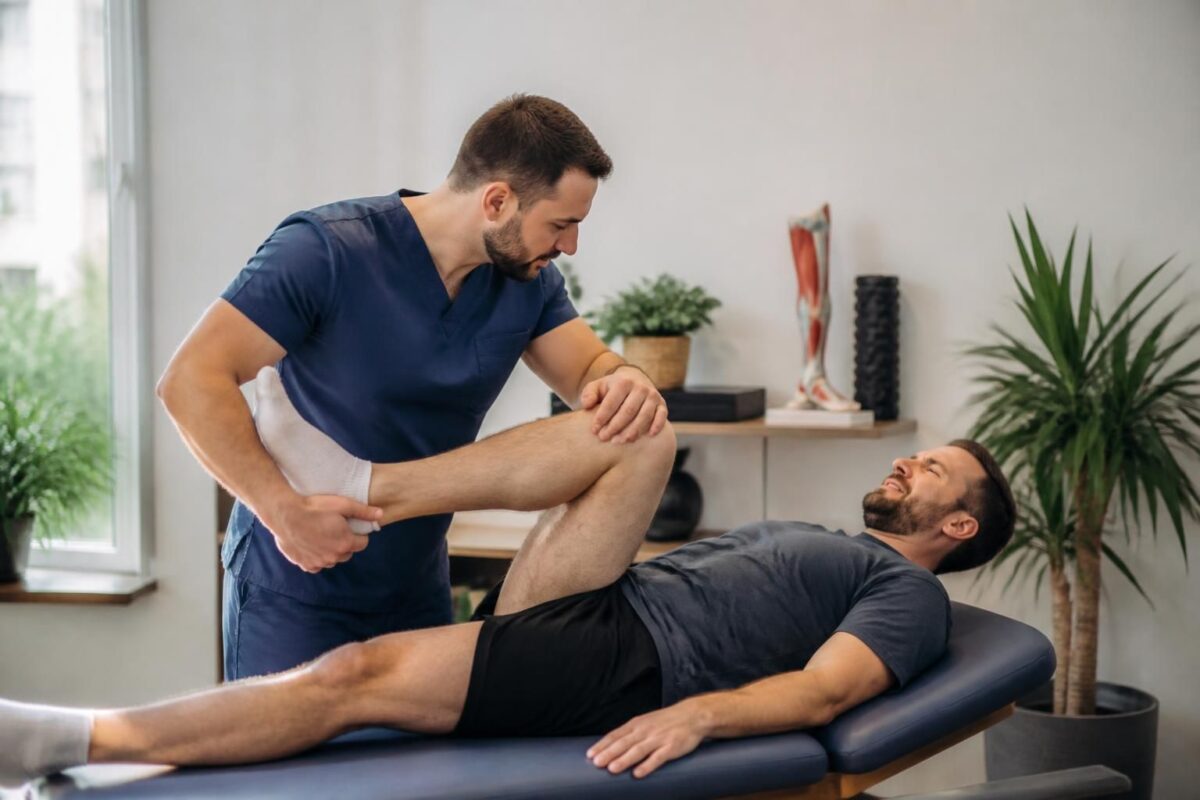
Osteopathy and chronic leg pain: regaining an optimal quality of life
In short In short, Osteopathy is one Global manual approach aimed at reducing Chronic leg pain and improve the quality of life. What is it? Non-drug therapy using the hands to identify restrictions and treat lesional chains. How does it…
Testimonials on osteopathy for optimal post-operative recovery
“After a knee surgery, I started osteopathy 6 weeks after the procedure, with the surgeon’s agreement. In a few sessions, I found a Mobility found and an pain reduction. The therapist works gently and respects the post-operative contraindications, which allowed me to resume my daily activities more quickly. »
“It was not magic, but the personalized support made a real difference. I understood how the Post-operative compensation settled down and thanks to the follow-up, my strain in the lower back and the pelvis dissipated gently. My scar and the Surrounding fabrics have gained in flexibility, and I feel more confident in my movements. »
“After a Caesarean, osteopathy helped me to Relieve abdominal tension. The work was done without pain and with particular attention to the scar and at diaphragm. Today, I am more mobile and less tired on a daily basis. »
“Tangible result: a Better circulation and less thanedema postoperative after abdominal surgery. The approach overall and the Postural advice completed the medical treatment and helped me to gradually resume my activities. »
“After shoulder surgery, the sessions targeted oppressive areas and strain who had moved elsewhere during the convalescence. I gradually found a amplitude and an stability Movements, which allowed me to resume my sports activities smoothly. »
“The Personalized follow-up plan was key: 2 to 4 sessions adapted to my rhythm, work on the mobility, the posture and the scar, and above all a coordination Claire with the medical team. I was reassured and motivated to continue. »
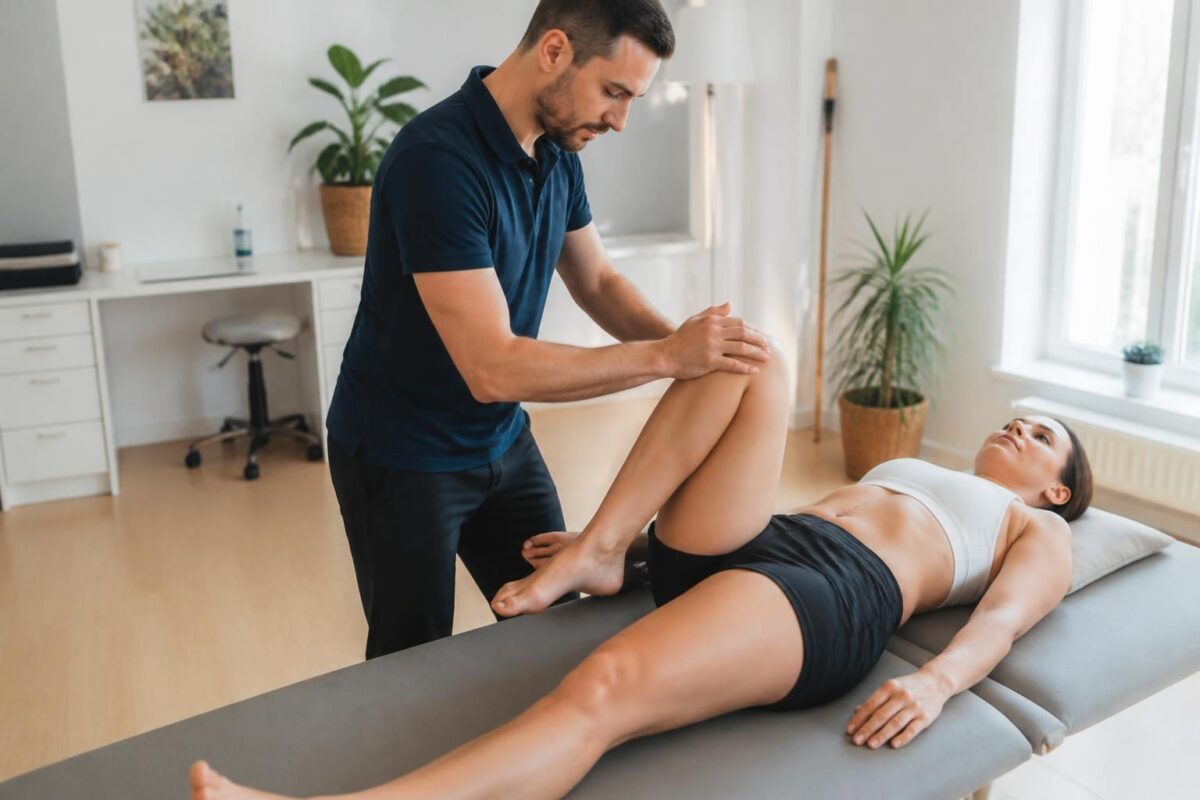
How osteopathy supports recovery after complex surgery
In short In short, Post-operative osteopathy is an approach fresh which supports the recovery After a Complex surgery. It helps to reduce the pain and the fatigue, improves the mobility and accelerates the healing thanks to a better vascularization and…
Optimized post-operative recovery thanks to osteopathy
In practice in Mouvaux, I regularly accompany patients in convalescence after surgery, motivated by the wish to quickly regain their autonomy. As an osteopath, I offer additional post-operative support for medical care, focusing on Restoration of mobility, reducing tension and overall body rebalancing.
Why thePost-operative osteopathy is effective? A surgery, even well followed, causes disturbances that affect the entire body: Muscle tensions related to positioning, Postural compensation To protect the operated area, a Decreased mobility due to immobilization, adherence Around the scars and altered lymphatic and blood circulation. These phenomena are normal, but they can slow healing if not.
When to use osteopathy after an intervention? In my practice, I encourage to wait for the first healing processes to take place and to obtain the doctor’s consent. The delay varies according to the operation: minor surgeries are generally considered after 2 to 3 weeks, major surgeries after 4 to 6 weeks, and caesareans generally after 6 to 8 weeks post-operative. The objective is to work in perfect complementarity with the medical team.
How does osteopathy support your recovery? First, it aims to Relearn mobility and to dissolve compensatory tensions. After knee surgery, for example, tensions may appear in the pelvis and back; The approach is to Gradually rebalance the joints, release tension and optimize the Movement coordination, while promoting more harmonious tissue healing.
The scar occupies a central place in post-operative support. theScar osteopathy acts on the surrounding tissues to improve the Local vascularization, promote the Flexibility of the fascias and prevent excessive adherence. I specify that the gestures respect the fragile areas and that I do not intervene directly on a fresh scar; The work is done smoothly via the mobility of neighboring structures and adjacent fabrics.
Beyond the tissues, osteopathy supports the essential digestive and circulatory functions after abdominal surgery. gently, it can help Boost intestinal motility, promote the lymphatic drainage and improve the Venous circulation, while soothing diaphragmatic and thoracic tensions.
Types of commonly supported interventions. I intervene after orthopedic surgeries (knees, shoulders, hips), spinal interventions and fractures requiring osteosynthesis; I also approach abdominal and gynecological surgeries and, with caution, chest cases requiring special attention to costal mobility and respiratory function.
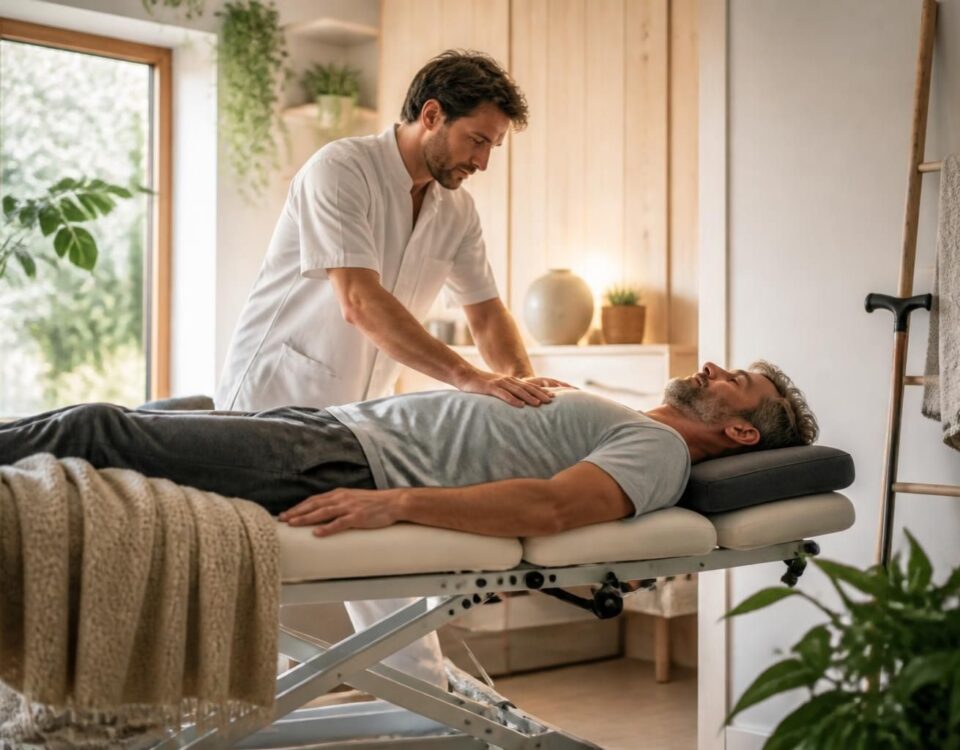
What to expect in a post-operative consultation? During the first visit, a detailed assessment is carried out in order to understand the type of intervention, your feelings and your objectives. the techniques used are sweet, suitable for your healing and painless. A personalized follow-up plan is then proposed, typically composed of 2 to 4 sessions Spaced 2 to 3 weeks apart, supplemented by postural and movement advice to optimize recovery.
This global approach allows the body, with its ability to adapt, to quickly regain its balance. If you are looking for tailor-made support for your convalescence, let’s make an appointment to assess together the best strategy adapted to your post-operative situation in Mouvaux.
This conclusion recalls that thePost-operative osteopathy Can accelerate recovery when treatment is coordinated with the medical team and validated by the surgeon, promoting mobility, by reducing the strain and optimizing the circulation and lymphatic drainage around and far from the operated area.
thePost-operative osteopathy aims to restore the mobility and reduce the offsets who settle after an intervention, in order to restore the balance of the body as a whole.
The right time to start the accompaniment is after the initial phase of healing and with the explicit agreement of the surgeon. In practice, we often consider support around 6 weeks Depending on the type of intervention and the evolution of the scar, so as not to disturb the healing process.
the techniques used respect the health and the security of the patient: we act on the Peripheral tissues around the scar and on the postural chains, without directly intervening on a still recent scar, in order to facilitate the flexibility fabrics and limit adhesions.
The overall benefits are multiple: improvement of the circulation and drainage, reduction of Distance pains and tensions, and support for a Postural reconstruction more harmonious, which contributes to a faster and lasting recovery.
Application areas include Orthopedic surgeries, abdominal and gynecological, with particular attention to pelvic mobility, respiratory function and abdominal comfort after intervention. This global approach makes it possible to limit post-operative imbalances and promote a gradual resumption of daily activities.
Integrating osteopathy into the postoperative course requires a complementarity With the medical teams and a secure framework, in order to ensure appropriate care for each patient and the nature of the intervention.
To learn more, you can consult resources and testimonials about the role of osteopathy in post-operative recovery, for example on the following pages: Osteopathy#ATFP_CLOSE_TRANSLATE_SPAN# and recovery after surgery, Osteopathy#ATFP_CLOSE_TRANSLATE_SPAN# and post-op recovery, Osteopathy#ATFP_CLOSE_TRANSLATE_SPAN# and recovery after surgery, LOSTeopathy#ATFP_CLOSE_TRANSLATE_SPAN# Recognized by health professionals, Taken#ATFP_CLOSE_TRANSLATE_SPAN# Support pre and postoperative, Work#atfp_close_translate_span# on scars.

Dr Sylvain Desforges, B.Sc., D.O., N.D., osteopath, is the founding president of TAGMED and of the ACMA association. He dedicates his practice to chronic spinal pain, low back pain and symptoms compatible with sciatica, particularly when pain radiates toward the buttock, leg, calf, foot or toes.
Through SOS Sciatique, he publishes educational content on sciatica symptoms, possible causes such as disc herniation, disc narrowing, foraminal stenosis or irritation of a lumbar nerve root, as well as non-surgical approaches that may be considered according to the evaluation. At Clinique TAGMED, care may include, depending on the case, motorized neurovertebral decompression, specific osteopathic care or precision percussion.
For an evaluation related to sciatica treatment in Montreal / Mount Royal or sciatica treatment in Terrebonne, please consult the services available at Clinique TAGMED.
Medical disclaimer
The information published on SOS Sciatique is provided for educational purposes only and does not replace a consultation, diagnosis, opinion or treatment provided by a physician or another authorized healthcare professional. The author of this article is neither a medical doctor nor a specialist in a medical specialty recognized by the Collège des médecins du Québec. The osteopathic, manual medicine or functional support approaches described on this site do not constitute medical acts and are not intended to replace medical follow-up.
Consult a physician or emergency service in cases of loss of bladder or bowel control, anesthesia in the saddle area, significant or progressive weakness in the leg or foot, fever, recent trauma, severe pain or rapid worsening of symptoms. For more details, please read our Legal Notice.