Why osteopathy is essential to maintain good posture
27/06/2026
Osteopathy and arthritis: improving the quality of life of patients
27/06/2026
In short In short, the Osteopathic approaches To treat the Recurrent postural imbalances are one solution centered on the body as a unit that relies on a Postural evaluation And some Manual techniques adapted to restore the mobility and thebalance. The treatment combines Joint mobilizations and postural advice to reduce aches, prevent relapses and improve the quality of life. At Montreal, this remedy is particularly relevant for people exposed to repetitive professional and sports constraints, offering results rapid and durable without invasive approach. |
The Osteopathic approaches To treat the Postural imbalances recurring are based on a Full assessment posture and movement habits to identify the root causes of asymmetries and develop a personalized plan.
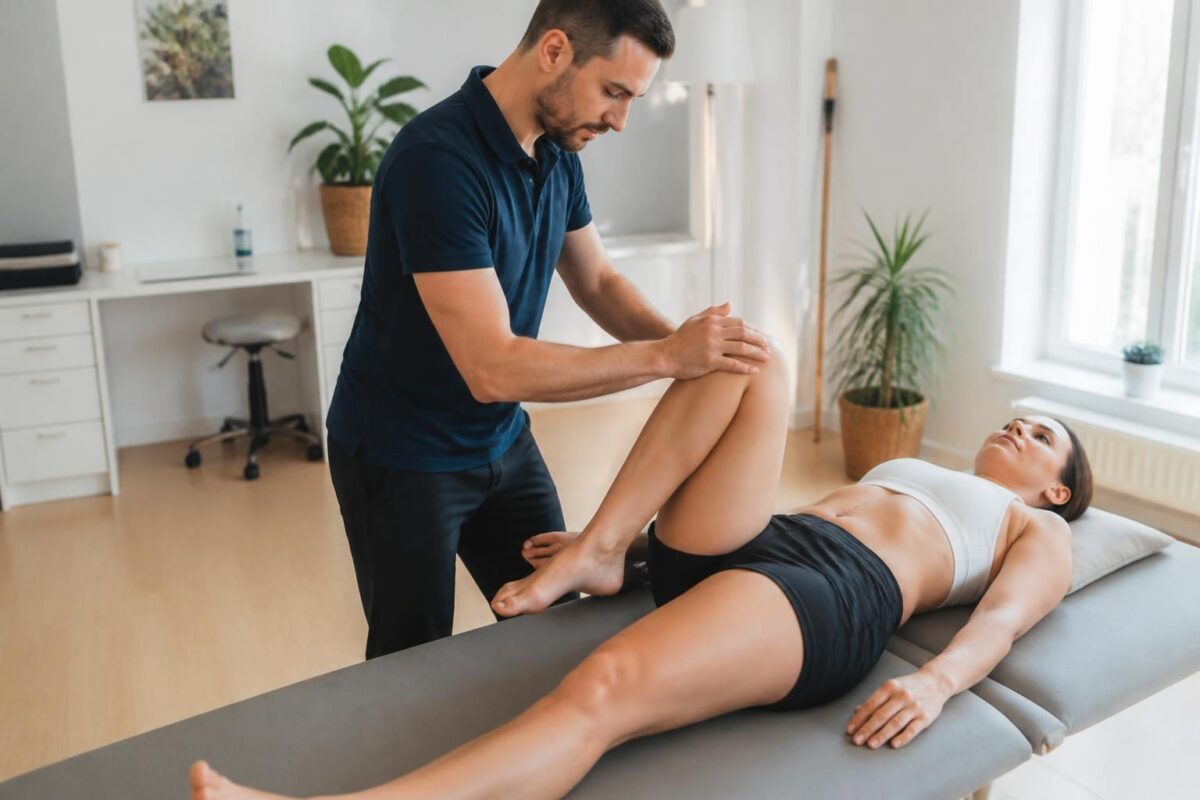
The practitioner applies Manual techniques targeted, such as Joint mobilizations, of vertebral manipulation and techniques of Myofascial relaxation, to restore the mobility and thealignment. The Postural rehabilitation associate Reinforcement exercises, stretches and Postural education is adapted to each patient to correct imbalances and promote the maintenance of results.
In addition, osteopathy offers advice ergonomic and strategies for Prevention of recurrences, while often part of a collaborative approach with other health professionals to optimize postural control and improve the quality of life in the long term.
This article presents the Osteopathic approaches To treat the Recurrent postural imbalances. It describes the foundations, the main practices and the conditions in which osteopathy can support a more balanced, lasting and painless posture. The text highlights postural evaluation, structural, visceral and cranial techniques, as well as the importance of postural education and personalized follow-up.
in an approach holistic, osteopathy considers the body as a unit. The mobility of muscles, joints and tissues is interconnected with nerve and visceral function. The goal is to restore mobility and thebalance overall to improve posture and quality of life on a daily basis.
principles and foundations
The body is seen as a functional unit. The structure and the function mutually influence each other. The organization has self-healing mechanisms. The osteopath identifies mobility restrictions and restores them to support the natural balance.
The main osteopathic practices
osteopathy structural : it focuses attention on musculoskeletal structures (bones, muscles, joints). The work aims to restore mobility and reduce tensions through appropriate manipulation, mobilization and stretching.
Visceral osteopathy : it targets the internal organs and their attachments. It aims to improve the mobility and function of the viscera by treating the tensions and adhesions likely to alter the digestive, respiratory or uro-gynecological functioning.
Cranial osteopathy : she wears on the skull and the central nervous system, with gestures sweetness To balance tensions and promote the circulation of cerebrospinal fluid. This approach can help sleep, concentration and certain headache disorders.
Practical resources and examples help to understand these approaches and their effectiveness in postural imbalances. To deepen, you can consult the following resources on sites specializing in osteopathy and repetitive postures.
Evaluation and treatment plan
The evaluation begins with an interview and an anamnesis to understand postural habits and repeated gestures of everyday life. Then, the osteopath performs a clinical and palpatory examination of the areas of tension and mobility restrictions. The treatment plan is then adapted, favoring the techniques that restore body alignment and Functional mobility. The treatment combines manipulation, release of tension and postural advice, without resorting to invasive gestures.
The monitoring aims to consolidate improvements and prevent recurrences. Postural education work and, when necessary, ergonomic advice and exercises adapted by the osteopath can complete the sessions.
Precautions and practical framework
Osteopathy is generally safe when practiced by a qualified professional. Some situations require special caution and additional medical evaluation. Training is done in recognized schools and affiliated osteopaths often work in institutional and private settings that comply with professional standards.
Training and professional executive
Professionals who practice osteopathy follow specialized training in recognized establishments. In practice, professionals rely on courses certified by recognized institutions and engage in continuous training to update their knowledge and techniques.
Integration and multidisciplinary collaboration
Osteopathy can be integrated into other approaches when necessary. Collaborations with health professionals make it possible to adapt the care and ensure overall patient follow-up. In this context, professional associations and reference organizations guide ethics and practice.
To enrich your understanding, here are additional resources from areas concerned by postural imbalances and repetitive posture.
To complete your information, see these resources:
Osteopathy and muscle tension linked to repetitive activities
Technological advances applied to osteopathy
How Osteopathy Improves Localized Blood Circulation
How Osteopathy Reduces Chronic Inflammation
The advantages of osteopathy to treat recurrent athletic pain
Neurovertebral decompression and osteopathy
herniated disc and osteopathic approach
Foraminal stenosis and osteopathy
Carpal tunnel system and osteopathy
SOS Sciatica Site (General Resources)
Training and practice framework: NUMSS, NAO, National University of Medical Sciences and National Academy of osteopathy.”,
Medical Disclaimer: The information and advice provided on this site does not replace the health professional’s diagnosis or treatment. Please note that Dr. Sylvain Desforges osteopath is neither a doctor of medicine nor a doctor, and is not a specialist in a medical specialty as defined by the Collège des Médecins du Québec. Manual medicine, functional medicine and sports medicine as described on this site exclude any medical treatment or diagnosis made by a doctor or specialist doctor. Always consult your doctor for any medical questions. For more details, please read our full legal notice.
Axes of action for recurrent postural imbalances
- Overall postural evaluation — Analysis of habits, movements and tensions
- Joint mobilizations — Restoration of amplitude and mobility
- Myofascial relaxation — Release from fascia tensions
- Stabilization and postural rehabilitation — Targeted exercises for alignment
- Structural/Visceral/Cranial Approaches — Adapted additional techniques
- Postural education — Daily tips and simple exercises
- Muscle chain management — Work on musculo-fascial balances
- Prevention and follow-up — Custom plan and regular monitoring

This article presents the Osteopathic approaches To treat the Recurrent postural imbalances, focusing on precise evaluation, appropriate manual techniques and postural education. The objective is to restore body alignment, improve mobility and prevent recurrences, thanks to a global and personalized approach based on anatomical and functional principles.
Diagnosis and evaluation of postural imbalances
The first step is to Full posture analysis and movement habits. The osteopath observes the asymmetries, evaluates the range of motion and identifies the areas of tension or compensation. An examination of muscle chains and working or leisure conditions makes it possible to identify the contributing factors. This approach aims to establish a treatment plan personalized and target the areas to be rebalanced to avoid recurrences.

How osteopathy improves the quality of life of active people
In short In short, theosteopathy is a global approach that Optimizes mobility and the function of the body of ACTIVE PEOPLE, for a better quality of life. It helps prevent injury and reduce Musculoskeletal pain While promoting the Sports recovery.…

Osteopathy and sports recovery: prepare the body for lasting performance
In short In short, Osteopathy and Sports recovery is one Global manual approach that sustainably prepares the body for the effort by restoring mobility and circulation After the effort. It is a discipline that acts on the sinews, the joints,…
Key posture principles and practices
Structural osteopathy
The approach structural Focuses on the elements of the musculoskeletal system: bones, muscles and joints. By engagement And some manipulation, it aims to restore the mobility of the joints and to release the tensions that alter the alignment. This approach acts directly on the supporting structures of the skeleton and torso to promote a lasting balance.
Visceral osteopathy
theVisceral osteopathy is interested in the organs and their attachés, in order to improve their mobility and coordination with the rest of the body. By working on tensions and adhesions, she participates in postural reharmonization, in particular when abdominal or pelvic areas influence the overall posture.
Cranial osteopathy
theCranial osteopathy Targets the nervous system and tensions in the skull and spine. By favoring gentle and targeted gestures, it contributes to balancing tensions and optimizing the synchronization of neuromuscular chains, which can positively influence postural control.
Why Osteopathy Is Essential For Recovery People
In short In short, Osteopathy in convalescence is an approach manual and holistic which helps to accelerate the recovery by restoring The balance, the mobility and a good circulation fabrics. it contributes to Reduce the pain, support the Back to…

Osteopathic manipulations to strengthen post-traumatic muscles
In short In short, Osteopathic manipulations for Strengthen post-traumatic muscles constitute a gentle manual approach aimed at restoring the mobility, reduce the pain and facilitate the Functional rehabilitation After a injury. What is Is it? A series of precise gestures…
Therapeutic strategies and treatment plan
The techniques used are based on a Appropriate selection depending on the patient. Structural manipulations and mobilizations restore the amplitude of gestures and alignment. methods myofasciales Release tension in connective tissues and improve circulation. exercises of Postural rehabilitation and of muscle building are then proposed to stabilize the achievements and promote a sustainable posture on a daily basis. Postural education, ergonomic advice and simple exercises at home complete the treatment and facilitate the maintenance of progress.

Osteopathy and prevention of work-related musculoskeletal disorders
In short theosteopathy is one Manual approach that restores body balance and prevents MSD related to work. Its advantages: reduction of tension, improvement of mobility and prevention of chronic pain. She is preventive and healing, suitable for office and trades…

The benefits of osteopathy to treat muscle imbalances
In short theosteopathy is a manual approach to restore themuscle harmony and postural considering the body as a whole. Its main benefits include the reduction of aches and tensions, the improvement of the mobility and from the posture, and prevention…
Education and prevention of recurrences
Beyond the sessions, thePostural education And lifestyle habits play a key role. The osteopath offers targeted exercises, postural adjustments and tips for integrating better alignment into everyday gestures. Prevention also involves managing stress, listening to body signals and an ergonomic organization of the workstation, in order to limit triggering factors and reduce the risk of relapse.
Osteopathy and chronic leg pain: regaining an optimal quality of life
In short In short, Osteopathy is one Global manual approach aimed at reducing Chronic leg pain and improve the quality of life. What is it? Non-drug therapy using the hands to identify restrictions and treat lesional chains. How does it…
How osteopathy supports recovery after complex surgery
In short In short, Post-operative osteopathy is an approach fresh which supports the recovery After a Complex surgery. It helps to reduce the pain and the fatigue, improves the mobility and accelerates the healing thanks to a better vascularization and…
Integration with other approaches and security
An osteopathic approach can be supplemented by other health professionals when necessary, such as physiotherapists or specialists in posteriology. This collaboration makes it possible to enrich the treatment plan and adapt the protocols according to specific needs. Although safe, osteopathy requires individual assessment to identify contraindications and adapt the techniques used, to ensure safety and efficacy for each patient.
Axes and descriptions of osteopathic approaches for recurrent postural imbalances
| Approach | Concise description |
|---|---|
| Structural osteopathy | Uses Joint manipulations And some engagement To restore thealignment and the mobility of muscle chains. |
| Visceral osteopathy | acts on the viscera and their attachments to release tensions that can influence the posture and global mobility. |
| Cranial osteopathy | Approach fresh on the central nervous system and cranial membranes to promote better regulation and harmonious alignment. |
| Mobilization and myofascial relaxation | release of tensions myofasciales and restriction areas to improve the mobility tissue and postural balance. |
| Postural education and ergonomics | Tips and exercisesergonomy To correct habits and maintain postural balance on a daily basis. |
| Postural rehabilitation and reinforcement | programs of Functional rehabilitation and of strengthening to stabilize the column and the postural axes. |
| vertebral decompression | technical aimed at reducing spinal pressure and improving the mobility segments and discs. |
| Holistic approach and treatment plan | Overall assessment and Personalized treatment plan which adjusts the techniques and objectives according to the patient. |
| Prevention and postural autonomy | Mastery of the toolsself-care and ergonomics to prevent relapses and promoteautonomy. |
Testimonials on osteopathic approaches to treat recurrent postural imbalances
“Before, I felt constant pain in my back after long days in front of the computer. After the sessions focused onStructural osteopathy, who work on Musculoskeletal structures and use engagement Targeted, my body has regained its balance. joint mobility came back and my pain decreased, with better posture throughout the day. — Lucie, 34, marketing manager.
“My work requires carrying and moving loads, which pulled on the diaphragm and viscera and, by domino effect, created tensions that stretched to my spine. thanks to theVisceral osteopathy, I found better organ mobility and freer breathing. My experience shows that maintaining a Postural balance Also goes through working on internal tensions, not just on muscles.” — Marc, 49, craftsman.
“I had frequent headaches and restless nights. theCranial osteopathy Was gentle but effective: she helped release tension and balance neurological demands for sleep and concentration. In a few sessions, my posture improved and my migraines decreased, which changed my way of moving on a daily basis. — Élise, 41, teacher.
“As a sportswoman, I am very attentive to my posture and my muscle balance. My osteopath has integrated advice fromPostural education and an Functional rehabilitation suitable for my workouts. The daily exercises and adjustments allowed me to correct asymmetries and improve my stability during technical gestures, with less pain and better performance. » — Anaïs, 27, sportswoman.
“I was mainly trying to prevent relapses after low back pain. personalized plans focused on Prevention of recurrences and thePostural education helped me establish ergonomic habits at work and at home. Regular follow-ups and simple daily exercises offer me lasting stability and regained confidence in my movements. — Pierre, 56, accountant.
Dr. Sylvain Desforges, Expert in osteopathy, naturopathy and manual medicine, plays the role of founding president of the Tagmed clinics and the ACMA association. With a career dedicated to health innovation, it focuses on Management of Chronic pain and the integration of advanced technologies. These include approaches such as vertebral decompression, treatment with laser and shockwave therapy. Its mission is to deliver evidence-based care to optimize the health and well-being of its patients. With this in mind, it promotes a holistic vision that combines precise diagnosis, targeted treatment and sustainable prevention.
The Recurrent postural imbalances are a common condition in the active adult, often amplified by professional gestures and daily habits. Osteopathy addresses these disorders as an interdependent set: tissue mobility, skeletal alignment, nervous and visceral systems balance, as well as respiratory and functional efficiency. This perspective makes it possible to understand how local tensions can spread and generate pain or chronic fatigue, while offering varied and personalized therapeutic axes.
Among the most used osteopathic approaches, we find theStructural osteopathy, which targets musculoskeletal structures (bones, muscles, joints) through manipulation, mobilization and stretching to restore the amplitude and coordination of movement. theVisceral osteopathy Works on the internal organs and their attachés, in order to improve mobility and digestive, respiratory or uro-gynecological function when tensions hinder their functioning. Finally, theCranial osteopathy Targets the central nervous system and cranial structures with gentle techniques to balance tension and promote better neuro-vasculofunctional synchronization. Together, these practices form an approach Multimodal and personalized Able to act on the source of imbalances rather than only on symptoms.
The therapeutic path begins with a Complete postural evaluation and an analysis of movement habits. The practitioner examines the posture at rest and in action, identifying areas of tension, joint restrictions and compensations that maintain the imbalance. This phase guides the selection of techniques and prioritization of objectives, in order to develop a clear and realistic treatment plan.
The treatment may include Joint manipulations, of Myofascial techniques To release tensions, and visceral or cranial interventions when necessary. At the same time, the doctor offers a Postural rehabilitation Including targeted exercises, ergonomic advice and breathing exercises to improve stability and neuromuscular reprogramming. The objective is not only to relieve pain, but also to increase the patient’s ability to maintain optimal posture on a daily basis and to avoid recurrences through better-aligned lifestyle habits.
This approach is part of a dynamic of Collaboration and integration with other health professionals when relevant. Physiotherapists, complementary osteopaths, naturopaths and specialists can seize together a global plan, in order to strengthen the results and offer a coherent follow-up. Relapse prevention, focused on postural education and maintenance of achievements through simple and effective routines, is a central pillar of this approach, which seeks to sustainably preserve patient mobility and comfort.
This article highlights the Osteopathic approaches intended to deal with Recurrent postural imbalances, relying on a Overall assessment and adapted manual techniques. It underlines how osteopathy can combine different methods to restore thePostural balance, improve the mobility and prevent relapses, while remaining patient-centric.
The Structural techniques Target musculoskeletal structures to restore range of motion and reduce pain, whileVisceral osteopathy and theCranial osteopathy respectively address the links between organs and posture, and the balance of the central nervous system. This triad improves the interaction between the muscle chains and the organs, favoring a Body alignment coherent and lasting.
A Complete postural evaluation is the base of the treatment. It identifies mobility restrictions and contributing factors, in order to build a personalized plan that can combine Joint mobilizations, of Myofascial releases, of Target reinforcement and postural advice. This integrated approach aims to reduce asymmetries, optimize muscle synergies and prevent recurrences through appropriate lifestyle habits.
The different osteopathic practices Offer complementary pathways according to the patient’s needs: active adults, athletes, pregnant women, children. Depending on the case, therapists can favor specific techniques while maintaining a vision holistic of the body. To deepen these axes, discover the following resources: #ATFP_CLOSE_TRANSLATE_SPAN# Osteopathic approaches to treat recurrent postural imbalances and les#ATFP_CLOSE_TRANSLATE_SPAN# Osteopathic approaches to improve postural balance.
The approach is reinforced by integrating with other professionals and by educating the patient. Learning to maintain a suitable posture, adopting favorable habits and carrying out simple exercises will reduce the risk of recurrence and will improve the well-being durably. To expand your understanding, also see: Importance#ATFP_CLOSE_TRANSLATE_SPAN# Regular consultations in osteopathy, Why#ATFP_CLOSE_TRANSLATE_SPAN# Osteopathy is a lasting solution for chronic pain, and les#ATFP_CLOSE_TRANSLATE_SPAN# Benefits for lower back pain.
To explore techniques and foundations, you can check out dedicated resources: Techniques#ATFP_CLOSE_TRANSLATE_SPAN# Osteopathic, Osteopathy,#ATFP_CLOSE_TRANSLATE_SPAN# A holistic approach to physical well-being, and LES#ATFP_CLOSE_TRANSLATE_SPAN# Recurring postural approaches. These resources complement knowledge and reinforce a practice focused on patient efficacy and safety.
the lasting benefits associated with these Manual approaches include voltage reduction, better Postural structure and a general improvement in Physical well-being. For those looking for effective and non-invasive solutions, osteopathy is an option to consider as an integral part of a global health and prevention plan.
Find out more about the links between rebalanced postures and quality of life can also go through exchanges with recognized professionals and institutions in the field, such as the public and independent resources mentioned above. For prevention acts and practical advice, consult the dedicated pages and guides intended to facilitate the appropriation of good postural habits on a daily basis.

Dr Sylvain Desforges, B.Sc., D.O., N.D., osteopath, is the founding president of TAGMED and of the ACMA association. He dedicates his practice to chronic spinal pain, low back pain and symptoms compatible with sciatica, particularly when pain radiates toward the buttock, leg, calf, foot or toes.
Through SOS Sciatique, he publishes educational content on sciatica symptoms, possible causes such as disc herniation, disc narrowing, foraminal stenosis or irritation of a lumbar nerve root, as well as non-surgical approaches that may be considered according to the evaluation. At Clinique TAGMED, care may include, depending on the case, motorized neurovertebral decompression, specific osteopathic care or precision percussion.
For an evaluation related to sciatica treatment in Montreal / Mount Royal or sciatica treatment in Terrebonne, please consult the services available at Clinique TAGMED.
Medical disclaimer
The information published on SOS Sciatique is provided for educational purposes only and does not replace a consultation, diagnosis, opinion or treatment provided by a physician or another authorized healthcare professional. The author of this article is neither a medical doctor nor a specialist in a medical specialty recognized by the Collège des médecins du Québec. The osteopathic, manual medicine or functional support approaches described on this site do not constitute medical acts and are not intended to replace medical follow-up.
Consult a physician or emergency service in cases of loss of bladder or bowel control, anesthesia in the saddle area, significant or progressive weakness in the leg or foot, fever, recent trauma, severe pain or rapid worsening of symptoms. For more details, please read our Legal Notice.