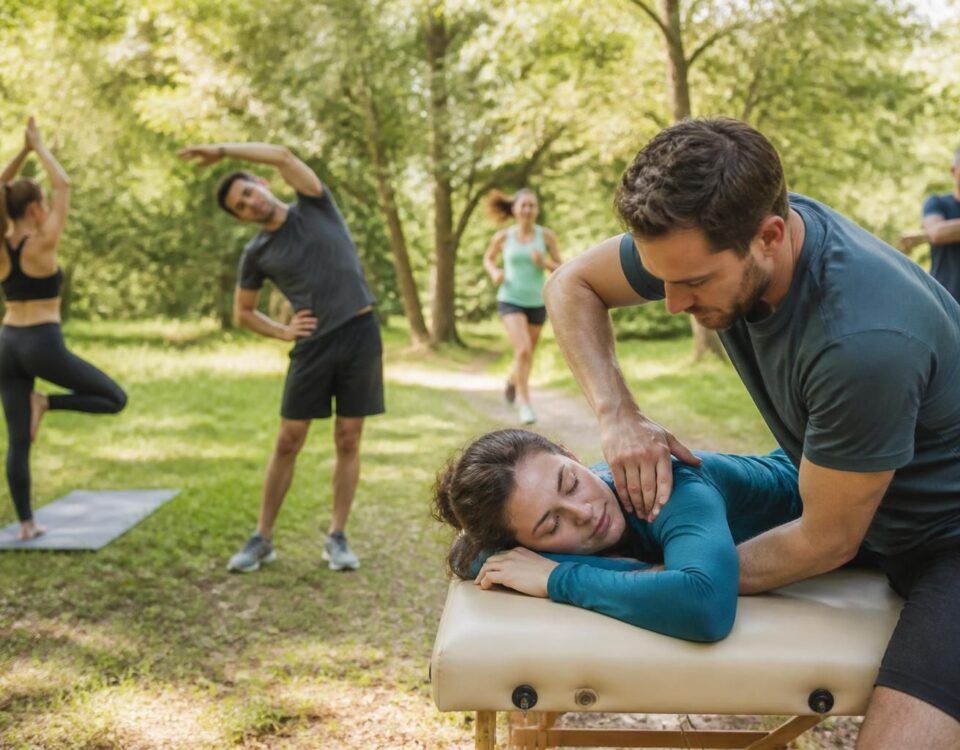
The benefits of osteopathy to relieve chest pain
27/06/2026
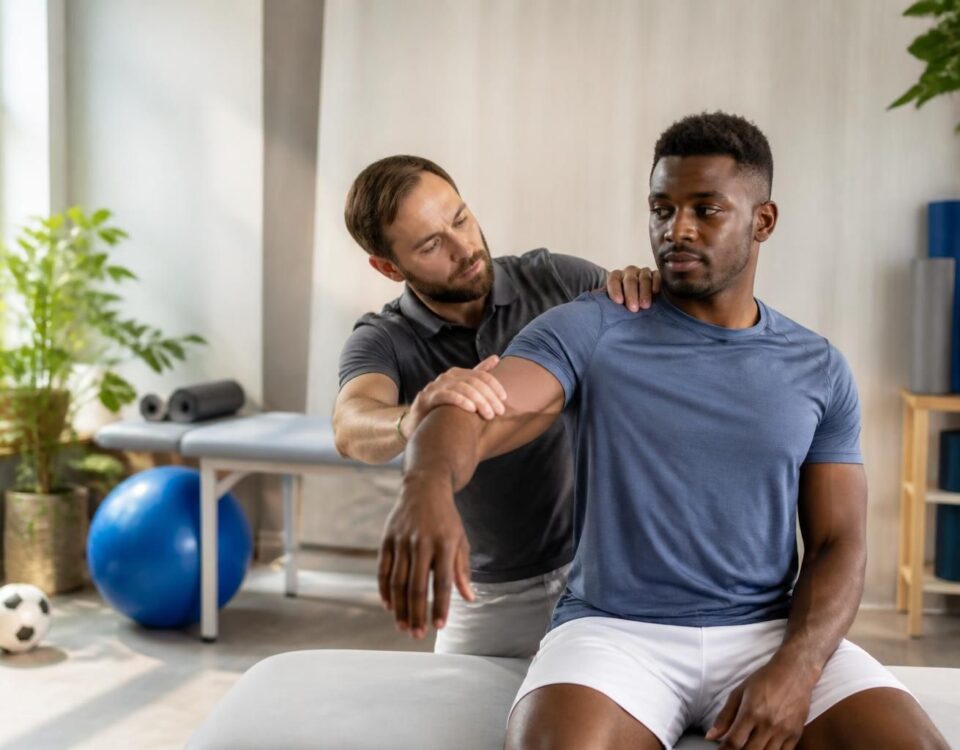
Osteopathy and ankle pain: regain mobility
27/06/2026
In short
| In short, theosteopathy Focused on Local blood circulation is a non-invasive approach that improves flow by releasing tensions and compression areas that hinder the vessels. It promotes better vascularization and lymphatic drainage, improves theoxygenation and tissue nutrition, and reduces inflammation. Result: faster recovery after exercise or injury, and increased daily circulatory comfort, without medication. Accessible in local osteopathic clinics, this treatment is easily integrated into a global and preventive management of circulatory well-being. |
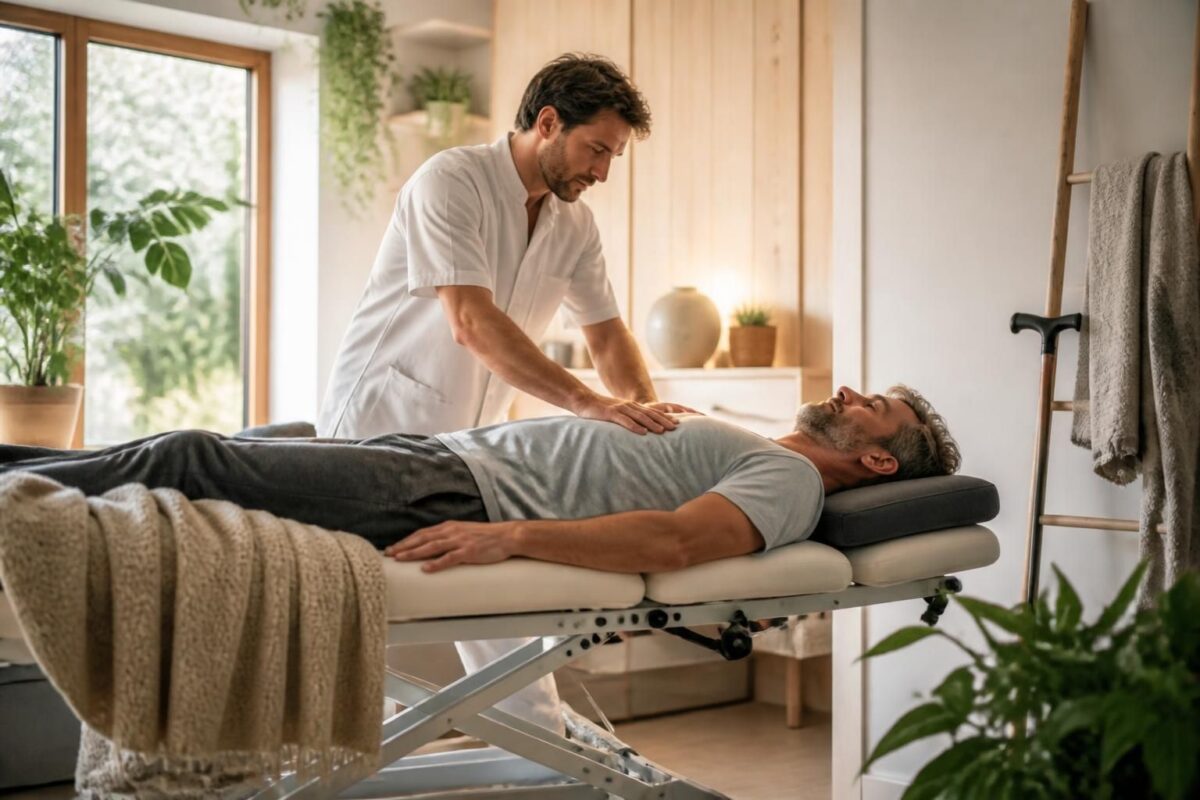
In osteopathy, the Localized blood circulation improves by releasing areas of tension that compress the arteries and veins of a given region. of gentle and targeted mobilizations restore theTissue alignment and mobility, favoring a better Hair perfusion and local tissue nutrition. The lymphatic drainage And the work on the interstitium contributes to fluidizing the exchanges and to support the venous return. By reducing inflammation and tension, losteopathy accelerates the recovery of targeted tissues and improves comfort in the treated area.
This article, written by a health professional expert in osteopathy, explains how theosteopathy better Localized blood circulation. It describes the simple and effective mechanisms used in practice, mobilizing techniques and the role of patient education. The statement emphasizes theoxygenation and tissue nutrition, as well as on lymphatic drainage as important levers for local healing.
Principles and mechanisms
Osteopaths identify and release areas of tension that hinder the flow of blood and fluids. By working on key regions such as the pelvis, the diaphragm and the spine, the objective is to improve the entry and evacuation of blood in local tissues. This approach aims to restore the balance of local trade and to promote a Local blood circulation more fluid.
Techniques used
Soft mobilizing techniques, tissue rebalancing techniques and lymphatic drainage are the main arsenal. They aim to reduce cuts and promote a vascularization effective target areas. These interventions can also stimulate hair exchange and improve nutrient and oxygen intake.
To deepen these approaches, see the resources on Prevention of injuries related to repetitive activities and on Improved local traffic.
Effects on tissues and local organs
A Improved local traffic Promotes oxygenation and tissue nutrition, which supports tissue repair and can reduce local inflammation. Osteopathy acts on the fascial system and the junctions between the structures to release the constraints that limit the vascular flow.
Role of lymphatic drainage
Lymphatic drainage contributes to the evacuation of waste and balances the volume of fluids. By increasing the effectiveness of this drainage, osteopathy can help release tension and improve Blood and lymphatic circulation at the local level.
Resources explore the impact of osteopathy on recovery and performance, particularly in the sporting context (Recovery and performance and Posture and balance).
Integration with sports activity and daily life
For athletes and working people, local osteopathy can improve recovery and reduce symptoms associated with less effective circulation. The intervention also aims to prevent tensions that accumulate during repetitive activities and to support a Optimal tissue circulation during exercise.
Education and prevention
The patient receives practical advice on maintaining a good bloodstream Everyday, including movement habits, adapted feeding and active breaks. This educational approach promotes continuity of beneficial effects and helps prevent long-term functional circulatory discomfort.
Training and professional support exist to validate these practices. Osteopathy courses recognized by NUMSS and NAO, as well as by National University of Medical Sciences and National Academy of osteopathy, ensure a solid basis of the techniques and knowledge used in practice.
Additional resources can be consulted to understand the mechanisms and limitations, including Misconceptions about osteopathy and details on the Osteopathic vascular treatment.
For those who wish to explore the benefits on the local traffic and the recovery, Osteopathy offers a global approach that links movement, circulation and well-being. Testimonies and clinical cases underline the speed of effects when techniques are applied accurately, especially in athletes and people with functional symptoms related to ineffective circulation.
For more information on rehabilitation and sports performance applications, see Osteopathy and sports recovery – Optimize performance and Osteopathy to improve posture and balance.
It is important to remember that the results vary according to the individual and that osteopathy does not replace specialized medical advice when vascular pathologies are suspected. For specific questions, consult your attending physician.
professional references and practice areas may include resources on Osteopathy and circulation and Balance and posture.
Relevant trainings and professional associations include ACMA, College of Canadian Osteopaths and College of Canadian Osteopaths, to ensure high standards of practice and ethics in this area.
For more information on the protocols and options available, you can consult specialized resources on the sites mentioned above and on the pages dealing with osteopathic vascular treatment.
To deepen the links, here are some relevant additional resources: Sports recovery, tendinitis, Posture and balance, and circulatory balance.
“Medical disclaimer: The information and advice provided on this site does not replace the health professional’s benefit, diagnosis or treatment. Please note that Dr. Sylvain Desforges osteopath is neither a doctor of medicine nor a doctor, and is not a specialist in a medical specialty as defined by the Collège des Médecins du Québec. Manual medicine, functional medicine and sports medicine as described on this site exclude any medical treatment or diagnosis made by a doctor or specialist doctor. Always consult your doctor for any medical questions. For more details, please read our full legal notice. »
content concerning the treatment of sciatica with the neurovertebral decompression and specific losteopathy and other specific conditions: in articles dealing with neurovertebral decompression, herniated disc, disc bulge, foraminal stenosis, spinal stenosis, disc pinching or disc degeneration, avoid suggesting exercises Or stretching.
References to training institutions and professional associations remain limited as follows: Numss training, NAO, National University of Medical Sciences, National Academy of Osteopathy; ACMA Associations, College of Canadian Osteopaths, College of Canadian Osteopaths.
- Release of compressions local vascular which releases arterial and venous flow in a targeted area.
- Tissue mobilization and Fasciary rebalancing to promote local traffic.
- Microcirculation stimulation And some capillaries for better oxygenation.
- Activation of the lymphatic system and drainage In order to reduce edema and stagnation.
- Improved oxygenation and from the Cell nutrition thanks to an optimized blood flow.
- Postural rebalancing and reduction of Muscle tensions which hinder the venous return.
- areas targets : diaphragm, basin, abdomen and column support local traffic.
- Education and self-gestures To sustainably support circulation (posture, activity, hydration).

This article presents how theosteopathy can improve the Localized blood circulation By releasing tensions, reharmonizing structures and stimulating natural tissue recovery mechanisms. By Targeted mobilizations, a work on the fascias and a lymphatic drainage, the osteopath acts directly on the areas where the flow is hindered, to optimize the supply of oxygen and nutrients.
A targeted approach to local traffic
Local traffic does not depend solely on the heart. It is also due to the mobility of the joints, the flexibility of the tissues and the integrity of the interstitial network which supports the exchanges between the blood and the cells. By identifying and releasing areas of tension, osteopathy restores the natural path of blood and lymph flows, which improves tissue oxygenation and accelerates repair processes.

How osteopathy improves the quality of life of active people
In short In short, theosteopathy is a global approach that Optimizes mobility and the function of the body of ACTIVE PEOPLE, for a better quality of life. It helps prevent injury and reduce Musculoskeletal pain While promoting the Sports recovery.…

Osteopathy and sports recovery: prepare the body for lasting performance
In short In short, Osteopathy and Sports recovery is one Global manual approach that sustainably prepares the body for the effort by restoring mobility and circulation After the effort. It is a discipline that acts on the sinews, the joints,…
Key osteopathic techniques for local circulation
Soft mobilizations and vascular rebalancing
precise movements and sweet Joints and surrounding tissues aim to release compressions that limit the passage of blood in a given region. This approach makes it possible to gradually open the vessels and harmonize muscle tone around the vascular areas, so that the blood flow regains a more effective distribution.
Lymphatic drainage and edema management
Manual lymphatic drainage facilitates the evacuation of waste and excess fluids, reducing swelling and improving venous circulation. By optimizing lymph function, circulation in the tissues is supported, which can reduce feelings of heaviness and promote faster recovery after exercise or injury.
Release of fascias and work on interstitium
The fascias surround all the structures and form a continuous network through which body fluids circulate. By releasing adhesions and rebalancing interstitium, osteopathy improves tissue elasticity and allows better diffusion of nutrients, thus contributing to a vascularization more efficient fabrics.
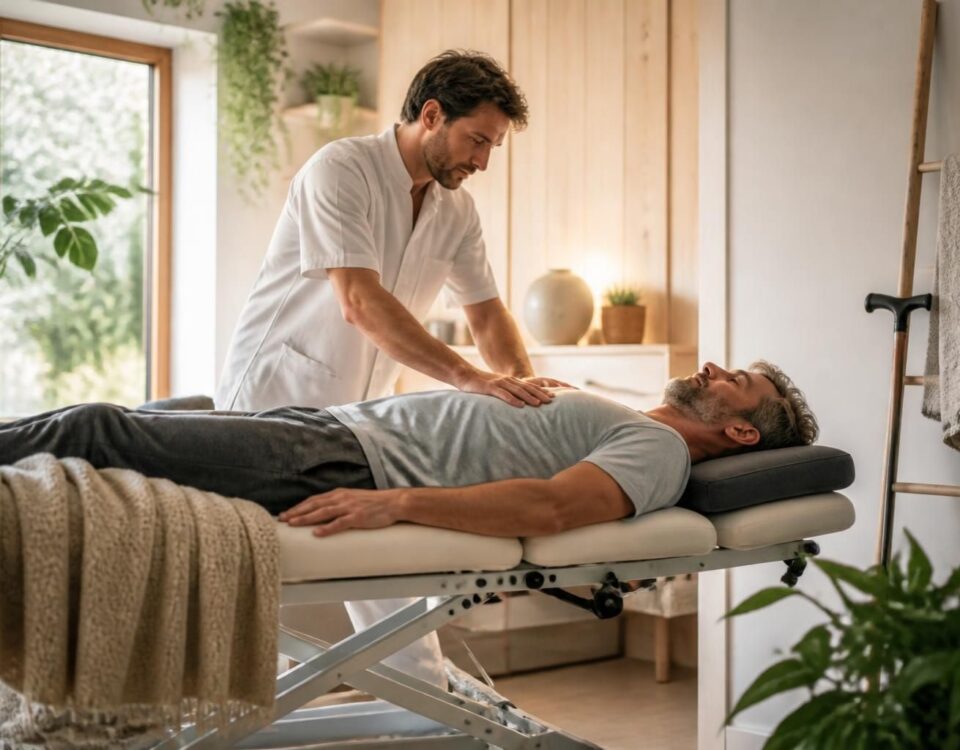
Why Osteopathy Is Essential For Recovery People
In short In short, Osteopathy in convalescence is an approach manual and holistic which helps to accelerate the recovery by restoring The balance, the mobility and a good circulation fabrics. it contributes to Reduce the pain, support the Back to…

Osteopathic manipulations to strengthen post-traumatic muscles
In short In short, Osteopathic manipulations for Strengthen post-traumatic muscles constitute a gentle manual approach aimed at restoring the mobility, reduce the pain and facilitate the Functional rehabilitation After a injury. What is Is it? A series of precise gestures…
Practical applications by region
circulation of the lower limbs
For the legs and feet, osteopathic work aims to relieve tension around the thighs, knees and ankles, in order to promote a more fluid blood flow to the muscles and peripheral tissues. Signs to watch: Sensations of heaviness at the end of the day and functional edema. Postural and locomotor follow-up can prevent repetitive blockages.
Circulation of upper limbs
At the level of the arms and shoulders, manipulations target areas where circulation can be slowed down by muscle tension or joint restrictions. Improving the mobility of the cervical spine and shoulders promotes better irrigation of the upper limbs and a reduction in pain linked to circulatory retention.
Role of the rib cage and diaphragm
The rib cage and diaphragm play a key role in circulatory dynamics and venous drainage. By optimizing their mobility, venous return is facilitated and more effective breathing is supported, which acts favorably on circulation throughout the trunk and extremities.

Osteopathy and prevention of work-related musculoskeletal disorders
In short theosteopathy is one Manual approach that restores body balance and prevents MSD related to work. Its advantages: reduction of tension, improvement of mobility and prevention of chronic pain. She is preventive and healing, suitable for office and trades…

The benefits of osteopathy to treat muscle imbalances
In short theosteopathy is a manual approach to restore themuscle harmony and postural considering the body as a whole. Its main benefits include the reduction of aches and tensions, the improvement of the mobility and from the posture, and prevention…
Advice and support
To get the most out ofVascular osteopathy, favor personalized care, adapted to your daily life and your symptoms. A series of sessions, combined with postural advice and simple exercises, can help you maintain a Localized blood circulation fluid and prevent recurring discomfort. If the signs persist or are accompanied by significant pain, consider a further assessment with a doctor.
| Aspect | local effect |
|---|---|
| Zone and posture | Releases tension and rebalances the posture To reduce the Local cuts. |
| Techniques used | mobilizations and tissue releases improve the passage of local flow. |
| Vascular mechanisms | Activation of the microcirculation and hair exchanges to better oxygenate the tissues. |
| Drainage | Drainage lymphatic Promoting waste disposal and venous flow. |
| The nervous system | harmonize the vascular tone via the autonomic nervous system. |
| Musculature | muscle relaxation releasing the tensions that slow down the circulation. |
| Tissue recovery | Improvement of the vascularization to accelerate tissue repair. |
| Inflammation | Reduction of inflammation that compresses the vessels and improves the flux. |
| Prevention and lifestyle | posture and activity adapted to support a blood flow sustainable. |
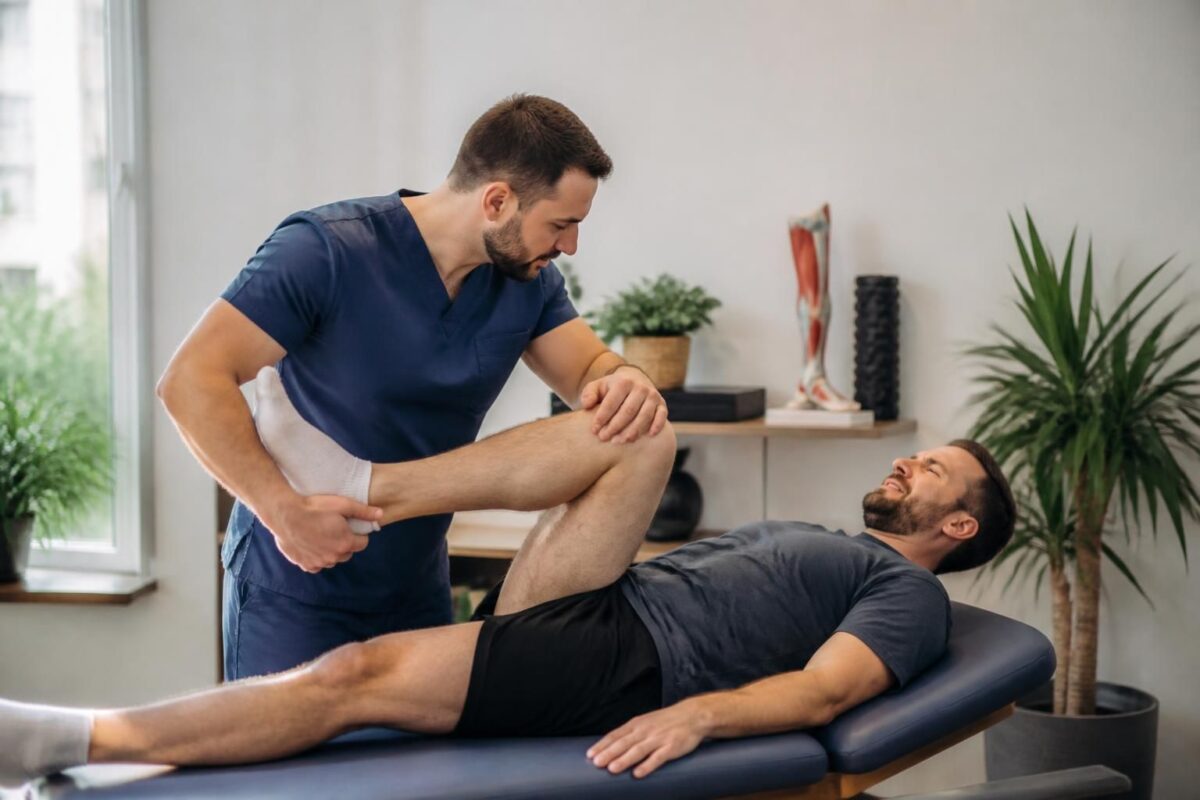
Osteopathy and chronic leg pain: regaining an optimal quality of life
In short In short, Osteopathy is one Global manual approach aimed at reducing Chronic leg pain and improve the quality of life. What is it? Non-drug therapy using the hands to identify restrictions and treat lesional chains. How does it…
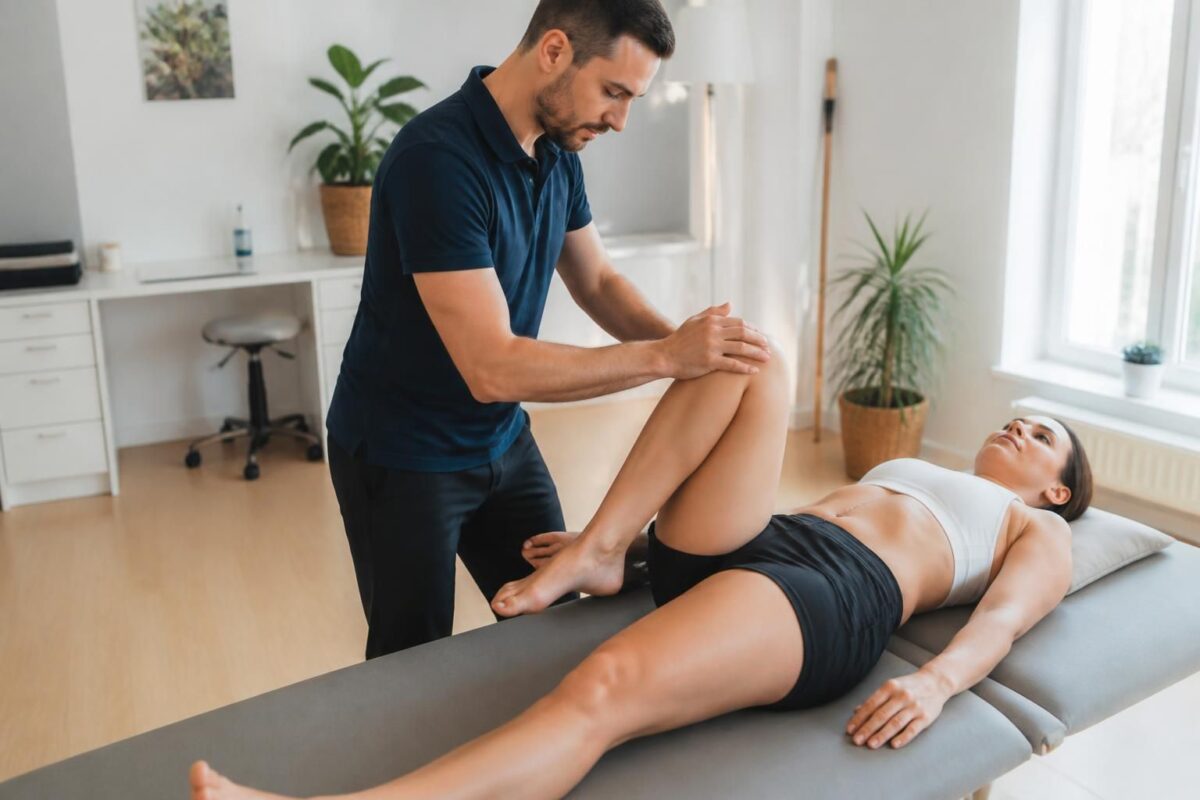
How osteopathy supports recovery after complex surgery
In short In short, Post-operative osteopathy is an approach fresh which supports the recovery After a Complex surgery. It helps to reduce the pain and the fatigue, improves the mobility and accelerates the healing thanks to a better vascularization and…
Testimonials: How Osteopathy Improves Localized Blood Circulation
Since the first session, I have noticed a Local blood circulation Much smoother in my legs. The feeling of heaviness dissipated and my feet found a reassuring warmth at the end of the day.
After a sprained ankle, losteopathy worked on the tissues around the joint and on the neighboring areas to release the stresses that hindered venous discharge. I felt an improvement in the vascularization And a reduction in edema, which allowed me to resume training more quickly.
For a painful episode on the arm following a minor intervention, gentle techniques favored a better lymphatic drainage and an microcirculation Optimized, accelerating tissue oxygenation and recovery.
In the neck and neck, repeated tensions restore the local circulation of cervical tissues. Thanks to losteopathy, the vascularization Scalp and surrounding muscles improved, bringing renewed mobility and less stiffness.
As a sportsman, I found a faster recovery after exercise: loxygenation muscles and a bloodstream Better distributed have supported my performance and reduced post-workout pain.
For the management of a slight edema, osteopathic techniques focused on the lymphatic drainage helped restore fluid flow and improve the circulation local, bringing a feeling of lightness and comfort.
DR Sylvain Desforges, expert in osteopathy, Naturopathy and manual medicine, is the founding president of TagMed and the ACMA association. Strong of a course dedicated to Health Innovation, his practice emphasizes the management of Chronic pain and the integration of advanced technologies. Its objective is to provide evidence-based care to optimize the health and well-being of his patients, with particular attention paid to improving the Localized blood circulation.
For him, the effectiveness of osteopathy lies in the ability to release tensions and restrictions that hinder blood flow to the level of targeted tissues. By working on muscle chains and fascias, he seeks to remove blockages that can limit local oxidative and nutritional intake. This approach promotes a more appropriate perfusion in specific areas, whether in limbs, pelvis or abdomen, thus improving tissue integrity and regional recovery.
The mechanisms involved are based on a gentle and targeted stimulation of tissue mobility. The Joint mobilizations and the Myofascial releases Help to restore correct alignment of structures, which decreases compressions on local arteries and veins. In addition, the osteopathic intervention acts on the diaphragm and visceral diaphragms, promoting better respiratory dynamics and improved Venous return and of lymphatic drainage. This synergy contributes to optimizing the microcirculation and tissue oxygenation, which is essential for cell repair.
In practice, this approach results in interventions adapted to each patient, including repositioning tensions and reharmonizing muscle and vascular balances. The objective is not only to calm the symptoms, but also to prepare the ground for complementary treatments and autonomous exercises. In cases of Functional circulation Altered, such as heavy legs or moderate edema, local osteopathy acts as a lever to improve perfusion, support healing and improve exercise tolerance.
This vision is integrated at the heart of a multidisciplinary practice at TagMed. Dr Desforges associates osteopathy, manual medicine and, when indicated, technologies such as spinal decompression, laser and the shock waves to support local circulation and accelerate tissue restitution. This combination aims to optimize vascular exchanges and promote more effective recovery after injury or surgery, while preventing mobility limitations linked to poor circulation.
At the heart of his approach is an educational and personalized dimension. Each session begins with a precise assessment, followed by an adapted care plan and to educate the patient on the mechanisms that influence local circulation. Postural advice, simple exercises and nutritional recommendations are an integral part of the course, in order to maintain a Healthy circulation and sustainable. Dr. Desforges thus embodies a modern and pragmatic vision of osteopathy as a tool for sustainable improvement of local tissue perfusion.
This article clearly presents how Osteopathy can locally improve the bloodstream By acting on tensions, structures and tissue exchanges. You will discover the essential mechanisms, areas targeted by osteopathic techniques and concrete benefits for tissues and recovery. Practical advice and additional resources will help you better understand why this approach can promote microcirculation more fluid and better oxygenation of the tissues.
The key mechanisms by which osteopathy acts on local circulation are based on the suppression of compression zones and the stimulation of the vascular circuits. By releasing tension and restoring muscle and joint balance, the osteopath encourages better bloodstream And, by extension, an improvement in the supply of oxygen and nutrients to tissues. Work can also promote the lymphatic drainage and capillary mobility, helping to reduce inflammation and accelerate healing of injured tissue.
Target areas and techniques used play a key role in local efficiency. Osteopaths favor gentle and targeted mobilizations on key regions such as the pelvis, abdomen, spine and diaphragm, which directly influence vascular dynamics and interstitial flow. By working on the interconnection of structures and releasing areas of tension, they facilitate a reactivation of fluid and blood exchanges at the local level.
The localized benefits include oxygenation and tissue nutrition, decreased inflammation and faster recovery after exercise or injury. a better one vascularization Local supports tissue healing, improves muscle flexibility and can reduce feelings of heaviness or pain associated with functional circulatory disorders. Patients often describe a light-hearted feeling and lighter-legged impression after a targeted session.
Several factors facilitate the local action of osteopathy on the circulation. The adoption of an active lifestyle and an adapted posture supports the results obtained during the sessions. The osteopath can also recommend simple exercises and ergonomic adjustments to maintain better bloodstream between visits and promote sustainable recovery. To deepen the technical aspects and perspectives related to osteopathic vascular treatment, you can consult specialized resources such as Osteopathy to relieve persistent knee pain, treat vascular disorders, or again How osteopathy promotes circulation.
To go further, additional resources shed light on the link between osteopathy and circulation, in particular work on osteopathic vascular treatment and cardiovascular health. You can thus explore clinical analyzes and examples via content such as Osteopathic vascular treatment, Osteopathy and cardiovascular health and Common pathologies and osteopathy.
In summary, the local action of osteopathy on the bloodstream Relies on targeted manipulations, release of tension and optimization of lymphatic drainage. This approach can improve the microcirculation, promote tissue oxygenation and support recovery after exercise or injury, while being part of a global approach to well-being and prevention.
To discover other practical insights and application conditions, also consult resources focused on the links between osteopathy, tissue mobility and circulation, such as How osteopathy improves muscle flexibility and Osteopathy helps improve blood circulation.

Dr Sylvain Desforges, B.Sc., D.O., N.D., osteopath, is the founding president of TAGMED and of the ACMA association. He dedicates his practice to chronic spinal pain, low back pain and symptoms compatible with sciatica, particularly when pain radiates toward the buttock, leg, calf, foot or toes.
Through SOS Sciatique, he publishes educational content on sciatica symptoms, possible causes such as disc herniation, disc narrowing, foraminal stenosis or irritation of a lumbar nerve root, as well as non-surgical approaches that may be considered according to the evaluation. At Clinique TAGMED, care may include, depending on the case, motorized neurovertebral decompression, specific osteopathic care or precision percussion.
For an evaluation related to sciatica treatment in Montreal / Mount Royal or sciatica treatment in Terrebonne, please consult the services available at Clinique TAGMED.
Medical disclaimer
The information published on SOS Sciatique is provided for educational purposes only and does not replace a consultation, diagnosis, opinion or treatment provided by a physician or another authorized healthcare professional. The author of this article is neither a medical doctor nor a specialist in a medical specialty recognized by the Collège des médecins du Québec. The osteopathic, manual medicine or functional support approaches described on this site do not constitute medical acts and are not intended to replace medical follow-up.
Consult a physician or emergency service in cases of loss of bladder or bowel control, anesthesia in the saddle area, significant or progressive weakness in the leg or foot, fever, recent trauma, severe pain or rapid worsening of symptoms. For more details, please read our Legal Notice.