Osteopathy and well-being: strengthening functional capacities
27/06/2026
How Osteopathy Improves Localized Blood Circulation
27/06/2026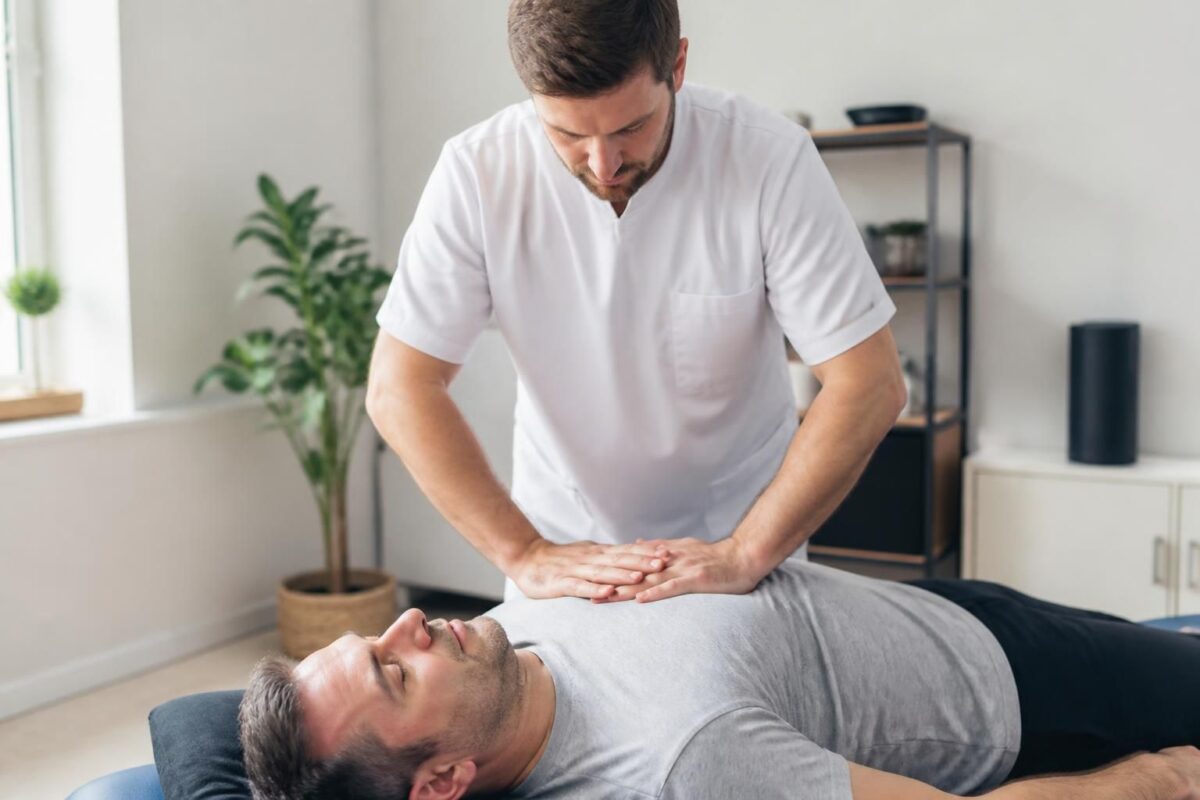
In short |
| In short, Osteopathy To relieve the Chest pain is a gentle manual approach that aims to restore balance and mobility Chest structures (thoracic cage, diaphragm, ribs and intercostal muscles) to reduce tension and improve breathing. Its benefits include the reduction of Chest pain, improving the mobility of the rib cage and breath, and better stress management, all without medication or surgery. The operation Based on targeted and non-invasive techniques that release tension, restore circulation and support self-healing of the body. accessible to adults and people with stress-related chest pain, Osteopathy is a natural option to relieve, prevent and promote better daily comfort. |
This approach osteopathic offers a natural solution for Relieve chest pain. By working on the rib cage, ribs and chest spine, it improves the mobility and release the Muscle tensions At the origin of the discomfort.
It promotes better breathing and an posture more aligned, which can reduce pain and irritations related to stress and chest tension.
thanks to techniques such as engagement and the Soft tissue release, Osteopathy acts on the entire thorax to restore balance and improve general well-being.
For a personalized evaluation, consult an osteopath to identify the exact origin of the pain and determine the appropriate treatment.
Quick summary: theosteopathy acts on the rib cage, ribs and intercostal muscles to relieve the Chest pain, improve the mobility and the breathing, reduce the stress and promote a sleep more repairing. This approach is suitable for all ages and can complement other treatments to restore torso and upper body harmony.
How osteopathy acts on the chest
An osteopathic consultation examines the chest structure, thoracic vertebral joints, ribs and intercostal muscles. After the evaluation, the osteopath applies gentle techniques to reduce tension and restore natural movement. This approach can help reduce pain and improve chest cage mobility. Structural techniques And tissue mobilization helps to free blocked areas and restore better circulation of body fluids. For further clinical outcomes, see available resources, including on Clinical results proving the efficacy of osteopathy.
Improved mobility and posture
Osteopathy aims to restore the balance between the bones, muscles and ligaments of the chest. Better mobility of the ribs and chest joints allows more fluid breathing and more aligned posture. This can reduce tensions that radiate to the back and shoulders. To understand the impact on Muscle flexibility, consult the dedicated resources, in particular How osteopathy promotes better muscle flexibility.
Impact on breathing and chest comfort
Chest tensions can limit lung expansion. Osteopathy acts on the diaphragm, ribs and muscles around the chest. This facilitates more complete and less tiring breathing. Effective breathing supports overall comfort and can reduce pain associated with stubborn postures.
Stress and sleep management
The thorax is linked to the autonomic nervous system. By releasing tension, osteopathy can alleviate muscle stress and promote general relaxation. Increased relaxation can improve sleep quality and muscle recovery. To explore the links between osteopathy and stress, see The impact on sports performance.
When to consult for chest pain
Consult an osteopath when chest pain persists, is accompanied by a feeling of blockage, or limits breathing or mobility. Osteopathy can be useful in addition to medical follow-up and in the prevention of recurrences. For more specific cases of thoracic pathologies, prefer a medical assessment and discuss options with your doctor.
Safety, contraindications and limits
Like any manual approach, osteopathy is safe when practiced by a qualified professional. Some conditions require a prior medical assessment. In the presence of fractures, acute infections or serious pathologies, a doctor must be consulted before any manipulation. For details on limits and precautions, you can consult specialized resources on legal notice.
Osteopathic techniques and mechanisms of action
Osteopaths mainly use techniques structural, myotensive, and sometimes visceral to restore chest balance. These approaches aim to restore tissue mobility and improve circulation, which can support pain reduction and better respiratory function. Resources on mechanisms and results can be viewed through dedicated sites, including Clinical results and Pain related to bad postures.
Integration with other approaches
Osteopathy can be associated with other non-pharmacological approaches to support the chest and general well-being. A global assessment can help identify postural factors, respiratory habits and chronic tensions. For additional perspectives, see Resources on osteopathy and movement on Muscle flexibility and Sports performance.
Training and professional context: Practitioners may come from NUMSS, NAO, National University of Medical Sciences or National Academy of osteopathy. Professional associations like ACMA and the College of Canadian Osteopaths oversee practice and training.
For more information and studies, you can consult the following resources:
– talk about health
– Clinical results
– Pain related to bad postures
– Muscle flexibility
– Impact on sports performance
– Osteopathy – Principles and pathologies treated
training institutions in osteopathy (References allowed): Numss, NAO, National University of Medical Sciences, National Academy of Osteopathy.
Professional Associations (authorized references): ACMA, College of Canadian Osteopaths, College of Canadian Osteopaths.
TagMed Clinic and Associated Resources can be viewed via Tagmed Clinic.
For more information on natural and osteopathic approaches, see also dedicated resources and clinical reviews on authorized areas.
Medical Disclaimer: The information and advice provided on this site does not replace the health professional’s diagnosis or treatment. Please note that Dr. Sylvain Desforges osteopath is neither a doctor of medicine nor a doctor, and is not a specialist in a medical specialty as defined by the Collège des Médecins du Québec. Manual medicine, functional medicine and sports medicine as described on this site exclude any medical treatment or diagnosis made by a doctor or specialist doctor. Always consult your doctor for any medical questions. For more details, please read our full legal notice.
- release of tensions and fascias around the rib cage To restore mobility
- Mobilization of chest joints and vertebrae to increase amplitude
- Diaphragmatic release and respiratory muscles to facilitate inspiration and exhalation
- Postural rebalancing To reduce pressure on the spine and ribs
- Nervous system stimulation To reduce pain and stress
- pain reduction chest and referred pain
- Improved breathing and tissue oxygenation
- Increased mobility of the rib cage and upper back
- Posture and balance improved, recurrence prevention
- more restful sleep and stress reduction

This recommendation presents how osteopathy can help relieve Chest pain By acting on the mobility of the rib cage, ribs and diaphragm, while releasing the tensions that hinder breathing and posture. It highlights simple mechanisms and concrete gestures to improve your daily comfort, without medication, thanks to an approach that is generally adapted to everyone.
Why osteopathy can relieve chest pain
The pain located in the chest area can come from muscle tension, costal joint blockages or a mobility restriction of the thoracic spine. In osteopathy, the heart, lungs and thoracic muscles are considered as a whole, and we seek to return to the rib cage its natural mobility. A regained mobility promotes better ventilation and reduces the tensions that are transmitted even in the shoulders and upper back.
Common causes
The Chest pain of musculoskeletal origin can be linked to prolonged work posture, insufficient stretching or overload during physical activities. Tensions in the intercostal muscles or small restrictions of the Costa-vertebral joints can cause breathing pain or referred pain in the chest.
relief mechanisms
Osteopathic techniques target the mobility of the thoracic vertebrae, ribs and diaphragm, while releasing the fasciae surrounding the muscles and organs. By improving chest mobility and respiratory synchronization, osteopathy can decrease the feeling of pain and provide more fluid and deep breathing.

How osteopathy improves the quality of life of active people
In short In short, theosteopathy is a global approach that Optimizes mobility and the function of the body of ACTIVE PEOPLE, for a better quality of life. It helps prevent injury and reduce Musculoskeletal pain While promoting the Sports recovery.…

Osteopathy and sports recovery: prepare the body for lasting performance
In short In short, Osteopathy and Sports recovery is one Global manual approach that sustainably prepares the body for the effort by restoring mobility and circulation After the effort. It is a discipline that acts on the sinews, the joints,…
The mechanisms of action of osteopathy on the thorax
Osteopathic interventions aim to restore the functional balance of the thorax. By releasing local tensions, they facilitate better blood and lymph circulation, which promotes tissue nutrition and the reduction of minor inflammations associated with pain.
Work on the diaphragm and intercostal muscles improves coordination between lung volume and thoracic movement. This can result in a More effective breathing, a lower feeling of oppression and a reduction in muscle stress in the chest area.
Why Osteopathy Is Essential For Recovery People
In short In short, Osteopathy in convalescence is an approach manual and holistic which helps to accelerate the recovery by restoring The balance, the mobility and a good circulation fabrics. it contributes to Reduce the pain, support the Back to…

Osteopathic manipulations to strengthen post-traumatic muscles
In short In short, Osteopathic manipulations for Strengthen post-traumatic muscles constitute a gentle manual approach aimed at restoring the mobility, reduce the pain and facilitate the Functional rehabilitation After a injury. What is Is it? A series of precise gestures…
What to expect during an osteopathic session
During a first consultation, the osteopath assesses your posture, the mobility of the thoracic joints and ribs, as well as your breathing. The treatment is personalized and can combine gentle manipulations, mobilizations and soft tissue release techniques. Each session aims to promote self-healing of the body by reducing tension and improving thoracic mobility.
The results vary by individual, but many feel a gradual decrease in pain and more free breathing after a few sessions. Simple self-care tips, such as breathing exercises and relaxation postures, can be offered to prolong home effects.

Osteopathy and prevention of work-related musculoskeletal disorders
In short theosteopathy is one Manual approach that restores body balance and prevents MSD related to work. Its advantages: reduction of tension, improvement of mobility and prevention of chronic pain. She is preventive and healing, suitable for office and trades…

The benefits of osteopathy to treat muscle imbalances
In short theosteopathy is a manual approach to restore themuscle harmony and postural considering the body as a whole. Its main benefits include the reduction of aches and tensions, the improvement of the mobility and from the posture, and prevention…
When and how to adjust your daily life
To complete the benefits, adopt simple adjustments on a daily basis: ergonomic layout of your workstation, regular breaks to mobilize the spine and shoulders, and practice of adapted breathing techniques. Maintaining a balanced posture and practicing diaphragmatic breathing exercises can sustainably reduce chest tension and improve mobility.
In case of acute chest pain, severe oppression or associated symptoms (chest pain that extends to the arm, jaw or shoulder, unusual shortness of breath), it is imperative to consult a doctor or the service promptly emergency. Osteopathy remains a complementary and non-substitute approach for functional disorders.
| Axis | Profit |
|---|---|
| relief of Chest pain | Rapid reduction of muscle tension for lasting comfort. |
| Mobility thoracic enhanced | Increased range of movement of ribs and chest. |
| Diaphragm and breathing | Released diaphragm, better breathing and less breathlessness. |
| Posture and alignment | Correction of imbalances that compressing the rib cage and pain. |
| Intercostal tensions | Release of tension between the ribs for increased breathing comfort. |
| local traffic | Improved blood and lymph circulation promoting healing. |
| stress management | Reduced stress and relaxation that would modulate pain. |
| Prevention of recurrences | Regular maintenance to maintain balance and prevent chest irritation. |
| Adaptability | Personalized approach for adults and seniors with chest pain. |
Osteopathy and chronic leg pain: regaining an optimal quality of life
In short In short, Osteopathy is one Global manual approach aimed at reducing Chronic leg pain and improve the quality of life. What is it? Non-drug therapy using the hands to identify restrictions and treat lesional chains. How does it…
How osteopathy supports recovery after complex surgery
In short In short, Post-operative osteopathy is an approach fresh which supports the recovery After a Complex surgery. It helps to reduce the pain and the fatigue, improves the mobility and accelerates the healing thanks to a better vascularization and…
Testimonials on the benefits of osteopathy to relieve chest pain
Before my first session, the Chest pain made every breathing painful and limited my movements. After a few sessionsosteopathy Targeted, I noticed a clear reduction in pain and a better thoracic amplitude. My breathing has become freer and I feel less tense.
As a sportswoman, the tensions in the rib cage had impacted my performance. theosteopathy released these tensions and improved my posture, which reduced the pain and strengthened my performance.
As a parent, I appreciate that the sessions are sweet and effective for thorax and the ribs. I found a sleep more restorative and a breathing more fluid.
An elderly patient testifies that, after years of chest stiffness, theosteopathy restored the mobility and improved its quality of life.
For the prevention, regular consultation helps prevent chest blockages and maintain breathing free, while reducing pain.
Another testimony points out that the sessions focused on the thorax provide a lasting feeling of relaxation and of welfare, with a significant improvement in the mobility.
Dr Sylvain Desforges, expert in osteopathy, naturopathy and manual medicine, is the founding president of TagMed and the ACMA association. With a career dedicated to innovation in health care, he is dedicated to the management of Chronic spine pain and the integration of advanced technologies such as Motorized vertebral decompression, the laser and the Shockwave therapy. Its mission is to offer care evidence-based in order to optimize the health and well-being of its patients. Its approach combines scientific rigor and clinical pragmatism, in order to meet the real needs of patients suffering from chest pain and associated functional disorders.
In the field of chest pain, osteopathy considers the thorax as a living, interdependent system, where the tensions of the rib cage, ribs and thoracic vertebrae can alter breathing and cause localized or irradiated pain. Osteopathic work aims to restore the chest mobility, to release dysfunctions of the costal joints and to harmonize the diaphragmatic function. By rebalancing these elements, the osteopath can help relieve inconsistent pain, improve lung expansion and promote simple everyday gestures. It can also reduce muscle tension in the shoulder and neck that amplifies pain and contributes to less effective posture. However, it is important to distinguish pains of muscular origin from pains of cardiac or vascular origin; The osteopath performs a careful initial assessment and works in addition to the doctor when necessary.
In concrete terms, the techniques used include targeted manipulations of the chest spine and costal joints, myofascial releases to release intercostals and pectorals, as well as diaphragmatic and visceral approaches to improve diaphragm and chest. By mobilizing the thoracic segments, balancing muscle tension and improving circulation, osteopathy helps reduce painful episodes and restore more fluid breathing. The effects go beyond immediate relief: better posture, reduced headache associated with cervical tension and increased endurance during daily activities. Osteopathic work can also alleviate pain from professional or sports overuses, when repetitive gestures and static postures cause imbalances in the rib cage.
This approach is integrated into a practice focused on evidence and safety, where each session begins with a thorough evaluation and a personalized treatment plan. Dr. Desforges favors gentle and non-invasive techniques, adapted to the age and lifestyle of each patient, while coordinating with other health professionals when necessary. The objective is not only to soothe pain, but also to improve coordination between the nervous, musculoskeletal and pulmonary system, and to promote sustainable recovery. In addition, the progressive introduction of recommended exercises and postural advice allows the patient to maintain the gains obtained between the sessions and to prevent recurrences. For those who suffer from chest pain related to stress, anxiety or daily tension, the osteopathic approach offers a gentle path to freer breathing and better quality of life.
As a founder and committed practitioner, Dr. Desforges illustrates how osteopathy can act as a pillar to relieve chest pain. By bringing together clinical expertise, attentive listening and complementary technologies, it offers a complete solution that targets the cause of pain rather than their symptoms. Patients appreciate not only lasting relief, but also reassurance: being able to breathe more easily, adopt a balanced posture and regain energy on a daily basis. His work shows that osteopathy is much more than a one-time care: it is a holistic approach that supports overall well-being, stress management and emotional balance through action on the body as a whole. To discover its approach and the services offered by the TagMed Clinic, contact and organize an assessment adapted to your needs.
This article presents how Osteopathy can effectively relieve Chest pain By acting on the mobility of thoracic structures, breathing and relaxation of tensions, while promoting overall well-being thanks to a holistic and non-invasive approach.
The Chest pain can find a multifactorial origin, often linked to muscular tension, a vaulted posture or a little mobilized diaphragm. Osteopathy aims to identify these dysfunctions and to restore a chest mobility harmonious, which releases the ribs and intercostal muscles and improves the breathing.
The techniques used — joint manipulations, myofascial releases and gentle visceral approaches — allow tensions around the chest and diaphragm to be released, promoting freer and less painful breathing. This direct action on respiratory mechanics can also optimize circulation and contribute to reducing pain sensations linked to muscle blockages. To understand the links between osteopathy and blood circulation, you can check out this useful link: Losteopathy and blood circulation.
Beyond the purely mechanical impact, osteopathy acts on the posture and the overall balance of the body. By rebalancing tension and improving the synchronization of muscle chains around the chest cage, it can reduce loads on chest structures and limit recurrent pain. To deepen the importance of posture, see: Osteopathy to improve posture and balance.
The benefits are not limited to the body: reducing stress and improving sleep are frequently reported effects, thanks to muscle relaxation and activation of relaxation mechanisms. Resources dedicated to the benefits of osteopathy and its impact on general well-being can shed more light on you: Benefits of Osteopathy.
Finally, osteopathy can be adapted to different profiles and situations, with personalized techniques to optimize thoracic mobility while respecting the contraindications. To understand the populations that can benefit from it and the associated precautions, see: Osteopathy: effectiveness and benefits.
In addition, specialized resources on the relief of joint and chest pain offer practical perspectives and concrete examples of non-drug approaches: Relieve joint pain without medication thanks to osteopathy, and Osteopathy to relieve persistent knee pain.

Dr Sylvain Desforges, B.Sc., D.O., N.D., osteopath, is the founding president of TAGMED and of the ACMA association. He dedicates his practice to chronic spinal pain, low back pain and symptoms compatible with sciatica, particularly when pain radiates toward the buttock, leg, calf, foot or toes.
Through SOS Sciatique, he publishes educational content on sciatica symptoms, possible causes such as disc herniation, disc narrowing, foraminal stenosis or irritation of a lumbar nerve root, as well as non-surgical approaches that may be considered according to the evaluation. At Clinique TAGMED, care may include, depending on the case, motorized neurovertebral decompression, specific osteopathic care or precision percussion.
For an evaluation related to sciatica treatment in Montreal / Mount Royal or sciatica treatment in Terrebonne, please consult the services available at Clinique TAGMED.
Medical disclaimer
The information published on SOS Sciatique is provided for educational purposes only and does not replace a consultation, diagnosis, opinion or treatment provided by a physician or another authorized healthcare professional. The author of this article is neither a medical doctor nor a specialist in a medical specialty recognized by the Collège des médecins du Québec. The osteopathic, manual medicine or functional support approaches described on this site do not constitute medical acts and are not intended to replace medical follow-up.
Consult a physician or emergency service in cases of loss of bladder or bowel control, anesthesia in the saddle area, significant or progressive weakness in the leg or foot, fever, recent trauma, severe pain or rapid worsening of symptoms. For more details, please read our Legal Notice.