Osteopathy to relieve persistent knee pain
27/06/2026
Osteopathy and sports pain: preventing and treating effectively
27/06/2026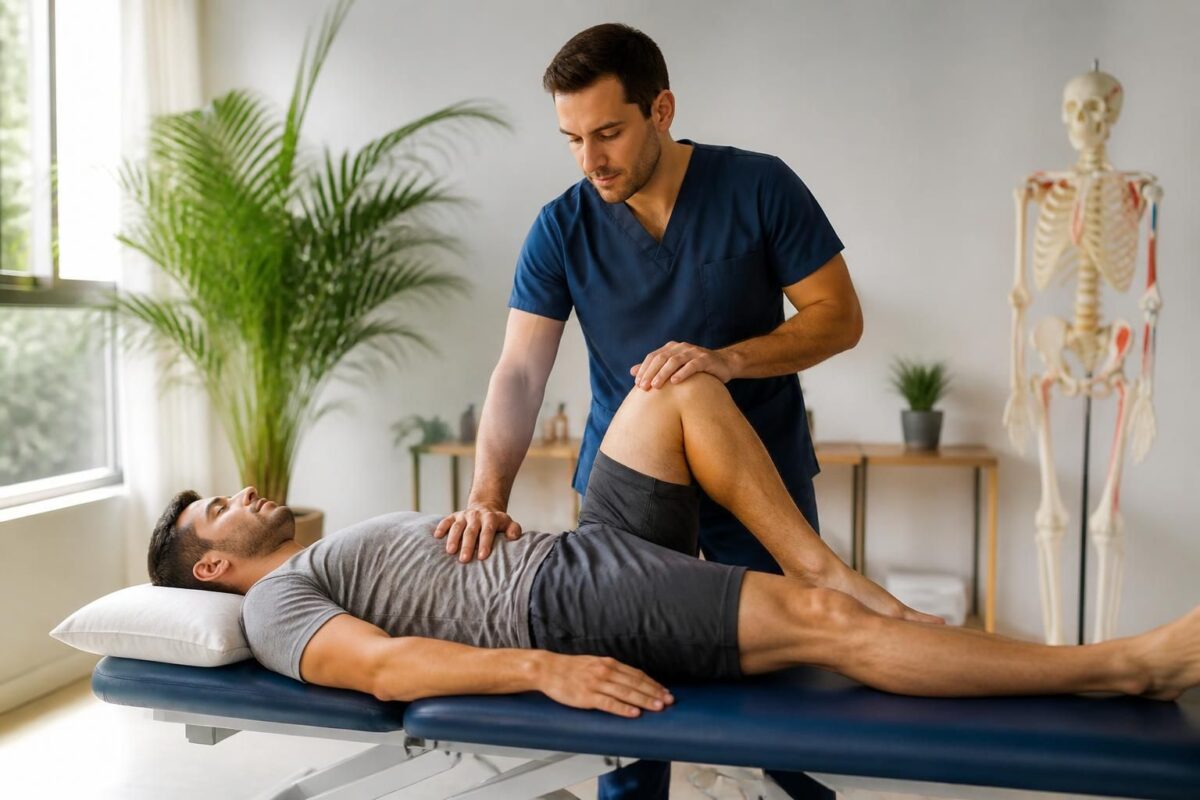
In short In short, theosteopathy To promote the Muscle flexibility is an approach holistic which acts on the sinews, the fascias and the joints To restore therange of motion and reduce tensions. Its main advantages include theImproving mobility, the Reduction of pain and stiffness, a best posture and the Prevention of recurrences, as well as a Strengthening neuromuscular coordination. Operation is based on a Overall assessment and the use of Soft manual techniques To release tensions, optimize theinnervation and the vascularization, and suggest exercisesSelf-support. accessible to Montreal, this service is particularly beneficial for Sedentary workers and the sportsman wishing to maintain their mobility and prevent stiffness. |
With Osteopathy, the Muscle flexibility improves by working on tensions and Tissue mobility. thanks to techniques sweet and targeted, the osteopath releases the fascias, restore the Joint mobility and balances the posture, key factors for better muscle elasticity. The improvement of the circulation and theinnervation Helps muscles relax and stretch more freely. Each session is adapted to the patient and aims to prevent future tensions by correcting the root causes of dysfunctions.
Quick Summary: Osteopathy Acts on muscles, fascias and joints to improve muscle flexibility. By releasing tensions, restoring alignment and regulating tone, it promotes better amplitude in movements and more effective recovery on a daily basis.
Understanding muscle flexibility
muscle flexibility is defined by the ability of muscles and connective tissues to lengthen and let the joints move freely. It depends on the elasticity of the muscles, the flexibility of the fascias and the integrity of the joints. A Optimized flexibility Allows for larger gestures, better posture and less chronic tension.
the osteopathic mechanisms that support it
Osteopathy acts on several levels. It aims to release tensions in the soft tissues (muscles, tendons, fascias), to improve the Joint mobility and promote a bloodstream and more effective lymphatic. This approach can help restore neuromuscular coordination, which helps to receive fewer muscle strains and increase flexibility during movements.
Relevant osteopathic techniques
The techniques used are intended to release the points of tension and to stretch the muscle chains in a gentle and effective way. work on fascias Allows you to reduce adhesions between muscle planes and restore normal muscle length. The use of gentle manipulations and targeted mobilizations helps to release joint blockages that restrict Amplitude movements and promote better coordination Neuromuscular.
Impact on performance and daily life
A Muscle flexibility Improved results in better posture, reduced tension and faster recovery after exercise. This approach can also prevent muscle fatigue and improve sleep quality. Osteopathy offers a global perspective, which takes into account the interactions between the musculoskeletal system, the diaphragm, respiration and the nervous system.
Integration and good practices
Practitioners trained in establishments recognized by the training standards in osteopathy (e.g. Numss, NAO, National University of Medical Sciences, National Academy of Osteopathy) provide support based on individual evaluation. Regular sessions, coupled with lifestyle advice and an appropriate activity, can help maintain or improve sustainably muscle flexibility.
Comparative Table of Approaches (General Information)
| Therapy | role in flexibility | Briefing |
|---|---|---|
| osteopathy | Releases tension, improves tissue and joint mobility, optimizes neuromuscular coordination. | Manual techniques targeted on fascia and muscles. global and non-invasive approach. |
| Physiotherapy | Muscle strengthening and targeted joint mobility. | sometimes avoids a more holistic approach. Effectiveness may vary depending on the case. |
| Physiotherapy (rehabilitation) | Muscle balance and endurance, functional programs. | Good complementarity with osteopathy depending on the objective. |
Additional references and resources
To learn more, check out these resources:
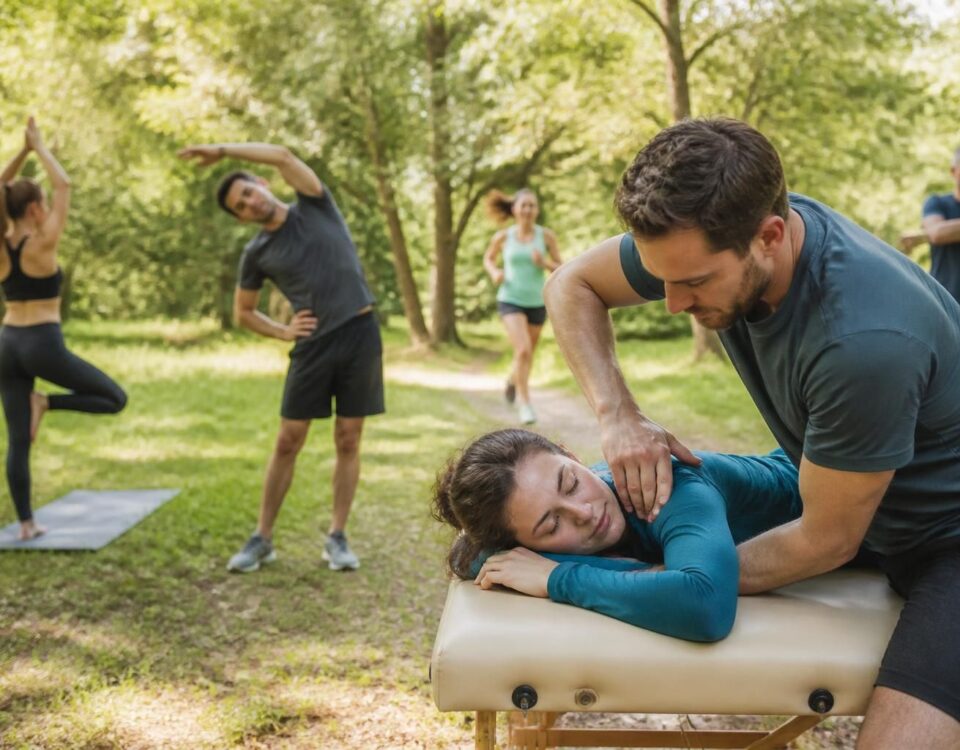
Osteopathy and sport,
Sport osteopathy and muscle recovery,
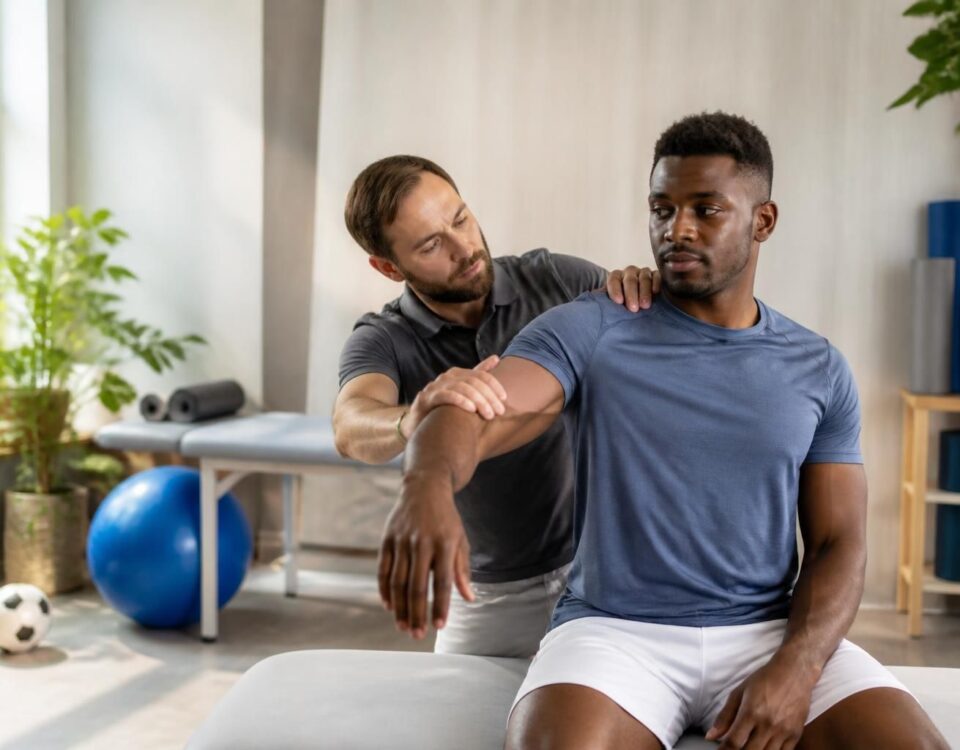
The Benefits of Osteopathy to Prevent Injuries,
Reduce muscle tension with osteopathy,
Osteopathy and stimulation of muscle regeneration,
Osteopathy, a natural alternative,
Osteopathy to relieve persistent knee pain,
Osteopathy and arthritis,
Musculoskeletal disorders and osteopathy,
Recovery after osteopathy session.
- Overall assessment To identify areas of tension that limit flexibility.
- release of tensions by targeted manual techniques.
- Mobilizations and stretching progressive to increase amplitude.
- Reduction of neuromuscular stresses and enhancement of tone.
- Improved traffic To optimize tissue oxygenation.
- Functional rehabilitation With exercises adapted to maintain flexibility.
- Postural education and daily ergonomic gestures.
- Progress plan to avoid overload and recurrence.
- Multidisciplinary collaboration to optimize the results.
- Prevention and maintenance through regular maintenance sessions.

This recommendation presents how theosteopathy can promote a Better muscle flexibility By acting on muscles, fascias and joints in a global and personalized approach. We describe the mechanisms, techniques used, practical advice and integration into everyday life to optimize elasticity and mobility without resorting to invasive treatments.
Understanding muscle flexibility and the role of osteopathy
The Muscle flexibility is not limited to the amplitude of the movements. It depends on the elasticity of the tissues, the flexibility of the fascias and the balance of the muscle chains. Osteopathy approaches the body as a whole, where posture, breathing and functioning of the organs directly influence mobility. By working on the root causes of tensions, it aims to restore a Optimal joint amplitude and an freedom of movement sustainable.

How osteopathy improves the quality of life of active people
In short In short, theosteopathy is a global approach that Optimizes mobility and the function of the body of ACTIVE PEOPLE, for a better quality of life. It helps prevent injury and reduce Musculoskeletal pain While promoting the Sports recovery.…

Osteopathy and sports recovery: prepare the body for lasting performance
In short In short, Osteopathy and Sports recovery is one Global manual approach that sustainably prepares the body for the effort by restoring mobility and circulation After the effort. It is a discipline that acts on the sinews, the joints,…
Mechanisms by which osteopathy improves flexibility
Through global analyses, the osteopath identifies the sources of stiffness and restriction in order to provide appropriate responses. of Soft manual techniques Target the release of tension in the muscles and connective tissue, facilitating natural stretching without forcing structures. The rebalancing of Postural chains And the correction of joint imbalances allow better synchronization of movements, reducing reflex tensions and compensations that limit flexibility.
The vascularization local and muscle innervation are optimized, which improves oxygen and nutrient intake and promotes recovery after exercise. the regulation of autonomic nervous system Also helps reduce stress and fatigue tensions, two factors frequently involved in chronic stiffness.
By working simultaneously on muscles, fascias, joints and respiration mechanisms, osteopathy frees up functional limitations and promotes Movement reintegration in daily and sports activities.
Techniques used to promote flexibility
Approaches include Myofascial releases targeted to dissolve adhesions and restore the elasticity of fascias, as well as Active and passive stretching progressive to regain confidence in the range of motion. of Soft joint mobilizations and postural control techniques support neuromuscular coordination, while breathing exercises facilitate nerve impulses and local relaxation.
The work is personalized and respects the body’s healing process. The practitioner chooses techniques that balance tensions and reduce stresses that limit flexibility, without causing excessive pain or damage.
Role of education and self-care
Between the sessions, self-stretching and micro-climbing advice makes it possible to maintain and improve the flexibility. Good hydration, work-friendly posture and regular breaks promote sustainable mobility. The osteopath can also offer simple exercises to integrate into everyday life to perpetuate the gains obtained during the sessions.
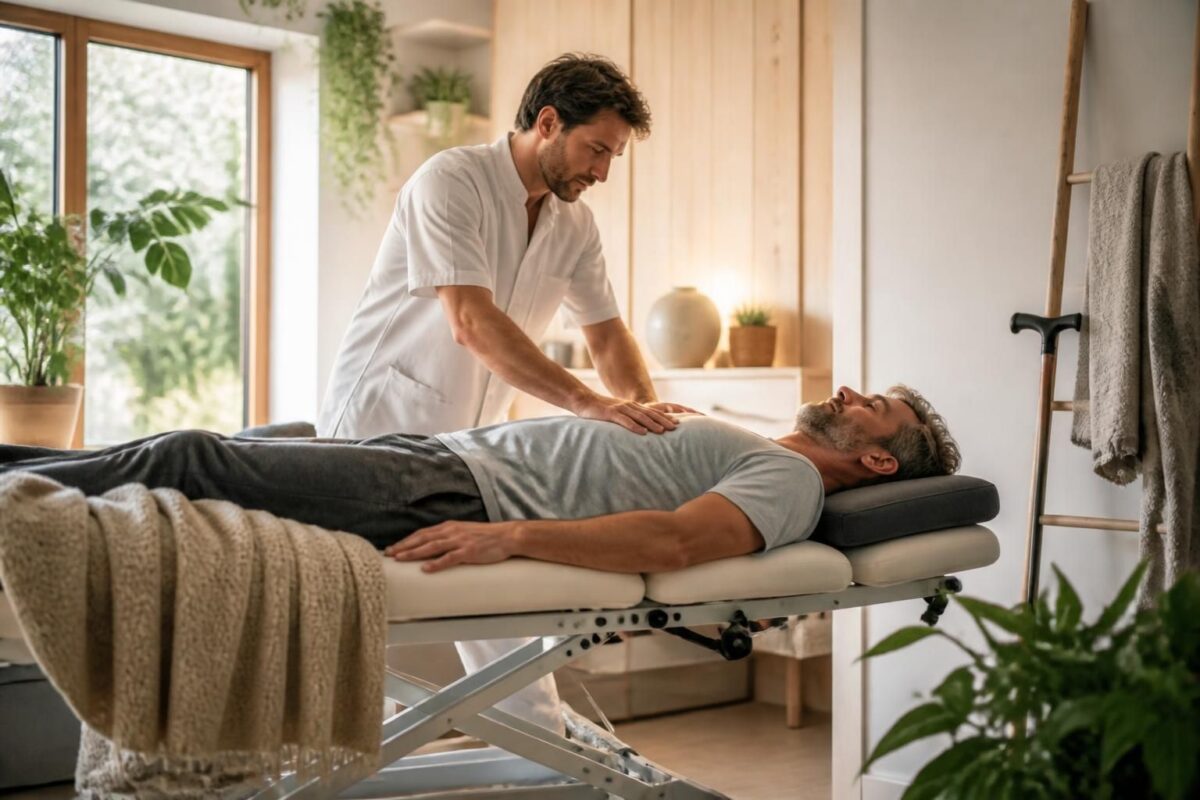
Why Osteopathy Is Essential For Recovery People
In short In short, Osteopathy in convalescence is an approach manual and holistic which helps to accelerate the recovery by restoring The balance, the mobility and a good circulation fabrics. it contributes to Reduce the pain, support the Back to…

Osteopathic manipulations to strengthen post-traumatic muscles
In short In short, Osteopathic manipulations for Strengthen post-traumatic muscles constitute a gentle manual approach aimed at restoring the mobility, reduce the pain and facilitate the Functional rehabilitation After a injury. What is Is it? A series of precise gestures…
Integration into everyday life and progress
To optimize the results, the osteopathic approach combines targeted sessions with an adapted personal routine. Progressive progression, regular checks and attention to recovery and sleep contribute to maintaining a Improved mobility and prevent recurrences of stiffness.

Osteopathy and prevention of work-related musculoskeletal disorders
In short theosteopathy is one Manual approach that restores body balance and prevents MSD related to work. Its advantages: reduction of tension, improvement of mobility and prevention of chronic pain. She is preventive and healing, suitable for office and trades…

The benefits of osteopathy to treat muscle imbalances
In short theosteopathy is a manual approach to restore themuscle harmony and postural considering the body as a whole. Its main benefits include the reduction of aches and tensions, the improvement of the mobility and from the posture, and prevention…
When to consult to improve flexibility
If you feel a Persistent stiffness, difficulties in starting your movements or tensions that limit your activities, an osteopathic consultation can help identify the root causes and propose a personalized plan to restore a Functional flexibility and sustainable.
| Axis of action | Impact on flexibility |
|---|---|
| Global and postural assessment | mark the imbalances and adjusts the posture To free the mobility articular. |
| Gentle joint manipulations | release the Joint amplitudes and reduce the freezing To win in flexibility. |
| Soft tissue release (Myofascial | dissolved strain and adherence To improve theMuscle elasticity. |
| Stretching and mobilization guided | accompany theelongation controlled and durable of the musculoskeletal chain. |
| Circulation and drainage | promote better Tissue nutrition and recovery, facilitating the flexibility. |
| Neuromuscular rebalancing | Affine the Engine control and the coordination For smoother mobility. |
| Breathing and diaphragm | promotes the relaxation and releases the tensions linked to the breathing, increasing the chest mobility. |
| Lifestyle and progressive activity | maintains gains by Regular exercises and an Adapted activity. |
| Personalized follow-up and prevention | maintains gains and avoids recurrences thanks to a Personalized follow-up and at the prevention. |
Since my first sessions, I have noticed a marked improvement in my flexibility And a reduction in the tensions that limited my movements on a daily basis. The gentle and targeted manipulations made it possible to gradually relax my muscles, which facilitated my stretching and my daily activities.
As an amateur sportsman, I often felt tension after exercise. thanks to the osteopathic approach focused on mobility Overall, my joints unfold more freely and my workouts continue without pain, with a feeling of fluidity regained.
The techniques used favored the relaxation of muscle chains and fascias, which restored theamplitude of my movements and increased the flexibility of my muscles. I notice less resilience and stiffness after the intense sessions.
After a few appointments, the pain associated with muscle tension decreased and my flexibility stabilizes over the long term. It helps me maintain better posture without conscious effort and avoid compensation that can occur with fatigue.
Osteopathic follow-up also helps me prevent injuries linked to repetitive daily actions. My mobility overall improves sustainably and I find a natural ease in the movements that were previously painful.
Dr. Sylvain Desforges, osteopath, naturopath and doctor Manuel, is the founding president of TagMed and heads the ACMA association. With a career dedicated to health care innovation, he specializes in the management of Chronic pain and in the integration of advanced technologies such as spinal decompression, laser and shock wave therapy. Its mission is to offer care evidence-based In order to optimize the health and the welfare of his patients. His approach is particularly aimed at strengthening the Muscle flexibility, by restoring the overall balance of the body.
For him, theosteopathy is not a simple relief technique; It’s a step holistic who is interested in how the structures of the body interact. By evaluating the posture, joint mobility and tissue tension, it identifies musculo-fascial chains and imbalances that limit the freedom of movement. The role of fascias And soft tissue is central: when these networks become rigid or irritated, they limit muscle extension and contraction. The objective is therefore to restore a flexible and coordinated tissue dynamics, the key to the flexibility sustainable.
The techniques used by Dr. Desforges combine approaches manuals and functional methods. The Myofascial relaxation, the Tissue release techniques, the Joint mobilizations and the Targeted stretches are used to shorten tension chains, improve local vascularization and promote better muscle innervation. In addition, advice from Diaphragmatic breathing and posture help lower vascularized and nervous tone, allowing the muscle to stretch and relax more naturally. This synergy contributes to increasing the mobility and prevent future restrictions.
The process is personalized and progressive. During the first consultation, the osteopath establishes a plan of action focused on patient needs and daily or sports activities that influence the flexibility. Subsequent sessions aim to rebalance the muscle chains, improve tissue elasticity and strengthen neuromuscular coordination. Patient education occupies a central place: self-stretching exercises, warm-up strategies and appropriate lifestyles are proposed to maintain mobility gains between sessions. This approach allows not only to increase the range of motion, but also to reduce the risk of recurrence.
In practice, osteopathy is a natural and effective solution to optimize the Muscle flexibility. By treating the structural causes and promoting a global physiological balance, it prepares the body to stretch and move with greater ease in everyday life and in physical exertion. Respect for natural healing mechanisms and personalized support make osteopathy a precious way to sustainably improve the mobility and quality of life of the people concerned.
This article shows that theosteopathy can promote a Muscle flexibility sustainable by acting on myofascial chains, joints and the neuromuscular system. By combining gentle manipulation, targeted stretching and active life advice, it aims to correct imbalances, improve amplitude of movement and prevent recurrences. To deepen these notions, you can consult specialized resources such as the article on osteopathy and fibromyalgia or the one on spine pain.
in an approach holistic, theosteopathy Acts on the Joint mobility and the Muscle flexibility by releasing fascia-ligament tensions and optimizing neuromuscular coordination. Manual techniques, such as work on soft tissue and relaxation, aim to restore functional continuity between muscles, tendons and fascias, thus facilitating smoother and less constrained movements. To understand how this approach can be applied concretely to the spine and the rest of the body, see in particular the highlights in the resources dedicated to the spine and fibromyalgia.
The therapeutic process emphasizes the relationship between posture, breathing and movement. By rebalancing the motor patterns and softening the associated muscle chains, osteopathy contributes to a Lasting improvement in muscle flexibility and better efficiency of daily and sporting movements. Professional sources describe how osteopathy can affect the Muscle flexibility and performance, in connection with bodybuilding and overall training.
For athletes as well as for people working in prolonged sitting, associated approaches can amplify the results: regular mobility exercises, appropriate stretching and appropriate effort volume management. Specialized articles and resources detail how osteopathy can support mobility and flexibility As part of a training program, and how it can help treat tendonitis and exercise-related muscle tension. You can consult sources such as the guides on the importance of osteopathy for muscles and mobility, in order to enrich your approach.
Finally, the rise of clinical research and returns confirms that theosteopathy offers an effective approach to improving the Muscle flexibility without systematically using invasive treatments. For those who are considering global management of their mobility, this discipline can be an important lever, supported by concrete resources and examples available online. To learn more, check out the resources that explore the link between osteopathy, flexibility and training, including articles dedicated to mobility and performance.
To learn more about specific aspects, you can consult the following resources: How osteopathy promotes better muscle flexibility, Osteopathy to relieve spinal pain, and Osteopathy and muscle pain. You will find additional explanations on the mechanisms and benefits of osteopathy for the Muscle flexibility.
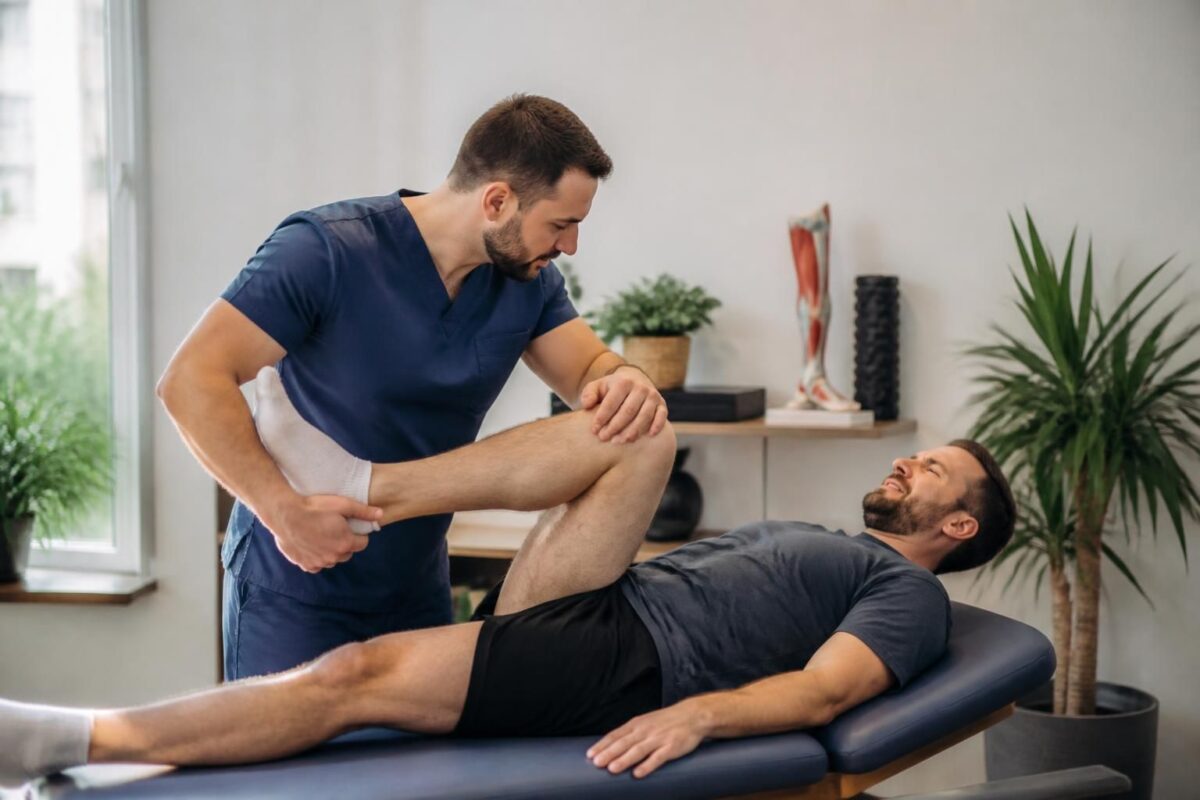
Osteopathy and chronic leg pain: regaining an optimal quality of life
In short In short, Osteopathy is one Global manual approach aimed at reducing Chronic leg pain and improve the quality of life. What is it? Non-drug therapy using the hands to identify restrictions and treat lesional chains. How does it…
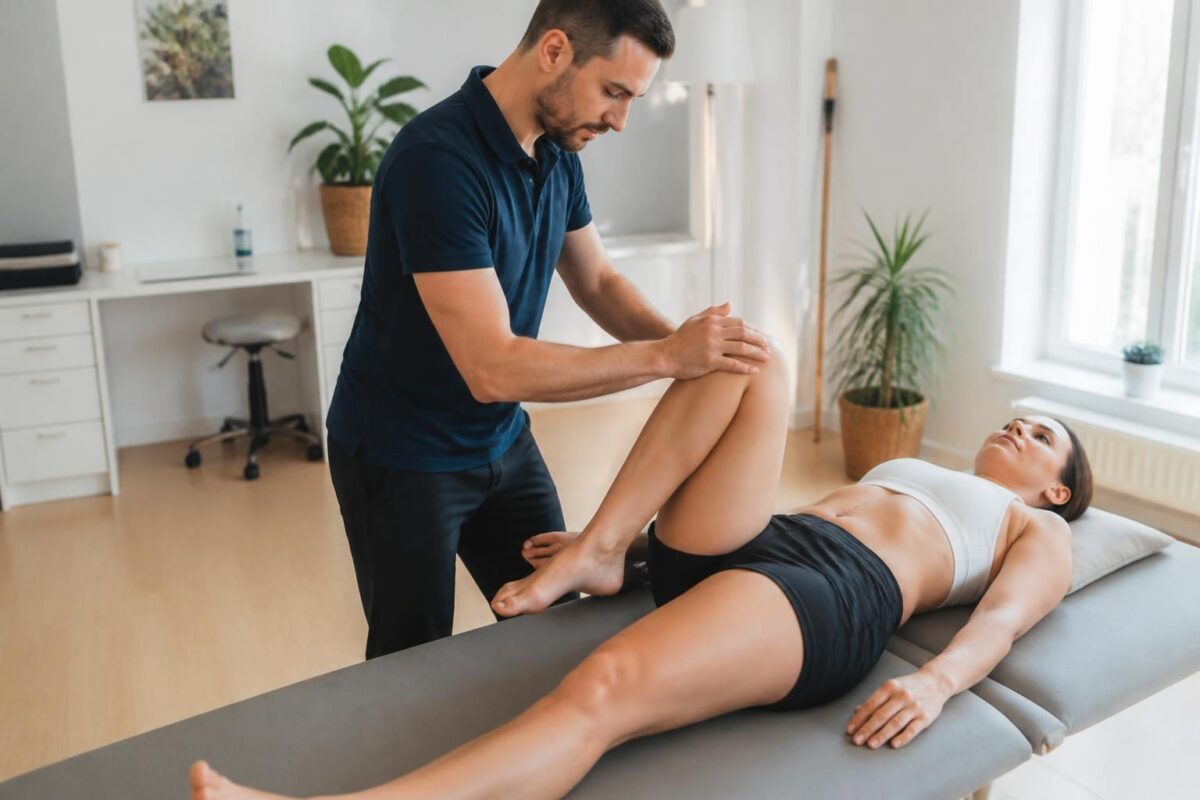
How osteopathy supports recovery after complex surgery
In short In short, Post-operative osteopathy is an approach fresh which supports the recovery After a Complex surgery. It helps to reduce the pain and the fatigue, improves the mobility and accelerates the healing thanks to a better vascularization and…

Dr Sylvain Desforges, B.Sc., D.O., N.D., osteopath, is the founding president of TAGMED and of the ACMA association. He dedicates his practice to chronic spinal pain, low back pain and symptoms compatible with sciatica, particularly when pain radiates toward the buttock, leg, calf, foot or toes.
Through SOS Sciatique, he publishes educational content on sciatica symptoms, possible causes such as disc herniation, disc narrowing, foraminal stenosis or irritation of a lumbar nerve root, as well as non-surgical approaches that may be considered according to the evaluation. At Clinique TAGMED, care may include, depending on the case, motorized neurovertebral decompression, specific osteopathic care or precision percussion.
For an evaluation related to sciatica treatment in Montreal / Mount Royal or sciatica treatment in Terrebonne, please consult the services available at Clinique TAGMED.
Medical disclaimer
The information published on SOS Sciatique is provided for educational purposes only and does not replace a consultation, diagnosis, opinion or treatment provided by a physician or another authorized healthcare professional. The author of this article is neither a medical doctor nor a specialist in a medical specialty recognized by the Collège des médecins du Québec. The osteopathic, manual medicine or functional support approaches described on this site do not constitute medical acts and are not intended to replace medical follow-up.
Consult a physician or emergency service in cases of loss of bladder or bowel control, anesthesia in the saddle area, significant or progressive weakness in the leg or foot, fever, recent trauma, severe pain or rapid worsening of symptoms. For more details, please read our Legal Notice.