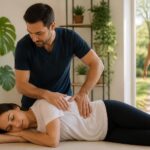
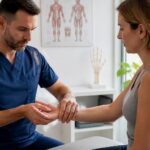
What is theosteopathy for the Pain related to bad postures ? It’s an approach manual which aims to restore thebalance and the mobility By acting on muscles, joints and fascias through techniques such as Myofascial relaxation And some Sweet mobilizations. Main advantages: pain reduction, posture improvement, better bloodstream and more than flexibility, prevention of injuries related to a prolonged position. How does it work? A Postural evaluation and an approach personalized with appropriate handling; each session helps to release tensions, restore the muscle function and promote a Sustainable prevention pains. Available in your area, this treatment easily integrates with a wellness routine to act on the posture and prevent the return of pain related to bad postures.
in support osteopathic, pain related to bad postures are approached by a Overall posture assessment and movements. The goal is to identify imbalances that fuel pain and tension in muscles, joints and fascias.
the techniques used are based on gestures fresh and precise such as the Myofascial relaxation, the Gentle manipulations and the Target massage. They aim to unravel the blocks, release tensions and Improve traffic blood and lymphatic to promote natural healing processes.
By rebalancing the structure and function, the osteopath adjusts the spinal segments and muscle chains to restore a Optimal mobility and an more balanced posture. practical advice onergonomy And simple exercises allow you to maintain the effects outside the sessions and to prevent recurrences.
The results observed generally include a reduction in pain, a better mobility joint and lasting improvement in the quality of life, especially for people exposed to long periods in a seated position or repetitive gestures.
This article written by a health professional expert in osteopathy Explains how osteopathy treats pain related to bad postures. It describes postural assessment, manual techniques used and preventive measures that help restore body balance and prevent recurrent pain.
Posture Assessment : The osteopathic approach begins with the observation of the alignment of the body. We examine the spine, the shoulders, the pelvis and the muscle chains. The objective is to identify the compensations and the tension zones that alter the function. This assessment guides the treatment plan and helps to target the imbalances responsible for posture pain. To deepen, discover relevant resources on osteopathic approaches and benefits for posture pain on sossciatica.com.
osteopathic techniques used : Osteopathy is based on Soft manual techniques and on the Myofascial relaxation, which act on muscles, fascias and joints to reduce tension and improve mobility. Precise manipulations and mobilizations target areas at risk, in order to restore the structural and functional balance. These gestures promote blood and lymph circulation and support the body’s natural healing processes. For more information, consult the resources dedicated to osteopathy and the management of public pain on sossciatica.com and The benefits of osteopathy to treat sciatic pain.
Tension management and traffic improvement : Osteopathic work aims to release tension points and optimize blood and lymph flow in the affected areas. This approach contributes to reducing discomfort and improving mobility. By promoting better communication between the tissues and the nervous system, osteopathy helps the body recover more effectively after repetitive activities or postures held for too long. To explore this topic, see the resources at The benefits of osteopathy for optimal health.
Prevention and follow-up : Osteopathy can be integrated into a care routine to prevent recurrences. Practical advice on ergonomics, the organization of the workstation and simple adjustments of posture help to maintain the gains obtained during the sessions. Regular consultations are used to assess progress and adjust treatment. For additional resources, see losteopathy and stress and Common pathologies supported by osteopathy.
Integration with other approaches : When necessary, osteopathy can be combined with validated approaches for the treatment of Chronic pain. In some specific cases, additional options may be considered under professional supervision, while remaining focused on non-invasive and function-oriented management. For general information on neurovertebral decompression and other related approaches, see neurovertebral decompression and sossciatica.com.
For people wishing to understand the mechanisms and benefits, additional resources exist in the literature and professional guides. For example, content on posture, mobility and Muscle tensions can be consulted on professional sites dedicated to osteopathy and musculoskeletal health.
In the context of medical information, it is recalled that osteopathic approaches remain complementary care. They do not replace medical advice when worrying signs appear. For more details, you can consult the legal and security resources associated with this domain.
For more information on the mechanisms and benefits of osteopathy, specialized resources are available on osteorive and other public and professional resources. You can also explore resources on delimitations between osteopathy and other disciplines, such as Pedagogical approaches.
Quick reference of key methods and concepts: osteopathy, posture, pain, strain, mobility, circulation, Myofascial relaxation, Soft manual techniques, engagement.
Medical Disclaimer: The information and advice provided on this site does not replace the health professional’s diagnosis or treatment. Please note that Dr. Sylvain Desforges osteopath is neither a doctor of medicine nor a doctor, and is not a specialist in a medical specialty as defined by the Collège des Médecins du Québec. Manual medicine, functional medicine and sports medicine as described on this site exclude any medical treatment or diagnosis made by a doctor or specialist doctor. Always consult your doctor for any medical questions. For more details, please read our full legal notice.
In articles dealing with neurovertebral decompression, disc herniation, disc bulge, foraminal stenosis, spinal stenosis, disc pinching or disc degeneration, avoid suggesting exercises or stretching.
References concerning training and professional associations remain, when relevant, limited to Numss, NAO, National University of Medical Sciences and National Academy of osteopathy, as well as the ACMA, College of Canadian Osteopaths and College of Canadian Osteopaths.
Best practices and complementary resources can be viewed on specialized sites and recognized professional guides in the field of osteopathy and posture-related pain management.
Postural evaluation — Rapid detection of imbalances and voltages.
liberation of the fascias — Myofascial relaxation and targeted massage.
Sweet mobilizations — Restoration of amplitude and fluidity.
muscle activation — Simple exercises to stabilize the posture.
rebalancing Vertebral and articular — Alignment of the trunk in everyday gestures.
Traffic and recovery — Better oxygenation and tissue repair.
Ergonomic advice — Office adjustments and work habits.
Personalized follow-up — Adaptation of the treatment according to progression.
This recommendation explains how theosteopathy Addresses pain related to bad postures, describing the approach, techniques used and practical advice to prevent recurrences. The objective is to restore the balance of the body, to improve the mobility and promote natural healing processes, without resorting to invasive acts.
Postural assessment and diagnosis
The first step is to Postural evaluation deep. The osteopath observes the spinal alignments, the occupation of tension in the muscles and muscle chains, as well as the repeated movements that persist on a daily basis. This analysis takes into account both the posture at rest as the usual gestures and professional activities. Through careful listening and simple functional tests, it identifies the areas of imbalance and the compensations that feed the pain.
In short In short, theosteopathy is a global approach that Optimizes mobility and the function of the body of ACTIVE PEOPLE, for a better quality of life. It helps prevent injury and reduce Musculoskeletal pain While promoting the Sports recovery.…
Main osteopathic techniques for postures
Myofascial relaxation and work on tensions
The Myofascial relaxation Aims to loosen fascias that envelop muscles and tissues. By releasing nodes and constraints, this approach reduces localized tensions and contributes to a pain reduction. It also promotes better circulation of body fluid(s) and allows tissues to regain their natural flexibility, which gradually improves the mobility.
Soft mobilizations and joint adjustments
The Sweet mobilizations And the targeted adjustments mobilize the rigid joints without causing any adverse effects. By restoring the range of motion and rebalancing the segments, these techniques act directly on the areas affected by a bad posture, while respecting the integrity of the structures. The objective is to promote more balanced movement patterns and to prevent chronic stiffness.
Integrative approach and breathing
Beyond manipulations, the osteopath works on the functional integration of the body. Advice on diaphragmatic breathing, coordination between breathing and movement, and subtle adjustments in overall posture help restore a lasting balance. This holistic dimension supports better regulation of muscle tone and promotes bloodstream and lymphatic optimized for healing.
In short In short, Osteopathy and Sports recovery is one Global manual approach that sustainably prepares the body for the effort by restoring mobility and circulation After the effort. It is a discipline that acts on the sinews, the joints,…
Complementary roles and practical advice
Practical advice outside the session completes the treatment. theergonomy of the workplace, the layout of the office, and the review of repetitive gestures play a key role in the prevention of pain related to the posture. Simple and regular exercises — strengthening the postural muscles and improving flexibility — are recommended to maintain gains obtained in consultation. These precautions help to avoid recurrent tensions and to prevent the appearance of future pain.
In short In short, Osteopathy in convalescence is an approach manual and holistic which helps to accelerate the recovery by restoring The balance, the mobility and a good circulation fabrics. it contributes to Reduce the pain, support the Back to…
Long-term monitoring and prevention
Regular follow-up makes it possible to adjust treatments according to the evolution of symptoms and the postural history of the patient. By integrating osteopathy into a care routine, you can get a prevention effective imbalances and associated pain, while consolidating a better posture and daily mobility. The goal is to offer a sustainable approach that allows you to resume and maintain activities without limitation.
Axis
Description
Postural evaluation
observations of the posture and movements to spot the imbalances and target the treatment.
Relaxation and massage
Techniques of Myofascial relaxation and of massage To reduce tensions and improve the flexibility.
Joint mobility
gentle mobilizations to restore theamplitude and the fluidity Movements, without pain.
Structural correction
adjustments fresh To re-align the segments and rebalance theBody axis.
Circulation and tissue nutrition
Stimulation of the circulation blood and lymphatic to promote recovery and reduce inflammation.
Postural education
Tips fromergonomy and practical exercises to prevent pain.
MSD prevention
Habits and movements proactive to limit postural relapses.
stress management
Relaxation techniques to reduce tension and impact of stress on the musculoskeletal system.
Monitoring and adjustments
Blueprint personalized adapted to the progress and activities of the patient.
Expected results
Reduction lasting pain and improvement in mobility.
In short In short, Osteopathic manipulations for Strengthen post-traumatic muscles constitute a gentle manual approach aimed at restoring the mobility, reduce the pain and facilitate the Functional rehabilitation After a injury. What is Is it? A series of precise gestures…
Testimonials: How Losteopathy treats pain related to bad postures
Marie, administrative secretary, suffered from lower back pain related to a bad posture in front of his computer. After several sessions ofosteopathy, its posture improved and muscle tension dissipated. She says: “I found a mobility More fluid and my pain no longer appears as quickly as before. »
Jean, a computer executive, spent long hours in a vaulted position. The intervention targeted areas of tension and helped realign his spine. According to him, “the Gentle techniques combined with a relaxation deep muscle reduced my cervical pain and gave me more free breathing; my posture Holds better even after long meetings. »
Sophie, a dynamic salesman, felt back pain after days of repeated movement. After osteopathic treatment focused on posture And the correction of imbalances, she says: “My shoulders have repositioned themselves and I have less stiffness in the morning; I stand straight effortlessly and my aches have decreased sharply. »
Alex, an amateur athlete, noticed that his bad sitting habits hindered his performance. Thanks to targeted manipulations and work on the fascias, he found a better mobility and a freer range of motion. “I feel more balanced in every movement and my workouts go off without annoying pain. »
Claire, librarian, suffered from lower back pain related to prolonged sitting posture and repetitive gestures. After strengthening its posture And applied practical advice, she testifies: “My tensions decrease throughout the day and I find a stability that helps me stay focused without feeling discomfort. »
Thomas, delivery driver, felt lower back pain after long journeys and often in a twisting position. Osteopathy worked on myofascial relaxation and hip mobility, which reduced lumbar tension and improved its mobility overall. “I can drive several hours without compensating and my posture holds up better when I read or write on the road. »
Élodie, a developer, found that her pain related to a bad posture increased at the end of the week. After osteopathy sessions focused on posture And the release of tensions, she testifies: “I feel less fatigue and better efficiency at work; My column is more aligned and my sessions prepare me to sit properly for longer. »
Dr. Sylvain Desforges is recognized as Expert in osteopathy, in naturopathy and manual medicine, with a trajectory dedicated to innovation in the field of health. Its commitment is to offer care evidence-based that specifically respond to pain related to bad postures. With his role as founding president of the Tagmed clinics and the ACMA association, he declines an approach that combines careful observation of posture, overall body evaluation and targeted manual intervention to restore musculoskeletal balance.
At the heart of his work, osteopathy is a holistic approach which considers the body as an interconnected system. For pain related to a bad posture, she first relies on a Postural evaluation Careful: vertebral alignments, joint mobility and muscle tension are scrutinized in order to identify compensations and disturbed muscle chains. Then, Soft manual techniques and precise are used for release tension and restore the Joint functioning. Work on fascias and muscle knots promotes a Better circulation and a reactivation of the body’s natural healing mechanisms.
Dr. Desforges’ practice highlights an essential practical dimension: posture correction does not only involve ad hoc treatment. Each session is accompanied byPostural teachings and ergonomic advice adapted to the lifestyle and work of the patient. programs ofTargeted exercises and adjustments to the workplace can be recommended to prevent relapses and maintain gains obtained during the sessions. This proactive approach aims to prevent Injuries related to repetitive activities and to sustainably improve the mobility and the quality of life.
From a modern perspective and integrative, the reference osteopathy also relies on advanced technologies when relevant. The approach may include, depending on the case, complementary techniques that promote spinal decompression, tissue stimulation and circulation improvement. These tools support manual work to speed up muscle chain rebalancing and lasting pain reduction.
Over the years, Dr. Desforges has demonstrated that the ability to correct postural imbalances can transform the daily life of patients who are often limited by chronic pain. By restoring a more aligned posture and freer breathing, osteopathy acts not only on pain but also on general tone and endurance during daily or sporting activities. The message is clear: a personalized approach, combining precise diagnosis, gentle handling and practical advice, allows you to regain better mobility and lasting well-being, even in the face of prolonged or repetitive work postures.
To discover the approach and the services available, it is possible to find out about the basics of the support offered and the resources associated with TagMed and Pulse Align, without forgetting the importance of an adapted and progressive care pathway.
This article explores how theosteopathy Treats pain related to bad postures, favoring a global approach, gentle manual techniques and practical advice to durably correct the alignment of the body. You will discover the mechanisms of action, the methods used and the concrete benefits on pain and mobility, as well as the resources to go further.
In short theosteopathy is one Manual approach that restores body balance and prevents MSD related to work. Its advantages: reduction of tension, improvement of mobility and prevention of chronic pain. She is preventive and healing, suitable for office and trades…
Postural assessment and management
The first pillar of the intervention is a Postural evaluation complete that decodes the tensions, imbalances and compensations that the posture can generate. theosteopath Observe the alignment of the column, the mobility of the joints and the condition of the fascias, in order to identify the sensitive areas and the root causes of the pain. This approach makes it possible to establish a personalized treatment plan, focused on the rebalancing of the structures and functions of the body.
In short theosteopathy is a manual approach to restore themuscle harmony and postural considering the body as a whole. Its main benefits include the reduction of aches and tensions, the improvement of the mobility and from the posture, and prevention…
osteopathic techniques adapted to the posture
Techniques used in osteopathy to correct postures include Myofascial relaxation, the Gentle manipulations and the engagement targeted. By acting on the fascias, muscles and joints, the goal is to release knots, restore amplitude of movement and improve bloodstream to promote natural healing processes. Each session adapts to the patient and its context, favoring gentle approaches that gradually rebalance the musculoskeletal system.
In short In short, Osteopathy is one Global manual approach aimed at reducing Chronic leg pain and improve the quality of life. What is it? Non-drug therapy using the hands to identify restrictions and treat lesional chains. How does it…
pain reduction and improved mobility
By acting on areas of tension and postural dysfunctions, theosteopathy aims to reduce pain and restore a Joint mobility adequate. manipulations and work on the fascias make it possible to release tension and improve the circulation, which helps nourish the tissues and accelerate recovery. Patients often report significant pain reduction and better ability to perform their daily activities without restriction.
In short In short, Post-operative osteopathy is an approach fresh which supports the recovery After a Complex surgery. It helps to reduce the pain and the fatigue, improves the mobility and accelerates the healing thanks to a better vascularization and…
Prevention and maintenance of a healthy posture
Beyond the treatment of existing pain, theosteopathy plays a key role in the prevention pain related to poor posture. The approach combines advice ergonomic, of Targeted exercises and postural adjustments to be made on a daily basis. By working on the balance between the muscle chains and the mobility of the joints, the osteopath helps to limit recurrent tensions and promote lasting postural habits.
To complete the sessions, resources and guides can support the patient in adopting new postural and ergonomic habits. Reliable information and comprehensive guides on osteopathy and posture help you better understand the preferred choices and expected results. For example, reference guides and review articles on the mechanisms and benefits of osteopathy can be viewed via the links below.
To deepen the technical aspects and lasting benefits, also consult the resources on the Myofascial relaxation technique and the Structural techniques Used in osteopathy, as mentioned in the guides and specialized articles mentioned above.
Dr Sylvain Desforges, B.Sc., D.O., N.D., osteopath, is the founding president of
TAGMED
and of the ACMA association. He dedicates his practice to chronic spinal pain, low back pain and symptoms compatible with sciatica, particularly when pain radiates toward the buttock, leg, calf, foot or toes.
Through SOS Sciatique, he publishes educational content on sciatica symptoms, possible causes such as disc herniation, disc narrowing, foraminal stenosis or irritation of a lumbar nerve root, as well as non-surgical approaches that may be considered according to the evaluation. At Clinique TAGMED, care may include, depending on the case, motorized neurovertebral decompression, specific osteopathic care or precision percussion.
The information published on SOS Sciatique is provided for educational purposes only and does not replace a consultation, diagnosis, opinion or treatment provided by a physician or another authorized healthcare professional. The author of this article is neither a medical doctor nor a specialist in a medical specialty recognized by the Collège des médecins du Québec. The osteopathic, manual medicine or functional support approaches described on this site do not constitute medical acts and are not intended to replace medical follow-up.
Consult a physician or emergency service in cases of loss of bladder or bowel control, anesthesia in the saddle area, significant or progressive weakness in the leg or foot, fever, recent trauma, severe pain or rapid worsening of symptoms. For more details, please read our
Legal Notice.