

How Osteopathy Improves Localized Blood Circulation
27/06/2026
Osteopathic techniques to reduce joint inflammation
27/06/2026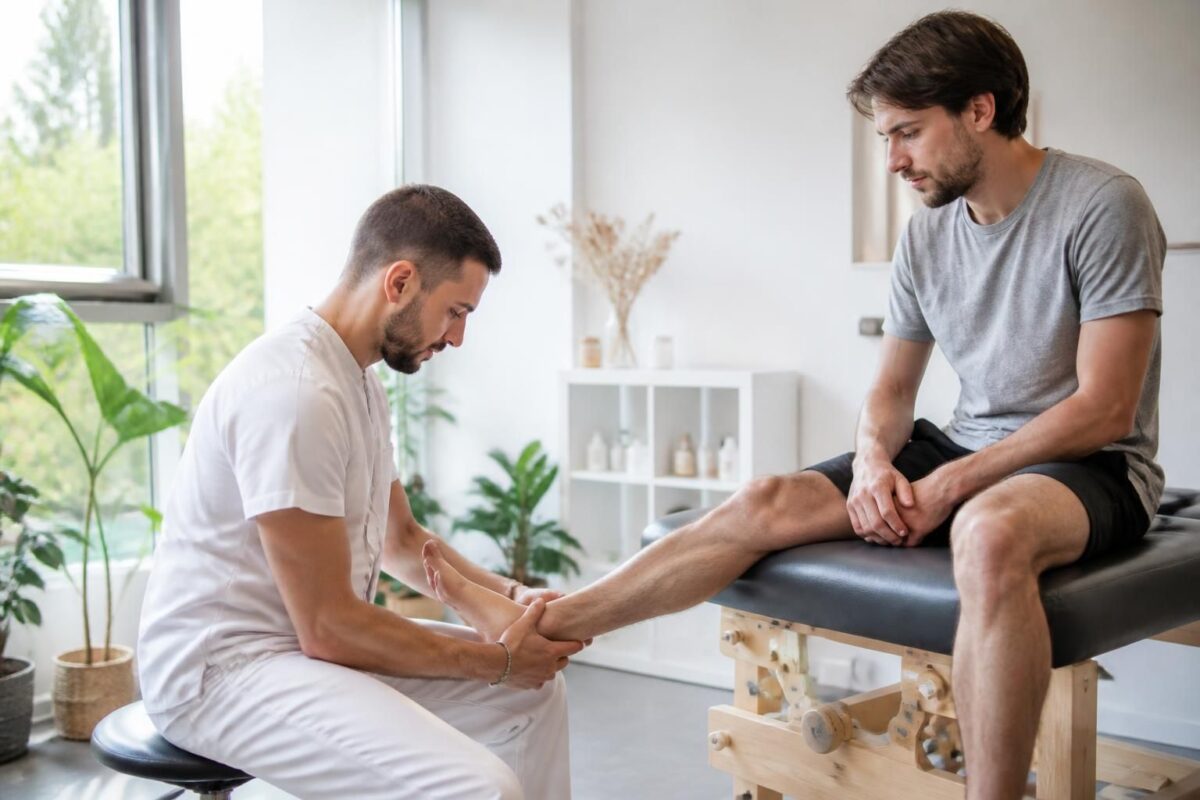
In short |
In short, theosteopathy is one Manual approach which aims to restore the mobility of the ankle and harmonize the fabrics around. For the ankle pain, it acts via Sweet mobilizations, the loosening of tissues and functional tips for moving painlessly. Its key assets include the pain reduction, LImproving mobility and the Prevention of recurrences, while stimulating the circulation and recovery. Its operation is based on a Overall assessment of the body and techniques targeted at the joints, muscles and ligaments, supplemented by Simple exercises to practice on a daily basis. In Montreal, this treatment is particularly suitable for sportsman and active people who want to resume their activities quickly and strengthen their ankle stability. |
osteopathy and pain ankle : find his mobility is done through an approach manual and global.
Ankle pain can come from a sprain, postural imbalances or tensions around the joint. By working on the soft tissues, the ligaments and neighboring joints, the osteopath can release tension, improve the circulation and restore therange of motion.
thanks to techniques of gentle mobilization and to a Assessment of the body as a whole, imbalances can be corrected and the proprioception reinforced. The result results in a pain reduction, a better flexibility and an Prevention of recurrences, facilitating the return to daily and sporting activity.
Quick Summary: Losteopathy offers targeted manual techniques to restore the mobility ankle, reduce pain and prevent recurrences. This approach considers the body as a bound system, where the ankle joint interacts with the hips, knees and back. The treatment aims to improve circulation, flexibility and stability, while giving the patient practical advice to prevent relapses and maintain mobility.
Understanding ankle pain
ankle pain can come fromsprains, postural imbalances, overuse or muscle tension around the joint. The osteopath evaluates not only the ankle, but also neighboring structures such as the knees, hips and lower back. This global approach makes it possible to identify the underlying causes and to adjust the treatment according to the patient, and not a single symptom.
Common factors include soft tissue dysfunction (muscles and ligaments), motion restrictions and postural compensations. Good ankle mobility is essential for walking, stability during sports activities and prevention of future injuries. Regular follow-up with an osteopath trained according to recognized standards (NUMSS, NAO, National University of Medical Sciences, National Academy of osteopathy) can help maintain body balance and prevent relapses.
How Osteopathy Helps Restore Mobility
Osteopathy uses techniques manuals varied to release tension around the ankle. Soft and targeted mobilization restores range of motion and improves local circulation. Working on soft tissues, such as muscles and ligaments around the joint, helps reduce inflammation and restore normal function.
In addition, the osteopath can offer simple and adapted exercises to support the stability and proprioception of the ankle. The objective is to improve coordination and perception of foot positioning in space, in order to prevent sprains and long-term imbalances. To deepen the benefits and current approaches, you can consult resources dedicated to osteopathy and ankle mobility.
To learn more about the benefits and mechanisms, see the following resources: The importance of regular osteopathy consultations, or Osteopathy and ankle pain – regain mobility.
The role of global assessment and prevention
The evaluation overall Takes into account the posture and the muscle chains that influence the ankle. Misalignment in the hips or back can change the function of the joint and promote pain. Correcting these imbalances helps to regain effective mobility and prevent future injuries.
Prevention goes through simple advice on posture, choice of shoes and muscle building around the ankle. Regular sessions with an osteopath make it possible to follow the evolution, to adjust the daily gestures and to adapt the rehabilitation exercises according to the patient’s needs. To learn more about the benefits of osteopathy in the prevention of sports pain, visit The advantages of osteopathy to treat recurrent athletic pain.
To deepen the overall aspect and methods used, theacma and other professional bodies oversee the practice and ethics of osteopathy in Canada. Trainings and repositories are available via NUMSS, NAO, National University of Medical Sciences and National Academy of Osteopathy.
Comparative table of approaches for the ankle
| Therapy | Main objective | Benefits | Limitations | Briefing |
|---|---|---|---|---|
| osteopathy | Restore mobility and overall ankle function | Joint mobilization, tissue relaxation, improved circulation | variable responses depending on the patient; Requires regular follow-up | Global patient-centric approach |
| Physiotherapy | Functional recovery and pain reduction | Structured program, reinforcement and proprioception | sometimes less focused on the globality of morphological chains | See dedicated comparative tables |
| Massage/Myofascial Techniques | Release of tensions and improved circulation | rapid reduction of local tensions | Temporary effect without major structural correction | Useful supplement to osteopathy |
Useful links and resources
To learn more about mechanisms and approaches, you can consult specialized resources at the following sites:
The importance of regular osteopathy consultations,
The advantages of osteopathy for sports pain,
Benefits for sciatic pain,
How osteopathy reduces stress-related tensions,
and Manual medicine and ankle pain – regain mobility.
For additional information on practices and associated technologies, see Tagmed Clinic. Other useful resources can be viewed via Recent innovations in osteopathy.
Medical Disclaimer: The information and advice provided on this site does not replace the health professional’s diagnosis or treatment. Please note that Dr. Sylvain Desforges osteopath is neither a doctor of medicine nor a doctor, and is not a specialist in a medical specialty as defined by the Collège des Médecins du Québec. Manual medicine, functional medicine and sports medicine as described on this site exclude any medical treatment or diagnosis made by a doctor or specialist doctor. Always consult your doctor for any medical questions. For more details, please read our full legal notice. »
- Overall assessment restrictions and imbalances around the ankle.
- Joint mobilizations targeted to restore amplitude and coordination of movements.
- soft tissues : Release of muscles, ligaments and fascia to release tension.
- Traffic and recovery : Improvement of local vascularization to accelerate healing.
- Pain Mastered by gentle and painless osteopathic techniques.
- Reinforcement and proprioception To stabilize the ankle and prevent relapses.
- Postural education and everyday gestures to preserve alignment during activities.
- Injury prevention by appropriate exercises and warm-up.
- Personalized follow-up and adaptation of the treatment plan.
- Functional objectives : regain mobility and activity without pain.

This sheet shows how theosteopathy can help pain ankle and help you find a mobility optimal. You will discover the general approach, the techniques used and the rehabilitation path, as well as practical advice to prevent recurrences. By assuming a global vision of the body, the osteopath seeks to restore the natural functioning of the joint and improve circulation, while remaining painless.
Assess mobility and causes
The work begins with a complete assessment of the mobility From the ankle and nearby structures: feet, calves, Achilles tendons, ligaments and fascias, but also hips and knees that can influence movement. The analysis focuses on how you walk, your posture and your possible imbalances. This approach overall Identifies the possible causes of pain: sprain, instability, postural imbalance, muscle tension or joint limitations.
Key evaluation questions
What movements are blocked or painful? Are there tensions in soft tissues? How is the alignment of the hips and back? These elements guide the choice of the best adapted techniques to restore the function and the stability from the ankle.

How osteopathy improves the quality of life of active people
In short In short, theosteopathy is a global approach that Optimizes mobility and the function of the body of ACTIVE PEOPLE, for a better quality of life. It helps prevent injury and reduce Musculoskeletal pain While promoting the Sports recovery.…

Osteopathy and sports recovery: prepare the body for lasting performance
In short In short, Osteopathy and Sports recovery is one Global manual approach that sustainably prepares the body for the effort by restoring mobility and circulation After the effort. It is a discipline that acts on the sinews, the joints,…
osteopathic techniques to regain mobility
Several approaches are used to find the mobility ankle and reduce pain. The osteopath favors precise gestures and fresh that rebalance tensions and relaunch blood and tissue circulation around the joint.
Joint mobilization and gentle handling
Targeted mobilizations and gentle maneuvers are aimed at freeing joint restrictions, rehabilitating motion amplitudes and reintroducing consistency between the ankle and adjacent structures.
soft tissue and fascia work
The relaxation of the surrounding muscles, ligaments and fascias improves flexibility and reduces tensions that limit mobility. This approach facilitates recovery and may decrease referred pain.
Proprioception and neuromuscular activation
Stimulations and simple exercises support sensitive rehabilitation and coordination between foot and lower limb. The goal is to restore dynamic stability to prevent new sprains and overloads.
Why Osteopathy Is Essential For Recovery People
In short In short, Osteopathy in convalescence is an approach manual and holistic which helps to accelerate the recovery by restoring The balance, the mobility and a good circulation fabrics. it contributes to Reduce the pain, support the Back to…

Osteopathic manipulations to strengthen post-traumatic muscles
In short In short, Osteopathic manipulations for Strengthen post-traumatic muscles constitute a gentle manual approach aimed at restoring the mobility, reduce the pain and facilitate the Functional rehabilitation After a injury. What is Is it? A series of precise gestures…
Rehabilitation plan and exercises
After each session, the osteopath can propose a progressive plan. The focus is on gentle exercises to do at home, aimed at light reinforcement, controlled stretching and proprioception. The objective is a safe progression towards a mobility found, with a functional recovery adapted to your activity.
Home exercises and progress
Gradually integrate targeted stretching, stability exercises and balance control movements. Slowly increase the amplitude and duration of the exercises according to your feelings and the indications received. A regular evolution helps prevent relapses and quickly regain your usual activities.

Osteopathy and prevention of work-related musculoskeletal disorders
In short theosteopathy is one Manual approach that restores body balance and prevents MSD related to work. Its advantages: reduction of tension, improvement of mobility and prevention of chronic pain. She is preventive and healing, suitable for office and trades…

The benefits of osteopathy to treat muscle imbalances
In short theosteopathy is a manual approach to restore themuscle harmony and postural considering the body as a whole. Its main benefits include the reduction of aches and tensions, the improvement of the mobility and from the posture, and prevention…
Prevention and practical advice
Prevention is essential to limit pain and recurrence. Choice of suitable shoes, appropriate warm-up and progression adapted to your sports or daily practice play a key role in maintaining the mobility.
Shoes and supports
Favor shoes with good arch support and stable support. Avoid surfaces that are too unstable and adopt suitable soles if necessary to support the arch of the foot.
Overheating and progression
Start with gentle gestures and gradually increase the intensity and range of motion. Adequate preparation of the ankles and associated biomechanical chains reduces the risk of injury and improves daily performance.
For personalized and effective support in your recovery process, do not hesitate to consider a osteopathic consultation dedicated to the ankle and your re-motion journey.
| Element | Details |
|---|---|
| Main objective | The objective is to restore mobility of the ankle by releasing tensions and improving the circulation blood and the function of surrounding tissues. |
| Origin of pain | pain related to sprains, imbalances postural or overload; Losteopathy treats the body as a whole, not just the joint. |
| Osteopathic approach | Approach holistic centered on LStructure/function interaction which targets the ankle and regions Associates. |
| Main Techniques | Mobilization fresh, tissue release and work on neighboring structures; Approach possibilities visceral or cranial. |
| Impact on mobility | improvement of theamplitude, pain reduction and faster return to activity; Improvement of the proprioception. |
| Role of associated structures | hips, knees, calf and tendons play a role; correct these imbalances Improves the ankle function. |
| Prevention and empowerment | Advice postural and home exercises to prevent recurrences; plan of maintenance. |
| Duration and rhythm of the sessions | regular sessions with a progression adapted over several weeks. |
| Expected long-term results | Mobility lasting, reduction of aches and better quality of life; relapse prevention. |
Osteopathy and chronic leg pain: regaining an optimal quality of life
In short In short, Osteopathy is one Global manual approach aimed at reducing Chronic leg pain and improve the quality of life. What is it? Non-drug therapy using the hands to identify restrictions and treat lesional chains. How does it…
How osteopathy supports recovery after complex surgery
In short In short, Post-operative osteopathy is an approach fresh which supports the recovery After a Complex surgery. It helps to reduce the pain and the fatigue, improves the mobility and accelerates the healing thanks to a better vascularization and…
Testimonials: Osteopathy and pain in the ankles — regain mobility
After a sprain that blocked my walk for weeks, I consulted for pain on the ankle and limited mobility. In a few sessions, I felt a pain reduction and an Improved range of motion. Today, I can continue my activities without limiting my steps, and I am convinced that theosteopathy was the trigger for this recovery.
As a runner, I was facing repeated episodes of pain at the ankle which prevented me from training serenely. The manual approach targeted both tissues around the joint and postural imbalances. Result: a Mobility found, less stiffness, and an ability to gradually resume my outings without fear of aggravating the pain.
For my career as a dancer, theosteopathy was a real turning point. The sessions worked on the proprioception, the stability and the alignment of the ankle, which made it possible to Strengthen mobility without causing pain. Since then, my performances have gained in fluidity and my post-choreograph rehabilitations are done more quickly.
Suffering from an imbalance related to posture at work, I constantly had pain in the ankle After long days sitting and standing. The osteopathic assessment highlighted tensions in the muscles and neighboring ligaments. After several sessions, I found a Sustainable mobility and a better pain Day by day, which allowed me to resume my daily activities without pain.
Finally, a junior athlete told me that the Osteopathic techniques helped to correct structural imbalances and Prevent injury. Its mobility is increased, its stride is more fluid and the recovery periods between the sessions have lengthened, which encouraged him to invest regularly in reinforcement and proprioception.
In the field of osteopathy and manual medicine, ankle pain is a frequent obstacle to mobility and physical activity. This recognized specialist favors an integrative approach that places the ankle at the heart of the movement, while taking into account the joint and muscular chains that interact with it. His approach begins with a precise evaluation of the gesture and motor control, in order to identify the mechanical and functional causes of pain. The objective is clear: to restore a normal amplitude, to facilitate everyday gestures and to prepare the body for future efforts without repeated pain.
Concretely, the osteopathic treatment of the ankle combines targeted manual techniques and progressive work on mobility. We act on the soft tissues – muscles, fascias and ligaments – and on the joint to lift restrictions, relaunch circulation and reduce inflammation. Mobilizations and manipulations, supplemented by contraction-relaxation exercises, help to realign the structures, stabilize the limb and synchronize the movement between foot and leg. This approach takes into account the role of the knees, hips and back in ankle function, in order to optimize recovery and avoid painful compensations that prolong the imbalance.
Beyond manual know-how, this practitioner integrates tools and practical advice to accelerate rehabilitation and prevent relapses. Proprioception and strengthening exercises target the muscles around the ankle to gain stability and control. Simple recommendations on the choice of shoes, the warming up and the progression of the loads make it possible to maintain the improvements obtained in the session. Non-invasive and technological options can complement the custom program, to increase processing accuracy and support sustainable and secure recovery.
This approach is guided by measurable results and a patient-centric relationship. Each session favors listening to symptoms and goals, followed by a clear and adaptable plan. The focus is on the safety, effectiveness and transparency of gestures, so that the patient understands what is done and why. By promoting autonomy, the practitioner transmits simple gestures and exercises to integrate into your routine, strengthening body consciousness and preventing tensions that lead to new pain.
To discover this approach and the services offered, contact a clinic specializing in osteopathy and manual medicine and request an evaluation dedicated to ankle mobility and recurrence prevention. This support can help you quickly regain mobility and comfort, while laying the foundations for sustainable well-being.
This conclusion summarizes the key points on theosteopathy and the ankle pain, by showing how an approach overall can help find mobility and prevent recurrences through targeted manual techniques, re-education adapted and advice from prevention.
The main goal is to give back to the ankle a range of motion complete by treating the imbalances of neighboring structures and unwinding tensions in the soft tissues around the joint.
Osteopathic approaches mobilize joints and tissues, improving the bloodstream local and reducing theinflammation, to facilitate recovery functional and sustainable. They also aim to restore the balance between the musculoskeletal elements that directly influence the ankle.
A key step is the re-education post-treatment, including Sweet exercises, from the proprioception and one strengthening Progressive muscles surrounding the ankle in order to strengthen stability and prevent recurrences during daily and sports activities.
The prevention occupies a central place, with advice on thewarming up, the choice of shoes and a program of stretching and stability work to maintain mobility and avoid long-term imbalances.
This approach is based on an approach overall and patient-centric, which combines postural corrections, pain management strategies and an individualized progression plan to support sustainable mobility and a better quality of life.
To learn more, check out these resources: Osteopathy and mobility – regain freedom of movement, How osteopathy treats pain related to bad postures, and Osteopathy and ankle pain : A global care for walking without pain.

Dr Sylvain Desforges, B.Sc., D.O., N.D., osteopath, is the founding president of TAGMED and of the ACMA association. He dedicates his practice to chronic spinal pain, low back pain and symptoms compatible with sciatica, particularly when pain radiates toward the buttock, leg, calf, foot or toes.
Through SOS Sciatique, he publishes educational content on sciatica symptoms, possible causes such as disc herniation, disc narrowing, foraminal stenosis or irritation of a lumbar nerve root, as well as non-surgical approaches that may be considered according to the evaluation. At Clinique TAGMED, care may include, depending on the case, motorized neurovertebral decompression, specific osteopathic care or precision percussion.
For an evaluation related to sciatica treatment in Montreal / Mount Royal or sciatica treatment in Terrebonne, please consult the services available at Clinique TAGMED.
Medical disclaimer
The information published on SOS Sciatique is provided for educational purposes only and does not replace a consultation, diagnosis, opinion or treatment provided by a physician or another authorized healthcare professional. The author of this article is neither a medical doctor nor a specialist in a medical specialty recognized by the Collège des médecins du Québec. The osteopathic, manual medicine or functional support approaches described on this site do not constitute medical acts and are not intended to replace medical follow-up.
Consult a physician or emergency service in cases of loss of bladder or bowel control, anesthesia in the saddle area, significant or progressive weakness in the leg or foot, fever, recent trauma, severe pain or rapid worsening of symptoms. For more details, please read our Legal Notice.