



How to choose a good osteopath
27/06/2026
Osteopathy to relieve chronic back pain
27/06/2026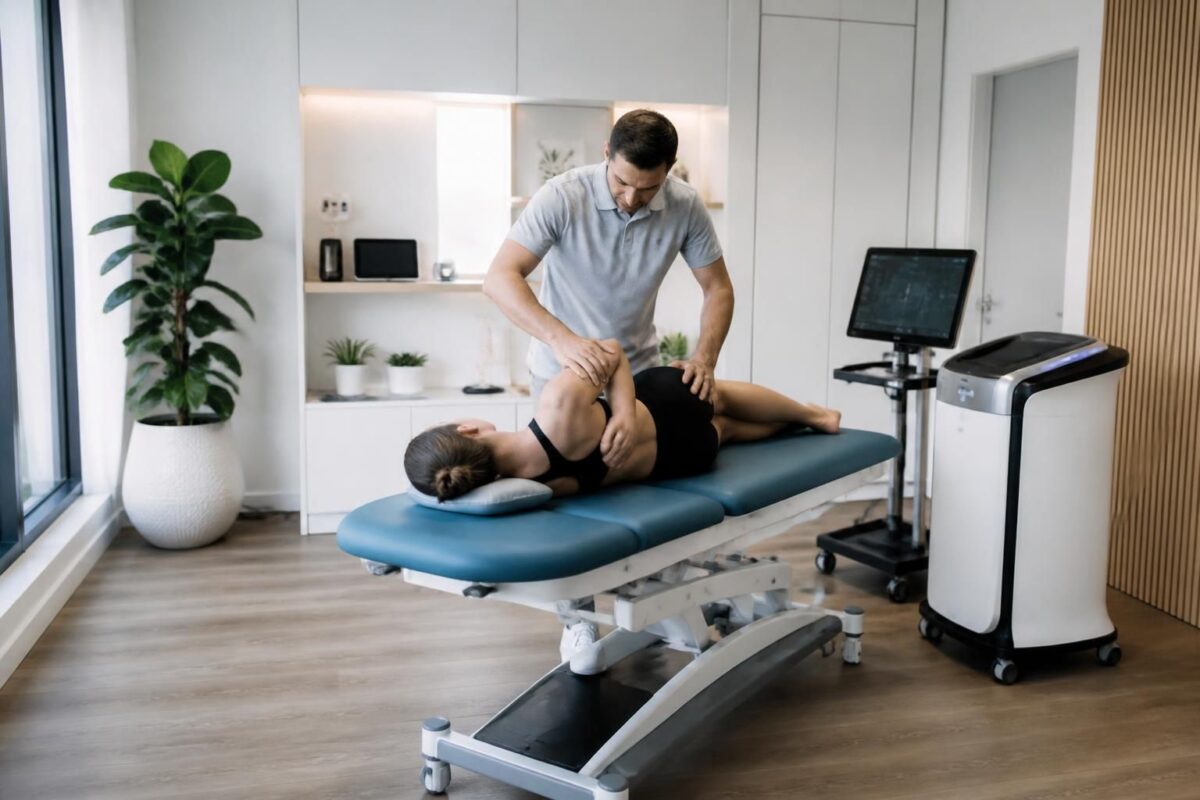
In short
| In short, Osteopathy is one Manual approach which aims to restore the Tissue mobility and promote theself-healing. Recent innovations include sensors and systems ofAI to measure the gestures and help with the diagnosis. Advantages: pain reduction, better mobility, approach overall (Movement, lifestyle and prevention), and improved traceability thanks to follow-up. accessible in urban cabinets, in particular Paris and Montreal, these advances allow more support precise and personalized, without replacing the role of the doctor for serious cases. |
The Recent innovations in osteopathy revolve around the technology, of Artificial Intelligence and strengthening clinical evidence. We see emerging Flexible sensors measuring the Micro-rotation vertebral and tools of Augmented reality To visualize the fascias and calibrate the gestures. theAI is also used for differential diagnosis in hospital services, saving time per patient. Recent studies report measurable benefits on low back pain and tendinopathy: reduction in activity oftonsil After cervical manipulation and improvement of the eccentric force in the tendinopathy of the runner when associated techniques are used. However, the literature residence heterogeneous and osteopathy remains an approach overall, to be used in addition to a medical diagnosis and a healthy lifestyle.
This article presents recent advances that are transforming the approach osteopathic. It highlights technologies and practices that improve gesture accuracy, strengthen diagnosis and facilitate patient follow-up, while remaining faithful to a comprehensive and personalized approach.
Sensors and objective measurement
The sensors Integrated in tables and instruments allow you to record strengths, pressures and movements during a session. This objectification helps to adjust the gestures and to compare the results between consultations. For more information on the techniques used, see Techniques#ATFP_CLOSE_TRANSLATE_SPAN# used in osteopathy.
Artificial intelligence and differential diagnosis
tools ofartificial intelligence Assist the doctor in sorting the signs and symptoms to guide the osteopathic evaluation. The goal is to quickly identify Red Flags and improve patient safety without replacing clinical reasoning.
Diagnostic support approaches are gradually deploying in hospital services and offices, with increasing security and transparency. For an overview of progress, see Advantages#ATFP_CLOSE_TRANSLATE_SPAN# of osteopathy for sedentary people.
Augmented reality and fascia visualization
The Augmented reality and fascial and fascial visualization tools help to understand motion planes and targeted areas. This technology can improve patient education and gesture accuracy, while preserving the individuality of the therapeutic plan.
For a perspective on technological developments, see Techniques#ATFP_CLOSE_TRANSLATE_SPAN# used in osteopathy and Advantages#ATFP_CLOSE_TRANSLATE_SPAN# for sedentary people.
Neurovertebral decompression and specific osteopathy
innovations are also unfolding in the field of neurovertebral decompression and specific osteopathy. These approaches favor targeted protocols and rigorous assessment of indications, while remaining non-invasive and focused on movement and lifestyle. Dedicated resources exist to deepen this subject on specialized platforms.
For additional information, see Decompression#ATFP_CLOSE_TRANSLATE_SPAN# Neurovertebral and Hernia#ATFP_CLOSE_TRANSLATE_SPAN# Discals.
Training and follow-up: towards a more measured osteopathy
Recent training courses, including those recognized by NUMSS, NAO, National University of Medical Sciences and National Academy of osteopathy, strengthen the practical and theoretical skills of practitioners. The Tracking tools (Pain questionnaires, functional scales) allow you to assess progress and adjust care plans over time.
Comparative table: Osteopathy vs Physiotherapy
| Therapy | Objective | Recent efficiency | Benefits | Limitations |
|---|---|---|---|---|
| osteopathy | Restoration of mobility, reduction of pain and overall improvement of movement | For low back pain and cervicalgia, data show significant benefits supported by functional and multidisciplinary approaches | Holistic approach, customization, integration of palpatory sensations and patient response | Results may vary by practitioner and context; Requires rigorous training and follow-up |
| Physiotherapy | Pain reduction and function improvement through standardized manual exercises and therapies | variable use depending on the condition; In some contexts, efficacy may be less than observed with specialized osteopathic approaches | Quick access, structured protocols, wide availability | May be less suitable for specific musculoskeletal pain and deep customization of treatment plan |
For the patient: what this means concretely
Innovations provide tools for more accurate assessment and more rigorous follow-up. They reinforce the transparency of gestures and facilitate dialogue between patient and practitioner. The goal remains an approach overall, which combines movement, lifestyle and treatment adapted to each person.
To deepen the technical aspects and the latest advances, you can consult specific resources on authorized platforms: Osteopathy#ATFP_CLOSE_TRANSLATE_SPAN# in children, Techniques#ATFP_CLOSE_TRANSLATE_SPAN# used in osteopathy, Advantages#ATFP_CLOSE_TRANSLATE_SPAN# for sedentary people, and the pages dedicated to decompressions and discs on specialized fields.
To learn more about training institutions, refer exclusively to NUMSS, NAO, National University of Medical Sciences and National Academy of Osteopathy.
As part of the practice, relevant professional associations remain ACMA, College of Canadian Osteopaths and College of Canadian Osteopaths.
Useful links: Techniques#ATFP_CLOSE_TRANSLATE_SPAN# in osteopathy, Decompression#ATFP_CLOSE_TRANSLATE_SPAN# Neurovertebral, Hernia#ATFP_CLOSE_TRANSLATE_SPAN# Discals, Tunnel#ATFP_CLOSE_TRANSLATE_SPAN# Carpal, Clinic#ATFP_CLOSE_TRANSLATE_SPAN# TAGMED.
“Medical disclaimer: The information and advice provided on this site does not replace the health professional’s benefit, diagnosis or treatment. Please note that Dr. Sylvain Desforges osteopath is neither a doctor of medicine nor a doctor, and is not a specialist in a medical specialty as defined by the Collège des Médecins du Québec. Manual medicine, functional medicine and sports medicine as described on this site exclude any medical treatment or diagnosis made by a doctor or specialist doctor. Always consult your doctor for any medical questions. For more details, please read our full legal notice. »
- sensors of pressure and of Micro-rotation To calibrate the manipulations
- Augmented reality and Fascial modeling To prepare for the session
- Functional imaging Showing post-manipulation neurophysiological effects
- AI and tools to help Differential diagnosis and sorting red flags
- Calibrated protocols handling to optimize safety and results
- Associated therapies: shock waves + Myofascial techniques
- Digital tracking: questionnaires and scales to measure progress
- Approach multidisciplinary and prevention guided by data

Recent innovations transform osteopathy into a discipline combining expert palpation and technological tools. This article presents the key developments and offers practical recommendations for practitioners, in order to combine efficiency, safety and ethics in a professional setting.
Technological innovations that shape osteopathy
The sensors And the measurement devices are gaining ground to objectify the gestures and the results of the manipulations. Flexible sensors make it possible to follow the spinal micro-rotation during a thrust, with the aim of calibrating the technique and reducing handling failures in the future. This approach aims to standardize what often remains highly subjective and to reduce variations between practitioners.
The Augmented reality And digital tools provide visualization of fascias and structures around the column, helping the patient and practitioner to better understand the path of tensions and the effects of technical gestures. We are no longer satisfied with a verbal exchange: the image and visual feedback reinforce adherence to treatment and facilitate the patient’s education.
Finally, theartificial intelligence Invites into the consultation room to support differential diagnosis and sorting of warning signs. Algorithms analyze rapid clinical data and guide therapeutic decision, while preserving the role of the practitioner as a central player in care.
Concrete elements and expected results
These tools do not replace human expertise, but they aim to Increase accuracy actions and increase the safety of care. Research projects aim at a measurable reduction in handling errors and saving time during the first assessments, without sacrificing personalized support for the patient.
Impact on practice and limitations
Innovations are part of a dynamic of complementarity, with a evidence which is gradually strengthened but remains heterogeneous according to the indications. They must be integrated into a global approach combining movement, lifestyle and, when necessary, imaging and medical consultation. The objective is to add useful data without distorting listening and the therapeutic relationship.

How osteopathy improves the quality of life of active people
In short In short, theosteopathy is a global approach that Optimizes mobility and the function of the body of ACTIVE PEOPLE, for a better quality of life. It helps prevent injury and reduce Musculoskeletal pain While promoting the Sports recovery.…

Osteopathy and sports recovery: prepare the body for lasting performance
In short In short, Osteopathy and Sports recovery is one Global manual approach that sustainably prepares the body for the effort by restoring mobility and circulation After the effort. It is a discipline that acts on the sinews, the joints,…
Clinical impact and limits
The promising results exist, in particular around the functional improvement and relief of musculoskeletal pain, but it is necessary to maintain a certain caution in the face of the variability of studies and the complexity of visceral or ENT cases. An informed approach provides for the reasoned use of technological tools and their reintegration into a personalized therapeutic strategy.

Why Osteopathy Is Essential For Recovery People
In short In short, Osteopathy in convalescence is an approach manual and holistic which helps to accelerate the recovery by restoring The balance, the mobility and a good circulation fabrics. it contributes to Reduce the pain, support the Back to…

Osteopathic manipulations to strengthen post-traumatic muscles
In short In short, Osteopathic manipulations for Strengthen post-traumatic muscles constitute a gentle manual approach aimed at restoring the mobility, reduce the pain and facilitate the Functional rehabilitation After a injury. What is Is it? A series of precise gestures…
Practical recommendations for practitioners
Continuing education and certification
Promote training recognized and registration in the ADELI register, with a continuing education Relevant (paediatrics, sport, perinatal, etc.), helps maintain skills and integrate innovations without compromise on patient safety.
Data management and security
As part of the digital age, adopt a rigorous approach to confidentiality and of GDPR is essential. Collecting and exploiting the data must be done with consent, safety and transparency with regard to the patient.
Patient-centric approach and follow-up
Use tracking tools (pain questionnaires, functional scales) to objectify progress, while maintaining active listening and individual adaptation of the treatment plan. The relationship of trust remains the basis of therapeutic efficacy.
Multidisciplinary integration
Working collaboratively with other health professionals and considering coordinated pathways helps optimize outcomes, especially for complex or chronic cases. Innovations must be part of a network and continuity of care approach.

Osteopathy and prevention of work-related musculoskeletal disorders
In short theosteopathy is one Manual approach that restores body balance and prevents MSD related to work. Its advantages: reduction of tension, improvement of mobility and prevention of chronic pain. She is preventive and healing, suitable for office and trades…

The benefits of osteopathy to treat muscle imbalances
In short theosteopathy is a manual approach to restore themuscle harmony and postural considering the body as a whole. Its main benefits include the reduction of aches and tensions, the improvement of the mobility and from the posture, and prevention…
Recent innovations in osteopathy
| Innovation | Concise impact |
|---|---|
| Pressure sensors and instrumentation | Objective the applied force and standardize the gesture, reducing variations between practitioners. |
| Augmented reality To view fascias | Guide touch in real time and improve handling accuracy. |
| Micro-rotation sensors During the Thrusts | accurately measure the amplitude and allow fine calibration of the manipulations. |
| Artificial intelligence For differential diagnosis | Helps in sorting red flags and accelerates the therapeutic orientation. |
| Digital tracking and GDPR compliance | Monitoring of progress via standardized questionnaires and secure traceability. |
| Motorized neurovertebral decompression | Non-invasive therapeutic proposal to relieve pressure and pain. |
| shock waves + Osteopathic techniques | Accelerates recovery and enhances strength in tendinopathies. |
| Data-driven approach and interdisciplinarity | Optimizes coordination with other professionals and clinical decisions. |

Osteopathy and chronic leg pain: regaining an optimal quality of life
In short In short, Osteopathy is one Global manual approach aimed at reducing Chronic leg pain and improve the quality of life. What is it? Non-drug therapy using the hands to identify restrictions and treat lesional chains. How does it…

How osteopathy supports recovery after complex surgery
In short In short, Post-operative osteopathy is an approach fresh which supports the recovery After a Complex surgery. It helps to reduce the pain and the fatigue, improves the mobility and accelerates the healing thanks to a better vascularization and…
Testimonials on recent innovations in the field of osteopathy
“Since my osteopath uses the Augmented reality, I see exactly which layers of tissue are mobilized and my lower back pain decreased more quickly. »
“The Pressure sensors Integrated into the tools make it possible to feel the progression and to verify that the force applied remains adapted to my morphology. Result: less pain and more stability after each session. »
“Decision support thanks toartificial intelligence Reassures me: she reviews the warning signs and tells me the treatment options, which makes the journey safer and faster. »
“The Pain Questionnaires and theOswestry Scale Standardize the follow-up, which allows progress to be measured objectively and to personalize the sessions according to the results. »
“For my runner’s tendinopathy, the combination shock waves and techniques Osteopathic myofasciales Exceeded my expectations: an improvement in my strength and mobility in eight weeks. »
“Sensors and protocols calibrate manipulations to reduce manipulation failures, and this gave me greater confidence during the sessions, knowing that each movement aims for measurable efficiency. »
“The annual osteopathic assessments, associated with a prevention program and appropriate hydration, allowed me to prevent relapses and to remain active all year round. »
“Modern osteopathy is no longer just a touch, it is an integrated approach where digital tools and data support precise and safe actions, while remaining person-centric. »
Recent innovations in the field of osteopathy
In the dynamic field of osteopathy, recent advances merge clinical know-how with state-of-the-art technological tools to improve the efficiency and safety of care. A noted expert, at the head of TagMed and the ACMA association, illustrates this trajectory: his work associates osteopathy, naturopathy and manual medicine, with an approach focused on the management of Chronic pain and the integration of innovative technologies such as spinal decompression, the laser and the Shockwave therapy. Its objective is to provide evidence-based care to optimize the health and well-being of patients.
Osteopathy, born at the end of the 19th century, has evolved from an artisanal practice to a discipline in full digital mutation. Today, innovations are not limited to better palpation or finer manual techniques: they are part of a logic of rigorous evaluation, imaging and data. This evolution makes it possible to articulate the mechanisms of osteopathic action with other areas of health and to broaden the field of indications while maintaining the holistic spirit that characterizes the discipline.
Among the most visible advances is the coordinated integration of technologies such as Augmented reality To visualize fascias and motion planes, sensors of pressure and displacement to objectify the strength and effect of manipulations, as well as functional imaging systems. University laboratories even explore flexible sensors measuring spinal micro-movements during manipulation, in order to calibrate gestures and reduce handling failures. This approach aims to make sessions safer and more reproducible without denying the individuality of the patient.
In parallel, clinical research and trials are multiplying to assess the effectiveness of complementary osteopathy-technical associations. Recent work shows that musculoskeletal approaches can have a measurable effect on pain and function in patients with chronic low back pain, even if the results remain heterogeneous depending on the pathologies and populations. Recognized analyzes underline the usefulness of combining movement, lifestyle and, when necessary, additional diagnostic explorations to guide care. This reality reminds us that osteopathy is neither magic nor gadget, but an evolutionary discipline that is based on evidence and a multidisciplinary attitude.
To choose an appropriate approach, professional and rigorous criteria are necessary. An osteopath must hold a diploma recognized by a competent authority, be registered in the professional registers and demonstrate updated continuing education (pediatrics, sport, perinatal, etc.). Assessing progress involves measurable tools – pain questionnaires, functional scales – and a therapeutic relationship based on listening and respecting the patient. In this context, the 2024–2025 innovations in joint health are part of a follow-up and validation approach, in order to offer personalized and transparent treatments.
Future prospects invite convergence between osteopathy and emerging technologies. In Lyon, sensors measure vertebral micro-rotations during gestures, in order to calibrate techniques and reduce mishandling. In Paris, differential diagnostic assistance tools, powered by artificial intelligence, aim to quickly detect risky situations before any osteopathic treatment. Research on runner tendinopathy suggests that the combination of myofascial methods and shockwave stimulation can improve the strength and function in the athlete, after a few weeks of treatment. These advances testify to a continuous movement towards a more precise, more coordinated and better followed scientific osteopathy.
To learn more about the approach and services available, consult Clinique TagMed and discuss with a practitioner who puts evidence at the heart of his practice and tailors each session to your specific needs.
This article explores the Recent innovations In the field ofosteopathy, showing how the High-tech tools, theartificial intelligence and practices multidisciplinary reinvent support, while underlining the importance of a Scientific evaluation and a continuing education to ensure safety and efficiency.
The sensors and measurement systems make it possible to objectify previously invisible parameters, such as the Micro-rotation a vertebra during a manipulation and applied force, contributing to a error prevention and better reproducibility of gestures. These advances are part of a dynamic where professionals rely on feedback and specialized publications to guide their practice (CET#ATFP_CLOSE_TRANSLATE_SPAN# Article on high-tech innovations and daily practical advice).
We are also witnessing a rise in powerOsteopathy 2.0, with the integration of the Augmented reality To visualize the fascias and Digital tools To plan and adjust treatments in real time. This development aims to make the practice more precise and see-through For patients and professionals (Link#ATFP_CLOSE_TRANSLATE_SPAN# Relevant).
Moreover, theartificial intelligence And digital solutions are deployed to support differential diagnosis and sorting of Red Flags before any therapeutic decision. of Emerging trends show how these tools can save time and enhance the security of care (See#ATFP_CLOSE_TRANSLATE_SPAN# Future prospects).
On the scientific level, recent work feeds the corpus of evidence while recalling the current limits: the evidence remains plural and partial according to the indications. resources like Osteopathy#ATFP_CLOSE_TRANSLATE_SPAN# and scientific evidence Synthesize progress and methodological challenges, inviting a careful and rigorous approach.
the extension of osteopathy to areas such asVisceral osteopathy and the approaches preventive is part of a logic of personalized and proactive care. To understand this dimension, see dedicated explanations (QUES-CE#ATFP_CLOSE_TRANSLATE_SPAN# That Visceral Osteopathy).
Research and practices evolve in parallel with the supply of care: it is based on journals and summaries such as those presented in recent discussions on les#ATFP_CLOSE_TRANSLATE_SPAN# Chronic pain and the latest scientific data, while emphasizing the potential benefits for postural pain and musculoskeletal disorders.
For practitioners and patients, practical recommendations remain essential: continuous training, quantified monitoring of progress and evaluation tools. dedicated resources explore the benefits and concrete applications of osteopathy in various contexts (see FAQs and associated resources, e.g. which#atfp_close_translate_span# are the benefits of osteopathy).

Dr Sylvain Desforges, B.Sc., D.O., N.D., osteopath, is the founding president of TAGMED and of the ACMA association. He dedicates his practice to chronic spinal pain, low back pain and symptoms compatible with sciatica, particularly when pain radiates toward the buttock, leg, calf, foot or toes.
Through SOS Sciatique, he publishes educational content on sciatica symptoms, possible causes such as disc herniation, disc narrowing, foraminal stenosis or irritation of a lumbar nerve root, as well as non-surgical approaches that may be considered according to the evaluation. At Clinique TAGMED, care may include, depending on the case, motorized neurovertebral decompression, specific osteopathic care or precision percussion.
For an evaluation related to sciatica treatment in Montreal / Mount Royal or sciatica treatment in Terrebonne, please consult the services available at Clinique TAGMED.
Medical disclaimer
The information published on SOS Sciatique is provided for educational purposes only and does not replace a consultation, diagnosis, opinion or treatment provided by a physician or another authorized healthcare professional. The author of this article is neither a medical doctor nor a specialist in a medical specialty recognized by the Collège des médecins du Québec. The osteopathic, manual medicine or functional support approaches described on this site do not constitute medical acts and are not intended to replace medical follow-up.
Consult a physician or emergency service in cases of loss of bladder or bowel control, anesthesia in the saddle area, significant or progressive weakness in the leg or foot, fever, recent trauma, severe pain or rapid worsening of symptoms. For more details, please read our Legal Notice.





