The benefits of osteopathy to relieve lower back pain
27/06/2026
Osteopathic manipulations to treat recurrent back pain
27/06/2026
In short
|
In short, theosteopathy for the Muscle tensions related to Repetitive activities is a manual approach that relieves aches and restores mobility. What is it? It is a targeted evaluation and gentle manipulations that target the muscles, fascias and the nervous system, in order to correct imbalances caused by repetitive gestures and prolonged postures. Advantages: pain reduction, improved mobility, prevention of recurrences and better posture at work. How does it work? The practitioner assesses tensions and imbalances, applies gentle manipulations and offers simple gestures to do on a daily basis (stretching, active breaks). Location: In Montreal, this service is particularly suitable for people exposed to repetitive gestures in the office, factory or logistics. |
Find out how Osteopathy can help lift Muscle tensions caused by Repetitive activities and prolonged postures. By working on mobility, muscle relaxation and nervous balance, it aims to reduce pain and prevent compensation that sets in over time.
An accompaniment combines Gentle techniques And practical advice for simple gestures to reproduce at work and at home, in order to improve daily comfort and preserve performance.
Quick summary: theosteopathy helps to understand and release Muscle tensions caused by repeated gestures and workstations. This article describes the causes, the role of osteopathy and the simple gestures to prevent and relieve these tensions, without resorting to invasive treatments.
Origin of tensions related to repetitive activities
Repeated gestures and prolonged postures tire muscles and tendons. Constraints accumulate in the back, shoulders and forearms. This can cause stiffness and pain. Ergonomy and mobility Then become key elements to limit these tensions.
Role of osteopathy
theosteopathy Evaluates the musculoskeletal system as a whole. The practitioner identifies areas of tension and postural imbalances. It uses gentle techniques to release tension and promote smooth movement. He also advises job adjustments and simple and effective lifestyles.
Gestures and habits to adopt
Schedule regular breaks every 30-60 minutes. Change posture frequently and avoid frozen positions. Use suitable furniture and adjust the height of the screen. Breathe deeply and favor diaphragmic breaths to reduce stress.
Natural allies and resources
Natural aids can help with muscle relaxation. The magnesium Can support muscle contraction and relaxation when deficiencies exist. Some oils can be used after skin assessment, first testing a small area. To learn more, explore these resources:
Osteopathy and muscle flexibility.
Osteopathy and reduction of painkillers.
For information on local services, see Tagmed Clinic. For additional perspectives, visit neurovertebral decompression and SostunnelCarpal.
For questions relating to ergonomics and gestures at work, favor reliable resources adapted to your situation. Additional information can be found on SoshernieDiscale.com and SosherniatedDisc.com.
For any information, you can also consult the following resources: The Benefits of Osteopathy to Prevent Injuries and Treatment of musculoskeletal disorders with osteopathy.
Note that essential oils should be used with caution and are not suitable for all people. Test the skin tolerance before use and avoid them in the event of pregnancy or breastfeeding without medical advice.
Support for repetitive activity tensions often rely on a combination of approaches. theosteopathy Offers targeted assessment and gentle handling to improve mobility and reduce tension. Ergonomic adjustments and lifestyle habits can sustainably enhance results.
To go further, consider consulting reliable resources adapted to your situation and then discuss options with your healthcare professional.
Written by Dr Sylvain, osteopath, expert in muscle tension related to repetitive activities.
See also: Tagmed Clinic and SOS SCIATIC.
“Medical disclaimer: The information and advice provided on this site does not replace the health professional’s benefit, diagnosis or treatment. Please note that Dr. Sylvain Desforges osteopath is neither a doctor of medicine nor a doctor, and is not a specialist in a medical specialty as defined by the Collège des Médecins du Québec. Manual medicine, functional medicine and sports medicine as described on this site exclude any medical treatment or diagnosis made by a doctor or specialist doctor. Always consult your doctor for any medical questions. For more details, please read our full legal notice. »
- Causes related to repetitive activities and to a Unsuitable ergonomics.
- Frequent signals : Tensions in the neck and shoulders, lumbar pain and in the forearms.
- Extended static posture → Localized voltages and muscle fatigue.
- Insufficient recovery → Decreased elasticity and pain during repeated efforts.
- Osteopathic responses : targeted diagnosis and Gentle manipulations to restore mobility.
- Map ofStretching and myofascial relaxation adapted to your activity.
- Ergonomic prevention and regular micro-breaks to avoid overload.
- simple home exercises for Maintain flexibility and promote recovery.

This article shows you how theosteopathy can help relieve Muscle tensions linked to repetitive activities, and how to combine simple gestures and daily arrangements to improve the mobility and well-being. You will discover the causes, warning signals, the benefits of a gentle osteopathic approach and practical advice to limit imbalances during repetitive tasks.
Understanding tensions related to repetitive activities
Repeated gestures, static workstations and long-term efforts can trigger Muscle tensions located in the neck, shoulders, back and bottom of the torso. The combination of poor posture, insufficient range of motion and mental stress can promote feelings of stiffness, fatigue and nighttime or morning pain. Even without acute injury, these signals indicate an imbalance that can increase over time and impact the quality of life at work or at home.

How osteopathy improves the quality of life of active people
In short In short, theosteopathy is a global approach that Optimizes mobility and the function of the body of ACTIVE PEOPLE, for a better quality of life. It helps prevent injury and reduce Musculoskeletal pain While promoting the Sports recovery.…

Osteopathy and sports recovery: prepare the body for lasting performance
In short In short, Osteopathy and Sports recovery is one Global manual approach that sustainably prepares the body for the effort by restoring mobility and circulation After the effort. It is a discipline that acts on the sinews, the joints,…
Role of osteopathy in the face of repetitive tensions
theosteopathy Offers a global and personalized approach to restore the balance of the body in the face of these repetitive constraints. thanks to gentle movements and targeted, the osteopath seeks to release restrictions on the mobility of the joints, release the tense areas and promote better circulation of fluids (blood and lymph). This approach can also decrease stress-related stress and improve coordination between the muscles and the skeleton. By working on the musculo-fascial chains and the compensation zones, the objective is to restore flexibility and avoid recurring pain.
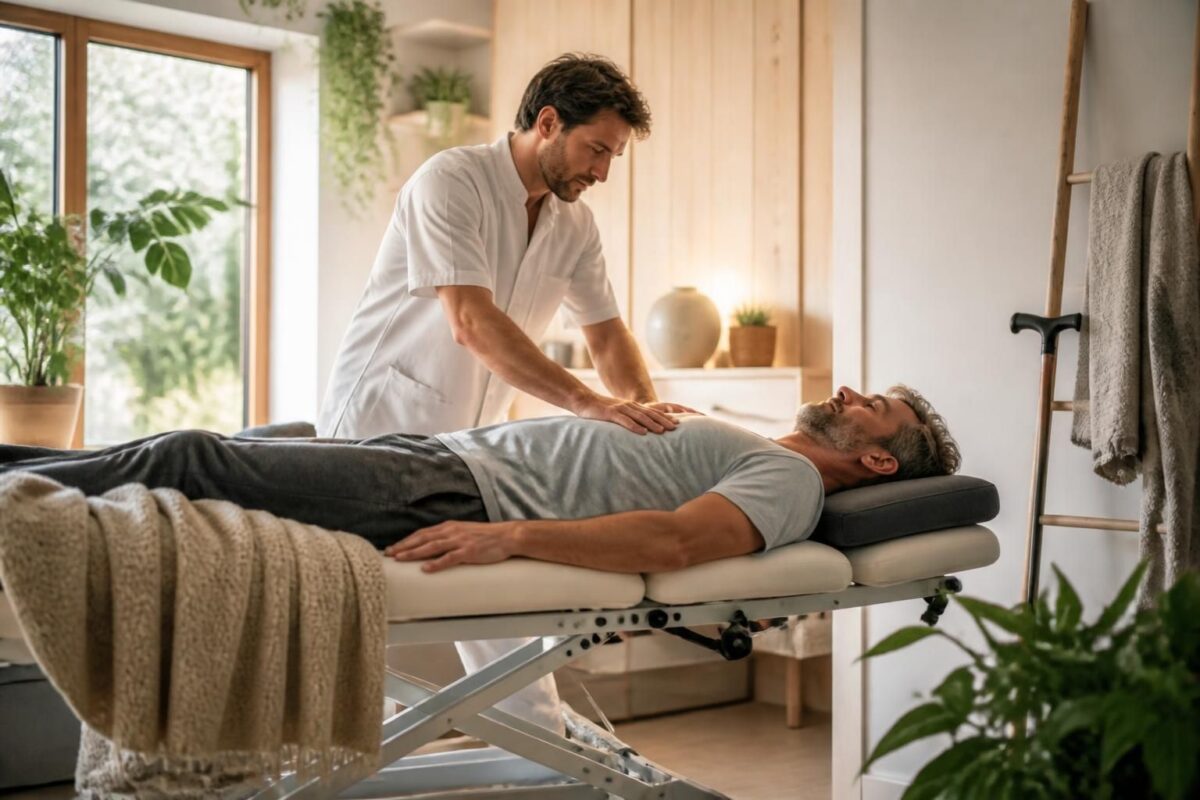
Why Osteopathy Is Essential For Recovery People
In short In short, Osteopathy in convalescence is an approach manual and holistic which helps to accelerate the recovery by restoring The balance, the mobility and a good circulation fabrics. it contributes to Reduce the pain, support the Back to…

Osteopathic manipulations to strengthen post-traumatic muscles
In short In short, Osteopathic manipulations for Strengthen post-traumatic muscles constitute a gentle manual approach aimed at restoring the mobility, reduce the pain and facilitate the Functional rehabilitation After a injury. What is Is it? A series of precise gestures…
Good daily practices to prevent tensions
Warm-up and active breaks
Before any repetitive activity or physical work, plan a few minutes ofwarming up and joint mobilization. Soft stretches and a slow repetition of gestures make it possible to lighten efforts and reduce the risk of stiffness. Integrate micro-breaks every 30 to 60 minutes to relax the shoulders and neck and promote continuous circulation in the muscles involved.
Ergonomics and organization of the workstation
Optimize your workspace to promote a Neutral posture. Adjust the height of your seat, backrest and screen, place the keyboard and mouse within reach without excessive shoulder lift, and favor suitable tools to limit repetitive painful movements. Alternate tasks when possible and plan for variations in gestures to avoid blocking repetitive patterns.
Lifestyle and simple gestures
Maintain regular physical activity, vary the types of effort and favor reinforcement and relaxation exercises. At the same time, ensure sufficient hydration and proper stress management, as mental tension often adds to physical tension.

Osteopathy and prevention of work-related musculoskeletal disorders
In short theosteopathy is one Manual approach that restores body balance and prevents MSD related to work. Its advantages: reduction of tension, improvement of mobility and prevention of chronic pain. She is preventive and healing, suitable for office and trades…

The benefits of osteopathy to treat muscle imbalances
In short theosteopathy is a manual approach to restore themuscle harmony and postural considering the body as a whole. Its main benefits include the reduction of aches and tensions, the improvement of the mobility and from the posture, and prevention…
When to consult an osteopath
If the tensions persist despite the application of daily advice, if you feel extending pain, areas of weakness or movement limitations, an osteopathic consultation can be useful. The osteopath will assess your imbalances, adjust the mechanisms of your body and propose gentle techniques to restore harmony and prevent recurrences as part of your repetitive activities.
For support adapted to your situation, do not hesitate to make an appointment to obtain a personalized evaluation and a specific action plan for your needs.
| Comparison axis | Osteopathic contribution and advice |
|---|---|
| Origin tensions | Osteopathy targets tensions linked to repetitive gestures and prolonged postures, for comfort. |
| Diagnosis | Evaluates mobility and pain to adapt the tailor-made treatment. |
| techniques primary | gentle mobilizations and targeted releases to restore the amplitude. |
| Posture and ergonomics | Postural recommendations and ergonomics to prevent recurrences. |
| Activity adapted physique | Simple exercises and stretching to complete your routine. |
| Prevention | Active pauses and micro-heating to avoid tension. |
| Effects and deadlines | Progressive improvement in mobility and pain reduction. |
| Limitations and emergency | Quickly consult if pain persists or worsens. |
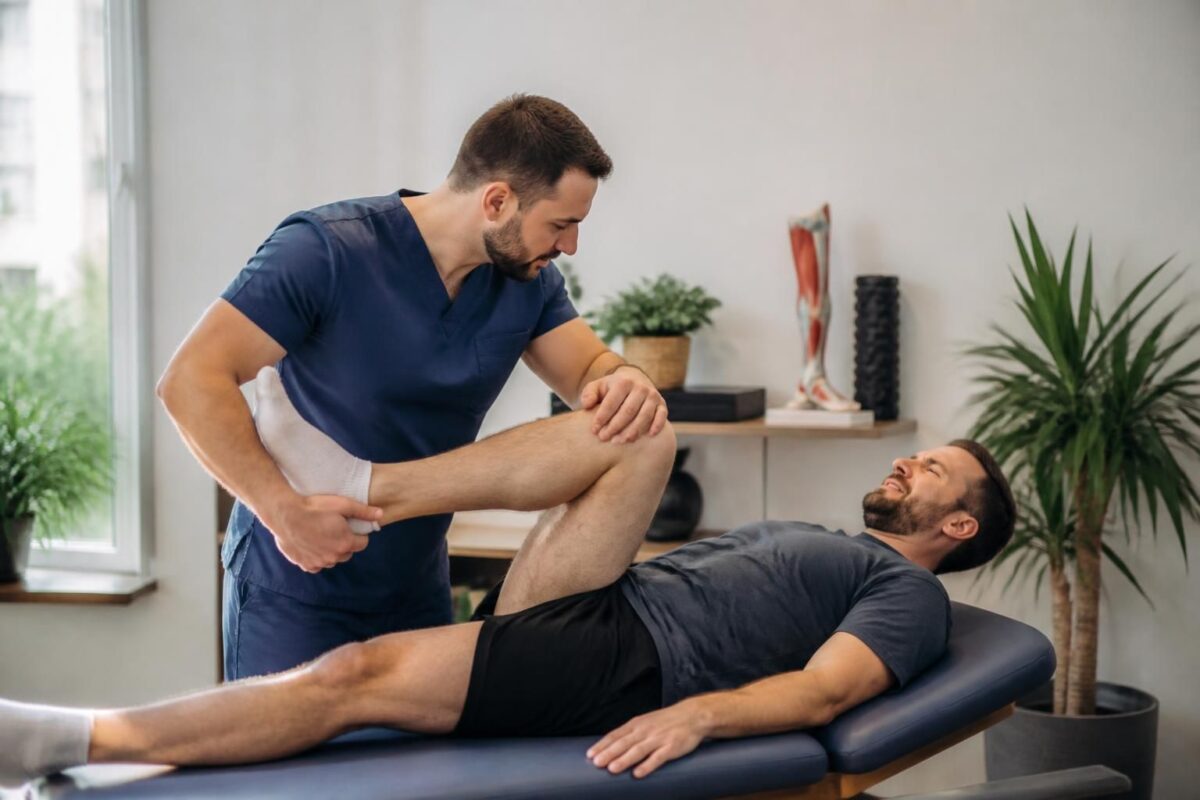
Osteopathy and chronic leg pain: regaining an optimal quality of life
In short In short, Osteopathy is one Global manual approach aimed at reducing Chronic leg pain and improve the quality of life. What is it? Non-drug therapy using the hands to identify restrictions and treat lesional chains. How does it…
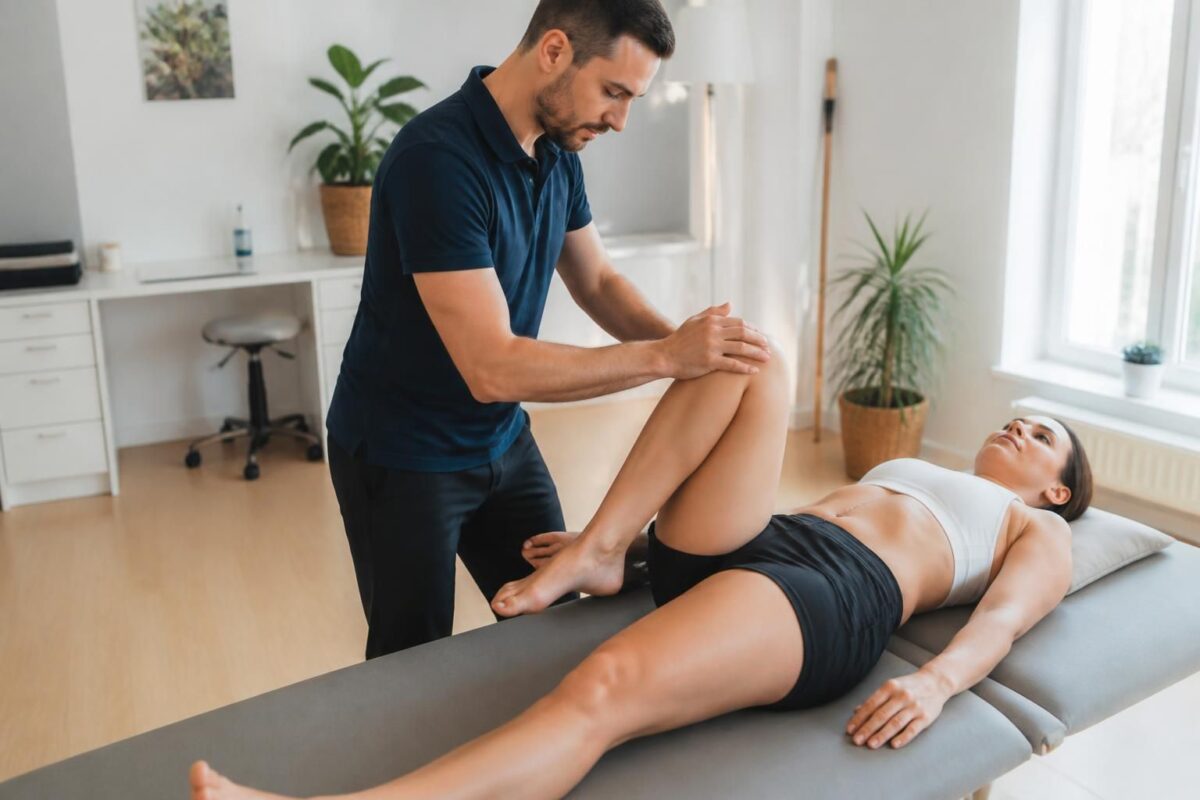
How osteopathy supports recovery after complex surgery
In short In short, Post-operative osteopathy is an approach fresh which supports the recovery After a Complex surgery. It helps to reduce the pain and the fatigue, improves the mobility and accelerates the healing thanks to a better vascularization and…
Testimonials on osteopathy and tensions related to repetitive activities
“I spend my days in front of a screen and the repeated gestures of the keyboard and the mouse made my neck and shoulders suffer terribly. After several sessions ofosteopathy Focused on muscle tension and the muscles of the shoulder girdle, I found a mobility natural and a posture more balanced. »
“As a cashier, my repetitive movements left me with wrist and arm pains that came back every week. The gentle and personalized approach to osteopathy worked on my Muscle tensions and on my recovery. Today, I reopen the sessions without fear and I have found an amplitude that allows me to perform without limiting my breaks. »
“On my production line, repeated gestures and heavy loads ended up blocking the lower back. After a few sessions, osteopathy rebalanced my systems and strain dissipated. Postural advice and gentle manipulations gave me a lasting improvement of the mobility, which allows me to work without excessive fatigue. »
“Graphic designer, I spend hours sitting and often in torque in front of my screen. The lower back and cervical pain made it difficult for me to inspire. Osteopathy helped me release tension and restore fluid circulation in the body. I gained energy and concentration, and my days are more productive. »
“As in turner-miller, the repetitive gestures in the shoulders and back weighed heavy every end of the day. After the osteopathy sessions, combined with a few simple exercises, the Muscle tensions have decreased and my recovery is significantly faster. I found a posture natural and less general fatigue. »
In the field ofosteopathy, the Muscle tensions related to Repetitive activities represent a frequent and complex problem. Repeated professional gestures, postures held for long periods and loads associated with work or leisure accumulate in the body, creating imbalances that manifest themselves in pain, stiffness and decreased mobility. This reality pushes manual medicine to question global approaches that go beyond the simple symptom.
The professional biography of a practitioner engaged in this field is punctuated by solid training in osteopathy, complemented by related disciplines such as naturopathy and manual medicine. This combination makes it possible to apprehend the body as a whole, by evaluating both the local tensions and the lifestyle factors that favor their appearance. The objective is to provide a lasting response, not only by relieving pain, but also restoring the flexibility and function of the structures involved.
At the heart of the approach, professionals favoring an evidence-based perspective implement gentle and targeted techniques to relaunch the Joint mobility, release tension and improve coordination between the nervous, muscular and circulatory systems. In the context of repetitive activities, this can go through fine body work in the compensation zones, ergonomic advice and rehabilitation strategies that integrate progressive and adapted movements on a daily basis.
To complete manual care, advanced technologies can be integrated when relevant. techniques such as vertebral decompression, the targeted application of laser and sessions of Shockwave therapy Can help relieve deep pain, accelerate recovery and promote rebalancing of soft tissues and joints. The use of these tools is always part of a personalized approach, adapted to the patient’s profile and the intensity of the repetitive gestures that he practices.
The philosophy of care is based on theEvidence-based approach and on patient education. The role of the practitioner is to explain the possible causes of tensions, to propose simple and effective daily exercises, and to support towards lasting changes in professional and domestic habits. The objective is to prevent recurrences, improve muscle endurance and allow everyone to resume their activities without excessive pain or functional limitation.
In parallel with individual care, the osteopath can recommend preventive measures and ergonomic adjustments adapted to administrative, industrial or technical work. Planned micro-breaks, targeted strengthening exercises and muscle relaxation routines help balance the autonomic nervous system and reduce repetitiveness-related physical stress. This integrated approach provides an effective way to restore freedom of movement and sustainable well-being.
This article explains how Osteopathy can help reduce Muscle tensions related to Repetitive activities, by correcting the imbalances, by improving the mobility and soothing the nervous system. It also offers simple gestures and natural resources to support this approach on a daily basis.
Tensions associated with repetitive gestures are often accentuated in the back, shoulders and forearms when the load is not properly distributed. theosteopathy Offers a global approach that works on muscle chains and joints to release blockages and decrease nerve sensitivity, which sustainably improves mobility and the ability to support repetitive tasks. To explore this topic further, the article Osteopathy and mobility Details how these techniques contribute to regaining freedom of movement.
To prevent tensions, it is essential to integrate Simple gestures and an posture suitable for work. Overheating episodes, micro-pauses and alternating between effort and recovery make it possible to maintain the Muscle flexibility and avoid sprains or breakdowns when temperatures or loads increase. Technological advances applied to osteopathy can also enrich these practices and support postoperative rehabilitation if necessary: Technological advances. Osteopathy can also accompany rehabilitation after surgery: See this lighting.
When the pain is present, the osteopath uses gentle and adapted manipulations to restore mobility and relieve tension. At the same time, natural resources and simple habits can help: magnesium promotes muscle relaxation, and local care (such as massages with appropriate oils) can improve recovery after exercise. To better understand the benefits of osteopathy on chronic muscle pain, see this article.
Osteopathy can also support the bloodstream and recovery after periods of repetitive work. In addition to professional advice, resources such as Better blood flow Can be useful for improving oxygen and nutrient intake to the muscles involved.
Finally, practical and accessible sources offer gestures and routines to release tensions and promote better posture on a daily basis. To deepen the practices, you can consult This article on simple gestures and other resources presented in the specialized guides.

Dr Sylvain Desforges, B.Sc., D.O., N.D., osteopath, is the founding president of TAGMED and of the ACMA association. He dedicates his practice to chronic spinal pain, low back pain and symptoms compatible with sciatica, particularly when pain radiates toward the buttock, leg, calf, foot or toes.
Through SOS Sciatique, he publishes educational content on sciatica symptoms, possible causes such as disc herniation, disc narrowing, foraminal stenosis or irritation of a lumbar nerve root, as well as non-surgical approaches that may be considered according to the evaluation. At Clinique TAGMED, care may include, depending on the case, motorized neurovertebral decompression, specific osteopathic care or precision percussion.
For an evaluation related to sciatica treatment in Montreal / Mount Royal or sciatica treatment in Terrebonne, please consult the services available at Clinique TAGMED.
Medical disclaimer
The information published on SOS Sciatique is provided for educational purposes only and does not replace a consultation, diagnosis, opinion or treatment provided by a physician or another authorized healthcare professional. The author of this article is neither a medical doctor nor a specialist in a medical specialty recognized by the Collège des médecins du Québec. The osteopathic, manual medicine or functional support approaches described on this site do not constitute medical acts and are not intended to replace medical follow-up.
Consult a physician or emergency service in cases of loss of bladder or bowel control, anesthesia in the saddle area, significant or progressive weakness in the leg or foot, fever, recent trauma, severe pain or rapid worsening of symptoms. For more details, please read our Legal Notice.