Sciatica in Terrebonne: L5-S1 Herniation and Pain Towards the Foot
30/10/2026
Intervertebral disc protrusion and pain in the big toe
30/10/2026
IN BRIEF
| Sciatica can vary depending on posture, as certain positions or their duration increase sensitivity of the nerve. Alternating positions, moving regularly, and adjusting sitting or standing periods can help distribute strains better and gradually improve tolerance to movement. Pain that changes with posture does not necessarily mean that the injury is getting worse. |
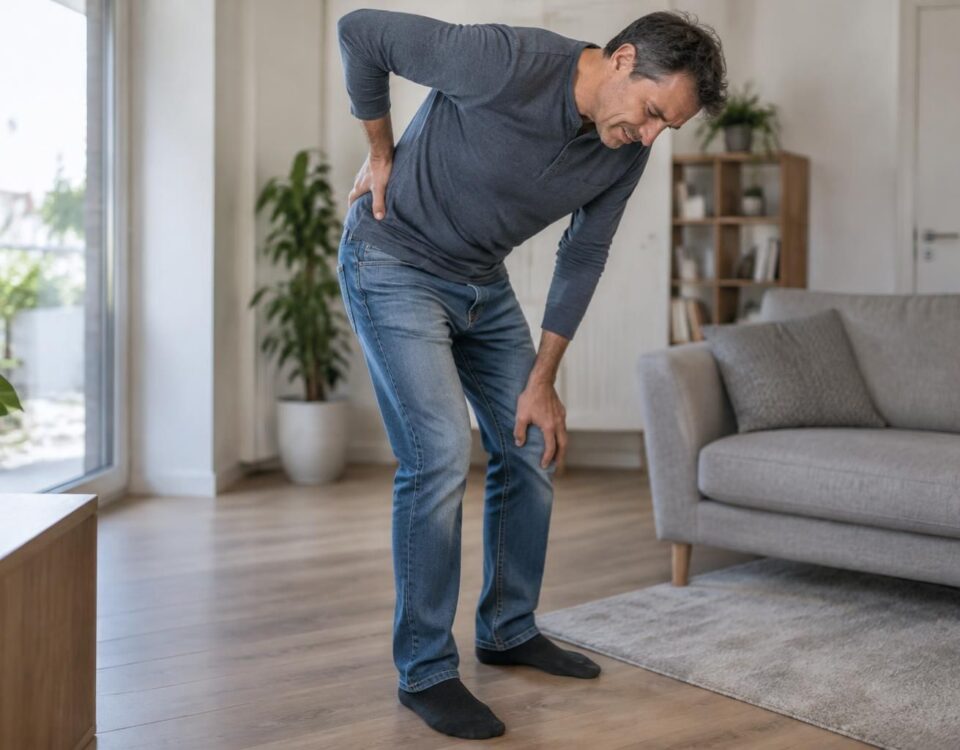
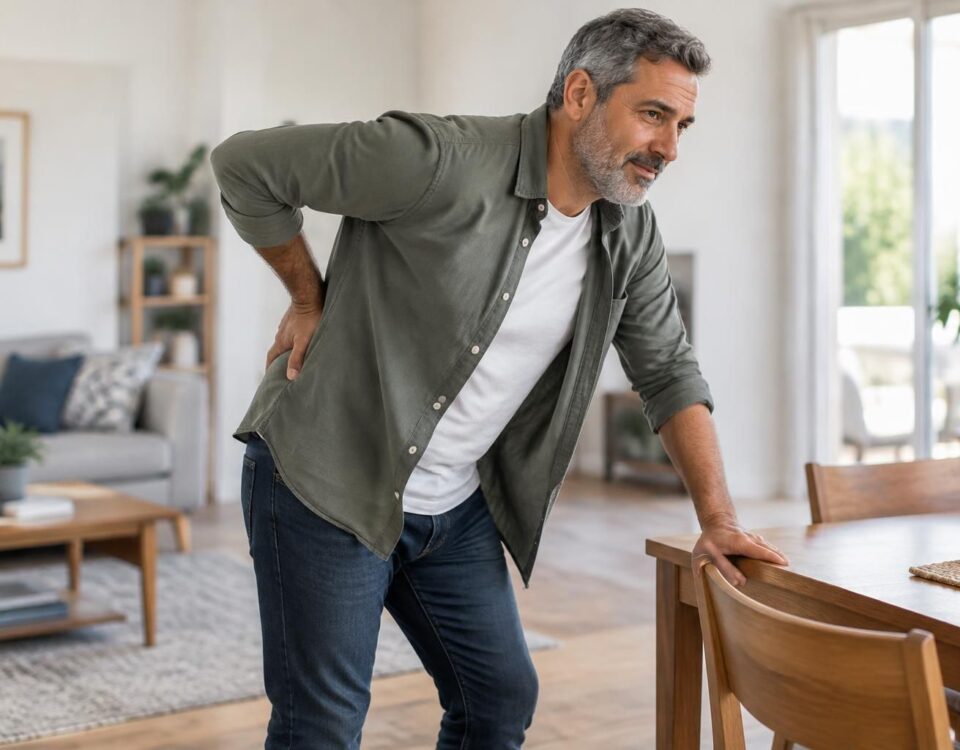
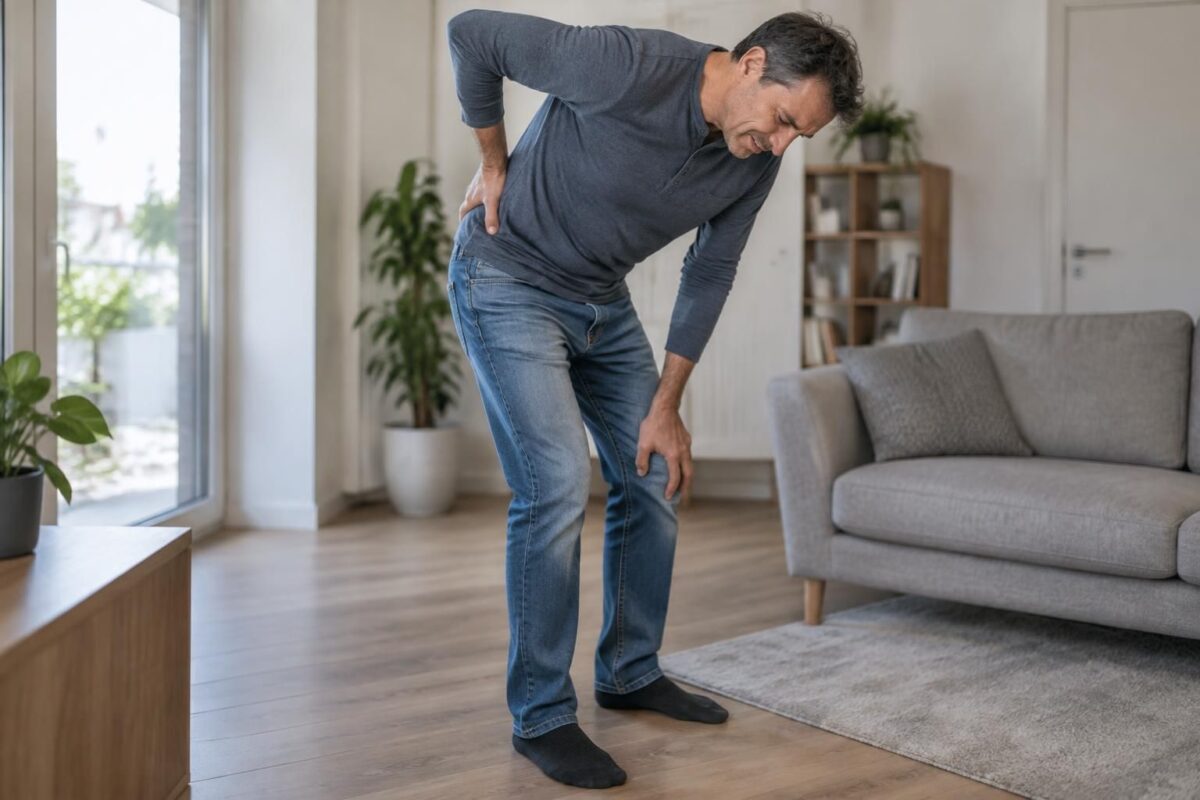
In the case of sciatica, pain can vary depending on posture, time spent sitting or standing, fatigue, and movements. An uncomfortable position does not necessarily mean that an injury is worsening: it may simply be less tolerated at that moment. Alternating positions and gradually incorporating movement can help improve tolerance.
Pain associated with sciatica can change depending on posture, time spent sitting or standing, and movements carried out. A position that is sometimes uncomfortable does not automatically mean that the nerve or spine is suffering a new injury. By observing the factors that modify symptoms and having their cause evaluated, it is possible to better adapt activities and choose appropriate management.
Why does pain change with posture?
Sciatica often corresponds to pain related to irritation or sensitivity of a nerve root in the lower back. Certain postures change the stresses placed on the spine and the tissues around the nerve. If the nervous system is already sensitive, these changes can temporarily increase or decrease pain.
The reaction depends on several factors: the adopted position, the time spent in that position, fatigue, and activities done before or after. A posture tolerated in the morning can therefore become uncomfortable later. This variation alone does not allow us to conclude that the condition of the spine has worsened.
Which postures can increase symptoms?
Prolonged sitting can accentuate pain in some individuals, especially if maintained without change for a long time. Others notice their symptoms more when they remain standing without moving, bend, or perform a specific movement. Conversely, a short period of rest or a change of position can sometimes provide relief.
There is no single posture to avoid for everyone. A position that increases pain for one person may be tolerated well by another. The important thing is to identify the circumstances associated with the symptoms and not to stay in a position that significantly intensifies them for long periods.
Pain that travels down the leg
Pain can radiate into the buttock, thigh, calf, or foot. Its course varies depending on the person and can be related to the affected nerve root. To better understand these differences, consult the information on the pain pathway associated with the roots L4, L5, and S1.
Pain in the leg is not always caused by nerve irritation. Radicular pain and referred pain can have different characteristics. A healthcare professional can evaluate the symptoms, their distribution, and the associated signs.
How to react when posture increases pain?
If a position triggers or amplifies symptoms, change posture and observe the response. Alternating positions and avoiding prolonged periods of immobility can help distribute strains. Adjust the duration of activities according to your tolerance, without trying to push through pain that significantly increases.
Sensitivity can vary from day to day. An uncomfortable posture does not, by itself, prove to be dangerous. An evaluation can help determine if the symptoms are consistent with sciatica and establish appropriate management options for your situation.
When to seek an evaluation?
Seek medical advice if the pain persists, worsens, or limits your activities. Consult a doctor or emergency service quickly in case of loss of urinary or bowel control, numbness in the saddle region, significant or progressive weakness in a leg or foot, fever, recent trauma, or rapid worsening.
For an evaluation related to sciatica, you can consult the services of the Clinique TAGMED, in Montreal or Terrebonne. The options proposed depend on the evaluation and do not replace a diagnosis or medical follow-up. To learn more about the treatment of sciatica in Montreal or the treatment of sciatica in Terrebonne, check the available services.
About the author
Sylvain Desforges, B.Sc., D.O., N.D., Doctor of Osteopathy and Naturopath, is the founding president of TAGMED and the ACMA association. He dedicates his practice to chronic pain of the spine, lower back pain, and pain compatible with sciatica, especially when the pain radiates to the buttock, leg, calf, foot, or toes.
Through SOS Sciatique, he publishes educational content on the symptoms of sciatica, their possible causes, and non-surgical approaches that may be considered based on the evaluation. At the Clinique TAGMED, care may include, as appropriate, motorized neurovertebral decompression, specific osteopathy, or precision impactor.
Medical Disclaimer: The information and advice provided on this site do not replace the opinion, diagnosis, or treatment of a healthcare professional. Please note that Sylvain Desforges, B.Sc., D.O., N.D., a doctor in osteopathy, is neither a doctor of medicine nor a physician, and is not a specialist in any medical specialty as defined by the Collège des médecins du Québec. Manual medicine, functional medicine, and sports medicine as described on this site exclude any medical treatment or diagnosis provided by a physician or specialist. Always consult your doctor for any medical questions. For more details, please read our complete legal notice.
Postures that may sometimes aggravate
- Sitting for a long time
- Standing still
- Repeating a sensitive action
To better manage variation
- Alternate positions
- Take short movement breaks
- Adjust duration according to tolerance

A sciatica with pain that varies according to posture may react to sitting position, standing still, or certain movements. This variation does not automatically mean that the situation is worsening: it may reflect increased sensitivity of the nervous system and a tolerance that changes with fatigue, the duration of the posture, and recent activities. Alternating positions and gradually resuming movement can help better distribute the stresses.
Why does pain change according to posture?
Sciatica corresponds to pain that may follow the path of the nerve, from the lumbar region to the buttock and sometimes to the leg, calf, or foot. When a nerve root or nearby tissues are sensitive, certain positions may temporarily modify the stresses on the lower back and around the nerve. The response varies from person to person.
Sitting for a long time can, for example, exacerbate symptoms in some people, while others feel more discomfort when standing still. A specific movement, a sustained posture, or a more tiring day can also trigger an increase in pain. A position tolerated yesterday may feel less comfortable today, without this alone proving a new injury.
How to adapt your positions on a daily basis
Change your posture regularly
Avoid seeking a perfect posture or remaining still in the hope of eliminating pain. Rather, try to alternate between sitting, standing, and walking, according to what you tolerate. If you work seated, plan short breaks to stand and move. Adjust the frequency of these breaks to your symptoms rather than waiting for the pain to become intense.
Resume movement gradually
Walking or gentle movements can be helpful as long as they remain comfortable. Start with a modest duration, then gradually increase it when symptoms allow. Avoid forcing yourself into a position that causes significant aggravation or pain that persists notably after activity. The goal is to regain tolerance to movement, not to test your limits with each session.
Observe your body’s response
Note the postures, durations, and activities that influence your symptoms. This observation helps to identify trends without interpreting each variation as a sign of damage. Fatigue, stress, lack of sleep, and the intensity of activities can also modify sensitivity. An appropriate progression may include mobility exercises, movement control, and proprioception, chosen with a professional according to your situation.
When to seek professional advice
If the pain limits your activities, persists, or is accompanied by numbness, request an evaluation from a licensed healthcare professional. They will be able to examine your symptoms and direct you towards appropriate care. Seek medical attention promptly in case of loss of bladder or bowel control, numbness in the saddle area, significant or progressive weakness of the leg or foot, fever, recent trauma, severe pain, or rapid worsening. This information is educational and does not replace a consultation, diagnosis, or medical treatment.
| Situation | What it may reflect |
|---|---|
| Pain that varies with posture | A variable tolerance to the stresses on the nervous system. |
| Prolonged sitting position | A sensitivity that may increase with the duration spent sitting. |
| Standing still | Immobility may make symptoms more present. |
| Certain movements | They may temporarily exacerbate pain or radiation. |
| Position better tolerated another day | Fatigue and context may modify sensitivity. |
| Pain triggered by a position | This does not necessarily mean structural worsening. |
| Alternating positions and movement | They help to distribute stresses and avoid prolonged immobility. |
| Progressive rehabilitation | It may improve tolerance to sensitive positions. |
Illustrative testimonials: sciatica and pain that varies with posture
Note: The accounts below are fictional examples, written for educational purposes. They do not correspond to authentic patient testimonies and do not predict the course of sciatica.
“After sitting for a long time at my desk, the pain would start from my buttock and sometimes go down the back of my thigh. When I stood up and walked for a few minutes, it often decreased. I understood that the time spent in one position mattered just as much as the position itself.” — Marc, 46 years old
“I thought that standing was always better than sitting, but immobility also ended up waking my symptoms. Alternating between a few minutes standing, a short walk, and a sitting break helped me manage sensitive periods better.” — Nadia, 53 years old
“Some days, bending down to put on my shoes increased the pain in my leg. Other days, the same movement was much easier. Fatigue and the time spent sitting seemed to change my tolerance. I learned to make the movement more gently, without forcing it when the symptoms increased.” — Luc, 61 years old
“The pain varied depending on my activity: after a car ride, I was stiffer and my buttock hurt. By changing positions during breaks, I generally felt less uncomfortable. This sensitivity did not necessarily mean that my back had been damaged further.” — Isabelle, 39 years old
These examples illustrate a common situation: a posture can become uncomfortable when maintained for a long time or when added to fatigue and other constraints. An increase in pain in a position does not, in itself, mean that this posture causes a lesion or structural worsening. Tolerance can also vary from day to day.
For many people, alternating positions, breaking periods of immobility, and gradually resuming movement help to better distribute the stresses. However, evolution and adapted activities depend on each situation; an evaluation by a health professional can help guide management.
Quickly consult a doctor or emergency service if you experience loss of urinary or bowel control, numbness in the saddle area, significant or progressive weakness in your leg or foot, fever, recent trauma, or rapid worsening of symptoms.
A pain compatible with sciatica does not always manifest in the same way. It may be felt in the lower back, the buttock, then down the thigh, calf, or foot. In some people, it increases after sitting for a long time; in others, it’s the immobile standing, walking, or a specific movement that makes it more pronounced. This variation depending on posture is common and deserves to be observed without jumping to conclusions about a worsening of the lesion.
Prolonged sitting can alter the distribution of stresses in the lower back and around nerve structures. Bending, standing up, or keeping the torso turned for a period can also provoke a reaction. Conversely, a lying position or a brief walk may be better tolerated. These responses depend on several factors: the duration spent in a posture, fatigue, recent activity level, and the sensitivity of the nervous system. A comfortable position one day can therefore become painful another day, without necessarily indicating that a structural change has occurred.
When pain shifts or intensifies in a given posture, it may indicate that the nervous system is less tolerant of that configuration at that moment. This signal does not alone determine the exact cause of the symptoms. A herniated disc, irritation of a nerve root, or other lumbar problems may be among the possibilities, but only a proper evaluation can help clarify the situation. Systematically avoiding any movement for fear of causing harm is not always helpful; however, it is reasonable to respect the body’s reactions and not push through significant pain.
A simple strategy is to alternate positions before discomfort becomes too pronounced. If work requires sitting, short breaks to stand up and move can help vary the stresses. When standing, regularly changing support or taking a few steps may be preferable to prolonged immobility. The goal is not to find a perfect posture, but to avoid maintaining the same configuration for too long and to observe what is better tolerated.
With appropriate support, movement can be gradually reintroduced. Mobility work, strengthening, and proprioception—the ability to perceive the position and movements of the body—can help improve functional tolerance. Progress should take symptoms into account: slight and temporary discomfort does not have the same meaning as pain that increases significantly, persists, or is accompanied by weakness. A health professional can help adapt activities and determine when a medical evaluation is indicated.
Sylvain Desforges, B.Sc., D.O., N.D., is an osteopath and naturopath, as well as the founding president of TAGMED clinics and the ACMA association. His practice focuses on chronic spinal pain, lower back pain, and symptoms compatible with sciatica. Depending on the evaluation and the individual’s situation, the approaches offered at TAGMED Clinic may include specific osteopathy, motorized neurovertebral decompression, or a precision impactor. These services do not replace a medical diagnosis or follow-up with a licensed health professional.
Medical warning: this content is provided for educational purposes and does not replace a consultation. Quickly consult a doctor or emergency service if you experience loss of urinary or bowel control, numbness in the saddle area, significant or progressive weakness in your leg or foot, fever, recent trauma, or rapid worsening of symptoms.
Sciatica may vary with posture, the time spent sitting or standing, the movements made, and the level of fatigue. A position that increases pain does not necessarily mean that a lesion is worsening: it may rather reveal that the nervous system is less tolerant of certain stresses at that moment. Alternating positions and gradually resuming movement can help improve this tolerance.
Why does pain change with posture?
Prolonged sitting, standing still, or certain movements can modify the tensions and pressures exerted around nerve structures. The reaction varies according to the individual, context, and duration spent in the same position. It is therefore possible that a posture is well tolerated one day and uncomfortable another day, without that indicating a structural change on its own.
Advice on positions that can be difficult to tolerate in case of sciatica or positions to adjust daily can help identify situations that trigger symptoms. However, they do not constitute a universal list: the goal is to observe your own response and avoid staying in a position that significantly increases pain for too long.
Adapting positions without fearing each movement
A sensitive posture is not necessarily harmful in itself. Rather than systematically avoiding it, it may be useful to reduce its duration, change positions regularly, and gradually resume movements. Practical guidelines on positions often better tolerated, postures to watch, and possible adjustments to relieve discomfort can complement this observation, without replacing a personalized assessment.
Stretches are not necessarily suitable for all situations. If a movement or stretch increases the pain radiating down the leg, causes numbness, or exacerbates symptoms, it is relevant to modify or stop it and seek advice. To better understand the precautions regarding the piriformis muscle, consult this article on sciatica and piriformis stretching.
Take symptoms and their evolution into account
The location of symptoms can vary: pain in the buttock or leg, tingling, numbness, or weakness. Their presence alone does not allow for identifying the cause. Information on symptoms sometimes associated with an issue in the L4-L5 region, on pain in the big toe and the L5 root, or on difficulty standing on tiptoe can help better understand the described signs, but do not replace a clinical examination.
Pain influenced by certain positions may also require evaluation when symptoms persist, intensify, or limit activities. The L5-S1 foraminal compression is among the possible causes to examine among others. In case of significant or progressive weakness, loss of urinary or bowel control, numbness in the saddle region, fever, recent trauma, or rapid worsening, consult a doctor or emergency service without delay.
Sciatica and pain worsened in lumbar flexion
IN BRIEF Aggravated lumbar flexion sciatica refers to pain that increases when bending the lower back forward and can radiate from the buttock to the leg. This movement may exacerbate the irritation of a nerve root, for example, in the…
Sciatica and pain worsened in lumbar extension
IN BRIEF Lumbosacral sciatica aggravated in extension is a pain that radiates down the buttock or leg and increases when the lower back arches. This position can exacerbate irritation of a nerve root, particularly in cases of stenosis; however, it…

Sciatica and pain relieved by bending: possible stenosis
IN BRIEF A sciatica-type pain relieved by leaning forward may be compatible with lumbar stenosis, a narrowing that can irritate or compress nerves. Flexion may temporarily decrease pressure, but does not confirm the diagnosis or treat the cause. A professional…

Sciatica and pain worsened while sitting: consider the disc?
IN BRIEF Sciatica aggravated in a seated position may be related to irritation of a nerve root, sometimes caused by a herniated disc. Remaining seated can exacerbate pain that radiates from the buttock down the leg, but this symptom alone…

Sciatica and pain relieved while seated: consider stenosis?
IN BRIEF A sciatica relieved in a seated position may suggest a lumbar stenosis and neurogenic claudication, but this sign alone is not sufficient for a diagnosis. Observing walking, weakness, and symptom evolution helps guide the evaluation and compare signs…

Sciatica and pain that worsens when walking
IN BRIEF A sciatica that worsens with walking is pain radiating from the buttock down the leg, exacerbated by walking. Several causes are possible: this symptom alone does not suffice for a diagnosis. Temporarily reduce walking duration, change positions, and…

Sciatica and pain that improves when walking
IN SUMMARY Sciatica is pain that radiates from the lower back or buttock down to the leg, sometimes all the way to the foot. If it decreases with walking, a gentle and regular walk can help limit stiffness and maintain…

IN BRIEF Sciatica is pain that often starts from the lower back or buttock and travels down the leg. Pain that worsens at the end of the day may be related to activities or prolonged positions, but it is not…

Sylvain Desforges, B.Sc., D.O., N.D., docteur en ostéopathie
Dr Sylvain Desforges, B.Sc., D.O., N.D., osteopath, is the founding president of TAGMED and of the ACMA association. He dedicates his practice to chronic spinal pain, low back pain and symptoms compatible with sciatica, particularly when pain radiates toward the buttock, leg, calf, foot or toes.
Through SOS Sciatique, he publishes educational content on sciatica symptoms, possible causes such as disc herniation, disc narrowing, foraminal stenosis or irritation of a lumbar nerve root, as well as non-surgical approaches that may be considered according to the evaluation. At Clinique TAGMED, care may include, depending on the case, motorized neurovertebral decompression, specific osteopathic care or precision percussion.
For an evaluation related to sciatica treatment in Montreal / Mount Royal or sciatica treatment in Terrebonne, please consult the services available at Clinique TAGMED.
Medical disclaimer
The information published on SOS Sciatique is provided for educational purposes only and does not replace a consultation, diagnosis, opinion or treatment provided by a physician or another authorized healthcare professional. The author of this article is neither a medical doctor nor a specialist in a medical specialty recognized by the Collège des médecins du Québec. The osteopathic, manual medicine or functional support approaches described on this site do not constitute medical acts and are not intended to replace medical follow-up.
Consult a physician or emergency service in cases of loss of bladder or bowel control, anesthesia in the saddle area, significant or progressive weakness in the leg or foot, fever, recent trauma, severe pain or rapid worsening of symptoms. For more details, please read our Legal Notice.