Sciatica in Terrebonne: L4-L5 protrusion and leg pain
29/10/2026
Disc herniation and pain radiating below the knee
29/10/2026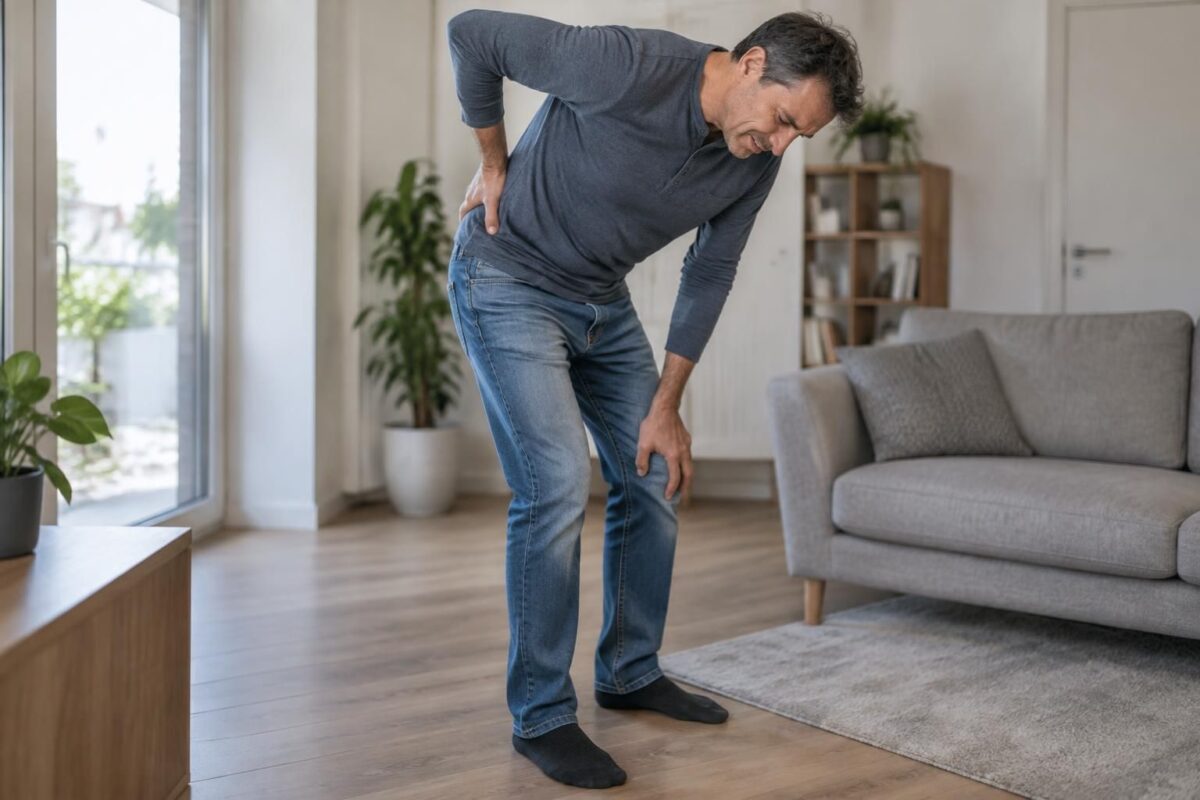
IN BRIEF
| Aggravated lumbar flexion sciatica refers to pain that increases when bending the lower back forward and can radiate from the buttock to the leg. This movement may exacerbate the irritation of a nerve root, for example, in the presence of a herniated disc. Adapting actions, avoiding painful movements, and favoring gentle activity can help better manage the symptoms; an evaluation allows for guiding the management. Consult quickly in case of progressive weakness or urinary or intestinal disorders. |
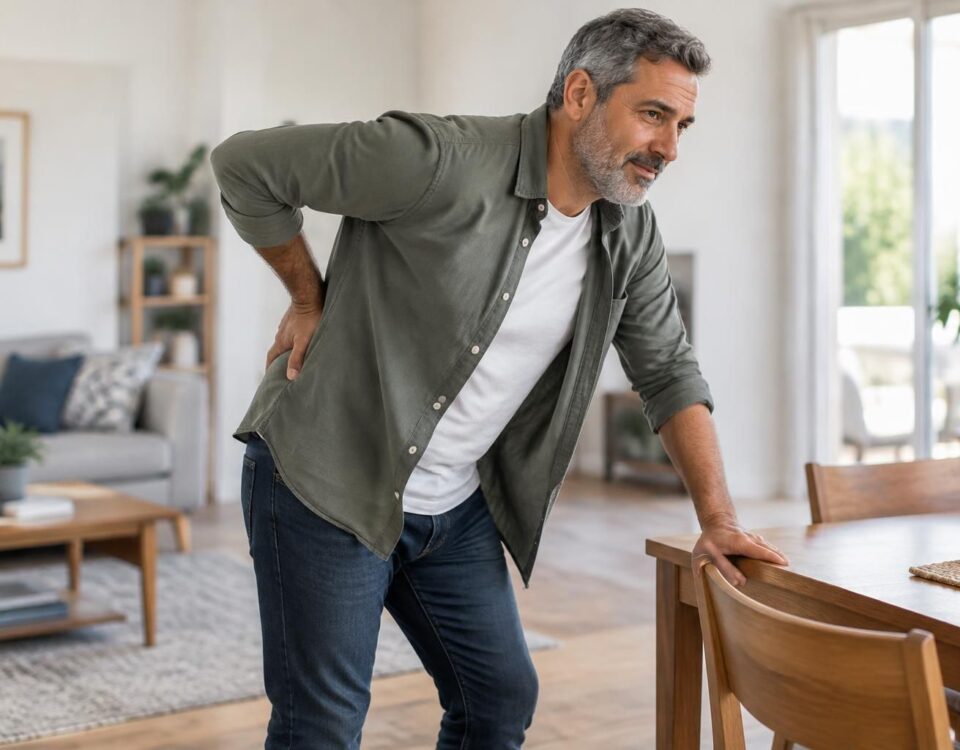
An aggravated lumbar flexion sciatica — for instance, when bending forward or sitting for a long time — may be associated with irritation of a nerve root, sometimes related to an intervertebral disc. However, this sign alone is not sufficient to determine the cause. Avoid movements that significantly intensify pain while maintaining gentle activity according to your tolerance, and consult a healthcare professional if symptoms persist or worsen.
Progressive leg weakness, loss of sensation in the saddle area, or urinary or intestinal disorders require urgent medical evaluation.
Pain that increases when bending forward may accompany sciatica, but this sign alone is not sufficient to determine the cause. Lumbar flexion can irritate certain structures in the lower back and make the pain more noticeable in the buttock or leg. An evaluation allows distinguishing between radicular pain and referred pain and choosing an appropriate treatment.
What does pain in lumbar flexion mean?
Lumbar flexion refers to the movement that rounds the lower back, for example, to bend down to pick up an object. If this motion increases pain that travels down into the buttock or leg, it may indicate sensitivity of certain lumbar structures. An intervertebral disc or nerve root may be involved, but pain alone does not confirm a herniated disc or nerve compression.
Pain may manifest in the lower back, buttock, back or side of the thigh, calf, or foot. Tingling, numbness, or weakness may also be present. The pathway and sensations vary from person to person.
Pain felt in the leg is not always sciatica caused by nerve impairment. Muscles and joints can also cause referred pain. To better understand this distinction, consult the articles on radicular pain and referred pain in Montreal or Terrebonne.
Why can flexion increase pain?
Flexion alters the stresses placed on the structures of the lower back. Depending on the cause and the individual’s sensitivity, bending may increase lumbar pain or pain that radiates down the leg. Pain that worsens in a seated position may also warrant an evaluation of the lower back, particularly of disc structures. However, this sign alone does not establish a diagnosis. You can read our article on sciatica worsened by sitting.
The reaction to flexion varies among individuals. Some feel primarily pain in the back. Others experience more pain in the buttock or leg. Posture, duration of the movement, and tissue condition can influence symptoms.
How to recognize the symptoms to watch for
Sciatica often affects one side of the body. Pain may originate from the lower back or the buttock and follow part of the nerve’s pathway down the leg. It may be described as a burning sensation, an electric shock, or sharp pain. Tingling sensations or loss of feeling may accompany it.
Note the movements and positions that modify your symptoms, as well as their pathway and duration. Also inform a professional if the pain travels below the knee or down to the foot, or if you notice weakness. This information helps guide the evaluation.
When to seek urgent medical help
Seek medical assistance immediately if you lose control of your bladder or bowels, if you experience numbness in the saddle area, or if there is significant or progressive weakness in the leg or foot. Severe pain, fever, recent trauma, or rapid worsening also justify immediate medical evaluation.

Sciatica and pain worsened in lumbar extension
IN BRIEF Lumbosacral sciatica aggravated in extension is a pain that radiates down the buttock or leg and increases when the lower back arches. This position can exacerbate irritation of a nerve root, particularly in cases of stenosis; however, it…
How evaluation helps guide management
The healthcare professional gathers your symptoms and examines, among other things, your mobility, sensitivity, and strength. They also check if certain movements reproduce or modify the pain. The examination helps guide the management but may not always identify the underlying structure involved.
Imaging, such as an MRI, is not necessary for all sciatic pains. A doctor may request it based on symptoms, their progression, and examination results. They may also consider additional tests if persistent weakness, numbness, or unusual progression justifies it.
Sciatica and pain relieved by bending: possible stenosis
IN BRIEF A sciatica-type pain relieved by leaning forward may be compatible with lumbar stenosis, a narrowing that can irritate or compress nerves. Flexion may temporarily decrease pressure, but does not confirm the diagnosis or treat the cause. A professional…
What to do when flexion worsens pain?
Avoid repeating a movement that triggers a sharp increase in pain in the leg. For daily tasks, temporarily adapt your way of bending and keep objects close to your body. Also, avoid staying in a position that significantly increases your symptoms for a long time.
Complete bed rest for a prolonged period is generally not recommended. Light activity can be maintained if it does not cause significant worsening. However, the response varies among individuals and depending on the cause of the pain. If walking improves or worsens your symptoms, this information may be useful during the evaluation. Consult our article on sciatic pain that improves with walking.
Since flexion can be painful in certain situations related to discs or nerves, avoid starting exercises or stretches without professional advice when these movements increase your symptoms. A professional can help you determine which actions to limit and what options to consider based on your situation.

Sciatica and pain worsened while sitting: consider the disc?
IN BRIEF Sciatica aggravated in a seated position may be related to irritation of a nerve root, sometimes caused by a herniated disc. Remaining seated can exacerbate pain that radiates from the buttock down the leg, but this symptom alone…
Management options
Management depends on the probable cause, the intensity of the symptoms, and their progression. It may include medical follow-up, advice on daily activities, and tailored manual approaches after evaluation. No treatment is suitable for everyone, and a non-surgical approach does not replace necessary medical care.
At the Clinique TAGMED, an evaluation may guide towards care such as specific osteopathy or, when appropriate, motorized neurovertebral decompression. These options are not suitable for all causes of pain and do not guarantee a result. In the presence of concerning symptoms or progressive weakness, a medical evaluation must be prioritized.

Sciatica and pain relieved while seated: consider stenosis?
IN BRIEF A sciatica relieved in a seated position may suggest a lumbar stenosis and neurogenic claudication, but this sign alone is not sufficient for a diagnosis. Observing walking, weakness, and symptom evolution helps guide the evaluation and compare signs…
About the author
Sylvain Desforges, B.Sc., D.O., N.D., Doctor of Osteopathy and Naturopath, is the founding president of TAGMED and the ACMA association. He dedicates his practice to chronic pain in the spine, lower back pain, and pain compatible with sciatica, particularly when pain radiates down to the buttock, leg, calf, foot, or toes.
Through SOS Sciatique, he publishes educational content on the symptoms of sciatica, its possible causes, and non-surgical approaches that may be considered based on evaluation. At Clinique TAGMED, care may include, depending on the case, motorized neurovertebral decompression, specific osteopathy, or precision percussion.
For an evaluation related to sciatica treatment in Montreal or Mont-Royal, or sciatica treatment in Terrebonne, check the services available at Clinique TAGMED.
Medical Disclaimer: The information and advice provided on this site do not replace the advice, diagnosis, or treatment of a health professional. Please note that Sylvain Desforges, B.Sc., D.O., N.D., Doctor of osteopathy, is not a medical doctor and is not a specialist in a medical specialty as defined by the Collège des médecins du Québec. Manual medicine, functional medicine, and sports medicine as described on this site exclude any medical treatment or diagnosis made by a doctor or medical specialist. Always consult your physician for any medical questions. For more details, please read our full legal notice.
- What it may suggest: irritation of a lumbar nerve root, sometimes associated with a herniated disc.
- Common signs: pain starting from the lower back or buttock and radiating down one leg, sometimes with tingling.
- Lumbar flexion: leaning forward or sitting for long periods can exacerbate symptoms in some individuals.
- To prioritize: move gently and regularly, avoiding movements that significantly increase pain.
- To be evaluated: persistent pain, numbness, or weakness, especially if symptoms worsen.
- Medical emergency: loss of control of the bladder or bowels, numbness in the saddle area, or significant and progressive weakness.

When sciatica-type pain increases when leaning forward, avoid repeating the movements that trigger it and prioritize gentle activities suited to your symptoms. Pain exacerbated by flexion may be associated with irritation of a nerve root, but this sign is not sufficient to determine the cause. A professional evaluation helps choose appropriate movements and care.
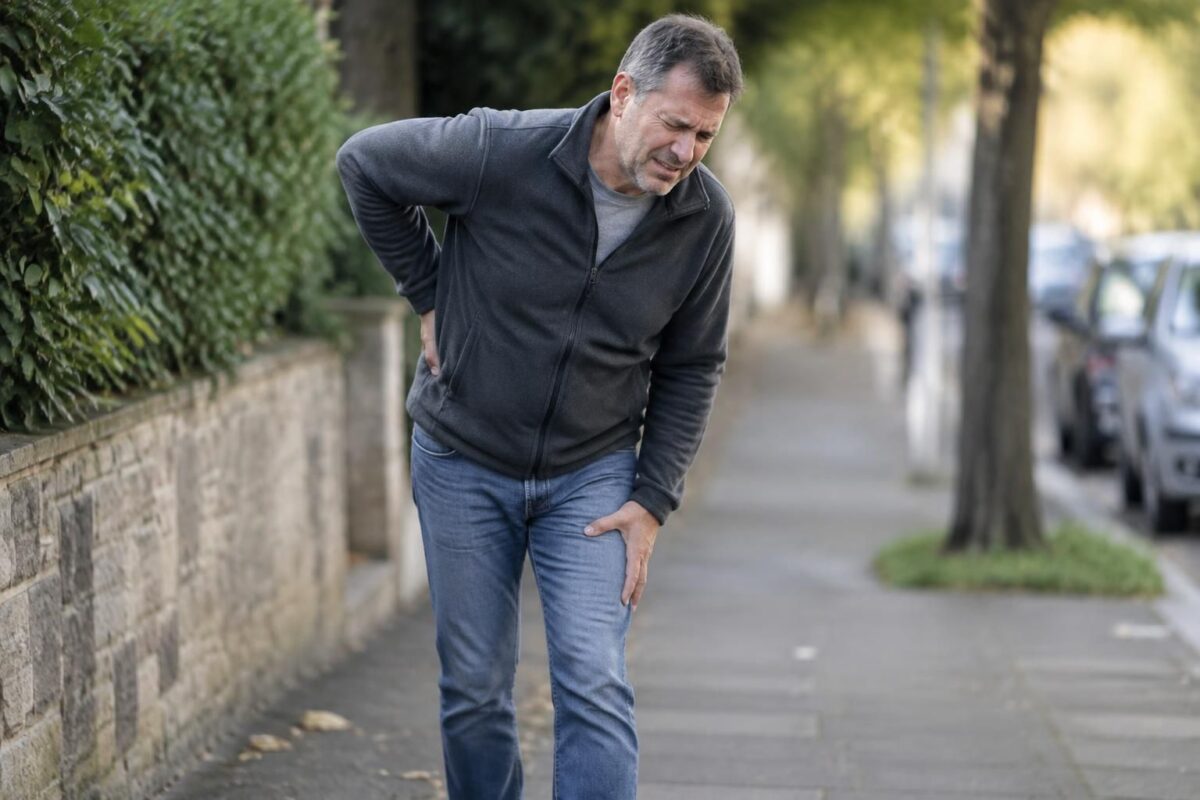
Sciatica and pain that worsens when walking
IN BRIEF A sciatica that worsens with walking is pain radiating from the buttock down the leg, exacerbated by walking. Several causes are possible: this symptom alone does not suffice for a diagnosis. Temporarily reduce walking duration, change positions, and…
Understanding pain exacerbated by lumbar flexion
Sciatica refers to pain following the route of a nerve from the lower back or buttock down to the leg. It can be accompanied by tingling, numbness, or weakness. Leaning, sitting for long periods, or lifting an object can exacerbate symptoms in some individuals. A herniated disc is a possible cause, but other factors may irritate or compress a nerve root.
The reaction to a movement varies from person to person. Do not try to confirm a diagnosis on your own by repeating a painful flexion. Instead, note which activities worsen or ease your symptoms, how far the pain radiates, and whether you notice a loss of strength or sensitivity.

Sciatica and pain that improves when walking
IN SUMMARY Sciatica is pain that radiates from the lower back or buttock down to the leg, sometimes all the way to the foot. If it decreases with walking, a gentle and regular walk can help limit stiffness and maintain…
Adjusting your movements in daily life
Temporarily reducing irritating flexions
If leaning forward significantly increases your leg pain, temporarily limit repeated flexions and twists, especially when picking up an object or performing a prolonged task. To lift a light load, get close to the object, bend at the hips and knees, and keep it close to your body. Do not force it if the movement progresses the pain towards your foot or causes increased numbness.
Staying active without exceeding your limits
Prolonged bed rest is generally discouraged. Try to maintain tolerable activities, such as short walks, adjusting the duration according to your response. Regularly change positions if you must sit. A comfortable position may help temporarily reduce discomfort, but no posture is suitable for everyone.
Avoid stretches that strongly reproduce radiating pain. An exercise should not be continued at all costs: stop it if it significantly exacerbates symptoms or leads to weakness, more pronounced tingling, or pain radiating further down the leg. A professional can guide you towards suitable progressive exercises.

IN BRIEF Sciatica is pain that often starts from the lower back or buttock and travels down the leg. Pain that worsens at the end of the day may be related to activities or prolonged positions, but it is not…
When to seek evaluation
Consult a healthcare professional if the pain persists, intensifies, limits your activities, or is accompanied by numbness or weakness. The evaluation may include a clinical examination; imaging is not necessary in all situations and depends on the symptoms and evolution.
Seek emergency care in case of loss of control of the bladder or bowels, numbness in the saddle area, significant or progressive weakness of the leg or foot, fever, severe pain, or rapid worsening. These signs require immediate medical evaluation.

Sciatica and pain that worsens in the evening
IN BRIEF more painful sciatic pain in the evening is often related to inactivity, fatigue, and increased attention to sensations. This does not necessarily mean that the nerve is worsening. Gently changing positions, walking for a few minutes, and finding…
About the Author
Sylvain Desforges, B.Sc., D.O., N.D., Doctor of Osteopathy and Naturopath, is the founding president of TAGMED and the ACMA association. His practice notably focuses on chronic spinal pain and pain associated with sciatica. The approaches proposed are determined according to the situation and evaluation of each person.
Medical Disclaimer
This content is provided for educational purposes and does not replace a consultation, diagnosis, or treatment by a physician or another authorized healthcare professional. The author is neither a physician nor a specialist in a medical field recognized by the Collège des médecins du Québec. Osteopathy and manual medicine approaches do not replace medical follow-up.
| Marker | To Know |
|---|---|
| Pain on flexion | Bending forward may accentuate lower back or radiating pain. |
| Radiation | Pain may radiate from the buttock down to the thigh, calf, or foot. |
| Possible cause | Nerve irritation, sometimes related to a disc, may be involved. |
| Other explanations | Painful flexion does not confirm, by itself, sciatica or a herniated disc. |
| To Observe | Note the movements that worsen or relieve symptoms and their evolution. |
| To Favor | Stay active according to your tolerance; avoid movements that significantly increase the pain. |
| Evaluation | Consult a healthcare professional if the pain persists or limits your activities. |
| Emergency | Consult immediately in case of loss of bladder or bowel control, numbness in the saddle area, or progressive weakness. |
Testimonials on Sciatica Aggravated on Lumbar Flexion
The testimonials below are fictional and illustrative examples. They do not correspond to identifiable patients and do not allow for a diagnosis: pain that increases when bending may have different causes.
“When I bent down to put on my shoes, pain radiated from my lower back into my buttock, then behind my thigh. I stood up slowly, as the forward movement intensified the shooting pains. I requested an evaluation to understand what triggered my symptoms and what adjustments to make.”
“My pain became sharper when I picked something up from the floor or when I stayed bent over my desk for a long time. At times, I also felt tingling in my leg. I learned to avoid sudden movements and to consult rather than assume that every pain radiating into my leg was necessarily sciatica.”
“I thought that stretching by touching my toes would help, but this flexion increased the pain into my calf. I stopped the exercise that triggered my symptoms and sought advice from a healthcare professional. The tolerated movements may vary from one person to another.”
“After sitting for several hours, bending forward to get up triggered a jolt in my buttock and the back of my leg. The pain was not the same every day. An evaluation helped me describe its exact path, the positions that aggravated it, and the associated sensations.”
A lower back pain radiating into the leg and aggravated by flexion may be compatible with nerve irritation, but other causes are possible. Consult a healthcare professional for an evaluation, especially if the pain persists or intensifies. In case of loss of bladder or bowel control, numbness in the saddle area, or significant or progressive weakness of the leg or foot, seek urgent medical help.
Sciatica and Pain Aggravated on Lumbar Flexion: Understand and Act
Sciatica refers to pain that follows the path of a lumbar nerve root, often from the lower back or buttock down to the thigh, calf, or foot. It may be accompanied by burning sensations, electric shocks, tingling, or numbness. Pain that intensifies when you bend forward, sit for a long time, or lift an object deserves evaluation, but this single sign is not enough to establish a diagnosis.
Lumbar flexion corresponds to the movement that rounds the lower back forward. In some individuals, this position increases pressure on the spinal structures and may irritate a nerve root. A herniated disc is among the possible causes, but osteoarthritis, spinal canal narrowing, or other lumbar issues may also contribute to the symptoms. Conversely, pain on flexion does not automatically mean that a disc is compressing the nerve: clinical examination is essential for interpreting the picture.
The manifestations vary according to the affected nerve root. Pain often affects one leg and may be more pronounced than the pain felt in the back. Some individuals notice an aggravation when coughing, sneezing, or sitting, while others are mainly bothered when bending or standing up. Weakness, loss of sensitivity, or difficulty walking should be reported to the healthcare professional.
The assessment generally starts with questions about the onset of symptoms, their path, and the movements that modify them, followed by an examination of strength, sensitivity, and reflexes. Imaging is not systematic: it may be considered depending on the evolution, observed signs, or the need to clarify the cause. The objective is to distinguish nerve pain from other lumbar pains and identify situations requiring prompt management.
In many cases, a non-surgical approach is initially favored. Maintaining suitable activity, such as short walks, may be preferable to prolonged bed rest. However, movements should remain tolerable: temporarily avoid actions that trigger significant irradiation, without completely immobilizing the back. A professional may offer individualized exercises and advice on modifying postures or daily tasks. Manual therapies and decompression technologies can be discussed after evaluation, depending on the situation; they do not replace a medical diagnosis or a treatment indicated by a physician. Surgery is reserved for certain cases, especially when symptoms persist despite appropriate care or when a neurological deficit justifies it.
If you experience loss of control of the bladder or bowels, numbness in the saddle area, significant or progressive weakness, or rapid deterioration, consult a doctor or emergency service promptly. A fever, recent trauma, or severe pain also require medical advice.
About the author: Sylvain Desforges, B.Sc., D.O., N.D., Doctor of Osteopathy and Naturopath, is the founding president of TAGMED clinics and the ACMA association. He is interested in managing chronic pain and integrating approaches and technologies such as neurovertebral decompression, laser, and shock waves. His work aims to provide care tailored to each person’s assessment.
Warning: This content is provided for educational purposes and does not replace a consultation, diagnosis, or treatment by an authorized healthcare professional. The author is neither a physician nor a specialist in a medical specialty recognized by the College of Physicians of Quebec. Osteopathy and manual medicine approaches do not replace medical follow-up.
Sciatic pain that increases when the lower back bends forward may be related to sensitivity of the lumbar structures, particularly a disc or a nerve root. However, this reaction is not the same for everyone: the extent of movement, its repetition, and the cause of the pain matter. Temporarily adapting painful movements, without completely immobilizing the back, and obtaining an evaluation if symptoms persist helps in choosing appropriate management.
Sciatica and lumbar flexion: essential guidelines
In lumbar flexion, the trunk leans forward. For some individuals, this movement — or sitting for extended periods — may exacerbate pain that radiates from the lower back or buttock down the leg. This can occur especially when a nerve root is irritated, but exacerbation during flexion alone is insufficient to establish a diagnosis. To better understand symptoms that may be associated with levels L4-L5 or L5-S1, consult a healthcare professional.
It is best not to force a movement that causes a noticeable increase in pain or symptoms in the leg. This does not mean you should avoid all bending or stay in bed: resume tolerated activities, adjusting amplitude and duration. Stretching the hamstrings or calf may also increase tension felt by some individuals; these should be gentle and stopped if they worsen symptoms. You can refer to resources on hamstring stretching and calf stretching.
Long periods of driving can make sitting difficult to tolerate. Taking breaks, changing positions, and avoiding lifting a load while bending and then twisting the trunk can help limit strain. Practical advice is provided in this article on journeys and lower back pain. The choice of exercises should be tailored to your symptoms: stop a movement if it intensifies or spreads the pain, and seek advice before continuing a routine that worries you.
An evaluation is indicated if the pain worsens, persists, or is accompanied by numbness or weakness. Seek immediate emergency service if you lose control of the bladder or bowels, experience numbness in the saddle area, or have significant or progressive weakness in a leg. For general information on sciatica, you may also consult the MSD Manual; this information does not replace a clinical evaluation.

Sylvain Desforges, B.Sc., D.O., N.D., docteur en ostéopathie
Dr Sylvain Desforges, B.Sc., D.O., N.D., osteopath, is the founding president of TAGMED and of the ACMA association. He dedicates his practice to chronic spinal pain, low back pain and symptoms compatible with sciatica, particularly when pain radiates toward the buttock, leg, calf, foot or toes.
Through SOS Sciatique, he publishes educational content on sciatica symptoms, possible causes such as disc herniation, disc narrowing, foraminal stenosis or irritation of a lumbar nerve root, as well as non-surgical approaches that may be considered according to the evaluation. At Clinique TAGMED, care may include, depending on the case, motorized neurovertebral decompression, specific osteopathic care or precision percussion.
For an evaluation related to sciatica treatment in Montreal / Mount Royal or sciatica treatment in Terrebonne, please consult the services available at Clinique TAGMED.
Medical disclaimer
The information published on SOS Sciatique is provided for educational purposes only and does not replace a consultation, diagnosis, opinion or treatment provided by a physician or another authorized healthcare professional. The author of this article is neither a medical doctor nor a specialist in a medical specialty recognized by the Collège des médecins du Québec. The osteopathic, manual medicine or functional support approaches described on this site do not constitute medical acts and are not intended to replace medical follow-up.
Consult a physician or emergency service in cases of loss of bladder or bowel control, anesthesia in the saddle area, significant or progressive weakness in the leg or foot, fever, recent trauma, severe pain or rapid worsening of symptoms. For more details, please read our Legal Notice.