Sciatica in Terrebonne: nerve pain and sensory territory
02/11/2026
Disc herniation and pain on the top of the foot
02/11/2026
IN BRIEF
| Recurrent sciatica is pain that follows the path of the sciatic nerve and comes in episodes. It may be linked to nerve irritation and factors such as posture or lack of movement. An evaluation helps guide management; moving gradually and varying positions can support recovery. Consult quickly if there is significant weakness, urinary issues, or numbness in the saddle region. |
A sciatica that comes in episodes may signal that the irritation of a nerve root persists, even when the pain eases. Sciatica describes a symptom, not its cause: the cause may be related to a disc, joint, or other structures in the lower back or pelvis. Staying active within tolerance, varying positions, and gradually resuming efforts may help. A professional evaluation allows for better guidance in management; consult a doctor quickly if there is significant or progressive weakness, urinary or bowel issues, or numbness in the saddle region.
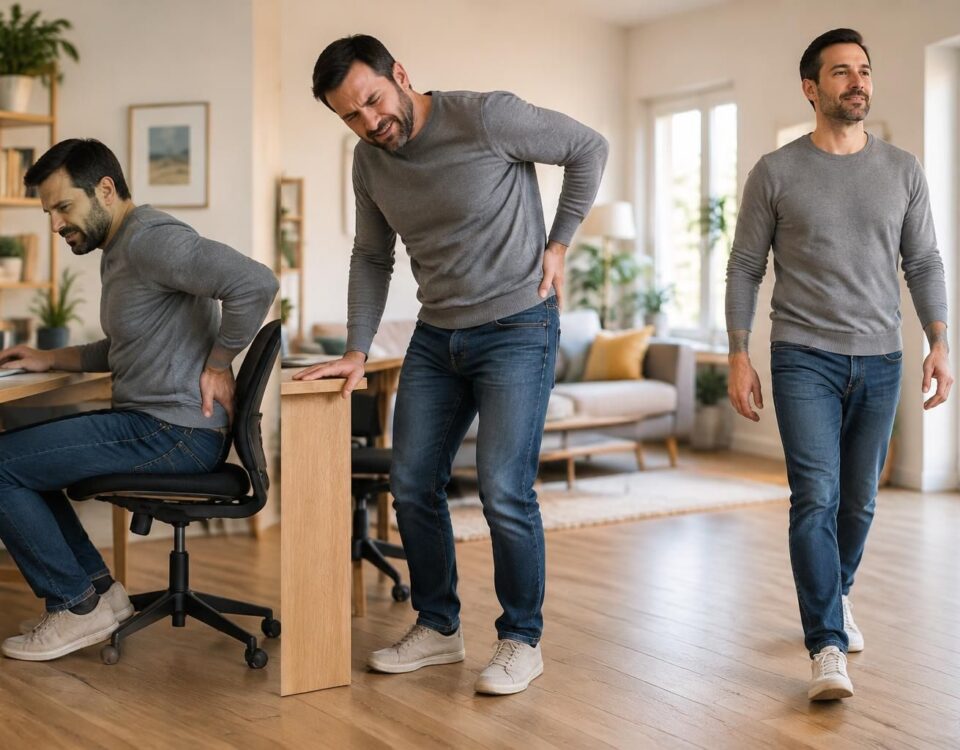
A sciatica that comes in episodes can be explained by nerve irritation that eases without the cause being clearly identified. The pain may reappear after prolonged sitting, effort, or normal movement. This article explains what these episodes may signify, what signs to monitor, and when to consult for an appropriate assessment.
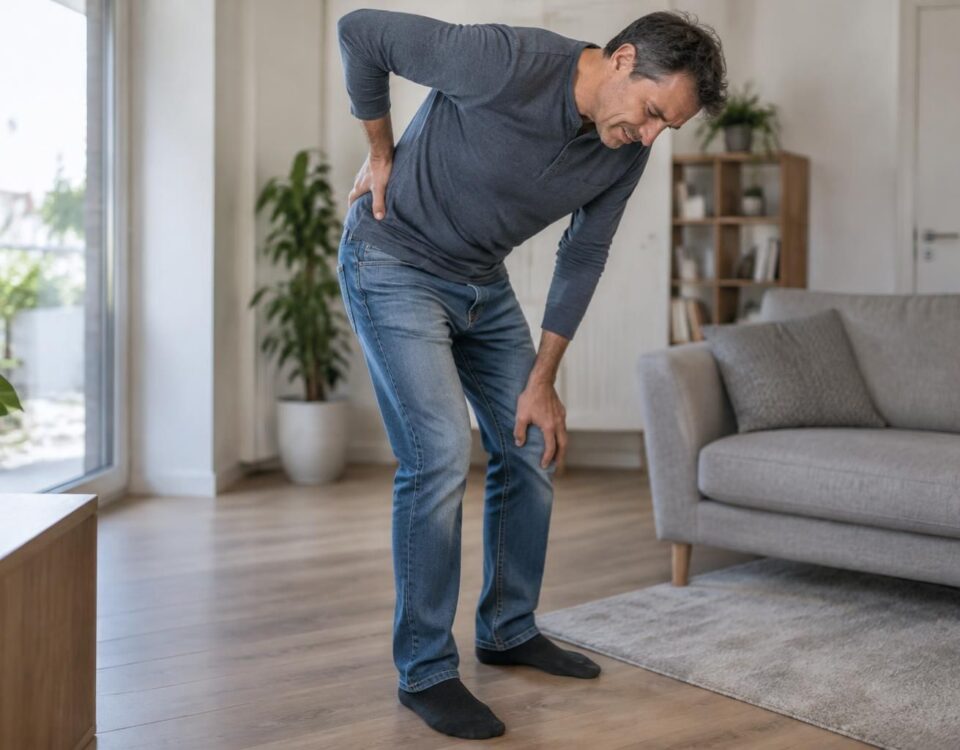
Sciatica refers to pain that follows the path of a lumbar nerve root and the sciatic nerve. It may affect the buttock, back of the thigh, calf, or foot. It is sometimes accompanied by burning, electric shocks, tingling, or numbness.
The pain can be constant or appear in episodes. A temporary improvement does not alone indicate that the cause has been resolved. Intermittent pain may vary depending on positions, activities, and nerve irritation. To learn more, check our article on sciatica and intermittent pain.
Recurrences are common among individuals who have already experienced a lumbar or sciatica episode. Research published in The Lancet describes these pains as issues that can evolve over time, with periods of improvement and reoccurrence. A recurrence does not mean you are fragile or that you have necessarily made a mistake.
Why does sciatic pain come back?
A pain may decrease when local irritation subsides or when you modify your activities. It can reappear if a situation once again stresses the affected area. The cause may be related to irritation of a nerve root, herniated disc, narrowing of nerve passageways, or other factors that need to be evaluated.
Pain experienced in the leg does not always indicate where the problem is located. The buttock or leg may be painful while the irritation is higher up, near the lumbar spine. A clinical evaluation helps distinguish possible causes and determine if medical examination or imaging is necessary.
An episode may ease without everything being resolved
Relative rest, posture changes, and decreased inflammation can reduce symptoms. However, the return of pain does not automatically prove that compression persists. It also does not allow for the identification, without examination, of a joint or muscle as a certain cause. The professional must consider your symptoms, history, and neurological examination.
To deepen understanding of the possible reasons for recurrences, you can read this article on recurrent sciatica and its possible causes. However, general information cannot replace an individual evaluation.
The sensitivity of the nervous system can change
When pain is recurrent or persistent, the nervous system can become more sensitive. Movements and positions previously well tolerated may then trigger symptoms more easily. Stress, disrupted sleep, and fear of movement can also influence pain perception. These factors do not mean the pain is imaginary: they can change how the body processes pain signals.

Sciatica and pain that varies from day to day
IN BRIEF Sciatica can vary from day to day depending on fatigue, activities, and the sensitivity of the nervous system. These fluctuations are common and do not necessarily mean that the situation is worsening. A gradual return to movement and…

Sciatica and pain that varies with activity
IN BRIEF Sciatica is pain related to irritation of a lumbar nerve root; it can vary with movements and activities. Gentle mobility, such as walking, and adapted exercises can help maintain flexibility and strength, while prolonged rest can increase stiffness.…
What situations can trigger an episode?
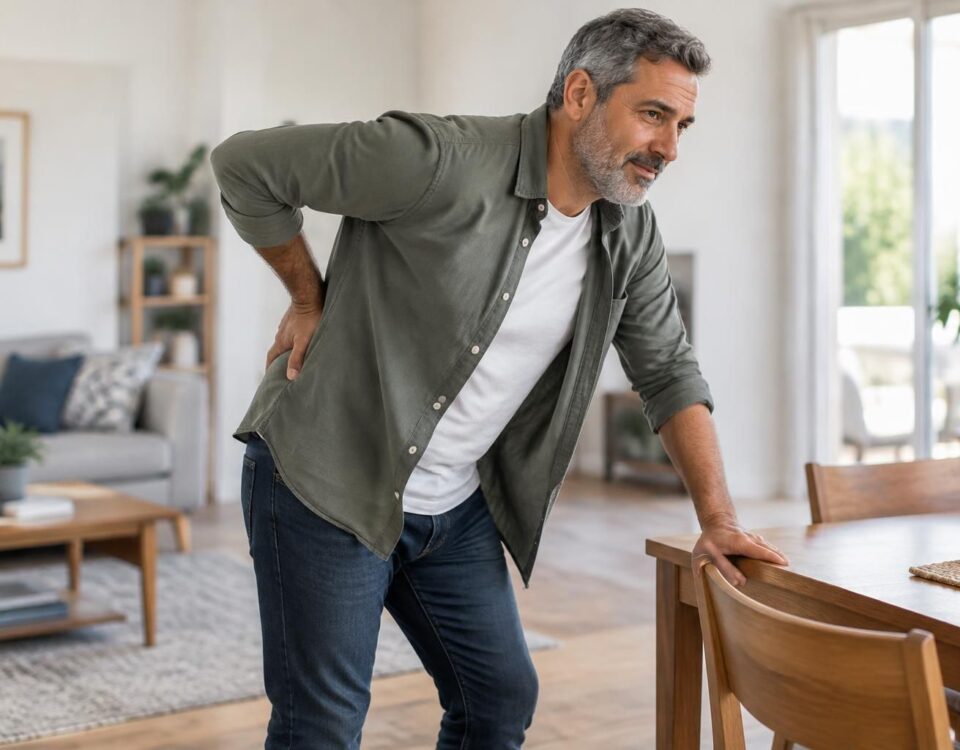
A long period of sitting, driving, a demanding workday, or a rapid increase in efforts can be associated with a resurgence. The trigger varies from person to person. It is useful to note the circumstances of each episode, its duration, its trajectory, and associated symptoms. This information can help the professional guide their evaluation.
Driving can exacerbate discomfort for some individuals, especially when prolonged sitting is accompanied by numbness. Check information on sciatica and foot numbness while driving.
Pain that travels down during wake-up can also be concerning. It deserves to be interpreted based on its intensity, duration, evolution, and associated signs. Our page on pain that travels down the leg upon waking provides general guidelines.

Sciatica and pain that varies with posture
IN BRIEF Sciatica can vary depending on posture, as certain positions or their duration increase sensitivity of the nerve. Alternating positions, moving regularly, and adjusting sitting or standing periods can help distribute strains better and gradually improve tolerance to movement.…
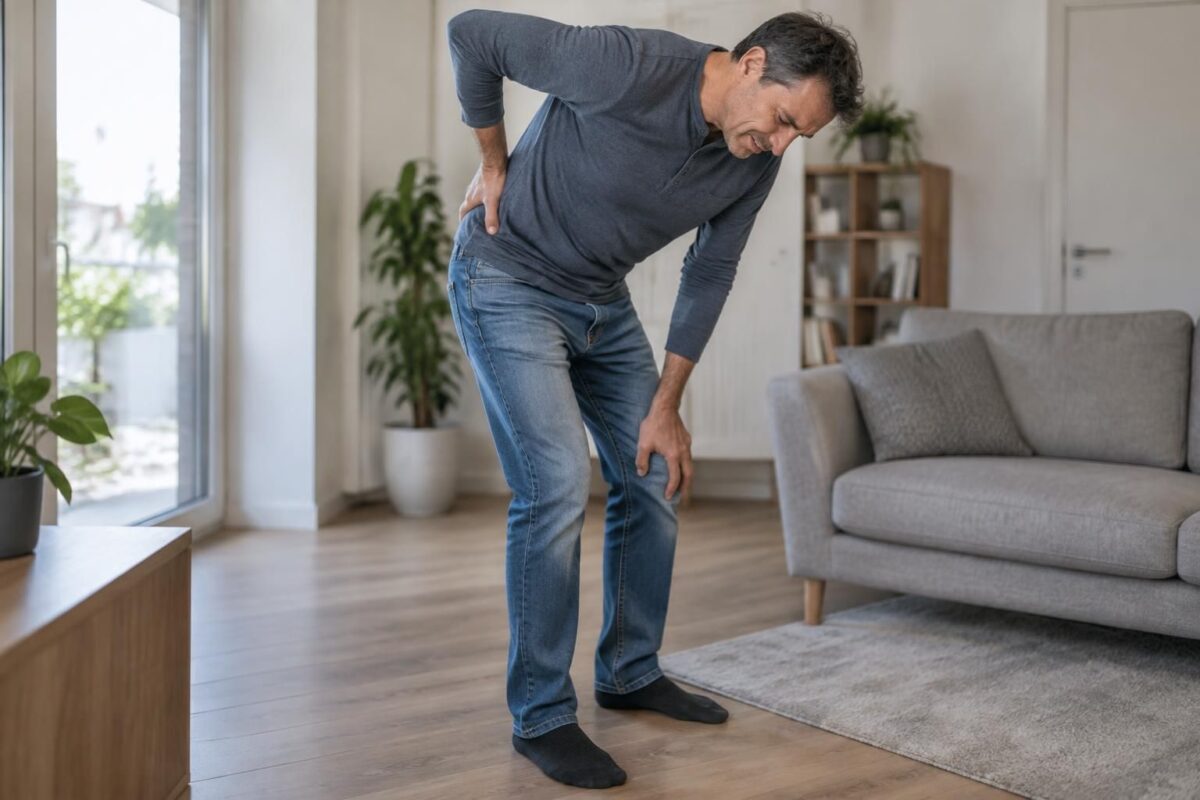
Sciatica and pain worsened in lumbar flexion
IN BRIEF Aggravated lumbar flexion sciatica refers to pain that increases when bending the lower back forward and can radiate from the buttock to the leg. This movement may exacerbate the irritation of a nerve root, for example, in the…
What symptoms should be observed?
Sciatica can cause pain that starts in the lower back or buttock and moves down the leg. Some individuals experience tingling, numbness, or a burning sensation. The location and trajectory of the symptoms can vary depending on the nerve root involved.
Pain in the heel may sometimes be associated with irritation of the S1 root, but several other causes are possible. An evaluation is necessary to establish the origin of the symptoms. Also, check our article on heel pain and the possible irritation of the S1 root.
Intermittent or constant pain alone is not enough to determine the severity of the problem. However, the presence of weakness, loss of sensation, or rapid worsening changes the course of action. To compare these presentations, consult this page on intermittent or constant sciatica pain.
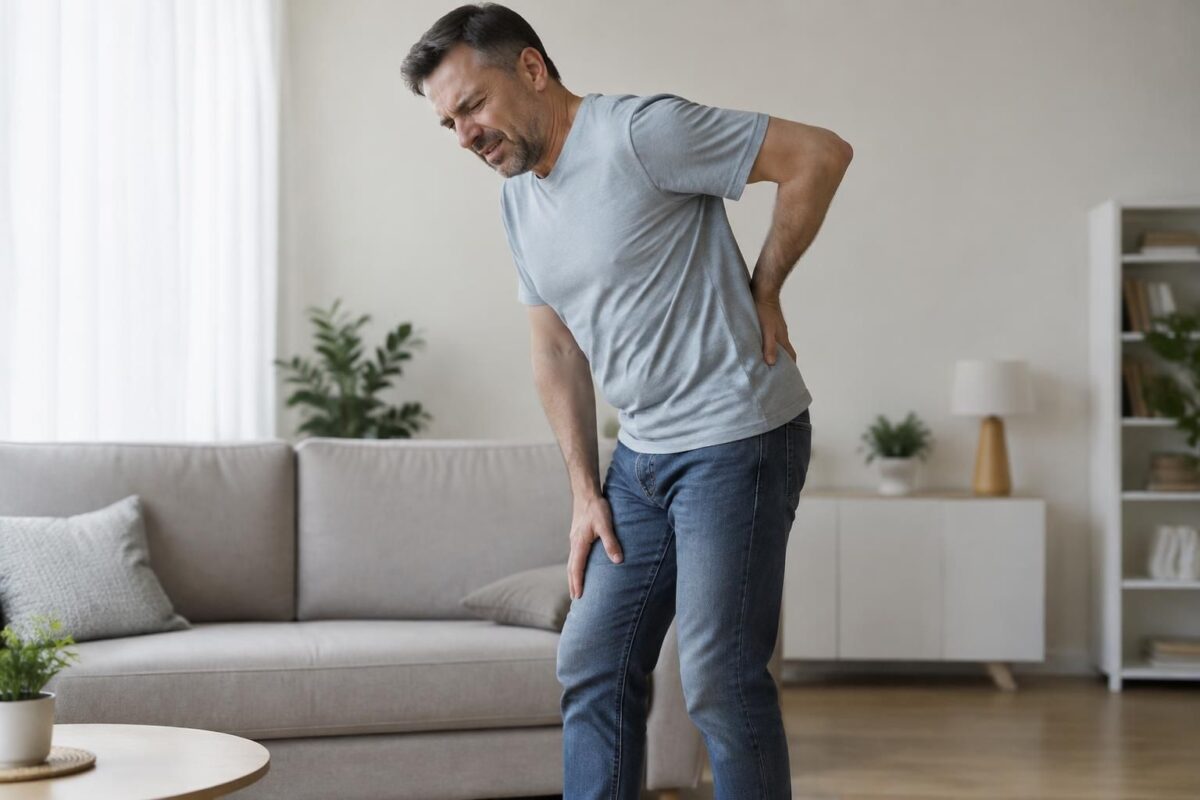
Sciatica and pain worsened in lumbar extension
IN BRIEF Lumbosacral sciatica aggravated in extension is a pain that radiates down the buttock or leg and increases when the lower back arches. This position can exacerbate irritation of a nerve root, particularly in cases of stenosis; however, it…

Sciatica and pain relieved by bending: possible stenosis
IN BRIEF A sciatica-type pain relieved by leaning forward may be compatible with lumbar stenosis, a narrowing that can irritate or compress nerves. Flexion may temporarily decrease pressure, but does not confirm the diagnosis or treat the cause. A professional…
How to react when the pain returns?
Avoid concluding alone that you have a herniated disc or a hip problem based solely on the pain path. A healthcare professional can check strength, sensitivity, reflexes, and movements that alter symptoms. They can then recommend appropriate management or refer you to a doctor.
If symptoms remain moderate and no warning signs are present, avoid positions that significantly worsen the pain and vary your postures according to your tolerance. Prolonged immobilization is generally not a sufficient response. Gradually resume your activities and seek advice if a movement greatly increases symptoms.
A treatment aimed solely at relieving pain can provide relief, but it does not always explain why episodes return. The evaluation should consider symptoms, history, load factors, and any neurological impairments. Manual treatments or other approaches should be chosen based on the assessment and do not replace a medical diagnosis.
When should you consult quickly?
Consult a doctor quickly if you notice significant or progressive weakness in the leg, a dropped foot, loss of sensitivity that spreads, or rapidly worsening pain. Loss of control of the bladder or bowels, new difficulty urinating, or loss of sensation in the saddle area requires urgent evaluation.
A medical consultation is also important in the presence of fever, after recent trauma, or if the pain is accompanied by a concerning general condition. If in doubt about the urgency, contact the medical services in your area.
Assessment and management options
At the TAGMED Clinic, an assessment can help determine if a non-surgical approach is appropriate. Depending on the evaluation and situation, care may include specific osteopathy or motorized neurovertebral decompression. These options are not suitable for everyone and do not replace a medical examination or follow-up prescribed by a doctor.
To learn about the services offered, check the pages of the TAGMED Clinic in Montreal and Mont-Royal or the service in Terrebonne. The relevance of treatment depends on your symptoms, health status, and the results of the assessment.
Frequently asked questions about episodic sciatica
Is intermittent pain reassuring?
Pain that comes and goes is not necessarily a sign of a serious condition, but its intermittent nature is not enough to rule out a problem requiring evaluation. Strength, sensitivity, progression, and associated symptoms also count.
Does recurrent sciatica mean that the first management failed?
Not necessarily. Symptoms can fluctuate, and several factors can contribute to their return. A new assessment can help verify if the situation has changed and if management should be adjusted.
Should I get an MRI with every episode?
No. Imaging is not always necessary. A doctor may consider it if symptoms persist, if the examination reveals a neurological deficit, or if results could change management. The decision depends on each situation.
Can the pain extend down to the foot?
Yes. Some pains related to nerve irritation can extend down to the foot or toes. However, foot pain may also have other causes. An examination helps clarify its origin.
About the author
Sylvain Desforges, B.Sc., D.O., N.D., Doctor of Osteopathy and Naturopath, is the founding president of TAGMED and the ACMA association. His practice focuses, among other things, on chronic pain in the spine, lower back pain, and symptoms compatible with sciatica.
Through SOS Sciatique, he publishes educational content on sciatica symptoms, possible causes, and non-surgical approaches that can be considered after assessment. At the TAGMED Clinic, care may include, as appropriate, motorized neurovertebral decompression, specific osteopathy, or precision percussion.
For an assessment related to sciatica treatment in Montreal or Mont-Royal or sciatica treatment in Terrebonne, consult the services available at the TAGMED Clinic.
Medical disclaimer
Medical disclaimer: The information and advice provided on this site do not substitute for the advice, diagnosis, or treatment of a healthcare professional. Please note that Sylvain Desforges, B.Sc., D.O., N.D., Doctor of osteopathy, is neither a medical doctor nor a physician, and is not a specialist in a medical specialty as defined by the Collège des médecins du Québec. Manual medicine, functional medicine, and sports medicine as described on this site exclude any treatment or medical diagnosis made by a physician or specialist. Always consult your doctor for any medical questions. For more details, please read our Complete Legal Notice.
Episodic sciatica: understanding
- Pain often follows the path of the nerve, from the buttock down the leg.
- A respite does not, by itself, indicate that the cause has vanished.
- Recurrences can be influenced by posture, activity, and sleep.
- A returning pain deserves evaluation to seek its origin.
Between episodes: act cautiously
- Gradually resume activities, without forcing through the pain.
- Alternate positions and take short breaks if you remain seated for a long time.
- Consult a healthcare professional if episodes persist or worsen.
- Significant weakness, urinary issues, or loss of sensitivity in the perineum: consult urgently.

A sciatica that returns in episodes deserves an evaluation of its possible causes and your daily habits. The pain may ease and then reappear without any obvious new incorrect movement. Between episodes, prioritize a gradual return to activity, avoid movements that significantly worsen symptoms, and consult a healthcare professional if the pain persists or worsens.
Understanding recurring pain
The term sciatica describes pain that radiates from the lower back or buttock down the leg, sometimes to the foot. Tingling, a burning sensation, or numbness may also be present. These symptoms may be associated with irritation of a nerve root, but their location alone is not enough to identify their origin.
A lull does not necessarily mean the problem is completely resolved. Intensity can vary with inflammation, activities, sleep, and stress levels. A recurrence is not evidence that you are fragile or that you acted incorrectly: it mainly indicates that it is useful to reevaluate the situation and adapt the resumption of activities.
Resuming movement without rushing the leg
Avoid prolonged rest
If your symptoms allow, try to stay active at a comfortable intensity. Short walks spread throughout the day may be easier to tolerate than a long outing. Rest can help during a flare-up, but lying down for long periods may decrease your endurance and confidence in movement.
Adapt exercises to your symptoms
Avoid forcing a stretch that reproduces sharp or electrical pain in the leg. A movement that pulls strongly is not necessarily beneficial for an irritated nerve. Instead, choose gentle movements and adjust them with a professional if the pain increases or persists after exercise. Progress should remain gradual, without trying to “push through” marked worsening.
Reducing everyday constraints
If you stay seated for a long time, regularly change positions and get up to move for a few minutes when possible. Also vary your tasks and postures instead of repeating the same action for a long time. To resume carrying loads or sports, gradually increase the duration or intensity, one step at a time.
Sleep and stress can influence the perception of pain. A regular sleep routine, breaks, and slow breathing do not replace an evaluation, but can support your recovery. Note activities that worsen or relieve symptoms: these observations will help the consulted professional guide their examination.
When to seek an evaluation
Consult a doctor or authorized healthcare professional if episodes recur, limit your activities, are accompanied by persistent numbness, or do not improve. An evaluation can help determine if tests or particular management are indicated. Manual care or exercises should be tailored to your situation and do not guarantee the absence of recurrence.
Signs requiring urgent consultation
Consult a medical service quickly in case of loss of control over the bladder or intestines, numbness in the saddle region, significant or progressive weakness in the leg or foot, fever, recent trauma, or rapid worsening of pain.
Medical warning
This information is educational and does not replace a consultation, diagnosis, or treatment by a doctor or another authorized professional. The author is neither a doctor nor a specialist in a medical specialty recognized by the Collège des médecins du Québec. Osteopathy, manual medicine, or functional support approaches do not replace medical follow-up.
| Situation | Useful guideline |
|---|---|
| Pain returns in episodes | A lull does not always mean the cause of irritation has disappeared. |
| Pain radiates down the leg | The painful path helps guide the evaluation, without identifying the origin of the problem by itself. |
| A long sitting period triggers symptoms | Alternating positions and taking short breaks can help limit prolonged constraints. |
| Stretching worsens the pain | Avoid movements that pull or intensify symptoms; prioritize a tolerable activity. |
| Rest becomes prolonged | Gradually resuming walking and activities can prevent deconditioning. |
| Pain persists or returns frequently | A professional evaluation can help clarify the factors that sustain the symptoms. |
| Significant weakness, dropped foot, or urinary issues | Consult urgently a doctor or emergency service. |
Testimonials: when sciatica returns in episodes
Note: the stories below are illustrative examples and do not constitute verified patient testimonials. Each situation is different, and pain that radiates down the leg deserves an appropriate evaluation.
“The pain would disappear, then return after a few weeks”
“I had episodes of pain in my buttock and behind my thigh. Each time, it would eventually ease, and I thought the problem was resolved. Then a long day sitting or unusual effort would reignite the symptoms. I understood that it was useful not only to wait for the crisis to pass but also to evaluate what might contribute to its return.”
“I avoided moving for fear of triggering a crisis”
“As soon as the pain returned, I minimized my activities. I walked less and stayed seated or lying down for a long time. Gradually resuming my activities, without seeking to force through the pain, helped me regain confidence in movement.”
“I thought my stretches would definitely help me”
“As my leg was tight, I stretched the back of my thigh. Some days, the electric sensation increased after the exercises. I learned that an uncomfortable movement is not always suitable and that it’s better to choose gentle movements, depending on the symptoms and assessment.”
“Sitting seemed to encourage the return of symptoms”
“My episodes often occurred after several hours in front of the computer or in the car. I couldn’t eliminate these sitting periods, but I started to vary my position and get up regularly. These adjustments allowed me to better manage my days, without claiming they were enough to explain or resolve all sciatica issues.”
“I wanted to understand why the pain returned”
“The pain would sometimes radiate down to my calf, then lessen for a time. As the episodes repeated, I requested an assessment to better understand the possible factors and determine the next steps. The important point for me was to get advice tailored to my situation rather than systematically going back to the same exercises.”
A pain radiating down the leg can have various causes. If it is accompanied by significant or progressive weakness, a foot drop, loss of bladder or bowel control, or numbness in the perineum, consult a doctor or emergency service promptly.
Sciatica and recurrent episodic pain: Sylvain Desforges’ approach
Sylvain Desforges, B.Sc., D.O., N.D., Doctor of Osteopathy and naturopath, is the founding president of TAGMED clinics and the ACMA association. His professional journey is dedicated to supporting people who experience persistent or recurrent pain, particularly in the spine, lower back, and legs. He is particularly interested in situations where pain decreases for a time, then reappears and disrupts sleep, work, or daily activities.
Sciatica refers to pain following part of the course of the sciatic nerve. It can start in the lower back or buttock and extend down the thigh, calf, or foot. Tingling, burning, or electric sensations may also accompany it. However, the term describes a symptom, not solely the cause of the problem. An assessment should take into account the location of the pain, its evolution, and other present signs.
When pain returns episodically, it is tempting to think that a specific movement has necessarily caused a new injury. However, several factors can contribute to these fluctuations: irritation that calms down without full tolerance returning to activities, resuming efforts too quickly, prolonged sitting, or decreased activity related to fear of pain. Stress and lack of sleep can also influence how the nervous system processes pain signals. Understanding these elements helps to better direct the next steps, without assuming that a single cause explains all cases.
In his educational content, Sylvain Desforges addresses possible causes of sciatic-type pain, including irritation of a nerve root, a herniated disc, or narrowing of the spaces through which nerves pass. He reminds that imaging results must be interpreted alongside the person’s history and clinical examination: an image does not always suffice to explain symptoms. The goal is to better understand the overall picture and determine if medical evaluation or other management is indicated.
Within TAGMED clinics, the options offered may include, depending on the assessment and situation of each person, specific osteopathy, motorized neurovertebral decompression, laser, or shock wave therapy. These approaches may not necessarily be suitable for everyone and do not replace a medical diagnosis. Follow-up may also focus on concrete habits: gradually reintroducing movement, varying positions, and adjusting activity loads according to abilities and symptoms.
His approach prioritizes accessible information and individualized care, based on available knowledge and the person’s needs. In cases of significant or progressive weakness in a leg, loss of bladder or bowel control, or numbness in the saddle area, urgent medical evaluation is necessary. Educational information does not replace consultation, diagnosis, or treatment by a licensed healthcare professional. Sylvain Desforges is neither a medical doctor nor a specialist in a medical specialty recognized by the Collège des médecins du Québec.
Sciatica that lessens and then returns episodically can be unsettling, but these fluctuations are common and do not mean that you are fragile or that you have necessarily worsened your condition. Pain can follow the route of the sciatic nerve without its origin being at the location where it manifests: the challenge is to understand the factors that sustain the symptoms, and then to resume movement and activities in a gradual and adapted manner.
When the pain returns, it is useful not to automatically consider it as a new independent episode. Nerve irritation can calm down and then awaken when daily pressures change or accumulate. An assessment allows for clarifying symptoms, their evolution, and possible causes, which may include the lower back or other structures. To better understand this phenomenon, also consult this article on the reasons why sciatic pain often returns and this content dedicated to recurrent sciatica.
Avoid remaining immobile for long periods or forcing a movement that significantly increases pain. If your condition allows, prefer short walking periods, vary your positions, and gradually resume the actions you had set aside. A pain in the calf, whether intermittent or constant, or a leg that feels numb should be described accurately to a healthcare professional: these symptoms can have multiple explanations. You can delve deeper into these topics with the pages on calf pain resembling cramping, intermittent or constant pain, and a leg that feels numb.
The follow-up should be adapted to your situation: a clinical assessment helps distinguish nerve pain from other causes and determine if examinations or care are necessary. Exercises, insoles, or manual approaches are not systematically suitable for everyone and do not replace medical advice. For additional guidelines, refer to the guide to understand, relieve, and prevent sciatica, the information on insoles and sciatica, as well as the advice regarding chronic sciatica.
Quickly consult a doctor in case of significant or progressive weakness in the leg or foot, foot dragging, loss of sensation in the saddle area, or urinary or intestinal issues. These signs require urgent medical evaluation. New or worsening nerve symptoms should also be taken seriously; you will find additional guidelines on nerve symptoms not to be taken lightly.

Sciatica and pain worsened while sitting: consider the disc?
IN BRIEF Sciatica aggravated in a seated position may be related to irritation of a nerve root, sometimes caused by a herniated disc. Remaining seated can exacerbate pain that radiates from the buttock down the leg, but this symptom alone…

Sciatica and pain relieved while seated: consider stenosis?
IN BRIEF A sciatica relieved in a seated position may suggest a lumbar stenosis and neurogenic claudication, but this sign alone is not sufficient for a diagnosis. Observing walking, weakness, and symptom evolution helps guide the evaluation and compare signs…

Sylvain Desforges, B.Sc., D.O., N.D., docteur en ostéopathie
Dr Sylvain Desforges, B.Sc., D.O., N.D., osteopath, is the founding president of TAGMED and of the ACMA association. He dedicates his practice to chronic spinal pain, low back pain and symptoms compatible with sciatica, particularly when pain radiates toward the buttock, leg, calf, foot or toes.
Through SOS Sciatique, he publishes educational content on sciatica symptoms, possible causes such as disc herniation, disc narrowing, foraminal stenosis or irritation of a lumbar nerve root, as well as non-surgical approaches that may be considered according to the evaluation. At Clinique TAGMED, care may include, depending on the case, motorized neurovertebral decompression, specific osteopathic care or precision percussion.
For an evaluation related to sciatica treatment in Montreal / Mount Royal or sciatica treatment in Terrebonne, please consult the services available at Clinique TAGMED.
Medical disclaimer
The information published on SOS Sciatique is provided for educational purposes only and does not replace a consultation, diagnosis, opinion or treatment provided by a physician or another authorized healthcare professional. The author of this article is neither a medical doctor nor a specialist in a medical specialty recognized by the Collège des médecins du Québec. The osteopathic, manual medicine or functional support approaches described on this site do not constitute medical acts and are not intended to replace medical follow-up.
Consult a physician or emergency service in cases of loss of bladder or bowel control, anesthesia in the saddle area, significant or progressive weakness in the leg or foot, fever, recent trauma, severe pain or rapid worsening of symptoms. For more details, please read our Legal Notice.