Sciatica and difficulty climbing stairs
13/09/2026
Sciatica and foot pain while walking
13/09/2026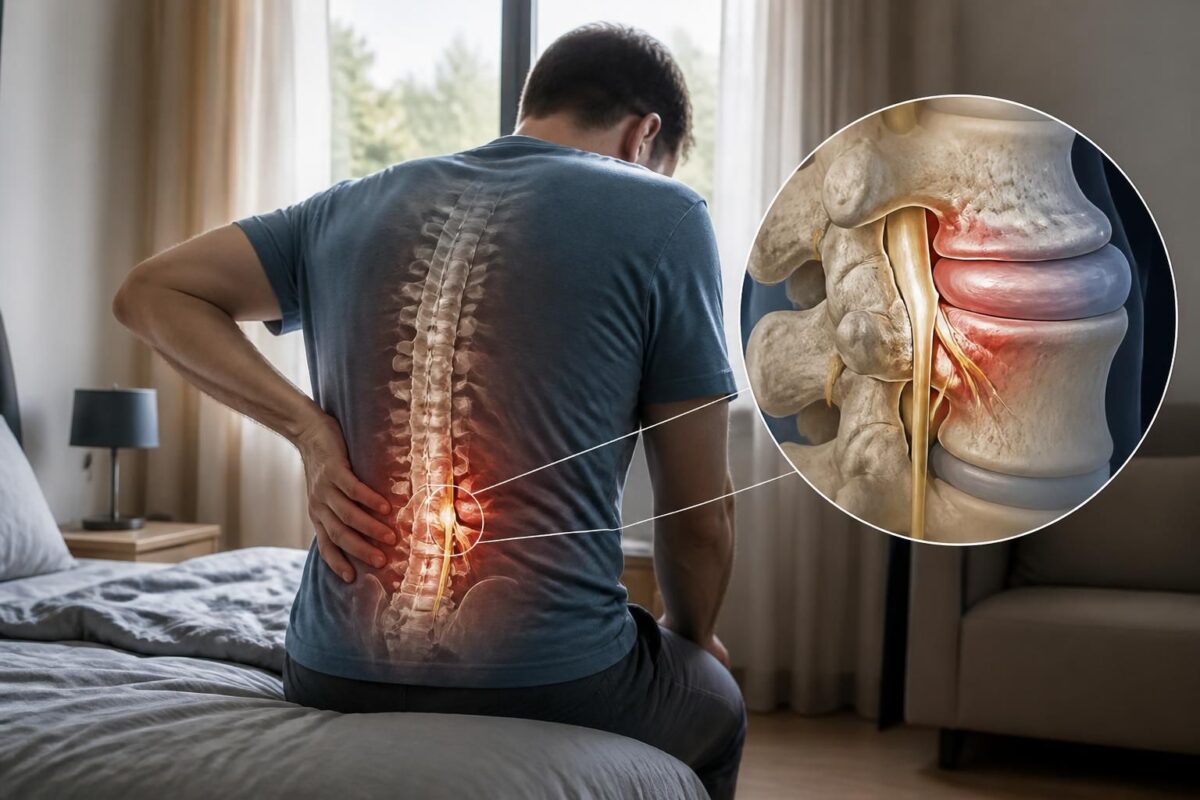
IN BRIEF
| In brief, a herniated disc and foraminal stenosis are two spinal disorders that can occur together. A herniated disc presents as a protrusion of the intervertebral disc and can compress nerves, while foraminal stenosis refers to the narrowing of the foramen through which the spinal nerve roots pass. This association may explain radiating lower back pain towards the limbs and unilateral radiculopathy. A clear diagnosis helps guide treatment towards conservative options (physical therapy, anti-inflammatories, injections) and, if necessary, surgical intervention. In Montreal, this service is particularly relevant for individuals aged 50 and older suffering from lumbosciatica and seeking a tailored solution. |
Short summary: Herniated disc and foraminal stenosis can be associated and amplify radicular and lower back symptoms.
- Herniated disc: protrusion or deformation of an intervertebral disc that can compress a nerve root and cause pain, paresthesia, or weakness.
- Foraminal stenosis: narrowing of the intervertebral foramen through which the roots pass, resulting in more localized and often intense radicular pain.
- Possible association: disc degeneration or herniation may reduce foraminal space; a herniation may also wedge into the foramen, creating double nerve compression and more pronounced symptoms.
- Signs and diagnosis: pain radiating into the buttock or leg, numbness; MRI/CT helps distinguish between the two mechanisms and guide management.
- Management: a tailored approach beginning with conservative options, with surgical decompression considered if necessary.
This article, written by a healthcare professional, reviews the potential association between a herniated disc and foraminal stenosis. We explain the possible mechanisms, symptoms, diagnosis, and management options, favoring non-surgical approaches when appropriate.
What is a herniated disc?
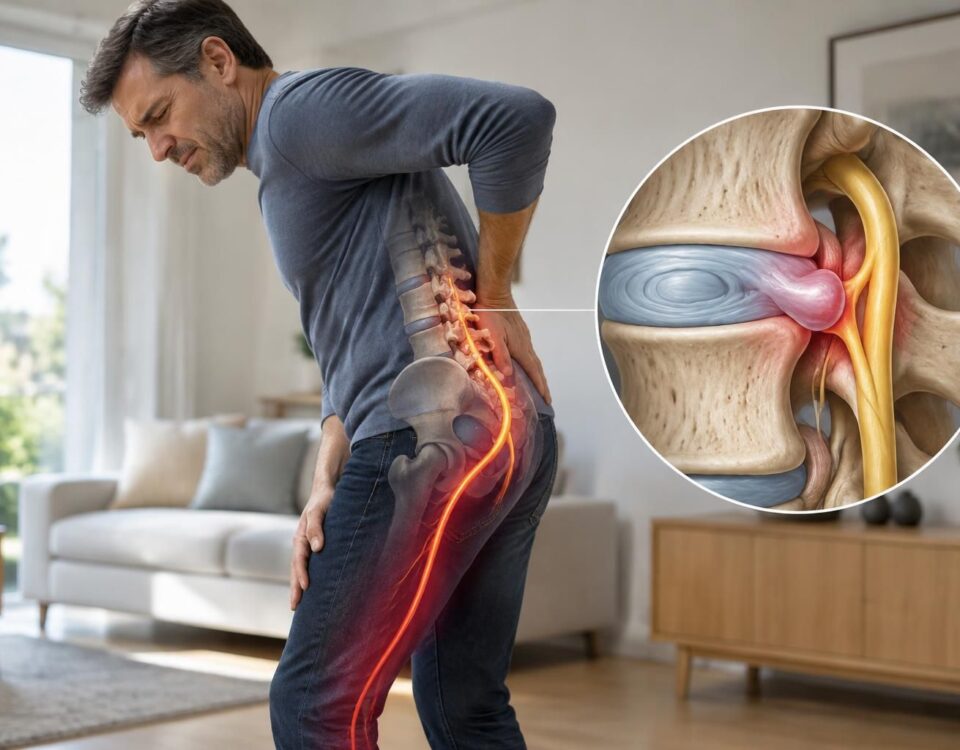
A herniated disc refers to the protrusion of an intervertebral disc from its normal position. This bulging can compress the nerve roots and cause pain, sensations of numbness, or muscle weakness, depending on the affected vertebral level.
Common causes: natural wear of the discs, repetitive movements, trauma, or significant strain. Diagnosis relies on radiological imaging such as MRI or CT scans, which reveal the location and extent of nerve compression.
What is foraminal stenosis?
Foraminal stenosis is a reduction of the space through which nerve roots pass through the intervertebral foramen. This precise location can lead to sharper and more localized pain, as well as numbness or loss of sensitivity in the territories served by the affected nerves.
It may result from thinning or narrowing of the foramen due to aging, arthritis, or spinal deformities. Symptoms are often unilateral and intense when compression is significant.
Possible association between herniated disc and foraminal stenosis
An association may exist when both mechanisms coexist at the same vertebral level. A herniated disc may worsen a foraminal stenosis by increasing pressure around the nerve root as it passes through the foramen. Conversely, a pre-existing foraminal stenosis may make the nerve root more vulnerable to a disc protrusion, amplifying the pain and symptoms.
In some individuals, the clinical picture results from a combination of radicular compression due to the herniation and foraminal narrowing. Diagnosis relies on clinical evaluation and imaging, which may show both a disc protrusion and foraminal narrowing.
Typical symptoms and diagnosis
Lower back pain radiating to the lower limbs, associated with tingling, pins and needles, or muscle weakness, may suggest a herniated disc and/or foraminal stenosis. The precise location of the pain and the intensity of the symptoms help differentiate the causes, but imaging remains essential to confirm the diagnosis and guide management.
To delve deeper into these concepts, you can consult the following resources:
- Herniated disc and radicular pain
- Neurovertebral decompression and non-surgical options
- Assessment and management
Diagnostics and therapeutic approach
Diagnosis relies on the association between clinical symptoms and imaging results. In the case of an association between herniated disc and foraminal stenosis, the goal is to determine the degree of compression and identify the involved structures in order to choose an appropriate treatment strategy.
Treatment options and clinical direction
Non-surgical approaches remain a priority when possible. At TAGMED clinic, several options can be considered based on the evaluation:
- Neurovertebral decompression motorized when clinical indications allow.
- Specific osteopathy and targeted manual techniques to improve mobility and reduce pain, without aiming for surgical treatment.
- Precision impactor for certain clinical indications, under appropriate supervision.
- Infiltrations or medical-surgical treatments not directly involved in the context of traditional physiotherapy.
- General non-drug approaches such as posture management and risk factor control, associated with appropriate medical follow-up.
Comparison table of non-surgical options and physiotherapy (with reference to effectiveness):
| Option | Description | Relative effectiveness (compared to physiotherapy) |
|---|---|---|
| Neurovertebral decompression | Motorized technique applied under clinical control and evaluation | Superior in certain selected cases |
| Specific osteopathy | Manual approaches aimed at functional balance | Variable depending on the case, complementary |
| Precision impactor | Targeted interventions for certain nerve compressions | Mixed evidence depending on the level and location |
| Physiotherapy (Physical Therapy) | Exercises and physical therapies | Variable effectiveness depending on the case; generally considered less specific for hernia/sthenosis associations |
| Infiltrations/medical treatments | Reduction of inflammation and pain | Variability depending on the patient and site |
In practice, an individualized approach is preferred. For additional information and resources related to these conditions, refer to the relevant professional and clinical areas:
For information and support, consult the resources on Sos Sciatique and Clinique TAGMED.
Medical disclaimer: The information and advice provided on this site do not replace the opinion, diagnosis, or treatment of a healthcare professional. Please note that Dr Sylvain Desforges, osteopath, is neither a doctor of medicine nor a physician, and is not a specialist in a medical specialty as defined by the Collège des médecins du Québec. Manual therapy, functional medicine, and sports medicine as described on this site exclude any medical treatment or diagnosis made by a physician or specialist. Always consult your doctor with any medical questions. For more details, please read our full Legal Notice.
- Herniated disc: protrusion or deformation of the intervertebral disc that may compress a nerve root.
- Possible location: spinal canal or intervertebral foramen, depending on orientation.
- Clinical signs: radicular pain, paresthesias, and sometimes muscle weakness depending on the affected root.
- Diagnosis: MRI or CT scan to visualize compression.
- Relation with the association: foraminal stenosis may coexist or be aggravated by a herniated disc.
- Foraminal stenosis: narrowing of the intervertebral foramen through which nerve roots exit.
- Preferred location: nerve exit, with more focal and often unilateral radicular pain.
- Signs: numbness, loss of sensitivity, and localized pain to the radicular area.
- Diagnosis: imaging targeting the foramen, supplementary examination if necessary.
- Relation with the association: a degenerative disc or herniated disc may contribute to or aggravate foraminal narrowing.

This article presents essential recommendations on the association between herniated discs and foraminal stenosis, two conditions that can coexist and amplify radicular symptoms. You will learn how these disorders intersect, what the causes and signals to watch for are, as well as the most relevant therapeutic approaches to relieve pain, improve mobility, and limit progression, prioritizing initially non-surgical solutions tailored to your situation.
Understanding the Association
A herniated disc occurs when the nucleus of an intervertebral disc presses on neighboring nerves, causing pain, numbness, or weakness in the areas served by these nerves. Foraminal stenosis concerns the space through which nerve roots exit via the foramina between the vertebrae. When a disc degenerates or deforms, it can reduce foraminal space and directly compress the nerve root, creating a possible association where symptoms mutually reinforce each other. Aging, microtraumas, and repetitive actions are common risk factors that promote both herniation and foraminal narrowing.
Signs and Diagnosis
Typical signs of a duo of herniated disc and foraminal stenosis include lower back or cervical pain associated with pain radiating down a limb, often with tingling, numbness, or muscle weakness in the affected area. Pain may be more precise and unilateral when foraminal stenosis is predominant. The use of medical imaging, particularly MRI, allows for the identification of both disc protrusion and foraminal narrowing, as well as the compressed nerve roots. A CT scan can be useful when MRI is not possible. A comprehensive clinical and functional assessment helps differentiate these phenomena and guide the therapeutic plan.
Recommended Therapeutic Approaches
Non-surgical Approaches
In most cases, a well-structured non-surgical program can provide significant relief and limit progression, especially when pain is not associated with severe neurological impairment. Key areas include: targeted physiotherapy to improve mobility and strengthen supporting muscles, osteopathy or tailored manual therapies to reduce tension and improve mobility, and progressive exercises focused on trunk stability and controlled extension of the spine. Ergonomics, posture, and daily activities should be optimized, with gradual improvements to avoid exacerbations. Symptomatic treatments such as anti-inflammatories or analgesics may be prescribed temporarily, under medical supervision, to allow the continuation of physical therapies. In some cases, targeted injections may be considered to reduce inflammation around the affected nerves.
When to Consider Surgery
Surgery is generally considered when symptoms persist despite conservative treatment lasting several weeks to a few months, or when significant neurological signs appear (marked weakness, loss of sensation, or risk of loss of function). In this light, surgical goals aim to relieve nerve compression, whether through foraminal decompression or targeted disk resection, in order to restore the passage of nerves and reduce radicular pain. A multidisciplinary evaluation is essential to determine the most appropriate intervention for your situation.
Preventing and Optimizing Daily Life
Prevention and maintenance of the back involve regular physical activity that is appropriate, maintaining good posture, and adopting a lifestyle that supports the spine. Avoiding poorly managed heavy loads, performing trunk strengthening exercises, and ensuring proper hydration and diet support disc and foraminal health. Regular follow-ups with your healthcare professional allow for adjustments to the treatment plan based on the evolution of signs and to prevent exacerbations.
| Criterion | Association and Implications |
|---|---|
| Location | Disc herniation: protrusion into the spinal canal; foraminal stenosis: narrowing of the intervertebral foramen. Possible association when both processes overlap. |
| Mechanism | Disc herniation: radicular compression by the protruding nucleus; foraminal stenosis: compression due to narrowing of the foramen. Together, possible increased pressure on the roots. |
| Symptoms | Low back pain and radicular pain; association may create more intense pain and extended irradiation, with possible numbness. |
| Imaging | MRI or CT scan to detect both phenomena; possibility of seeing a hernia and foraminal narrowing simultaneously. |
| Causes & Factors | Aging-related wear, microtraumas; degeneration promotes the coexistence of a hernia and a narrowed foramen. |
| Association | Yes, possible association: a hernia may add to an already narrowed foramen, reinforcing nerve compression. |
| Conservative Treatment | Physiotherapy, anti-inflammatories, and rehabilitation; coordinated approach if both mechanisms are present. |
| Surgical Treatment | Targeted decompression based on affected areas; surgical choice adjusted according to the presence of both conditions. |
| Prevention / Lifestyle | Maintaining correct posture, engaging in appropriate physical activity, and avoiding heavy loads to limit wear and the risk of association. |
Testimonials on the Possible Association between Disc Herniation and Foraminal Stenosis
“At 62, intense low back pain radiated into my buttock and thigh. Imaging showed a disc herniation and a foraminal stenosis at the same level, demonstrating that this possible association explained the symptoms.”
“I was told that when disc herniation and foraminal stenosis coexist, the pain can vary and be more localized to one side. Thanks to a multidisciplinary approach and osteopathy, I regained mobility and reduced irradiation.”
“I initially experienced intense pain followed by periods of remission. My therapist identified the possible association between disc herniation and foraminal stenosis and adjusted the treatment to alleviate nerve compression, which helped avoid surgery.”
“Today, after several weeks, I handle daily efforts better and my back hurts less. I understand that one can influence the other and that the key is appropriate management for this association.”
Spinal pathologies can manifest as low back pain and radicular symptoms radiating into the limbs. Two conditions commonly found in this clinical landscape are disc herniation and foraminal stenosis. While they share some mechanisms, they also have significant differences in their location and mode of action on the nerves exiting the spinal cord. In some cases, these conditions coexist and may exacerbate pain and neurological disorders, making evaluation and management more complex.
What is a disc herniation? It is a bulging of the intervertebral disc out of its normal position, which can compress adjacent nerve roots and trigger pain, paresthesias, and sometimes muscle weakness. Typical causes include natural disc wear, repeated movements, or trauma. Symptoms vary depending on the location of the herniation and may spread into the arms or legs, sometimes with numbness and tingling sensations.
What is foraminal stenosis? This specific form of nerve compression affects the intervertebral foramen, the opening through which the nerve roots exit the spinal canal. Foraminal stenosis is often caused by narrowing of the foraminal space due to disc degeneration, osteophytes, or vertebral compression. It generally manifests as sharper and more localized radicular pain, sometimes associated with numbness and loss of sensitivity when the root is severely compressed.
Possible association and underlying mechanisms: disc degeneration can lead to a decrease in disc height, favoring foraminal narrowing and intensifying nerve root compression. Conversely, a disc herniation can exacerbate nerve irritation at the entrance of the foramen, or in the spinal canal, creating a scenario where symptoms overlap. This pathological duo can amplify pain, limit mobility, and worsen radiculopathy, especially in aging patients or those subjected to repetitive mechanical stress.
Diagnosis and clinical implications: the diagnosis relies on a targeted clinical examination and imaging techniques, primarily MRI to precisely locate the hernia and assess nerve compression, often complemented by CT when MRI is not feasible. The evaluation must distinguish signs of radiculopathy caused by a disc herniation from those of pure foraminal stenosis in order to anticipate the most suitable therapeutic options and assess the surgical risk if intervention is considered.
Treatment and management: the approach is generally multidisciplinary and graduated. Initial measures consist of non-surgical treatments, including physiotherapy, muscle strengthening, anti-inflammatories, and postural adjustments. Targeted injections and manual therapies can relieve pain and reduce nerve irritation. If symptoms persist or there is a loss of function despite these treatments, surgical options such as partial discectomy, foraminotomy, or fusion may be discussed, depending on spinal stability and the extent of symptoms.
For individuals suffering from low back pain associated with radicular symptoms, it is crucial to assess both aspects: disc herniation and foraminal stenosis, as an association may modify the choice of treatments, timelines, and prognosis. Adopting a preventive approach focused on posture, trunk strengthening, and suitable physical activity can also limit the onset and progression of these conditions.
This article addresses the possible association between Disc Herniation and Foraminal Stenosis, explaining how these pathologies can coexist, their nerve compression mechanisms, their symptoms, and the approaches to diagnosis and treatment. Although distinct in their location, they often share degenerative and mechanical factors that necessitate precise evaluation to guide therapeutic choice.
In some cases, a Disc Herniation can directly contribute to a Foraminal Stenosis by narrowing the foramen through which nerve roots exit, thus exacerbating radiculopathy and causing local pain in the lower back or leg. Furthermore, a Foraminal Stenosis can occur independently of a disc herniation and may present with more targeted pain and increased sensitivity during exertion or prolonged standing.
Coexistence is more frequent among elderly patients or those showing multiple degenerative signs (disk wear, osteophyte formation, foraminal narrowing). This association can complicate diagnosis, as symptoms may overlap and mimic a single pathology. Evaluation is then based on appropriate imaging to precisely locate the source of compression and distinguish the disc contributions from foraminal stenosis. You can consult dedicated resources on the difference between these pathologies and their clinical manifestations on the specialized sites mentioned below.
From a therapeutic perspective, the initial approach is generally conservative: management with analgesics and anti-inflammatories, physiotherapy, and targeted exercises aimed at relieving pain and restoring mobility while strengthening the trunk. When nerve compression persists or worsens, intervention options may be considered, such as foraminal decompression techniques or, if necessary, approaches associated with disc surgery or spinal stabilization based on the clinical context. The goal is to free the nerve root and improve motor function and quality of life.
To delve deeper, here are some relevant resources that address among other things the distinctions between these conditions, the mechanisms of radicular pain, and therapeutic options: Difference between disc herniation and foraminal herniation, Disc herniation and pain when sneezing, Foraminal disc herniation, Disc herniation and annular tear, Cervical foraminal stenosis, Acute sciatica – common causes, What we can do, Mechanical compression of the nerve, Foraminal stenosis, Pain that centralizes.

L5-S1 protrusion and sciatic pain: pathway to the foot
IN BRIEF A L5-S1 disc protrusion is a disc that slightly bulges between the lumbar and sacral vertebrae. If it irritates a nerve root, pain may radiate from the lower back or buttock down the back of the leg to…

L4-L5 protrusion and sciatic pain: possible signs
IN BRIEF A L4-L5 disc protrusion is a bulging of the disc between two lumbar vertebrae. If it irritates the L5 nerve root, it can cause sciatica radiating from the buttock to the side of the leg and the top…
Disc protrusion and sciatica: when the disc touches a nerve root
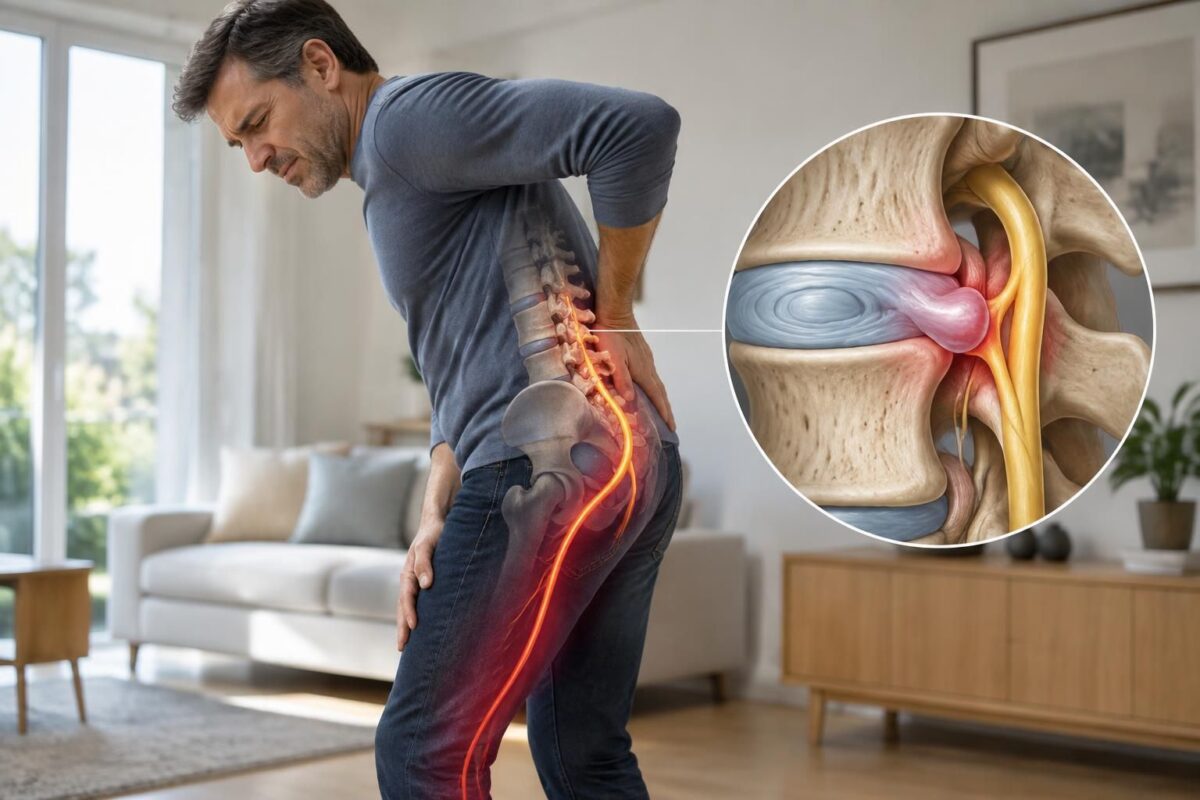
IN BRIEF A disc protrusion is a disc that extends beyond its usual contour. If it irritates a nerve root, it can contribute to sciatica, with pain radiating into the buttock or leg, sometimes accompanied by tingling or weakness. An…

Herniated disc and sciatica: morning pain and lumbar stiffness
IN BRIEF A herniated disc can irritate a nerve root and cause sciatica, with lower back pain radiating down the leg. However, morning pain and lower back stiffness alone are not sufficient to confirm this diagnosis. An assessment helps guide…

Herniated disc and sciatica: night pain and factors to watch out for
IN BRIEF A herniated disc can irritate a nerve root and cause sciatica, sometimes more bothersome at night. Night pain alone is not enough to determine the cause: its variation according to positions, neurological examination and, if necessary, imaging help…

Herniated disc and sciatica: why the leg can be numb
IN BRIEF A sciatica is pain related to the irritation of a nerve root, sometimes caused by a <strongherniated disc. Pressure on the nerve can cause tingling, loss of sensation, or weakness in the leg. A healthcare professional can assess…

Herniated disc and sciatica: causes of recurring pain
IN BRIEF A herniated disc can irritate or compress a nerve root and cause sciatica, with pain radiating from the lower back to the buttock or leg and possibly returning. Symptoms and their causes are not always the same: an…
Herniated disc and sciatica: when to reassess symptoms
IN BRIEF A herniated disc can irritate a nerve root and cause sciatica, with pain that radiates down the leg. Reevaluating symptoms helps to track their evolution and determine if medical advice or tests are necessary, without assuming that surgery…

Dr Sylvain Desforges, B.Sc., D.O., N.D., osteopath, is the founding president of TAGMED and of the ACMA association. He dedicates his practice to chronic spinal pain, low back pain and symptoms compatible with sciatica, particularly when pain radiates toward the buttock, leg, calf, foot or toes.
Through SOS Sciatique, he publishes educational content on sciatica symptoms, possible causes such as disc herniation, disc narrowing, foraminal stenosis or irritation of a lumbar nerve root, as well as non-surgical approaches that may be considered according to the evaluation. At Clinique TAGMED, care may include, depending on the case, motorized neurovertebral decompression, specific osteopathic care or precision percussion.
For an evaluation related to sciatica treatment in Montreal / Mount Royal or sciatica treatment in Terrebonne, please consult the services available at Clinique TAGMED.
Medical disclaimer
The information published on SOS Sciatique is provided for educational purposes only and does not replace a consultation, diagnosis, opinion or treatment provided by a physician or another authorized healthcare professional. The author of this article is neither a medical doctor nor a specialist in a medical specialty recognized by the Collège des médecins du Québec. The osteopathic, manual medicine or functional support approaches described on this site do not constitute medical acts and are not intended to replace medical follow-up.
Consult a physician or emergency service in cases of loss of bladder or bowel control, anesthesia in the saddle area, significant or progressive weakness in the leg or foot, fever, recent trauma, severe pain or rapid worsening of symptoms. For more details, please read our Legal Notice.