Sciatica and pain that varies with activity
31/10/2026
Sciatica and movement that worsens: why stop it
31/10/2026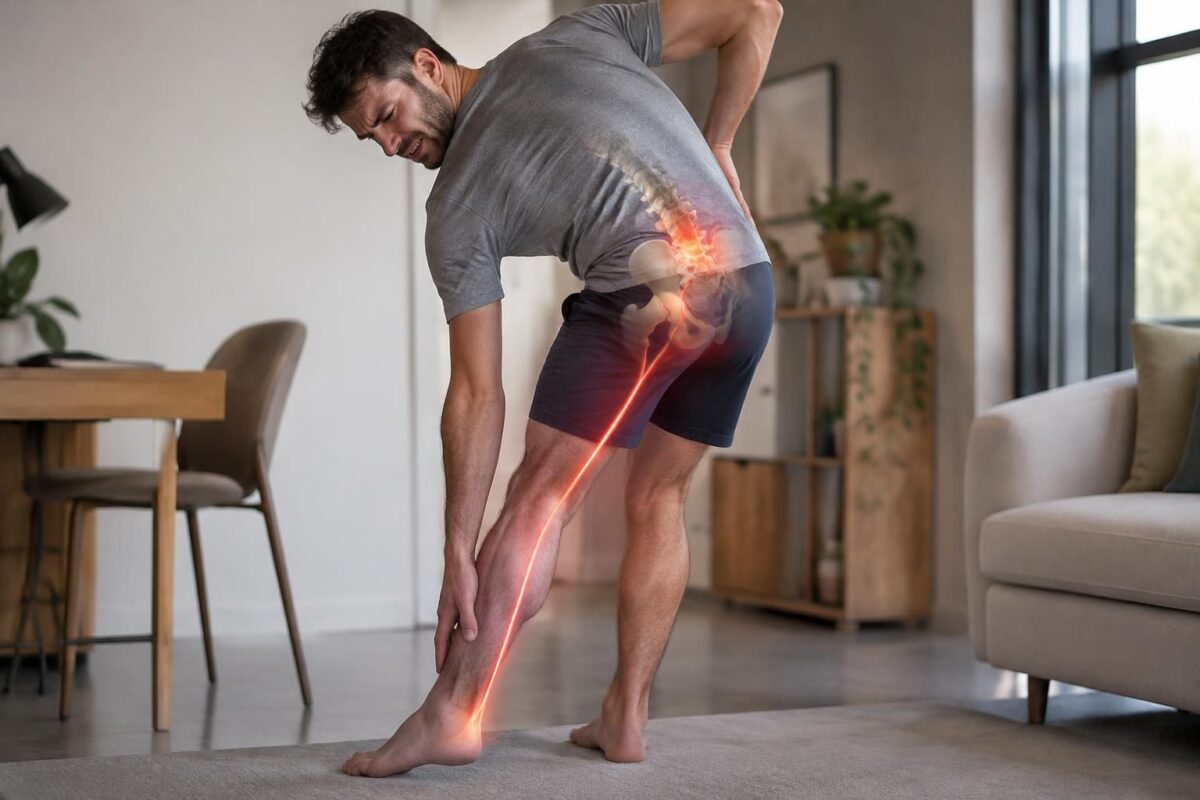
IN BRIEF
| A disc herniation is a bulging of a disc in the spine, often without symptoms. If it irritates a lumbar nerve root, the pain may radiate down the leg to the foot and sometimes be felt in the heel. However, heel pain does not necessarily mean that a disc is involved: its origin must be evaluated. Progressive weakness, significant numbness, or urinary or bowel disturbances require urgent consultation. |
A disc herniation does not always cause symptoms. If it irritates a lumbar nerve root, pain may still radiate down the leg to the foot, sometimes to the heel, with tingling or numbness. Heel pain may also have another origin, such as a local foot problem: the path and associated symptoms help guide the evaluation.
Quickly consult a healthcare professional if the pain persists, worsens, or is accompanied by weakness. Loss of bladder or bowel control, insensitivity in the saddle area, or significant weakness require urgent evaluation.
A disc herniation can sometimes irritate a nerve root and cause pain that radiates down the leg to the foot. Heel pain may then be related to the back, but this relationship is not automatic: local foot causes are common. The path of the pain, other symptoms, and the clinical examination help guide the evaluation.
Can a disc herniation cause heel pain?
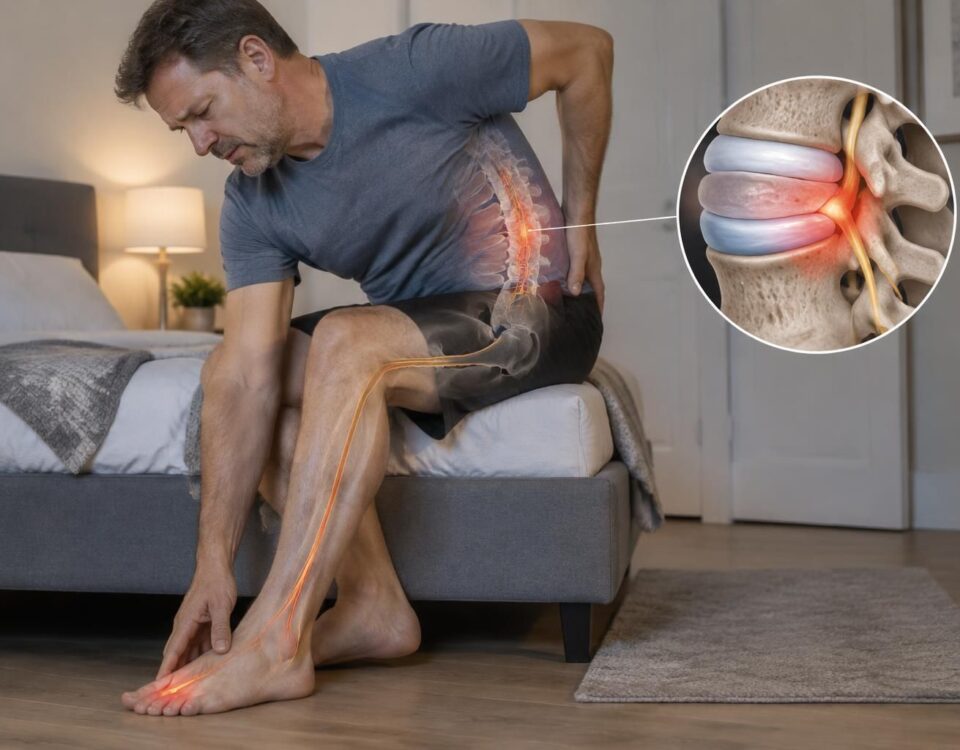
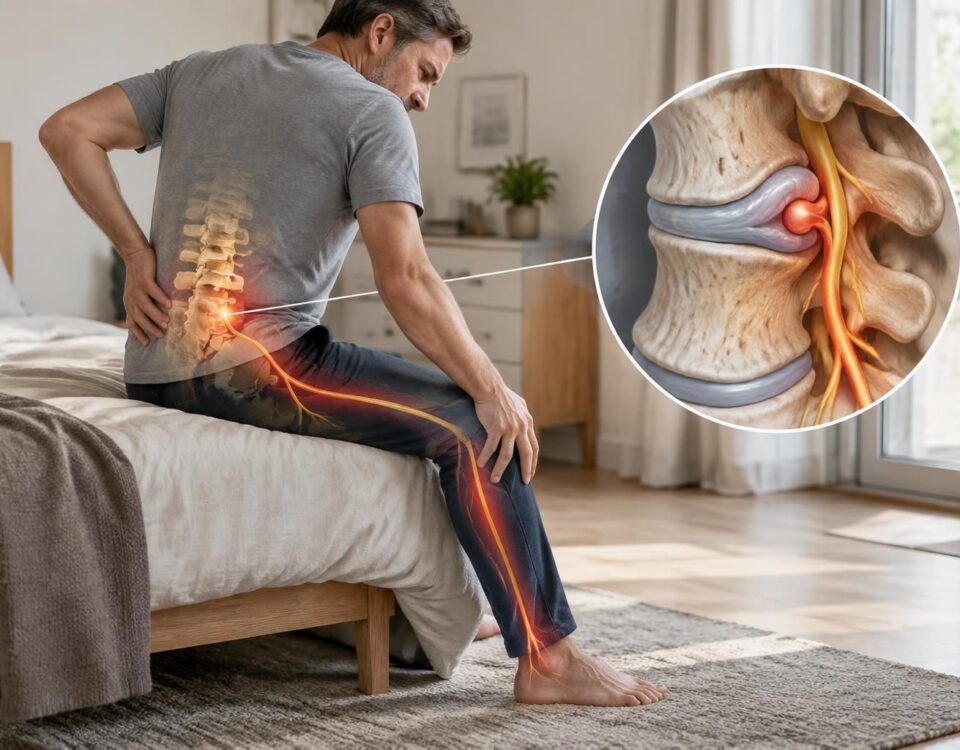
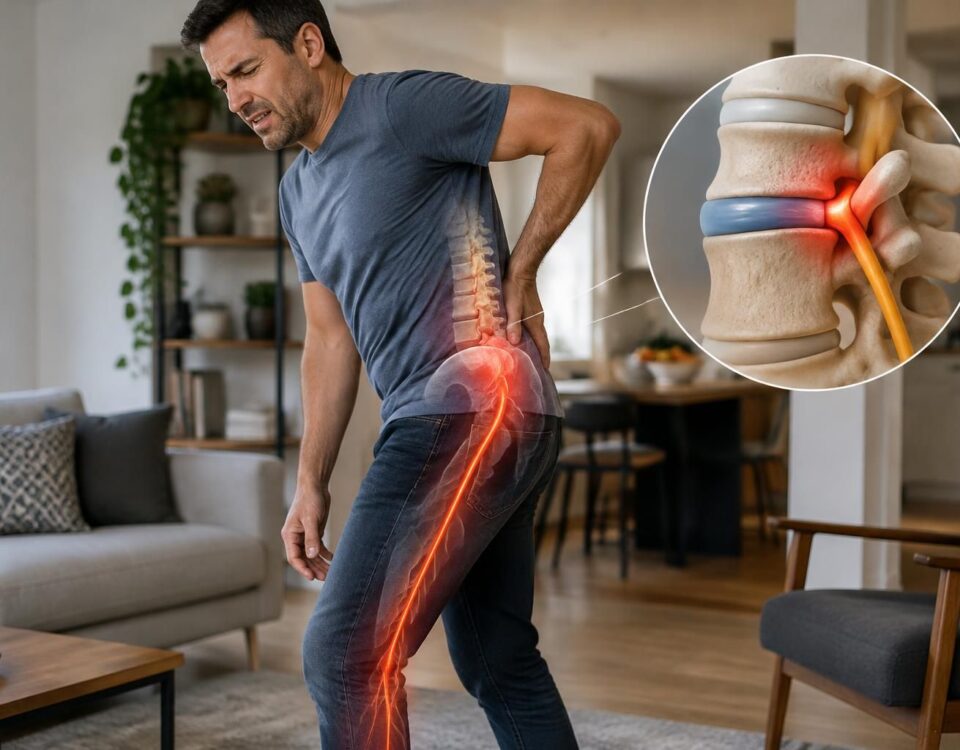
A disc herniation corresponds to a bulge of the disc between two vertebrae. It doesn’t necessarily cause pain. It can become symptomatic if it irritates or compresses a nearby nerve root. The pain may then follow the path of the nerve through the buttock, the leg, and sometimes the foot.
Affecting the S1 root can particularly cause pain at the back of the leg and towards the outer edge of the foot, sometimes down to the heel. However, the location of the pain alone is not enough to identify the affected root. A visible herniation on imaging does not prove, by itself, that it explains the pain.
To understand why an image of a herniation doesn’t always correspond to symptoms, consult our article on disc herniation and lumbar degeneration.

Intervertebral disc protrusion and pain in the big toe
IN BRIEF A disc protrusion is a bulging of the disc that can irritate a lumbar nerve root, particularly L5, and cause pain, tingling, or numbness down to the big toe. This symptom alone does not confirm a disc origin:…
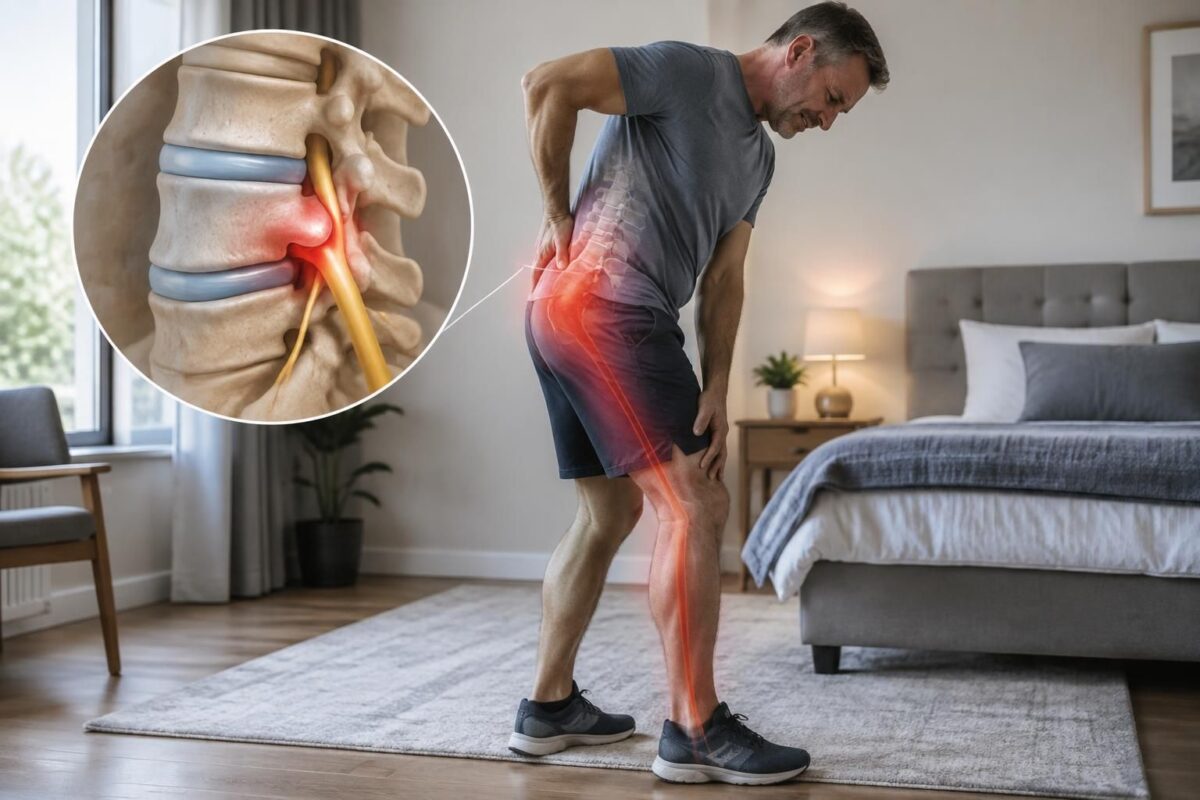
Disc herniation and pain radiating below the knee
IN BRIEF A disc protrusion is a deformation of a disc in the spine that can irritate a nerve root. If the pain extends below the knee, with tingling or weakness, this may suggest sciatica, although this alone does not…
What signs may suggest a nerve origin?
Nerve-related heel pain is sometimes accompanied by lower back or buttock pain. It may radiate behind the thigh and the calf. Some people describe burning, electric shocks, tingling, or numbness. The pain may increase in certain positions or during specific activities.
Pain mainly felt under the heel, at the first step after resting or after a long period of standing, may also come from the tissues of the foot. Irritation of the plantar fascia, an Achilles tendon injury, or other local issues are among the possible causes. Only a healthcare professional can assess the situation and distinguish these origins.
The path and circumstances of the pain matter
Before a consultation, note where the pain starts, how far it radiates, if it affects one or both feet, and if it is accompanied by weakness or changes in sensitivity. Also indicate how long it has been present and what seems to aggravate or relieve it. These pointers help the professional guide their examination.
Pain that appears after a twist doesn’t necessarily mean that a disc is involved. To better understand this context, you can read our page on disc herniation and pain after twisting the back.
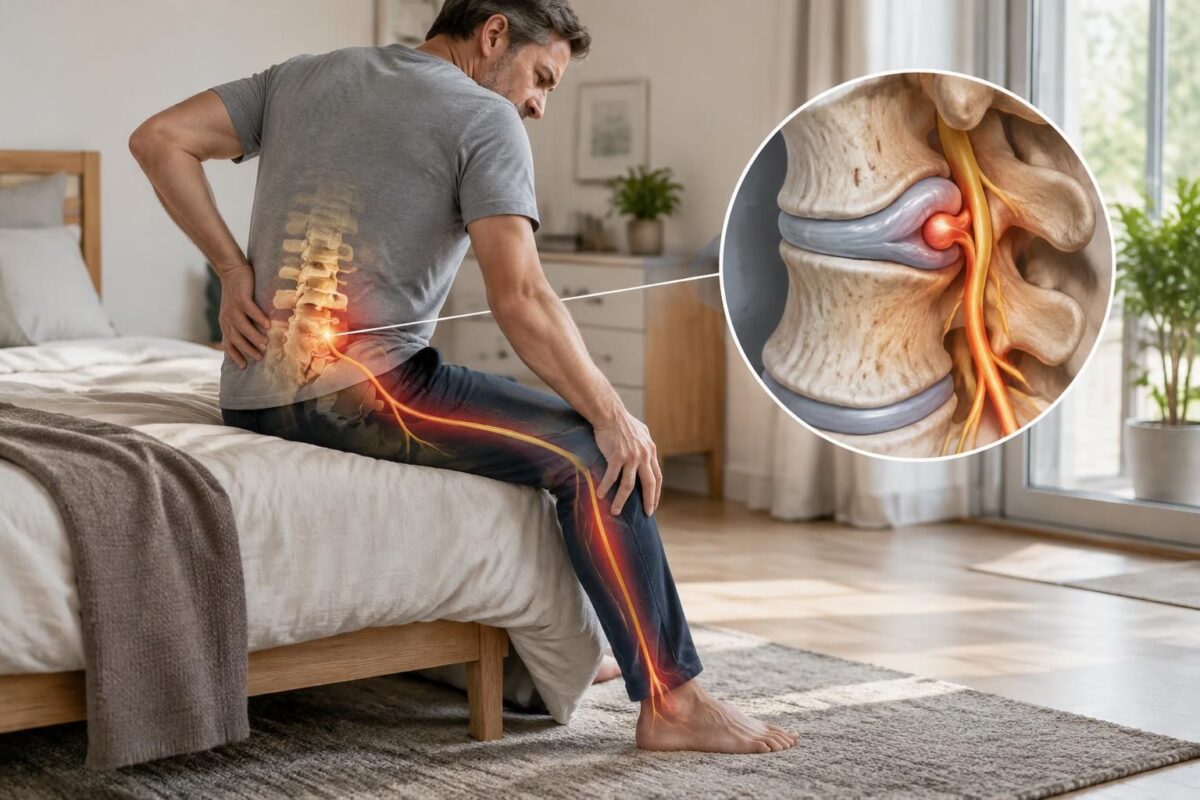
Intervertebral disc protrusion and neurological symptoms
IN BRIEF A disc protrusion is an intervertebral disc that bulges and can irritate a nerve root. It can cause pain, tingling, numbness, or weakness in an arm or leg, depending on its location. Clinical examination and, if necessary, imaging…
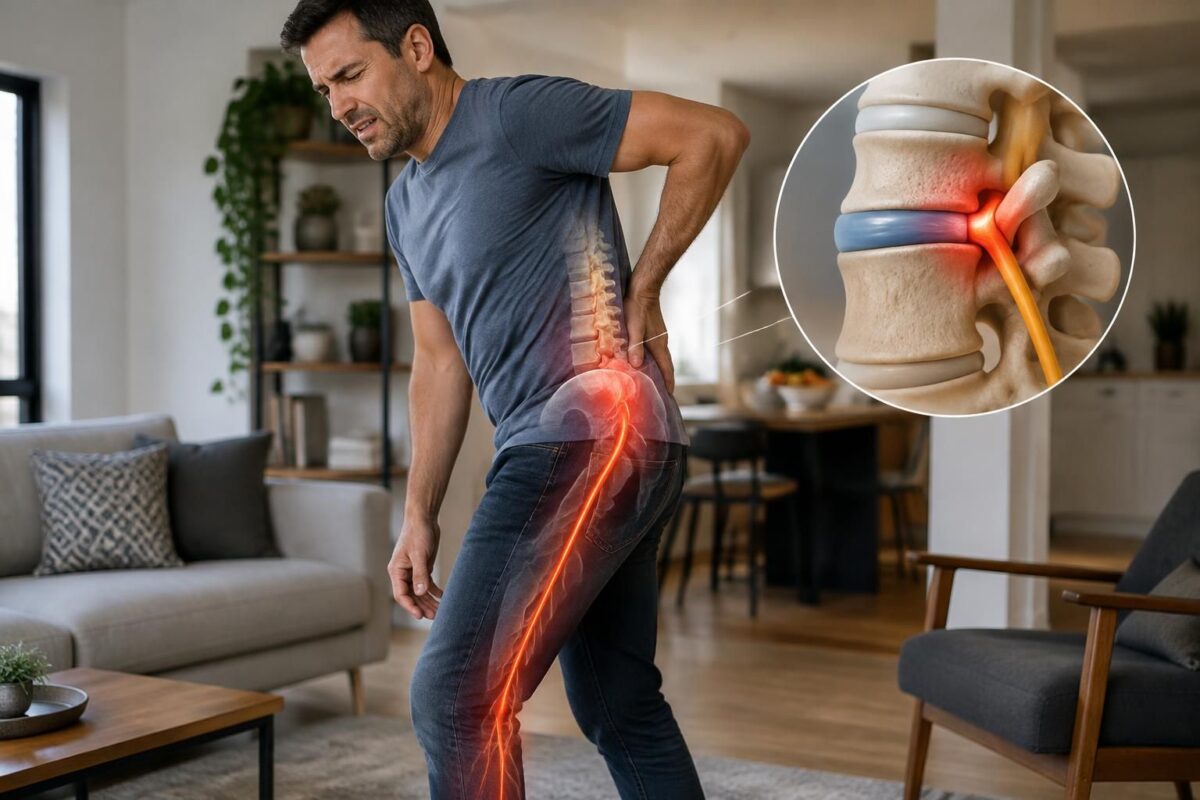
Disc herniation and recurrent sciatica
IN BRIEF A disc protrusion is a bulging of the disc that may be associated with recurring sciatica, without necessarily being the cause. The evaluation correlates symptoms, neurological examination, and imaging, if relevant. An appropriate plan can help improve function…
Why does imaging not confirm the cause?
Imaging tests can show disc changes in people who have no pain. The professional therefore correlates the results with the symptoms and physical examination. An image must correspond to the affected area and the clinical picture to contribute to the diagnosis.
The doctor may decide if imaging is useful based on progression, present signs, and examination results. An MRI is not necessary in all cases. Our article on pain that increases when sitting presents some useful elements to describe the symptoms.
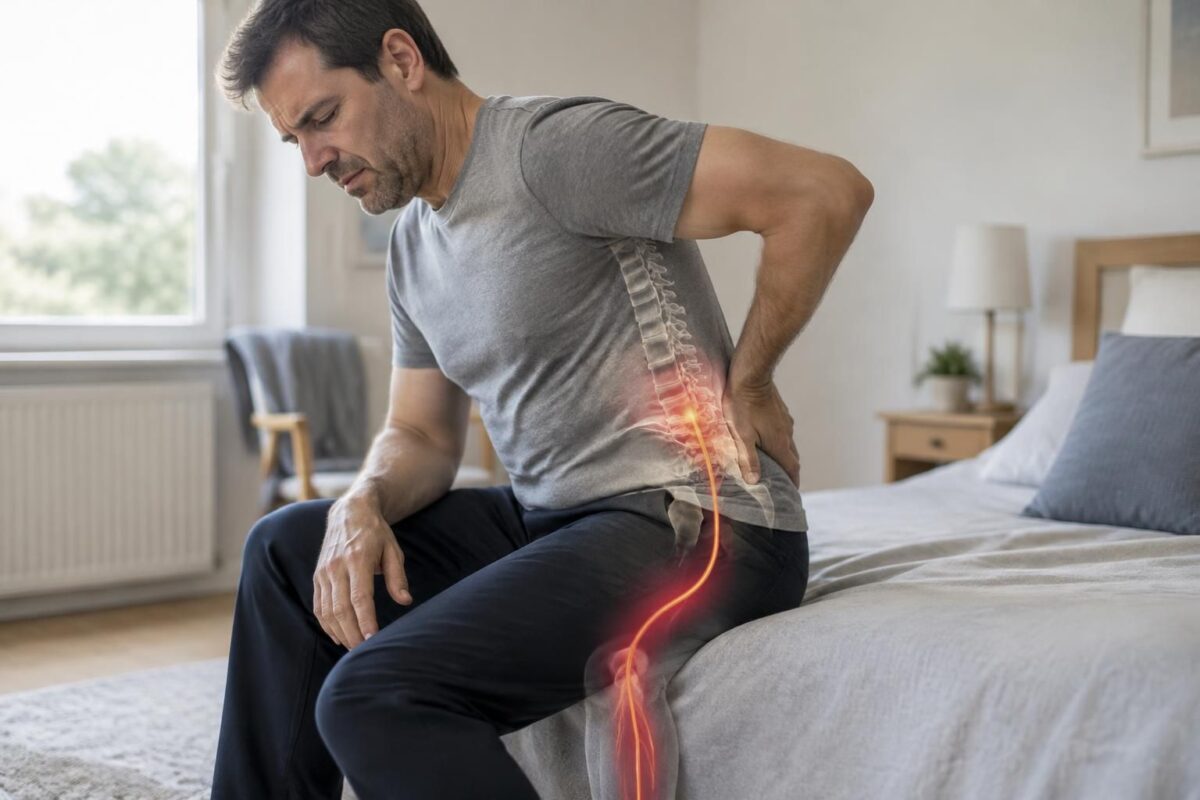
Disc herniation and persistent pain in the leg
IN BRIEF A disc protrusion is a bulging of a disc that can irritate a nerve and cause persistent pain in the leg, sometimes accompanied by tingling or numbness. Imaging alone does not confirm the origin of the symptoms: clinical…
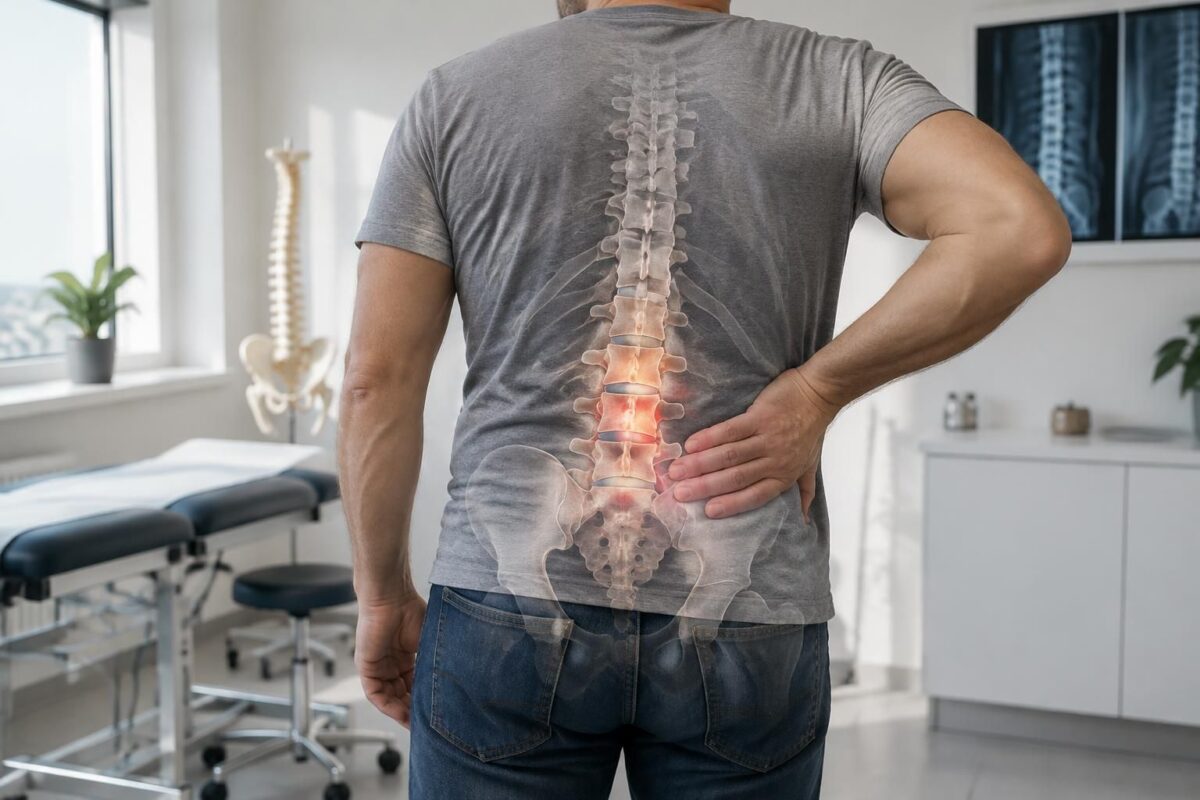
Disc herniation and lumbar degeneration
IN BRIEF A lumbar disc protrusion is a bulging of a disc often related to disc degeneration. It does not always cause symptoms but can contribute to lower back pain or pain radiating down the leg if a nerve is…
When to consult quickly?
Make an appointment with a doctor if heel pain persists, intensifies, interferes with walking, or is accompanied by pain radiating down the leg. New weakness in the foot or leg, or extending numbness, also requires prompt evaluation.
Consult an emergency service without delay in case of sudden difficulty urinating, loss of bladder or bowel control, insensitivity in the area between the thighs, or significant or progressive weakness in a leg or foot. A fever, recent trauma, or rapid deterioration also justify prompt medical attention.
Severe pain that does not respond to usual measures warrants medical advice. To learn more about the possible complications of disc involvement, consult SOS Sciatique on the possible causes of sciatica.
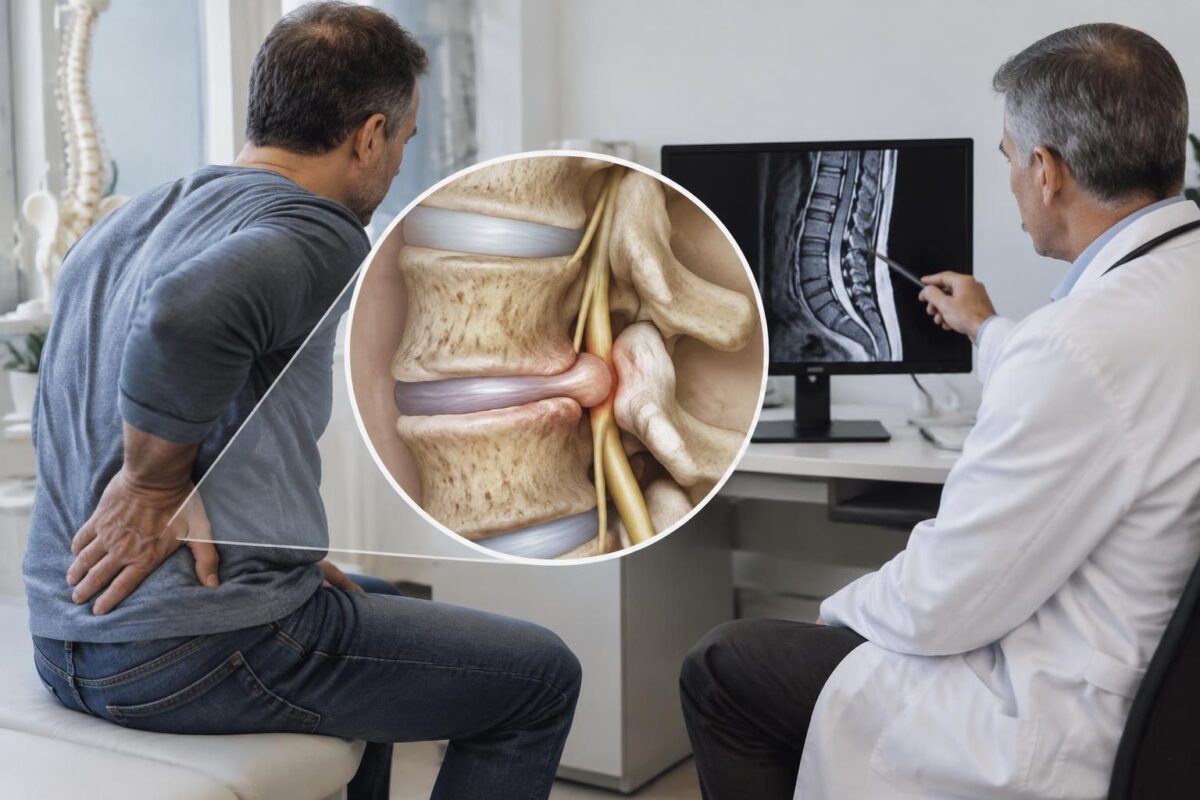
Disc protrusion and disc pinching: combined mechanisms
IN BRIEF A disc protrusion is a bulging of the disc, while a disc narrowing refers to a decrease in its height. These changes can coexist and sometimes irritate a nerve root, leading to pain or radiation, but they can…

Disc herniation and associated foraminal stenosis
IN BRIEF A disc protrusion associated with foraminal stenosis occurs when a bulging disc coexists with a narrowing of the opening through which a nerve root passes. This association can lead to lower back pain radiating into the leg, tingling,…
Evaluation and support options
The evaluation aims to determine if the pain comes from the back, a nerve, or a structure of the foot. It takes into account your symptoms, your history, and your ability to walk. If a disc problem is suspected, the professional may also check the strength and sensitivity of the leg and foot.
Based on the evaluation, non-surgical approaches may be discussed. At the TAGMED Clinic, the care offered may include specific osteopathy or motorized neurovertebral decompression. These approaches are not suitable for everyone and do not replace a medical diagnosis. An evaluation allows checking if they are relevant to your situation.
For information about services related to sciatica, please consult the clinic pages in Montreal and Mont-Royal or in Terrebonne.
About the Author
Sylvain Desforges, B.Sc., D.O., N.D., Doctor of Osteopathy and naturopath, is the founding president of TAGMED and the ACMA association. He dedicates his practice to chronic pain of the spine, back pain, and pain compatible with sciatica, especially when the pain radiates down to the buttock, leg, calf, foot, or toes.
Through SOS Sciatica, he publishes educational content on the symptoms of sciatica, possible causes such as herniated discs, disc pinching, foraminal stenosis, or irritation of a lumbar nerve root, as well as on non-surgical approaches that may be considered based on the assessment. At the TAGMED Clinic, treatments may include, depending on the case, motorized neurovertebral decompression, specific osteopathy, or precision percussion.
Medical Warning
The information published on SOS Sciatica is provided for educational purposes and does not replace a consultation, diagnosis, advice, or treatment performed by a physician or another authorized health professional. The author of this article is neither a doctor nor a specialist in a medical specialty recognized by the Collège des médecins du Québec. The approaches of osteopathy, manual medicine, or functional support described on this site do not constitute medical acts and are not intended to replace medical follow-up.
Consult a doctor or an emergency service in case of urinary or bowel incontinence, numbness in the saddle area, significant or progressive weakness of the leg or foot, fever, recent trauma, severe pain, or rapid worsening. For more details, please read our Legal Notice.
Medical Disclaimer: The information and advice provided on this site do not replace the opinion, diagnosis, or treatment of a health professional. Please note that Sylvain Desforges, B.Sc., D.O., N.D., doctor of osteopathy, is neither a medical doctor nor a physician and is not a specialist in a medical specialty as defined by the Collège des médecins du Québec. Manual medicine, functional medicine, and sports medicine as described on this site exclude any medical treatment or diagnosis made by a physician or specialist. Always consult your doctor for any medical questions. For more details, please read our complete Legal Notice.
When the heel may be related to the back
- The pain starts from the lower back or the buttock and radiates down the leg.
- Tingling or numbness may accompany the pain.
- Irritation of a lumbar nerve root, sometimes S1, can explain pain down to the heel.
When to consider another cause
- A pain limited to the heel, especially when bearing weight, may have a local origin.
- A visible protrusion on imaging does not prove it causes the pain.
- Consult quickly if weakness appears or worsens; urgent care if urinary or bowel issues or perineal numbness occur.

A disc protrusion may be associated with heel pain if it irritates a lumbar nerve root, but this pain often has another origin, such as the plantar fascia or the Achilles tendon. Imaging alone cannot establish the cause: the symptom trajectory must be considered, and a clinical examination must be performed. Here’s how to identify useful signs and choose the next steps.
Can a disc protrusion cause heel pain?
A protrusion refers to a bulging of the disc between vertebrae. It is often visible on imaging without causing symptoms. It may become painful if it irritates or compresses a nerve root, but the presence of a protrusion on an MRI does not prove it explains foot pain.
Irritation of the S1 root, particularly in the lower lumbar region, may sometimes cause pain that radiates to the buttock and back of the leg to the outer edge of the foot or heel. Tingling, numbness, or a burning sensation may accompany this radiation. The trajectory varies from person to person: thus, it is not sufficient alone to confirm the cause.
Recognizing other possible causes
Pain primarily localized under the heel, particularly with the first steps after resting or in the morning, may be related to the plantar fascia. Pain at the back of the heel, worsened by walking or climbing stairs, may rather concern the Achilles tendon. Improper footwear, a recent increase in activity, or mechanical overload may also contribute to the symptoms.
Note if the pain changes with movements of the back, sitting position, coughing, or exertion. Also, observe if it radiates down the leg, if the heel is sensitive to touch, and if abnormal sensations or weakness occur. This information will help the health professional distinguish a nerve pain from a local foot problem.
What to do to start?
Adapt activity without immobilizing
If your condition allows, maintain light daily activities and temporarily reduce those that significantly worsen the pain. Prolonged bed rest is generally not advised for back pain. For heel pain, opt for comfortable and stable shoes; avoid walking barefoot if it intensifies the pain. Do not force stretches or exercises if they increase radiation or numbness.
Request an appropriate evaluation
Make an appointment with a doctor or a qualified professional if the pain persists, limits walking, extends into the leg, or is accompanied by tingling. The examination helps assess strength, sensitivity, reflexes, and the foot. An X-ray, MRI, or other tests are not systematic: the decision depends on the symptoms, their progression, and the results of the examination.
Management may include activity advice and tailored exercises. Manual or functional approaches may be considered based on the evaluation, without replacing a medical diagnosis. Avoid starting an intensive program or treatment on your own if you have weakness, loss of sensitivity, or significant pain.
When to consult urgently?
Consult immediately in case of significant or progressive weakness of the leg or foot, loss of bladder or bowel control, or numbness around the perineum. A fever, a recent trauma, or rapid worsening also justify urgent medical advice. In Quebec, contact emergency services if these signs are present.
| Landmark | To know |
|---|---|
| Disc protrusion | Bulging of a disc, often without symptoms. |
| Heel pain | May sometimes be related to lumbar nerve irritation, but often has a local cause. |
| Possible link | Pain that descends into the leg down to the heel may suggest sciatica. |
| Nerve signs | Tingling, numbness, or pain radiating from the back reinforce this possibility. |
| Other common causes | Plantar fasciitis, overload, or local irritation of the foot may also explain the pain. |
| To remember | A protrusion visible on imaging does not prove that it causes heel pain. |
| Medical evaluation | Consult if the pain persists, worsens, or is accompanied by foot weakness. |
| Emergency | Loss of urinary or bowel control, or numbness between the thighs: immediate emergency. |
Illustrative testimonies: disc protrusion and heel pain
Note: The narratives below are fictional examples, written for educational purposes. They do not represent identifiable patient testimonies and do not allow for a diagnosis. A protrusion visible on imaging does not automatically mean it is the cause of heel pain.
“My pain started in my lower back and went down to my heel”
For several weeks, I had pain in my lower back, and then pain appeared in my buttock and the back of my leg, down to my heel. It was sometimes accompanied by tingling. The medical evaluation helped determine if the path of the pain could correspond to irritation of a nerve root, rather than a local foot issue.
“I had a disc protrusion, but my heel hurt mostly with the first step”
I learned that a protrusion was visible on my exam, and I initially thought it explained all my pain. However, my heel was mostly sensitive when I got up in the morning or after sitting. This type of pain can also have a local origin in the foot. The image of the back alone does not provide a definitive answer.
“The heel pain changed with my movements”
I felt discomfort in my lower back and pain that went down into my leg. Certain movements seemed to exacerbate it, while direct pressure under the heel caused a different sensation. By precisely describing the path of the pain, the circumstances under which it appeared, and any presence of numbness, I was able to provide useful markers to the consulted professional.
A disc protrusion is a bulging of an intervertebral disk. It can be present without symptoms. If a nerve root is irritated, the pain may radiate to the buttock and leg, sometimes down to the foot or heel. However, heel pain can also arise from the foot, ankle, or another cause: the evaluation must consider all symptoms.
To prepare for a consultation, note how long the pain has been present, its starting point, how far it descends, what aggravates or relieves it, as well as any tingling, numbness, or change in strength. The diagnosis relies on the history of symptoms and clinical examination; an image of protrusion alone is not sufficient to establish a cause-and-effect relationship.
Consult quickly if new or progressive weakness appears in the leg or foot, if numbness extends, or if the pain becomes significant and persistent. Loss of bladder or bowel control, or numbness in the saddle area, requires urgent management.
Medical warning: This information is educational and does not replace a consultation, diagnosis, or treatment by a licensed health professional. Osteopathy and manual approaches do not substitute for medical follow-up.
Disc protrusion and heel pain: what possible link?
A disc protrusion corresponds to a bulging of the intervertebral disk. It can be observed at different levels of the spine, especially in the lower back, without causing symptoms. An MRI image showing a protrusion is thus not sufficient to establish that it is the source of heel pain: it is necessary to correlate imaging results with symptoms and clinical examination.
When the lumbar protrusion irritates or compresses a nerve root, the pain can radiate from the back to the buttock and leg. Tingling, numbness, or weakness may also occur. Depending on the affected root, sensations may reach the foot. However, pain limited to the heel is not, alone, a characteristic sign of sciatica. The path of the pain, changes in sensitivity, and muscle strength help the health professional determine if a nerve origin is plausible.
The heel can also be painful for local reasons, unrelated to a disk: irritation of the plantar fascia, tendon issues, improper footwear, activity-related overload, or contusion, for example. Pain that is stronger with the first steps after rest or primarily manifests with pressure may direct the evaluation to the foot. These indicators do not allow for a remote diagnosis; medical evaluation is indicated if the pain persists, intensifies, or limits walking.
To clarify the situation, the professional may inquire about the exact location where the pain starts and radiates, its duration, activities that worsen it, and the presence of tingling or loss of strength. They typically examine mobility, sensitivity, and strength, as well as the foot and ankle. Imaging is not systematically necessary: it is considered based on symptoms, their evolution, and the examination results.
Care depends on the identified cause. In the absence of emergency signs, maintaining appropriate activities is often preferable to prolonged immobility. Progression should remain tolerable and take pain into account; a professional can recommend temporary adjustments, exercises, or further evaluation. Manual care and technologies offered in the clinic do not replace a medical diagnosis and are not suitable for all situations.
Sylvain Desforges, B.Sc., D.O., N.D., Doctor of Osteopathy and naturopath, is the founding president of TAGMED clinics and the ACMA association. His practice focuses on chronic pain and the integration of manual approaches and technologies, including neurovertebral decompression, laser, and shockwaves. Options should be chosen based on the evaluation of each individual; they do not guarantee a result and do not replace medical follow-up.
Consult a doctor promptly if significant or progressive weakness appears in the leg or foot, if pain worsens rapidly, or if walking becomes very difficult. Loss of urinary or bowel control, numbness in the saddle area, fever, or pain after trauma require urgent evaluation. This information is educational and does not replace a diagnosis or advice from a licensed health professional.
A disc protrusion may be visible on imaging without causing pain. When pain reaches the heel, the pathway, other symptoms, and their evolution should be examined: lumbar nerve irritation is a possibility, but other causes from the foot, leg, or pelvis may also be involved. Imaging alone does not establish the source of pain; a clinical evaluation helps choose the appropriate next steps.
Heel Pain and Disc Protrusion: Useful Guidelines
A protrusion in the lower back may be related to pain that radiates down the leg to the foot if a nerve root is irritated. However, pain limited to the heel is not sufficient to conclude that a disc is involved. The doctor considers, among other things, the precise location, the presence of tingling or numbness, the strength of the foot, and movements that alter symptoms. Pain more associated with the big toe can also provide useful indications about the nerve pathway, as explained in this article on disc protrusion and pain in the big toe.
The protrusion can coexist with other changes, such as a disc bulge or, in some cases, a foraminal stenosis associated with a disc herniation. These findings should be interpreted based on symptoms and examination, and not as an automatic explanation for any foot pain. Similarly, a loss of sensation deserves evaluation, especially if it extends or is accompanied by weakness.
It is useful to specify when the heel hurts: upon rising, during walking, after a period of sitting, or during a car ride. Worsening while seated or in a car may guide the evaluation, without confirming a disc origin alone; additional guidelines are presented in this article on disc protrusion and pain that increases while driving. The piriformis syndrome and other musculoskeletal problems can also cause pain radiating down the leg. To better understand the distinctions between protrusion and herniation, also refer to the explanations from Consultant Ergonome, Ton Pharmacien, and Doctissimo.
Note how long the pain has been present, its location, how far it radiates up or down, what exacerbates it, and any tingling or weakness that may be present. This information will help the health professional determine if examinations are necessary. Consult promptly if significant or progressive weakness appears. Sudden difficulties urinating, new incontinence, or loss of sensation in the saddle area require urgent care. This information is educational and does not replace a medical evaluation.

Sylvain Desforges, B.Sc., D.O., N.D., docteur en ostéopathie
Dr Sylvain Desforges, B.Sc., D.O., N.D., osteopath, is the founding president of TAGMED and of the ACMA association. He dedicates his practice to chronic spinal pain, low back pain and symptoms compatible with sciatica, particularly when pain radiates toward the buttock, leg, calf, foot or toes.
Through SOS Sciatique, he publishes educational content on sciatica symptoms, possible causes such as disc herniation, disc narrowing, foraminal stenosis or irritation of a lumbar nerve root, as well as non-surgical approaches that may be considered according to the evaluation. At Clinique TAGMED, care may include, depending on the case, motorized neurovertebral decompression, specific osteopathic care or precision percussion.
For an evaluation related to sciatica treatment in Montreal / Mount Royal or sciatica treatment in Terrebonne, please consult the services available at Clinique TAGMED.
Medical disclaimer
The information published on SOS Sciatique is provided for educational purposes only and does not replace a consultation, diagnosis, opinion or treatment provided by a physician or another authorized healthcare professional. The author of this article is neither a medical doctor nor a specialist in a medical specialty recognized by the Collège des médecins du Québec. The osteopathic, manual medicine or functional support approaches described on this site do not constitute medical acts and are not intended to replace medical follow-up.
Consult a physician or emergency service in cases of loss of bladder or bowel control, anesthesia in the saddle area, significant or progressive weakness in the leg or foot, fever, recent trauma, severe pain or rapid worsening of symptoms. For more details, please read our Legal Notice.