Sciatica and difficulty going down stairs
14/09/2026
Sciatica and foot numbness while walking
14/09/2026
IN BRIEF
|
The subject is the association between herniated disc and lumbar osteoarthritis as combined causes of sciatica and femoral neuralgia. This interaction explains the low back pain and nerve irradiations. Benefits and applications: allows differentiation of pain related to the spine from that related to the nerve and directs toward targeted treatment: rehabilitation, manual therapy, injections, or surgery in case of failure. How it works: the disc degenerates (discopathy) and may form a herniated disc; lumbar osteoarthritis creates osteophytes that irritate the nerves. MRI confirms the diagnosis and guides the therapeutic choice. Non-surgical approaches and injections are prioritized, while surgery is only considered after failure or recurrences. In Montreal, this framework is particularly suited for individuals suffering from pain associated with herniated discs and lumbar osteoarthritis. |
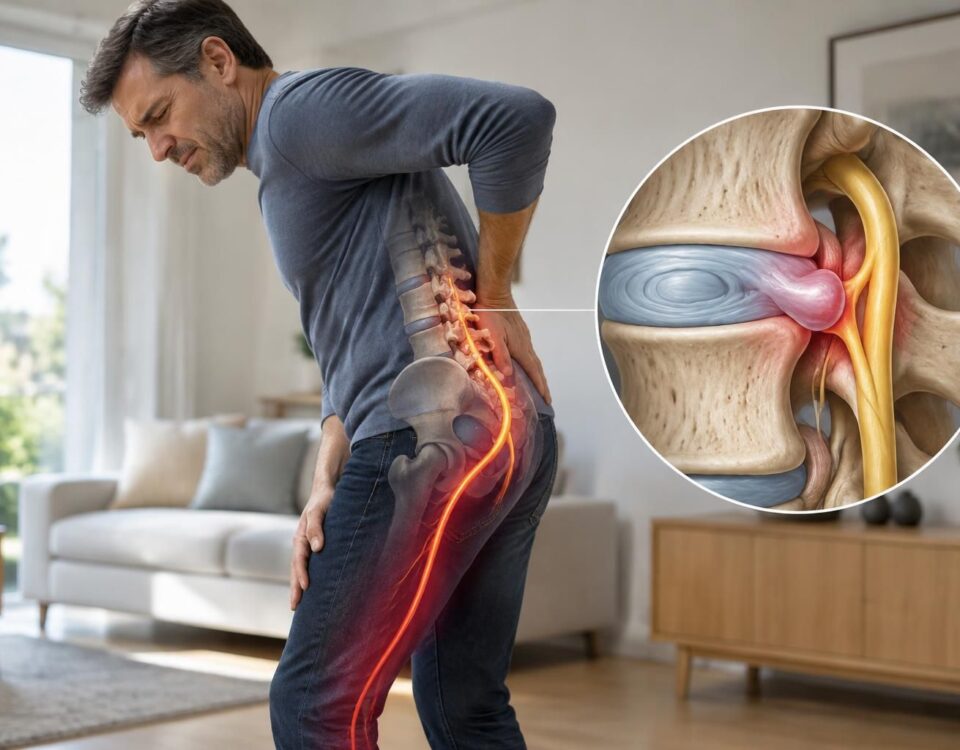
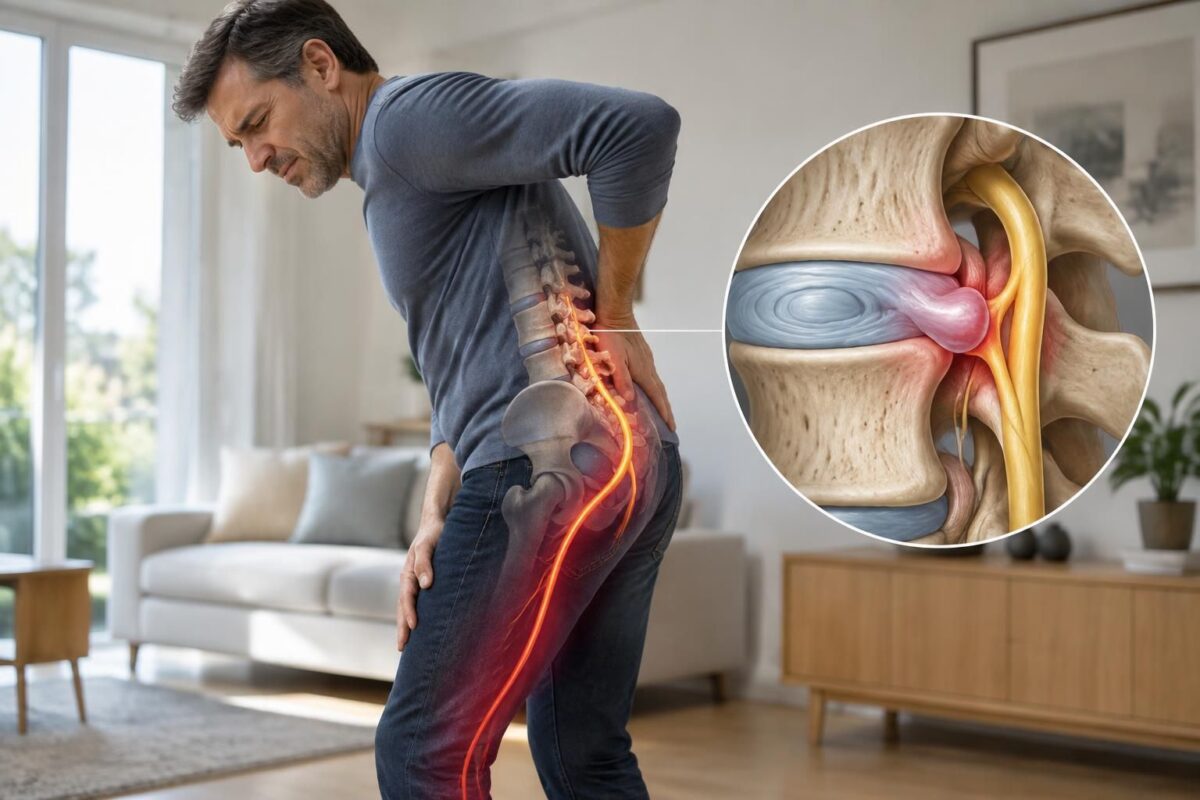
Sciatica may result from combined causes: herniated disc and lumbar osteoarthritis. Discopathy leads to deterioration of the intervertebral disc and may result in a herniated disc that compresses a nerve root, causing radicular low back pain (for example sciatica or femoral neuralgia). Simultaneously, facet joint osteoarthritis may induce foraminal compression and nerve irritations, with more chronic and rigid pain described as “bone cauliflower.” When these mechanisms coexist, the pain can be more intense and persist longer.
This analysis explains how a herniated disc and lumbar osteoarthritis can combine to cause sciatica. It describes the mechanisms, diagnosis, and management options, ranging from medical treatment to surgery when necessary. The article also specifies the indications and role of TAGMED Clinic in Montreal and Terrebonne in evaluation and management.
Mechanism and Anatomy
The intervertebral disc acts as a cushion between the vertebrae. It can suffer from discopathy, progressing through fissures, protrusions, and eventually a herniated disc. At the lumbar level, the spinal cord ends higher, and the large nerve roots form the nerves of the lower limb, notably the femoral nerve and the sciatic nerve. A herniated disc may compress a root and cause low back pain associated with radicular pain. Lumbar osteoarthritis leads to osteophytes and joint changes that exacerbate the conflict and may generate persistent low back pain, sometimes described as a “cauliflower” type of bone pain in the lumbar region.
Symptoms and Diagnosis
Many individuals present with a herniated disc without symptoms. The typical sign is pain that follows the path of a nerve root, manifested as sciatica or femoral neuralgia. Tingling or weakness may accompany this picture. Warning signs, such as significant motor or sphincter disturbances, require urgent management. The diagnosis relies mainly on imaging. MRI is the gold standard for assessing the disc and roots. A CT scan can quickly screen but MRI specifies the condition of the roots and the degree of discopathy and osteoarthritis.
Therapeutic Approaches and Management
Most cases of sciatica and femoral neuralgia evolve favorably with effective medical treatment, including anti-inflammatories and analgesics, reasonable rest, and appropriate rehabilitation according to evaluation. Injections near the disc conflict may be considered when the pain is more persistent, generally under radiological control. In some cases, non-surgical approaches may be proposed after evaluation, including specialized options available at the TAGMED Clinic.
When intervention is indicated, it involves a microdiscectomy under microscope, generally performed under general anesthesia and sometimes on an outpatient basis. The procedure lasts less than 30 minutes and aims to remove the herniated disc while preserving adjacent structures. General risks (infections, hematoma) exist but remain rare; neurological risks and recurrences are discussed beforehand. Post-operative follow-up includes rehabilitation and a check-up visit around 6 weeks to limit late low back pain and prevent recurrences.
For cases requiring comprehensive or decompressing management, resources such as neurovertebral decompression may be considered after evaluation. Additional information is available through the following resources: sosherniediscale.com, sosherniateddisc.com, and neurovertebral decompression. For a specialized evaluation in Montreal or Terrebonne, consult TAGMED Clinic.
Additional resources on mechanisms and clinical pathways can be consulted on the following pages: sciatica and pain that decreases while walking, pain and numbness after walking, pain radiating to the outer edge of the foot, and return from trip: pain that descends into the leg.
Prevent and Monitor
Maintaining regular follow-up with specialized evaluation allows tracking the progression of symptoms. An articulation in collaboration with TAGMED allows for adjustments to treatment options based on progression and impact on professional and personal activities. Additional resources are available through the links above to better understand the mechanisms and perspectives for management.
Medical disclaimer: The information and advice provided on this site do not replace the opinion, diagnosis, or treatment of a healthcare professional. Please note that Dr. Sylvain Desforges, osteopath, is neither a doctor of medicine nor a physician, and is not a specialist in a medical specialty as defined by the College of Physicians of Quebec. Manual therapy, functional medicine, and sports medicine as described on this site exclude any treatment or medical diagnosis made by a physician or specialist. Always consult your doctor for any medical questions. For more details, please read our full Legal Notice.
- Axis: mechanisms of nerve conflict
- Herniated disc: root compression, radicular pain
- Lumbar osteoarthritis: osteophytes and foraminal narrowing
- Convergence: sciatic pain and femoral neuralgia at multiple levels
- Typical symptoms: pain along the nerve pathway, paresthesias
- Clinical signs: possible weakness, sensory disturbances
- Key imaging: MRI for disc-root conflict; CT scan useful as a first resort
- Management: initial medical treatment and targeted rehabilitation

This article explains how lumbar osteoarthritis and herniated discs can combine to cause sciatica, detailing the mechanisms, signs, diagnosis, and treatment options, prioritizing conservative measures and a progressive approach towards more invasive solutions if necessary.
Combined causes and mechanisms
Lumbar discopathy and arthritic damage to the facet joints can accumulate and reduce the space around the nerve roots. The disc, a shock absorber between two vertebrae, can degrade, crack, or protrude, leading to a herniated disc. At the same time, lumbar osteoarthritis is associated with bone formations (osteophytes) and changes in the ligaments surrounding the vertebrae, which can compress nerves and roots. This combination can generate both low back pain and varying radicular pain along the nerve pathway.
Pain related to a herniated disc is often more impulsive and triggered by efforts or pressure on the abdomen (coughing, straining) and may target the territory of the affected nerve (femoral neuralgia or sciatica). In contrast, arthritic pain may resemble a more diffuse, deep, and persistent pain, worsened by movements and positions, reflecting a mechanical conflict due to bone remodeling and loss of elasticity in the joint structures. When both processes coexist, patients frequently describe a combination of pains, sometimes fluctuating, which can complicate the initial diagnosis.
Signs and symptoms
Typical symptoms include pain that follows the path of the affected nerve (sciatica or femoral neuralgia) and may be accompanied by tingling, weakness, or sensory disturbances. Central or diffuse low back pain may coexist, reflecting joint damage and tension on the ligaments. It is important to be attentive to warning signs: loss of bowel or bladder control, progressive neurological pain, or motor deficit signs, which require quick evaluation.
Diagnosis and imaging
The clinical assessment looks for painful areas and signs of radicular deficit. Imaging remains central: MRI is the reference examination to evaluate discs, protrusions or hernias, and the condition of the joints and foramina. A CT scan may be useful if MRI is not available or to clarify certain bony details. The goal is to differentiate discal and osteophytic components and determine if nerve compression is present and at what level.
Therapeutic approaches
Conservative measures
The majority of sciatic and femoral neuralgic pain related to these mechanisms can be improved by non-surgical management. This includes appropriate pharmacological treatments (anti-inflammatory drugs, analgesics), periods of relative rest, and especially a rehabilitation program focused on strengthening the trunk muscles and stretching the hamstrings and hip flexors. An adapted and regular physical activity, aimed at gaining flexibility and lumbar stability, helps stabilize the spine and reduce exacerbations. Daily ergonomics, weight control, and quitting smoking also help limit stress on the spine.
Manual or osteopathic approaches may be beneficial for some individuals when performed by qualified professionals and without forcing the painful areas. The goal is to reduce local inflammation, improve mobility, and promote normal nerve function without aggravating root irritation.
Interventions and indications
Corticosteroid injections near the disc-radicular conflict may be considered when inflammation persists despite conservative measures. Surgery is rare and considered after failure of non-operative treatment or in cases of frequent recurrences, progressive neurological deficits, or severe syndromes like major radicular compression with no expected improvement. In practice, surgical interventions are discussed individually, taking into account symptoms, clinical history, and imaging results; the goal remains the benefit-risk balance to restore normal function and reduce pain.
Prevention and long-term maintenance
To prevent flare-ups and promote the maintenance of a functional lumbar spine, it is recommended to incorporate regular strengthening and flexibility exercises, adopt an appropriate posture during daily and professional activities, and manage risk factors (weight, smoking, sedentary lifestyle). Adequate medical monitoring and gradual rehabilitation after painful episodes can limit recurrences and improve long-term quality of life.
| Element | Concise details |
|---|---|
| Mechanism | Herniated disc: direct compression of the nerve root; lumbar osteoarthritis: osteophytes and joint deformities irritating the nerve. |
| Type of pain | Herniated disc: impulsive radicular pain; lumbar osteoarthritis: lower back pain and chronic stiffness. |
| Clinical signs | Herniated disc: sciatica/crural neuralgia; osteoarthritis: mechanical lower back pain and reduced mobility. |
| Key imaging | Reference MRI; may reveal hernia and osteophytes with possible foraminal stenosis. |
| Triggers | Herniated disc: pain intensified by coughing or abdominal effort; osteoarthritis: pain associated with movement and wear. |
| Initial treatment | Conservative approach: anti-inflammatories, rehabilitation, and manual therapy; possible injections near the disc-root conflict. |
| Surgical indication | Herniated disc: surgery after treatment failure or recurrences; osteoarthritis: surgery if conservative treatments fail. |
| Prognosis and follow-up | Favorable prognosis with appropriate management; follow-up and recurrence prevention as needed. |
Testimonials: Herniated Disc and Lumbar Osteoarthritis – Combined Causes of Sciatica
“My name is Sophie, I am 58 years old, and my life was dictated by pain that started in my buttock and radiated down to my calf. Examinations showed a lumbar herniated disc associated with lumbar osteoarthritis, two overlapping mechanisms that contribute to persistent sciatica. After targeted osteopathic support and appropriate exercises, I regained proper mobility and pain-free periods.”
“Marc, 49, a plumber, describes episodes where the pain starts in his buttock and moves up his leg, especially during exertion or coughing. The assessment revealed a lumbar herniated disc associated with lumbar osteoarthritis, explaining a more complex sciatica and cruralgia. By following an osteopathy and rehabilitation program, the pain decreased, and mobility returned.”
“Jeanne, 66, retired, suffered from lumbar osteoarthritis and experienced recurrent sciatica flare-ups. She explains that the combination of the two conditions can cause nerve pain and sensitivity issues, but appropriate support helps limit crises and resume daily activities.”
“Luc, 44, an athlete, notes that a deteriorating disc can be associated with osteoarthritis and create pain that can appear impulsively, especially during sneezing or coughing. This combination can make sciatica more complex, but a rehabilitation pathway and posture advice allowed him to resume activities without resorting to heavy treatments.”
Dr. Sylvain Desforges is a recognized osteopath known for his integrated approach to chronic chronic pain of the spine. An expert in osteopathy, naturopathy, and manual medicine, he is the founding president of TAGMED clinics and the ACMA association. Throughout his career, he has placed health innovation at the heart of his practice, combining proven methods with advanced technologies to optimize the treatment of lower back pain. His approach is based on evidence-based care and attentive listening to the patient, in order to construct personalized care plans in the face of complex mechanisms such as the association between hernia and lumbar osteoarthritis.
In his field, he is particularly interested in situations where lumbar osteoarthritis and herniated disc coexist. Discopathy can progress in stages—fissure, protrusion, then hernia—and interact with nerve roots, generating typical radicular pain. Concurrently, osteoarthritis causes joint and osteophyte changes that can fix or compress nearby structures, leading to persistent lower back pain and radicular symptoms when conflict between the disc and surrounding ligaments intensifies.
The underlying mechanism is complex. The intervertebral disc, as a cartilaginous shock absorber, loses its elasticity with age and degenerative damage; when it deteriorates, it can exert pressure on the nerves that emerge from the vertebrae and cluster to form the sciatic nerve and the crural nerve. The combination of a degraded disc and osteophytes during lumbar osteoarthritis can create a multifocal conflict, causing both lower back pain and pain along the nerve pathway, sometimes accompanied by paresthesia or motor weakness. In some cases, the pain is impulsive and triggered by exertion or coughing, indicating an acute nerve conflict, while in others, it is more constant and linked to chronic inflammation of the tissues.
To evaluate these situations, the clinical examination is complemented by appropriate imaging. MRI remains the reference tool for visualizing the discs, hernias, and their relations with nerve roots, while CT can be useful in case of doubt. The goal is to distinguish pain originating from the spine from pain of nerve origin, in order to target the most appropriate therapeutic strategy and avoid invasive treatments when possible.
Dr. Desforges favors a multidisciplinary and non-surgical approach when possible. His treatment relies on osteopathy and manual medicine to relieve tension and restore mobility, supplemented by techniques such as motorized neurovertebral decompression, laser, and shockwave therapy when indicated. Rehabilitation protocols and advice on physical activity, posture, and lifestyle complement these interventions to reduce inflammation and promote functional recovery.
When symptoms remain stubborn or frequently recur despite conservative treatment, Dr. Desforges engages in an informed discussion with the patient to assess options. The use of surgical solutions is considered cautiously and after a thorough analysis of the benefit-risk ratio, with a marked preference for conservative and targeted approaches that often allow for quicker resumption of activities and a sustainable reduction in pain. His priority remains optimizing the health and well-being of each patient through a personalized and evidence-based approach.
His mission is to provide evidence-based care to optimize the health and well-being of his patients, using a combination of advanced therapeutic tools and effective osteopathic practices. To learn more about his approach and services, please contact TAGMED clinics.
This summary details how herniated discs and lumbar osteoarthritis can combine to cause sciatica, describing the mechanisms, clinical signs, diagnostic options, and possible therapeutic approaches, with insights into the role of non-surgical treatments and surgical indications.
The pathophysiological basis rests on two complementary axes: the intervertebral disc that degrades (discopathy) and can form a herniated disc, and lumbar osteoarthritis which leads to the formation of osteophytes and joint retractions. These alterations can compress the nerve roots and cause both low back pain and radiating pain along the path of the nerve, that is, sciatica or femoral neuropathy. Osteoarthritis can give rise to a continuous painful form, sometimes described as a “bony cauliflower” in radiological images, which limits the elasticity of structures and perpetuates pain. In practice, pain often combines disc and arthritic components.
Diagnosis is based on an anamnesis and clinical examination supplemented by imaging. MRI remains the reference examination to evaluate the disc-root conflict and the degree of osteoarthritis of the posterior joints. CT scans can quickly identify a pathology, but MRI provides a precise mapping of the nerves and osteophytes. In cases of sciatica associated with signs of weakness or persistent pain, it is helpful to quickly explore the reason and consider appropriate management: you can consult dedicated resources that explain why to seek immediate help for pain that gives way in the leg (link) and details on foot weakness and the risk of foot drop (link). Other useful resources discuss the link between lumbar osteoarthritis and herniated discs (link).
Therapeutically, the majority of cases are managed with medical measures and rehabilitation: anti-inflammatories, analgesics, and rehabilitation or manual therapy programs, aimed at reducing inflammation and relieving the nerve, while correcting mechanical factors. Corticosteroid injections may be considered near the disc-root conflict when pain persists despite treatment. A non-surgical approach is effective in the majority of episodes, with improvement often observable within a few weeks.
Surgical indications remain relatively rare and are only an emergency in specific contexts (paralyzing sciatica or femoral neuropathy, unbearable pain resistant to morphine, or signs of nerve compression in the pelvis with sphincter disturbances — cauda equina syndrome). Outside of these situations, the goal is to optimize the benefit-risk ratio by prioritizing conservative treatments first. The reference surgery is microdiscectomy performed under a microscope after dilating the muscles through minimally invasive techniques; the procedure is generally outpatient and lasts less than 30 minutes.
The overall surgical risk is low but not zero: general complications associated with any surgery (anesthesia, hematoma, infection) are around 2 to 5%, while specific neurological risks and CSF leaks remain rare (generally less than 1%). The recurrence rate is estimated at about 10% over 5 years. Post-operative follow-up includes rehabilitation and a gradual return to activity, with a return to work possible after about 4 to 8 weeks, depending on the extent of the surgery and the recovery of the patient.
To delve deeper into these mechanisms and management options, some online resources discuss the links between low back pain, osteoarthritis, and herniated discs, and provide advice on the care pathway: for example, articles on lumbar osteoarthritis as a complication of a herniated disc (link), or specialized pages on lumbar disc herniation surgery (link). Other resources on the mechanisms and signs of sciatica and associated conditions are available via dedicated pages and specialized resources (link).

L5-S1 protrusion and sciatic pain: pathway to the foot
IN BRIEF A L5-S1 disc protrusion is a disc that slightly bulges between the lumbar and sacral vertebrae. If it irritates a nerve root, pain may radiate from the lower back or buttock down the back of the leg to…

L4-L5 protrusion and sciatic pain: possible signs
IN BRIEF A L4-L5 disc protrusion is a bulging of the disc between two lumbar vertebrae. If it irritates the L5 nerve root, it can cause sciatica radiating from the buttock to the side of the leg and the top…
Disc protrusion and sciatica: when the disc touches a nerve root
IN BRIEF A disc protrusion is a disc that extends beyond its usual contour. If it irritates a nerve root, it can contribute to sciatica, with pain radiating into the buttock or leg, sometimes accompanied by tingling or weakness. An…

Herniated disc and sciatica: morning pain and lumbar stiffness
IN BRIEF A herniated disc can irritate a nerve root and cause sciatica, with lower back pain radiating down the leg. However, morning pain and lower back stiffness alone are not sufficient to confirm this diagnosis. An assessment helps guide…

Herniated disc and sciatica: night pain and factors to watch out for
IN BRIEF A herniated disc can irritate a nerve root and cause sciatica, sometimes more bothersome at night. Night pain alone is not enough to determine the cause: its variation according to positions, neurological examination and, if necessary, imaging help…

Herniated disc and sciatica: why the leg can be numb
IN BRIEF A sciatica is pain related to the irritation of a nerve root, sometimes caused by a <strongherniated disc. Pressure on the nerve can cause tingling, loss of sensation, or weakness in the leg. A healthcare professional can assess…

Herniated disc and sciatica: causes of recurring pain
IN BRIEF A herniated disc can irritate or compress a nerve root and cause sciatica, with pain radiating from the lower back to the buttock or leg and possibly returning. Symptoms and their causes are not always the same: an…
Herniated disc and sciatica: when to reassess symptoms
IN BRIEF A herniated disc can irritate a nerve root and cause sciatica, with pain that radiates down the leg. Reevaluating symptoms helps to track their evolution and determine if medical advice or tests are necessary, without assuming that surgery…

Dr Sylvain Desforges, B.Sc., D.O., N.D., osteopath, is the founding president of TAGMED and of the ACMA association. He dedicates his practice to chronic spinal pain, low back pain and symptoms compatible with sciatica, particularly when pain radiates toward the buttock, leg, calf, foot or toes.
Through SOS Sciatique, he publishes educational content on sciatica symptoms, possible causes such as disc herniation, disc narrowing, foraminal stenosis or irritation of a lumbar nerve root, as well as non-surgical approaches that may be considered according to the evaluation. At Clinique TAGMED, care may include, depending on the case, motorized neurovertebral decompression, specific osteopathic care or precision percussion.
For an evaluation related to sciatica treatment in Montreal / Mount Royal or sciatica treatment in Terrebonne, please consult the services available at Clinique TAGMED.
Medical disclaimer
The information published on SOS Sciatique is provided for educational purposes only and does not replace a consultation, diagnosis, opinion or treatment provided by a physician or another authorized healthcare professional. The author of this article is neither a medical doctor nor a specialist in a medical specialty recognized by the Collège des médecins du Québec. The osteopathic, manual medicine or functional support approaches described on this site do not constitute medical acts and are not intended to replace medical follow-up.
Consult a physician or emergency service in cases of loss of bladder or bowel control, anesthesia in the saddle area, significant or progressive weakness in the leg or foot, fever, recent trauma, severe pain or rapid worsening of symptoms. For more details, please read our Legal Notice.