Sciatica and foot pain while walking
13/09/2026
Sciatica in Terrebonne: pain and numbness after walking
14/09/2026
IN BRIEF
| In brief, sciatica in Montreal is a lumbar radiculopathy characterized by pain and numbness that starts from the lower back or buttock and radiates down the leg, especially after walking. In Montreal, the approach favors a functional assessment and a personalized conservative management, involving simple gestures and neurodynamic and ergonomic exercises to alleviate pain and allow for a return to tolerated activities. Structured reassessments guide progress and monitor warning signs, with neurovertebral decompression discussed only if necessary and justified. |
In Montreal, sciatica often manifests as pain that starts from the lower back and extends after walking down to the foot, accompanied by numbness in the toes. This lumbar radiculopathy is generally managed through a clinical assessment focused on function and a personalized conservative management, rather than imaging alone. The history of symptoms and examination are combined, and if necessary, targeted investigations are done to establish a plan with measurable goals, favoring gentle gestures like neurodynamics and ergonomics to regain mobility and reduce pain.
Neurovertebral decompression can be discussed if indicated, and warning signs (loss of sphincter control, rapid weakness in one leg) require prompt intervention. In the Montreal context, the TAGMED Clinic offers non-surgical options and structured follow-up to achieve smooth walking and limit recurrences.
This guide, written by a healthcare professional, presents the mechanisms and practical guidelines to understand and manage sciatica and numbness after walking in Montreal. It emphasizes a functional assessment and safe gestures aimed at preserving mobility and limiting pain, with particular attention to ergonomics and safety during daily activities.
The painful journey and numbness after walking may reflect irritation or compression of a lumbar root, most often around the L5 or S1 roots. An approach based on clinical assessment, observation of function, and neurological signs is preferred, rather than imaging alone. The goal is to reduce pain while regaining stable and tolerated walking.
Understanding Symptoms After Walking
Pain may start in the lower back and radiate to the buttock, leg, calf, or foot. Numbness and paresthesias may target the top of the foot (L5) or the outside edge and heel (S1). The evolution may be stable or progressive, and the precise location of the nerve territory aids in diagnosis and treatment choice. To delve deeper into the location and signs, you may consult dedicated resources on Numbness foot and sciatica – signs to watch and pain towards the little toe and root S1.
Clinical Assessment in Quebec
The assessment prioritizes the link between symptoms, function, and neurological examination. Gait, strength, sensitivity, and reflexes are examined. Imaging is considered if it can alter the diagnosis or treatment plan and if it does not interfere with the clinical decision. For appropriate management, the TAGMED Clinic offers a personalized non-surgical approach focused on movement, balance, and motor control. To learn more about non-surgical options, visit Sciatica and walking.
Non-Surgical Management Options
Management favors a conservative approach adapted to daily life. The focus is on maintaining tolerated activities, gradual progression, and rehabilitation centered on neurodynamics and ergonomics. Simple and safe movements can help reduce tension on the nerve while protecting joints and tissues. In some cases, after an objective assessment, neurovertebral decompression may be discussed as an option, but it does not universally apply and requires regular reevaluation. For Montreal and Terres patients, TAGMED offers tailored and effective non-surgical approaches.
For further information and practical resources, you can consult the following pages: Sciatica Terrebonne – pain towards the little toe and root S1, Sciatica Montreal – pain towards the little toe and root S1, and Numbness of the foot and sciatica – signs to watch out for.
Emergencies and warning signs
Consult quickly in case of loss of sphincter control, rapid or progressive weakness of a leg, increasing numbness in the saddle region, unbearable pain, or fever after trauma. These signs require a rapid medical evaluation to avoid complications.
Useful links and resources
To delve deeper, useful resources and additional information are available from the SOS Sciatique and TAGMED websites. For example, Sciatica and calf pain while walking and Sciatica Montreal – nighttime pain in the leg.
Preventing recurrences
To limit recurrences, prioritize ergonomics suited for work and sleep, maintain regular physical activity focused on core stability and neurodynamics, and monitor weight. Guided exercises and postural advice can help preserve mobility and safety in daily life. Practical resources will be useful for adapting your workspace and daily gestures, particularly through the associated pages of TAGMED and SOS Sciatique.
Additionally, here are useful links to deepen your understanding of concepts related to sciatica and the foot:
Sciatica Montreal – nighttime pain in the leg,
Sciatica – numbness and weakness – Montreal,
and Sciatica and difficulty climbing stairs.
Medical disclaimer: The information and advice provided on this site do not replace the opinion, diagnosis, or treatment of a healthcare professional. Please note that Dr. Sylvain Desforges osteopath is neither a medical doctor nor a physician, and is not a specialist in a medical specialty as defined by the Collège des médecins du Québec. Manual medicine, functional medicine, and sports medicine as described on this site exclude any treatment or medical diagnosis made by a physician or medical specialist. Always consult your doctor for any medical questions. For more details, please read our full Legal Notice.
Stay informed about the signs to watch for and the non-surgical options available in Montreal and the surrounding areas. For a personalized evaluation tailored to your living environment, contact the TAGMED Clinic or consult the resources mentioned above.
Notes on limitations and training sources: This text relies on recognized clinical approaches in the field of osteopathy and manual medicine. For continuous education and professional frameworks, professional references remain limited to the ACMA (Canadian Alliance of Alternative Medicine), College of Canadian Osteopaths and the Canadian Osteopaths College, as well as the NUMSS and NAO training structures when relevant. Neurovertebral decompression and associated indications remain discussed with the practitioner after evaluation.
Sciatica in Montreal: pain and numbness after walking
- Key symptoms: Pain radiating along the sciatic nerve after walking
- Numbness: foot or toes, territory L5 or S1
- Impact on walking: pain or heaviness hindering momentum and stride
- Possible locations: L5 (top of foot/big toe) or S1 (outer border, heel, sole)
- Warning signs: loss of sphincter control, rapid weakness in one leg, unbearable pain
- Assessment axis: function-centered approach and neurological signs; imaging used if it changes the plan
- Treatment plan: Conservative management, gentle movements, neurodynamics, and trunk strengthening
- Practical advice: gradual walking, active breaks, work and sleep ergonomics
- Signs to monitor: progressing numbness, new weakness, pain worsening with walking, perineal signs
- Non-surgical options: neurovertebral decompression to be discussed after reevaluation if necessary

This recommendation addresses Sciatica in Montreal, featuring pain and numbness after walking. It proposes a non-surgical approach centered on function, clinical assessment, and neurodynamics, complemented by ergonomic advice to regain walking ability and limit recurrences. The goal is clear: simple and safe movements, measured progression, and monitoring warning signs to allow you to resume tolerated activities without surgery whenever possible.
Initial assessment and signs to monitor
Basic principles
The sciatic nerve can be irritated or compressed at a lumbar root and travel down to the foot. The evaluation prioritizes function and neurological signs rather than imaging alone. It is often specified whether the condition affects the L5 territories (top of the foot and big toe) or S1 (outer edge of the foot, heel, or sole).
Signs to watch for include pain radiating from the lower back to the foot, numbness and paresthesias, and sometimes weakness that can limit walking or standing. Warning signals require prompt consultation: loss of urinary or sphincter control, rapid weakness of a leg, unbearable pain, or fever after trauma.

Sciatica in Montreal: intermittent pain or constant pain?
IN BRIEF In brief, sciatica in Montreal refers to pain that starts in the lower back and follows the path of the buttock, thigh, and sometimes the foot, which can be intermittent or constant. It often reflects an underlying mechanical…
Sciatica in Montreal: burning pain behind the thigh
IN BRIEF Sciatica is a pain that starts from the lower back or buttock and radiates down the back of the thigh, sometimes to the calf or foot, described as a burning sensation or electric shock. In Montreal, an osteopathic…
Conservative management and exercises
Goals and key actions
In practice, the approach emphasizes maintaining tolerated activities and gradual progression. Gentle movements are proposed to relieve the nerve and limit pain, relying on neurodynamic techniques and trunk strengthening to stabilize the spine.
Ergonomics and work and sleep habits play a central role in preventing recurrences. Simple adjustments can help: appropriate seating, frequent active breaks, keeping loads close to the body, and weight management. Neurovertebral decompression may be considered only if the objective evaluation justifies it and is not a first option.
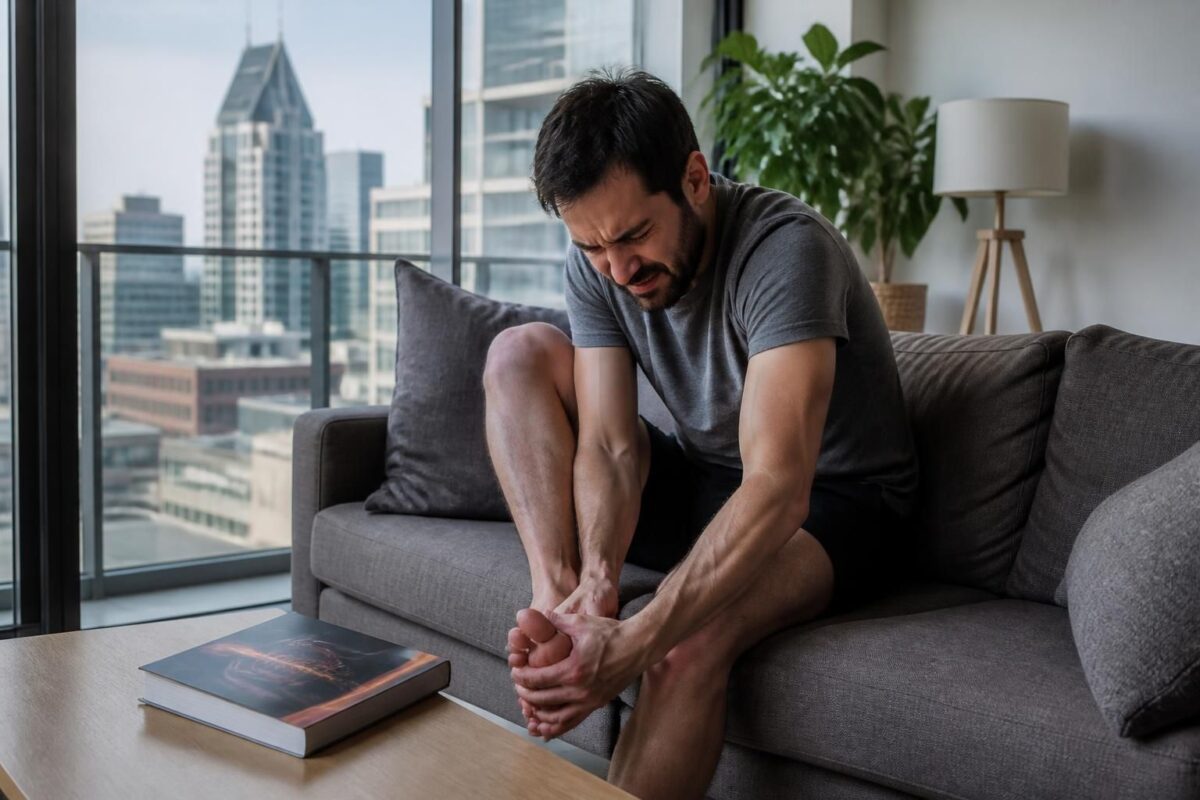
Sciatica in Montreal: numbness of the big toe and lower back pain
IN SHORT In short, sciatica associated with numbness of the big toe and lower back pain is a symptom resulting from compression or irritation of the sciatic nerve that extends from the lower back to the foot. In Montreal, this…
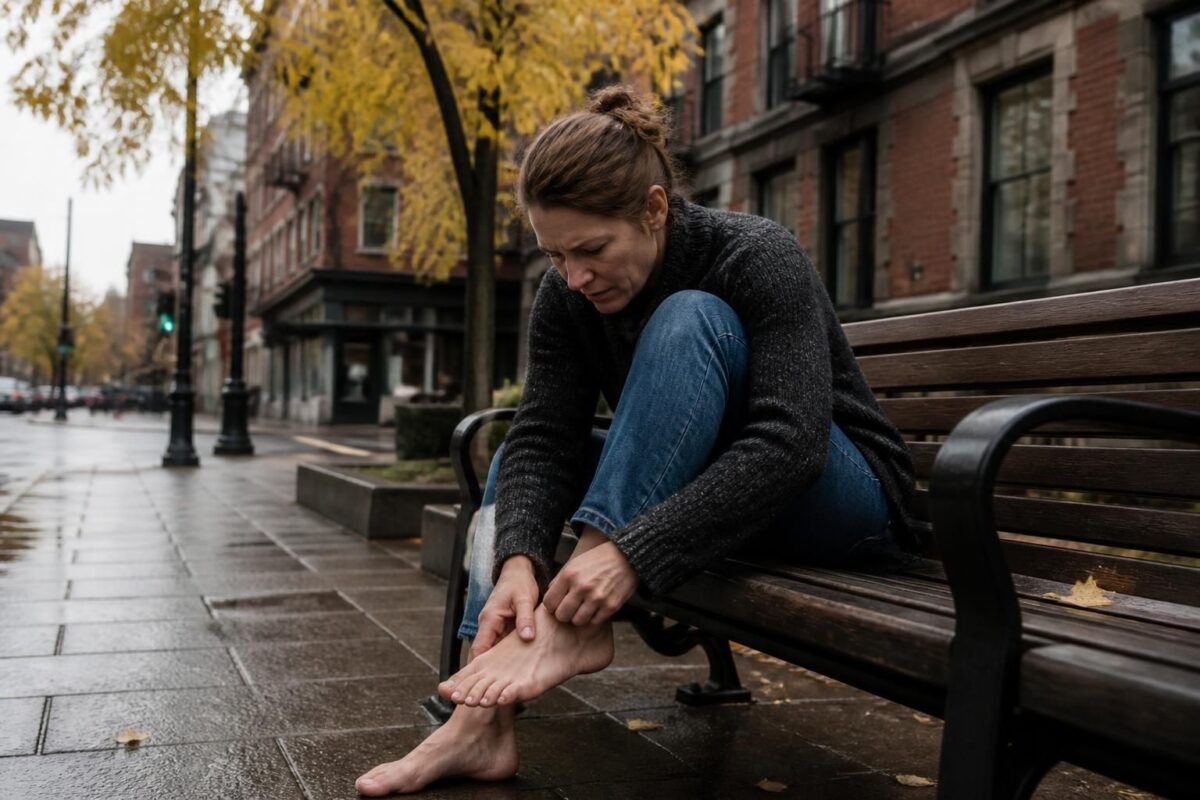
Sciatica in Montreal: loss of sensitivity in the toes
IN BRIEF In brief, sciatica associated with a loss of sensitivity in the toes is pain that starts in the lower back and can radiate down to the foot. In Montreal, this service offers an effective non-surgical approach based on…
When to consult quickly and action plan
Warning signs
Urgent signals exist if you notice rapid or significant weakness in a leg, loss of sphincter control, numbness extending to the saddle area, or pain that worsens despite rest and conservative measures. In the presence of these symptoms, prompt medical evaluation is recommended.
The action plan in Montreal practice consists of a quick consultation to clarify the probable cause and adjust treatment. Further investigations or specialized referral may be discussed if the evaluation justifies it, always aiming to avoid heavy interventions unless necessary.

Sciatica in Montreal: pain when sitting with tingling in the foot
IN SHORT In short, sciatica in Montreal is a radicular pain that often worsens in sitting position and may be accompanied by tingling in the foot. This approach emphasizes an assessment that links symptoms to function and neurological signs, rather…

Sciatica in Montreal: pain in the leg after prolonged standing
IN BRIEF In brief, sciatica in Montreal is pain that radiates into the leg after prolonged standing, often related to nerve irritation or lumbar stenosis and may be accompanied by numbness, tingling, or weakness. The diagnosis relies on the agreement…
Prevention and practical advice
Routines and habits
To limit recurrences, prioritize regular physical activity focused on core stability, neurodynamics, and strengthening deep muscles. Weight control and a routine of safe exercises help reduce strain on nerve roots and stabilize the spine.
Adopt safe daily actions: correct lifting (hips and knees bent, back straight), neutral posture at work and rest, and frequent position transitions. Gentle and progressive movements, done without pain, facilitate a return to smooth walking and prevent exacerbations.

Sciatica in Montreal: Persistent Pain in the Heel
IN BRIEF In brief, persistent sciatica in the heel is a lumbar radiculopathy that can affect the S1 root and manifest as pain radiating to the heel. In Montreal, non-surgical evaluation focused on the symptom pathway, function, and neurological signs…

Sciatica in Montreal: pain that descends but then rises back up towards the buttock
IN BRIEF In brief, sciatica pain is pain that starts from the lower back or the buttock and can radiate down the leg, sometimes returning to the buttock. In Montreal, an osteopathic evaluation helps identify mobility restrictions and musculoskeletal causes,…
In Montreal: resources and local support
Available options
In Montreal, specialized clinics offer non-surgical management suited for sciatica with foot numbness after walking. Programs focused on neurodynamics, posture, and functional rehabilitation can help regain normal mobility and reduce pain.
A structured plan can guide you in daily actions and work habits, with measurable goals and regular reassessment to adjust exercises and advice according to your progress.
| Aspect | Concise Elements |
|---|---|
| Path and location | Pain and numbness start from the lower back or buttock and radiate to the foot, possible numbness on the foot or toes (territories L5/S1). |
| Triggers after walking | Appears or intensifies after walking; decreases at rest. |
| Type of pain | Pain radiating along the sciatic path; intensity related to effort. |
| Numbness and territories | Paresthesias localized according to L5 (top of the foot/big toe) or S1 (outer edge/foot). |
| Warning signs | Loss of sphincter control or rapid weakness of a leg; unbearable pain. |
| Evaluation elements | Targeted functional and neurological examination; control of walking and foot strength. |
| Therapeutic approach | Prioritized conservative approach: movement, neurodynamics, and ergonomics. |
| Imaging | Imaging considered if it can modify the treatment plan; otherwise, it is secondary. |
| Advanced options | Decompression discussed after objective reassessment, if justified. |
Testimonials about Sciatica in Montreal: pain and numbness after walking
I am Marie, from Montreal. After walking for 25 to 30 minutes, pain and numbness traveled down my leg and to the top of my foot. By following the function-centered approach and the neurodynamic exercises prescribed at the TAGMED Clinic, I regained much of my mobility and can resume my daily walks without being stopped by pain.
I am Jean, from Montreal. My sciatica would flare up after every walk, with pain radiating from the lower back to the heel, accompanied by numbness in the outer edge of the foot. The personalized plan, focused on ergonomics and gentle actions, gradually improved my walking and reduced the intensity of the symptoms without surgery.
I am Anaïs, from Montreal. At the office, after a morning’s work, I felt numbness in the arch and pain stretching to the calf during my walking breaks. Thanks to a suitable conservative approach and practical advice on posture, I’ve been able to take longer walks without major pain.
I am Luc, an active Montrealer. After a longer walk, a dull pain in the lower back and numbness appeared on the sole of my foot. The consultation clarified the path of the nerve and the safe actions to perform at home to relieve the nerve. In a few weeks, my walking became fluid again and the intensity of the pain decreased.
I am Isabelle, Montreal. Pain and numbness mostly appear after my walking sessions, and sometimes at night. With support and advice on ergonomics and gentle exercises, I maintain regular activity and notice better tolerance for effort after each session.
Dr. Sylvain Desforges, osteopath, naturopath, and manual physician, is a major figure in the Montreal landscape for managing back pain and sciatica. Founder and president of TAGMED clinics and the ACMA association, he pursues a career dedicated to innovation in healthcare and the integration of advanced technologies. His practice covers the treatment of chronic lumbar spine pain and sciatica, with particular expertise in non-surgical approaches, functional rehabilitation, and optimizing patient well-being. With a multidisciplinary background, he combines osteopathy, naturopathy, and natural approaches to offer personalized pathways. His projects reflect his commitment to implementing the latest research in effective clinical practices, accessible to the daily lives of Montrealers. He also guides the team towards evidence-based protocols and rigorous evaluation of results.
When speaking of sciatica in Montreal, pain and numbness after walking are often signs of irritation or compression of a lumbar root, most commonly at L5 or S1, which can extend down to the foot and toes. Dr. Desforges favors a clinical evaluation focused on function and neurological signs rather than imaging alone, in order to distinguish radiculopathy from other causes and establish an appropriate strategy. The patient benefits from a structured examination that links symptoms to walking and the ability to act, with clear benchmarks to track progress and adjust the treatment plan.
His therapeutic approach focuses on gentle and safe maneuvers aimed at relieving the nerve and reducing pain. The program combines, depending on the case, neurodynamic exercises, targeted trunk strengthening, and ergonomic advice to reduce mechanical strain in daily life and at work. Imaging is considered only if it can change the diagnosis or action plan. Neurovertebral decompression is discussed, but only when objective evaluation indicates that it may be beneficial. On the non-surgical front, protocols such as shockwave therapy or laser therapy are integrated into the pathway to accelerate recovery while remaining within a safe and conservative framework.
In Montreal, this framework allows for the restoration of mobility without the need for systematic surgery and learning to recognize emergency signals. The pathway begins with a detailed analysis of the symptom history, walking and endurance tests, followed by the establishment of measurable goals and a progressive plan focused on function. Education on ergonomics, weight management, and appropriate physical activity (strengthening of deep muscles, stabilization, and nerve gliding exercises) are pillars of preventing recurrences. Regular re-evaluations and adjustments to the plan ensure that treatment remains relevant and effective. Furthermore, when the situation requires, a specialized referral may be considered after an objective re-evaluation.
Dr. Desforges provides a clear vision: to combine safety, effectiveness, and accessibility so that Montrealers can regain a natural and pain-free gait after walking. His approach is based on evidence and dialogue with the patient, in order to establish lasting trust and a tangible improvement in quality of life.
This conclusion summarizes the key elements of the Montreal approach to sciatica associated with numbness and pain after walking: precise localization of the affected nerve, a function-focused evaluation rather than imaging alone, and a conservative management approach centered on neurodynamics, ergonomics, and trunk strengthening. It emphasizes structured re-evaluation and emergency criteria, with local resources to guide patients towards regained mobility without heavy intervention when possible.
Lumbar pain radiating to the foot and potential numbness of the foot typically fall within a radiculopathy that can affect the L5 territories (top of the foot and big toe) or S1 (outer edge of the foot, heel or sole). The clinical evaluation closely links symptoms to function and neurological examination, rather than relying solely on imaging. This approach allows for the quick identification of whether conservative management is sufficient and suitable for the patient’s daily life.
In Montreal, the goal is to restore and preserve mobility through gentle, safe, and progressive maneuvers focused on neurodynamics, postural work, and the optimization of tolerated activities. When the clinical plan shows indications of discal or foraminal factors, neurovertebral decompression may be discussed, but only after an objective re-evaluation and in the absence of signs that necessitate rapid intervention.
Alert signals that necessitate quick consultation include loss of bowel or bladder control, rapid or marked weakness in one leg or foot, unbearable pain, or numbness in the perineal/saddle region. Other factors, such as fever or general signs after trauma, also require urgent attention. In all cases, the evaluation prioritizes the relationship between the symptom history, walking, and strength, rather than isolated imaging.
To limit recurrences, prioritize ergonomics suited to work and sleep, regular physical activity focused on stabilization and neurodynamics, and weight management to reduce mechanical strain on the nerve roots. Simple maneuvers and mobility exercises can help relieve the nerve and improve walking, without excessive risk when performed with caution and initial supervision.
Useful resources and additional advice exist to guide Montreal patients: guides on when to consult and the safety of care, information on sciatica and signs to watch for, as well as practical tips related to ergonomics and physical activity. To dive deeper, you can consult the following links:
Sciatica: when to consult and safety,
Sciatica – MSD Manuals,
Loss of strength and signs not to trivialize,
Understanding sciatica pain – Symptoms and when to consult,
Sciatica pain in Montreal – tingling/burning/numbness,
Sciatica in Montreal – heavy or painful leg,
Sciatica – numbness and areas,
Sciatica in Montreal – persistent pain in the heel,
Sciatica and weakness in the calf – what to watch for.

Dr Sylvain Desforges, B.Sc., D.O., N.D., osteopath, is the founding president of TAGMED and of the ACMA association. He dedicates his practice to chronic spinal pain, low back pain and symptoms compatible with sciatica, particularly when pain radiates toward the buttock, leg, calf, foot or toes.
Through SOS Sciatique, he publishes educational content on sciatica symptoms, possible causes such as disc herniation, disc narrowing, foraminal stenosis or irritation of a lumbar nerve root, as well as non-surgical approaches that may be considered according to the evaluation. At Clinique TAGMED, care may include, depending on the case, motorized neurovertebral decompression, specific osteopathic care or precision percussion.
For an evaluation related to sciatica treatment in Montreal / Mount Royal or sciatica treatment in Terrebonne, please consult the services available at Clinique TAGMED.
Medical disclaimer
The information published on SOS Sciatique is provided for educational purposes only and does not replace a consultation, diagnosis, opinion or treatment provided by a physician or another authorized healthcare professional. The author of this article is neither a medical doctor nor a specialist in a medical specialty recognized by the Collège des médecins du Québec. The osteopathic, manual medicine or functional support approaches described on this site do not constitute medical acts and are not intended to replace medical follow-up.
Consult a physician or emergency service in cases of loss of bladder or bowel control, anesthesia in the saddle area, significant or progressive weakness in the leg or foot, fever, recent trauma, severe pain or rapid worsening of symptoms. For more details, please read our Legal Notice.