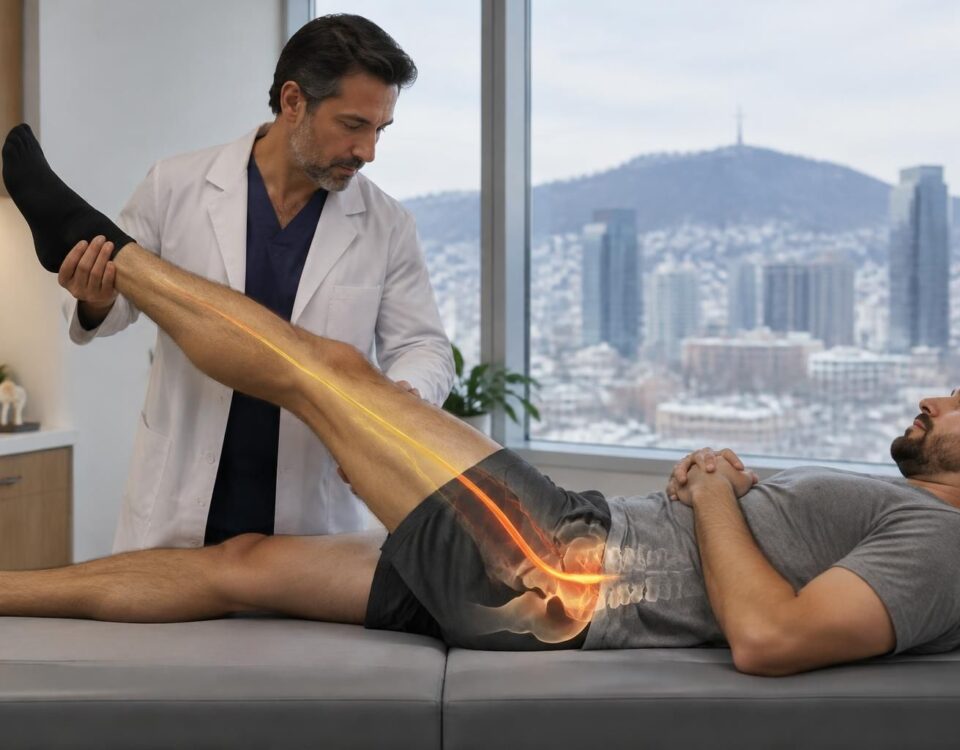



Sciatica and heavy legs while walking
15/09/2026
Sciatica in Terrebonne: pain while sitting with tingling in the foot
16/09/2026
IN SHORT |
In short, sciatica in Montreal is a radicular pain that often worsens in sitting position and may be accompanied by tingling in the foot. This approach emphasizes an assessment that links symptoms to function and neurological signs, rather than an isolated image, with a conservative plan and regular reassessment. In Montreal, this service helps identify likely causes and directs toward tolerated and progressive measures, including adapted exercises and non-surgical options when relevant, while remaining attentive to signs of urgency. |
Brief summary – Sciatica in Montreal: pain in sitting position with tingling in the foot
- Symptoms: sciatic pain worsened in sitting position, with tingling or numbness that may radiate down to the foot.
- Assessment approach: link symptoms to function and neurological signs; caution in the presence of weakness, loss of sensitivity, or signs of urgency.
- Key pointers: sitting pain may suggest a disc component but is not specific; varying positions (sitting, standing, walking) may reduce irritation; pain that radiates further down or is accompanied by weakness requires reassessment.
- Treatment plan: conservative approach with maintenance of tolerated activities and gradual progression; non-surgical options evaluated based on clinical profile; decompression or other interventions discussed if relevant.
- When to seek immediate attention: new or rapidly progressing weakness, loss of urinary or bowel control, saddle anesthesia, fever, or significant trauma.
Quick summary: this article, written by Sylvain Desforges, osteopath in Montreal, discusses sciatica presenting as pain in sitting position and tingling in the foot. It describes probable causes, clinical pointers, function-focused assessment, and conservative management options proposed by TAGMED Clinic. The approach emphasizes the link between symptoms, function, and evolution, rather than relying solely on imaging. The text specifies when a reassessment or specialized referral is recommended and provides practical pointers for daily life and follow-up.
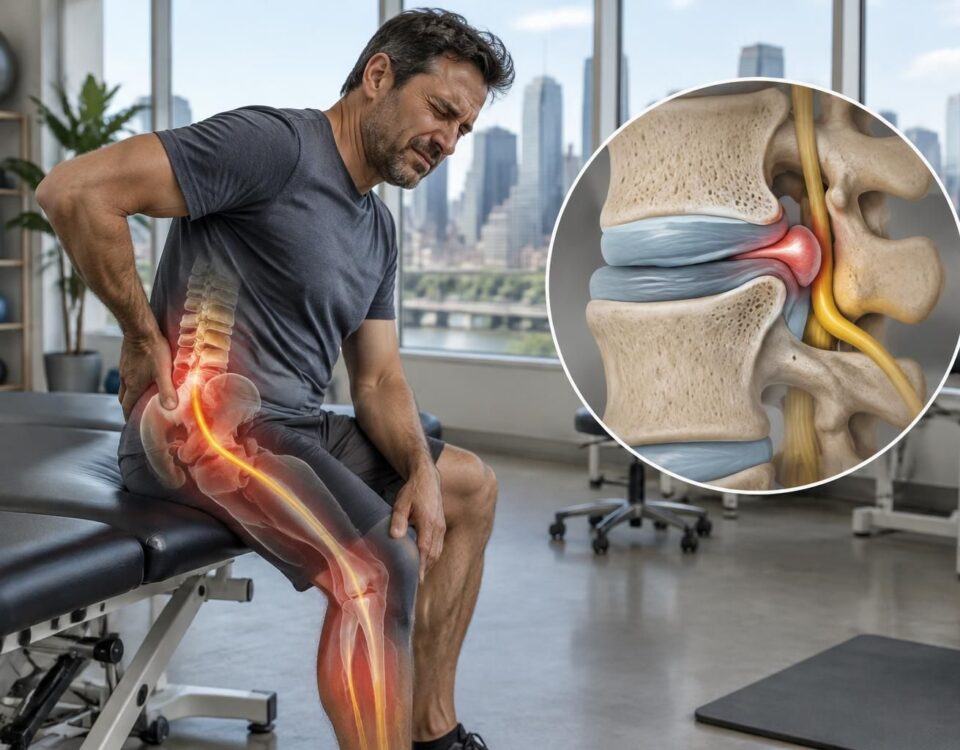
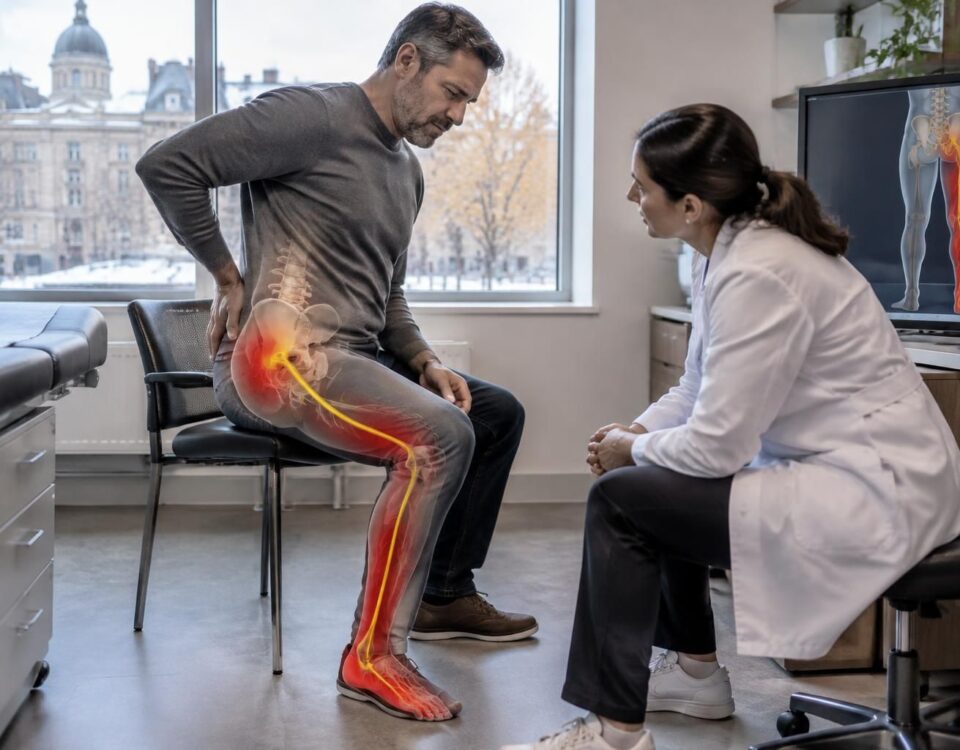
For some people, sitting can exacerbate pain in the buttock or leg. The pain may be due to a disc component or other lumbar nerve irritations. Lumbar flexion, pressure on the disc, and prolonged duration without position change can worsen the condition, as can mechanical tension on the nervous system.
A useful assessment links symptoms to function and neurological signs, rather than to an isolated image. The goal is to clarify the pain trajectory and the presence of signs that suggest radicular irritation or another cause.
Pointer 1: pain that worsens in sitting position may suggest a disc component, but this sign is not specific, and only the clinical context matters.
Pointer 2: the duration and variability of the symptom are as important as the position. Alternating sitting, standing, and walking can reduce irritation and enhance tolerance.
Pointer 3: pain that radiates further down the leg or is accompanied by weakness warrants reassessment, as it may change the management plan.
The clinical context helps distinguish radicular irritation from other causes of leg pain. An urgent sign must be ruled out before proceeding with routine management. Distribution, progression, and functional impact guide the evaluation.
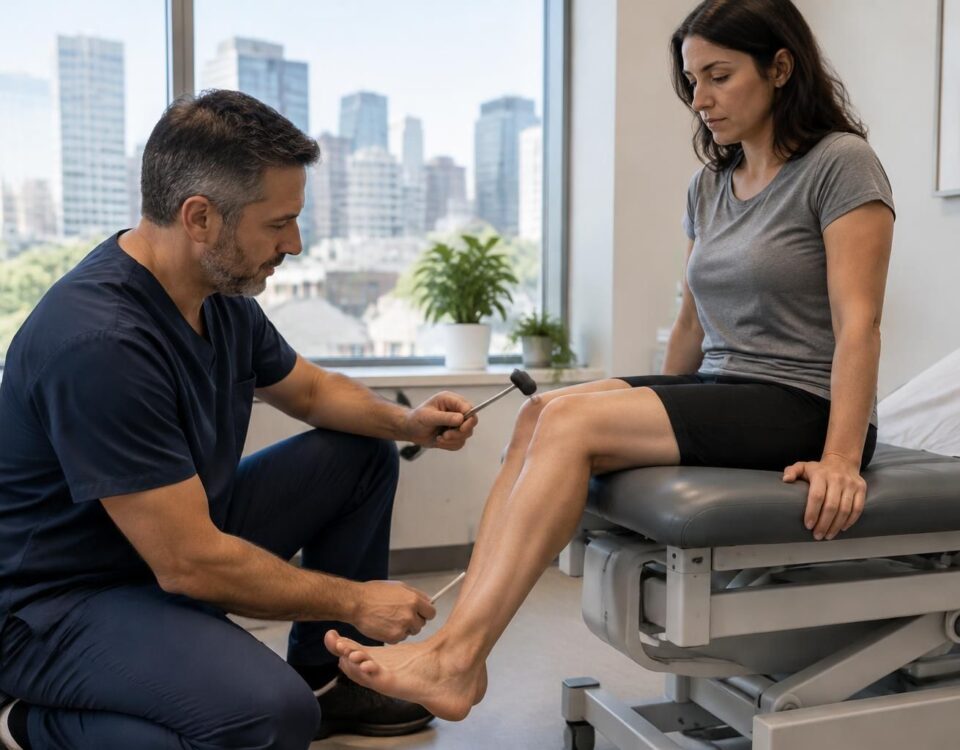
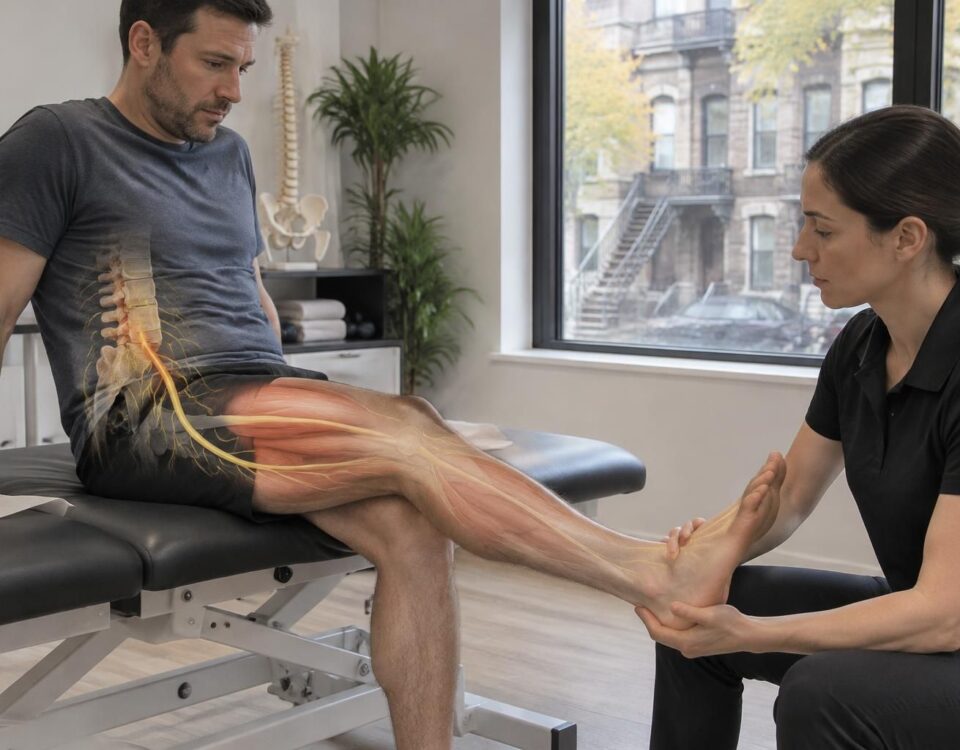
The examination may include walking, evaluating muscle strength, sensitivity, and tests adapted to the presentation. A precise history of symptoms is also collected: trajectory, duration, intensity, sleep, aggravating positions, and treatments already tried. The clinical evaluation then links function and neurological signs to the evolution of symptoms. If necessary, imaging may be considered, focusing on exams that influence treatment direction. Finally, a plan is defined with measurable objectives and criteria to modify or discontinue treatment.
Conservative approach. The focus is on maintaining tolerated activities, gradual progression, and rehabilitation tailored to the clinical profile. The motorized neurovertebral decompression may be discussed for certain selected patients, but it is neither universal nor guaranteed and requires objective reassessment. For cases needing a more specific approach, a medical referral for infiltration, investigation, or specialized advice may become relevant depending on the severity and evolution of neurological signs.
When to seek immediate or urgent care? New, significant, or rapidly progressing weakness in the leg or foot, urinary or bowel disturbances, saddle anesthesia, fever with spinal pain, or significant trauma require urgent medical evaluation. These signs should not be managed in the context of a routine appointment.
A structured follow-up allows for measuring progress and adjusting the strategy as needed. The plan must link symptoms to function and neurological safety, and it should be revised according to clear criteria.
To facilitate access to local resources and appropriate evaluation, you can consult the associated information on the dedicated pages for sciatica and sitting position, including the following online resources:
For more details, see the following resources:
Sciatica and pain that increases after a long walk
Treatments for the sciatic nerve
Sciatica and sitting position — TAGMED Clinic
Sciatica from sitting position — TAGMED Clinic (in English)
Sciatica in Montreal: pain from the lower back to the calf
Sciatica and weakness in the thigh — possible lumbar cause
For technical aspects and management options, specialized resources can also be consulted on the following pages:
Sciatica and airplane, prolonged sitting
By default, the proposed approaches favor a focus on non-surgical care and function-based rehabilitation, with coordination towards TAGMED when necessary. External resources help to better understand the mechanisms and signs to monitor, without substituting individual medical assessment.
Address of the TAGMED clinic Montreal / Mont-Royal for non-surgical assessment and appropriate orientation: 1140 Beaumont Avenue, Mont-Royal, QC H3P 3E5.
Frequently Asked Questions and Practical Tips
Why is the pain stronger while sitting? Flexion and prolonged duration without movement increase tension on lumbar and nerve structures, which can intensify the pain.
Should I use a lumbar cushion? This may help some individuals, but alternating positions is often more effective in reducing irritation.
How long can I sit? There is no universal duration. Pay attention to your tolerance and prioritize alternating cycles of position.
Is the car different? Yes. Vibrations and difficulty frequently changing position can exacerbate symptoms.
Should I completely avoid sitting? Generally, no. The goal is to adjust and break up positions rather than to remain still or stand all the time.
What does it mean if pain travels lower after sitting? Report persistent distal extension during assessment to adjust the plan.
When to consult quickly? If tolerance decreases rapidly, if the pain becomes very disabling, or if neurological signs progress, seek rapid medical assessment.
For clinical decisions and care, the TAGMED clinic proposes an approach centered on the concordance between symptoms, examination, and imaging when it influences management. This approach prioritizes patient safety and function, and it may include options such as motorized neurovertebral decompression in appropriate cases.
Additional useful links and local resources:
Sciatica and pain that worsens after a long walk
Sciatica and sitting position — TAGMED Clinic
The Spine Page – treatment of sciatica in Montreal
Sciatica in Montreal – low back pain to the calf
Medical disclaimer: The information and advice provided on this site do not replace the advice, diagnosis, or treatment of a healthcare professional. Please note that Sylvain Desforges, B.Sc., D.O., N.D., Doctor of Osteopathy, is neither a doctor of medicine nor a physician, and is not a specialist in a medical specialty as defined by the Collège des médecins du Québec. Manual medicine, functional medicine, and sports medicine as described on this site exclude any treatment or medical diagnosis made by a physician or medical specialist. Always consult your doctor for any medical questions. For more details, please read our complete Legal Notice.
- Pain aggravated by sitting may reflect a discal component, but it is not specific.
- Alternating sitting, standing, and walking may reduce irritation and promote tolerance.
- Pain that travels down the leg or weakness warrants re-evaluation.
- The path of symptoms and neurological signs guide assessment more than isolated imaging.
- Exclude a neurological or vascular emergency before standard management.
- Connect symptoms, function, and neurology rather than relying solely on an image.
- Initial evaluation: walking, strength, and sensitivity; targeted tests based on the picture; imaging if it can influence management.
- Conservative approach: tolerated activities, gradual progression, and rehabilitation.
- Advanced options: motorized decompression discussed for certain selected patients; requires objective re-evaluation.
- Medical orientation: infiltration or specialized advice based on severity and neurological signs.
- Plan and follow-up: measurable objectives, precautions, and criteria for modification or cessation.
- Practical tips: why sitting may aggravate? flexion and duration; lumbar cushion useful but alternating positions remains key; personal tolerance for duration; in the car, vibrations and posture can amplify symptoms; report if pain travels lower after sitting.

This article presents practical recommendations for sciatic pain when sitting position exacerbates the pain and tingling occurs in the foot in Montreal. It emphasizes the importance of correlating symptoms, examination, and imaging when relevant, while prioritizing a conservative approach suited to function and daily life.
Evaluate sciatic pain in sitting position
Pain that worsens while sitting may reflect a discal component or lumbar radicular irritation. A useful assessment involves relating symptoms to function and neurological signs, rather than relying solely on imaging. The goal is to understand the path of pain, its progression over time, and its impact on sleep, walking, and daily activities.
Reference 1
Marker 1: more intense pain in a seated position may be compatible with a disc component, but this sign alone is not specific and must be interpreted in the overall context of the episode.
Marker 2
Marker 2: the duration and variations of the position are as important as the position itself. Alternating between sitting, standing, and walking can reduce irritation and improve tolerance.
Marker 3
Marker 3: if the pain spreads lower down the leg or is accompanied by weakness, a rapid reassessment is necessary to avoid worsening and consider other options.
Evaluation and Examination Plan
A useful examination links signs to function and progression rather than to an isolated image. It may include walking, strength, sensitivity, and tests adapted to the presentation, in order to characterize the impact on daily life and to guide decisions.
Practical Approach and Conservative Management
The general orientation is conservative: maintain tolerated activities, gradually progress, and adapt exercises and daily movements to the clinical profile. The goal is to reduce irritation while preserving mobility and functional capacity.
Motorized spinal decompression may be discussed for certain selected patients, but it is neither universal nor guaranteed and requires objective reassessment. Imaging can be useful when results influence management, when there are neurological signs, or when symptoms persist.
Medical orientation may become relevant depending on severity and duration, especially if an injection or specialized opinion is feasible after examination and targeted imaging.
Follow-Up and Decision-Making
A structured follow-up allows for measuring progress and modifying the strategy as needed. The plan should define clear functional objectives (sleep, walking, work, daily activities) and reassessment criteria to continue, adjust, or stop certain measures. Reassessment should link symptoms to function and neurological safety rather than to isolated pain.
When to Consult Quickly
Consult quickly in the presence of new weakness, saddle numbness, sphincter dysfunction, an infectious focus (fever associated with back pain), or major trauma. Progressive neurological signs, deficit pain, and sphincter dysfunction require urgent medical evaluation and not elective care.
Practical Home Tips
To promote comfort and progress, prioritize alternating positions and tolerated activities. Choosing a lumbar cushion may help some individuals, but the important thing is to alternate positions and advance gradually. If seated tolerance deteriorates quickly or if neurological signs evolve, contact a healthcare professional promptly.
| Evaluation Axis | Concise Description |
|---|---|
| Diagnostic Axis | Pain in seated position with tingling in the foot suggests root irritation, to be confirmed by history and examination. |
| Warning Signs | New weakness, progressive numbness, or sphincter dysfunction require urgent evaluation. |
| Impact of Sitting | Alternating between sitting, standing, and walking can reduce irritation. |
| Examination Elements | Assess strength, sensitivity, and gait; prefer a functional approach over imaging alone. |
| Imaging | Imaging useful if it can modify the care plan or in the presence of neurological deficit. |
| Therapeutic Approach | Preference for a conservative approach with tolerated activity and rehabilitation; decompression or injection reserved for certain cases. |
| Reassessment Indicators | Reassess if pain descends further or if neurological signs evolve. |
| When to Consult Quickly | Urgency if progressive weakness, sphincter dysfunction, febrile pain, or major trauma. |
Testimonials on Sciatica in Montreal: Pain in Seated Position and Tingling in the Foot
“In Montreal, I suffered every time I sat for more than a few minutes. The pain in seated position and tingling in the foot prevented me from working. The evaluation linked my symptoms to function and not to an isolated image, then I followed a gradual conservative plan. Today, I can move more freely and have regained a routine that suits me.”
“As a driver, my job forces me to sit for hours. The pain and tingling extended down to my foot. After a consultation in Montreal, I understood the importance of alternating sitting, standing, and walking, and following a measurable plan. My symptoms stabilized and my quality of life returned to normal.”
“As a teacher, the pain in seated position and tingling in the foot made me doubt my ability to teach. The approach focusing on the alignment between symptoms, examination, and imaging when pertinent reassured me. With follow-up and reassessments, my pain has decreased and my mobility has returned.”
“I am a student and felt that the numbness made my university days unbearable. In Montreal, I was advised to adjust my positions and focus on activity progression. The practical advice on seated posture and monitoring neurological signs allowed me to resume my studies without fear of pain spikes.”
Sciatica in Montreal: Pain in Seated Position and Tingling in the Foot
Dr. Sylvain Desforges, expert in osteopathy, naturopathy and manual medicine, is the founding president of the TAGMED clinics and the ACMA association. His career is guided by a constant innovation in healthcare, with a marked specialization in managing chronic pain and the integration of advanced technologies aimed at improving the function and well-being of patients. In the sensitive field of sciatica, he favors an approach that amalgamates clinical reasoning, safety, and efficacy, taking into account the particularities of each patient living in Montreal and its surroundings.
In the Montreal context, where pain can be strongly influenced by sitting position and the nerve pathways that descend to the foot, his approach is based on a symptom- and function-centered evaluation, rather than solely on imaging. The goal is to connect clinical manifestations to the patient’s daily reality—sleep, work, driving, and prioritized activities—to determine the probable causes and the most relevant non-surgical treatment options. He considers imaging as a tool that can be useful when its input directly influences therapeutic conduct, but never as the sole decision-making criterion.
Dr. Desforges reminds that pain extending to the foot or accompanied by tingling may reflect radicular irritation, a herniated disc, or other structural compromises. However, he emphasizes that a symptomatic distribution alone is not enough to conclude a specific nerve root. Thus, his clinical reasoning integrates history of symptoms, neurological examination, and, when necessary, a targeted evaluation that may include simple tests of strength, sensitivity, and gait. This approach aims to avoid hasty conclusions and to promote a management plan based on measurable functional criteria.
In practice, the conservative approach occupies a central place: maintaining tolerated activities, gradual progression, adapted rehabilitation, and concrete measures to track progress. Dr. Desforges favors options such as motorized spinal decompression, the use of laser, and shockwave therapy when clinical indications allow, while remaining cautious about their universality and individual effectiveness. The objective is to support functional recovery without systematically resorting to surgery, and to consider, if necessary, an injection, a specialized opinion, or another intervention after a rigorous evaluation.
As a local leader, he is committed to providing a clear and measurable pathway: defining functional goals (nighttime rest, walking, work, driving), planning progression steps, and establishing re-evaluation criteria to adjust or modify the treatment plan. His approach is guided by the principles of neurological safety and by the concern to respond personally to pain that can limit the daily life of Montrealers suffering from sciatica with sitting pain and tingling in the foot. Dr. Desforges continues to promote evidence-based practice, aiming to optimize the health and well-being of his patients through integrated and tailored care.
Quick summary: Sciatica in Montreal often manifests as pain while sitting and tingling in the foot, reflecting possible lumbar radiculopathy. The article highlights a function-centered evaluation and examination, favors a conservative management adapted to the local context, and specifies warning signs that require re-evaluation or targeted imaging. Specialized resources in Montreal and practical advice help guide the care pathway.
Clinical Guidelines and Evaluation
Pain that worsens while sitting may be compatible with a disc component, but this sign is not specific and must be interpreted within the framework of symptoms and functional evolution. The approach is to connect symptoms, function, and neurological signs rather than relying exclusively on imaging.
Guideline 1: Increased pain while sitting may indicate a disc component, without being a unique diagnosis.
Guideline 2: Sitting duration and alternating between sitting, standing, and walking play a key role in reducing irritation and in assessing patient tolerance.
Guideline 3: Pain that radiates further down the leg or is accompanied by weakness warrants prompt and targeted re-evaluation.
The clinical context helps distinguish radicular irritation from other causes of leg pain. A neurological or vascular emergency must be excluded before routine management.
Management Plan and Conservative Approach
A structured clinical evaluation connects the onset of symptoms with the painful territory and function, integrating neurological signs and functional impact. The plan emphasizes a progressive rehabilitation, maintaining tolerated activities, and a gradual progression to reduce irritation without imposing prolonged immobilization.
A conservative approach is recommended when tolerance and function allow, with adapted rehabilitation and guidance on daily activities. For some selected patients, a motorized spinal decompression may be discussed, but it requires objective re-evaluation and does not guarantee universal results.
In cases of persistence or progression of symptoms despite an adapted strategy, targeted imaging or medical specialized referral may become relevant to clarify the diagnosis and guide the next steps.
When to Consult Quickly and Emergencies
Consult quickly in cases of new or progressive weakness, sphincter dysfunction, saddle anesthesia, onset of fever associated with back pain or significant trauma. Bilaterally neurological signs, severely disabling pain, or rapid deterioration require urgent medical evaluation.
A structured follow-up allows measuring progress and adjusting the strategy accordingly. The goal is to link functional outcomes, pain, and clinical safety to clear re-evaluation and modification criteria for the plan.
Resources and Useful Links
To deepen your understanding, you can consult local and specialized resources that complement this support:
Sciatica and pain when going up the stairs
Sciatica — signs of irritation
Sciatica and difficulty coming down the stairs
Sciatic pain in Terrebonne — incomplete journey
AMS Clinic — Sciatica explained
Sciatica and difficulty going up the stairs
Sciatica in Montreal — pain in the hip or true nerve radiation
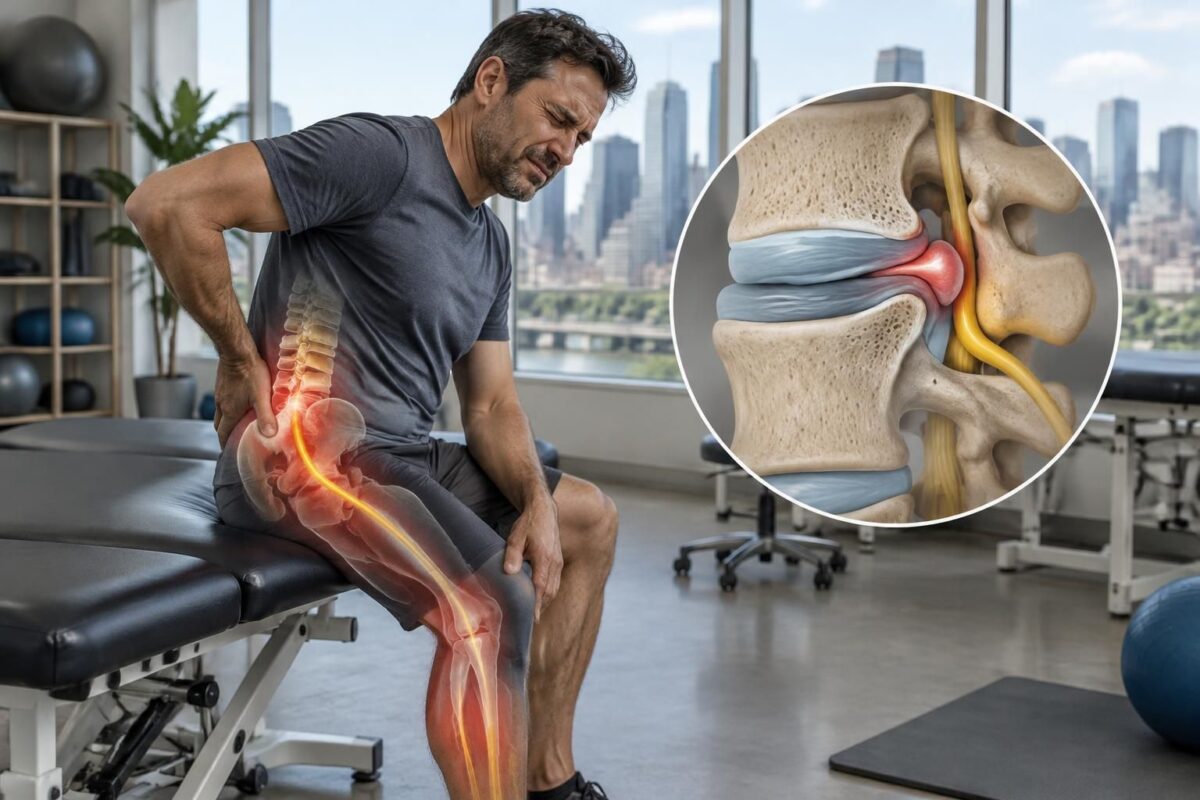
Sciatica in Montreal: L5-S1, canal, foramen, and nerve compression
IN BRIEF Sciatica related to L5-S1 can occur when a nerve root is irritated or compressed, particularly due to narrowing of the spinal canal or the foramen, the opening through which the nerve exits the spine. It can cause pain,…
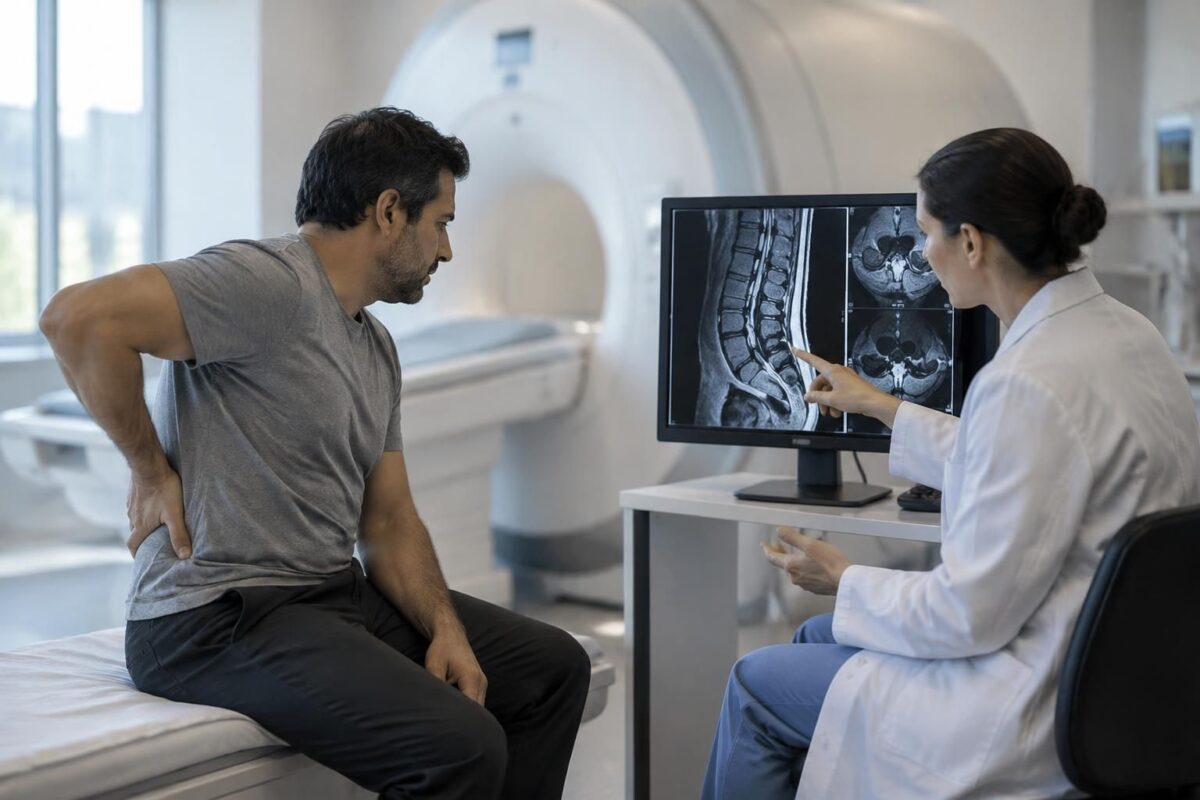
Sciatica in Montreal: why an MRI must be correlated with symptoms
IN BRIEF An MRI for sciatica shows structures in the lower back, but an anomaly alone does not prove the cause of the pain. It must be compared with the symptom pathway, the affected side, and the neurological examination. This…
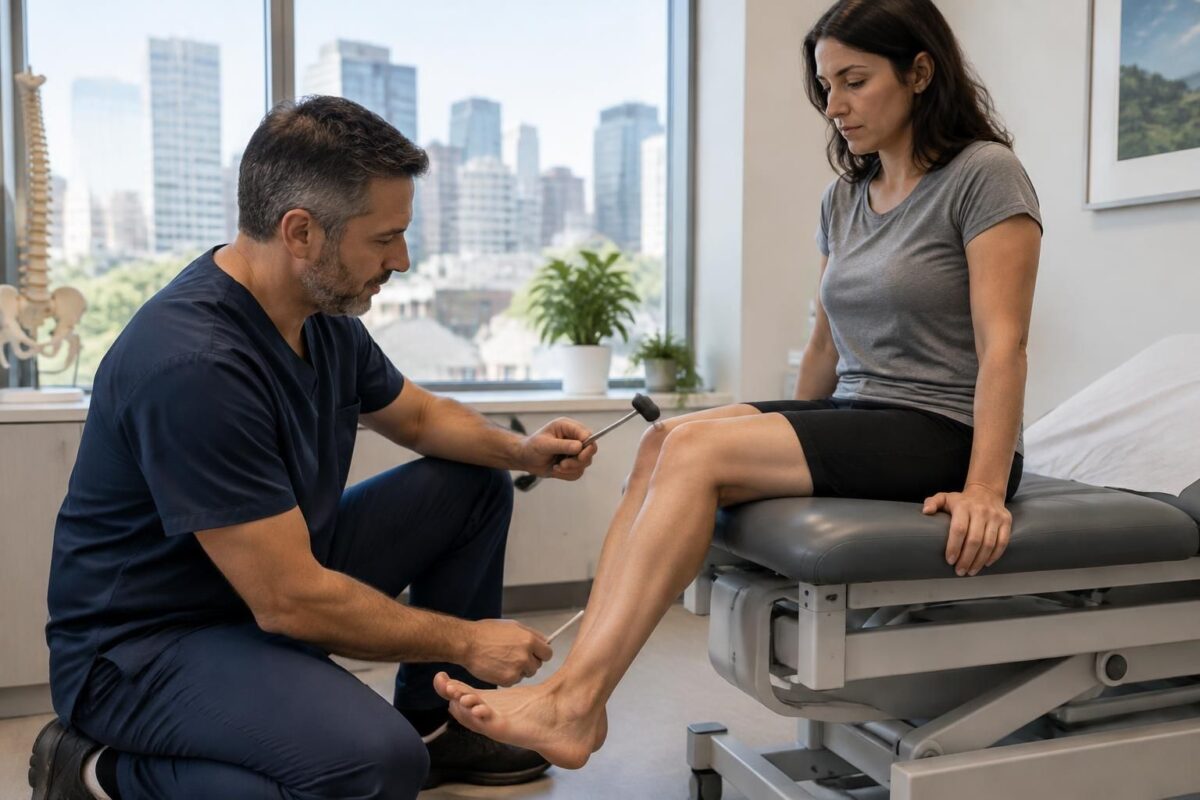
Sciatica in Montreal: reflexes, strength, and sensitivity in evaluation
IN BRIEF The evaluation of sciatica involves examining reflexes, muscle strength, and sensitivity, in addition to the pathway and evolution of pain. In Montreal, these observations help the healthcare professional identify potential neurological signs and guide the next steps. No…
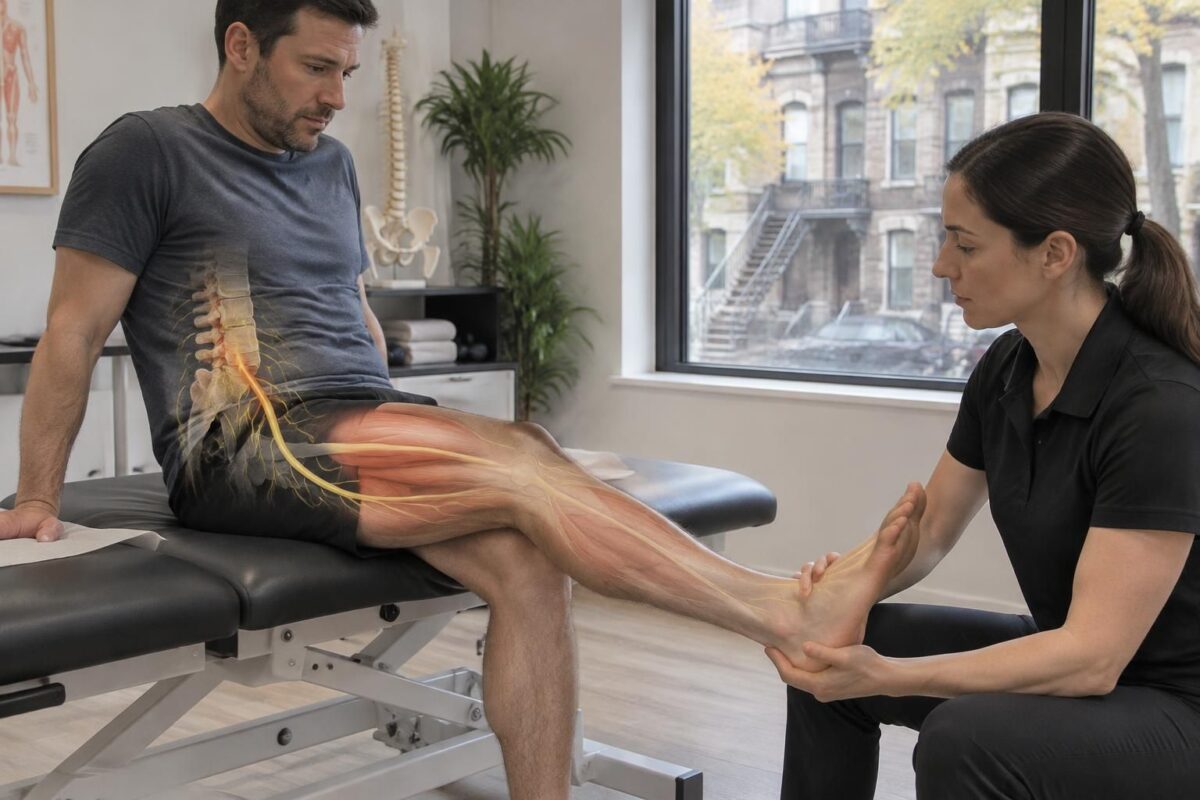
Sciatica in Montreal: Muscle Weakness Based on the Irritated Root
IN BRIEF Sciatica can cause muscle weakness when lumbar nerve roots are irritated. Depending on the affected root, it may become difficult to lift the foot or stand on tiptoes. In Montreal, an assessment of strength, sensation, and pain pathway…
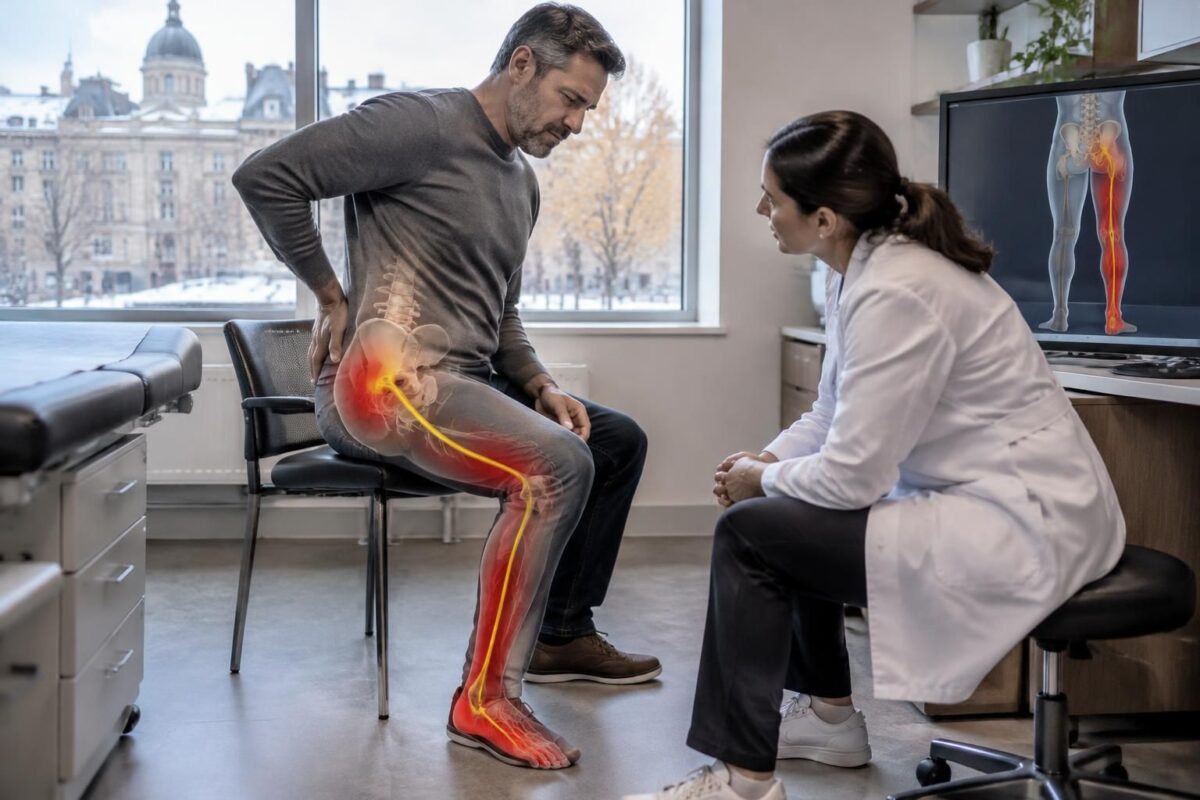
Sciatica in Montreal: nerve pain and sensory territory
IN BRIEF Sciatica is a nerve pain that radiates from the lower back or buttock down the leg. Its sensitive territory varies depending on the affected root and may include burning, tingling, or numbness down to the foot. In Montreal,…
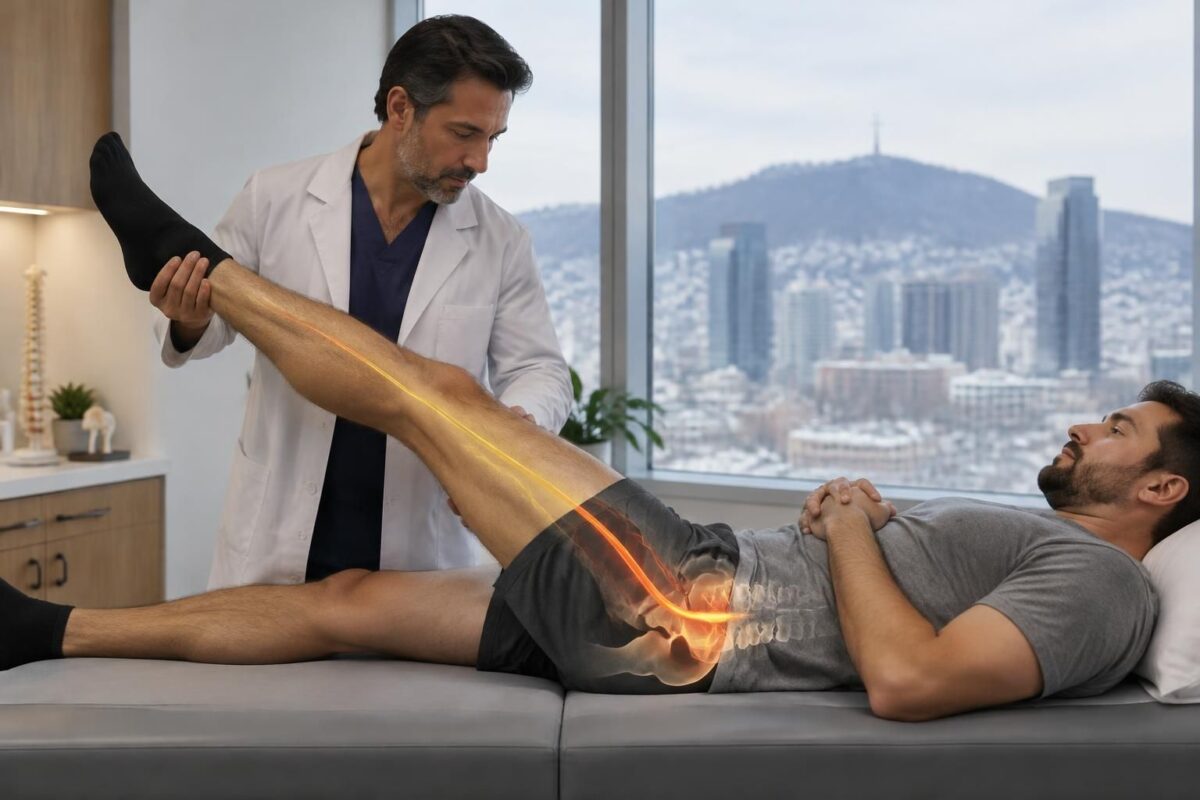
Sciatica in Montreal: irritation L5 or S1, why the clinical examination matters
IN BRIEF The sciatica related to irritation of the L5 or S1 root can cause pain, numbness, or weakness in the leg and foot. In Montreal, the clinical examination compares the course of symptoms, sensitivity, strength, and reflexes to guide…
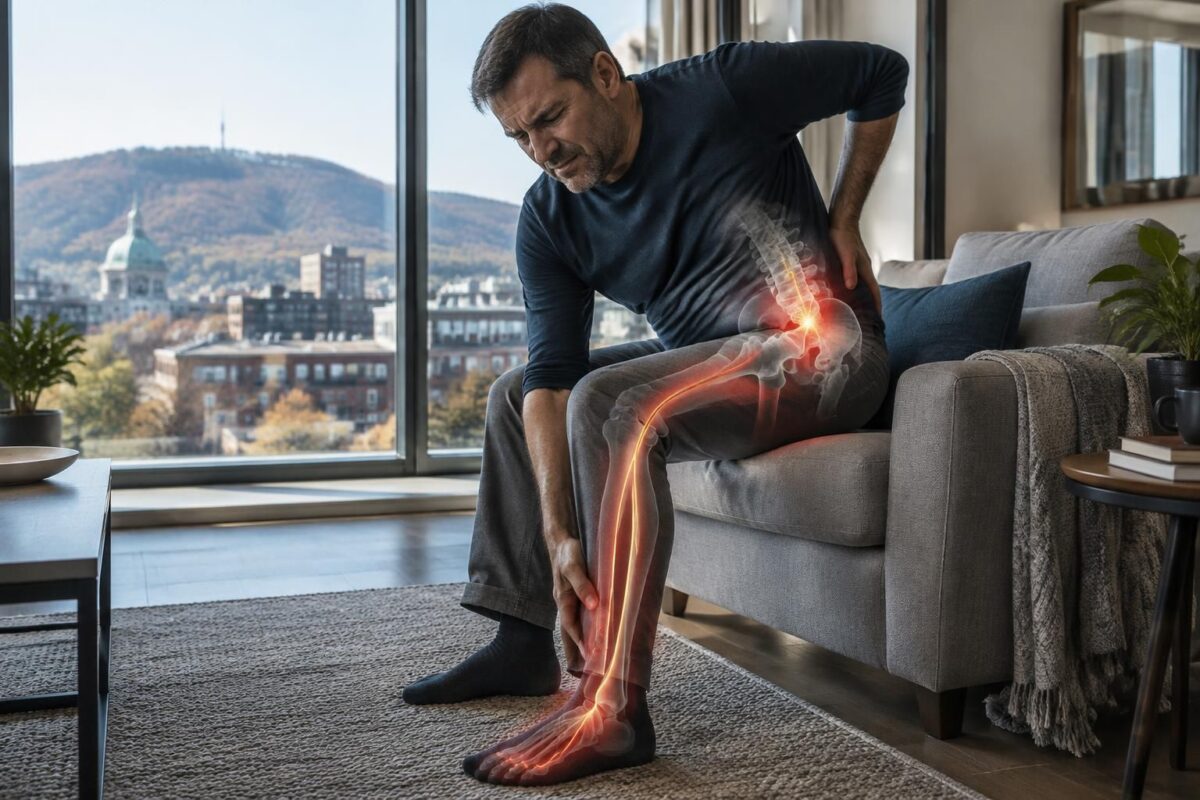
Sciatica in Montreal: L5-S1 Herniation and Pain Towards the Foot
IN BRIEF A L5-S1 disc herniation can irritate the S1 nerve root and cause sciatica in Montreal, with pain or numbness radiating down to the calf, heel, or foot. The assessment correlates symptoms, strength, and sensitivity with imaging, if relevant;…
Sciatica in Montreal: L4-L5 protrusion and leg pain
IN BRIEF An L4-L5 disc protrusion is a bulging of the disc that can irritate a nerve root and cause sciatica, with pain in the buttock and leg. However, it does not always cause symptoms. In Montreal, an assessment can…

Sylvain Desforges, B.Sc., D.O., N.D., docteur en ostéopathie
Dr Sylvain Desforges, B.Sc., D.O., N.D., osteopath, is the founding president of TAGMED and of the ACMA association. He dedicates his practice to chronic spinal pain, low back pain and symptoms compatible with sciatica, particularly when pain radiates toward the buttock, leg, calf, foot or toes.
Through SOS Sciatique, he publishes educational content on sciatica symptoms, possible causes such as disc herniation, disc narrowing, foraminal stenosis or irritation of a lumbar nerve root, as well as non-surgical approaches that may be considered according to the evaluation. At Clinique TAGMED, care may include, depending on the case, motorized neurovertebral decompression, specific osteopathic care or precision percussion.
For an evaluation related to sciatica treatment in Montreal / Mount Royal or sciatica treatment in Terrebonne, please consult the services available at Clinique TAGMED.
Medical disclaimer
The information published on SOS Sciatique is provided for educational purposes only and does not replace a consultation, diagnosis, opinion or treatment provided by a physician or another authorized healthcare professional. The author of this article is neither a medical doctor nor a specialist in a medical specialty recognized by the Collège des médecins du Québec. The osteopathic, manual medicine or functional support approaches described on this site do not constitute medical acts and are not intended to replace medical follow-up.
Consult a physician or emergency service in cases of loss of bladder or bowel control, anesthesia in the saddle area, significant or progressive weakness in the leg or foot, fever, recent trauma, severe pain or rapid worsening of symptoms. For more details, please read our Legal Notice.