Sciatica and exercises to avoid according to the symptoms
01/11/2026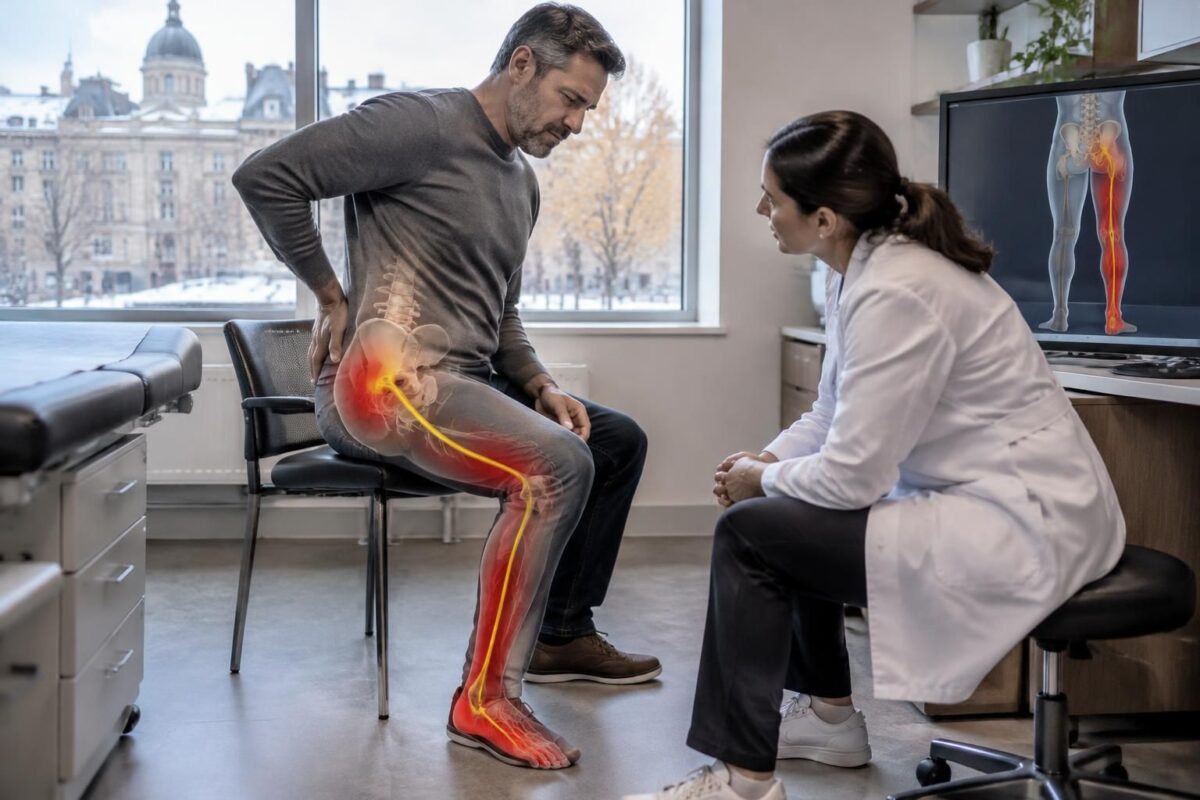
IN BRIEF Sciatica is a nerve pain that radiates from the lower back or buttock down the leg. Its sensitive territory varies depending on the affected root and may include burning, tingling, or numbness down to the foot. In Montreal, an assessment helps guide management based on the cause of the symptoms. |
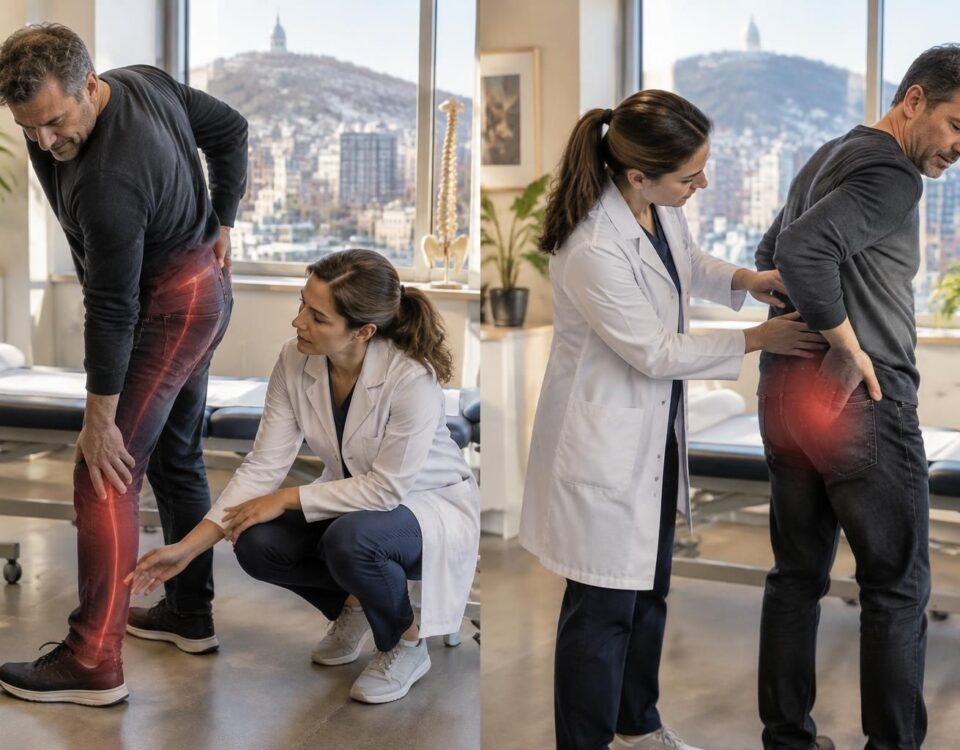
Sciatica can cause an electric or burning pain that starts from the lower back or buttock and moves down the leg. Tingling or numbness can affect different areas depending on the irritated nerve root: the side of the leg and the top of the foot, or the back of the calf and the sole of the foot. In Montreal, a professional evaluation can help clarify the origin of the symptoms and guide care. Significant or progressive weakness, or loss of control of the bladder or bowels, requires urgent medical consultation.
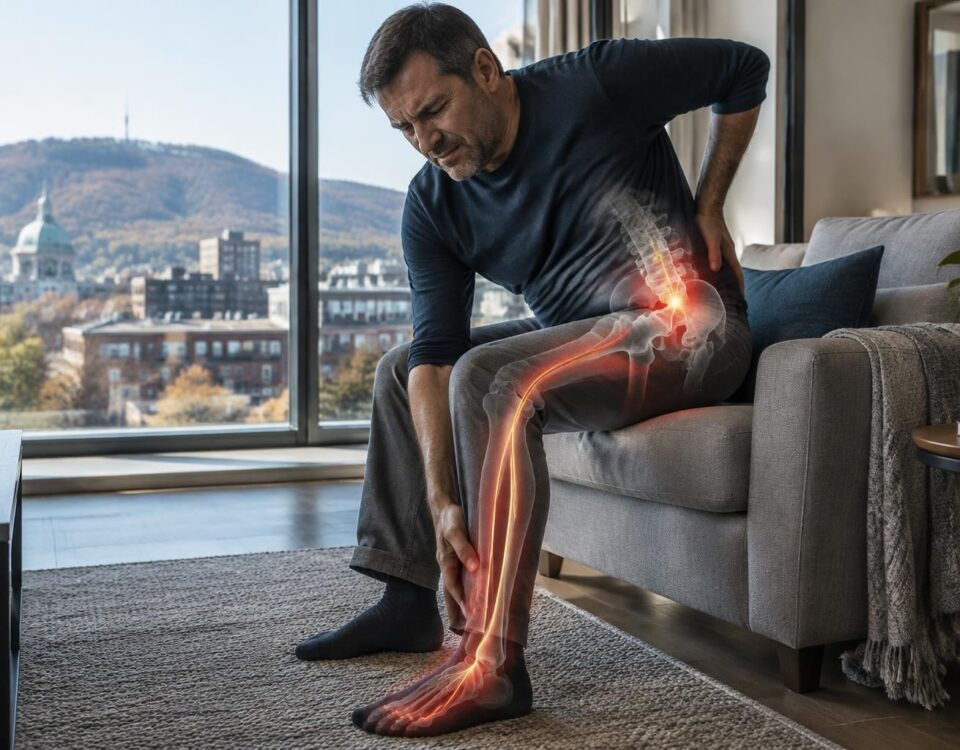
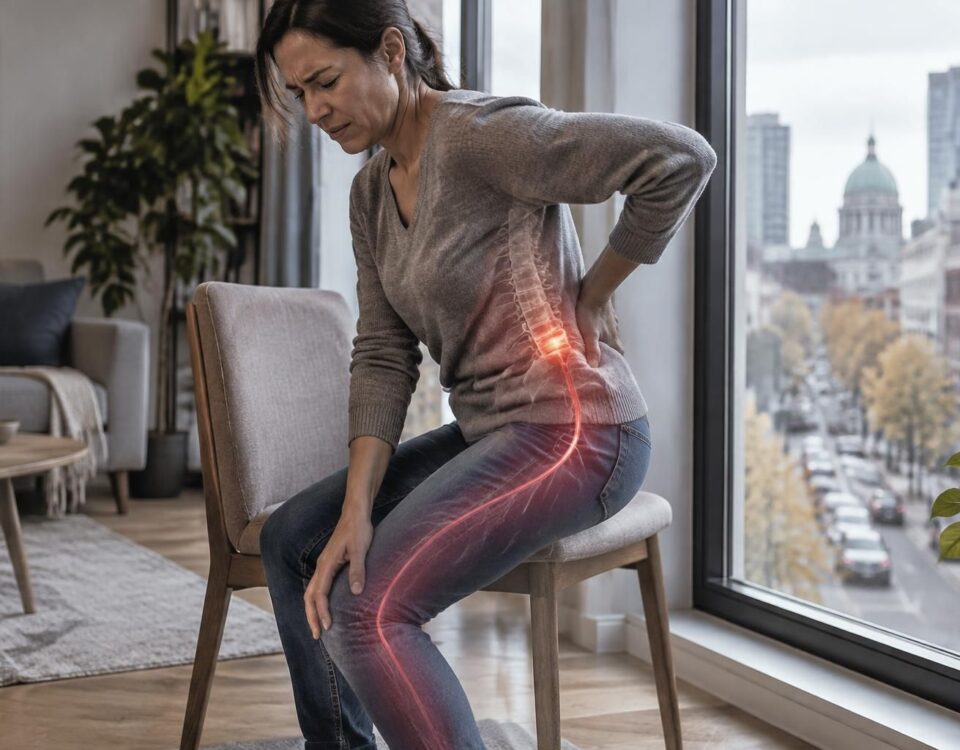
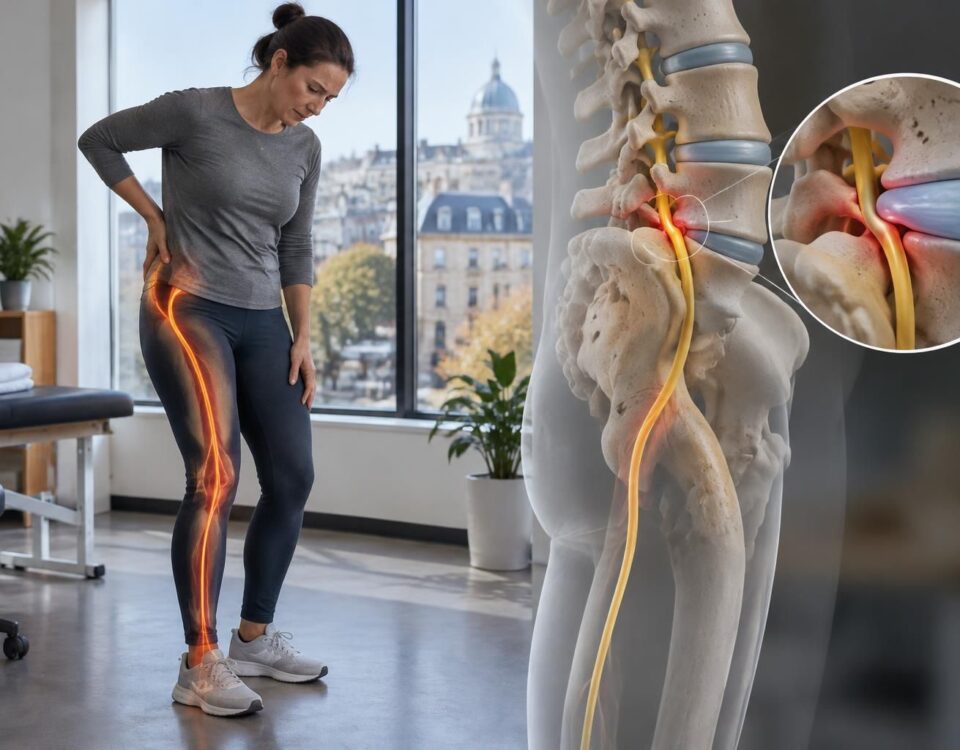
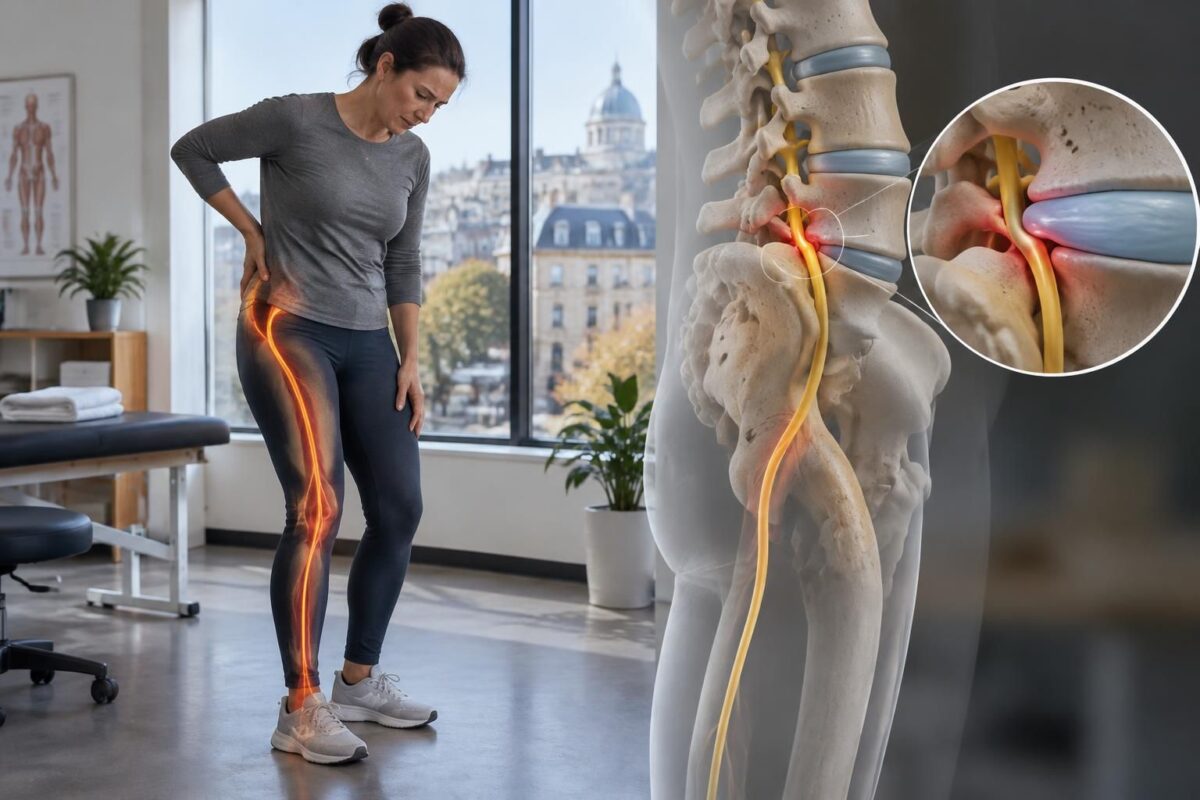
A sciatica can cause pain, tingling, or numbness that travels down the buttock and leg. The affected area can provide clues about the irritated nerve root, but symptoms alone are not sufficient to establish a diagnosis. This article explains how to understand the sensitive territory, what a clinical examination can reveal, and when to seek an evaluation quickly. The sciatic nerve forms from lumbar and sacral nerve roots, primarily L4, L5, and S1. It traverses the buttock region and descends along the back of the thigh. Further down, its branches contribute to the sensitivity and movements of the leg and foot. Irritation of a nerve root can cause shooting pain, burning, tingling, or loss of sensitivity. These sensations can extend from the lower back or buttock down to the calf, foot, or toes. Pain may vary with movements and positions. You can learn more about the variation of sciatica pain with activity. The sensation is not the same for everyone. Pain following a nerve pathway does not solely indicate the level or cause of irritation. The sensitive territory helps guide the evaluation, but it must be interpreted in conjunction with other clinical signs. Irritation of L4 can lead to symptoms at the front or side of the thigh, near the knee, and sometimes towards the inner part of the leg. Some people also notice weakness when extending the knee. These signs vary and do not replace an examination. Affecting L5 can cause pain or abnormal sensations on the side of the leg and the top of the foot. The big toe may also be affected. Weakness in lifting the foot or big toe may sometimes accompany the pain. To better understand this root, refer to this article on the frequency of L5-S1 involvement in sciatica. Irritation of S1 can cause symptoms at the back of the thigh and calf, then under the foot or on its outer edge. Some people have difficulty standing on their toes. The territories of L5 and S1 may overlap, making clinical evaluation important. To delve into the possible differences between irritation of L5 and S1, read this article on the importance of clinical examination. A general overview is also available in the AMS article on sciatica. Radicular pain is related to the irritation of a nerve root. It may be accompanied by tingling, numbness, or weakness in a specific area of the leg. Projected pain, also known as referred pain, originates from a structure transmitting pain to another region. It does not always follow a nerve pathway and does not necessarily result in changes in sensitivity. These profiles may appear similar. The location of the pain, reported sensations, strength, and reflexes help the professional differentiate the possibilities. The article on radicular pain and referred pain outlines these differences. The Merck Manual also provides general information on sciatica. Sciatica describes a set of symptoms rather than a single cause. A herniated disc may irritate a nerve root. Other possibilities include narrowing of a nerve opening, lumbar osteoarthritis, or certain muscle and joint conditions. Only a professional can evaluate the possible causes based on symptoms and examination. Pain in the buttock radiating down the leg may also be related to irritation of the nerve near the piriformis muscle. This presentation can resemble pain originating from the spine. Stretching is not suitable for all situations and may sometimes exacerbate symptoms. Consult the article on piriformis stretching and its possible effects before trying such a strategy. Pain at the front of the thigh may correspond to femoral nerve pain, rather than sciatica. The pathway of symptoms helps orient the examination, but does not alone confirm the origin. For general information on symptoms, also visit the page dedicated to sciatica. An evaluation begins with questions about the onset of pain, its path, positions that modify it, and changes in sensitivity or strength. The examination may check mobility, sensitivity, muscle strength, and certain reflexes. These elements help determine if the symptoms suggest nerve irritation and whether medical consultation or imaging may be necessary. A radiograph, MRI, or other imaging is not automatically required. A health professional may recommend one based on observed signs, symptom duration, and their evolution. Imaging must be interpreted in relation to the symptoms: a visible abnormality does not always prove it causes pain. In Montreal, the TAGMED Clinic presents its services related to sciatica. An evaluation can help determine if a non-surgical approach, such as specific osteopathy or motorized neurovertebral decompression, may be considered. The choice depends on the situation and does not substitute for a medical diagnosis. For general clinical information, you can also visit the page on sciatica pain. Quickly seek medical help if you lose control of your bladder or bowels, if you lose sensation around the genitals or the anal area, or if significant weakness appears or worsens in one leg. A fever, recent trauma, severe pain, or rapid deterioration also warrant immediate evaluation. Sylvain Desforges, B.Sc., D.O., N.D., Doctor of Osteopathy and Naturopath, is the founding president of TAGMED and the ACMA association. He dedicates his practice to chronic pain of the spine, low back pain, and pain associated with sciatica, particularly when the pain radiates to the buttock, leg, calf, foot, or toes. Through SOS Sciatique, he publishes educational content about the symptoms of sciatica, possible causes such as herniated disc, disc pinching, foraminal stenosis, or irritation of a lumbar nerve root, as well as non-surgical approaches that may be considered based on the evaluation. At TAGMED Clinic, care may include, depending on the case, motorized neurovertebral decompression, specific osteopathy, or precision percussion. For an evaluation related to sciatica treatment in Montreal / Mont-Royal or sciatica treatment in Terrebonne, check the available services at TAGMED Clinic. The information and advice provided on this site do not replace the opinion, diagnosis, or treatment of a healthcare professional. Please note that Sylvain Desforges, B.Sc., D.O., N.D., Doctor of osteopathy, is neither a medical doctor nor a physician, and is not a specialist in a medical specialty as defined by the Collège des médecins du Québec. Manual medicine, functional medicine, and sports medicine as described on this site exclude any medical treatment or diagnosis done by a medical doctor or specialist. Always consult your physician for any medical questions. For more details, please read our Complete Legal Notice. The information published on SOS Sciatique is provided for educational purposes and does not replace a consultation, diagnosis, opinion, or treatment performed by a physician or another licensed healthcare professional. The author of this article is neither a doctor nor a specialist in a medical specialty recognized by the Collège des médecins du Québec. The osteopathy, manual medicine, or functional support approaches described on this site do not constitute medical acts and are not intended to replace medical follow-up. Consult a physician or an emergency service in case of loss of bladder or bowel control, anesthesia in the anal area, significant or progressive weakness of the leg or foot, fever, recent trauma, severe pain, or rapid deterioration.How to recognize sciatica nerve pain
Sensitive territories associated with roots L4, L5, and S1
Root L4
Root L5
Root S1
Radicular pain or projected pain: what’s the difference?
Possible causes of sciatica pain
How the evaluation proceeds in Montreal
When to seek immediate consultation
CONTENT ENDAbout the Author
Medical Disclaimer
Indicative Guidelines: the painful area may vary and is not sufficient to establish a diagnosis.
Often Affected Area
Radiating pain, tingling, or numbness — root L4
Front of the thigh, inside of the knee and calf
Shock or tingling — root L5
Outer side of the leg, top of the foot, big toe
Burning or numbness — root S1
Back of the thigh, calf, outer edge or sole of the foot
Typical sciatic pain
Lower back or buttock, with radiation into one leg
Progressive weakness, loss of sensation in the anal area, or urinary or bowel issues require urgent medical evaluation.

In Montreal, pain that starts from the lower back or buttock and radiates down the leg may indicate sciatica, but its distribution and changes in sensation vary according to the affected nerve root. Note precisely where you feel pain, tingling, or numbness, as well as the movements that worsen them: these observations will assist a professional in guiding the evaluation and next steps.
Understanding the Sensory Territory
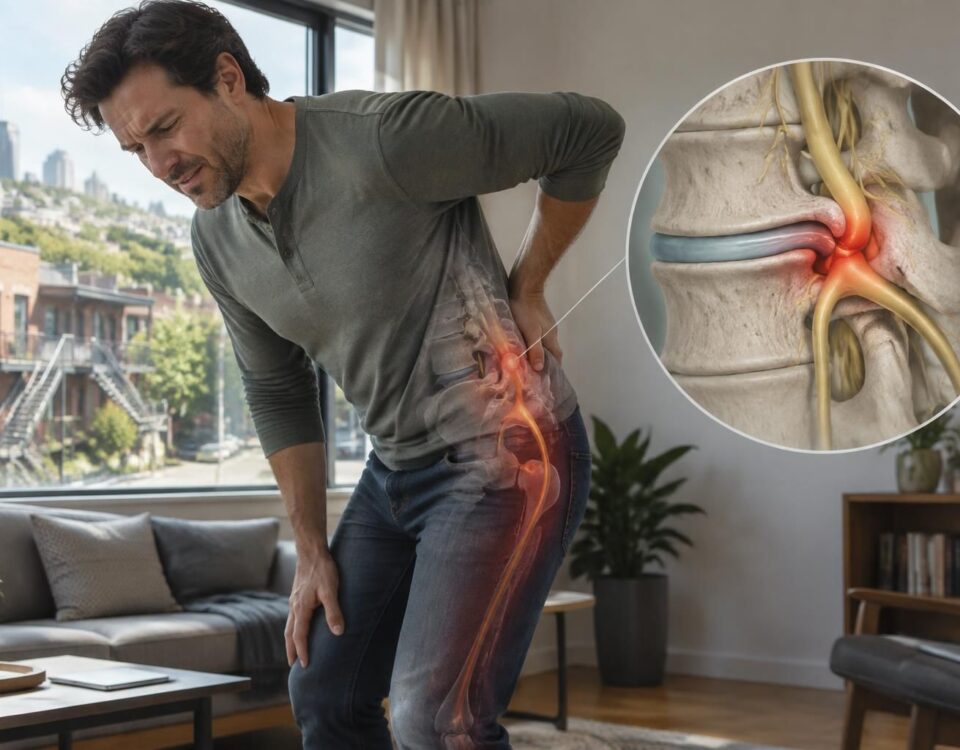
The sciatic nerve comes from nerve roots in the lower back and pelvis. When one of these roots is irritated or compressed, the symptoms may follow a path towards the buttock, thigh, calf, or foot. A burning sensation, electric shock, tingling, or decreased sensitivity may accompany the pain. However, not everyone presents the same symptoms.
What Location May Suggest
Irritation around L4-L5 may particularly be accompanied by symptoms on the side of the leg or on the top of the foot. Damage around L5-S1 may manifest at the back of the thigh, in the calf, or under the foot. These indicators are suggestive: sensory territories overlap, and location alone cannot confirm the cause or the affected level.
Pain limited mainly to the buttock may also have a muscular or joint origin, such as irritation near the piriformis muscle. Pain at the front of the thigh may relate to another nerve, specifically the femoral nerve. A clinical examination is therefore preferable to self-diagnosis.
Sciatica in Montreal: irritation L5 or S1, why the clinical examination matters
IN BRIEF The sciatica related to irritation of the L5 or S1 root can cause pain, numbness, or weakness in the leg and foot. In Montreal, the clinical examination compares the course of symptoms, sensitivity, strength, and reflexes to guide…
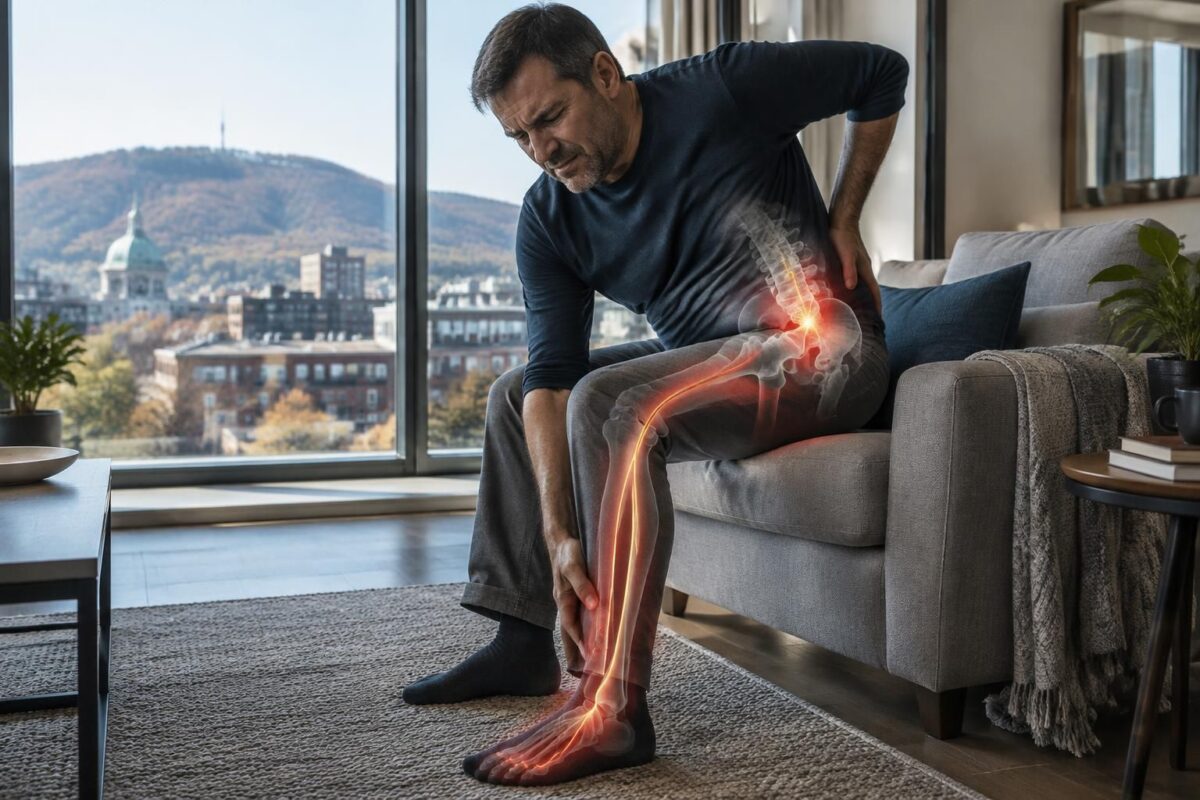
Sciatica in Montreal: L5-S1 Herniation and Pain Towards the Foot
IN BRIEF A L5-S1 disc herniation can irritate the S1 nerve root and cause sciatica in Montreal, with pain or numbness radiating down to the calf, heel, or foot. The assessment correlates symptoms, strength, and sensitivity with imaging, if relevant;…
Recommendations for Tracking Your Symptoms
For a few days, keep track of the affected area, the side involved, the intensity of the pain, and the presence of tingling or numbness. Note if the symptoms extend to the foot, if they change when you cough or move, and if any weakness appears. Avoid testing your strength repeatedly or intentionally provoking the pain.
If the symptoms are manageable, prioritize gentle mobility and suitable movement rather than prolonged complete rest. Alternate positions and regularly interrupt sitting periods. A warm or cold compress can provide temporary comfort; choose the one that suits you, avoiding direct application to the skin. Do not start intense stretching if it increases pain or numbness.
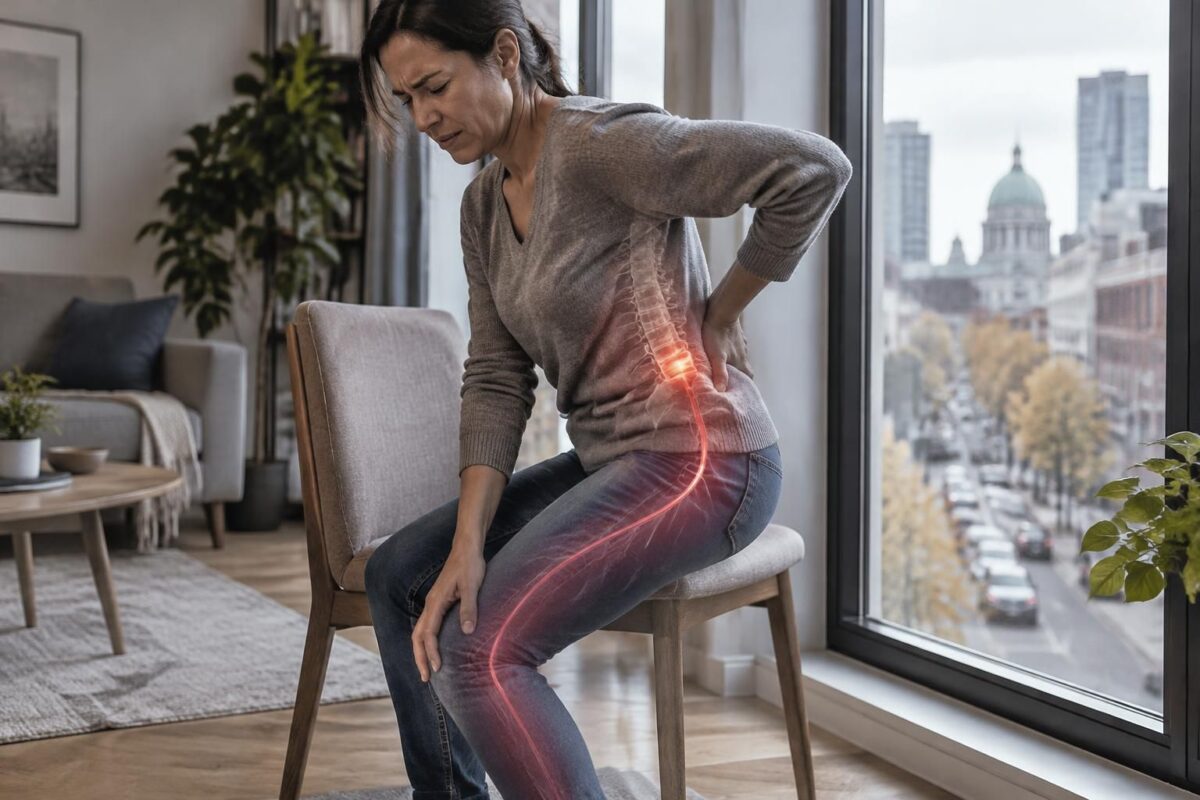
Sciatica in Montreal: L4-L5 protrusion and leg pain
IN BRIEF An L4-L5 disc protrusion is a bulging of the disc that can irritate a nerve root and cause sciatica, with pain in the buttock and leg. However, it does not always cause symptoms. In Montreal, an assessment can…
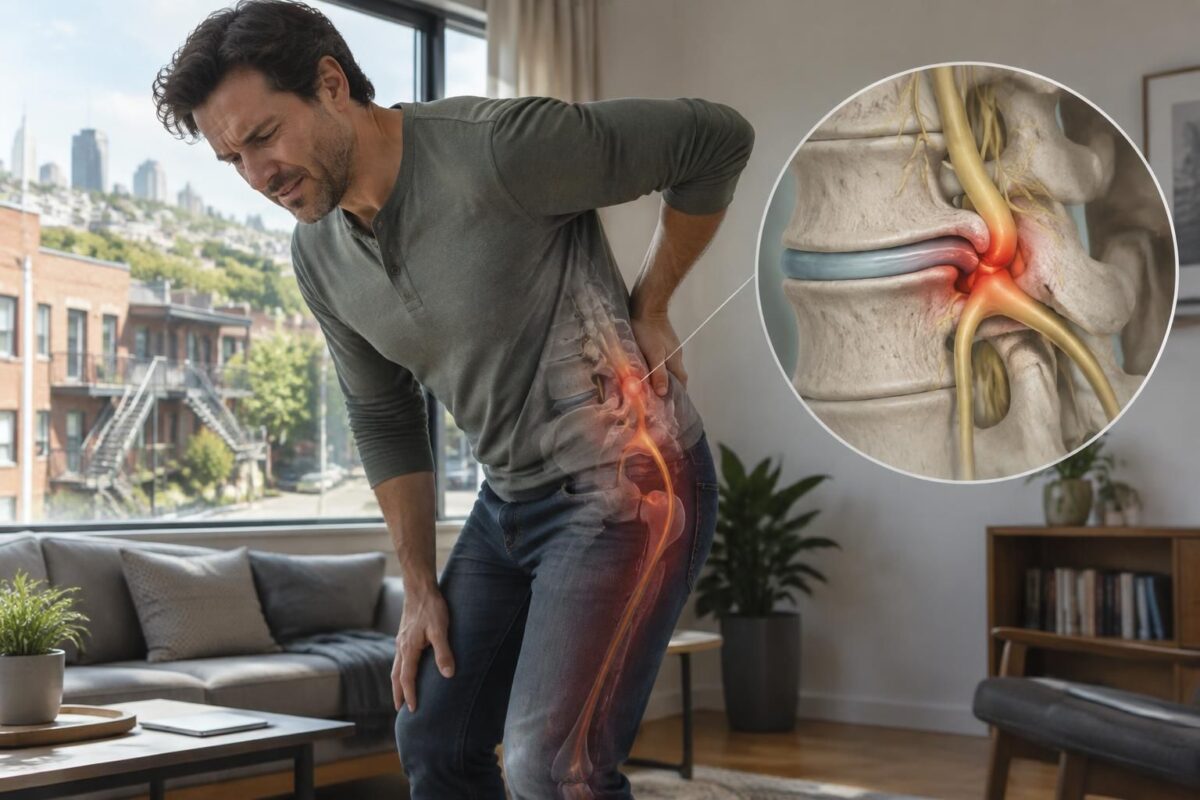
Sciatica in Montreal: what “disc-root conflict” means
IN BRIEF A disc-root conflict refers to possible contact or pressure between an intervertebral disc and a nerve root. In Montreal, this mention in the MRI can help understand a sciatica, but does not by itself prove that the disc…
When to Seek an Evaluation in Montreal
Consult a doctor or a qualified healthcare professional if the pain persists, intensifies, recurs frequently, or limits your activities. Depending on your symptoms, the assessment may include a neurological examination of sensitivity, strength, and reflexes. Imaging is not necessary in all cases; its usefulness depends on the examination and context. A physiotherapist or osteopath can also contribute to the functional assessment and support, within the limits of their scope of practice.
Signs Requiring Urgent Attention
Go quickly to the emergency room in case of loss of control of the bladder or bowels, numbness in the saddle area, or significant or progressive weakness in a leg or foot. A fever, recent trauma, or rapid deterioration also warrant immediate medical evaluation.
| Possible Impairment | Common Sensory Area |
|---|---|
| L4 Root | Front of the thigh, inner side of the knee and lower leg. |
| L5 Root | Outside of the leg, top of the foot, and big toe. |
| S1 Root | Back of the thigh and calf, outside edge or sole of the foot. |
| Sciatic Nerve Irritation | Pain, burning, or tingling that may radiate from the buttock down to the foot. |
| Nerve Compression in the Buttock | Pain often centered in the buttock and back of the thigh; the pathway may vary. |
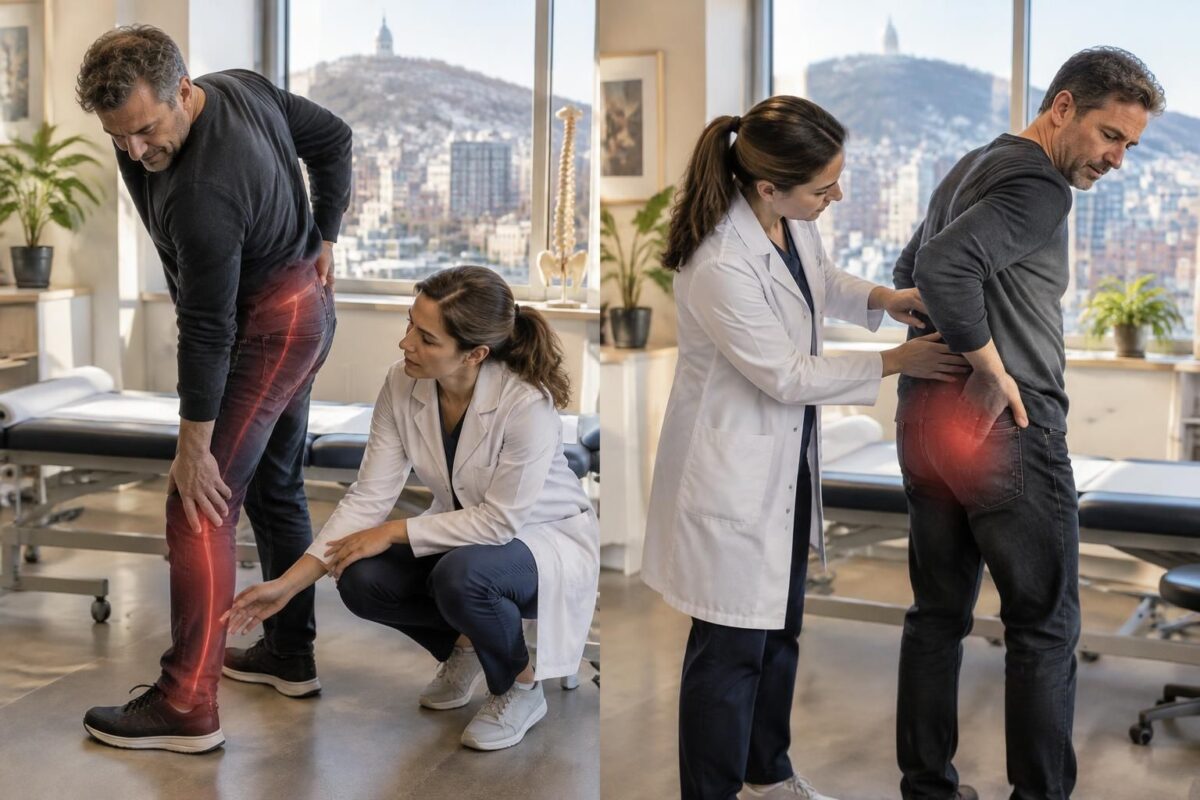
Sciatica in Montreal: radicular pain versus referred pain
IN BRIEF Radicular sciatica corresponds to irritation of a nerve root, while referred pain can spread to the buttock or leg without direct nerve involvement. In Montreal, distinguishing these pains helps guide the evaluation by linking the symptom route to…
Sciatica in Montreal: nerve root, disc, and foramen explained simply
IN BRIEF Sciatica corresponds to pain linked to the irritation of a nerve root, sometimes near a lumbar disc or a narrowed foramen. In Montreal, distinguishing an L4-L5 issue that may affect the L5 root from an L5-S1 problem that…
Illustrative Testimonials on Sciatica in Montreal: Nerve Pain and Sensory Territory
Transparency Note: The accounts below are fictional examples created for educational purposes. They do not represent real patients and do not guarantee that treatment will yield the same results.
“My pain started in the lower back, went through the buttock, and down the side of the leg to the top of the foot. I also had tingling in my toes. I realized that the area where symptoms are felt can help describe the problem, but it’s not enough to determine the cause.” — Fictional example of an adult from Montreal
“In my case, the pain was mainly along the back of the thigh and calf, with a burning sensation under the foot. During the assessment, I could explain exactly where the sensitivity seemed different and which movements worsened my symptoms. This helped the professional guide their examination.” — Fictional example of a resident from Montreal
“I mainly felt a deep pain in the buttock, radiating to the back of the thigh. I automatically thought of a herniated disc, but it was explained to me that several causes could produce similar symptoms, including nerve irritation or muscle tension.” — Fictional example of a resident from Montreal
The sensory territory refers to the area where numbness, tingling, burning sensation, or unusual sensitivity occurs. Pain may radiate from the lumbar region or buttock to the thigh, calf, foot, or toes. Its pathway varies from person to person: it cannot, by itself, make a diagnosis or precisely identify an irritated nerve root.
During a consultation in Montreal, describe the starting point of the pain, its pathway, the numb areas, and the activities that modify the symptoms. A clinical evaluation will determine whether a medical examination or imaging is indicated and will consider the options suitable for your situation.
Consult a doctor or an emergency service quickly in case of loss of control of the bladder or bowels, numbness in the saddle area, or significant or progressive weakness in a leg or foot.
Medical Warning: This content is provided for educational purposes and does not replace a consultation, diagnosis, or treatment by a doctor or other licensed healthcare professional. Osteopathy or manual medicine approaches do not replace medical follow-up.

Sciatica in Montreal: understanding L5-S1 foraminal compression
IN BRIEF L5-S1 foraminal compression is a narrowing of the opening where a nerve root exits, which can cause sciatica with pain, tingling, or weakness in the buttock and leg. In Montreal, an assessment allows for correlating symptoms, clinical examination,…

Sciatica in Montreal: why L5-S1 is often involved
IN BRIEF The sciatica L5-S1 often corresponds to irritation of the S1 root, sometimes related to a herniated disc. The pain may start in the buttock and descend behind the thigh to the calf or the foot. In Montreal, understanding…
Sciatica in Montreal: Understanding Nerve Pain and Sensory Territory
A pain that starts from the lower back and radiates into the buttock, leg, or foot may suggest sciatica. This term generally describes pain related to the irritation of a lumbar or sacral nerve root, rather than a single disease. In Montreal, as elsewhere, understanding the pathway of symptoms and their sensory territory can help guide the assessment, but does not replace a professional examination.
The sciatic nerve is formed from nerve roots located in the lower back, notably L4, L5, and S1. It travels through the buttock area, runs down the back of the thigh, and then splits to contribute to the sensitivity and movements of the leg and foot. When one of these roots is irritated or compressed, pain may follow part of this pathway. It is sometimes described as an electric shock, burning, or stabbing pain, accompanied by tingling or numbness.
The sensory territory can provide clues, but it varies from person to person and does not, by itself, determine the cause. Irritation associated with L4 may manifest towards the front or side of the leg. An impairment of L5 may affect the side of the leg and the top of the foot, sometimes reaching the big toe. Irritation of S1 may be felt more at the back of the thigh, in the calf, or under the foot. These areas overlap: the location of symptoms must therefore be interpreted in conjunction with other results of the assessment.
Pain may be related to a herniated disc, narrowing of the openings where the nerve roots pass, or other changes in the spine. Some radiating pains also originate from structures located in the buttock, such as the piriformis muscle. Therefore, pain that radiates down the leg is not automatically proof of sciatic nerve compression. The duration of symptoms, movements that exacerbate them, and the possible presence of weakness are also important.
An evaluation may include questions about the onset and progression of the pain, examination of mobility, and neurological tests concerning strength, sensitivity, and reflexes. Imaging, such as an MRI, is not necessary in all cases; a healthcare professional can determine its relevance based on the symptoms and examination. Treatment depends on the presumed cause, the intensity of the signs, and the overall condition of the person. Appropriate exercises, advice to maintain tolerable activity, and rehabilitation care may be part of the options discussed. At the TAGMED Clinic, the proposed approaches may include, depending on the assessment, specific osteopathy or motorized neurovertebral decompression.
Consult a doctor or an emergency service quickly in case of loss of urinary or bowel control, numbness in the saddle area, significant or progressive weakness in the leg or foot, fever, recent trauma, or rapid deterioration. These signs require immediate medical evaluation.
About the author: Sylvain Desforges, B.Sc., D.O., N.D., Doctor of Osteopathy and naturopath, is the founding president of TAGMED and the ACMA association. His practice focuses on chronic spine pain, lower back pain, and symptoms consistent with sciatica. He provides educational content and supports individuals in understanding the non-surgical options that may be considered based on their situation.
Medical warning: this content is provided for educational purposes and does not replace a consultation, diagnosis, or treatment by a physician or another licensed healthcare professional. The author is neither a doctor nor a specialist in a medical specialty recognized by the Collège des médecins du Québec. The approaches presented do not constitute medical acts and do not replace medical supervision.
In Montreal, pain that starts from the lower back or the buttock and descends into the leg may suggest sciatica, but its path alone is not enough to determine the cause. The painful or numb area, called sensitive territory, provides clues about the potentially irritated nerve root. A comprehensive evaluation helps distinguish lumbar involvement from other causes and choose an appropriate care pathway.
Sciatic pain may manifest as burning, electrical shocks, tingling, or numbness. It may travel along the back or side of the leg and sometimes reach the foot or toes. Depending on the affected root, symptoms may be more pronounced on the top of the foot or along the calf and sole of the foot. However, these markers are variable: they do not, on their own, confirm a herniated disc or precisely locate a compression.
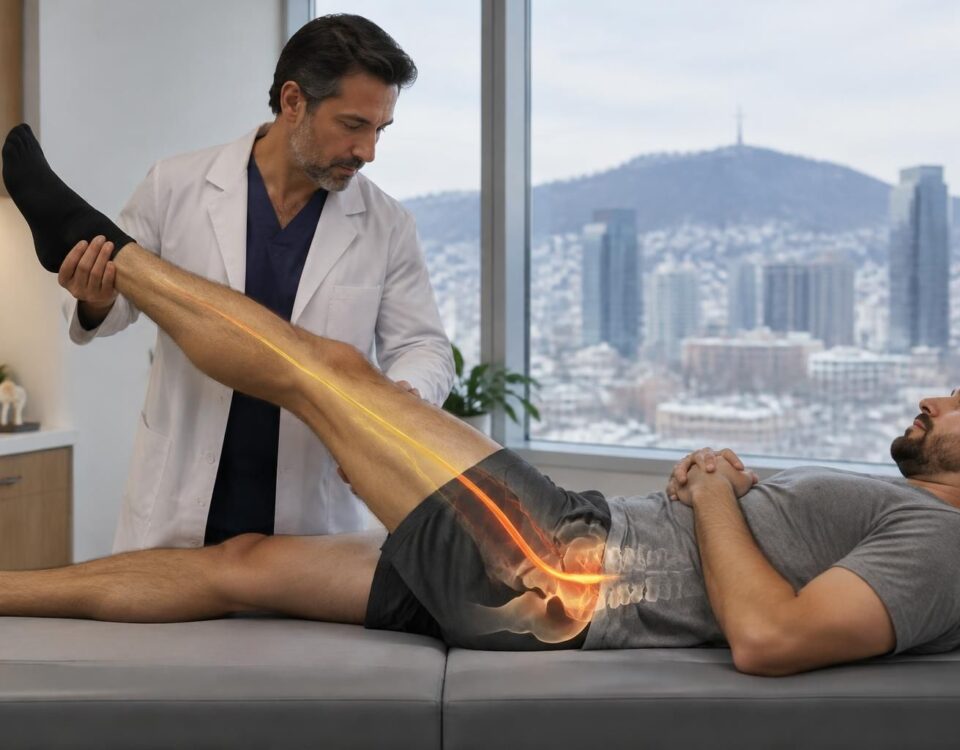
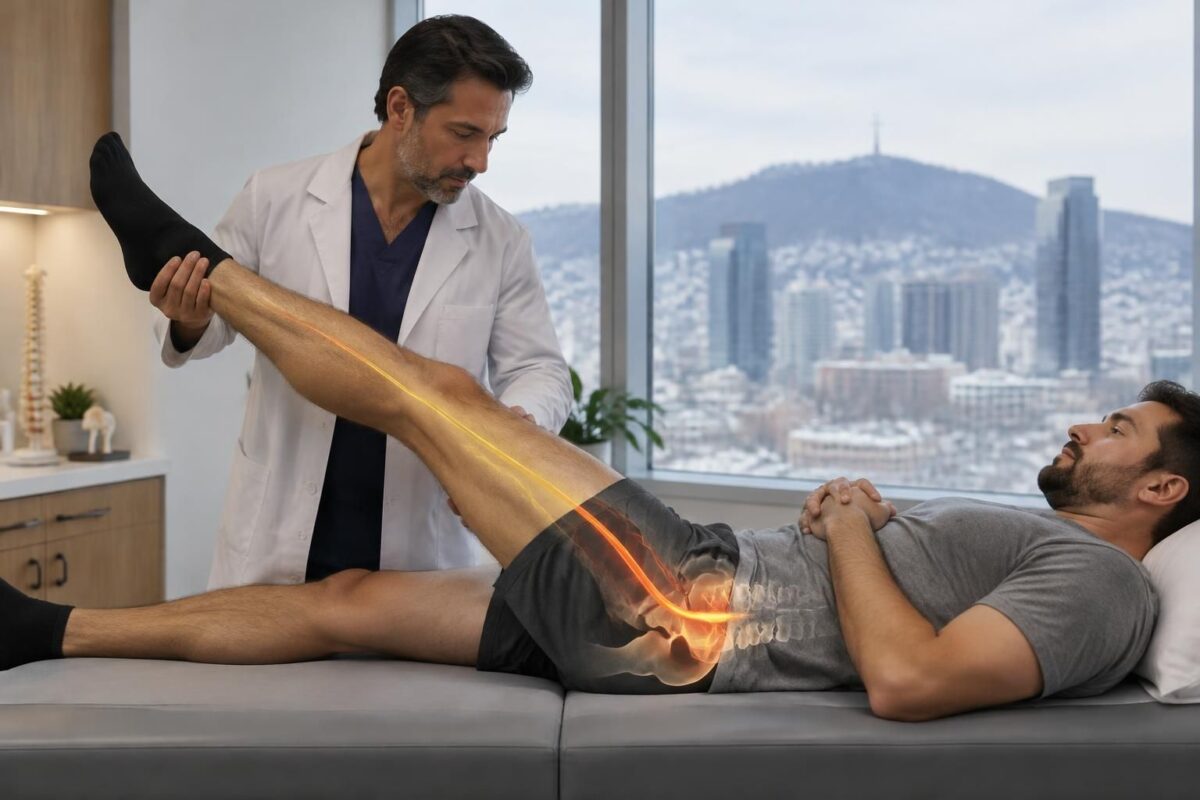
The assessment takes into account the history of symptoms, their evolution, muscle strength, sensitivity, and movements that worsen or relieve the pain. Pain heightened in a sitting position may guide the evaluation towards disc irritation, while relief in a sitting position may sometimes suggest stenosis; these observations must be interpreted by a professional. To better understand these pathways, consult resources on pain aggravated in a sitting position and pain relieved in a sitting position.
In Montreal, a sciatica evaluation allows for correlating symptoms with the results of the clinical examination. Depending on the situation, a doctor may suggest imaging or other tests. Care options vary based on the cause, intensity of pain, and neurological signs; an overview of sciatica treatments in Montreal can help prepare for a discussion with a professional. Additional resources are also available from Rehabital, Clinique Omicron, and Clinique TAGMED.
While awaiting an evaluation, prioritize gentle movements that do not exacerbate symptoms and avoid staying in an uncomfortable position for long periods. Intense stretching or certain exercises may aggravate irritation in some individuals: consult advice on aggressive stretching, exercises to adjust based on symptoms, and Pilates movements to modify. An exercise program should take into account your tolerance and evolve gradually.
Significant or worsening weakness in the leg or foot, loss of control of the bladder or bowels, or numbness in the saddle area requires urgent medical evaluation. These signs should not be managed solely through exercises or manual therapy.

Sylvain Desforges, B.Sc., D.O., N.D., docteur en ostéopathie
Dr Sylvain Desforges, B.Sc., D.O., N.D., osteopath, is the founding president of TAGMED and of the ACMA association. He dedicates his practice to chronic spinal pain, low back pain and symptoms compatible with sciatica, particularly when pain radiates toward the buttock, leg, calf, foot or toes.
Through SOS Sciatique, he publishes educational content on sciatica symptoms, possible causes such as disc herniation, disc narrowing, foraminal stenosis or irritation of a lumbar nerve root, as well as non-surgical approaches that may be considered according to the evaluation. At Clinique TAGMED, care may include, depending on the case, motorized neurovertebral decompression, specific osteopathic care or precision percussion.
For an evaluation related to sciatica treatment in Montreal / Mount Royal or sciatica treatment in Terrebonne, please consult the services available at Clinique TAGMED.
Medical disclaimer
The information published on SOS Sciatique is provided for educational purposes only and does not replace a consultation, diagnosis, opinion or treatment provided by a physician or another authorized healthcare professional. The author of this article is neither a medical doctor nor a specialist in a medical specialty recognized by the Collège des médecins du Québec. The osteopathic, manual medicine or functional support approaches described on this site do not constitute medical acts and are not intended to replace medical follow-up.
Consult a physician or emergency service in cases of loss of bladder or bowel control, anesthesia in the saddle area, significant or progressive weakness in the leg or foot, fever, recent trauma, severe pain or rapid worsening of symptoms. For more details, please read our Legal Notice.