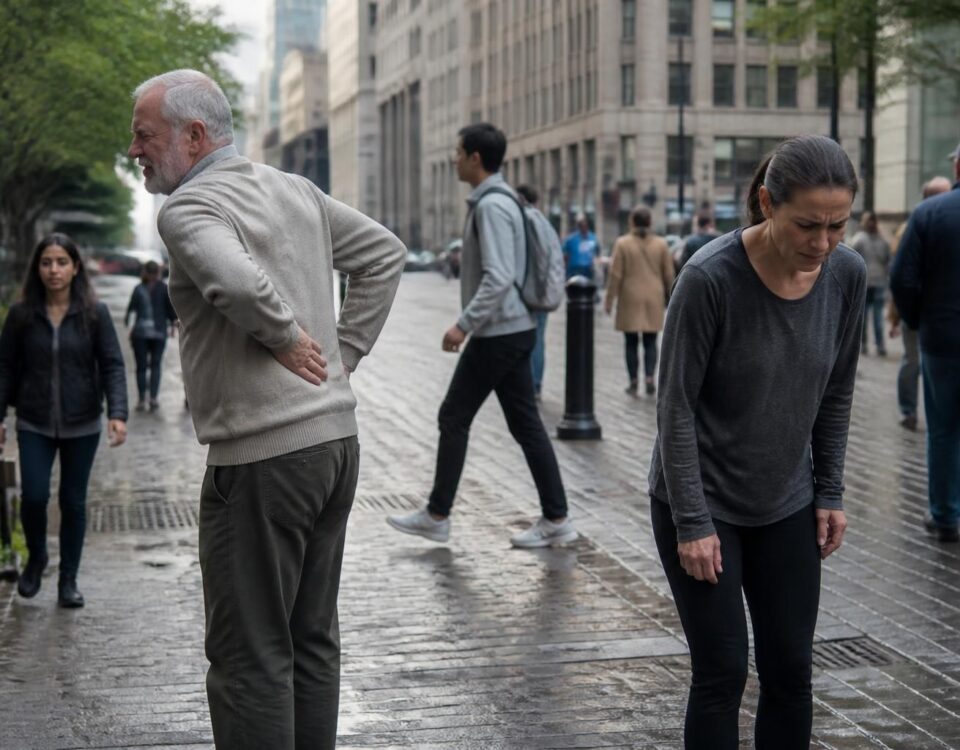
Sciatica and foot numbness while walking
14/09/2026
Sciatica in Terrebonne: leg pain after prolonged standing
15/09/2026
IN BRIEF |
In brief, sciatica in Montreal is pain that radiates into the leg after prolonged standing, often related to nerve irritation or lumbar stenosis and may be accompanied by numbness, tingling, or weakness. The diagnosis relies on the agreement between symptoms, neurological examination, and, when necessary, imaging. Conservative methods help reduce pain, improve walking, and daily activities through a tailored progression. Depending on the profile, non-surgical options like motorized neurovertebral decompression may be discussed after evaluation. In Montreal, this service is particularly helpful for individuals whose work requires standing and who seek personalized and function-focused care. |
In Montreal, sciatica can manifest as pain in the leg after prolonged standing. It may result from nerve irritation or lumbar stenosis, and can be accompanied by signs such as numbness, tingling, or weakness.
The diagnosis is based on the symptom trajectory, neurological examination, and, if necessary, imaging. Walking and tolerated activity are encouraged and progress gradually; depending on the context, conservative approaches or specialized assessments may be discussed.
Quick summary: this article explains why sciatica may arise after a period of prolonged standing, what signs to watch for, and what actions to take in Montreal. It describes how to evaluate symptoms, when to seek prompt consultation, and what care options are available, particularly at the TAGMED Clinic.
Understanding the phenomenon after prolonged standing
The pain that radiates down the leg may stem from nerve irritation or lumbar stenosis. The context of walking or prolonged standing may exacerbate or reveal these signs. The pain may also have a vascular or general origin. The symptom trajectory and associated signs help guide the evaluation.
In clinical analysis, it is essential to consider the precise symptom trajectory, its evolution, and any neurological signs. Numbness, tingling, weakness, or changes in reflexes increase the importance of a thorough neurological evaluation. Stable and reversible pain differs from a new deficit or rapid deterioration.
The ability to compare signs between the right and left sides, as well as the consistency of symptoms, is often more informative than a single isolated test. The physician also evaluates local, joint, muscular, and vascular structures based on the context.
Key elements to describe and follow the symptom
Useful benchmarks: describe the trajectory (starting point, direction, side, and affected area), test the function (walking, sitting position, standing, and triggering or alleviating activities), and assess neurology (strength, sensitivity, reflexes). The action plan is based on the history of symptoms, daily function, and clinical evolution.
Progress is better measured by the impact on walking, sleep, and activities than by a single sensation. The functional context is essential for interpreting pain and reported limitations.
When to consult promptly or in an emergency
Consult promptly in the presence of new weakness, foot drop, or rapid deterioration of the leg. New urinary or bowel issues, saddle anesthesia, or significant progressive weakness require urgent care. Significant bilateral symptoms or fever also warrant rapid medical evaluation.
Evaluation and diagnosis in Montreal
The diagnosis relies on the agreement between symptoms, clinical examination, and imaging data when they alter the course of action. The symptom trajectory and neurological signs must be interpreted in the patient’s functional context and clinical setting.
In the context of a consultation, identifying a sciatic profile may include analyzing the trajectory, the presence of numbness or weakness, and the activities that worsen or alleviate symptoms. In cases where prolonged standing seems to play a role, the evaluation seeks to distinguish a nerve component from musculoskeletal or vascular pain.
Care options at the TAGMED Clinic
In Montreal and the surrounding area, the TAGMED Clinic offers specialized evaluations for lumbar pain and sciatica related to prolonged standing. Depending on the evaluation, certain approaches may be discussed, particularly based on indications and contraindications. Motorized neurovertebral decompression may be considered for selected patients after a comprehensive evaluation. Other osteopathic approaches or targeted interventions may be discussed on a case-by-case basis.
For specific cases, the team may rely on recognized protocols and on experience gained in managing sciatica in Montreal and around Terrebonne. The goal is to preserve function and allow a gradual return to tolerated activities while monitoring neurological signs and aggravating factors.
Useful resources and links
To enhance your understanding, consult the following resources: Sciatica in Montreal – pain toward the little toe and root S1, Sign to evaluate: loss of balance and symptoms, Impact of prolonged sitting on a plane, and Sciatica – heavy leg. You may also visit Sciatica cases in Terrebonne.
Other useful readings on the subject include TAGMED resources and information pages dedicated to sciatica and prolonged standing.
Medical disclaimer: The information and advice provided on this site do not replace the advice, diagnosis, or treatment of a healthcare professional. Please note that Dr. Sylvain Desforges, osteopath, is neither a doctor of medicine nor a physician, and is not a specialist in a medical specialty as defined by the Collège des médecins du Québec. Manual medicine, functional medicine, and sports medicine as described on this site exclude any medical treatment or diagnosis made by a physician or a specialist doctor. Always consult your doctor for any medical questions. For more details, please read our full Legal Notice.
- Journey: pain in the leg after prolonged standing.
- Location: follows the nerve territories; the topography varies by person.
- Associated signs: numbness, paresthesia, weakness, gait disturbances.
- Evolution: stable and reversible pain vs new deficit or rapid deterioration.
- Possible causes: may also be vascular or general in origin, not solely nerve-related.
- Diagnosis: relies on symptom/examination concordance; imaging is useful if it alters management.
- Emergencies: new or progressive weakness, dropped foot, new urinary/intestinal issues, saddle anesthesia.
- Activity: prioritize a tolerated activity and gradual progression; avoid prolonged inactivity.
- Clinical evaluation: walk, test strength, sensitivity, and reflexes; compare right-left.
- Imaging: not systematic; decision guided by clinical context and impact on treatment.
- Therapeutic options: manual approaches or decompression discussed after evaluating indications and contraindications.
- Follow-up: document evolution, frequency, and intensity of flare-ups, and affected activities.

This quick recommendation guides you on the onset of leg pain after prolonged standing, typical of sciatica. It reminds how to understand the journey of symptoms, what neurological signs to monitor, when a quicker evaluation is needed, and what steps to take for appropriate and safe management, especially in an urban setting like Montreal. The goal is to maintain what can be tolerated, avoid inactivity, and guide toward measures that improve function without rushing unnecessary examinations.
Understanding the context and the pathway of symptoms
The pathway of the symptom is a key indicator. Its location, direction, and persistence can point to nerve irritation or lumbar stenosis, especially when the pain appears while walking or after prolonged standing. However, there are vascular or general causes that can mimic this picture. The diagnosis relies on the concordance between symptoms, examination, and, if relevant, imaging.
Key elements of clinical evaluation
The practitioner compares nerve signs with local, joint, muscular, or vascular causes, depending on the context. It is important not to rely on a single painful area: strength, sensitivity, reflexes, and gait direct the hypothesis further. A useful benchmark is the right-left comparison and the consistency of signs between what you feel and what the examination reveals.
Describing the pathway
Note the starting point, direction, side, and the most distal areas affected, as well as the duration and triggering factors. This precise description helps prioritize hypotheses and choose the actions to be taken.
Testing function
Evaluate situations that worsen or alleviate symptoms: walking, standing, sitting, and daily activities. The goal is to determine what your body tolerates and what is too irritating to adjust the rehabilitation program.
Examining neurology
Check muscle strength, sensitivity, and reflexes, with tests adapted to your clinical picture. This is the heart of the decision regarding the necessity for additional imaging or specialized opinion.
Deciding the next steps
Based on the evaluation, prioritize a conservative management approach with load advice and gradual progression, or consider specific adaptations (rehabilitation, neurovertebral decompression discussed after evaluation). Imaging or an injection may be considered if it can change the therapeutic approach.
Activity, rehabilitation, and therapeutic options
The aim is to maintain what is tolerated and gradually decrease irritating exposures. Rehabilitation aims to rebuild functional capacity while protecting the back and affected nerves. Depending on the profile, manual approaches or neurovertebral decompression may be considered after evaluating indications and contraindications. The goal is to allow a gradual return to activities while monitoring neurological signals.
When to consult quickly or urgently?
Consult without delay in the presence of new weakness, dropped foot, or rapid deterioration, new urinary or intestinal issues, saddle anesthesia, or significant and progressive weakness in a leg or foot. Significant bilateral symptoms, major trauma, or associated fever require urgent medical evaluation.
Frequently asked questions and practical advice
A heavy leg can accompany sciatica or stenosis, but this sign is not specific. A pain in the leg does not necessarily imply a disc herniation; it must be interpreted with examination and imaging if necessary. MRI is not systematic: it is mainly useful if it can change the management. Walking is generally encouraged if tolerated, but it should be measured and adapted to your pain. Finally, prolonged standing can worsen symptoms, but it does not necessarily indicate a unique cause: the functional context and neurological signs guide decisions.
| Analysis Axis | Concise Insight |
|---|---|
| Path and Location | Identify the path and painful area, in connection with a nerve territory. |
| Neurological Signs | Numbness, paresthesia, weakness, or walking disorders indicate nerve root involvement. |
| Evolution and Severity | New deficits or rapid deterioration require evaluation. |
| Triggers and Activity | Prolonged standing may worsen; prefer tolerated walking according to symptoms. |
| Clinical Examinations | Assess strength, sensitivity, reflexes, and walking; compare right/left. |
| Imaging and Guidance | Targeted imaging if it changes the management or if there are significant neurological signs. |
| Therapeutic Approaches | Prefer conservative approaches; decompression may be discussed after evaluation. |
| Emergencies and Warning Signs | Urinary issues, saddle anesthesia, or rapid weakness require urgent evaluation. |
| Functional Objective | Maintain tolerated activities and progress gradually to restore walking. |
Testimonials on Sciatica in Montreal: Pain in the Leg After Prolonged Standing
Camille — 39 years old, Montreal
After hours of standing at work, the pain in my leg became unbearable and limited my movements. I was explained that the path of the symptom and the associated signs may reveal a Sciatica triggered by nerve irritation and prolonged standing. Thanks to a comprehensive evaluation, a personalized plan, and targeted exercises, I gradually regained my mobility and comfort in daily life. If you are experiencing the same situation in Montreal, a consultation can really make a difference.
Laurent — 52 years old, Mont-Royal (near Montreal)
My heavy leg mostly appeared while walking or after a long period of standing. The team linked this path to a nerve component and specified the signs that required more attention. After conservative treatment and tailored activity advice, the pain eased, and I could resume my activities without fear of triggering it. For those who work standing, I highly recommend having your case evaluated in Montreal.
Sophie — 34 years old, Montreal
The symptom started with pain in the buttock and leg after a day of standing work. The key concept: describing the path, testing function, and observing evolution helped to distinguish a nerve cause from other pains. Today, thanks to an adapted approach, my Sciatica is better managed, and I can resume my normal activities with less worry.
Éric — 60 years old, Montreal
I felt like every step triggered pain that radiated down to my foot, especially after standing for a long time. I was explained that the path of the symptom and detailed neurological evaluation were essential, and that imaging or infiltration were not systematic but useful if necessary. By following recommendations and a progressive program, I regained smoother walking and less pain.
Isabelle — 48 years old, Montreal
The sensation of a heavy leg and tingling appeared after prolonged standing. Thanks to a functional evaluation and targeted exercises, my Sciatica was better understood and treated without resorting to invasive interventions. I recommend not to ignore this type of pain and to consult in Montreal for tailored support.
In the osteopathic and manual medicine landscape in Montreal, an experienced clinician offers an integrated approach for sciatica and pain associated with prolonged standing. Relying on osteopathy, naturopathy, and advanced manual techniques, he leads TAGMED clinics and works within professional associations to improve the management of low back and radiating pain. His goal is to provide evidence-based care to optimize patient health and well-being, especially for those experiencing leg pain after a standing period.
Sciatica can occur when the nerve path is irritated by inflammation, disc irritation, or foraminal stenosis, causing pain that often radiates along the thigh, then the calf to the foot. In Montreal, practitioners emphasize the importance of evaluating not only the exact location of the pain but also its path, location, and associated neurological signs, such as numbness, paresthesias, weakness, or changes in reflexes. This understanding guides diagnostic orientation and therapeutic decisions in a context where local, joint, muscular, or vascular causes may coexist or mask each other.
The diagnosis relies on the concordance between reported symptoms, clinical examination, and, when relevant, imaging results. The path of the symptom is used as a clinical clue – but it must be interpreted in light of function, neurological examination, and the patient’s overall context. There is no “single test” capable of identifying a responsible structure; right-left comparison, assessment of progression, and correlation of neurofunctional signs remain essential to prioritize hypotheses and guide subsequent steps.
In the Montreal practice, the clinical approach combines education, self-management, and adapted therapies. Patients are encouraged to maintain tolerated activities and to progress gradually, in order to rebuild functional capacity without exacerbating symptoms. Depending on the profile, targeted manual approaches or neurovertebral decompression may be considered after evaluation of indications and contraindications. These options remain discussed as complementary possibilities and do not guarantee outcomes for all cases.
In terms of imaging, it is not systematic; it becomes relevant when the clinical context suggests that it could modify the therapeutic approach or when major neurological signs require further evaluation. The goal is always to quickly steer towards measures that can influence management, while avoiding unnecessary explorations. Furthermore, advanced technologies such as motorized neurovertebral decompression, laser therapies, and shock waves can be discussed within a personalized plan and after a comprehensive assessment of benefits and risks.
If you experience leg pain after a prolonged standing period in Montreal, a specialized evaluation can clarify the clinical profile, signs to monitor, and the next steps suitable for your situation. The goal is to describe the trajectory, test functions, and examine neurological signs to determine the best therapeutic pathway, whether it involves conservative management, functional modifications, or resorting to complementary strategies.
Here is a quick summary: a sciatica in Montreal presenting with leg pain after prolonged standing may result from nerve irritation, lumbar stenosis, or other factors. The evaluation is based on the symptom’s trajectory, neurological signs, and evolution, with options ranging from tolerated activity to further investigations depending on the context; local and professional resources are available to guide management.
The symptom’s trajectory and associated signs are key clinical markers. The location and direction of the trajectory help guide the diagnosis, but nerve territories can overlap and vary for each patient. Elements such as numbness, tingling, weakness, or difficulties walking strengthen the hypothesis of a nerve origin and justify a thorough neurological evaluation. To understand the practical implications, refer to resources on the link between sciatica and walking and standing contexts.
In terms of evolution, stable and reversible pain does not carry the same meaning as a new deficit or rapid deterioration. The physician compares neurological signs with local, joint, muscular, or vascular causes depending on the context and favors an approach that prioritizes patient function rather than pain alone. The central principle is that strength, sensitivity, and reflexes complement the painful trajectory to prioritize hypotheses and guide management.
Practically, the goal is to allow tolerated activity and avoid irritating exposures while gradually rebuilding capacity. Depending on the profile, targeted manual approaches or neurovertebral decompression may be discussed after evaluating indications and contraindications, without guaranteeing results. To better understand the link between posture and symptoms, refer to dedicated pages on the subject and positions to prioritize or avoid.
Additional guidance may be necessary when imaging or an infiltration seems likely to modify clinical conduct, especially in cases of persistent neurological signs or slow but significant evolution. Accessing specialized resources, such as the services of Clinique TAGMED, may prove useful for an appropriate and personalized assessment.
In cases of new or progressive weakness, drop foot, new urinary or bowel disturbances, or rapid deterioration, a quick consultation is indicated and may require urgent medical evaluation. To better evaluate common scenarios and possible trajectories, you can consult dedicated resources such as those explaining the relationship between standing and sciatica, or the effects of walking on symptoms (Sciatica and standing, Sciatica and beneficial or aggravating walking). For additional information on specific manifestations in Montreal and practical advice, see dedicated pages on pain radiating to the foot or lumbar areas, as well as resources on positions to avoid (pain radiating to the outer edge of the foot, pain to the top of the foot and root L5).
For those wishing to explore the practical aspects of management and the choices between activity, rehabilitation, and investigations, resources such as the dedicated pages on standing and sciatica treatment provide useful benchmarks and concrete advice on the steps to take and the signals to monitor (signs of irritation, legs and sciatica). These elements will help guide management tailored to each situation.
Important information: this summary does not replace a medical consultation, and results may vary depending on the cause, neurological signs, and individual response to treatment.

Sciatica in Montreal: intermittent pain or constant pain?
IN BRIEF In brief, sciatica in Montreal refers to pain that starts in the lower back and follows the path of the buttock, thigh, and sometimes the foot, which can be intermittent or constant. It often reflects an underlying mechanical…

Sciatica in Montreal: burning pain behind the thigh
IN BRIEF Sciatica is a pain that starts from the lower back or buttock and radiates down the back of the thigh, sometimes to the calf or foot, described as a burning sensation or electric shock. In Montreal, an osteopathic…
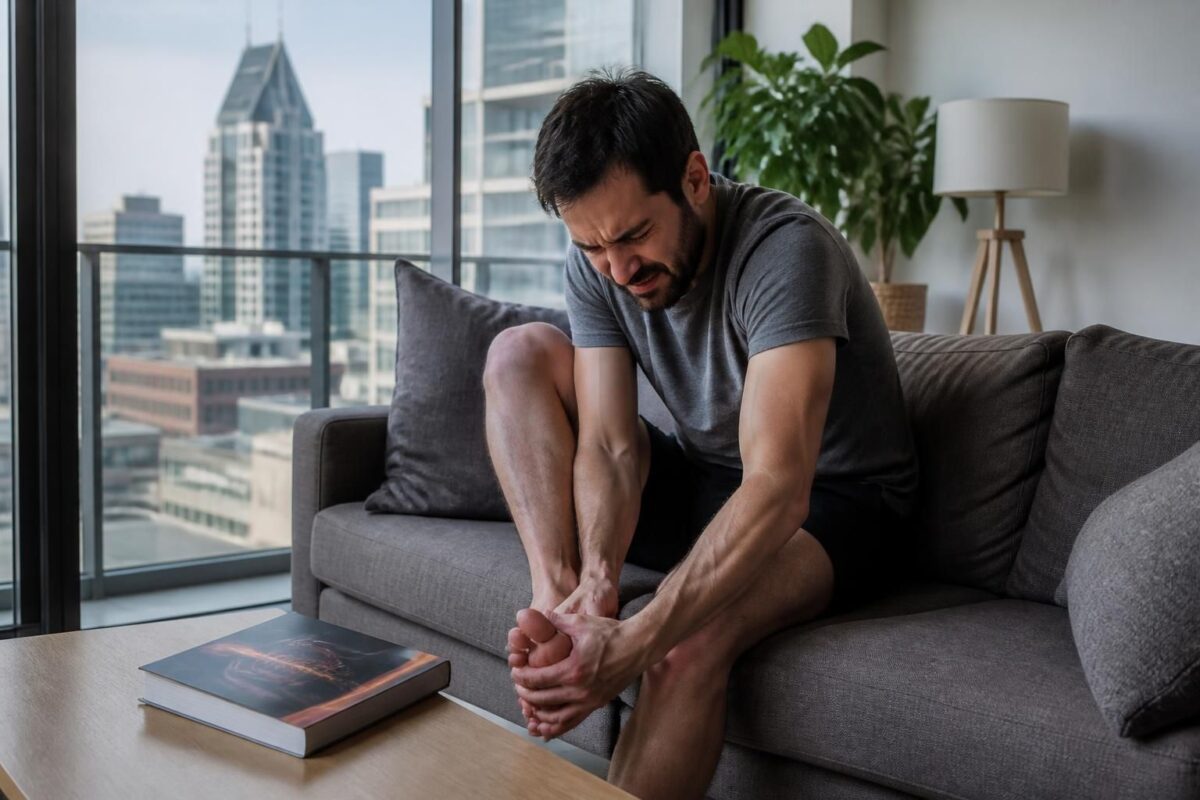
Sciatica in Montreal: numbness of the big toe and lower back pain
IN SHORT In short, sciatica associated with numbness of the big toe and lower back pain is a symptom resulting from compression or irritation of the sciatic nerve that extends from the lower back to the foot. In Montreal, this…
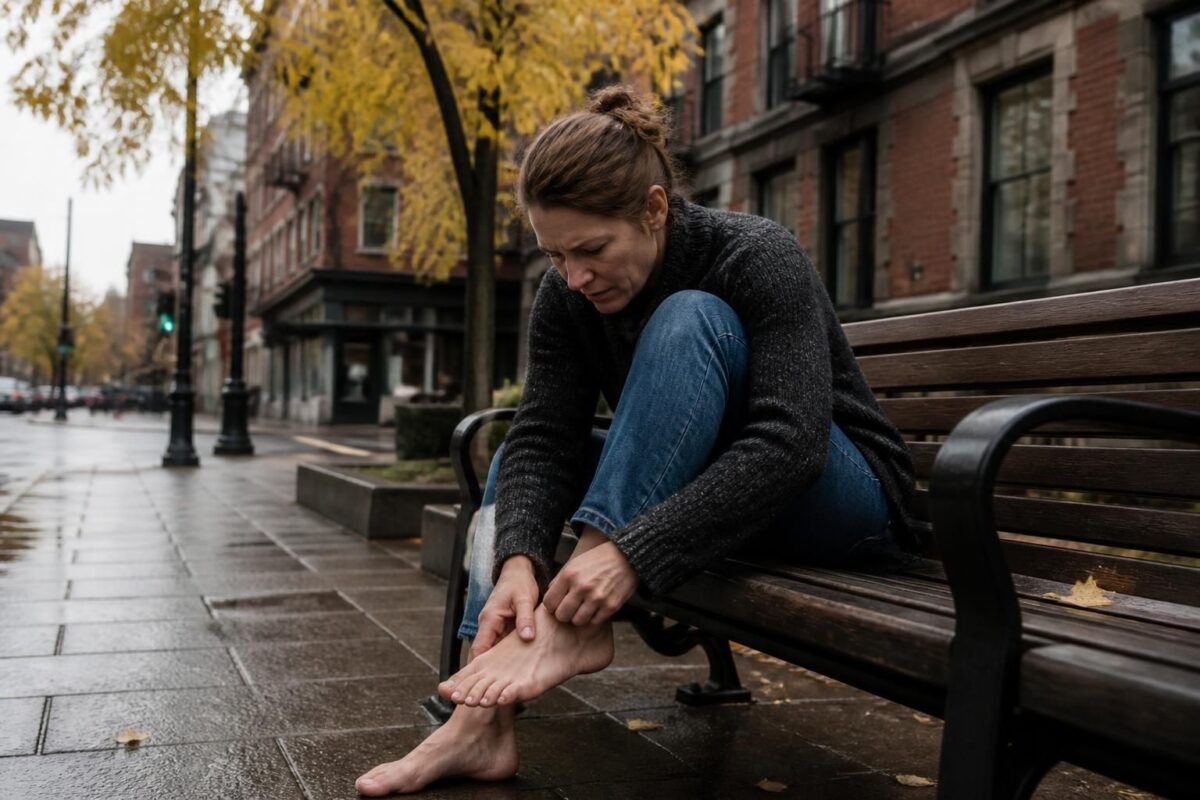
Sciatica in Montreal: loss of sensitivity in the toes
IN BRIEF In brief, sciatica associated with a loss of sensitivity in the toes is pain that starts in the lower back and can radiate down to the foot. In Montreal, this service offers an effective non-surgical approach based on…

Sciatica in Montreal: pain when sitting with tingling in the foot
IN SHORT In short, sciatica in Montreal is a radicular pain that often worsens in sitting position and may be accompanied by tingling in the foot. This approach emphasizes an assessment that links symptoms to function and neurological signs, rather…

Sciatica in Montreal: pain and numbness after walking
IN BRIEF In brief, sciatica in Montreal is a lumbar radiculopathy characterized by pain and numbness that starts from the lower back or buttock and radiates down the leg, especially after walking. In Montreal, the approach favors a functional assessment…

Sciatica in Montreal: Persistent Pain in the Heel
IN BRIEF In brief, persistent sciatica in the heel is a lumbar radiculopathy that can affect the S1 root and manifest as pain radiating to the heel. In Montreal, non-surgical evaluation focused on the symptom pathway, function, and neurological signs…

Sciatica in Montreal: pain that descends but then rises back up towards the buttock
IN BRIEF In brief, sciatica pain is pain that starts from the lower back or the buttock and can radiate down the leg, sometimes returning to the buttock. In Montreal, an osteopathic evaluation helps identify mobility restrictions and musculoskeletal causes,…

Dr Sylvain Desforges, B.Sc., D.O., N.D., osteopath, is the founding president of TAGMED and of the ACMA association. He dedicates his practice to chronic spinal pain, low back pain and symptoms compatible with sciatica, particularly when pain radiates toward the buttock, leg, calf, foot or toes.
Through SOS Sciatique, he publishes educational content on sciatica symptoms, possible causes such as disc herniation, disc narrowing, foraminal stenosis or irritation of a lumbar nerve root, as well as non-surgical approaches that may be considered according to the evaluation. At Clinique TAGMED, care may include, depending on the case, motorized neurovertebral decompression, specific osteopathic care or precision percussion.
For an evaluation related to sciatica treatment in Montreal / Mount Royal or sciatica treatment in Terrebonne, please consult the services available at Clinique TAGMED.
Medical disclaimer
The information published on SOS Sciatique is provided for educational purposes only and does not replace a consultation, diagnosis, opinion or treatment provided by a physician or another authorized healthcare professional. The author of this article is neither a medical doctor nor a specialist in a medical specialty recognized by the Collège des médecins du Québec. The osteopathic, manual medicine or functional support approaches described on this site do not constitute medical acts and are not intended to replace medical follow-up.
Consult a physician or emergency service in cases of loss of bladder or bowel control, anesthesia in the saddle area, significant or progressive weakness in the leg or foot, fever, recent trauma, severe pain or rapid worsening of symptoms. For more details, please read our Legal Notice.