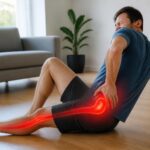
Sciatica in Terrebonne: pain that goes down but then rises back up to the buttock
12/09/2026
Herniated disc and disc pinching: two different mechanisms
12/09/2026
IN SHORT
| In short, sciatica associated with a loss of balance is a signal that deserves a quick assessment to rule out neurological impairment and prevent complications. Sciatica refers to pain related to compression or irritation of the sciatic nerve; loss of balance may indicate more serious nerve damage and requires appropriate management. The benefits of this evaluation lie in the quick referral to non-invasive and personalized approaches (osteopathy, physical therapy, postural advice) aimed at reducing pain and restoring stability. The process is based on a simple clinical examination leading to a personalized plan; in case of alarming signs, urgent management may be recommended. In Montreal, this type of evaluation is accessible in specialized clinics for accurate diagnosis and appropriate treatment. |
Sciatica is pain that follows the path of the sciatic nerve, often due to nerve compression. When it impacts balance, it can cause instability when walking, muscle weakness in the leg, and difficulties raising the foot, accompanied by paresthesias and numbness.
To be assessed quickly:
- Pain radiating in the buttock and leg
- Weakness or loss of control of leg movement
- Numbness or tingling along the nerve path
- Loss of balance or unstable gait
- Pain worsened by walking, coughing, or stretching
If any of these signs appear, consult a healthcare professional quickly for a targeted and appropriate assessment to determine the cause and management options.
Quick summary: this article, written by a healthcare professional, explains how loss of balance may be related to sciatica. It details the signs to assess, possible mechanisms, useful examinations, and management options suitable for TAGMED. It also warns about situations requiring medical urgency and provides reliable resources to complement the information.
Sciatica can affect balance when pain, sensory disturbances, or muscle weakness interfere with walking. The sciatic nerve is the longest in the body, and its pain can extend from the lower back to the foot. A loss of balance may result from nerve damage or sensory alterations that disrupt the perception of the body territory and motor control.
Signs indicating potential damage requiring assessment
In the presence of sciatica, watch for the following signs that may influence balance: burning pain along the nerve path, tingling, numbness, progressive weakness in one leg, and difficulty walking or standing upright. If any of these elements appear or worsen, medical evaluation is indicated. In case of pain that spreads quickly or is accompanied by significant motor deficit, urgent assessment is necessary.
Causes and possible mechanisms of balance loss associated with sciatica
Loss of balance can occur when pain is intense and limits postural stability. It may also reflect sensory or motor impairment of a lumbar nerve root. In this context, the assessment must distinguish between a mechanical cause such as a herniated disc or stenosis, and other origins related to the nervous or vestibular system. The goal is to clarify whether balance is affected by pain, by a sensory alteration, or by targeted weakness.
Clinical evaluation and diagnostic explorations
During the clinical examination, the doctor checks muscle strength, reflexes, and sensitivity of the lower limbs. The Lasègue test may be used to assess radicular irritation. If symptoms persist beyond six weeks or if there is weakness or sensory-motor impairment, imaging studies may be considered. These examinations help identify a lumbar or radicular origin and guide management.
For additional information and similar cases, you can consult specialized resources on issues related to sciatica and walking:
sciatica and pain that appears after a few minutes of walking
sciatica and feeling of a dead foot – when to consult
sciatica in Montreal – pain towards the top of the foot and root L5
sciatica and difficulty lifting the foot – urgent or quick consultation
Management and therapeutic options
Management depends on the cause and severity of the symptoms. In the context of sciatica associated with loss of balance, clinical evaluation will guide the choices. Non-surgical options may be considered depending on the context, and specific approaches from TAGMED clinic may be proposed when relevant. In cases of neurovertebral decompression or other discussed conditions, professionals prioritize approaches tailored to each patient and avoid inappropriate recommendations. For cases requiring specialized management, motorized neurovertebral decompression and specific osteopathic techniques can be discussed at the TAGMED Clinic in Montreal or Terrebonne.
To access relevant and validated resources, follow these links:
Carpal tunnel syndrome and low back
These resources provide general information and do not replace a personalized medical consultation. For specific cases, contact your primary care physician or the TAGMED Clinic.
Medical Disclaimer: The information and advice provided on this site do not replace the opinion, diagnosis, or treatment of a healthcare professional. Please note that Dr. Sylvain Desforges, osteopath, is neither a physician nor a doctor and is not a specialist in a medical specialty as defined by the Collège des médecins du Québec. Manual medicine, functional medicine, and sports medicine as described on this site exclude any treatment or medical diagnosis made by a doctor or medical specialist. Always consult your physician for any medical questions. For more details, please read our full Legal Notice.
About the Author
Dr. Sylvain Desforges, B.Sc., D.O., N.D., osteopath, is the founding president of
TAGMED
and the ACMA association. He dedicates his practice to chronic pain of the spine, low back pain, and pain consistent with sciatica, especially when the pain radiates down to the buttock, leg, calf, foot, or toes.
Through SOS Sciatique, he publishes educational content on the symptoms of sciatica, possible causes such as herniated discs, disc pinching, foraminal stenosis, or irritation of a lumbar nerve root, as well as on non-surgical approaches that may be considered based on the evaluation. At the TAGMED Clinic, treatments may include, depending on the case, motorized neurovertebral decompression, specific osteopathy, or precision impact therapy.
For an evaluation related to
sciatica treatment in Montreal / Mont-Royal
or to
sciatica treatment in Terrebonne,
consult the available services at the
TAGMED Clinic.
Assessment Axis: symptoms to evaluate versus emergency signs.
- Pain radiating from the lower back to the leg
- Loss of balance or instability when walking
- Paresthesia or tingling in the foot
- Difficulty lifting or extending the leg
- Pain aggravated by walking or coughing
- Loss of bladder or bowel control
- Marked weakness in one leg
- Painful sensitivity of the perineum or low back pain with fever
- Suspected cauda equina (severe neurological signs)
- Severe pain not relieved by painkillers

The sciatica can sometimes be accompanied by a loss of balance, a potential sign of nerve damage or postural disruption. This article provides you with key elements to evaluate, signs to monitor, and practical advice for acting quickly and safely, without waiting for a consultation if necessary but knowing when to seek urgent care.
Understanding the link between sciatica and loss of balance
The sciatica corresponds to irritation or compression of the sciatic nerve, which provides a large part of the sensation and movement in the leg. An injury in this area can lead to pain radiating from the lumbar region to the foot, but it can also disrupt proprioception and balance. Various causes exist, such as a herniated disc, spinal canal narrowing, or other spinal pathologies. Depending on the location and severity, walking may become difficult and destabilizing.
Symptoms to evaluate
During an episode of loss of balance related to sciatica, observe the following: pain that starts in the lower back and spreads to the buttock and leg, burning sensations or tingling, and muscle weakness that may interfere with walking. Unusual radiation signs, pain increasing with walking or stretching, or a feeling of instability when standing are important indicators. Also notice if balance deteriorates when transitioning from sitting to standing, going up stairs, or twisting the trunk.
Warning signs requiring rapid evaluation
Certain situations require urgent care: loss of bladder or anal sphincter control, marked weakness or paralysis of one leg, very severe pain accompanied by fever or confusion, or any new rapid and severe neurological symptom. If balance deteriorates suddenly and is associated with any of these signs, contact emergency services immediately.
Diagnosis elevation and evaluation tools
During a consultation, the doctor will assess the muscle strength, reflexes, and perform a straight leg raise test to evaluate root involvement. If symptoms persist beyond six weeks or if there is significant weakness, additional tests may be considered: an MRI or a CT scan to visualize the structures of the spine and identify an underlying cause; electrophysiological tests may also be performed to precisely locate the affected root and quantify the severity of the injury.
Care and practical recommendations
Immediate advice to maintain balance and reduce pain: stay active as much as the pain allows, avoid prolonged bed rest, favor suitable activities such as light walking or swimming under supervision. Symptomatic treatments may be considered after individual evaluation (anti-inflammatories or analgesics depending on contraindications). Physiotherapy is helpful to strengthen trunk muscles, improve posture, and work on balance and coordination, but it is suitable for non-acute phases. Integrate stabilization and stretching exercises under supervision, and adopt daily gestures that protect the back (good posture, lifting techniques, gradual resumption of activities). If a structural cause is suspected, or if neurological signs evolve, specialized management (thorough evaluation, targeted therapies, or interventions when necessary) may be recommended by the healthcare professional.
| Item to evaluate | Concise evaluation |
|---|---|
| Location and irradiation | Pain starting from the lower back and following the path of the sciatic nerve down to the leg. |
| Type and nature of pain | Burning or shooting pain along the path. |
| Weakness / movement | Weakness or difficulty lifting and supporting the leg. |
| Numbness and tingling | Tingling or numbness along the path. |
| Pain with cough / stretching | Pain aggravated by coughing, stretching, or sneezing. |
| Cauda equina | Signs of cauda equina syndrome: loss of bladder control or bowel. |
| Impact on balance | Instability and risk of falling while walking. |
| Emergency indicators | Severe pain with marked weakness or rapid loss of strength. |
Testimonials on Sciatica and Balance Loss: Symptoms to Evaluate
Claire, 54 years old shares: I experienced an episode of sciatica that radiated from my lower back to my leg, accompanied by a feeling of loss of balance while walking. After a thorough evaluation, the professional targeted areas to treat and implemented suitable exercises and an osteopathic approach. In a few weeks, I regained more stability and less pain.
Antoine, 62 years old: the sciatica made me tilt while climbing stairs; I felt I was wobbling. A precise evaluation allowed identifying the mechanical cause and a plan combining osteopathy and exercises restored my stability.
Myriam, 40 years old: the nerve pain spread to my foot and the loss of balance became frequent. After a consultation and targeted work, I noticed a significant improvement and better confidence in my movements.
Laurent, 70 years old: following recent episodes of sciatica and loss of balance, I underwent a thorough evaluation and then received treatment based on osteopathy and strengthening exercises; I feel more stable and less stiff in my daily activities.
Dr. Sylvain Desforges, an expert in osteopathy, naturopathy, and manual medicine, is the founding president of TAGMED clinics and the ACMA association. With a career dedicated to innovation in healthcare, he specializes in the management of chronic pain and the integration of advanced technologies such as motorized spinal decompression, laser, and shockwave therapy. His approach is evidence-based and aims to optimize the health and well-being of his patients. In his approach, sciatica and balance disorders are areas of evaluation and care that require multidisciplinary expertise.
Sciatica often manifests as intense pain that starts from the lower back and can radiate to the buttock and leg, sometimes down to the foot. When balance is impaired, it can be a sign that the sciatic nerve or associated neural pathways disrupt sensitivity, coordination, and postural stability. Dr. Desforges addresses these symptoms with a holistic perspective: he seeks to understand not only the location of the pain but also the mechanisms that can affect walking, stability, and proprioception. His goal is to provide solutions that restore movement without worsening the pain.
To assess the loss of balance associated with sciatic pain, he conducts a thorough clinical examination focused on muscle strength, reflexes, and the quality of sensory signals. Specific tests help verify the integrity of nerve roots and the possible presence of referred pain. He remains attentive to warning signals such as progressive neurological disturbances, marked weakness, or loss of bladder or bowel control, which require urgent medical management. This vigilance ensures a safe and tailored approach for each patient.
The diagnosis may rely on imaging elements when symptoms persist, evolve, or when pain is associated with neurological signs. In practice, Dr. Desforges favors a multimodal strategy that combines osteopathic evaluation, postural advice, and a personalized rehabilitation plan. The goal is to clarify possible causes of sciatica and instability, whether they be disc herniations, vertebral degeneration, or other musculoskeletal dysfunctions. He also integrates suitable non-invasive treatments to promote a quick return to functional mobility.
His mission is to offer evidence-based care and attentive listening, to help his patients regain their balance, mobility, and quality of life. By combining targeted osteopathy, gentle therapies, and a personalized strengthening and balance program, he offers a pragmatic and effective approach to sciatica and balance loss. Discover his approach and the available services at the TAGMED Clinic.
This article addresses the link between sciatica and loss of balance, the signs to evaluate, possible causes, and care options. It provides practical guidelines for recognizing symptoms, knowing when to consult, and understanding the examinations and treatments that may be considered.
In the context of sciatica, a loss of balance may indicate damage to the lumbar nerve roots and affect the ability to walk normally. Signs to watch for include a progressive weakness in one leg, numbness or tingling, and coordination difficulties. Pain that radiates from the lumbar area to the buttock and down the leg may accompany this disorder and increase the risk of imbalance.
To assess these symptoms, the clinical examination checks strength, reflexes, and radicular signs (for example, the Lasègue test). If symptoms persist beyond six weeks or are accompanied by marked weakness or loss of sensitivity, imaging tests such as MRI or CT become useful for precisely locating the origin and guiding treatment. To delve deeper into the symptoms and their variety, you can refer to explanatory resources like this guide on symptoms or Ameli’s advice on when to consult.
Among the possible causes, disc herniation remains common, but one should also consider lumbar osteoarthritis leading to canal narrowing, spondylolisthesis, trauma, inflammatory disease or infection of the spine, and rare cases of tumors. In pregnant women, postural issues can also cause sciatica, which often improves after childbirth. For further exploration of these aspects, refer to The science behind the causes and symptoms of sciatica, and for regional details, specific articles like Sciatica in Terrebonne – pain towards the top of the foot and root L5 and Sciatica in Terrebonne – pain towards the little toe and root S1 enrich understanding.
Localized manifestations also exist, such as pain radiating towards the top of the foot (root L5) or towards the little toe (root S1). For concrete examples, consult the following resources: on the top of the foot and and towards the little toe.
In case of emergency, certain signs require immediate attention: cauda equina syndrome, loss of bladder or sphincter control, rapid weakness or progression of numbness, fever, or severe pain accompanied by other symptoms. For situations requiring quick action, refer to Ameli’s guide on what to do and when to consult.
Prevention and management involve a multidisciplinary approach: maintaining suitable physical activity, strengthening and stretching, and correct posture. Online resources, such as what to know about sciatic syndromes and balance, provide helpful advice to reduce risks. Additional information on non-surgical treatments and management options can be consulted via Médecin Direct – sciatica: causes, symptoms, and treatments.
For a personalized assessment and guidance suited to your situation, feel free to contact the TAGMED Clinic (TAGMED Clinic). Educational resources and practical advice are also available through SOS Sciatique, especially for situations related to prolonged travel or nocturnal pain and for burning symptoms in the toes on this subject.

Sciatica and pain after a day of sitting at work
IN BRIEF Sciatica after a day of sitting refers to pain that starts in the lower back or buttock and may radiate down the leg. Prolonged posture can accentuate discomfort. Regular breaks, a few minutes of walking, and an adequately…

Sciatica and pain after prolonged standing
IN BRIEF Sciatica is pain related to irritation of a nerve root, which can radiate from the lower back to the buttock and leg. Prolonged and immobile standing can promote or worsen symptoms, although it is not always the cause.…

Sciatica and pain after long walk
IN BRIEF sciatica after a long walk manifests as pain in the lower back or buttock that radiates down the leg, sometimes accompanied by tingling or numbness. Temporarily reduce the distance, take breaks, and resume walking gradually, without staying in…

Sciatica and pain after weight training
IN BRIEF Sciatica after weight training refers to pain that starts from the lower back or buttock and radiates down the leg, sometimes after a workout. Weight training is not always the cause or necessarily prohibited: a gradual return, a…

Sciatica and pain after cycling
IN BRIEF Sciatica and pain after biking may be related to nerve irritation or an uncomfortable position. Biking is sometimes possible if the pain is mild and stable: reduce the duration, pedal without forcing, and adjust your posture. Stop if…

Sciatica and pain after running
IN BRIEF Sciatica after running is pain that can radiate from the lower back or buttock down the leg, sometimes all the way to the foot. The impacts of running can exacerbate symptoms: reduce or temporarily suspend outings that worsen…

Sciatica and pain after sports
IN SHORT Sciatica pain after sports can be a temporary reaction to effort, especially after a too-quick or intense return. It does not necessarily mean that sports are off-limits: reducing intensity, progressing gradually, and favoring well-tolerated movements can help keep…

Sciatica and pain after moving
IN BRIEF Sciatica after a move is pain that starts in the lower back or buttock and radiates down the leg, sometimes after lifting or moving heavy objects. It may be accompanied by tingling or numbness. Identifying the symptoms and…

Dr Sylvain Desforges, B.Sc., D.O., N.D., osteopath, is the founding president of TAGMED and of the ACMA association. He dedicates his practice to chronic spinal pain, low back pain and symptoms compatible with sciatica, particularly when pain radiates toward the buttock, leg, calf, foot or toes.
Through SOS Sciatique, he publishes educational content on sciatica symptoms, possible causes such as disc herniation, disc narrowing, foraminal stenosis or irritation of a lumbar nerve root, as well as non-surgical approaches that may be considered according to the evaluation. At Clinique TAGMED, care may include, depending on the case, motorized neurovertebral decompression, specific osteopathic care or precision percussion.
For an evaluation related to sciatica treatment in Montreal / Mount Royal or sciatica treatment in Terrebonne, please consult the services available at Clinique TAGMED.
Medical disclaimer
The information published on SOS Sciatique is provided for educational purposes only and does not replace a consultation, diagnosis, opinion or treatment provided by a physician or another authorized healthcare professional. The author of this article is neither a medical doctor nor a specialist in a medical specialty recognized by the Collège des médecins du Québec. The osteopathic, manual medicine or functional support approaches described on this site do not constitute medical acts and are not intended to replace medical follow-up.
Consult a physician or emergency service in cases of loss of bladder or bowel control, anesthesia in the saddle area, significant or progressive weakness in the leg or foot, fever, recent trauma, severe pain or rapid worsening of symptoms. For more details, please read our Legal Notice.