

Subacute sciatica: persistent symptoms
06/11/2026
Sciatica and too quick a return: why the pain comes back
06/11/2026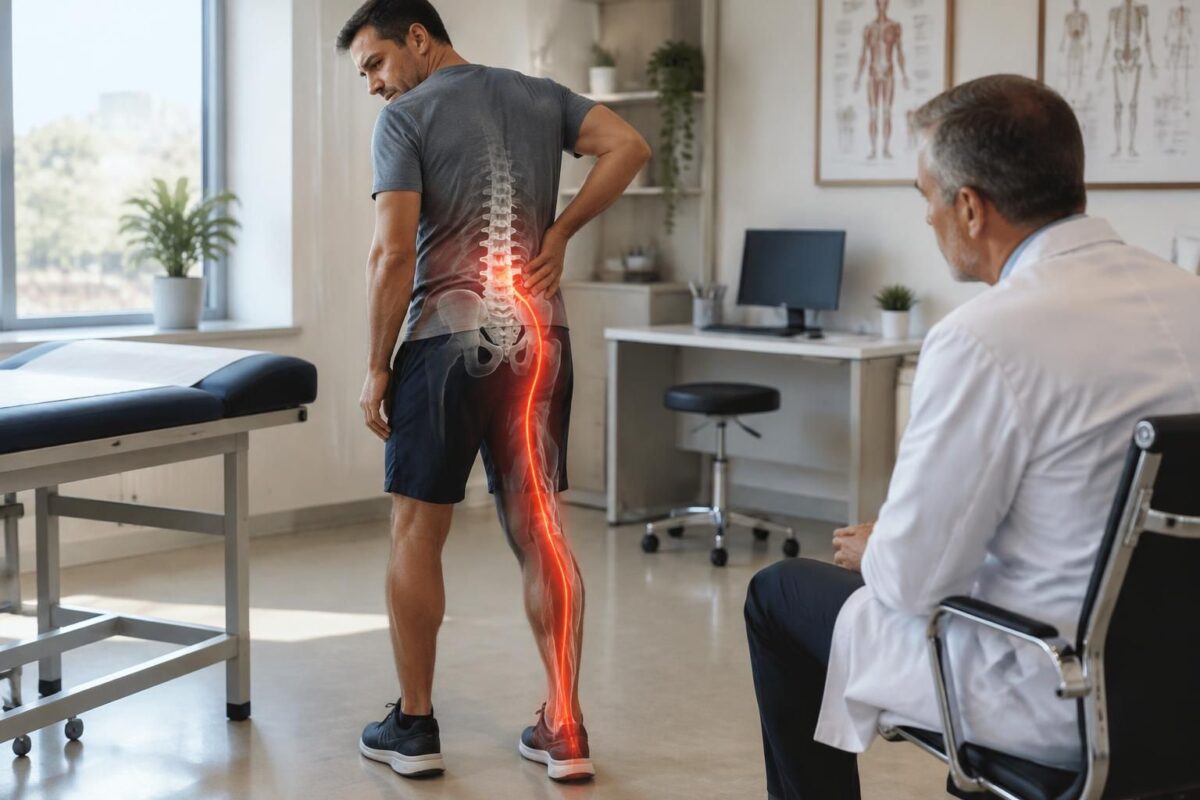
IN SHORT A L5-S1 disc bulge corresponds to a disc that slightly overruns between the last lumbar vertebra and the sacrum. It can irritate a nerve root and cause pain resembling sciatica down to the foot, but this anomaly visible on imaging is not always the cause of symptoms. An evaluation helps guide management; gradually moving and adapting activities can promote recovery. Consult quickly if you develop significant or progressive weakness, or urinary or intestinal issues. |
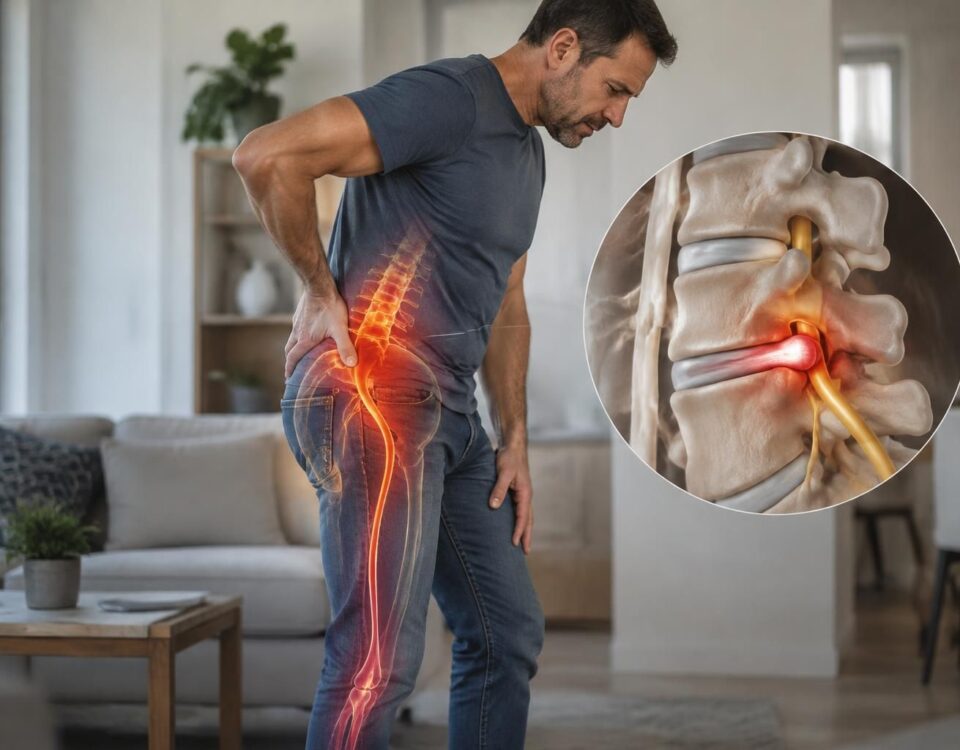
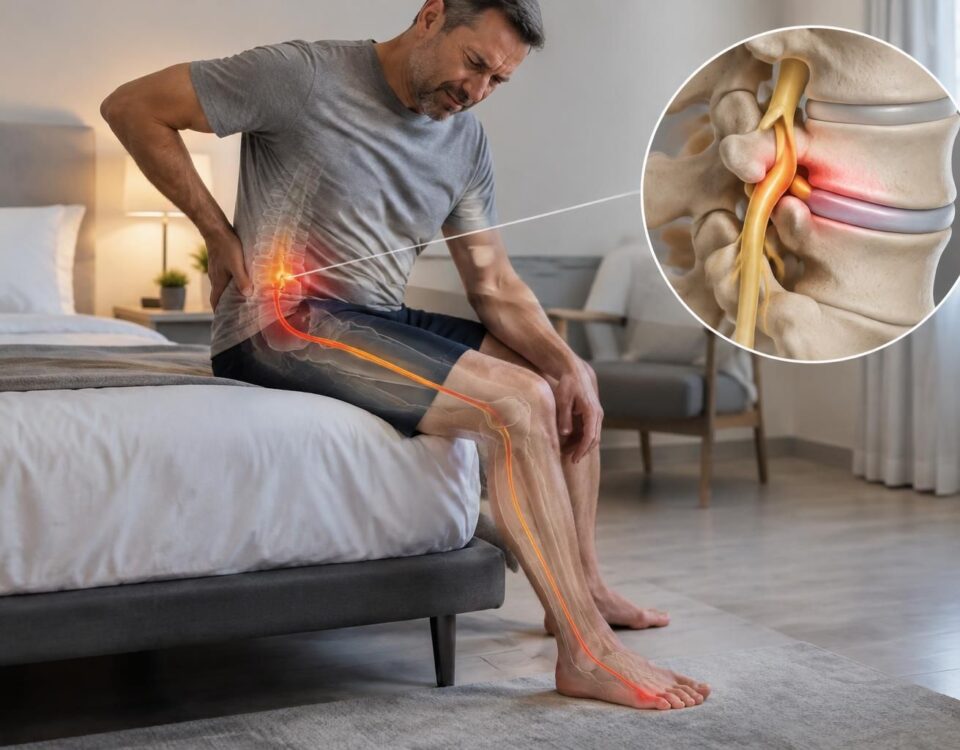
A L5-S1 disc bulge corresponds to a disc that slightly exceeds its usual contours. It can irritate a nerve root and cause pain that starts from the lower back or buttock and radiates down the leg to the foot. However, a bulge visible on MRI does not always explain symptoms: clinical evaluation is important.
Generally remain active according to your tolerance and have persistent or worsening pain evaluated by a healthcare professional. Consult quickly in case of significant or progressive weakness of the leg or foot, loss of sensitivity in the saddle area, or urinary or intestinal issues.
A L5-S1 disc bulge may be associated with pain radiating from the lower back to the buttock, leg, or foot. However, an MRI image alone cannot confirm the cause of the pain. The evaluation must consider symptoms, their progression, and neurological signs. Several non-surgical options can be discussed with a healthcare professional.
The L5-S1 segment is located between the last lumbar vertebra and the sacrum. This area transmits a significant portion of the loads applied to the lower back. The disc located between these vertebrae can change shape over time or due to different stresses.
A disc bulge describes a disc that slightly exceeds its usual limits, often quite broadly. This imaging term does not automatically mean that a nerve root is compressed or that the disc causes pain. Some people have a bulge visible on MRI without symptoms.
To better understand the terms used in reports, consult resources on L5-S1 discopathy, bulging and protruding discs at L4-L5 or L5-S1, as well as information on L5-S1 discopathy and disc pinch.
Why can the pain radiate down to the foot?
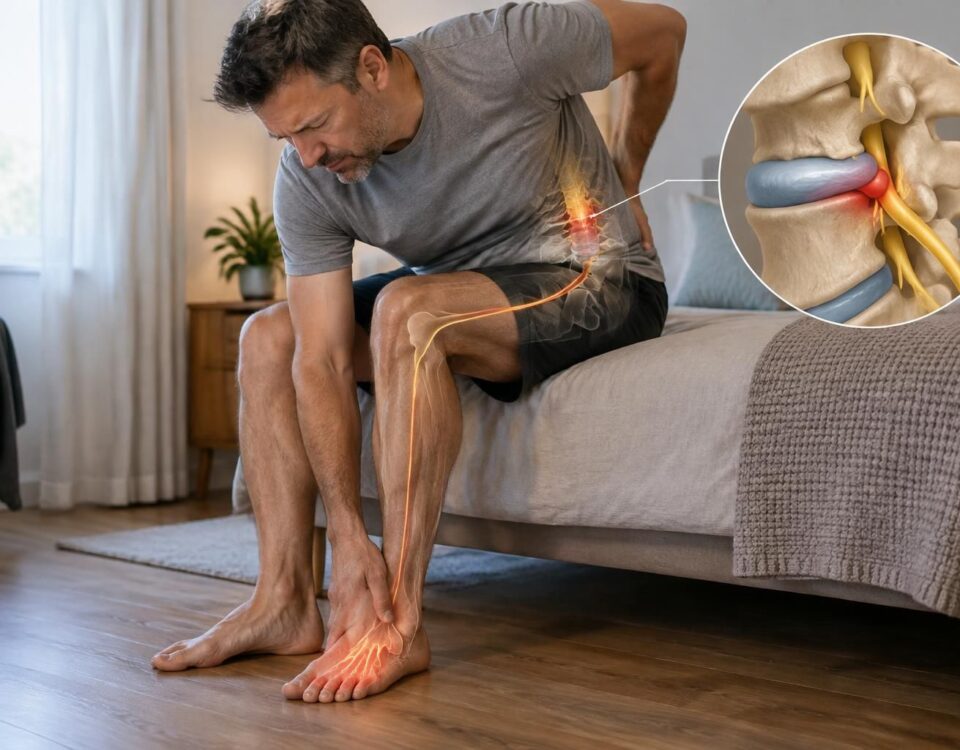
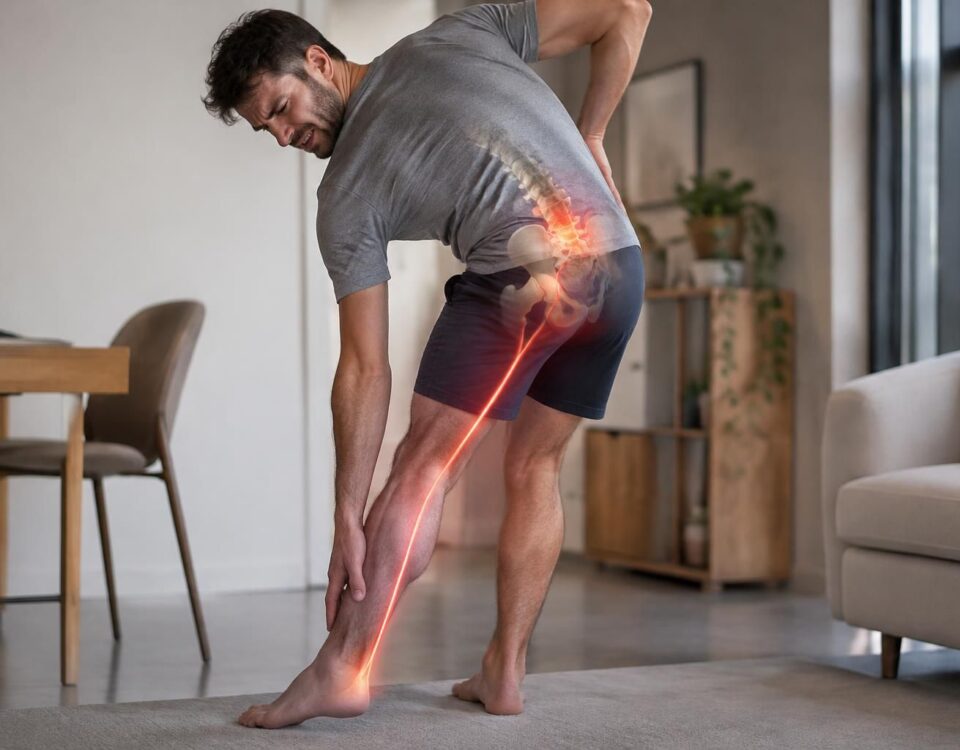
Pain radiating from the lower back down the leg and to the foot may correspond to irritation of a nerve root. The term sciatica is often used when the pain follows part of the path of the sciatic nerve. Sensations vary: sharp pain, burning, tingling, numbness, or an electric shock feeling.
A bulge can sometimes reduce the available space around a nerve root or contribute to local irritation. However, the pain may also depend on other factors. Therefore, the MRI report should be interpreted with the symptoms and clinical examination, not in isolation.
Pain may be felt in the buttock, behind the thigh, in the calf, or down to the toes. Its path depends on the affected nerve root. Pain in the foot does not, by itself, prove that an L5-S1 bulge is responsible.
To explore possible links between protrusion and radiating pain, you can read information on disc protrusion and recurrent sciatica, disc-root conflict, and foraminal compression L5-S1.
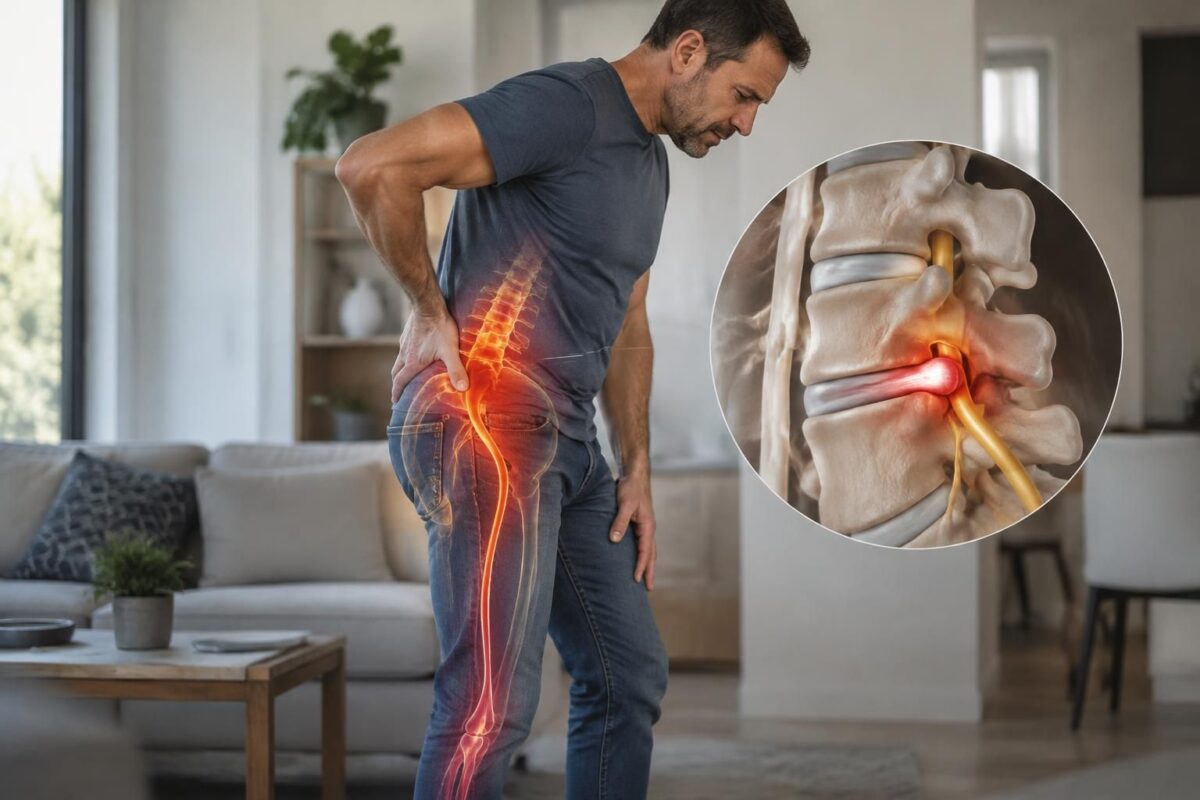
Disc herniation L4-L5 and leg pain
IN BRIEF A L4-L5 disc bulge is a protrusion of the lumbar disc that can contribute to pain in the buttock or leg if a nerve root is irritated. An MRI in a neutral position does not always show what…

Disc bulge and sciatica: possible cause or simple discovery?
IN SHORT A disc bulge is a diffuse protrusion of a disc, sometimes associated with sciatica, but often discovered incidentally on imaging. To determine if it explains symptoms, one must compare the image to their path, the neurological examination, and…
Visible disc bulge on MRI: is it the cause of the pain?
Not necessarily. Imaging exams show the structure of the discs and other tissues, but they do not directly measure pain. Disc changes can appear in individuals who do not have back pain. Conversely, a person may experience significant pain without any obvious anomaly on imaging.
The healthcare professional therefore compares the MRI result with the location of the pain manifestation, sensations in the leg, muscle strength, and reflexes. This approach helps determine whether the bulge could contribute to the symptoms or if it is an incidental finding unrelated to the pain.
Pain can also vary from day to day. A temporary increase in symptoms does not always mean that the disc has deteriorated further. To understand why certain positions or activities sometimes exacerbate sciatica, consult articles on movement that worsens sciatica and pain aggravated in lumbar extension.

Lumbar Disc Protrusion and the Choice of a Non-Surgical Approach
IN SHORT A disc protrusion is a bulging of a disc between the vertebrae; it often does not cause any symptoms. If it is accompanied by pain, a non-surgical approach may include appropriate activity, prescribed medications, and progressive rehabilitation. It…
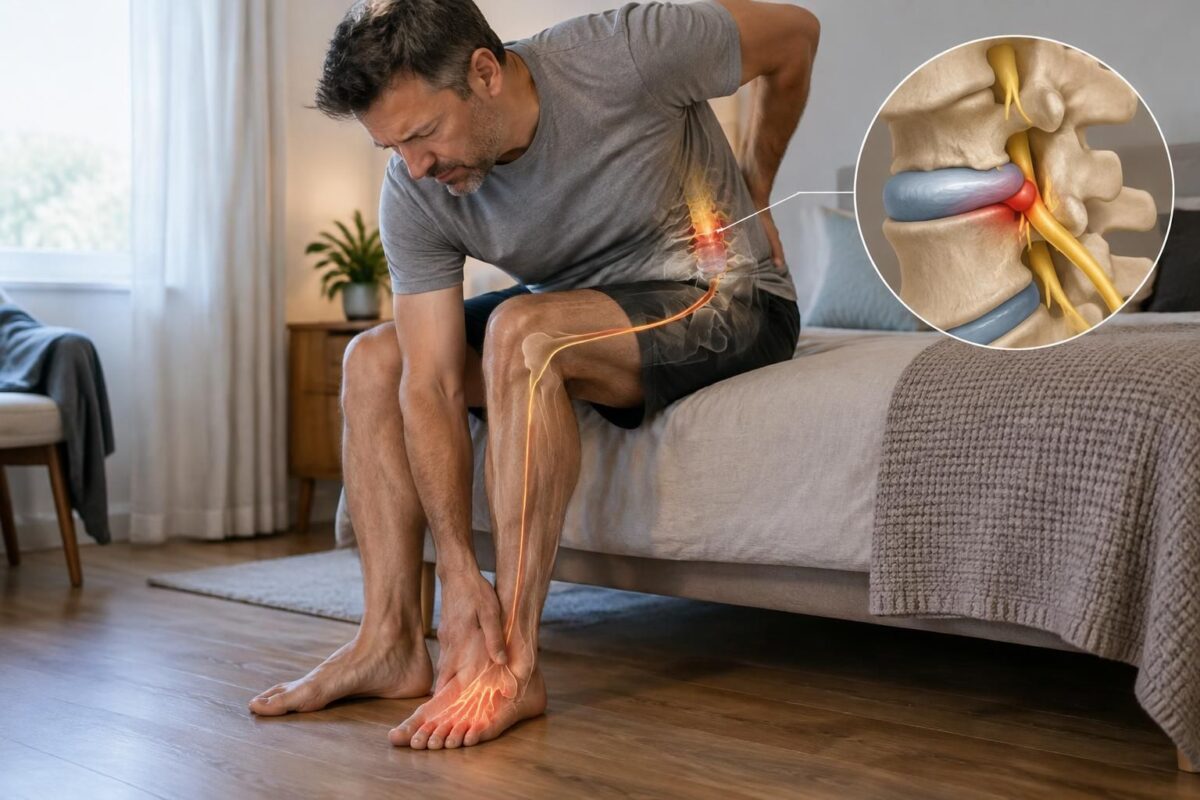
Disc herniation and pain on the top of the foot
IN BRIEF A disc protrusion is an intervertebral disc that bulges without necessarily rupturing. Pain on the top of the foot may sometimes be related to irritation of a lumbar nerve, but it does not alone confirm disc involvement. An…
What examinations may be proposed?
The choice of examinations depends on your symptoms, their duration, and the results of the evaluation. An X-ray can show the bones and the alignment of the spine, but it does not precisely visualize the discs. An MRI provides images of the discs and surrounding tissues. A healthcare professional determines if this exam is useful in your situation.
An imaging report may use terms like bulge, protrusion, herniation, disc pinch, or stenosis. These terms describe different aspects. Their presence does not alone predict the intensity of pain or the duration of symptoms.
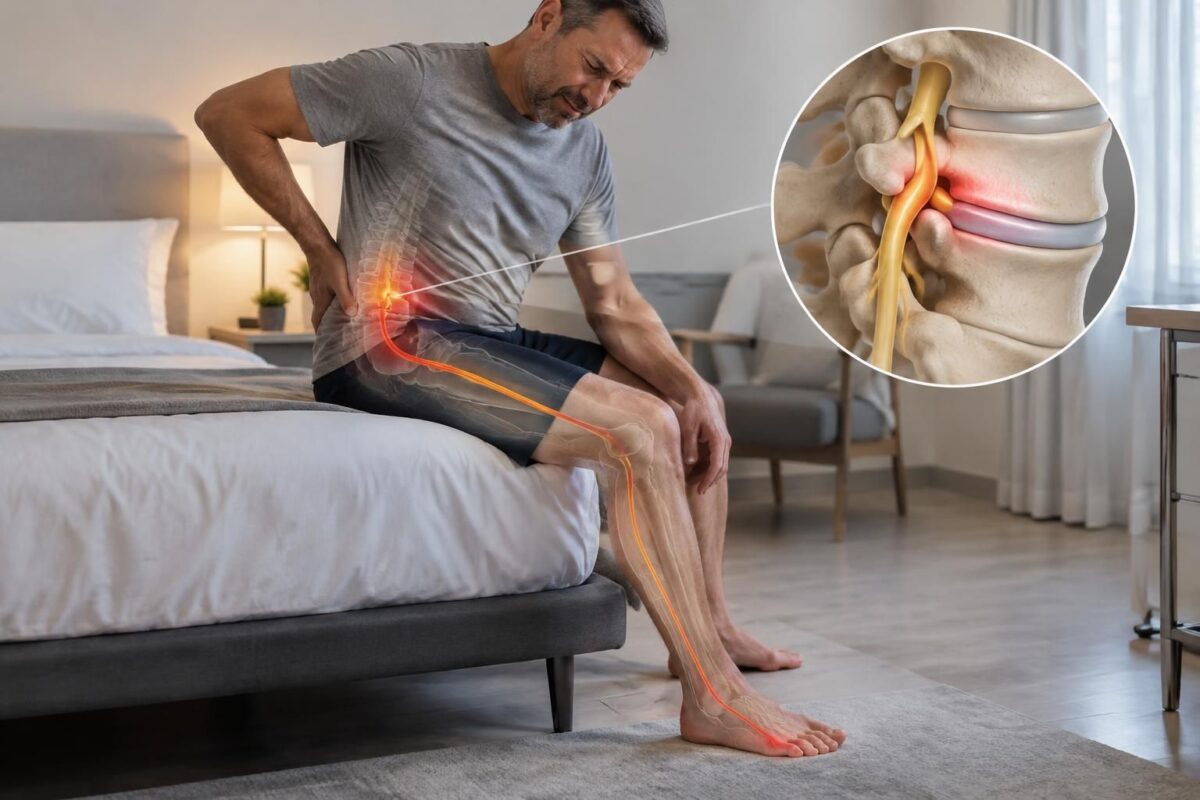
Disc protrusion and pain on the outer edge of the foot
IN BRIEF A disc bulge is a bulging of the disc that can sometimes irritate a nerve root and cause pain down to the outer edge of the foot. However, this pain is not always related to the disc: a…
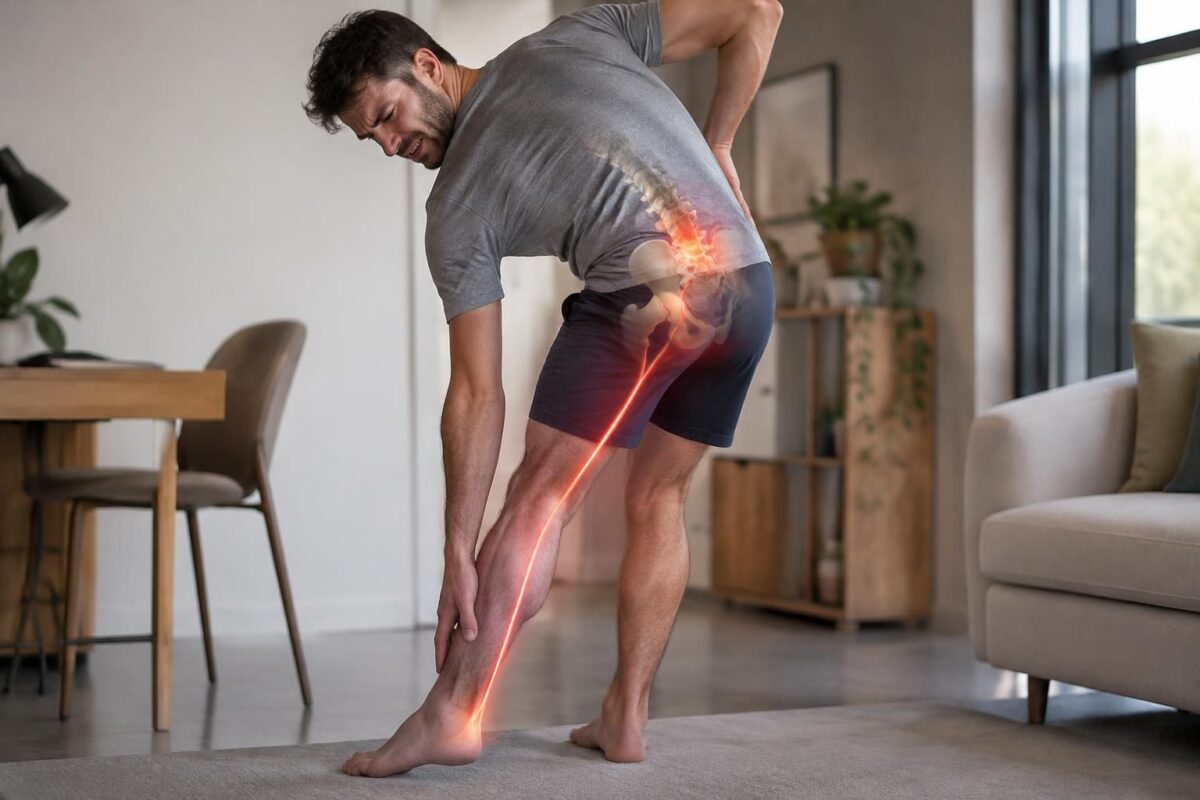
IN BRIEF A disc herniation is a bulging of a disc in the spine, often without symptoms. If it irritates a lumbar nerve root, the pain may radiate down the leg to the foot and sometimes be felt in the…
What to do if you have pain down to the foot?
The first step is to have the situation evaluated, especially if the pain is new, persistent, or accompanied by unusual sensations. The healthcare professional can assess strength, sensitivity, and reflexes, and then guide the person to appropriate examinations or care.
Management depends on the probable cause, intensity of symptoms, and overall condition. It may include advice on managing activities, medical follow-up, and non-surgical approaches. No treatment guarantees the same outcome for everyone, and options should be chosen based on individual evaluation.
At Clinique TAGMED, an assessment can help determine if treatments such as specific osteopathy or motorized neurovertebral decompression are appropriate. These approaches are not suitable for all situations and do not replace a medical diagnosis. To learn more about the available services, visit the page on sciatica treatment in Montreal and Mont-Royal or the page on sciatica treatment in Terrebonne.
How long can the pain last?
The duration varies depending on the individual and the cause of the symptoms. Some pains diminish in a few weeks, while others persist or return. Improvement in symptoms does not always depend on complete resolution of the bulge on the MRI. Follow-up also focuses on pain, sensitivity, strength, and daily capabilities.
If symptoms do not improve, worsen, or limit your activities, consult a doctor or licensed healthcare professional. Medical treatment, injections, or surgery are only considered based on the clinical situation and after an appropriate evaluation.
When should you seek emergency care?
Quickly consult a doctor or emergency service in case of loss of urinary or bowel control, new difficulty urinating, numbness in the saddle area, or significant or progressive weakness in a leg or foot. A fever, recent trauma, severe pain, or rapid deterioration also require medical evaluation.
These signs do not allow for a diagnosis from a distance. They require prompt management so that a professional can determine their cause.
About the author
Sylvain Desforges, B.Sc., D.O., N.D., Doctor of Osteopathy and naturopath, is the founding president of TAGMED and the ACMA association. His practice focuses on chronic pain in the spine, lower back pain, and pain associated with sciatica, particularly when the pain radiates to the buttock, leg, calf, foot, or toes.
Through SOS Sciatique, he publishes educational content on the symptoms of sciatica, possible causes such as disc herniation, disc pinching, foraminal stenosis, or irritation of a lumbar nerve root, as well as non-surgical approaches that may be considered after evaluation. At Clinique TAGMED, care may include, depending on the case, motorized neurovertebral decompression, specific osteopathy, or precision percussion.
For an assessment related to sciatica treatment in Montreal or Mont-Royal, or sciatica treatment in Terrebonne, check the services available at Clinique TAGMED.
Medical disclaimer
Medical disclaimer: The information and advice provided on this site do not replace the advice, diagnosis, or treatment of a healthcare professional. Please note that Sylvain Desforges, B.Sc., D.O., N.D., doctor of osteopathy, is neither a medical doctor nor a physician, and is not a specialist in a medical specialty as defined by the Collège des médecins du Québec. Manual medicine, functional medicine, and sports medicine as described on this site exclude any treatment or medical diagnosis made by a doctor or specialist. Always consult your physician for any medical questions. For more details, please read our full legal disclaimer.
Understanding Symptoms
- A disc bulge can sometimes irritate a nerve root.
- Pain can radiate down the buttock, leg, and to the foot.
- tingling or numbness may also occur.
- The MRI image alone is not sufficient to prove that the bulge is causing the pain.
Recommended actions
- Stay gently active and break up walking periods.
- Temporarily avoid movements that exacerbate pain in the leg.
- Request an evaluation if symptoms persist or worsen.
- Seek emergency care in case of progressive weakness, loss of urinary or bowel control, or numbness in the saddle area.

A L5-S1 disc bulge can sometimes irritate a nerve root and cause pain that radiates from the buttock to the foot. However, a visible anomaly on imaging is not enough to prove that it causes symptoms. The goal is to have the signs evaluated, stay active as much as possible, and gradually adapt activities according to pain levels and advice from a healthcare professional.
Understanding the L5-S1 disc bulge
The L5-S1 segment is located between the last lumbar vertebra and the sacrum. A bulge describes a disc that slightly protrudes from its usual contour. It is not automatically a herniation or nerve compression. Some people present this type of finding without pain; its importance must therefore be interpreted in conjunction with symptoms and clinical examination.
When the pain radiates down the leg and reaches the foot, irritation of a nerve root, sometimes associated with the sciatic nerve, may be considered. Tingling, numbness, or a sensation of weakness may also appear. The path and intensity vary from person to person: only a professional can evaluate if the symptoms correspond to the imaging.
What to do when the pain radiates to the foot?
Stay active, without straining
Prolonged strict rest is generally not a useful strategy. Try to maintain tolerable activities, such as short walks, and gradually increase their duration if symptoms allow. Alternate positions and avoid staying still for long periods. Temporarily reduce movements or efforts that significantly exacerbate the pain in the leg, then gradually reintroduce them.
Adapting exercises to your reactions
There is no universal exercise that suits all people with disc bulging. Gentle movements, mobility exercises, or gradual strengthening may be suggested after evaluation. A practical guide: stop or modify a movement if it significantly increases pain radiating to the foot, causes increasing numbness, or leads to weakness. A physiotherapist or another qualified professional can help you progress appropriately.
Avoid attempting to “put the disc back in place” through manipulations. Any treatment should be explained, individualized, and take into account your symptoms, history, and daily goals.
When to seek a medical evaluation?
Consult a doctor if pain persists, worsens, returns frequently, or is accompanied by a loss of sensation or weakness. A clinical examination helps determine if further tests, such as an MRI, are necessary; they are not systematic and should address a specific question.
Seek emergency services without delay in cases of new difficulties urinating, loss of urinary or bowel control, numbness in the saddle area, or significant and progressive weakness of the leg or foot. Fever, recent trauma, or rapid worsening also warrant a quick evaluation.
About the author and medical warning
Sylvain Desforges, B.Sc., D.O., N.D., doctor of osteopathy and naturopath, is the founding president of TAGMED and the ACMA association. His educational content particularly focuses on spinal pain and non-surgical approaches that may be considered based on evaluation.
This information is educational and does not replace a consultation, diagnosis, or treatment by a licensed healthcare professional. The author is neither a physician nor a specialist in a medical specialty recognized by the Collège des médecins du Québec. Osteopathy and functional support do not substitute for medical follow-up.
| Marker | Key points |
|---|---|
| Disc bulge L5-S1 | A disc protrudes slightly; the image alone does not prove the cause of the pain. |
| Pain towards the foot | May correspond to nerve irritation but requires clinical evaluation. |
| Link between the two | Possible, but not systematic: a bulge may be present without symptoms. |
| Other possible signs | Tingles, numbness, or pain in the buttock and leg. |
| Evolution | Symptoms may vary; the image of the disc does not always reflect their intensity. |
| Activity | Favor tolerated movements and gradually resume according to your symptoms. |
| Medical evaluation | To be considered if pain persists, worsens, or is accompanied by neurological signs. |
| Emergency | Consult without delay in cases of progressive weakness or urinary or bowel issues. |
Testimonials on disc bulge L5-S1 and pain that radiates to the foot
Important: the testimonials below are fictional and illustrative examples. They do not describe real patients and do not predict the evolution of your situation. A disc bulge visible on imaging alone is not sufficient to establish the cause of foot pain.
“The pain would start from the lower back and radiate down to the toes” — fictional testimonial
After an MRI, I was told about a disc bulge at L5-S1. I mainly felt pain in my buttock and behind my leg, with tingling towards my foot. The result worried me, but my healthcare professional explained that my symptoms and clinical examination should also be taken into account. I gradually resumed walking and adapted my activities according to my tolerance.
“At times my foot felt numb” — fictional testimonial
The discomfort would appear after sitting for long periods and sometimes radiated down to my foot. I learned to vary my positions and take short breaks to move. As the sensations persisted, I discussed it with a healthcare professional to evaluate the situation rather than assume that the MRI image explained everything.
“I was afraid to move and worsen the bulge” — fictional testimonial
At first, I limited almost all my movements for fear of damaging my back further. After receiving appropriate advice, I started again with gentle and progressive activities. Some days were better than others. I avoided forcing movements that significantly exacerbated the pain in my leg and sought advice when my symptoms changed.
Pain radiating from the lower back to the buttock, leg, or foot may be consistent with nerve irritation, but other causes are possible. The link between a disc bulge L5-S1 and symptoms should be evaluated by a professional, taking into account the clinical examination, evolution, and imaging results.
Seek prompt medical attention in cases of significant or progressive weakness of the leg or foot, loss of urinary or bowel control, or numbness in the saddle area. These symptoms require urgent evaluation.
About the author
Sylvain Desforges, B.Sc., D.O., N.D., Doctor of Osteopathy and naturopath, is the founding president of TAGMED and of the ACMA association. His practice focuses particularly on chronic spinal pain and pain compatible with sciatica. The approaches offered at TAGMED Clinic may include, based on evaluation, specific osteopathy, motorized neurovertebral decompression, or precision impact therapy.
Medical warning
This information is provided for educational purposes and does not replace a consultation, diagnosis, or treatment by a licensed healthcare professional. The author is neither a physician nor a specialist in a medical specialty recognized by the Collège des médecins du Québec. Approaches of osteopathy, manual medicine, or functional support do not replace medical follow-up. In case of concerning symptoms or rapid worsening, consult a doctor or emergency services.
Disc bulge L5-S1 and pain towards the foot: understanding the link
Pain that starts from the lower back and descends into the buttock, leg, or all the way to the foot can be worrying. When imaging reveals a disc bulge at L5-S1, it is tempting to immediately see it as the cause of all symptoms. However, an image alone is not enough to establish a diagnosis: it must be interpreted alongside the sensations described, the clinical examination, and the evolution of the pain.
The L5-S1 level is located at the junction between the last lumbar vertebra and the sacrum. The disk placed between these bones helps distribute stress and allows movement of the lower back. A bulge corresponds to an overflow of the disk’s contour. It does not necessarily mean that the disk is ruptured, nor that a nerve is compressed. It can be visible on an MRI in individuals who have no pain.
When nerve structures are irritated, pain may follow a path down the leg. Depending on the affected nerve root, it can reach the calf, the top or the sole of the foot, sometimes extending to the toes. Tingling, a feeling of numbness, or weakness can also occur. These symptoms sometimes suggest a sciatica, but other causes are possible. Their distribution and intensity help the healthcare professional guide the evaluation.
A disc bulge observed on an MRI, therefore, does not, in itself, conclude that the foot is hurting due to the disk. The doctor or authorized healthcare professional considers the history of symptoms, muscle strength, sensitivity, reflexes, and movements that worsen or relieve the pain. Imaging is decided based on the medical context; it is not automatically necessary from the onset of a painful episode.
Management depends on the evaluation and tolerance of each individual. In the absence of contraindication, maintaining appropriate daily activities and gradually resuming movement may be preferable to prolonged immobility. Short walks, regular position changes, and gradual exercises may be considered according to the symptoms. There is no universal routine: a movement that suits one person may exacerbate pain in another. Activities that significantly worsen symptoms in the leg should be adjusted and discussed with a professional.
A medical evaluation is particularly important if the pain persists, worsens, or is accompanied by sensory disturbances or weakness. Consult promptly if there are new difficulties moving the foot or leg. Loss of bladder or bowel control, difficulty urinating, or loss of sensitivity in the saddle area requires urgent care. These signs should not simply be attributed to an MRI result.
The term “bulge” may seem alarming, but it does not, on its own, inform about the level of pain or future capabilities. The goal is to connect the examination results to actual symptoms, identify signs that require medical attention, and choose a suitable activity progression. Manual therapy or functional support approaches can be discussed with the relevant professionals, without replacing a diagnosis or medical follow-up.
About the author
Sylvain Desforges, B.Sc., D.O., N.D., Doctor of Osteopathy and Naturopath, is the founding president of TAGMED and the ACMA association. His practice focuses particularly on chronic pain of the spine and pain compatible with sciatica. His approach is interested in functional support and the use, depending on the evaluation, of technologies such as motorized neurovertebral decompression, laser, or shockwaves. To learn about available services, visit the TAGMED Clinic.
Medical disclaimer
This information is provided for educational purposes and does not replace a consultation, diagnosis, or treatment by a doctor or another authorized healthcare professional. The author is neither a doctor nor a specialist in a medical specialty recognized by the Collège des médecins du Québec. Osteopathy, manual medicine, or functional support approaches do not constitute medical acts and do not replace medical follow-up. In the presence of loss of bladder or bowel control, anesthesia in the saddle area, significant or progressive weakness, fever, recent trauma, severe pain, or rapid worsening, consult a doctor or emergency service. For more details, please read the Legal Notice.
A L5-S1 disc bulge can sometimes irritate a nerve root and cause pain that starts from the lower back or buttock and descends to the foot. However, this abnormality observed on imaging does not prove by itself that it is the cause of the symptoms: clinical examination, strength, sensitivity, and reflexes help interpret the result and choose the appropriate course of action.
Interpreting the disc bulge and pain towards the foot
The L5-S1 segment, located between the last lumbar vertebra and the sacrum, is heavily engaged in daily movements. A bulge refers to a disk that overflows from its usual contour, without necessarily corresponding to a herniated disk or causing pain. To better understand this distinction, refer to the explanations on disc bulge and herniated disk L5-S1.
When pain runs down the leg to the foot, irritation of a nerve root may be considered, especially if accompanied by tingling, numbness, or a sense of weakness. The location and intensity of these signs vary from person to person. Information about the canal, foramen, and possible nerve compression is presented for L5-S1 in Terrebonne and for L5-S1 in Montreal.
A protrusion located at another level, such as L4-L5, can also be described on imaging; it should be related to the symptoms rather than considered in isolation. To delve deeper into this topic, you can read the information on L4-L5 protrusion and leg pain. Additional resources on herniated L5-S1 are available from Rheumatology L’Union and Edbiologie Santé.
Assessing symptoms and adapting activities
A professional assessment allows for checking if the pain indicates nerve damage and to examine in particular muscle strength, reflexes, and sensitivity. These elements, combined with your history and functional abilities, help determine if further tests or specific management are necessary. Please also refer to the guidelines regarding reflexes, strength, and sensitivity in the assessment.
In the absence of warning signs, maintaining tolerated activities and gradually resuming movement may be considered. It is generally helpful to temporarily adjust exercises or tasks that significantly exacerbate pain in the leg, without concluding that the back is damaged by any movement. If symptoms persist or evolve, guidance on subacute sciatica and persistent symptoms may supplement the information, without replacing an individualized assessment.
Pain towards the foot deserves particular attention if accompanied by new or progressive weakness, difficulty lifting the foot, significant loss of sensitivity, or urinary or bowel disturbances. These manifestations require prompt medical evaluation; urinary or bowel problems and numbness in the saddle area warrant an urgent consultation.
About the Author
Sylvain Desforges, B.Sc., D.O., N.D., Doctor of Osteopathy and Naturopath, is the founding president of TAGMED and the ACMA association. He dedicates his practice to chronic spinal pain, lower back pain, and pain compatible with sciatica, especially when the pain radiates towards the buttock, leg, calf, foot, or toes.
Through SOS Sciatique, he publishes educational content about sciatica symptoms, possible causes such as disc herniation, disc compression, foraminal stenosis, or irritation of a lumbar nerve root, as well as non-surgical approaches that may be considered based on the assessment. At the TAGMED Clinic, care may include, depending on the case, motorized neurovertebral decompression, specific osteopathy, or precision percussion.
For an assessment related to sciatica treatment in Montreal / Mont-Royal or sciatica treatment in Terrebonne, consult the services available at the TAGMED Clinic.
Medical Disclaimer
The information published on SOS Sciatique is provided for educational purposes and does not replace a consultation, diagnosis, advice, or treatment performed by a physician or other licensed healthcare professional. The author of this article is neither a physician nor a specialist in a medical specialty recognized by the Collège des médecins du Québec. The osteopathy, manual medicine, or functional support approaches described on this site are not considered medical acts and are not intended to replace medical follow-up.
Consult a physician or emergency service in case of loss of urinary or bowel control, numbness in the saddle area, significant or progressive weakness of the leg or foot, fever, recent trauma, severe pain, or rapid deterioration. For more details, please read our Legal notice.

Intervertebral disc protrusion and pain in the big toe
IN BRIEF A disc protrusion is a bulging of the disc that can irritate a lumbar nerve root, particularly L5, and cause pain, tingling, or numbness down to the big toe. This symptom alone does not confirm a disc origin:…
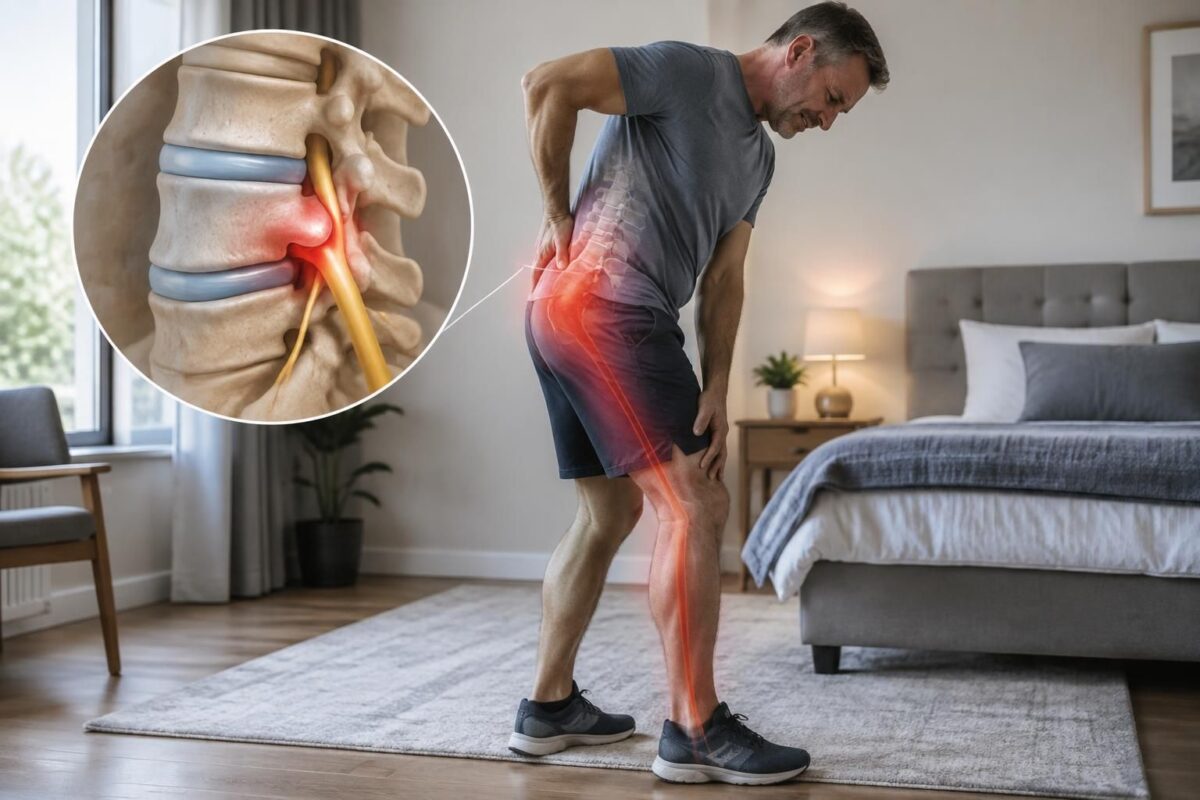
Disc herniation and pain radiating below the knee
IN BRIEF A disc protrusion is a deformation of a disc in the spine that can irritate a nerve root. If the pain extends below the knee, with tingling or weakness, this may suggest sciatica, although this alone does not…

Sylvain Desforges, B.Sc., D.O., N.D., docteur en ostéopathie
Dr Sylvain Desforges, B.Sc., D.O., N.D., osteopath, is the founding president of TAGMED and of the ACMA association. He dedicates his practice to chronic spinal pain, low back pain and symptoms compatible with sciatica, particularly when pain radiates toward the buttock, leg, calf, foot or toes.
Through SOS Sciatique, he publishes educational content on sciatica symptoms, possible causes such as disc herniation, disc narrowing, foraminal stenosis or irritation of a lumbar nerve root, as well as non-surgical approaches that may be considered according to the evaluation. At Clinique TAGMED, care may include, depending on the case, motorized neurovertebral decompression, specific osteopathic care or precision percussion.
For an evaluation related to sciatica treatment in Montreal / Mount Royal or sciatica treatment in Terrebonne, please consult the services available at Clinique TAGMED.
Medical disclaimer
The information published on SOS Sciatique is provided for educational purposes only and does not replace a consultation, diagnosis, opinion or treatment provided by a physician or another authorized healthcare professional. The author of this article is neither a medical doctor nor a specialist in a medical specialty recognized by the Collège des médecins du Québec. The osteopathic, manual medicine or functional support approaches described on this site do not constitute medical acts and are not intended to replace medical follow-up.
Consult a physician or emergency service in cases of loss of bladder or bowel control, anesthesia in the saddle area, significant or progressive weakness in the leg or foot, fever, recent trauma, severe pain or rapid worsening of symptoms. For more details, please read our Legal Notice.