Sciatica and pain relieved by bending: possible stenosis
27/10/2026
Sciatica and pain that travels lower after a stretch
27/10/2026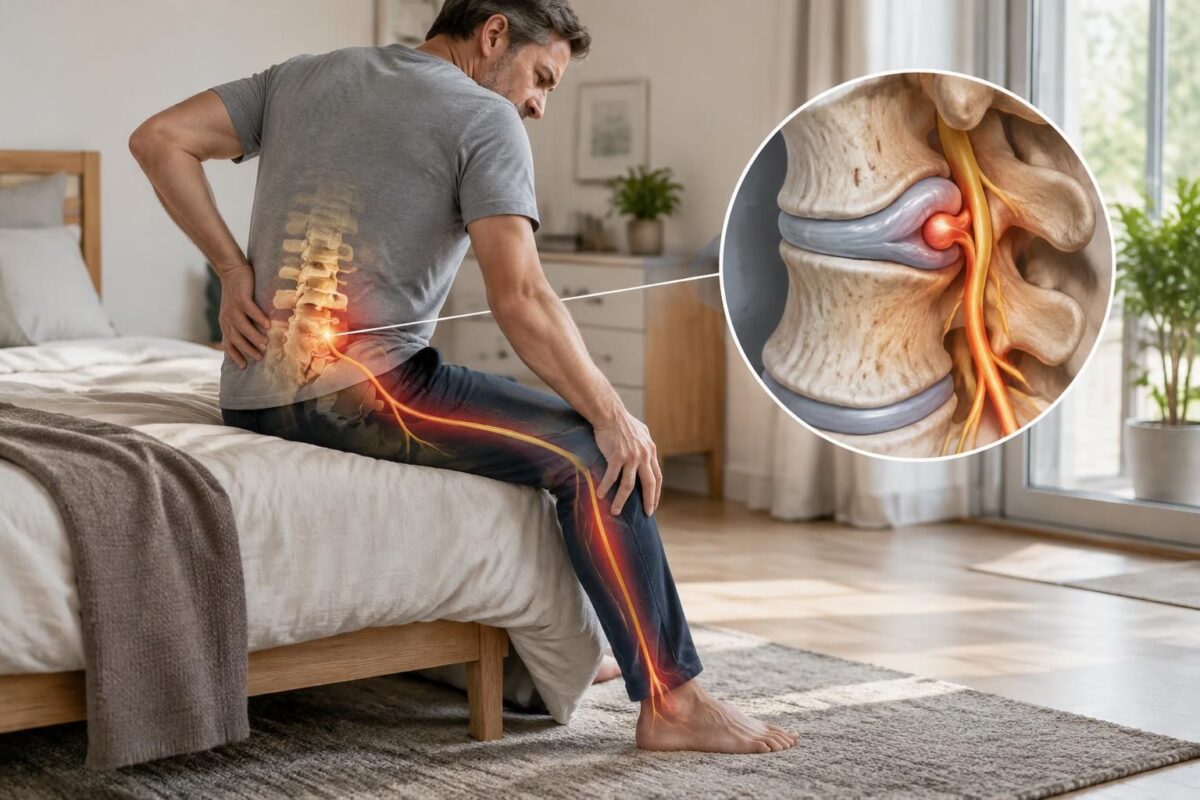
IN BRIEF A disc protrusion is an intervertebral disc that bulges and can irritate a nerve root. It can cause pain, tingling, numbness, or weakness in an arm or leg, depending on its location. Clinical examination and, if necessary, imaging help guide management, often based on appropriate activity and rehabilitation. Progressive weakness or urinary or bowel disturbances require urgent medical evaluation. |
A disc protrusion is a bulging of a disc that can irritate a nerve root. Depending on its location, it can cause back or neck pain, tingling, numbness, or weakness in an arm or leg. These symptoms are not systematic and should be evaluated in context.
Consult quickly if weakness appears or worsens. A loss of bowel or bladder control or numbness in the saddle area requires urgent management. This information is educational and does not replace medical advice.
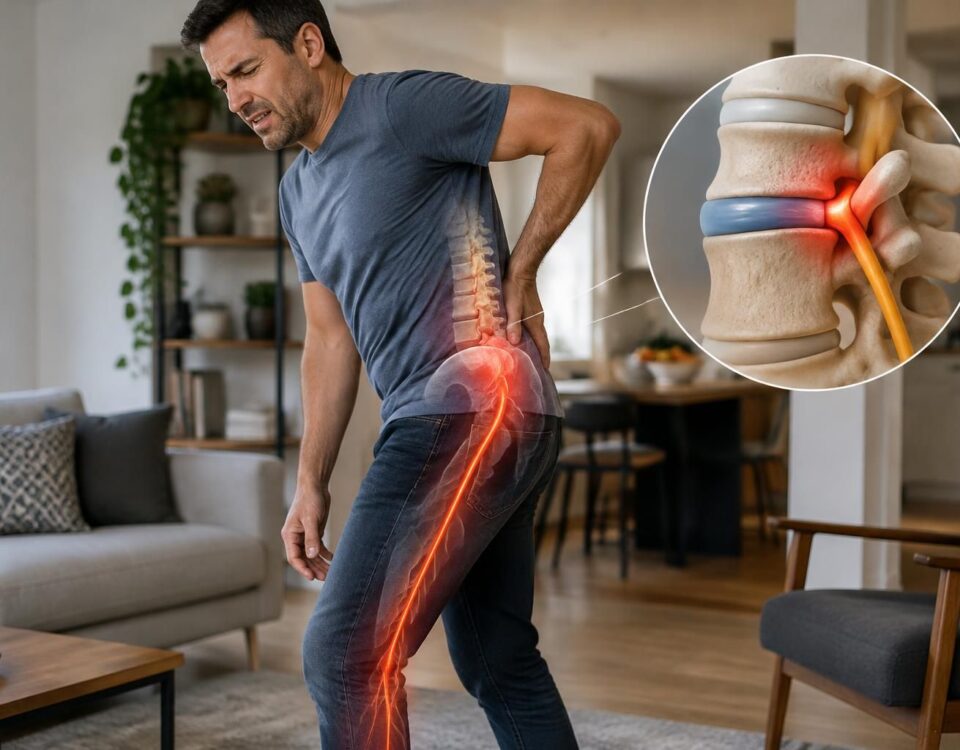
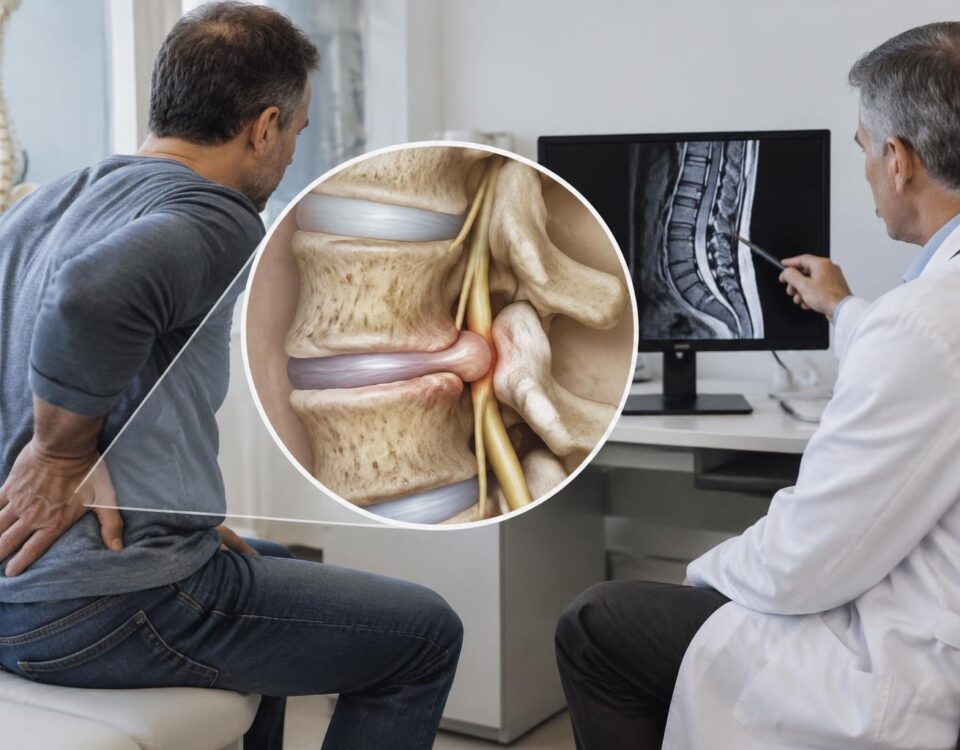
A disc protrusion is a bulging of a disc located between two vertebrae. It can irritate a nerve root and cause pain, tingling, numbness, or weakness in an arm or leg. However, a protrusion visible on imaging does not always cause symptoms. The evaluation takes into account your signs, their evolution, and clinical examination. Significant or progressive neurological symptoms require prompt medical attention. Intervertebral discs cushion the stresses between vertebrae. Over time or due to repeated stress, a disc can bulge. This bulging can sometimes reduce the space around a nerve root or irritate it. Pain may then follow the nerve pathway, but the protrusion can also remain without notable effect. The term disc protrusion describes a form of disc bulging. It does not automatically mean that a nerve is compressed. The distinction between protrusion and herniation depends on the shape and extent of the deformation. To better understand what imaging can show, refer to this article on disc herniation and MRI results. Nerve irritation can cause pain that radiates away from the spine. Depending on the affected area, symptoms may involve a buttock, leg, foot, shoulder, arm, or hand. The location of the symptoms can guide evaluation, but it cannot confirm the cause on its own. For example, pain in the buttock can have different origins. The page dedicated to disc protrusion and pain in the buttock explains this possible link. A protrusion in the lower back can cause low back pain. If a nerve root is irritated, the pain may radiate down into the buttock and leg. Some people may also experience tingling or numbness in the calf or foot. These signs can correspond to sciatica-like pain, but other causes are possible. Pain may vary with movement or position. Sitting for a long time or moving can sometimes exacerbate it, but these responses differ from person to person. To learn more about the factors that influence pain progression, refer to this article on sciatica related to disc herniation. A protrusion in the neck can cause cervical pain that radiates to the shoulder, arm, or hand. Tingling, numbness, or loss of strength may also occur. The affected area depends on the involved nerve root. Some symptoms may resemble those of other neck, shoulder, or arm disorders. An evaluation is therefore necessary to link the signs to their probable cause, rather than concluding based solely on an image. New or worsening weakness, difficulty walking, or significant sensory loss warrant prompt medical evaluation. The same applies if symptoms spread or increasingly disrupt daily activities. You can find more information on the importance of assessing sensory loss related to disc injury. Seek emergency care if there is a loss of control of the bladder or bowels, numbness in the saddle area—around the genitals and anus—or significant and progressive weakness in a leg or foot. These signs may indicate nerve damage that requires immediate attention. The evaluation starts with the symptoms, their duration, and their evolution. A healthcare professional can assess sensitivity, muscle strength, reflexes, and movements. They also consider how the symptoms affect sleep, work, and daily activities. Imaging, such as an MRI, may be requested if the symptoms or examination warrant it. The MRI shows the discs and nearby structures, but it is not sufficient to determine the cause of the pain. A protrusion may be present without causing a problem. Therefore, results must be interpreted alongside the symptoms and examination. To understand the relationship between a disc and an irritated nerve, also read our page on disc herniation and inflammation of a nerve root. Management depends on the affected area, the intensity of the symptoms, and the presence or absence of weakness or sensory loss. A doctor may recommend measures to alleviate pain or request further examinations. Medications, including pain relievers or anti-inflammatories, should be used according to a professional’s advice and the precautions specific to your health condition. Surgery is not necessary in most cases. It may be considered by a specialist if significant nerve compression leads to a deficit, if symptoms persist despite appropriate management, or if a neurological emergency is suspected. The decision rests on the overall clinical picture, not just the presence of a protrusion on the MRI. The neurovertebral decompression and specific osteopathy can be discussed at TAGMED Clinic after an assessment and depending on the situation. These approaches do not replace a medical diagnosis or urgent care when concerning neurological signs appear. Consult the services of the TAGMED Clinic in Montreal or Terrebonne to learn about the available evaluation options. Note where the pain radiates, when the tingling appears, and if your strength or sensitivity changes. This information can help the consulted professional assess the evolution of your condition. Avoid resuming an activity that clearly worsens symptoms without seeking advice, and do not push through despite progressing weakness or numbness. At work, alternate positions and take regular breaks if you remain seated or standing for long periods. To lift an object, keep it close to your body and avoid sudden movements. These actions can reduce certain stresses, but they do not replace an evaluation if neurological symptoms are present. No. A protrusion can appear on imaging without causing pain or neurological signs. The healthcare professional checks if the results match the symptoms and examination. Not necessarily. Tingling may have several causes. Their location, duration, and associated signs, such as weakness, help guide the evaluation. Yes, a lumbar protrusion can irritate a nerve root and produce pain in the buttock or leg. However, other causes may present similar symptoms. An examination clarifies the situation. Seek urgent help in case of loss of urinary or bowel control, numbness in the saddle region, or significant progressive weakness of a leg or foot. For other new or persistent neurological signs, contact a healthcare professional promptly. About the author Sylvain Desforges, B.Sc., D.O., N.D., osteopath and naturopath, is the founding president of TAGMED and the ACMA association. He dedicates his practice to chronic pain of the spine, low back pain, and pain consistent with sciatica, particularly when pain radiates down to the buttock, leg, calf, foot, or toes. Through SOS Sciatique, he publishes educational content on the symptoms of sciatica, possible causes such as disc herniation, disc pinching, foraminal stenosis, or irritation of a lumbar nerve root, as well as on non-surgical approaches that may be considered depending on the assessment. At TAGMED Clinic, care may include, as appropriate, motorized neurovertebral decompression, specific osteopathy, or precision percussion. For an evaluation related to sciatica treatment in Montreal / Mont-Royal or sciatica treatment in Terrebonne, consult the services available at the TAGMED Clinic. Medical disclaimer The information published on SOS Sciatique is provided for educational purposes and does not replace a consultation, diagnosis, opinion, or treatment performed by a physician or another authorized healthcare professional. The author of this article is neither a doctor nor a specialist in a medical specialty recognized by the College of Physicians of Quebec. The osteopathy, manual medicine, or functional support approaches described on this site do not constitute medical acts and are not intended to replace medical follow-up. Consult a doctor or emergency service in case of loss of urinary or bowel control, anesthesia in the saddle region, significant or progressive weakness of the leg or foot, fever, recent trauma, severe pain, or rapid aggravation. For more details, please read our Legal notice. Medical disclaimer: The information and advice provided on this site do not replace the opinion, diagnosis, or treatment from a healthcare professional. Please note that Dr. Sylvain Desforges, osteopath, is neither a medical doctor nor a physician and is not a recognized specialist in any medical specialty as defined by the College of Physicians of Quebec. Manual medicine, functional medicine, and sports medicine as described on this site exclude any treatment or medical diagnosis made by a doctor or medical specialist. Always consult your physician for any medical questions. For more details, please read our full Legal Notice.Disc Protrusion and Neurological Symptoms: Understanding the Link
Possible Signs of Nerve Irritation
Symptoms by Region of the Spine
Lumbar Protrusion
Cervical Protrusion
When Neurological Symptoms Require Prompt Attention
How to Evaluate a Disc Protrusion
Management Options
Daily actions and symptom monitoring
Frequently asked questions about disc protrusion and neurological symptoms
Does a disc protrusion always cause symptoms?
Do tinglings mean a nerve is compressed?
Can a disc protrusion explain pain in the leg?
When should urgent medical help be sought?
Possible neurological signs
- Tingling or numbness in an arm or leg
- Radiated pain to the buttock, leg, shoulder, or arm
- Decreased sensitivity or muscle weakness
When to consult quickly
- Significant or progressive weakness
- New difficulty walking or moving a limb
- Urgency in case of loss of urinary or bowel control, or numbness in the saddle region

A disc protrusion can irritate a nerve root and cause neurological symptoms such as tingling, numbness, or weakness in an arm or leg. Their significance depends on their progression and impact: a professional evaluation helps determine appropriate measures, while certain signs require urgent consultation.
Recognizing neurological symptoms
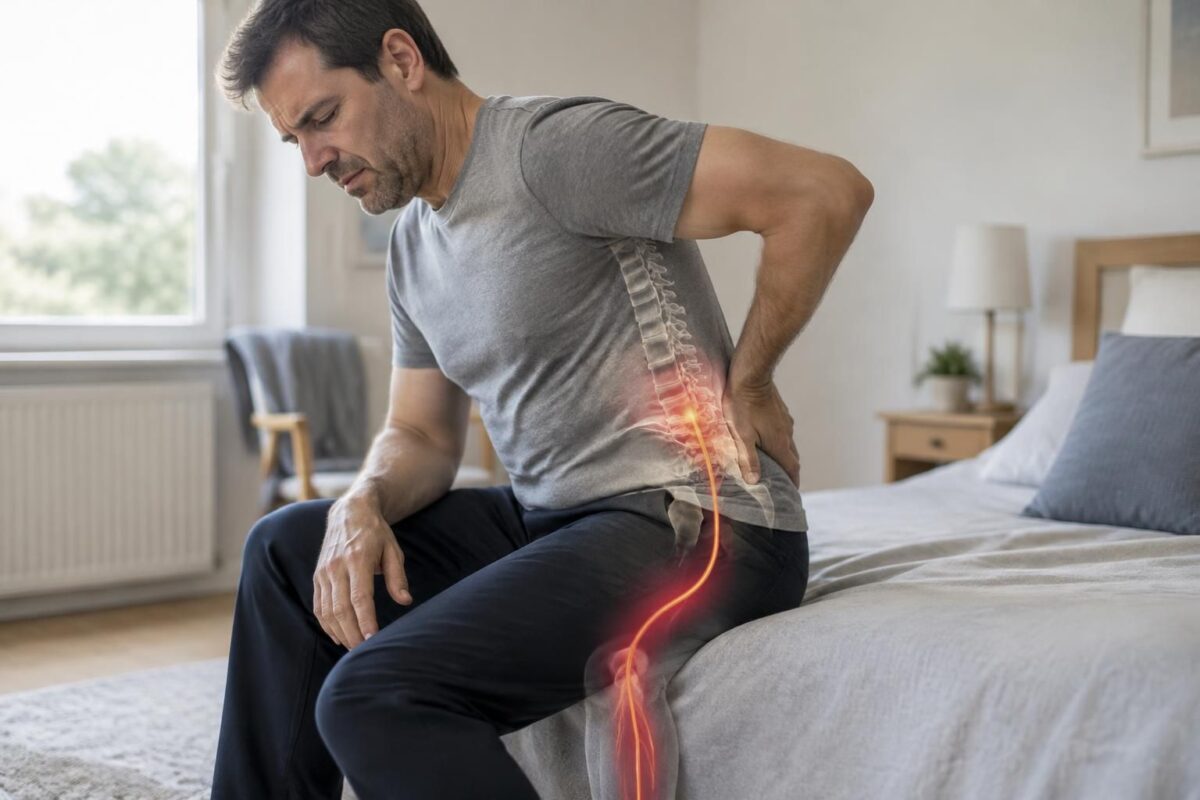
Symptoms vary depending on the affected area. In the lumbar region, pain may radiate down into the buttock and leg, sometimes down to the foot or toes. In the cervical region, it can radiate to the shoulder, arm, or hand. Tingling, decreased sensitivity, or muscle weakness may also appear.
Note where the symptoms occur, how long they last, and what modifies them: sitting position, movements, walking, coughing, or exertion. These observations will help the healthcare professional understand your situation. A visible anomaly on imaging alone is not enough to explain the symptoms: it must be interpreted in conjunction with the clinical examination.
Disc herniation and recurrent sciatica
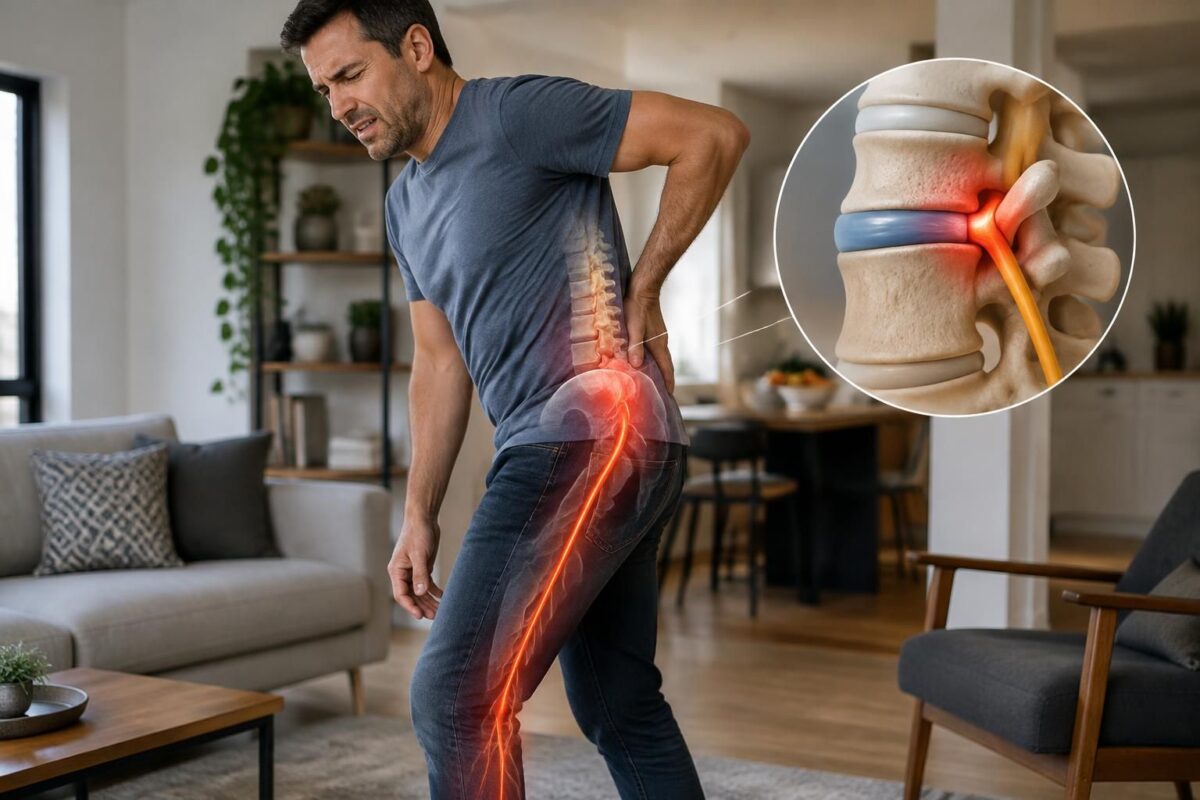
IN BRIEF A disc protrusion is a bulging of the disc that may be associated with recurring sciatica, without necessarily being the cause. The evaluation correlates symptoms, neurological examination, and imaging, if relevant. An appropriate plan can help improve function…
When to Seek Medical Advice
Consult Quickly if Symptoms Worsen
Seek medical advice if numbness spreads, if weakness appears or worsens, if your gait becomes difficult, or if pain persists despite modifying your activities. A professional can assess strength, sensitivity, and reflexes, and then decide if tests such as an MRI are indicated.
Recognize Emergency Signs
Loss of bladder or bowel control, new difficulty in urination, numbness in the saddle region, or significant and rapidly progressing weakness require urgent care. Contact emergency services without delay. These signs should not be addressed solely with exercises or manual therapies.
Disc herniation and persistent pain in the leg
IN BRIEF A disc protrusion is a bulging of a disc that can irritate a nerve and cause persistent pain in the leg, sometimes accompanied by tingling or numbness. Imaging alone does not confirm the origin of the symptoms: clinical…
Adapt Your Activities Without Immobilizing the Back
Unless advised otherwise by a medical professional, prioritize relative rest: temporarily reduce activities that significantly worsen symptoms, but avoid staying in bed for long periods. Alternate positions, take short breaks if sitting, and gradually resume tolerated movements. Stop any exercise that triggers or increases weakness, numbness, or radiating pain.
When lifting a load, bring it close to your body and bend your legs rather than bending suddenly while twisting your torso. At work, adjust your seat and change posture regularly. These actions do not eliminate a protrusion, but they can limit strain and facilitate daily activities.
Disc herniation and lumbar degeneration
IN BRIEF A lumbar disc protrusion is a bulging of a disc often related to disc degeneration. It does not always cause symptoms but can contribute to lower back pain or pain radiating down the leg if a nerve is…
Choose a Progressive Management Approach
Treatment depends on your symptoms and clinical evaluation. It may include tailored rehabilitation, progressive mobility and strengthening exercises, as well as advice on resuming activities. Medications or injections should be discussed with a qualified professional, taking your health status into account. Surgery is only considered in certain situations, especially in cases of severe symptoms or concerning neurological deficits.
Before undertaking manual therapy or any other complementary care, report your neurological symptoms and examinations to the consulted professional. These approaches do not replace a medical evaluation, especially in cases of strength loss or rapid worsening. The information provided here is educational and does not replace a diagnosis or medical opinion.
| Neurological Symptom | Helpful Indicator |
|---|---|
| Tingling | May indicate nerve irritation. |
| Numbness | Monitor its extent and progression. |
| Pain radiating to a limb | May follow the pathway of a compressed or irritated nerve. |
| Muscle weakness | Seek medical advice quickly, especially if it is progressing. |
| Difficulty walking | A rapid medical assessment is necessary. |
| Loss of bladder or bowel control | Medical emergency: consult without delay. |
| Numbness in the saddle region | Medical emergency: go to the emergency room immediately. |
| Conflicting symptoms and imaging | A visible protrusion does not suffice to confirm the cause of symptoms. |
Disc protrusion and disc pinching: combined mechanisms
IN BRIEF A disc protrusion is a bulging of the disc, while a disc narrowing refers to a decrease in its height. These changes can coexist and sometimes irritate a nerve root, leading to pain or radiation, but they can…
Illustrative Testimonials: Disc Protrusion and Neurological Symptoms
Transparency Note: The following accounts are fictional examples inspired by possible situations. They do not correspond to verified testimonials and do not predict the course for another person. A visible protrusion on imaging does not always cause symptoms; clinical evaluation also counts.
“The pain radiated down to my foot” — Marc, 46
After several days of pain in his lower back, Marc began to feel shocks in his buttock and the back of his leg, with tingling in his foot. Prolonged sitting exacerbated his discomfort. A healthcare professional assessed his strength, sensitivity, and reflexes, then determined if further tests were necessary. A program for the progressive resumption of activities was tailored to his symptoms.
“My arm would go numb at times” — Sophie, 51
Sophie felt pain in her neck radiating to her shoulder and forearm. She also noticed intermittent numbness in some fingers. Since these signs could indicate nerve irritation, she sought medical advice instead of concluding the cause herself. The evaluation helped clarify the situation and discuss appropriate management options.
“The tingling worried me more than the pain” — Alain, 39
Alain had pain in his lower back and described tingling in part of his leg. He feared that a disc protrusion would automatically mean surgery. After evaluation, he understood that the decision does not rest solely on an MRI image, but also on symptoms, their progression, and the neurological examination. The advice he received focused on activity management and monitoring for any changes.
“I consulted when my strength decreased” — Nadia, 57
Nadia felt radiating pain in her leg, accompanied by new weakness in lifting her foot. She consulted quickly so that a professional could assess this change. This example reminds us that new or progressive muscle weakness warrants prompt medical advice, even if pain varies from day to day.
“I learned not to interpret MRI results on my own” — Éric, 43
An imaging report mentioned a protrusion, while Éric felt little pain some days and more on others. He discussed the result with a professional, who linked it to his symptoms and examination. He learned that a disc anomaly on imaging alone does not explain every sensation nor determine the treatment.
Tingling, numbness, or radiating pain can have various causes. Seek medical advice if these symptoms persist, spread, or are accompanied by a loss of strength. In cases of loss of bladder or bowel control, numbness in the saddle region, or significant and progressive weakness, consult emergency services immediately.

Disc herniation and associated foraminal stenosis
IN BRIEF A disc protrusion associated with foraminal stenosis occurs when a bulging disc coexists with a narrowing of the opening through which a nerve root passes. This association can lead to lower back pain radiating into the leg, tingling,…
Dr. Sylvain Desforges: Supporting Individuals Affected by a Disc Protrusion and Neurological Symptoms
Sylvain Desforges, B.Sc., D.O., N.D., osteopath and naturopath, dedicates his practice to supporting individuals living with chronic spinal pain. Founder and president of the TAGMED clinics and the ACMA association, he focuses particularly on lower back pain and symptoms consistent with nerve irritation, such as pain radiating into the buttock or leg. His approach aims to help individuals better understand their situation and explore options tailored to their needs.
A disc protrusion refers to the bulging of an intervertebral disk. It deforms and may irritate nearby tissues, although this image alone is not sufficient to explain the pain. When the protrusion affects a nerve root or exerts pressure nearby, neurological symptoms may arise. Their nature depends on the affected area, the degree of irritation, and the overall health of the individual.
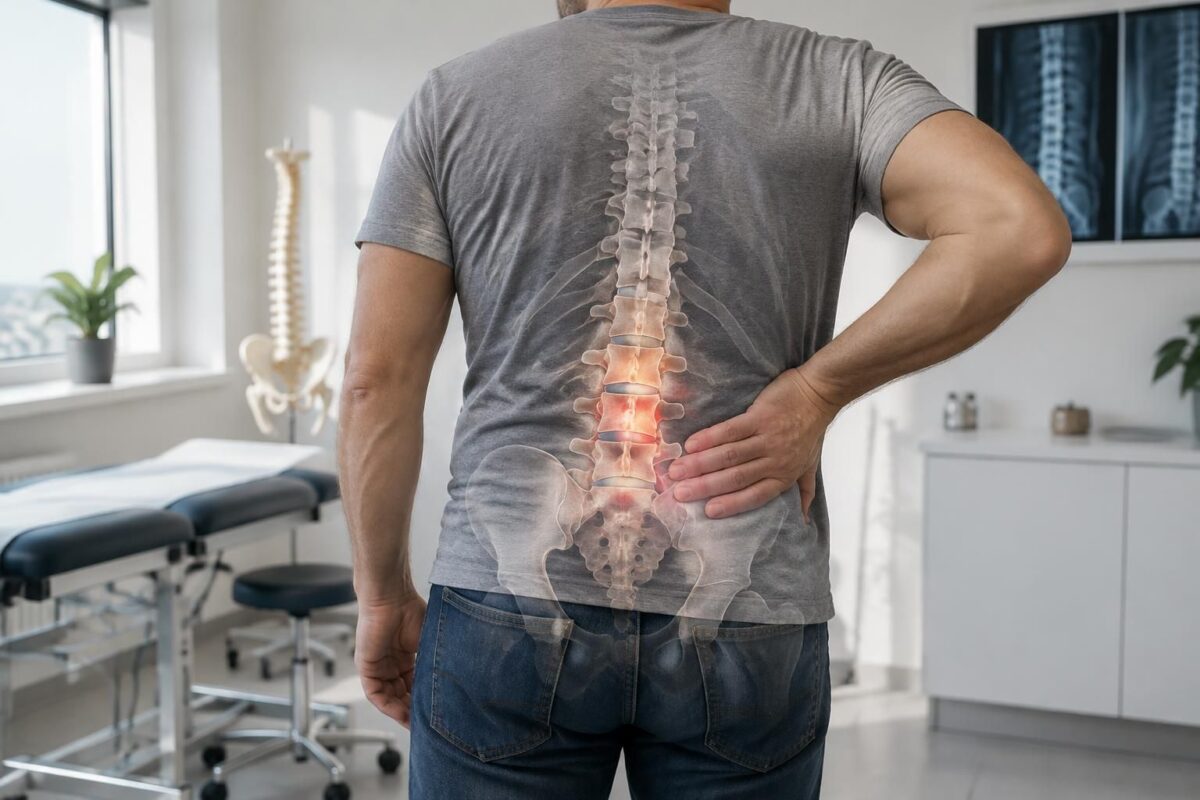
In the lumbar region, some symptoms may include pain starting from the lower back and extending to the buttock, thigh, calf, or foot. tingling, numbness, or a burning sensation may also be experienced. A cervical protrusion may rather be accompanied by pain in the neck or shoulder, sometimes extending to the arm or hand. A decrease in strength may occur in the affected limb. However, these signs can have various causes and require proper evaluation.
Sylvain Desforges’s role is to assist individuals in understanding their pain and functional limitations without claiming to make a medical diagnosis. The evaluation of symptoms, their duration, evolution, and impact on daily activities are important elements to communicate to a healthcare professional. Imaging, such as an MRI, may be considered by a physician when the clinical context justifies it. Results should always be interpreted in the context of the symptoms: a visible anomaly does not necessarily explain the pain.
Depending on the situation, non-surgical management may include temporary adaptation of activities, rehabilitation, progressive exercises, and advice on resuming movement safely. At TAGMED Clinic, offered care may include, after assessment, specific osteopathy, motorized neurovertebral decompression, or precision percussion. These approaches do not suit everyone and do not replace a medical diagnosis or prescribed treatments. The goal is to contribute to an individualized and coordinated approach when necessary.
Prevention also plays an important role in this support: moving regularly according to one’s abilities, interrupting long periods of sitting, gradually strengthening the trunk, and learning to lift loads while limiting sudden twists can help better manage daily constraints. Progress should remain appropriate to the symptoms, especially in the presence of neurological signs.
Significant or progressive weakness, loss of bowel or bladder control, or decreased sensitivity in the saddle region requires urgent medical evaluation. The information presented is educational and does not replace a consultation, diagnosis, or treatment by an authorized healthcare professional. Sylvain Desforges is neither a physician nor a specialist in a medical specialty recognized by the Collège des médecins du Québec.
A disc protrusion is a bulging of the disk between the vertebrae. It can irritate a nerve root and lead to neurological symptoms such as tingling, numbness, pain radiating down an arm or leg, or sometimes weakness. However, a protrusion visible on imaging does not always explain the symptoms: the evaluation also considers their location, evolution, and clinical examination.

Spinal disc protrusion and nerve inflammation
IN BRIEF A disc protrusion is a bulging of the disc that can irritate or compress a nerve, without necessarily causing symptoms. When it leads to nerve inflammation, it can cause pain in the back or neck, sometimes accompanied by…
What neurological symptoms can appear?
When a protrusion affects a lumbar region, pain can radiate to the buttock, thigh, calf, or foot, sometimes with tingling or decreased sensitivity. In the cervical region, discomfort can spread to the shoulder, arm, or hand. The affected area mainly depends on the possibly irritated nerve root. To better recognize possible manifestations, consult this guide on symptoms associated with a disc protrusion and this overview of signs and their impacts on health.
A cervical protrusion, particularly at the C5-C6 level, may be accompanied by neck pain and abnormal sensations in the arm. Manifestations vary from person to person and require appropriate evaluation rather than interpretation based solely on imaging. To better understand this location, discover the possible consequences of a C5-C6 protrusion and the tailored solutions.

Disc protrusion and irritation of L5
IN SHORT A disc protrusion is a bulging of the disc that can irritate the L5 root and cause lower back pain radiating to the buttock, leg, or foot, sometimes with tingling or weakness. MRI alone is not sufficient to…
Why can pain be accompanied by tingling?
A bulging disk may, depending on its position and context, contribute to irritating a nerve structure. However, pain is not always related to direct compression: local inflammation, tissue sensitivity, and other changes in the spine may also be involved. The terms protrusion and herniated disc are distinct, even if their description and interpretation can sometimes be confusing. To delve deeper into these differences, consult the information on hernia and disc protrusions and on the possible causes, symptoms, and treatments.
Symptoms can also be influenced by posture and activities. Some individuals notice worsening after a period of sitting or during specific movements. Others observe increased stiffness upon waking. These variations do not alone confirm a particular injury, but they are useful to describe during a consultation. To explore these situations, read the articles on pain that worsens while sitting and on morning pain and lumbar stiffness associated with sciatica.

Disc protrusion and pain after twisting the back
IN BRIEF A disc protrusion is a bulging of the disc that can contribute to pain after a back twist, but it alone does not confirm the cause. The pain can remain in the lower back or radiate to the…
Evaluation and management
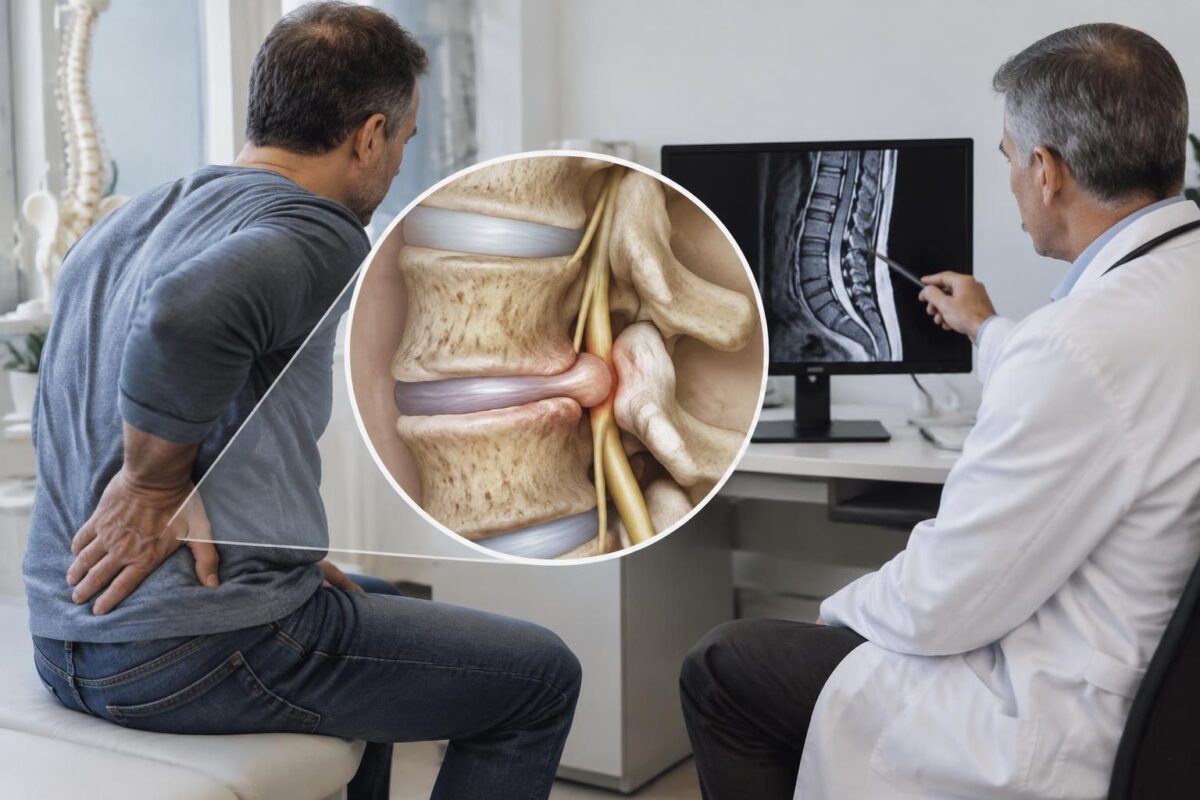
A healthcare professional can examine strength, sensitivity, reflexes, and mobility, and then determine whether imaging examinations are relevant. An MRI may be considered based on the symptoms and their evolution, but its results must be correlated with the clinical examination. Lumbar pain can also have multiple associated factors: for example, disc changes and osteoarthritis may coexist. To learn more, consult the article on the possible combination of herniated disc, lumbar osteoarthritis, and sciatic symptoms.
The management depends on the situation. It may include a temporary adjustment of activities, progressive exercises, and rehabilitation; medications or other interventions require a medical evaluation. A cough or effort may sometimes intensify an existing pain, but this sign alone is not enough to determine the cause. Additional markers are presented in this article on painful cough and possible nerve irritation.
When to seek medical help quickly?
Quickly seek medical advice if you notice new or worsening weakness, significant loss of sensitivity, difficulty walking, or a clearly progressing pain. Loss of control over the bladder or bowels, or numbness in the saddle area, warrants urgent evaluation. In the presence of these signs, do not delay care to try unassessed exercises or treatments.
About the author
Sylvain Desforges, B.Sc., D.O., N.D., osteopath and naturopath, is the founding president of TAGMED and the ACMA association. He dedicates his practice to chronic spinal pain, lower back pain, and pain consistent with sciatica, especially when the pain radiates down to the buttock, leg, calf, foot, or toes.
Through SOS Sciatique, he publishes educational content on sciatica symptoms, its possible causes, and non-surgical approaches that may be considered based on evaluation. At TAGMED Clinic, care may include, depending on the case, motorized neurovertebral decompression, specific osteopathy, or precision percussion therapy.
For an evaluation related to sciatica treatment in Montreal / Mont-Royal or sciatica treatment in Terrebonne, consult the services available at TAGMED Clinic.
Medical disclaimer
The information published on SOS Sciatique is provided for educational purposes and does not replace a consultation, diagnosis, opinion, or treatment performed by a physician or another licensed healthcare professional. The author of this article is neither a physician nor a specialist in a medical specialty recognized by the Collège des médecins du Québec. The approaches of osteopathy, manual medicine, or functional support described on this site do not constitute medical acts and are not intended to replace medical follow-up.
Consult a physician or emergency service in cases of loss of urinary or bowel control, anesthesia in the saddle area, significant or progressive weakness in the leg or foot, fever, recent trauma, severe pain, or rapid deterioration. For more details, please read our Legal Notice.

Dr Sylvain Desforges, B.Sc., D.O., N.D., osteopath, is the founding president of TAGMED and of the ACMA association. He dedicates his practice to chronic spinal pain, low back pain and symptoms compatible with sciatica, particularly when pain radiates toward the buttock, leg, calf, foot or toes.
Through SOS Sciatique, he publishes educational content on sciatica symptoms, possible causes such as disc herniation, disc narrowing, foraminal stenosis or irritation of a lumbar nerve root, as well as non-surgical approaches that may be considered according to the evaluation. At Clinique TAGMED, care may include, depending on the case, motorized neurovertebral decompression, specific osteopathic care or precision percussion.
For an evaluation related to sciatica treatment in Montreal / Mount Royal or sciatica treatment in Terrebonne, please consult the services available at Clinique TAGMED.
Medical disclaimer
The information published on SOS Sciatique is provided for educational purposes only and does not replace a consultation, diagnosis, opinion or treatment provided by a physician or another authorized healthcare professional. The author of this article is neither a medical doctor nor a specialist in a medical specialty recognized by the Collège des médecins du Québec. The osteopathic, manual medicine or functional support approaches described on this site do not constitute medical acts and are not intended to replace medical follow-up.
Consult a physician or emergency service in cases of loss of bladder or bowel control, anesthesia in the saddle area, significant or progressive weakness in the leg or foot, fever, recent trauma, severe pain or rapid worsening of symptoms. For more details, please read our Legal Notice.