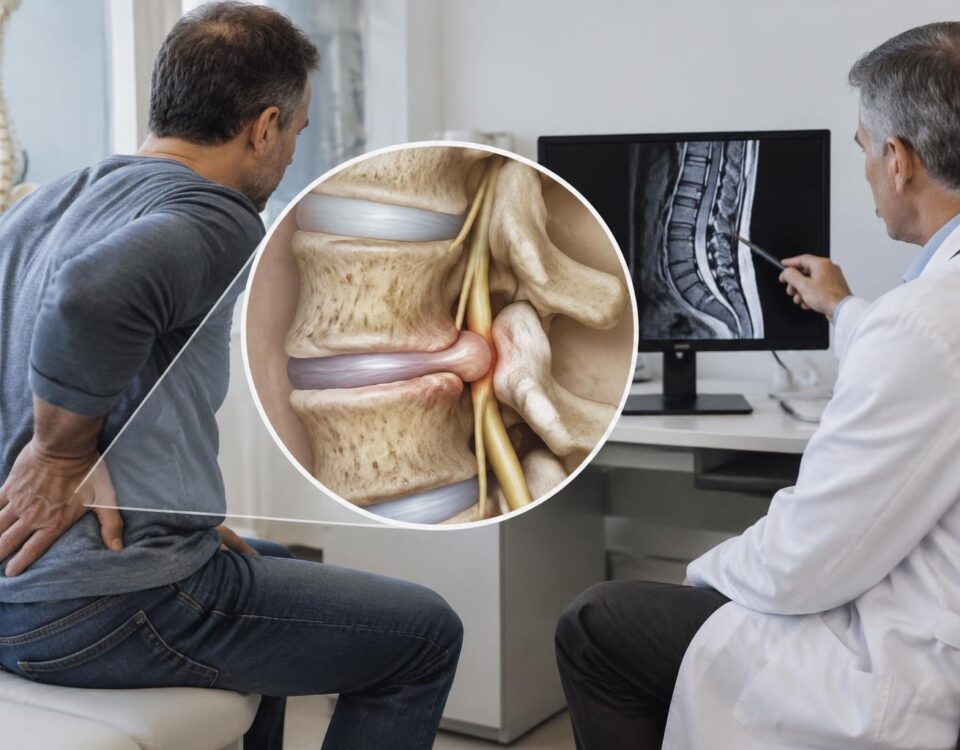
Sciatica and intermittent numbness: how to interpret it?
18/08/2026
Sciatica and pain that travels down the leg in a car
18/08/2026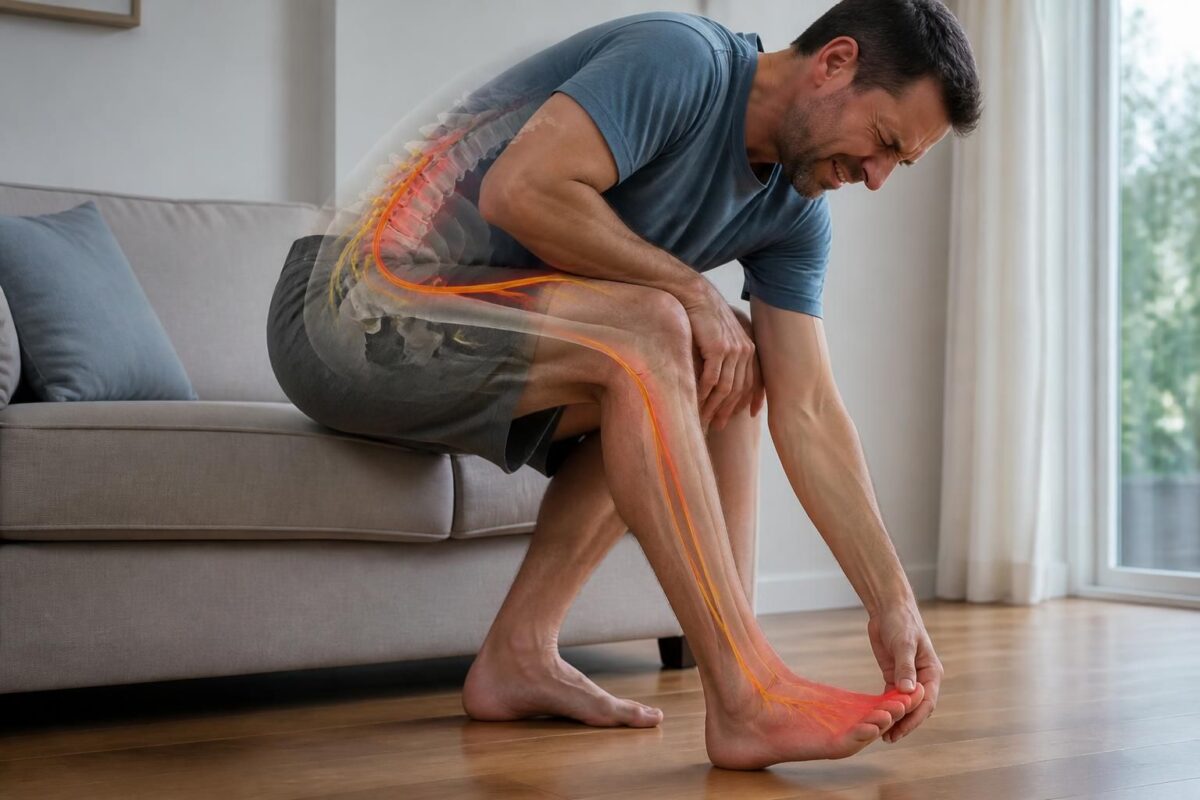
IN BRIEF
In brief, the Disc herniation associated with a big toe pain related to the L5 nerve root is a nerve compression originating from the lumbar region and radiating to the top of the foot up to the big toe. What is it? A herniation between the L4 and L5 vertebrae that pinches the L5 root, causing radicular pain and sometimes weakness. Advantages: precise diagnosis and targeted management, with effective conservative options (rehabilitation, inflammation management, exercises) and facilitated resumption of mobility. How does it work? The evaluation combines imaging (lumbar MRI) and clinical examination; the treatment favors non-operative measures and controlled activity, with surgery considered after failure of conservative treatments or in case of motor deficit. In Montreal, this service is particularly useful for individuals experiencing pain that radiates from the back to the top of the foot and the big toe. |
A lumbar disc herniation can compress the L5 root, causing pain that can radiate from the lower back to the big toe.
- Characteristic path: begins between the L4-L5 vertebrae, passes through the buttock, then descends along the outer side of the leg to the big toe.
- Distinctive sign: pain on the top of the foot and the big toe; possible weakness in lifting the big toe and difficulty walking on heels.
- Common causes: disc herniation between L4 and L5, local inflammation, lumbar canal narrowing (foraminal stenosis), spondylolisthesis.
- Difference with S1: L5 affects the top of the foot and the big toe; S1 affects the sole of the foot and the little toe; differentiating motor tests (heels for L5, toes for S1).
- Therapeutic approach: imaging (MRI) and EMG for confirmation; conservative treatment (adapted activity, anti-inflammatories, rehabilitation) with surgery in case of persistent motor deficit or failure after six weeks.
Quick summary: a disc herniation can compress the L5 root, causing pain that radiates from the lower back to the top of the foot and the big toe. This article describes the path of the L5 nerve, the signs that distinguish L5 from S1, and therapeutic options, including indications for neurovertebral decompression and non-surgical choices to prioritize at TAGMED clinic.
The pain associated with an L5 injury follows a specific path. It starts between the lumbar vertebrae and descends along the outer surface of the leg, crosses the ankle, and reaches the top of the foot and then the big toe. This pathway is the key witness of L5 root compression between L4 and L5.
The sciatic nerve is the largest nerve in the body. Its L5 root can be responsible for localized pain on the top of the foot and the big toe, a distinctive sign when it comes to a lumbar issue related to L5.
To understand your discomfort, you need to identify the nerve origin in the spine. It originates between L4 and L5, then the nerve passes through the sciatic notch and descends down the leg to the foot. The endpoint at the big toe is the distinctive sign of an L5 injury.
Where does your L5 sciatic path precisely go?
The path of the L5 sciatica follows the outer path of the thigh, goes around the knee, and continues along the external malleolus and the top of the foot. This location explains why some pains persist on the top of the foot and the big toe when the L5 root is involved.
Knowing this path allows you to differentiate L5 from an S1 injury. The L5 path leads to the top of the foot and the big toe, while S1 affects more the sole of the foot and the little toe.
The 3 common causes of nerve compression
Identifying the culprit is crucial for prompt action. Typical causes include:
• Disc herniation between L4 and L5, when the disc nucleus can directly compress the L5 root and trigger electric pain.
• Foraminal stenosis or canal narrowing, due to wear of the cartilage and bony spurs that reduce the nerve space.
• Spondylolisthesis, slippage of a vertebra that stretches and compresses nerve roots, potentially exacerbating pain in the lumbar region and leg.
Piriformis syndrome or other factors can sometimes mimic these symptoms.
Clinical signs and distinction from the S1 root
Electric and motor signs guide the diagnosis. Paresthesia, electric shocks, and possible motor weakness may appear. The absence of fever is typical in this context.
Key differences between L5 and S1:
• Foot area: L5 affects the top of the foot, S1 affects the sole.
• Toe affected: L5 impacts the big toe, S1 the little toe.
• Motor test: L5 can impair the ability to place the heel on the ground, S1 affects more the ability to walk on toes.
• Reflex: L5 may retain a normal reflex, S1 may show reflex abnormalities.
In case of rapid onset of loss of urinary control or other emergency signs, seek immediate consultation.
Therapeutic solutions and actions to relieve you
The diagnosis leads to a tripod approach: medication, assessment, and adapted rehabilitation, and lifestyle hygiene. At the TAGMED clinic, the goal is to manage inflammation and evaluate the best treatment path.
Medically, the physician may propose an anti-inflammatory treatment and refer for assessments such as MRI and EMG to evaluate nerve conduction. The use of approaches like acupuncture may be considered depending on the evaluation, always under medical supervision.
General measures can help, such as limiting intense efforts and engaging in appropriate physical activity. Ergonomic advice can also support daily recovery, without choosing unsuitable exercises. For additional perspectives, see the following resources: pain on the top of the foot and possible L5 root, central disc herniation and pain, and disc herniation – symptoms and treatment.
To understand neurovertebral decompression options and therapeutic choices, you can consult resources related to neurovertebral decompression and similar cases, while remaining attentive to the importance of personalized medical evaluation. Other useful resources include dedicated pages on sciatic pain and the L5 root at sossciatique.com, and information on non-surgical options guide your care journey.
When imaging is necessary, lumbar MRI allows for precise visualization of the hernia, and EMG evaluates nerve conduction. Surgery remains an option when motor deficits persist or after failure of conservative treatments over a defined period, according to medical evaluation.
Quickly identify your L5 sciatica pathway, from the back to the big toe, to stop inflammation. Between neurovertebral decompression and care at TAGMED clinic, act now to free your nerve root and regain smooth mobility.
For more information, consult especially the following resources: neurovertebral decompression and disc herniation, L5 root and pain above the foot, and Sciatica in Terrebonne.
For more information on treatment options in Montreal or Terrebonne, see the pages of TAGMED Clinic: TAGMED Clinic.
Medical disclaimer: The information and advice provided on this site do not replace the advice, diagnosis, or treatment of a healthcare professional. Please note that Dr. Sylvain Desforges, osteopath, is neither a medical doctor nor a physician, and is not a specialist in a medical specialty as defined by the Collège des médecins du Québec. Manual medicine, functional medicine, and sports medicine as described on this site exclude any treatment or medical diagnosis made by a doctor or specialist. Always consult your physician for any medical questions. For more details, please read our full Legal Notice.
- Axis: rapid diagnosis and concrete actions for an L5 involvement associated with a disc herniation.
- Key symptom: pain on the top of the foot and in the big toe.
- L5 pathway: originating from the lumbar region, passing through the buttock, rising along the leg to the big toe.
- Frequent causes: L4-L5 disc herniation, foraminal narrowing, or spondylolisthesis compressing L5.
- Diagnosis: lumbar MRI to confirm the hernia and locate L5; EMG if necessary.
- Management: moderate activity, targeted rehabilitation, and reduction of inflammation.

This article explains how a disc herniation between L4-L5 can affect the L5 root, manifesting as pain targeted in the big toe and on the top of the foot, and what strategies can provide lasting relief without surgery. You will discover the typical pathway of pain, frequent causes of compression, and clinical markers to differentiate L5 from S1 to guide the most suitable treatment.
Understanding the pathway and causes
Typical pathway of pain related to L5 toward the big toe
The pain associated with the L5 root follows a precise route: it starts from the lumbar region, passes through the buttock, and descends on the outer side of the leg to reach the big toe. This external pathway is the key sign of L5 root involvement and allows it to be distinguished from other pain patterns.
Frequent causes of nerve compression around L5
The most common situations that compress the L5 root are:
– Disc herniation between L4-L5: the gelatinous nucleus can directly pinch the L5 root, triggering electric pain and localized inflammation that amplifies suffering.
– Foraminal stenosis (narrowing of the exit canal) and spondylolisthesis (sliding of a vertebra): these situations reduce the space around the nerve root and increase pressure on L5.
– Other factors: localized inflammation, vertebral instability, and sometimes piriformis syndrome that can mimic radicular compression.
Clinical signs and differential diagnosis
Differentiating L5 from S1
To distinguish an injury to L5 from one to S1, it is necessary to identify where the pain is located and which muscles support the pain. The pain will dominate the top of the foot and the big toe in the case of L5, while the plantar foot is more typical of S1. The motor test and reflex localization also help:
– Possible motor deficit: difficulty walking on the heels (mobility of the top of the foot, action of L5).
– Test on the balls of the feet for S1: difficulty getting onto the balls of the feet suggests S1.
– Frequent absence of fever; the pain is more neuropathic than isolated inflammatory.
Alert Signs and Urgent Indications
Signals requiring rapid evaluation include major progressive motor deficits, debilitating pain despite rest and treatments, or signs affecting continence. Spontaneous improvement should not overshadow the need for medical evaluation if pain persists or worsens.
Treatment Strategies and Daily Actions
Medical Approach and Rehabilitation
Treatment often starts with short-term anti-inflammatory medication and active rehabilitation. Targeted mobility and strengthening exercises, performed progressively, promote nerve decompression and preserve mobility. The use of complementary therapies (e.g., acupuncture) may be considered based on evaluation.
Lifestyle and Posture
Adopt an active approach and avoid prolonged inactivity. Favor moderate walking and avoid postures that increase pressure on the disc. For sleep, prefer a side position with a pillow between the knees to reduce lumbar tension. Work on good ergonomics at your desk: feet flat, movements limiting twisting and heavy loads.
Imaging and Surgical Options
Appropriate imaging (MRI) is useful to confirm a Herniated Disc and assess the foraminal canal before any intervention. Electromyography can complement the assessment by evaluating nerve conduction. Surgery remains a rare option and is only considered if persistent motor deficits or failure of conservative treatments occur after several weeks.
By quickly identifying the path of the L5 root and associated signs related to the big toe, you can target simple and effective actions to relieve the nerve, reduce inflammation, and regain smooth mobility.
| Element | Concise Description |
|---|---|
| Anatomical Origin | The L5 can be compressed by a L4-L5 herniated disc, causing pain to the big toe. |
| Nerve Pathway | The L5 nerve follows an external pathway from the leg to the big toe. |
| Typical Location | Pain that starts in the lower back and reaches the top of the big toe, not the sole of the foot. |
| Motor Signs | Possible deficit in dorsiflexion and extension of the big toe (L5). |
| Sensory Signs | Paresthesias on the dorsum of the foot and the big toe. |
| Differential Diagnosis | Exclude piriformis syndrome. |
| Associated Causes | Herniated disc, foraminal narrowing, and spondylolisthesis can compress L5. |
| Imaging | Lumbar MRI recommended to confirm the hernia and evaluate L5. |
| Therapeutic Approaches | Active rehabilitation, adapted posture, and non-invasive anti-inflammatory treatments. |
| When to Consult Quickly | Persistent motor deficit or sphincter loss requiring urgent evaluation. |
Testimonials: Herniated Disc and Big Toe Pain — Possible L5 Root
“Previously, I experienced lower back pain that started from the lower back, crossed the buttock, and descended to the top of the foot, then to the big toe. The team identified a herniated disc between L4 and L5 with involvement of the L5 root. Understanding this pathway gave me hope that my pain was coming from a nerve that can be freed and treated.”
“My case was complex: the pain radiated over the top of the foot and the big toe rather than the sole. I was explained that this often corresponds to an involvement of the L5 root and not purely lumbar pain. Thanks to a targeted rehabilitation program and ergonomic advice, I regained normal mobility and a significant reduction in pain.”
“After receiving the diagnosis, I followed a path focused on mobility exercises and adapted physical activity. The pain gradually decreased, and, most importantly, the sensation in the big toe became normal again. I transitioned from a limited daily life to the active life I had lost.”
“The advice for maintaining deep core strength and proper posture was crucial. Sleeping on my side, adjusting my sitting position, and practicing regular walking contributed to decompressing the nerve and stabilizing my back, which slowed long-term painful episodes.”
“Today, I am able to resume my usual activities with much less pain, and I better understand the connection between the herniated disc, the L5 root, and the pain in the big toe. The pathway of the nerve is no longer a source of worry, but a factor to manage through active rehabilitation and appropriate lifestyle.”
Herniated Disc, Big Toe Pain and L5 Root: Professional Profile of Dr. Sylvain Desforges
Dr. Sylvain Desforges is recognized as a expert in osteopathy, naturopathy, and manual medicine, and he is the founding president of TAGMED clinics and the ACMA association. His career is guided by a desire to innovate in the field of care, with particular attention paid to the management of chronic pain of the spine and the integration of advanced technologies. His approach relies on a rigorous clinical methodology, centered around the patient, to provide therapeutic pathways designed to sustainably improve mobility and well-being.
In his practice, Dr. Desforges integrates tools and techniques that go beyond strictly osteopathic methods. He seeks to combine traditional know-how with modern devices such as motorized spinal decompression, laser, and shock waves. This multidisciplinary approach allows for addressing complex situations like herniated disc and pain associated with the L5 root, while avoiding, when possible, the need for surgery. His goal is to reduce inflammation, relieve the compressed nerve, and restore functional mobility, prioritizing evidence-based solutions.
The “L5 root” dimension plays a central role in many of his assessments. It explains that L5-related sciatic pain can manifest as back pain radiating to the outer side of the leg and down to the big toe, with specific signs that differentiate an L5 involvement from an S1 involvement. This distinction guides the choice of therapeutic gestures and the priority given to certain aspects of rehabilitation and nerve stimulation. In practice, Dr Desforges favors a fine exploration of the nerve origin and mechanical mechanisms, in order to propose a personalized plan that combines active rehabilitation, posture and ergonomics, and targeted physical interventions.
On the therapeutic front, his philosophy rests on close collaboration between several disciplines and a gradual progression of treatment. He emphasizes non-invasive measures and daily gestures that promote lasting relief: moderate physical activity, controlled mobility, and appropriate lifestyle hygiene. His approach also includes practical advice on positioning, ergonomics, and patient education on the mechanisms of neuropathic and inflammatory pain. The goal is to optimize the patient’s ability to regain control over their movements and restore a pain-free quality of life.
The mission of Dr Desforges is to deliver evidence-based care, focused on the individuality of each patient and on active and sustained rehabilitation. By combining osteopathy, manual techniques, and modern technologies, he strives to offer personalized pathways that reduce pain, improve function, and restore autonomy. His vision integrates comprehensive care, where the therapist’s actions rely on solid clinical data and careful listening to each person’s goals.
To discover his approach and the services offered by TAGMED, contact the clinic to arrange an assessment suited to your situation. Dr Desforges thus offers a structured way to address issues related to disc herniation and L5 radiculopathy, and to put patients on the path to smooth and sustainable movement.
This quick summary describes how a disc herniation can involve the L5 root, causing pain that radiates down to the big toe, and how to recognize the L5 path to direct diagnosis and therapeutic gestures. It details common causes, clinical signs that differentiate L5 from S1, and management options aimed at freeing the nerve and restoring mobility.
Summary and Clinical Implications
The pain related to the L5 root follows a specific path: starting in the lumbar area, passing through the buttock, and descending along the outer side of the leg to the big toe. This path is a key indicator of compression between the L4 and L5 vertebrae. The diagnosis relies on the assessment of the painful territory and motor deficit: difficulty lifting the foot (heel support) or electric sensation along the back of the leg. Imaging (MRI) and neurophysiological tests (EMG) help locate the compression and assess nerve conduction.
Common Causes and L5 Path
The most common causes of compression of the L5 root are: disc herniation between L4 and L5, foraminal stenosis due to osteoarthritis and narrowing of the lumbar canal, and spondylolisthesis that causes one vertebra to slide over another. The L5 path passes through the foramen and can be confused with the piriformis syndrome, which sometimes mimics the same symptoms. The distinguishing sign is pain that radiates to the top of the foot and the big toe.
Clinical Signs and Distinction from the S1 Root
To differentiate L5 from S1, we observe the sensory territory: L5 affects the top of the foot and the big toe, while S1 affects the sole of the foot and the little toe. The L5 motor test prioritizes walking on the heel, while S1 is manifested by walking on the toes. Signs such as burning, paresthesia, and loss of strength may require prompt medical evaluation if the deficit progresses.
Practical Recommendations and Gestures
An effective approach combines targeted medical treatment and active rehabilitation. Anti-inflammatories may be indicated to reduce nerve inflammation, and practicing mobility and deep core stabilization exercises helps gently decompress the nerve. Activities such as moderate walking and adopting ergonomic postures support recovery without exacerbating pain. Avoid sudden twists and carrying heavy loads, and prioritize an alternating walking/resting routine to facilitate recovery.
Resources and Useful Links
To delve deeper, consult these resources presenting different aspects of treatment and the L5 path: sciatica treatment in Terrebonne – hernia, stenosis or nerve irritation, sciatica Terrebonne – sensation of electric discharge in the leg, Disc herniation – osteopathy advice, can one have sciatica without disc herniation, paramedian disc herniation and possible painful path, hernia L4-L5, neurovertebral decompression and chronic disc herniations – lasting relief, disc herniation L5-S1, understand L5 sciatic pathway – pain.
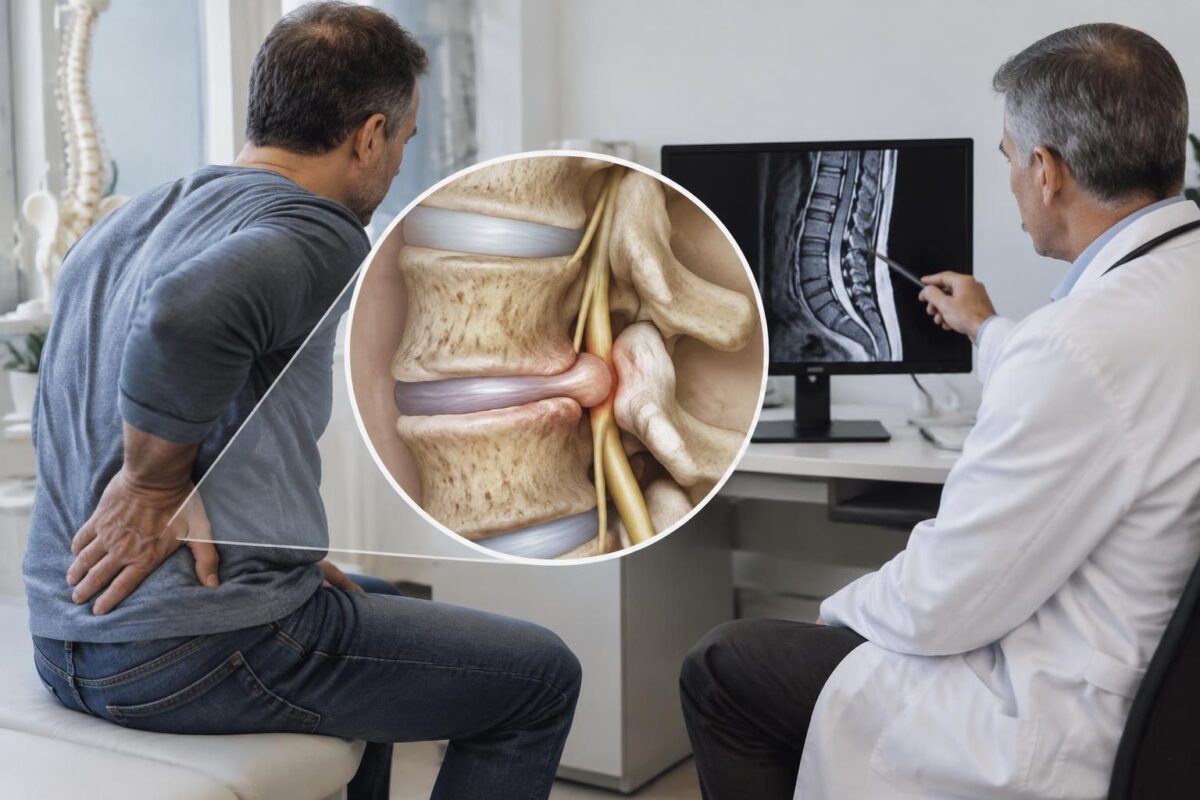
Disc protrusion and disc pinching: combined mechanisms
IN BRIEF A disc protrusion is a bulging of the disc, while a disc narrowing refers to a decrease in its height. These changes can coexist and sometimes irritate a nerve root, leading to pain or radiation, but they can…

Disc herniation and associated foraminal stenosis
IN BRIEF A disc protrusion associated with foraminal stenosis occurs when a bulging disc coexists with a narrowing of the opening through which a nerve root passes. This association can lead to lower back pain radiating into the leg, tingling,…

Spinal disc protrusion and nerve inflammation
IN BRIEF A disc protrusion is a bulging of the disc that can irritate or compress a nerve, without necessarily causing symptoms. When it leads to nerve inflammation, it can cause pain in the back or neck, sometimes accompanied by…

Disc protrusion and irritation of L5
IN SHORT A disc protrusion is a bulging of the disc that can irritate the L5 root and cause lower back pain radiating to the buttock, leg, or foot, sometimes with tingling or weakness. MRI alone is not sufficient to…

Disc protrusion and pain after twisting the back
IN BRIEF A disc protrusion is a bulging of the disc that can contribute to pain after a back twist, but it alone does not confirm the cause. The pain can remain in the lower back or radiate to the…

Disc herniation and pain after lifting
IN BRIEF A disc protrusion is a bulging of a disc between the vertebrae. Pain that appears after lifting a load does not prove that it is the cause: the MRI must be interpreted alongside the symptoms and the clinical…

Disc herniation and lumbar flexion: why caution is necessary
IN BRIEF A disc protrusion is a bulge of the intervertebral disc, which can be silent or irritate a nerve. Lumbar flexion is not necessarily dangerous but can worsen symptoms in some individuals. Adapting movements, avoiding those that aggravate pain,…

Disc herniation and pain that worsens in the car
IN BRIEF A disc protrusion is a bulging of a disc that can irritate a nerve. In a car, prolonged sitting and vibrations can exacerbate back, buttock, leg, or arm pain. Regular breaks, an adapted posture, and personalized management can…

Dr Sylvain Desforges, B.Sc., D.O., N.D., osteopath, is the founding president of TAGMED and of the ACMA association. He dedicates his practice to chronic spinal pain, low back pain and symptoms compatible with sciatica, particularly when pain radiates toward the buttock, leg, calf, foot or toes.
Through SOS Sciatique, he publishes educational content on sciatica symptoms, possible causes such as disc herniation, disc narrowing, foraminal stenosis or irritation of a lumbar nerve root, as well as non-surgical approaches that may be considered according to the evaluation. At Clinique TAGMED, care may include, depending on the case, motorized neurovertebral decompression, specific osteopathic care or precision percussion.
For an evaluation related to sciatica treatment in Montreal / Mount Royal or sciatica treatment in Terrebonne, please consult the services available at Clinique TAGMED.
Medical disclaimer
The information published on SOS Sciatique is provided for educational purposes only and does not replace a consultation, diagnosis, opinion or treatment provided by a physician or another authorized healthcare professional. The author of this article is neither a medical doctor nor a specialist in a medical specialty recognized by the Collège des médecins du Québec. The osteopathic, manual medicine or functional support approaches described on this site do not constitute medical acts and are not intended to replace medical follow-up.
Consult a physician or emergency service in cases of loss of bladder or bowel control, anesthesia in the saddle area, significant or progressive weakness in the leg or foot, fever, recent trauma, severe pain or rapid worsening of symptoms. For more details, please read our Legal Notice.