Sciatica in Terrebonne: numbness of the big toe and lower back pain
18/09/2026
Herniated disc and diminished reflexes: possible neurological sign
18/09/2026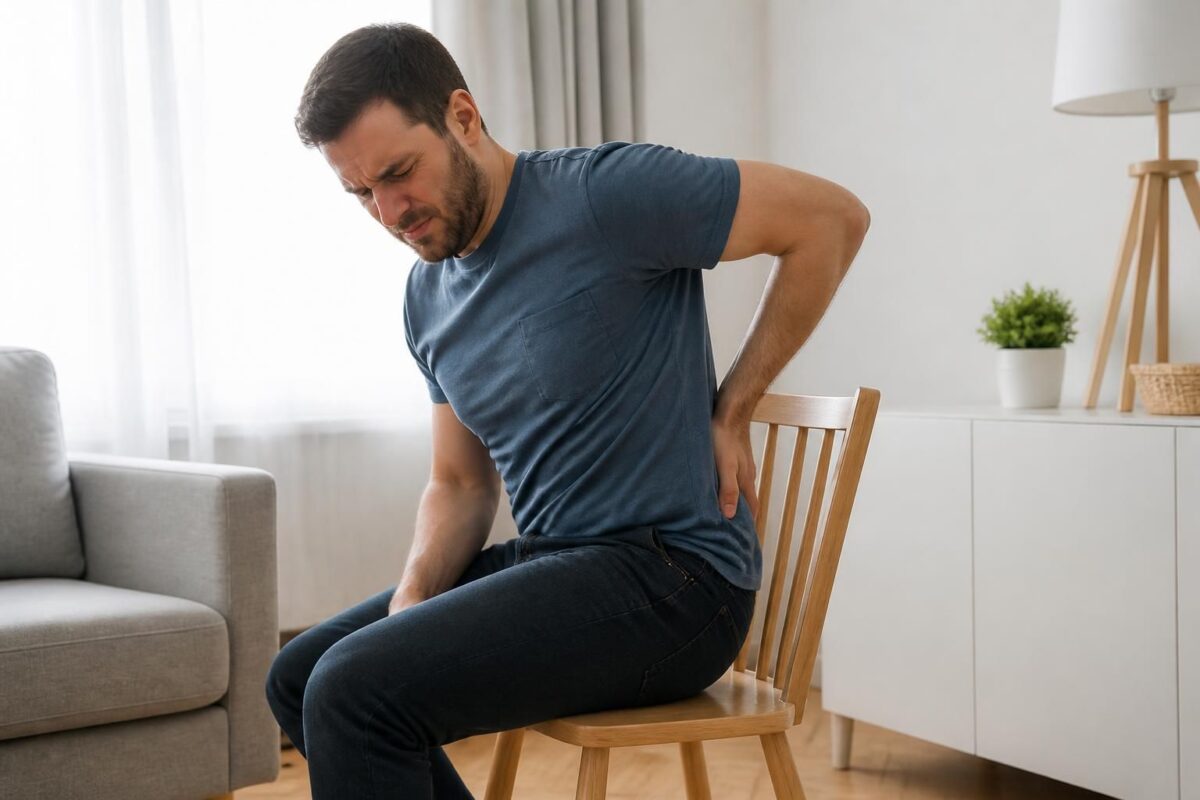
IN BRIEF
| In brief, Sciatica and difficulty sitting describes pain that follows the path of the sciatic nerve, often worsened by prolonged sitting. This approach aims to break up sitting periods and adjust posture to reduce pressure on the lumbar discs and relax the nerve. Benefits: pain reduction, better tolerance for sitting, and improved ability to work or move daily. How it works: alternate sitting and standing periods, schedule active breaks every 30 minutes for screen work, and apply simple neurodynamic movements (upper body extension, lumbar support, painful leg raised) to relieve the nerve. Available in Montreal and local clinics, this non-invasive framework can help you regain control of your days without surgery. |
Sciatica is pain that follows the path of the sciatic nerve, often related to a herniated disc or irritation of a lumbar root. This pain can become particularly uncomfortable when sitting.
Prolonged sitting increases pressure on the lumbar discs and puts the nerve under tension, especially with a rounded back and a forward head.
To limit discomfort, favor active breaks and proper posture: a chair with a slightly reclined back, lumbar cushion, painful leg elevated, and light extension of the lower back. Alternate sitting, standing, and walking throughout the day and adjust your screen to keep your head upright.
By adopting these simple adjustments, you can reduce discomfort and regain ease in your daily activities.
This article explains why sciatica can make it difficult to sit, what mechanisms are involved, and what simple and safe measures will promote a more comfortable position in daily life. It provides clear guidelines, workstation adjustments, and care options at TAGMED Clinic when necessary. The goal is to limit pain by staying active and adapting how to sit without resorting to risky movements.
Understanding the link between sciatica and sitting
Sciatic pain follows the path of the sciatic nerve. Prolonged sitting can increase pressure on the lumbar discs and stress a nerve root, which can amplify pain in the buttock and leg. A hunched posture or a head leaning forward can also stretch the nerve and worsen discomfort.
Practical tips for sitting without increasing pain
Avoid prolonged immobility. Take active breaks and move regularly. If you work on a screen, prioritize breaks every 30 minutes, and throughout the day, take more general breaks every 2 hours to walk and regain mobility. Adjust your workstation: slightly reclined back, suitable lumbar support, feet flat, and painful leg elevated to the side.
Position that relieves and preferred posture
Adopt a sitting position that promotes a slight extension of the lower back. Use a lumbar cushion and tilt the backrest to shift part of the weight backward. Keep your head aligned and avoid leaning heavily forward. Gradually elevate the painful leg to the side and ensure the hip is slightly extended. Maintain the screen at a height that allows you to look straight ahead, without tilting your head.
Role of professional adjustments and care
A doctor or osteopath can assess your workstation and posture and suggest appropriate adjustments. At TAGMED Clinic, care may include osteopathic approaches, and depending on the assessment, options like motorized neurovertebral decompression may be considered. These options will be discussed during an on-site personalized consultation: TAGMED Clinic.
When to consult and signs of alarm
Consult promptly if very intense pain persists despite adjustments, if you notice significant weakness in the leg or foot, loss of sensation around the genital areas, or urinary discomfort. These signs require rapid medical evaluation.
Resources and useful links
For additional information on the topic and practical advice, you may refer to the following resources: sossciatique.com/sciatique-et-marche-utile-ou-aggravante, sossciatique.com/sciatique-a-montreal-perte-de-sensibilite-dans-les-orteils, sossciatique.com/sciatique-a-terrebonne-perte-de-sensibilite-dans-les-orteils, sossciatique.com/douleur-sciatique-a-terrebonne-trajet-incomplet-faut-il-sinquieter, sossciatique.com/sciatique-et-douleur-en-montant-les-escaliers, sossciatique.com/sciatique-a-terrebonne-perte-de-sensibilite-dans-les-orteils, sossciatique.com/sciatique-et-marche-utile-ou-aggravante.
For more options and explanations on non-surgical approaches, visit the TAGMED Clinic website: cliniquetagmed.com.
Links for general information and prevention (authorized areas):
sossciatique.com,
sossciatique.com/sciatique-et-marche-utile-ou-aggravante,
sossciatique.com/sciatique-a-montreal-perte-de-sensibilite-dans-les-orteils,
sossciatique.com/sciatique-a-terrebonne-perte-de-sensibilite-dans-les-orteils,
sossciatique.com/douleur-sciatique-a-terrebonne-trajet-incomplet-faut-il-sinquieter,
sossciatique.com/sciatique-et-douleur-en-montant-les-escaliers,
decompressionneurovertebrale.com and sosherniediscale.com.
For prevention and education aspects, you can also refer to specialized resources on sitting and posture: ergonuit.fr, sgca.fr.
Note: this text does not provide specific exercises or stretches when discussing neurovertebral decompression or disc pathologies. It prioritizes clinical evaluation and posture advice, and refers to professional care at the TAGMED Clinic when necessary.
Medical disclaimer: The information and advice provided on this site do not replace the opinion, diagnosis, or treatment of a healthcare professional. Please note that Dr. Sylvain Desforges, osteopath, is neither a medical doctor nor a physician, and is not a specialist in a medical field as defined by the Collège des médecins du Québec. Manual therapy, functional medicine, and sports medicine as described on this site exclude any treatment or medical diagnosis made by a physician or medical specialist. Always consult your doctor for any medical questions. For more details, please read our full Legal Notice.
- Pain that follows the path of the sciatic nerve
- Pain that worsens with prolonged sitting
- Discomfort or heaviness in the buttock or thigh
- Numbness or paresthesia in the leg
- Active break every 30 minutes at the screen
- Break the sitting time: stand up and walk for 2 to 3 minutes
- Proper posture: slightly reclined backrest, lumbar cushion, painful leg free
- Work posture: screen at eye level, feet on the ground, ability to alternate sitting/standing

In this article, you will learn why sciatica can worsen when sitting too long and how to adjust your posture and your workstation to limit pain. You will find practical tips, simple time markers, and easy actions to implement in the office, at home, or in the car to spend less time stuck and more time moving.
Why sitting can worsen sciatica
The sitting position prolongs the pressure on the lumbar discs and puts the sciatic nerve under tension, especially when the back is slightly arched or the head is leaning forward. This tension can irritate a nerve root and trigger pain that radiates down the buttock, leg, calf, or foot. To limit these effects, prioritize a slight extension of the torso and avoid positions that force the nerve to stretch. In short, an improved posture and regular breaks make a significant difference.
Adapting your workstation and setup
Organizing your workstation around good lumbar support and a well-adjusted screen drastically changes the situation. Choose an adjustable chair with a backrest that supports the natural curve, and place your feet flat on the ground. The top of the screen should remain at eye level, at an appropriate distance to avoid leaning the head. Using a lumbar cushion can help maintain the lower back’s curvature and relieve the nerve along its lumbar path. If possible, opt for a desk that allows alternation between sitting and standing to avoid postural stagnation.
Useful practical tips: organize your space so that every movement is simple and natural, and avoid positions that force the back into flexion or force the head forward. A slight inclination of the backrest and controlled curvature of the lower back promote nerve drainage and reduce tension on the sciatic nerve.
Simple actions to limit daily pain
To relieve sciatica throughout the day, prioritize active micro-breaks and posture adjustments. Slightly shift the painful leg to the side, with the hip extended and the knee bent, to relieve the nerve. Adopt a slight extension of the torso and increase the curvature of the lower back if necessary, supporting the back with the lumbar cushion. Keep your head straight or slightly back to avoid unnecessary strain on the nerve, and adjust the screen’s position to prevent cervical tension. Finally, slightly lean the torso toward the painful leg to enhance relaxation.
Time markers and active breaks
Two useful official markers: break sedentary time every 2 hours with a short walk and stretching; and ideally schedule active breaks every 30 minutes when working on a screen. If pain worsens, react at the first signs and finish the task with an active break or micro-stretch.
When to consult and warning signs
Quickly consult in case of intense pain that does not improve with any posture, marked weakness in one leg, loss of sensitivity around the genitals, or urinary issues. Outside of these signs, discuss with your doctor or a physical therapist to adjust your workstation and exercise program, and consider targeted neurodynamics exercises if your condition allows.
| Aspect | Context and concise advice |
|---|---|
| Prolonged sitting | Increases pressure on the lumbar discs and tension on the sciatic nerve; prioritize breaks and an adjusted posture. |
| Role of breaks | Active break every 30 minutes while working at a screen; short walks or stretches to relieve tension. |
| Recommended posture | Slightly extended back, inclined backrest, lumbar cushion, and painful leg free. |
| Postures to avoid | Rounded back and head forward increase tension on the sciatic nerve. |
| Office adjustments | Screen at eye level and adjustable chair; tilt the backrest to support the natural curve. |
| Lumbar support | A lumbar cushion improves support and can reduce pain during sitting hours. |
| Sitting duration | Listen to your pain and integrate micro-breaks; there is no universal duration, but frequent movement helps. |
| Car | Adjust the seat and keep the painful leg free; plan stops every 2 hours during trips. |
| Warning signs | Unbearable pain, increasing weakness, urinary issues, or loss of control; consult quickly. |
| Reorientation of activities | Alternate between sitting and standing and incorporate walking to change the strain on the back. |
Testimonials on Sciatica and Difficulty Sitting
“Since my Sciatica appeared at the office, sitting has become a real challenge. Every position seems to pull on my buttock and leg, and meetings turn into endless trials.”
“I found that it wasn’t the pain itself that paralyzed me, but the inability to find a comfortable position. By adding good lumbar support and regular active breaks, I can sit longer without the pain flaring up.”
“Car trips were unbearable: pain radiating to my knee and mental fatigue. By adjusting the seat, reclining it, and using a lumbar cushion, I regained pain-free trips and safer driving.”
“I tested small posture adjustments and simple exercises. By slightly freeing my painful leg and arching my lower back, the sciatic nerve relaxes significantly and the pain diminishes throughout the day.”
“The secret has been quickly alternating between sitting and standing with an adjustable workstation and planning breaks every 30 minutes. My concentration and productivity have improved, and the pain has become manageable.”
“If you suffer from Sciatica, don’t let the pain take over. Adjusting your workstation and making a few posture adjustments can change your daily life. Consulting a specialist for a personalized plan can really make a difference.”
Sciatica and Difficulty Sitting: Professional Biography of Dr. Sylvain Desforges
Dr. Sylvain Desforges, osteopath and practitioner of manual medicine and naturopathy, is the founding president of TAGMED clinics and the ACMA association. With a career dedicated to innovation in healthcare, he specializes in managing chronic spinal pain and integrating advanced technologies such as motorized neuro-spinal decompression, laser, and shockwave therapy. His mission is to provide evidence-based care to optimize the health and well-being of his patients. In his practice, he focuses on understanding the mechanisms of sciatica and the challenges faced by those who must sit for long periods, in order to offer sustainable and personalized solutions.
The issue of difficulties in sitting is central to his therapeutic approach. Dr. Desforges reminds us that prolonged sitting increases pressure on the lumbar discs and can strain the sciatic nerve, especially when the back rounds and the head projects forward. However, his approach is not to deprive the patient of a chair but to organize regular breaks and improve posture to limit strain. He advocates for active breaks and simple but effective adjustments: slightly inclined backrest, appropriate lumbar support, and reducing the load on the painful leg by positioning it to the side. These tips are part of a preventative and functional rehabilitation logic that allows for standing and walking without aggravation.
For patients suffering from sciatica, Dr. Desforges favors non-surgical approaches and a judicious integration of modern technologies. Motorized neuro-spinal decompression is used when clinical indications allow, combined with specific osteopathic techniques and rehabilitation programs. Laser and shockwaves complement this care by promoting inflammation reduction and improving mobility. This combination aims to relieve pain, restore function, and enable the patient to resume daily activities with peace of mind.
At the same time, Dr. Desforges places great importance on patient education. His approach is based on clear communication and educational content, so that everyone understands the possible causes of sciatica — such as disc herniation or foraminal stenosis — and adopts appropriate postural habits, particularly during long work or driving hours. This educational aspect is reflected in his interactions with patients and in his operational resources aimed at improving the daily lives of those prone to pain during sitting.
At the TAGMED Clinic, Dr. Desforges offers a thorough assessment followed by personalized care, integrating osteopathy, neurodynamics, and ergonomic advice for the workspace and daily life. His approach combines science, technique, and kindness to help patients regain an active life, without limitations and reducing painful episodes related to sciatica and the temporary inability to sit comfortably.
For those who wish to benefit from an evidence-based approach and advanced technologies in dealing with sciatica and difficulty sitting, Dr. Desforges offers personalized assessments and complementary support within his practice, aiming to restore mobility, balance, and well-being. His services focus on a comprehensive approach that combines effectiveness, safety, and quality of life.
This article concludes that sciatica and difficulty sitting are closely related: sitting too long can increase pressure on the lumbar discs and stress the sciatic nerve, which can amplify pain and sensations in the leg. A pragmatic management of the workstation, regular breaks, and simple posture adjustments can limit these effects and improve daily comfort.
The lumbar pressure and tension of the sciatic nerve increase when the spine is flexed and the back rounds in a sitting position. To reduce this risk, favor a slight extension of the back, appropriate lumbar support, and an inclined backrest. Free the painful leg and adjust the screen to keep the head aligned with the torso, avoiding excessive neck flexion. This approach, inspired by neurodynamics, helps to reduce tension on the nerve and alleviate pain during hours spent sitting.
In work configurations, practical guidelines remain simple and effective: take active breaks every 30 minutes when working on a screen, and plan more general breaks every 2 hours to walk and gently stretch the back. The goal is not to completely avoid sitting, but to break up sitting time and vary postures to limit stress on the lower back and sciatic nerve.
Specifically, adapt your workstation with simple elements: an adjustable chair height, a booster if necessary, a lumbar cushion, and a height-adjustable desk allowing for sitting-standing alternation. In practice, prefer a position where the torso is slightly tilted back, the back is in a slight curve, and the painful leg is left free and relaxed to reduce nerve tension.
Car journeys present a particular situation to anticipate: move the seat forward to gain space, extend the painful leg, and, if possible, use a lumbar support or rolled towel to maintain the natural curvature of the lower back. Plan regular stops every 2 hours to walk and relieve pressure on the back and nerve.
In the presence of alarming signs — intolerable pain despite adjustments, significant weakness, or progression of urinary issues or sphincter control — a prompt medical consultation is essential. Outside of these emergencies, have your workstation and posture evaluated by a professional if discomfort persists or worsens, to adapt your treatment and work environment.
To delve deeper, check out these practical resources and guides: How to Sit with Sciatica, Sitting Without Worsening Pain, Positions to Avoid, Nocturnal Leg Pain, Sitting Position and Sciatica, Pain that Descends then Rises to the Buttock, Numbness and Lumbar Pain, Slow Walking Better Tolerated or Not, Sitting Position, How to Do It, Pain After Walking.

Sciatica and pain after a day of sitting at work
IN BRIEF Sciatica after a day of sitting refers to pain that starts in the lower back or buttock and may radiate down the leg. Prolonged posture can accentuate discomfort. Regular breaks, a few minutes of walking, and an adequately…

Sciatica and pain after prolonged standing
IN BRIEF Sciatica is pain related to irritation of a nerve root, which can radiate from the lower back to the buttock and leg. Prolonged and immobile standing can promote or worsen symptoms, although it is not always the cause.…

Sciatica and pain after long walk
IN BRIEF sciatica after a long walk manifests as pain in the lower back or buttock that radiates down the leg, sometimes accompanied by tingling or numbness. Temporarily reduce the distance, take breaks, and resume walking gradually, without staying in…

Sciatica and pain after weight training
IN BRIEF Sciatica after weight training refers to pain that starts from the lower back or buttock and radiates down the leg, sometimes after a workout. Weight training is not always the cause or necessarily prohibited: a gradual return, a…

Sciatica and pain after cycling
IN BRIEF Sciatica and pain after biking may be related to nerve irritation or an uncomfortable position. Biking is sometimes possible if the pain is mild and stable: reduce the duration, pedal without forcing, and adjust your posture. Stop if…

Sciatica and pain after running
IN BRIEF Sciatica after running is pain that can radiate from the lower back or buttock down the leg, sometimes all the way to the foot. The impacts of running can exacerbate symptoms: reduce or temporarily suspend outings that worsen…

Sciatica and pain after sports
IN SHORT Sciatica pain after sports can be a temporary reaction to effort, especially after a too-quick or intense return. It does not necessarily mean that sports are off-limits: reducing intensity, progressing gradually, and favoring well-tolerated movements can help keep…

Sciatica and pain after moving
IN BRIEF Sciatica after a move is pain that starts in the lower back or buttock and radiates down the leg, sometimes after lifting or moving heavy objects. It may be accompanied by tingling or numbness. Identifying the symptoms and…

Dr Sylvain Desforges, B.Sc., D.O., N.D., osteopath, is the founding president of TAGMED and of the ACMA association. He dedicates his practice to chronic spinal pain, low back pain and symptoms compatible with sciatica, particularly when pain radiates toward the buttock, leg, calf, foot or toes.
Through SOS Sciatique, he publishes educational content on sciatica symptoms, possible causes such as disc herniation, disc narrowing, foraminal stenosis or irritation of a lumbar nerve root, as well as non-surgical approaches that may be considered according to the evaluation. At Clinique TAGMED, care may include, depending on the case, motorized neurovertebral decompression, specific osteopathic care or precision percussion.
For an evaluation related to sciatica treatment in Montreal / Mount Royal or sciatica treatment in Terrebonne, please consult the services available at Clinique TAGMED.
Medical disclaimer
The information published on SOS Sciatique is provided for educational purposes only and does not replace a consultation, diagnosis, opinion or treatment provided by a physician or another authorized healthcare professional. The author of this article is neither a medical doctor nor a specialist in a medical specialty recognized by the Collège des médecins du Québec. The osteopathic, manual medicine or functional support approaches described on this site do not constitute medical acts and are not intended to replace medical follow-up.
Consult a physician or emergency service in cases of loss of bladder or bowel control, anesthesia in the saddle area, significant or progressive weakness in the leg or foot, fever, recent trauma, severe pain or rapid worsening of symptoms. For more details, please read our Legal Notice.