



Herniated disc and loss of sensation: why evaluate
17/09/2026
Sciatica in Montreal: numbness of the big toe and lower back pain
18/09/2026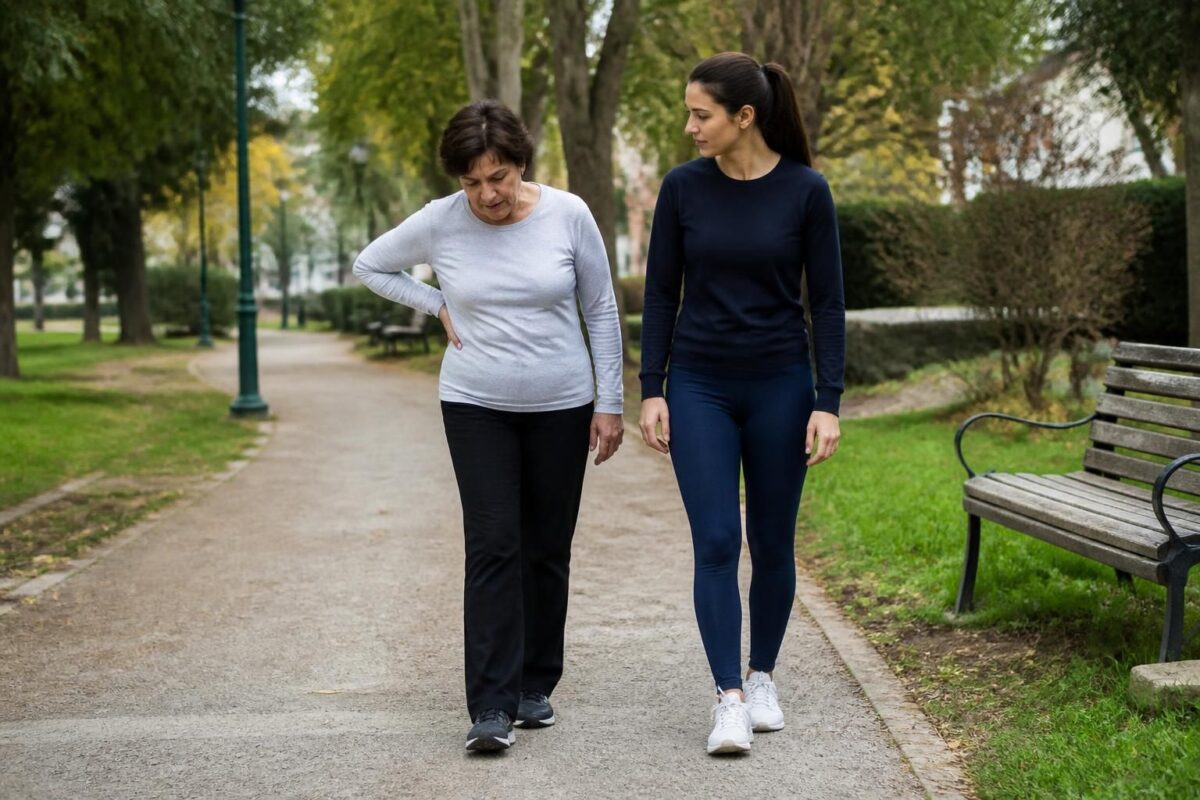
IN BRIEF
| In brief, sciatica and slow walking refer to an approach where light physical activity is used to manage sciatic pain. Definition: walking slowly allows one to stay active without overloading the back or the nerve. Benefits: maintain mobility, prevent inactivity, and promote recovery while limiting transient pain. How it works: the sciatic nerve may become more sensitive, but a gradual and broken walk, adapted to the tolerance threshold, can extend over days without worsening symptoms. In short, it is a safe and effective approach to improve endurance tolerance and support recovery. |
Sciatica and slow walking: better tolerated or not?
- Stay active: walking is generally well tolerated in the presence of sciatica and can prevent the harmful effects of inactivity.
- No overload: start with short durations and break up your walks; gradually increase the distance or time according to your tolerance.
- Monitor the signs: a slight pain that decreases during the day may be acceptable; if the pain goes lower in the leg, worsens, or persists the next day, adjust the walking.
- Alert cases: constant or disabling pain, loss of sensitivity or strength, urinary or fecal disturbances, fever, recent trauma, or pain that does not improve after conservative treatment beyond 3 months require medical consultation.
- Progression: if you were a regular walker, stay close to your usual volume; otherwise, gradually increase the distance and time to avoid further discomfort.
This article is written by a health professional and expert. It explains how sciatica and slow walking are articulated. It describes what is tolerated, what may be problematic, and how to progress safely. It is accessible and based on clinical observations and relevant scientific data.
Understanding the relationship between sciatic pain and walking
Sciatic pain can arise from several mechanisms. The sciatic nerve is mobile and can be irritated. The pain often travels down the back of the leg. Walking creates repeated movements of the pelvis and back. This can increase or decrease pain depending on the moment. Walking is not dangerous in principle. It can be well tolerated if the intensity and duration remain within your capacity.
Assessing your tolerance during slow walking
Start with a moderate duration suited to your current tolerance. Observe the reaction after the effort in the hours that follow. If the pain remains stable and mild, you can progress slowly. If the pain worsens persistently, reduce the duration and go back.
Practical tips for walking slowly safely
Stay close to your usual walking volume. Gradually increase the distance or time. Break up walking periods to avoid excessive strain. Listen to your body and adjust the pace and rhythm according to the days.
When to consult and signs of alert
There are alert signs. Pain that does not cease after a few days, loss of sensitivity, numbness, weakness in the affected leg, urinary issues, or fever should prompt a consultation. If the pain persists beyond 3 months despite an active and appropriate approach, seek medical evaluation.
Practical approaches and resources
Walking can be integrated into a comprehensive health strategy. For practical information on walking and sciatica, you can consult dedicated resources at sossciatique.com. For advice and clinical support, discover TAGMED, which offers options in Montreal and Terrebonne. You can also consult complementary resources on other reference sites such as decompressionneurovertebrale.com and sosherniediscale.com.
To support a smooth progression, here are simple principles to apply:
Break up the walk: several shorter periods spread throughout the day. Progress gradually: slowly increase the duration or distance when the pain remains stable. Listen to the body: temporarily reduce if symptoms persist or worsen.
Any questions or experiences to share? You can leave a comment or contact your health professional for an appropriate evaluation. For more general information, you can consult specialized sources and reliable online guides, prioritizing resources that clearly explain tolerance and progression without imposing forced protocols.
Medical disclaimer: The information and advice provided on this site do not replace the advice, diagnosis, or treatment of a healthcare professional. Please note that Dr. Sylvain Desforges, osteopath, is neither a doctor of medicine nor a physician, and is not a specialist in a medical specialty as defined by the Collège des médecins du Québec. Manual medicine, functional medicine, and sports medicine as described on this site exclude any treatment or medical diagnosis made by a doctor or medical specialist. Always consult your doctor for any medical questions. For more details, please read our full Legal Notice.

Quick summary: slow walking is generally well tolerated in the presence of sciatica pain and can help maintain activity without exacerbating the problem. The goal is to listen to your tolerance, break efforts into segments, and gradually adjust the duration and intensity. This article details how to start, how to progress, and what signals to monitor to walk safely, whether your pain is acute or chronic.
Understanding slow walking and sciatica pain
Sciatica pain often results from increased sensitivity of the sciatic nerve rather than major damage. Walking involves repeated movements of the pelvis and spine; these actions create moderate and progressive strain on the nerve. As long as this strain remains within your tolerance threshold, walking is not harmful and can even promote a return to activity. The important thing is to distinguish situations where the effort is bearable from those where it exceeds your current tolerance.

Sciatica and return to activity: why to progress slowly
IN BRIEF Returning to activity after sciatica involves gradually regaining movement without exacerbating pain. It helps maintain mobility while minimizing the risk of relapse. Start with walking, then alternate between walking and running for short intervals, increasing effort step by…

Sciatica and physical activity: how to avoid mistakes
IN BRIEF Sciatica is pain that follows the path of the sciatic nerve, from the lower back to the leg. Appropriate physical activity helps to stay mobile without maintaining irritation: favor gentle walking, cycling in an upright position, or swimming,…
Why slow walking can be well tolerated
For many, slow walking is a simple way to stay active without imposing excessive load on the back or nerve. Generally, if you respect a gradual progression, your nervous system adapts and your tolerance gradually increases. Even in cases of acute pain, it is rare for walking, when done cautiously, to permanently worsen symptoms. In contrast, inactivity can deteriorate overall physical condition; thus, moving remains beneficial, as long as you do not push beyond your personal threshold.
Sciatica and forced walking: risk of worsening
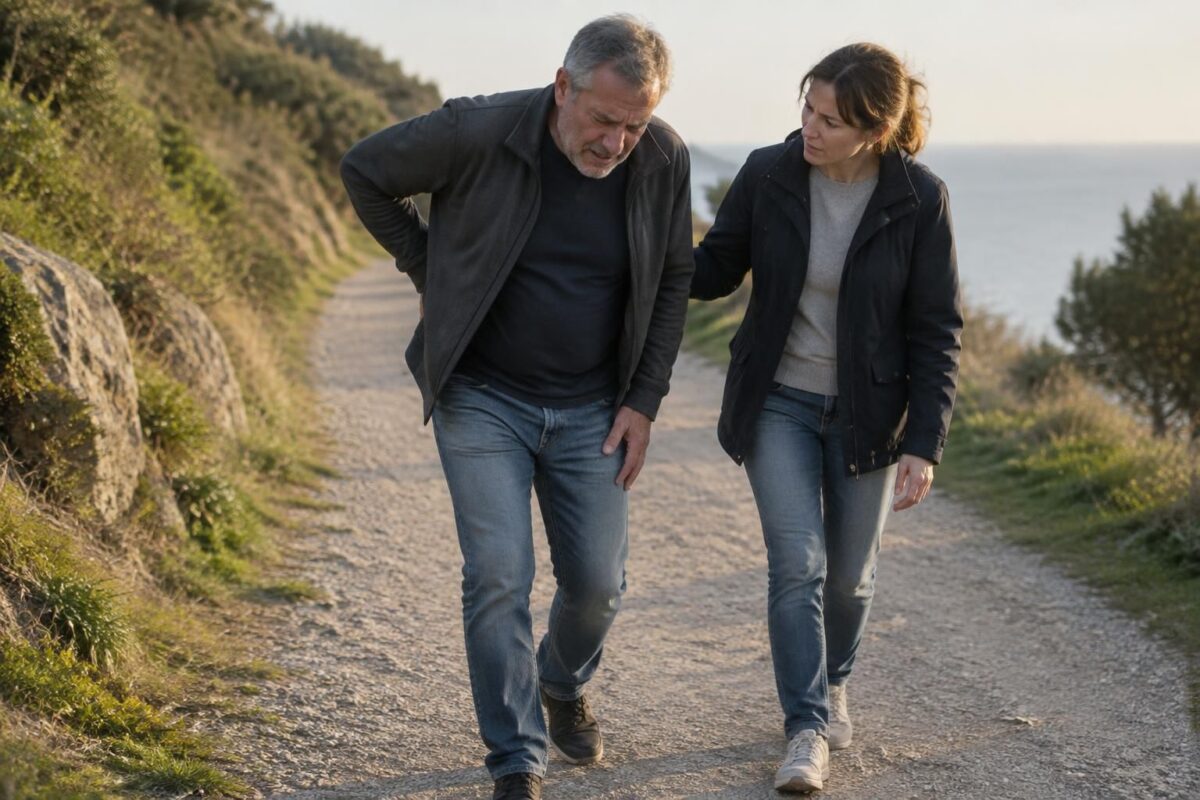
IN BRIEF Sciatica can make walking painful, but pushing yourself may worsen the symptoms. Walk for short periods, at your own pace, only if the pain remains tolerable and does not intensify over time. If you are limping, if the…

Sciatica and daily walking: how to respect tolerance
IN BRIEF Sciatica is pain related to the irritation of a nerve, which can extend from the lower back down to the leg. Walking with sciatica is often possible and helps to maintain mobility, provided you move slowly, take short…
How to start safely
Before walking: assess your tolerance
Choose a modest duration to start, for example 10 to 15 minutes, and avoid long sessions if pain increases rapidly. Set a realistic goal and prepare to break the walk into several segments throughout the day.
During the walk: stay within comfort
Adopt a comfortable pace, without increasing pain or excessive fatigue. Maintain a neutral posture and favor flat surfaces. If a step triggers discomfort, slow down, then reassess after a few more steps. The goal is to establish a regular routine without exceeding your threshold.
After walking: observation and adjustment
Note if the pain remains stable or improves after exertion. A slight temporary increase is acceptable; however, a worsening that persists the next day indicates the need to reduce duration or intensity and try again later.

Sciatica and Gradual Resumption of Walking After an Attack
IN BRIEF Sciatica is pain related to irritation or compression of the sciatic nerve. After an episode, gradually resuming walking can help maintain mobility and limit stiffness without straining. Start with short walks on flat terrain, wear comfortable shoes, and…

Sciatica and walking after sitting: why the pain increases at the start
IN BRIEF Sciatica can hurt more during the first steps after sitting for a long time: a sensitized nerve may tolerate maintained posture and the restart of movement less well. Gradually standing up, walking for a few minutes, and varying…
Progression and practical advice
Breaking up the walk and progressing step-by-step is often the best approach. For example, gradually moving from 10 to 20 then 30 minutes spread throughout the day can help the nerve adapt. If your pain remains stable and tolerable, slowly increase the duration or distance; if it becomes more troublesome, revert to a previous step and try again later. Stay overall active, as inactivity can be more harmful than a few minutes of walking.

Sciatica and difficulty walking on tiptoes
IN BRIEF The difficulties in walking on tiptoes with sciatica may indicate muscle weakness related to nerve damage. This test helps identify a deficit but is not sufficient to establish a diagnosis. If the weakness is new, worsens, or is…

Sciatica and difficulty walking on heels
IN BRIEF The difficulty in walking on heels with sciatica may be related to weakness in the muscles that lift the foot, sometimes caused by nerve irritation or compression. This sign alone does not determine the cause: have it assessed…
Warning signals and special cases
Pay attention to warning signs: very intense and constant pain, loss of sensation or strength in the leg, urinary or bowel issues, fever, recent trauma, or sciatica pain that persists and becomes debilitating beyond 3 months despite conservative treatment. In these cases, consult a doctor promptly.
| Axis | Concise response |
|---|---|
| Tolerance and pain | Slow walking is generally tolerated if the effort remains within the tolerance of the nerve and the pain is transitory. |
| Healing and evolution | No evidence that walking accelerates healing, but it prevents sedentary behavior and can support evolution. |
| Risk of worsening | Minimal risk if you adapt the duration and pace and progress cautiously. |
| Effort management | Break up the walk and gradually increase the duration to broaden tolerance. |
| Signs to monitor | Monitor whether the pain worsens or persists after exertion; reduce and consult if necessary. |
| Target audience | Suitable for most patients; requires individual adaptation. |
| Psychological impacts | Promotes energy and mood by staying active. |
| Practical support | Start with a moderate duration, observe reactions within hours and the following day, then adjust. |
Testimonials on Sciatica and slow walking: better tolerated or not?
Here are testimonials from people who have attempted slow walking facing sciatica. Some in acute phases, others in chronic pain, all seeking to know if this practice is tolerated and how to implement it without worsening the situation.
“My name is Marc, I am 42 years old and have acute sciatica that has kept me at home. At first, I was afraid that even a few steps would trigger an explosion of pain. Then I tried to walk slowly, in small portions, and I noticed that the pain decreased rapidly after each short walk. By continuing gradually, walking became a tolerated habit and even useful to prevent the pain from taking root.”
“I am Sophie, 58 years old, and my chronic sciatica bothers me daily. Slow walking has become an ally. What matters is to gradually increase the distance and time without pushing the body blindly. When I respect this progression, the periods of pain remain stable and outings become longer without experiencing lasting worsening.”
“My name is Léo, I’m 29 years old and I went from the couch to slow walking with normal hesitation. By breaking up my sessions and staying attentive to my body, I have managed to do half-hours without the sciatica flaring up violently. Today, tolerance is gradually increasing and each step encourages me to continue without unnecessary fear.”
“Marianne, 64 years old, sensitive to certain lower back pains. My sciatica is not a threat, but an increased sensitivity of the nerve. Slow walking helps me move without overloading my back: I start gently, I listen to the signals and I gradually increase the duration. The result: better tolerance and less apprehension during outings.”
“Finally, I’m Romain, 52 years old, active but cautious. I have noticed that slow walking is better tolerated when one listens to their body and breaks up efforts. Even in the long term, by respecting this principle, I see that pain does not set in permanently and that I am gradually regaining more comfort during my daily walks.”
Dr. Sylvain Desforges is a recognized practitioner in osteopathy, naturopathy, and manual medicine. His journey is marked by innovation in health, with approaches that prioritize the effectiveness and safety of patients. Founder and president of the TAGMED clinics and head of the ACMA, he has built a reputation among teams and patients for his ability to articulate science and clinical practice.
His practice also falls within the field of chronic pain, where he works to integrate advanced technologies such as spinal decompression, laser, and shockwave therapy. His mission is to offer evidence-based care to optimize the health and well-being of his patients. In his approach, each patient is considered as a whole: physiology, life context, and personal goals, in order to propose a personalized and measurable approach, without ever compromising safety.
On the subject of sciatica and slow walking, he offers a nuanced and useful perspective: walking is not synonymous with danger, even in the presence of pain. His logic rests on a notion of tolerance rather than on a rigid principle: duration and intensity can be modulated according to the tolerance threshold of the nerve and the body as a whole. He also reminds us of the warning signs that necessitate specialized medical evaluation, but in the absence of these red flags, walking remains an active tool to stay mobile and fight against inactivity.
For those who wish to engage in slow walking, Dr. Desforges offers a simple and reproducible framework: start with a moderate duration adapted to the current level, then observe the reactions in the hours that follow and the next day. If the pain remains stable, one can gradually increase, breaking the walk into several short outings throughout the day. In case of persistence or worsening of symptoms, the adjustment is immediate. This fragmented progression allows for gradually increasing the tolerance of the sciatic nerve and the back, without overloading the body.
His approach is also enriched by cutting-edge techniques: spinal decompression, laser, and shockwaves are integrated into a treatment plan that combines exercises, advice, and manual techniques. The goal is to reduce the nerve’s sensitivity and promote a wider range of tolerated movements, while monitoring safety and functional outcomes. The alliance between science and clinical practice offers concrete options to regain control over pain and daily life.
Ultimately, Dr. Desforges carries a patient-centered vision: to offer care that is evidence-based, support autonomy, and guide each patient towards a better quality of life despite chronic pain. Through his TAGMED clinics and his commitment to the ACMA, he strives to democratize access to integrated and personalized treatments, so that everyone can view slow walking as a lasting partner in managing sciatica.
Here is a clear and pragmatic summary on sciatica and slow walking. In summary, walking slowly is generally well tolerated and can help to stay active without necessarily worsening pain. The goal is to adapt the duration and effort to your current tolerance, differentiating between acute and chronic episodes, and staying attuned to your body. This approach is based on the idea that walking is not harmful by nature as long as you don’t exceed your tolerance threshold and progress step by step.
Key points to remember about slow walking and sciatica
Walking involves repeated movements of the pelvis and spine, which leads to a moderate variation in tension on the sciatic nerve. In painful contexts, the mechanical capacity of the nerve may not be altered, but its sensitivity may increase. This means that stresses usually tolerated can become uncomfortable if repeated for too long. Thus, slow walking is not dangerous in itself; it becomes problematic if the load exceeds your current tolerance.
For acute episodes, quickly leaving an uncomfortable position and starting to walk can relieve pain, but prolonged walking may not shorten healing time in all cases. However, staying active is recommended, and walking is one of the simplest and most effective ways to do so. In chronic episodes, the same logic applies: walking is generally not deleterious and can support overall pain management.
A useful concept is the individual tolerance threshold: each tissue can bear a certain stress, and this threshold may be temporarily lowered during a painful episode. If your walking exceeds this tolerance, the pain may worsen or persist. The key is to fragment efforts and progressively adjust duration and intensity.
To progress safely, it is recommended to start with a moderate duration suited to your current tolerance, then observe reactions in the hours that follow. If the pain remains stable, you can consider a slight increase, always in a progressive and measured manner. In case of persistence or worsening of symptoms, it may be wise to temporarily reduce walking and reevaluate the load.
Practical resources and additional advice on walking and sciatica, including points on climbing stairs and positions to favor or avoid, can help you establish a routine that suits your situation. You can consult dedicated guides and articles for exercise schemes, feedback from experiences, and professional opinions.
How to Adapt Slow Walking to Your Tolerance
If you are a regular walker, try to stay close to your usual volume as long as the pain allows. If you plan to increase, do so gradually so your body can adapt to the new level of activity without unnecessarily stressing the nerve.
If you are less accustomed to walking but wish to start, increase the distance or walking time in small increments. Take the time to observe how your body reacts after each outing and avoid stacking sessions that trigger more intense pain or persist the next day.
To guide your progress, consider breaking up your walking periods: several short sessions spread throughout the day may be better tolerated than one long walk. This approach helps the nerve adjust without exceeding your personal threshold.
Resources and Useful Links
To dive deeper, you can consult practical resources that address pain while sitting, difficulties with stairs, and recovery tips during a flare-up. For example, guides dedicated to sciatica and walking offer concrete advice and feedback from experiences:
Useful links and integrated natural resources:
Sciatica and Difficulty Climbing Stairs
Should You Walk or Rest during a Sciatica Flare-up?
Positions to Avoid and Those that Can Sometimes Provide Relief
Pain While Sitting and Tingling in the Foot
Walking and Sciatica: Practical Approach
Weakness in the Thigh and Potential Lumbar Cause
Sciatica and Walking: Clinical Analysis
Pain in the Hip or True Nerve Irradiation

Dr Sylvain Desforges, B.Sc., D.O., N.D., osteopath, is the founding president of TAGMED and of the ACMA association. He dedicates his practice to chronic spinal pain, low back pain and symptoms compatible with sciatica, particularly when pain radiates toward the buttock, leg, calf, foot or toes.
Through SOS Sciatique, he publishes educational content on sciatica symptoms, possible causes such as disc herniation, disc narrowing, foraminal stenosis or irritation of a lumbar nerve root, as well as non-surgical approaches that may be considered according to the evaluation. At Clinique TAGMED, care may include, depending on the case, motorized neurovertebral decompression, specific osteopathic care or precision percussion.
For an evaluation related to sciatica treatment in Montreal / Mount Royal or sciatica treatment in Terrebonne, please consult the services available at Clinique TAGMED.
Medical disclaimer
The information published on SOS Sciatique is provided for educational purposes only and does not replace a consultation, diagnosis, opinion or treatment provided by a physician or another authorized healthcare professional. The author of this article is neither a medical doctor nor a specialist in a medical specialty recognized by the Collège des médecins du Québec. The osteopathic, manual medicine or functional support approaches described on this site do not constitute medical acts and are not intended to replace medical follow-up.
Consult a physician or emergency service in cases of loss of bladder or bowel control, anesthesia in the saddle area, significant or progressive weakness in the leg or foot, fever, recent trauma, severe pain or rapid worsening of symptoms. For more details, please read our Legal Notice.


