Disc herniation and pain radiating below the knee
29/10/2026
Sciatica in Montreal: L5-S1 Herniation and Pain Towards the Foot
30/10/2026
IN BRIEF
| Sciatica is pain that radiates from the lower back to the buttock and leg. Gentle exercises can promote mobility and relieve symptoms, but their effectiveness depends on the cause: a movement suitable for piriformis irritation may worsen a herniated disc or stenosis. Choose tolerated exercises, stop if they intensify the pain, and consult a healthcare professional if symptoms persist or worsen. |
The exercises often suggested online for sciatica include the piriformis stretch in a “figure 4,” knees to the chest, cat-cow, and child’s pose. Their relevance, however, depends on the cause of symptoms: some movements may relieve, while others may exacerbate a herniated disc or stenosis. Favor gentle movements, without forcing, and stop any exercise that increases or radiates pain down the leg. In case of persistent pain, weakness, or numbness, consult a healthcare professional.
Exercises shown online may seem simple, but they are not suitable for all cases of sciatica. Pain can stem from different causes, such as irritation of a nerve root, a narrowed lumbar canal, or tension around the buttock. Therefore, before following a video or routine, one must understand the likely origin of the symptoms and avoid any movement that aggravates them. Sciatica describes pain that follows the pathway of the sciatic nerve, from the lower back to the buttock and leg. This term does not specify, on its own, which structure is involved. Similar pain may be related to various conditions, and the same movement can relieve one person while increasing symptoms for another. Articles and videos often recommend piriformis stretches, back movements, or stabilization exercises. These materials do not replace an individual assessment. A resource that presents movements for the sciatic nerve, like this guide on exercises for sciatica, can help understand the options discussed online. However, it does not determine whether these movements are appropriate for your situation. To better understand the possible origins of pain, also consult this article on the causes of sciatica and commonly suggested exercises. The presence of pain in the leg alone is not sufficient to establish a diagnosis. A herniated disc or another disc problem can irritate a nerve root. Certain positions, particularly repetitive movements or significant bending of the back, may then increase pain in some individuals. One should not attempt to self-correct a disc issue based on a video. The term disc-nerve conflict refers to a situation where a disc is associated with irritation or compression of a nerve root. To understand its meaning, you can read this explanation on the disc-nerve conflict. In the case of a diagnosed or suspected herniated disc, prolapse, or disc bulging, have your symptoms evaluated before undertaking exercises or stretches. Spinal stenosis corresponds to a narrowing of the space available for nerve structures. Symptoms may vary according to posture and walking. A movement that extends the back, sometimes shown in online routines, may not be suitable for certain individuals affected. The article on sciatica pain relieved while sitting and stenosis discusses this possible link between symptoms and posture. Pain relieved in a particular position does not confirm stenosis. Only a healthcare professional can put the symptoms in context and determine if a medical evaluation is necessary. Tension in the piriformis region or hip muscles can sometimes produce pain that resembles sciatica. Online articles then present movements such as the figure four or pigeon pose. However, pain felt during a stretch does not prove that the targeted muscle is the cause of the problem. An anecdote, such as the one presented in this article on exercises recommended to alleviate sciatica, should not be seen as a universal prescription. Symptoms, history, and tolerance to movement vary from person to person. A hamstring stretch can pull on the tissues located at the back of the thigh. In some individuals, this sensation corresponds to muscle tension. In others, it may awaken nerve pain. To distinguish these sensations, consult the article on possible nerve tension during hamstring stretching. The same principle applies to calf stretches. Pain that radiates down the leg or becomes sharp during movement warrants caution. This article explains why a calf stretch may increase symptoms. A simple rule helps to limit risks: stop the movement if it increases pain, tingling, or numbness in the leg. Do not force yourself to reach a position shown in a video. A local stretching sensation is not the same phenomenon as electric pain that radiates. A serious routine specifies its limits and does not promise to “cure” all sciatica. It should remind that the cause of symptoms matters, and a movement must be halted if it aggravates pain. You may compare advice with resources that address exercises and lower back pain, such as this article on exercises for sciatica and lower back pain, while avoiding automatically reproducing the suggested movements. Do not multiply exercises to find out which “works.” A routine should be chosen based on your condition and adapted with a professional if symptoms are persistent, intense, or accompanied by neurological signs. If you cannot find any comfortable position, this article on difficulty finding a comfortable position may help you better describe your situation during a consultation. General advice on initial steps is also available in this guide: what to do in case of sciatica. Use this information as a reference point, not as a diagnosis or personal treatment program. Consult a health professional if the pain is significant, persists, or worsens, or if it is accompanied by weakness in the leg or foot. A quick assessment is necessary if there are difficulties controlling the bladder or bowels, difficulties urinating, or numbness in the groin area. These signs may indicate a medical emergency. A consultation allows for the examination of symptoms, their evolution, and the factors that trigger them. It also helps to determine whether an exercise routine is appropriate or if further medical evaluation is necessary. Caution is especially important when a herniated disc, protrusion, spinal stenosis, or another specific condition is suspected. “Medical disclaimer: The information and advice provided on this site do not replace the opinion, diagnosis, or treatment of a health professional. Please note that Sylvain Desforges, B.Sc., D.O., N.D., doctor in osteopathy, is neither a medical doctor nor a specialist in a medical specialty as defined by the Collège des médecins du Québec. Manual medicine, functional medicine, and sports medicine as described on this site exclude any medical treatment or diagnosis made by a physician or medical specialist. Always consult your physician for any medical questions. For more details, please read our full Legal Notice.”Why online exercises are not suitable for everyone
The cause of pain changes the precautions to take
Irritation related to a disc or nerve root
Narrowed lumbar canal
Pain related to the buttock or hip muscles
Stretches may sometimes increase nerve tension
How to evaluate a routine found online
Check who the routine is intended for
Observe your tolerance, without trying to test the pain
When to seek a medical evaluation
CONTENT END
- Herniated disc: be cautious with deep forward bends and intense hamstring stretches.
- Piriformis syndrome: gentle “figure 4” stretching may help, without forcing the hip.
- Lumbar stenosis: flexion movements may be better tolerated; avoid extensions if they worsen symptoms.
- Pregnancy: adapt postures and avoid lying flat on your back if it becomes uncomfortable.
- Uncertain cause: prioritize gentle movements and stop those that increase pain in the leg.
- Persistent or aggravated symptoms: seek advice from a health professional before continuing exercises.

Exercises for sciatica found online can help restore movement, but they are not suitable for every situation. The cause of the pain—such as a herniated disc, lumbar stenosis, or piriformis irritation—affects the movements to prioritize. Start gently, observe your symptoms, and seek advice from a health professional if you have any doubts.
Before Following an Exercise Found Online
Sciatica describes pain that follows the path of the sciatic nerve, from the lower back to the buttock and sometimes the leg. It may also be accompanied by tingling or numbness. As several problems can cause these symptoms, a routine presented as “universal” may not necessarily be suitable for your case.
Before starting, verify that the advice comes from a reputable source and that it doesn’t promise a quick cure. An exercise may relieve one person and worsen the symptoms of another. Choose only two or three gentle movements at first, without trying to exactly replicate a demonstration if your body does not allow it.
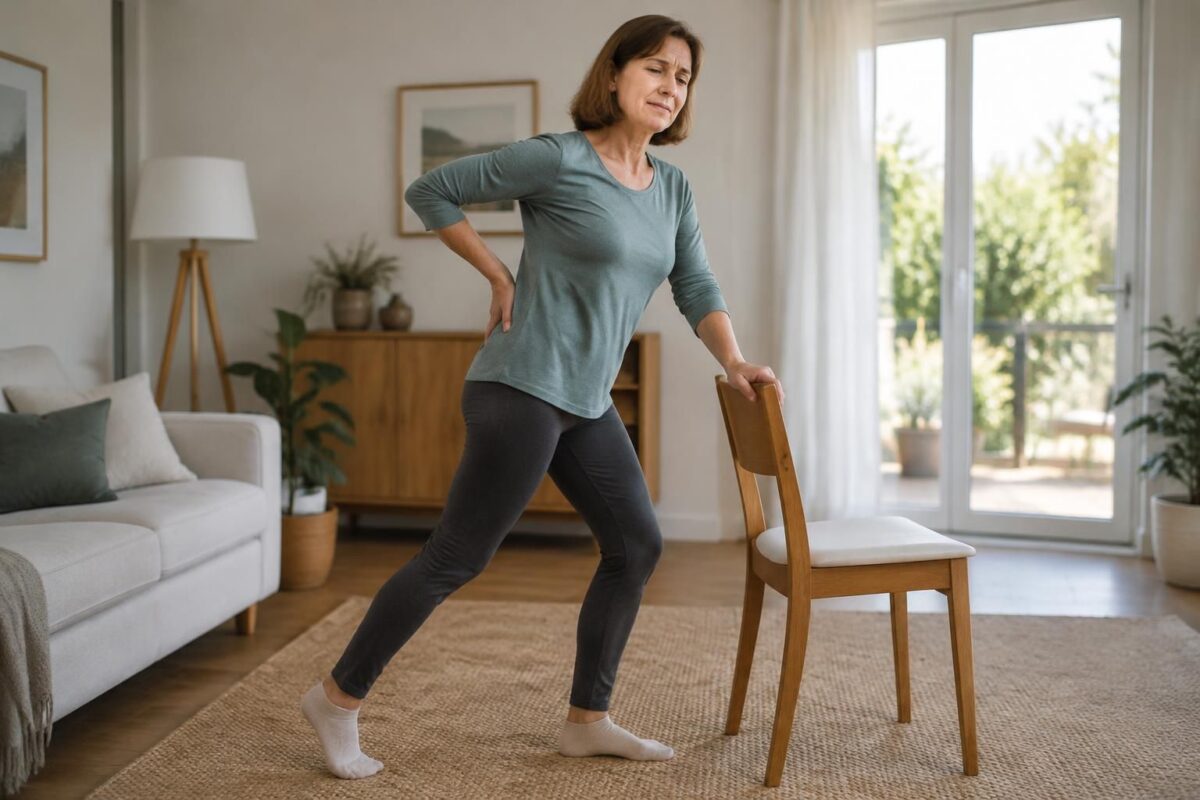
Sciatica and movement that provides temporary relief: is it enough?
IN BRIEF Sciatica is pain related to the irritation of the sciatic nerve, often felt from the lower back down to the leg. Gentle movement, walking for a few minutes, and changing positions regularly can provide temporary relief and limit…

Sciatica and generic exercises: why they are not suitable for everyone
IN BRIEF Sciatica is pain related to irritation or compression of the sciatic nerve. Generic exercises are not suitable for everyone: their effectiveness depends on the cause, intensity of symptoms, and recovery phase. Adapted movements can help maintain mobility without…
Adapting Movements to the Possible Cause
If Pain May Be Related to a Herniated Disc
If the pain worsens when sitting or bending forward, avoid deep bends and forced hamstring stretches. Gently bringing the knees towards the chest is suitable for some, but not all: stop if the pain travels further down the leg. A professional can help you determine which positions are best tolerated.
If Discomfort Seems to Come from the Buttock or Piriformis
The lying figure four stretch can be a gentle option: lying on your back, place one ankle on the opposite knee and slowly bring the thigh towards you. You should feel a stretch in the buttock, not a sharp pain radiating down the leg. The pigeon pose is more intense; save it for later, or avoid it if it triggers your symptoms.
If You Have Lumbar Stenosis or an Uncertain Diagnosis
Stenosis can make standing and walking uncomfortable, while a slightly forward-leaning position may sometimes provide relief. In this context, gentle movements like the child’s pose may be better tolerated. Conversely, back extensions, especially lifting the torso while lying on the stomach, may not be suitable. Do not attempt them without appropriate advice if stenosis has been diagnosed.

Sciatica and pain that travels lower after a stretch
IN BRIEF A sciatic pain that goes lower after a stretch may indicate that the movement is further irritating the nerve. A stretch should not intensify the pain or cause new tingling sensations: stop it and avoid forcing. Only resume…

Sciatica and aggressive stretches: possible sign of worsening
IN BRIEF Sciatica is pain that radiates from the lower back or buttock down the leg. Aggressive stretching does not necessarily relieve the nerve and can intensify the pain, especially if it moves further down to the foot or is…
Building a Progressive and Safe Routine
Prioritize Gentleness and Regularity
The cat-cow movement allows for slow back mobilization on all fours: alternate a slightly rounded back and a slightly arched back, without hitting a limit. You can also try a child’s pose or a gentle hip stretch. Maintain a comfortable position for about 20 to 30 seconds or perform a few fluid repetitions. Gradually increase the duration only if the symptoms remain stable.
Avoid jerky movements, forced twists, and intense exercises with weights during an episode. Short walks may be preferable to prolonged immobility, depending on your tolerance. If a movement causes pain to travel lower down the leg, triggers a shooting sensation, or increases numbness, stop immediately and do not resume without advice.

Sciatica and calf stretching: when the pain increases
IN SHORT A calf stretch can exacerbate sciatica if it further irritates the nerve. It should not cause pain that increases or radiates down the leg: stop the movement and do not push through. Stretches may help with some tensions,…
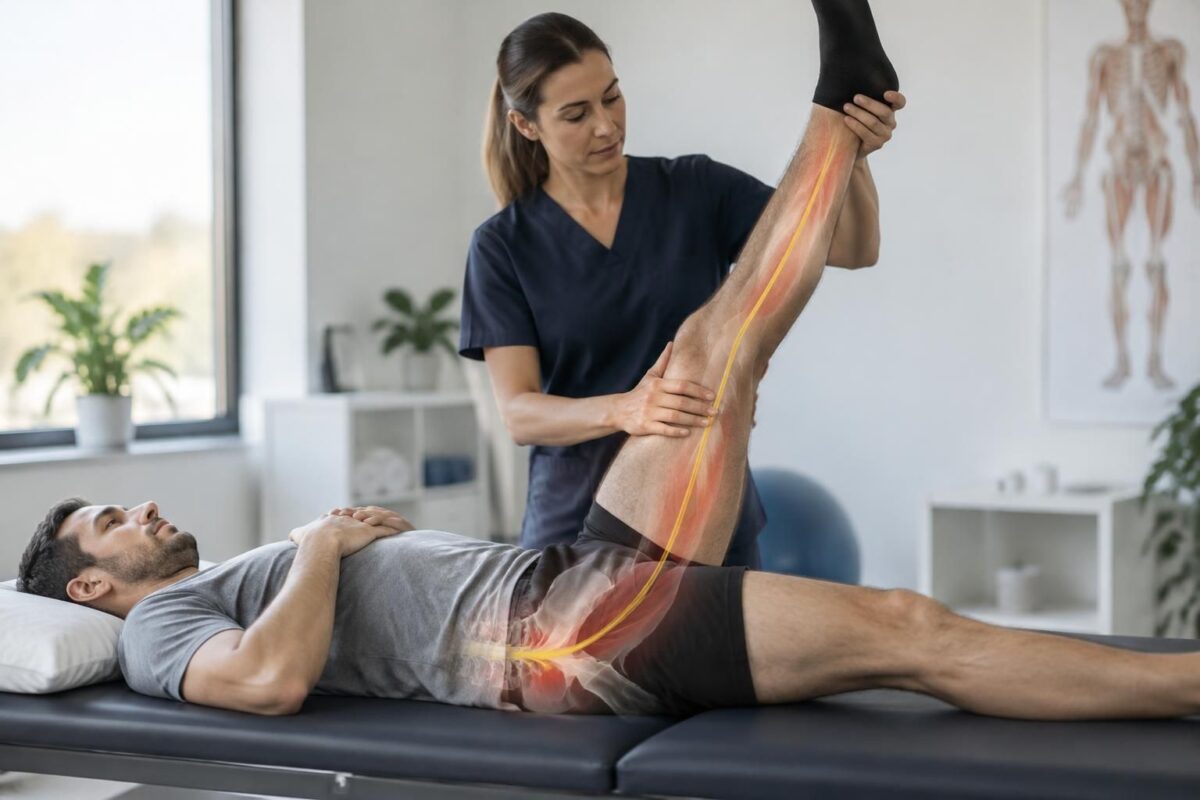
Sciatica and hamstring stretching: possible nerve tension
IN BRIEF Sciatica can make stretching the hamstrings uncomfortable, as the tension felt may come from the nerve rather than the muscle. A gentle stretch, with a straight back and without seeking maximum range, can help loosen the back of…
When to Seek Medical Advice
Consult a doctor or physiotherapist if the pain persists, worsens, or significantly limits your activities. Gradual weakness of the leg or foot requires prompt evaluation. Difficulty urinating, loss of bladder or bowel control, or numbness around the groin constitutes a medical emergency. Online exercises do not replace a diagnosis or personalized support.
| Possible cause | Caution with exercises |
|---|---|
| Herniated disc | Avoid forward bends that increase pain in the leg. |
| Piriformis syndrome | Gently try figure 4 if it doesn’t trigger symptoms. |
| Lumbar stenosis | Bending may relieve; avoid extensions that aggravate discomfort. |
| Spondylolisthesis | Avoid forced movements and seek advice from a professional. |
| Pregnancy | Choose suitable positions and seek medical advice. |
| Uncertain cause | Start with gentle movements and stop if the pain radiates further. |
| Gradual weakness or urinary issues | Consult quickly; do not attempt to treat these signs with exercises. |
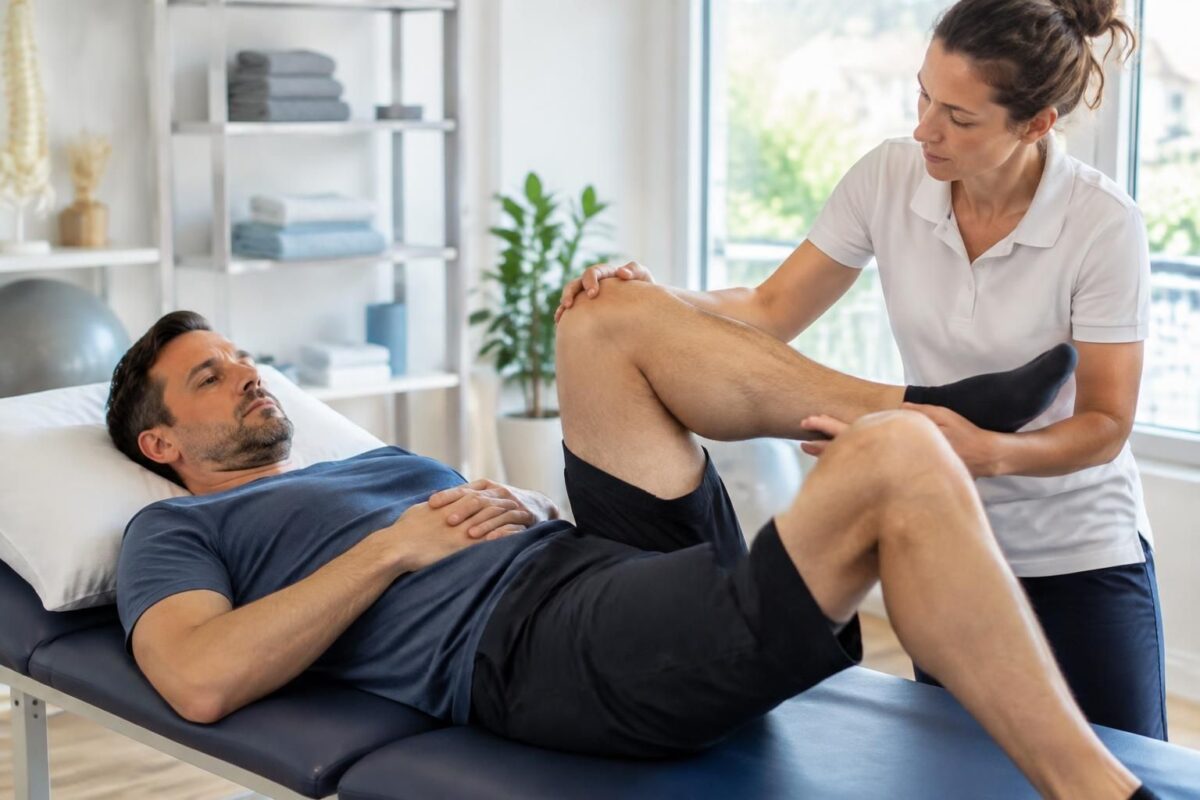
Sciatica and piriformis stretching: useful or worsening depending on the case
IN BRIEF Piriformis-related sciatica can cause deep pain in the buttock, sometimes radiating down the back of the thigh. A gentle stretch can loosen the hip and relieve discomfort if the muscle is involved, but it can worsen symptoms if…

Sciatica and popular stretches: why to stay cautious
IN BRIEF Sciatica causes pain that radiates from the lower back down the leg. Popular stretches, such as the pigeon pose or hamstring stretches, are not always suitable: pulling on an irritated nerve can worsen the symptoms. Favor gentle movements,…
Sciatica and exercises: testimonials that highlight the importance of caution
The testimonials below are reconstructed examples based on experiences frequently shared online; they are not verified quotes. They illustrate possible experiences, but do not allow for determining the cause of sciatica or the appropriate treatment.
“I started with the figure 4 stretch, lying on my back. I did it gently, without trying to pull hard, and found the position more comfortable than standing stretches. As soon as the pain moved further down my leg, I stopped.”
“The pigeon stretch seemed useful for relaxing my glute, but it was too intense in the first few days. I preferred to return to a lying version, which was easier to control. I realized that an exercise appreciated by others doesn’t necessarily suit everyone.”
“Bringing my knees to my chest and the child’s pose sometimes provided relief. However, some backward movements increased my discomfort. My health professional explained that the choice of exercises depends notably on the origin of the symptoms.”
“The cat-cow stretch helped me gradually regain movement. I reduced the range and did only a few repetitions. If a position caused sharp pain or radiated symptoms further down the leg, I returned to a neutral posture.”
These experiences show why it is important to adapt exercises to the possible cause of sciatica. Discomfort related to the piriformis, irritation associated with a herniated disc, or narrowing of the lumbar canal do not necessarily respond to the same movements. Some bends may relieve certain people, while they may exacerbate symptoms in others.
Start with gentle movements and only choose those that remain tolerable. A moderate stretching sensation is not the same as sharp pain, an electric sensation, or pain that extends further down the leg. Stop the exercise if the symptoms intensify and seek advice from a doctor or physiotherapist, especially if the pain persists or worsens.
Gradual weakness of the leg, difficulty lifting the foot, numbness in the groin area, or urinary and intestinal issues require urgent medical evaluation. Exercises do not replace a diagnosis or the opinion of a health professional.
Sylvain Desforges: sciatica and exercises found online, caution according to the cause
Sylvain Desforges is presented as an expert in osteopathy, naturopathy, and manual medicine. Throughout his career, he has devoted himself to innovation in the field of care and the management of chronic pain. He is the founding president of TAGMED clinics and the ACMA association, two organizations associated with his commitment to an approach integrating different health practices and technologies.
His work particularly focuses on supporting individuals facing persistent pain. Among the tools used in his field are spinal decompression, laser, and shockwaves. The mission assigned to him consists of providing care based on available data, with the goal of supporting the health and well-being of patients. In this regard, sciatica requires special attention: symptoms may resemble one another, but their origin and suitable exercises vary from person to person.
Sciatica refers to pain that follows the path of the sciatic nerve, from the lower back or glute to the leg. A herniated disc, narrowing of the spinal canal, or irritation of the muscles around the hip can be involved. Exercises shared online — such as the piriformis stretch in “figure 4,” the pigeon pose, knees to the chest, cat-cow, or child’s pose — may seem simple to replicate. However, their popularity does not mean they are suitable for all situations.
For example, a gentle stretch of the piriformis may be considered when the discomfort seems primarily located in the glute and hip rotation is uncomfortable. The pigeon pose places more strain on the hip and should be modified or avoided if it exacerbates symptoms. Bending movements, such as bringing knees to the chest, may be better tolerated by some people with lumbar stenosis. Conversely, significant bending may worsen pain related to a herniated disc. Back extensions are also not suitable for everyone, especially in cases of confirmed stenosis.
Dr. Desforges emphasizes careful management tailored to each patient’s situation. In this spirit, a routine found online should not replace a medical evaluation or the opinion of a health professional. It is better to start with one or two gentle movements, with a comfortable range, rather than immediately following a full series of exercises. Mild tension may be acceptable, but sharp pain, stronger radiations, or symptoms extending further down the leg are reasons to stop the movement.
Once the tolerated movements are identified, mobility and strengthening exercises can sometimes complement the routine. The glute bridge, for example, engages the hips and trunk, while the cat-cow gently mobilizes the back. Their execution should remain controlled, without forcing or attempting to “unlock” the spine. Gradual weakness, urinary or intestinal issues, or numbness in the groin area require urgent medical evaluation. Caution involves choosing exercises based on the likely cause, the body’s reactions, and the advice of a professional.
Exercises found on the Internet can help better manage a sciatica, but not all are suitable for every situation. Pain may be related to a herniated disc, irritation of the piriformis, or a narrow lumbar canal, among other causes. The right reflex is therefore to choose gentle movements according to one’s symptoms, adapt them, and stop if they worsen the pain.
Choosing movements based on the cause
The same exercise may relieve one person while bothering another. For example, flexion movements, such as pulling the knees toward the chest, are sometimes better tolerated when standing and walking worsen symptoms. Conversely, deep forward bends can be uncomfortable in cases of disc-related pain. To better understand the movements generally recommended and their precautions, consult the guides from Tout pour ma santé and Stretching Workout.
The pathway of pain can also vary depending on the affected nerve root. Discomfort that radiates down to the top of the foot, for example, is not necessarily interpreted as pain felt in another area. Explanations regarding the influence of the affected root on the pain pathway, regarding the frequent involvement of L5-S1, or regarding pain toward the top of the foot associated with L4-L5 can help understand why a generic program doesn’t always meet one’s needs.
Prioritize gentle progression
Movements like the lying figure 4, cat-cow mobilizations, or certain gentle hip stretches can be attempted if the pain remains manageable. It’s better to start with a small selection of exercises, with a comfortable range, rather than jumping into a whole routine found online. The advice from Body House Kiné, the Mon Ostéo group, and the Lille Physiotherapy Clinic also emphasizes the importance of distinguishing tolerated movements from those that trigger symptoms.
Walking may remain a feasible activity if it doesn’t intensify the pain. Some people find their symptoms improve while walking, while others need to reduce the duration or frequency of their movements. Insights to interpret this reaction are presented in this article on sciatica and pain that improves while walking. It is advisable to gradually increase activity, without trying to push beyond one’s limits.
Avoid actions that worsen symptoms
A pain that becomes sharper, radiates further down the leg, or is accompanied by new numbness is a signal to stop exercising. Forced forward bends, heavy twists, and certain strengthening exercises may be inappropriate during a flare-up. The deadlift, in particular, requires special attention: its level of risk depends on the cause of the symptoms, the load, and the technique. Additional details are available on deadlifts and sciatica.
Exercises found on the Internet cannot replace a personalized evaluation. A doctor or physiotherapist can help determine which movements to try and which to avoid, especially if the pain persists or worsens. Progressive weakness in the leg, difficulties controlling the bladder or bowels, or numbness in the groin area require a urgent medical evaluation.

Sylvain Desforges, B.Sc., D.O., N.D., docteur en ostéopathie
Dr Sylvain Desforges, B.Sc., D.O., N.D., osteopath, is the founding president of TAGMED and of the ACMA association. He dedicates his practice to chronic spinal pain, low back pain and symptoms compatible with sciatica, particularly when pain radiates toward the buttock, leg, calf, foot or toes.
Through SOS Sciatique, he publishes educational content on sciatica symptoms, possible causes such as disc herniation, disc narrowing, foraminal stenosis or irritation of a lumbar nerve root, as well as non-surgical approaches that may be considered according to the evaluation. At Clinique TAGMED, care may include, depending on the case, motorized neurovertebral decompression, specific osteopathic care or precision percussion.
For an evaluation related to sciatica treatment in Montreal / Mount Royal or sciatica treatment in Terrebonne, please consult the services available at Clinique TAGMED.
Medical disclaimer
The information published on SOS Sciatique is provided for educational purposes only and does not replace a consultation, diagnosis, opinion or treatment provided by a physician or another authorized healthcare professional. The author of this article is neither a medical doctor nor a specialist in a medical specialty recognized by the Collège des médecins du Québec. The osteopathic, manual medicine or functional support approaches described on this site do not constitute medical acts and are not intended to replace medical follow-up.
Consult a physician or emergency service in cases of loss of bladder or bowel control, anesthesia in the saddle area, significant or progressive weakness in the leg or foot, fever, recent trauma, severe pain or rapid worsening of symptoms. For more details, please read our Legal Notice.