Sciatica and pain worsened in lumbar extension
28/10/2026
IN BRIEF
| Sciatica is pain related to irritation or compression of the sciatic nerve. Generic exercises are not suitable for everyone: their effectiveness depends on the cause, intensity of symptoms, and recovery phase. Adapted movements can help maintain mobility without worsening pain, while certain bends, twists, or loads can further irritate the nerve. A healthcare professional can guide the choice of exercises. |
Generic exercises are not suitable for all sciatica cases: their effectiveness depends on the cause of irritation, the intensity of pain, and the recovery phase. Deep bends, twists, or forced stretches may worsen symptoms in some individuals, while gentle movements may be well tolerated by others. A tailored program, ideally established with a healthcare professional, helps to move gradually without imposing unnecessary constraints on the nerve.
A program found online may suit one person and worsen another’s pain. Sciatica can have multiple causes, and symptoms vary from person to person. The right choice depends on the clinical examination, painful area, muscle strength, and symptom progression. This article explains why generic exercises are not always appropriate and when to seek medical advice. Sciatica refers to pain related to irritation or compression of a nerve root involved in the sciatic nerve. Pain may start from the lower back or buttock and radiate down the leg. Some people also experience tingling, numbness, or weakness. Symptoms do not always allow for a clear identification of the cause. An injury may involve different nerve roots, such as L4, L5, or S1. The signs associated with sciatica affecting L4-L5 and the signs associated with root S1 illustrate these differences. A herniated disc, narrowing of a passage for the nerves, or muscle-related irritation can produce similar symptoms. However, the response to movement or position may vary. L5-S1 foraminal compression and the roles of the disc, foramen, and nerve roots are explained in these resources. An exercise that seems simple may stress an already sensitive area. Therefore, there is no universal series that suits all sciatica cases. Caution is particularly important in the presence of a herniated disc, protrusion, or narrowing of the canal or foramen. An online program does not know the origin of your pain, your medical history, or your neurological examination. It cannot determine if a movement increases your symptoms or if it is suitable for your situation. A routine recommended for one person may be poorly tolerated by another. The phase of the pain matters too. A recent and intense pain is managed differently than a persistent pain. General advice on exercises to avoid with sciatica or on movements sometimes poorly tolerated does not replace an individual assessment. Back bends, twists, loads, or stretches can alter the stress placed on the back and nerve tissues. Their effect depends on the cause and how they are performed. A movement should not be continued if it triggers pain radiating further down the leg, numbness, or weakness. Stretching the back of the thigh requires special attention. A feeling of tension may come from the muscle or the nerve, and these two situations are treated differently. To better understand this difference, consult the information on the possible nerve tension during hamstring stretching. Posture, range, and speed change how a movement is felt. A video or sheet cannot verify your technique or observe your reaction. The advice on movements to perform or avoid should therefore be considered general information, not as a personal program. Daily positions can also influence symptoms. General recommendations on positions that are sometimes poorly tolerated or soothing do not automatically apply to everyone. Stop a movement if the pain becomes more intense, radiates lower down the leg, or is accompanied by new tingling or numbness. Note what triggered the reaction and inform the healthcare professional evaluating you. Avoid resuming the same exercise alone to check if the pain returns. Prolonged complete rest is not an appropriate response for all situations. However, staying active does not mean following a standard program or performing movements despite worsening. A professional can help determine activities compatible with your symptoms. The page dedicated to movements likely to irritate a sciatica also provides general guidelines. A doctor or another qualified healthcare professional can examine your symptoms, strength, and sensitivity, then decide if further examinations are necessary. Report the duration of the pain, its path, movements that trigger it, and any weakness felt. The content dedicated to pain, numbness, and weakness associated with L4-L5 can help you prepare your questions. The details of the pain history and the results of the examination are more useful than a randomly chosen routine. For an overview of the limitations of standardized advice, you can also read this article on sciatica and exercises to avoid. Consult immediately if you lose control of your bladder or bowels, if you experience numbness in the perineum area, or if significant weakness appears or worsens quickly. These signs require urgent medical evaluation. Also seek medical advice if the pain persists, worsens, or severely limits your activities. A professional can confirm the course of action and guide you towards appropriate management for your situation. No. General advice does not take into account your cause, symptoms, or examination. Stop any movement that worsens pain or brings about new neurological signs. Not necessarily. The level of activity depends on your situation. An assessment helps distinguish tolerated movements from those that worsen your symptoms. However, avoid following a generic program without verifying that it suits you. No. Some stretches can increase tension on an irritated nerve. The pain or tension felt does not always indicate which tissue is affected. Seek advice before continuing a stretch that provokes symptoms in the leg. Consult if the pain worsens, persists, or is accompanied by numbness or weakness. A loss of control over the bladder or bowels, or numbness of the perineum, requires urgent attention. Medical Disclaimer: The information and advice provided on this site do not replace the opinion, diagnosis, or treatment of a healthcare professional. Please note that Sylvain Desforges, B.Sc., D.O., N.D., Doctor of osteopathy, is neither a doctor of medicine nor a physician and is not a specialist in any medical specialty as defined by the Collège des médecins du Québec. Manual medicine, functional medicine, and sports medicine as described on this site exclude any medical treatment or diagnosis made by a physician or medical specialist. Always consult your doctor for any medical questions. For more details, please read our complete Legal Notice.Sciatica describes a symptom, not a single cause
Possible causes change management
Why generic programs can worsen symptoms
They do not take into account the cause or the pain phase
Some movements are not suitable for certain symptoms
A written instruction does not correct execution
How to react to increasing pain
Do not force through radiating pain
Seek an appropriate evaluation
When to consult quickly
Frequently asked questions about sciatica and generic exercises
Is an exercise recommended for many people necessarily safe for me?
Should I avoid all movements if I have sciatica?
Are stretches always indicated?
When should I consult?
Sciatica and generic exercises: why adapt them?
- Forward bends
- May exacerbate symptoms in some individuals, especially in the acute phase.
- Stretches with straight legs
- Can pull on an already irritated nerve; the effect depends on the cause and sensitivity.
- Crunches and classic abs
- Repeated bending of the back may be poorly tolerated during a painful flare-up.
- Twists and heavy loads
- The combination of rotation and effort may worsen pain in some patients.
- Lumbar extensions
- Sometimes useful, sometimes aggravating: their relevance particularly depends on the origin of the sciatica.
- Same program for everyone
- An exercise suited for one person may irritate the symptoms of another; prioritize professional advice.

Sciatica does not manifest the same way in everyone: its origin, the intensity of pain, and the movements that trigger it vary. That is why a generic exercise program may be ineffective or even increase symptoms. Here’s how to adapt activity, what movements to monitor, and when to seek advice from a healthcare professional.

Sciatica and pain that travels lower after a stretch
IN BRIEF A sciatic pain that goes lower after a stretch may indicate that the movement is further irritating the nerve. A stretch should not intensify the pain or cause new tingling sensations: stop it and avoid forcing. Only resume…

Sciatica and aggressive stretches: possible sign of worsening
IN BRIEF Sciatica is pain that radiates from the lower back or buttock down the leg. Aggressive stretching does not necessarily relieve the nerve and can intensify the pain, especially if it moves further down to the foot or is…
Why an exercise suited for one person may not be right for you
Sciatica refers to pain related to irritation of a nerve root or the sciatic nerve. A herniated disc, narrowing of the lumbar canal, or muscle irritation in the buttock may be involved. These situations do not necessarily respond similarly to movements.
The position that alleviates one person’s pain may therefore exacerbate another’s symptoms. For example, some people poorly tolerate bent-over positions, while others feel more discomfort when standing for long periods or arching their lower back. An exercise presented online as “ideal for sciatica” does not always account for these differences.

Sciatica and calf stretching: when the pain increases
IN SHORT A calf stretch can exacerbate sciatica if it further irritates the nerve. It should not cause pain that increases or radiates down the leg: stop the movement and do not push through. Stretches may help with some tensions,…
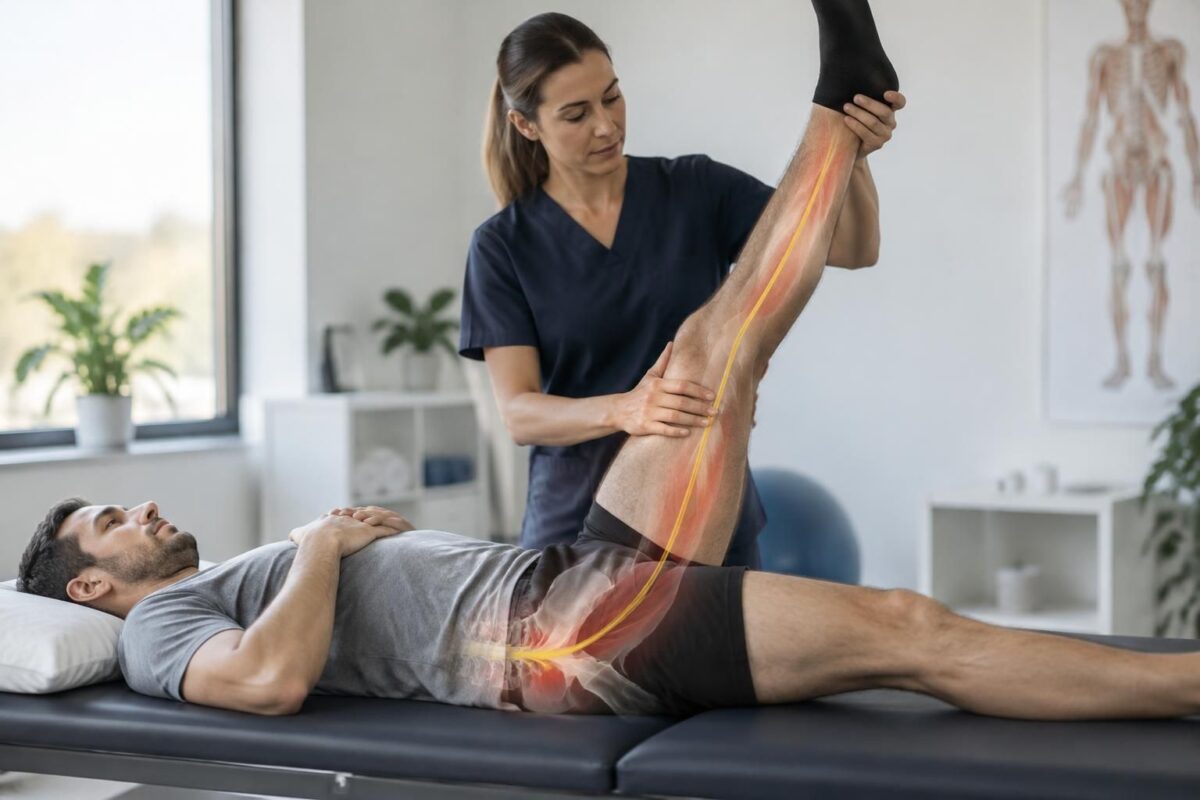
Sciatica and hamstring stretching: possible nerve tension
IN BRIEF Sciatica can make stretching the hamstrings uncomfortable, as the tension felt may come from the nerve rather than the muscle. A gentle stretch, with a straight back and without seeking maximum range, can help loosen the back of…
Movements to modulate according to your symptoms
Intense bends and stretches
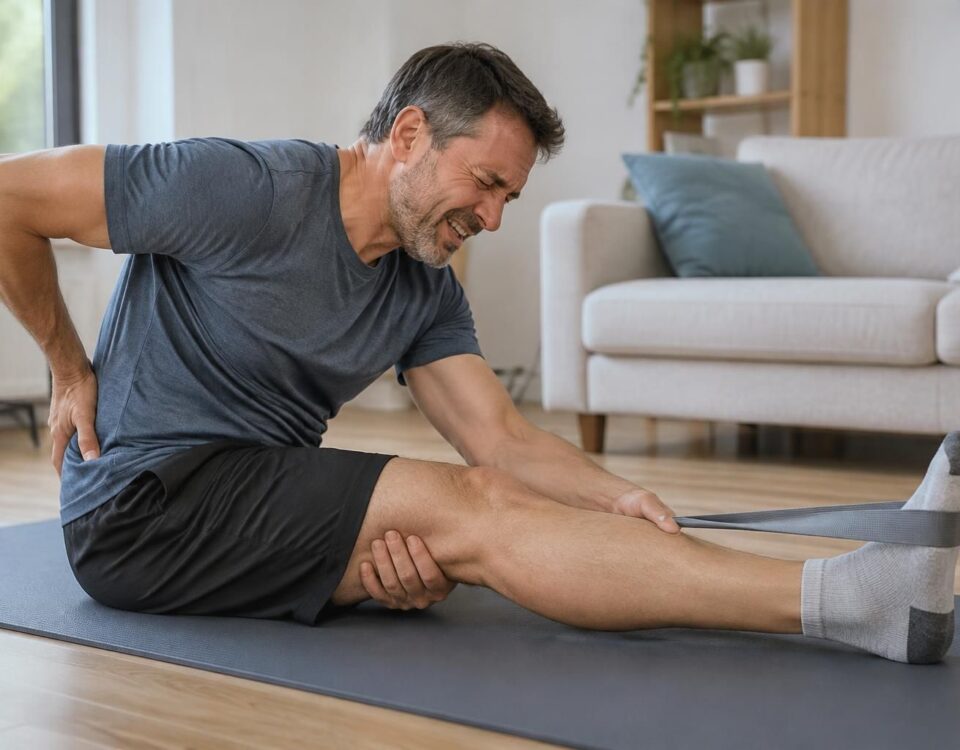
Bending with straight legs to touch your toes or strongly stretching the back of the thigh can stress nerve tissues. If pain travels further down the leg or if tingling occurs, stop the movement. This does not mean that all stretching is forbidden, but it should be chosen and dosed according to your situation.
Twists, weights, and classic abs
Rapid trunk rotations, lifting heavy weights, and repeated crunch-type abs may be poorly tolerated, especially during a painful flare-up. Avoid pushing through pain that radiates. As symptoms diminish, these activities can sometimes be gradually reintroduced with proper technique and, if necessary, with the support of a professional.
Extensions and planking
Extension exercises are not suitable for everyone either. An accentuated arch may relieve some people but exacerbate symptoms in others, particularly depending on the cause of compression. Similarly, a plank performed with a sagging back may create unnecessary strain. The quality of the movement matters more than the number of repetitions.
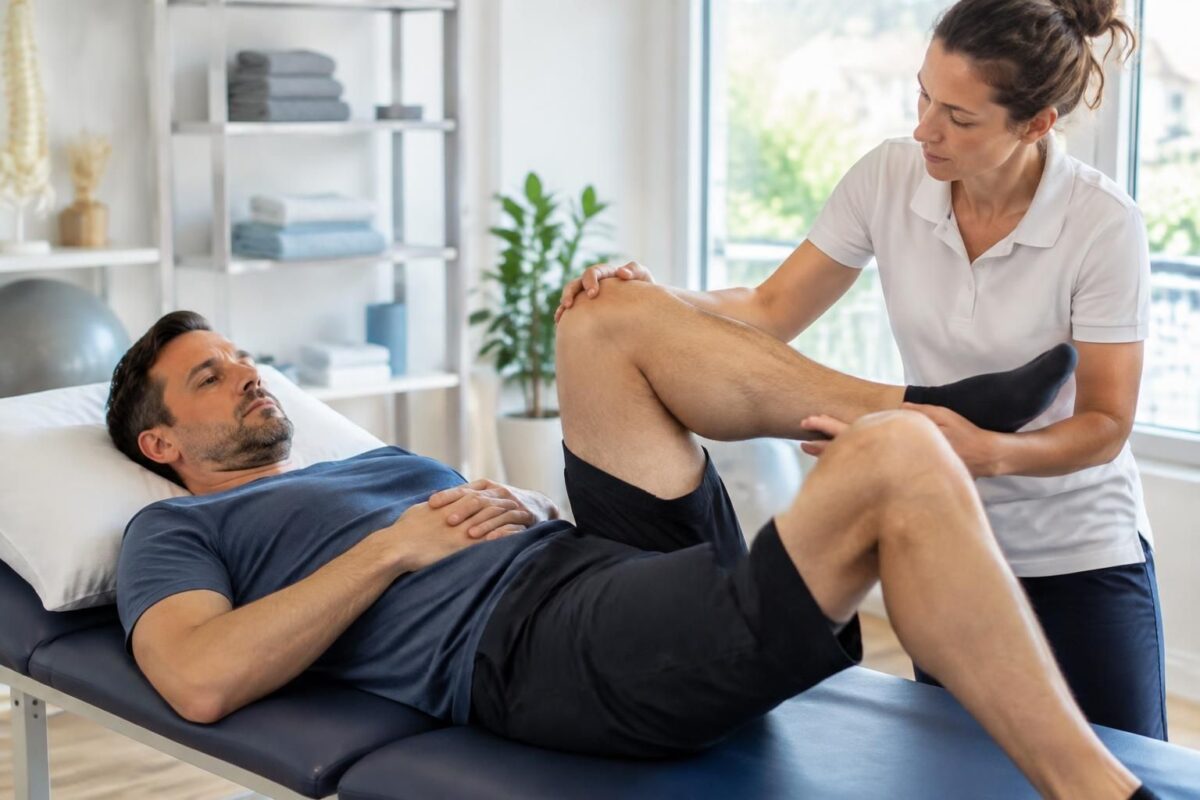
Sciatica and piriformis stretching: useful or worsening depending on the case
IN BRIEF Piriformis-related sciatica can cause deep pain in the buttock, sometimes radiating down the back of the thigh. A gentle stretch can loosen the hip and relieve discomfort if the muscle is involved, but it can worsen symptoms if…

Sciatica and popular stretches: why to stay cautious
IN BRIEF Sciatica causes pain that radiates from the lower back down the leg. Popular stretches, such as the pigeon pose or hamstring stretches, are not always suitable: pulling on an irritated nerve can worsen the symptoms. Favor gentle movements,…
Prioritize a gradual and individualized approach
Prolonged complete rest is generally not desirable. As long as it remains tolerable, gentle activity, such as short walks on flat ground, helps maintain mobility. Start modestly and increase effort gradually. If an activity significantly intensifies pain or causes it to radiate further down the leg, reduce it and seek advice.
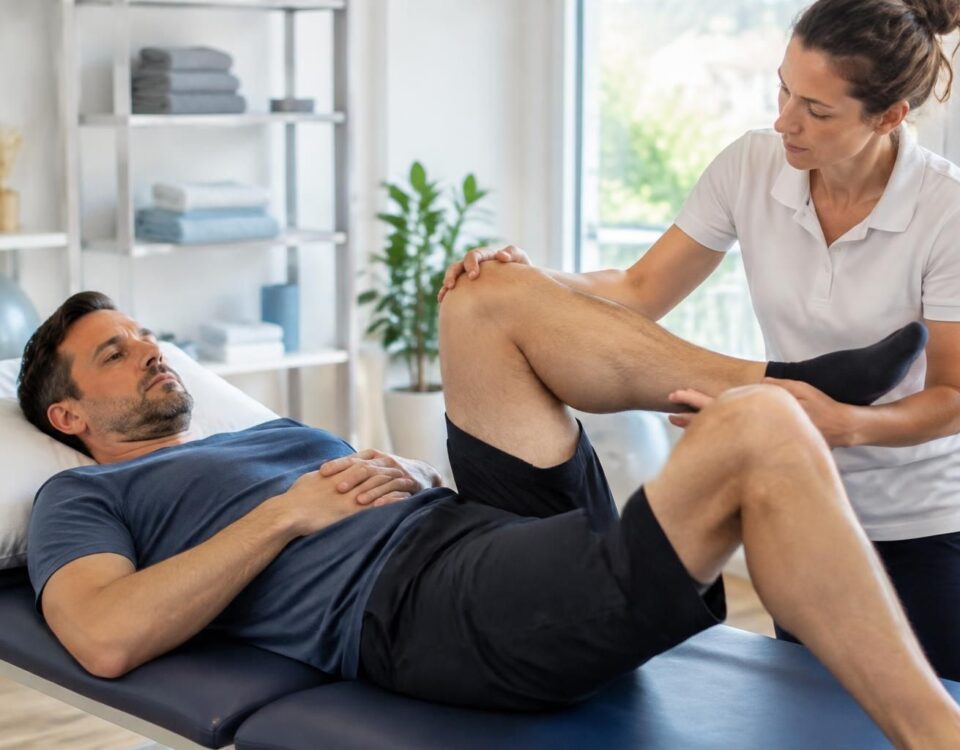
A doctor or physiotherapist can assess your symptoms, identify better-tolerated movements, and suggest an appropriate progression. This precaution is particularly useful before resuming running, strength training, or an exercise program found online. Do not confuse mild discomfort with neurological deterioration: the onset or increase of numbness and weakness deserves special attention.

Sciatica and Pilates: movements to adapt
IN SHORT Sciatica causes pain that can radiate from the lower back down to the leg. The Pilates Reformer can promote a gradual return to movement and strengthen core control, provided that the movements, range, and resistance are adapted. Favor…

Sciatica and core stability: variable tolerance depending on symptoms
IN BRIEF Core strengthening in case of sciatica consists of progressively strengthening the trunk muscles. Its tolerance varies depending on pain and symptoms: suitable without worsening the pain, it can support mobility and the resumption of activities, but does not,…
When to consult without delay
Quickly seek medical advice if the pain persists, worsens, or significantly limits your activities. Consult immediately if you have difficulty controlling your bladder or bowels, numbness in the area between your legs, or significant and progressive weakness in one leg. These signs require immediate evaluation.
| Generic Exercise | Why to Adapt in Case of Sciatica |
|---|---|
| Forward Bends | May exacerbate symptoms in some people. |
| Stretches with Straight Legs | May further irritate the nerve if it puts it under tension. |
| Crunches and Sit-ups | The movement may strain the lower back in a poorly tolerated way. |
| Quick Twists of the Torso | Their effect depends on the pain and the cause of sciatica. |
| Deep Squats or Heavy Loads | The effort may exceed current tolerance. |
| Back Extensions | They are not suitable for all causes of sciatica. |
| Online Program Without Support | It does not always account for symptoms or their progression. |
| Any Exercise That Increases Pain Radiating Down the Leg | To be discontinued and evaluated by a healthcare professional. |
Note: the testimonials below are fictitious examples, inspired by possible situations. They do not replace medical advice: the cause of sciatica and the response to movements vary from person to person.
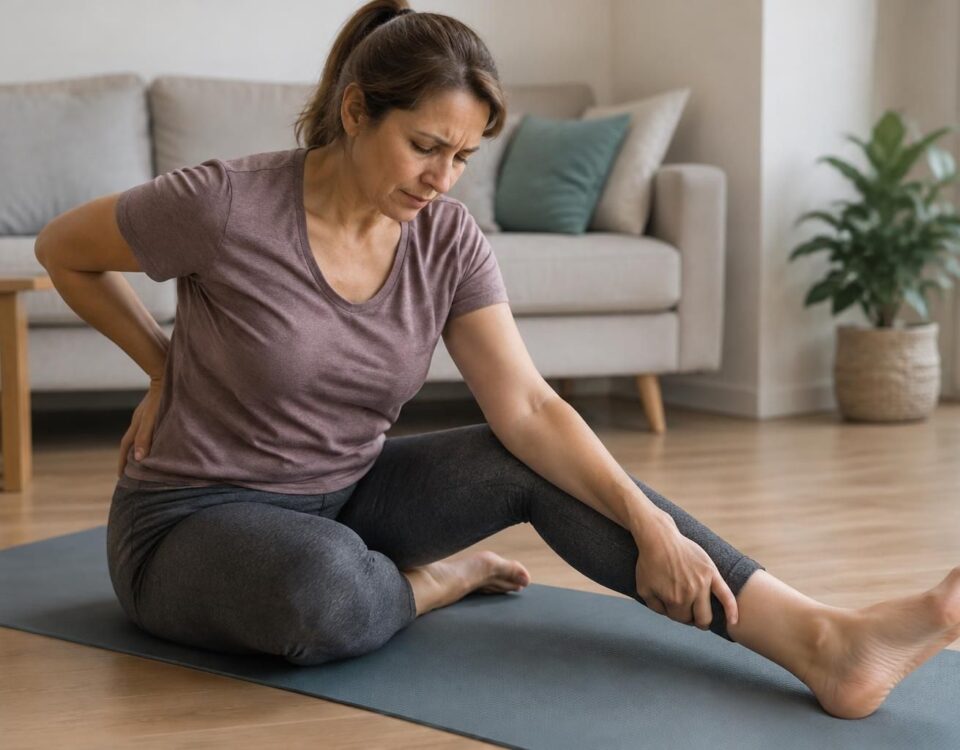
Claire, pain worsened when bending: “I was following a video that advised touching my toes to stretch the back of my legs. Each time I tried, the pain went further down my leg. My physiotherapist explained that, in my case, this movement put the nerve under tension. We adapted the exercises instead of pushing through.”
Marc, discomfort increased in arched position: “I thought that back extensions were necessarily beneficial, so I did several cobra-type poses. But my pain worsened when I remained arched. The professional who assessed me took my symptoms into account and suggested a different progression.”
Nadia, pain mostly in the buttock: “The exercises I found online did not match what I was feeling. Some hip stretches hurt me more, especially after sitting for a long time. The assessment helped distinguish tolerated movements from those that further irritated my painful area.”
Julien, too quick return to sports: “As soon as the crisis seemed to lessen, I resumed running and strengthening exercises as before. The impacts woke the pain. I understood that a general program does not necessarily account for the recovery phase, technique, or load that one can handle.”
Sophie, poorly tolerated abdominal exercises: “Crunches were presented as a good way to strengthen the back and abdomen. However, they triggered my symptoms. With my physiotherapist, I learned to prioritize gentler, more controlled movements without trying to push through the pain.”
These experiences illustrate why an exercise is not automatically suitable simply because it is popular or presented as effective against sciatica. Tolerance depends particularly on the source of the symptoms, their intensity, body position, and how the movement is executed.
If pain increases, radiates further down the leg, or is accompanied by tingling or numbness, stop the exercise and seek advice from a healthcare professional. Progressive weakness, loss of bladder or bowel control, or numbness in the genital area require urgent medical evaluation.
Sylvain Desforges: An Individualized Approach to Sciatica and Exercises
Sylvain Desforges is a professional specializing in osteopathy, naturopathy, and manual medicine. He is the founding president of TAGMED clinics and the ACMA association. His background is dedicated to innovation in health and supporting individuals living with chronic pain. In this context, sciatica illustrates well why identical exercise advice for everyone may not necessarily suit each patient.
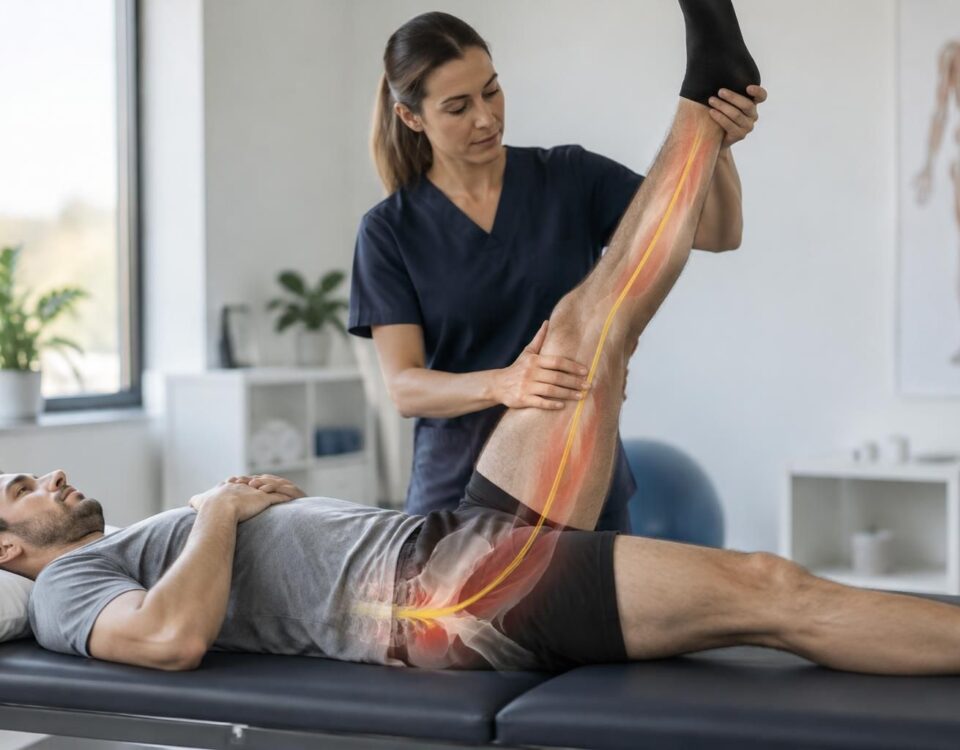
The term sciatica generally describes pain related to irritation or compression of a nerve root in the lower back. It can radiate into the buttock and leg, sometimes down to the foot, and may be accompanied by tingling, numbness, or weakness. However, this picture does not signify a single cause. A herniated disc, narrowing of the lumbar canal, or irritation of structures located in the buttock region can, among other causes, produce similar symptoms. Management must therefore take into account their probable origin, intensity, and evolution.
This is why a program of exercises found online or recommended in general may be poorly suited. A forward bending movement, a trunk rotation, or an intense stretch may be tolerated by one person but exacerbate symptoms in another. The reaction depends particularly on the cause of the pain, the stage of the episode, mobility, physical condition, and health history. Thus, an exercise presented as beneficial is not automatically appropriate in all situations.
Forward bending exercises, classic crunches, quick twists, and lifting heavy loads deserve particular attention when the pain is sharp or radiates down the leg. They may increase stress on the lower back or further strain an already irritated nerve. Similarly, stretching the back thigh muscles is not always a solution: if it strongly pulls on the nerve pathway, it can intensify burning or shooting sensations. It is better to avoid pushing through radiating pain.
Dr. Desforges’ professional approach aims to provide care based on available data and tailored to individual needs. His expertise focuses on chronic pain management and the integration of technologies such as spinal decompression, laser therapy, and shockwave therapy. These modalities do not replace a clinical evaluation: the choice of treatment depends on the individual’s situation and is a decision made with a healthcare professional.
For some people, gentle and progressive activity, such as short walks, can help maintain mobility. For others, the professional may initially prioritize adapted movements, a temporary modification of certain activities, or targeted stabilization work. Progression should be individualized: an exercise should be reduced or discontinued if it causes a marked aggravation, particularly if pain radiates further down the leg, numbness increases, or new weakness develops.
An assessment helps to distinguish potentially beneficial movements from those that may exacerbate symptoms. In case of persistent pain, worsening, or uncertainty about what to do, it is advisable to seek advice from a professional. Progressive weakness, loss of sensation in the genital area, or issues with bladder or bowel control require urgent medical attention.
The online exercises proposed may seem universal, but sciatica does not always have the same origin or evolution. A movement tolerated by one person may exacerbate the symptoms of another: the choice of exercises must consider the probable cause, the phase of pain, the individual’s capabilities, and the body’s response. This is why a personalized, progressive program, and if necessary, supervised by a professional, is preferable to a generic routine.
Why generic exercises are not suitable for everyone
The term “sciatica” describes symptoms, not a single cause. Pain that radiates down the leg may be related, among other things, to irritation of a nerve root, a disc-root conflict, or other lower back issues. It is therefore useful to distinguish radicular pain from referred pain, as explained in this point on pain felt in the leg. To understand what a disc-root conflict means, also refer to this explanation on the subject.
The direction of movement also matters. Some people feel better leaning, while others experience increased symptoms in that position. Relief in flexion may warrant an assessment to check for stenosis, without being sufficient to establish a diagnosis: this reference on pain relieved by leaning helps understand why a guideline applicable to some may not be for all.
Lists of “exercises to do” or “to avoid” should therefore be interpreted with caution. Repeated flexions, quick twists, heavy loads, or intense stretches may be poorly tolerated during a painful period, but their effect depends on the individual situation. Resources such as advice from the Mollyflex blog, the Lille physiotherapy practice, and Mon Ostéo Groupe can provide insights, but do not replace an evaluation suitable for your symptoms.
Popular stretches are not automatically beneficial: if they replicate or exacerbate pain radiating down the leg, it is better to stop the movement and seek advice. Caution is particularly important with stretches that strongly pull on the back of the thigh or the nerve. To explore this nuance further, read these tips on common stretches and precautions to take. Difficulty in finding a comfortable position may also warrant adapting the activity and seeking advice, as highlighted in this guide on difficult positions to tolerate.
Adapting activity to symptoms and their evolution
A program should evolve with the individual. When pain is acute, the goal may be to maintain gentle mobility without straining. As improvement occurs, strengthening and resuming activities can be gradually introduced. In cases of persistent sciatica, exercises should also be adjusted to daily capabilities and responses. These guidelines are discussed in this article on chronic sciatica and the choice of exercises.
Weight training is not necessarily excluded, but the loads, amplitudes, posture, and progression must be chosen carefully. A standardized session may overlook these parameters and push individuals to continue despite worsening symptoms. Before resuming or modifying a workout, consult recommendations dedicated to weight training in case of sciatica and if pain persists or intensifies, have your situation evaluated by a healthcare professional.
In practice, pay attention to your body’s response: an exercise should not cause a marked or lasting increase in pain, nor exacerbate tingling, numbness, or weakness. Stop the movement if it aggravates symptoms and seek medical advice to determine appropriate progression. Rapidly worsening weakness, numbness in the perineum, or loss of bladder or bowel control requires urgent medical evaluation.

Sylvain Desforges, B.Sc., D.O., N.D., docteur en ostéopathie
Dr Sylvain Desforges, B.Sc., D.O., N.D., osteopath, is the founding president of TAGMED and of the ACMA association. He dedicates his practice to chronic spinal pain, low back pain and symptoms compatible with sciatica, particularly when pain radiates toward the buttock, leg, calf, foot or toes.
Through SOS Sciatique, he publishes educational content on sciatica symptoms, possible causes such as disc herniation, disc narrowing, foraminal stenosis or irritation of a lumbar nerve root, as well as non-surgical approaches that may be considered according to the evaluation. At Clinique TAGMED, care may include, depending on the case, motorized neurovertebral decompression, specific osteopathic care or precision percussion.
For an evaluation related to sciatica treatment in Montreal / Mount Royal or sciatica treatment in Terrebonne, please consult the services available at Clinique TAGMED.
Medical disclaimer
The information published on SOS Sciatique is provided for educational purposes only and does not replace a consultation, diagnosis, opinion or treatment provided by a physician or another authorized healthcare professional. The author of this article is neither a medical doctor nor a specialist in a medical specialty recognized by the Collège des médecins du Québec. The osteopathic, manual medicine or functional support approaches described on this site do not constitute medical acts and are not intended to replace medical follow-up.
Consult a physician or emergency service in cases of loss of bladder or bowel control, anesthesia in the saddle area, significant or progressive weakness in the leg or foot, fever, recent trauma, severe pain or rapid worsening of symptoms. For more details, please read our Legal Notice.