Intervertebral disc protrusion and pain in the big toe
30/10/2026
IN BRIEF
| Sciatica is pain related to the irritation of the sciatic nerve, often felt from the lower back down to the leg. Gentle movement, walking for a few minutes, and changing positions regularly can provide temporary relief and limit stiffness, without necessarily addressing the cause. Choose movements that do not exacerbate the pain radiating into the leg and consult quickly if there is weakness, numbness in the perineum, or urinary or bowel problems. |
Gentle movement can temporarily relieve sciatica and limit stiffness: favor short walks and change positions regularly, without straining. But this is not always enough to address the cause. Avoid movements that trigger sharp pain in the leg and consult if symptoms persist or worsen.
A movement or position can temporarily reduce the pain of sciatica, but this relief does not always mean the problem is resolved. Staying gently active, avoiding gestures that accentuate the pain, and recognizing warning signs are useful measures. The pain that travels down the leg can have several causes: a medical examination helps to choose the appropriate course of action. Sciatica pain arises when a nerve or nerve root is irritated. A position can momentarily reduce pressure or tension in the lower back and buttock. Changing posture can also relax contracted muscles. The pain then decreases, sometimes for a few minutes or hours. This respite does not confirm the cause of the pain and does not prove that the nerve is no longer irritated. Pain that returns after movement should therefore be monitored, especially if it intensifies or is accompanied by tingling, numbness, or weakness. The pain may follow a specific nerve pathway or be referred pain coming from muscles or joints. To better understand this difference, consult the article on radicular pain and referred pain. No, not alone. A movement that relieves is a practical clue for managing symptoms, but it does not replace the evaluation of their cause. Most episodes improve gradually. However, persistent pain, worsening, or neurological signs require professional advice. It is generally better to maintain gentle activity rather than staying in bed for long periods. You can change positions regularly and walk short distances if it remains tolerable. If an activity causes sharp pain that travels further down the leg, stop it and seek advice. The general recommendations from Health Insurance on sciatica and situations requiring consultation can also help guide you. Additional information on walking is available in this article on walking in case of sciatica. For exercises, consult the information cautiously: a movement suitable for one person may worsen symptoms for another, especially in the presence of a herniated disc. The page on exercises associated with sciatica does not replace an individual evaluation. There is no one position that suits everyone. Keep the positions that reduce your pain and change if discomfort increases. Lying on your back, you can place your legs on a cushion or chair to relieve the lower back. On your side, a cushion between the knees can make the posture more comfortable. If you walk, start with a short distance on flat ground. You can repeat this walk during the day if the pain returns to its usual level after exertion. Avoid forcing a movement in the hope of “unblocking” the nerve. The article on rapid sciatica relief without exercise also discusses comfort options, but no method guarantees lasting relief in a few seconds. A change of position in bed may sometimes trigger pain. In this case, move slowly and avoid sudden twists. To learn more, consult the advice on sciatica pain when turning in bed. Reduce or stop movement if it triggers sharp pain, significantly increases pain in the leg, or causes weakness. Temporary relief does not justify continuing an activity that subsequently worsens the symptoms. Difficulty lifting the foot or standing on tiptoe can indicate motor impairment. Consult quickly if weakness appears or progresses. These articles describe difficulty lifting the foot and difficulty going on tiptoe. Pain that travels down to the foot can also accompany nerve irritation related to a herniated disc, but the pain pathway alone is not enough to establish a diagnosis. To better understand this situation, read the information on L5-S1 herniation and pain towards the foot. Heat or cold can provide temporary relief. Some people prefer heat to relax muscles; others find cold more pleasant when the area is very sensitive. Apply a heat source or a cold pack wrapped in a cloth for a short period. Do not place it directly on the skin and do not fall asleep with it. You can test which option brings you the most comfort, without considering it as a treatment for the cause. A guide on measures to take in case of sciatica presents other gestures to discuss with a healthcare professional. Consult urgently if you lose control of the bladder or bowels, if you have a loss of sensation in the perineum, or if significant weakness appears in the leg or foot. A fever associated with the pain, very intense pain that does not subside, or rapid worsening also requires medical evaluation. Outside of emergencies, make an appointment if the pain remains strong, returns often, or limits your activities despite prudent measures. The professional can assess your strength, sensitivity, and the movements that trigger pain. They will determine if further examinations or treatments are necessary. You can maintain a gentle movement if it improves comfort without causing a clear worsening afterwards. Stop it if the pain becomes sharp, travels further down the leg, or is accompanied by weakness. No. Changing position may momentarily relieve pressure or tension around the irritated area. It does not confirm that the cause has disappeared. Strict and prolonged rest can lead to stiffness. If your condition allows, maintain gentle activity and adapt it to your symptoms. Seek medical advice if pain severely limits your mobility or worsens. Medical disclaimer: The information and advice provided on this site do not replace the opinion, diagnosis, or treatment of a healthcare professional. Please note that Sylvain Desforges, B.Sc., D.O., N.D., Doctor of osteopathy, is neither a medical doctor nor a physician, and is not specialized in a medical specialty as defined by the Collège des médecins du Québec. Manual medicine, functional medicine, and sports medicine as described on this site exclude any treatment or medical diagnosis performed by a doctor or specialist. Always consult your physician for any medical questions. For more details, please read our complete Legal Notice.Why can movement relieve sciatica?
Is temporary relief enough?
What movements and positions to try without straining?
When to stop movement?
Heat, cold, and other comfort measures
When to consult urgently?
Frequently asked questions
If a movement relieves, can I keep doing it?
Does pain that disappears when changing position mean sciatica is cured?
Should I stay at rest until the pain goes away?
Movement can relieve
- Walk gently and change positions regularly.
- Keep movements that soothe or do not aggravate the pain permanently.
- A lying position, with legs elevated, can also relax the lower back.
But relief is not enough
- It can be temporary: gradually resume activity.
- Avoid movements that trigger sharp pain in the leg and prolonged strict rest.
- Consult quickly in case of leg weakness, urinary problems, or loss of sensation in the perineum.

Walking or changing position can temporarily relieve sciatica, but it is not always enough to address its cause or prevent recurrences. Gentle movement helps maintain mobility and avoid stiffness. The goal is to stay active without overexerting, observing how your pain reacts and consulting if it persists or is accompanied by concerning signs.
Why can movement relieve sciatica?
During sciatica, pain starts from the lower back or the buttock and may radiate down the leg. Depending on its origin, it may be related to irritation of a nerve root near the spine, or to muscle tension in the buttock. Staying still for long periods generally does not make the problem go away and can make the back stiffer, while small movements maintain mobility.
Gentle walking, regular position changes, and continuing daily activities within tolerable limits can bring about improvement. However, this relief is sometimes temporary: movement alone does not precisely indicate what irritates the nerve nor guarantees that the pain will not return.

Sciatica and exercises found on the Internet: caution depending on the cause
IN BRIEF Sciatica is pain that radiates from the lower back to the buttock and leg. Gentle exercises can promote mobility and relieve symptoms, but their effectiveness depends on the cause: a movement suitable for piriformis irritation may worsen a…

Sciatica and generic exercises: why they are not suitable for everyone
IN BRIEF Sciatica is pain related to irritation or compression of the sciatic nerve. Generic exercises are not suitable for everyone: their effectiveness depends on the cause, intensity of symptoms, and recovery phase. Adapted movements can help maintain mobility without…
How to move without worsening the pain?
Prefer gentle activity
Start with short walks on flat ground, several times a day if it suits you. Adjust the duration to your condition: better a few tolerated movements than a long walk that triggers sharp pain. Change positions regularly if you are sitting for long periods and avoid staying in bed for several days.
A slight discomfort during activity may be acceptable if it returns to its usual level afterward. On the other hand, stop or modify the movement if it causes intense pain, marked shoots down the leg, or persistent worsening. Avoid heavy loads, sudden movements, and exercises that clearly reproduce your symptoms.
Test resting positions
You can try lying on your back with your calves on a chair, so that you flex your hips and knees. Another option is to lie on your less painful side, with a cushion between your knees. These positions are not suitable for everyone: keep those that decrease your pain and change if they increase it.
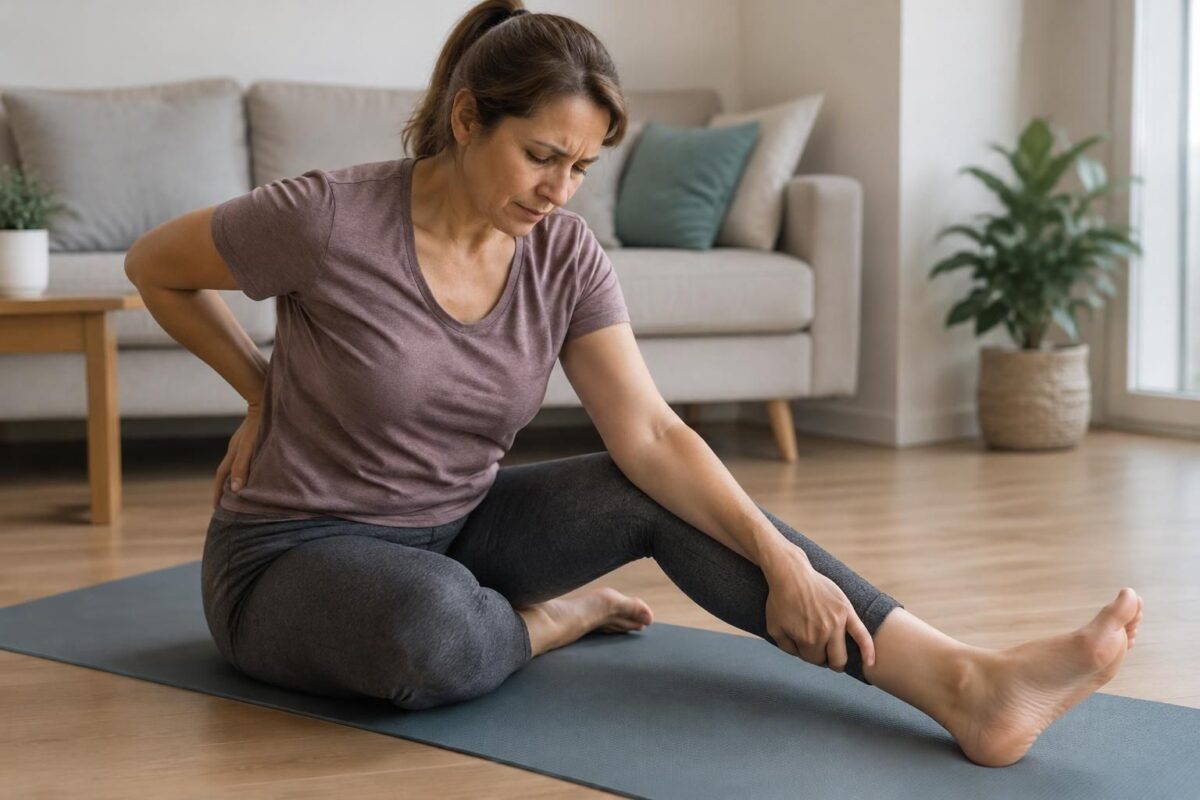
Sciatica and pain that travels lower after a stretch
IN BRIEF A sciatic pain that goes lower after a stretch may indicate that the movement is further irritating the nerve. A stretch should not intensify the pain or cause new tingling sensations: stop it and avoid forcing. Only resume…
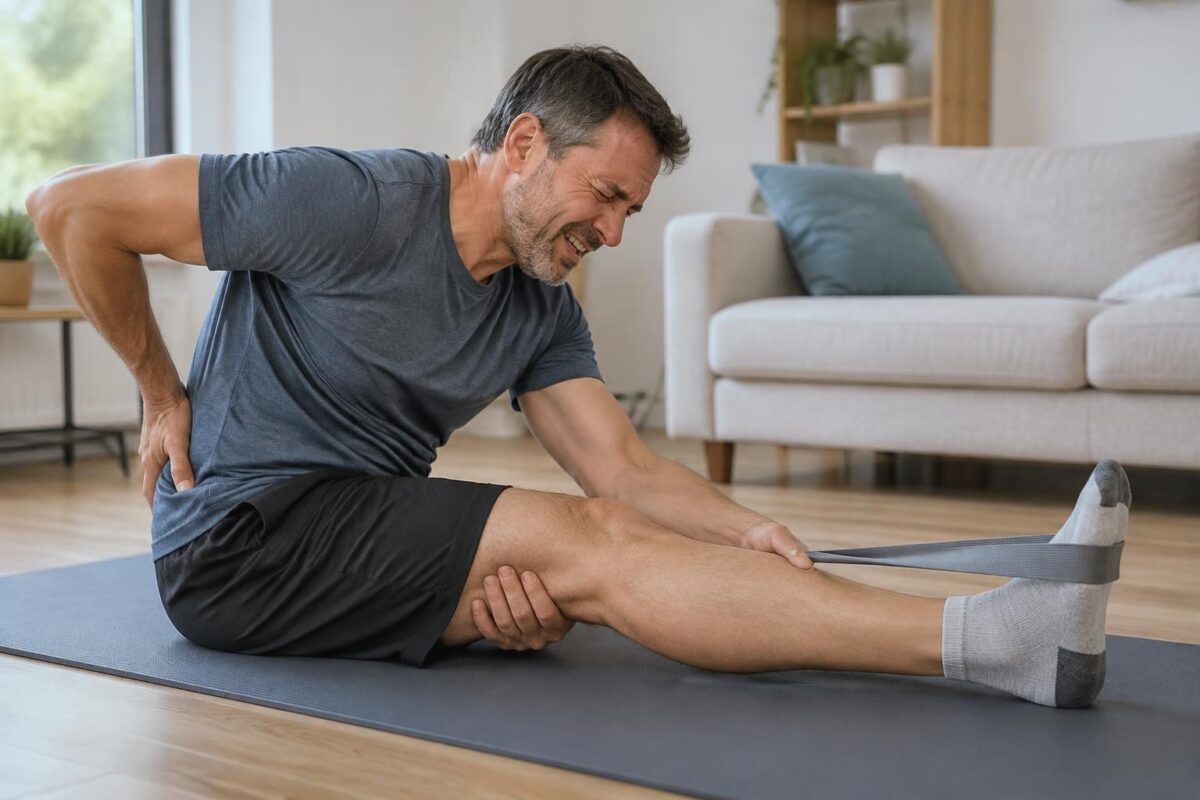
Sciatica and aggressive stretches: possible sign of worsening
IN BRIEF Sciatica is pain that radiates from the lower back or buttock down the leg. Aggressive stretching does not necessarily relieve the nerve and can intensify the pain, especially if it moves further down to the foot or is…
Is movement sufficient for recovery?
Not necessarily. Moving can facilitate daily life, but the relief obtained does not always mean that the cause is resolved. Most episodes improve gradually over a few weeks, but recovery varies depending on the origin of the pain and its intensity. If the pain remains strong, recurs frequently, or limits your activities despite appropriate adjustments, make an appointment with a healthcare professional. They can assess your symptoms and guide you, particularly toward appropriate care or exercises.
Stretches should remain gentle: do not pull harshly on the painful leg and do not try to “unlock” your back with untrained manipulations. Heat or cold can provide temporary comfort; choose what relieves you, protecting your skin and without falling asleep with a hot source.

Sciatica and calf stretching: when the pain increases
IN SHORT A calf stretch can exacerbate sciatica if it further irritates the nerve. It should not cause pain that increases or radiates down the leg: stop the movement and do not push through. Stretches may help with some tensions,…
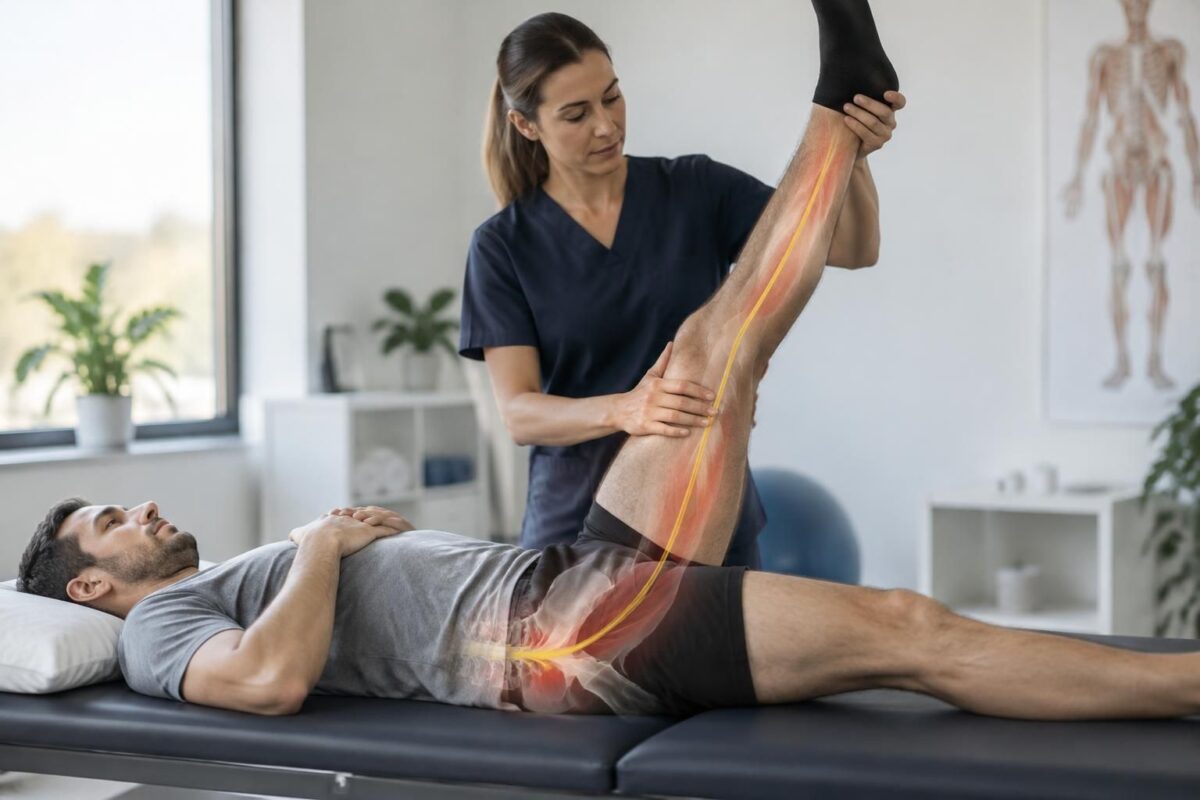
Sciatica and hamstring stretching: possible nerve tension
IN BRIEF Sciatica can make stretching the hamstrings uncomfortable, as the tension felt may come from the nerve rather than the muscle. A gentle stretch, with a straight back and without seeking maximum range, can help loosen the back of…
When should you consult urgently?
Request urgent medical help if you have difficulty controlling your bladder or bowels, loss of sensation in the perineum, or significant or progressive weakness in the leg, such as a foot drop. Also consult quickly if pain is accompanied by fever or becomes very intense. These signs should not be managed solely by more movement.
In the absence of emergency signs, seek advice if the pain does not improve, significantly disrupts your sleep, or prevents you from walking normally. A professional can help you determine which movements are appropriate for your situation.
| What movement indicates | To remember |
|---|---|
| Pain decreases during gentle walking | Good sign of tolerance, but not proof of healing. |
| Relief lasts only during movement | Movement temporarily soothes symptoms. |
| Pain returns after activity | Reduce intensity and prefer short periods. |
| Pain radiates more down the leg | Stop this movement and seek advice if it persists. |
| Mobility gradually improves | Continue to move gently, without forcing. |
| Bed rest seems more comfortable | Avoid prolonged immobility, which can slow recovery. |
| Leg weakness or urinary problems | Consult urgently, even if movement alleviates. |
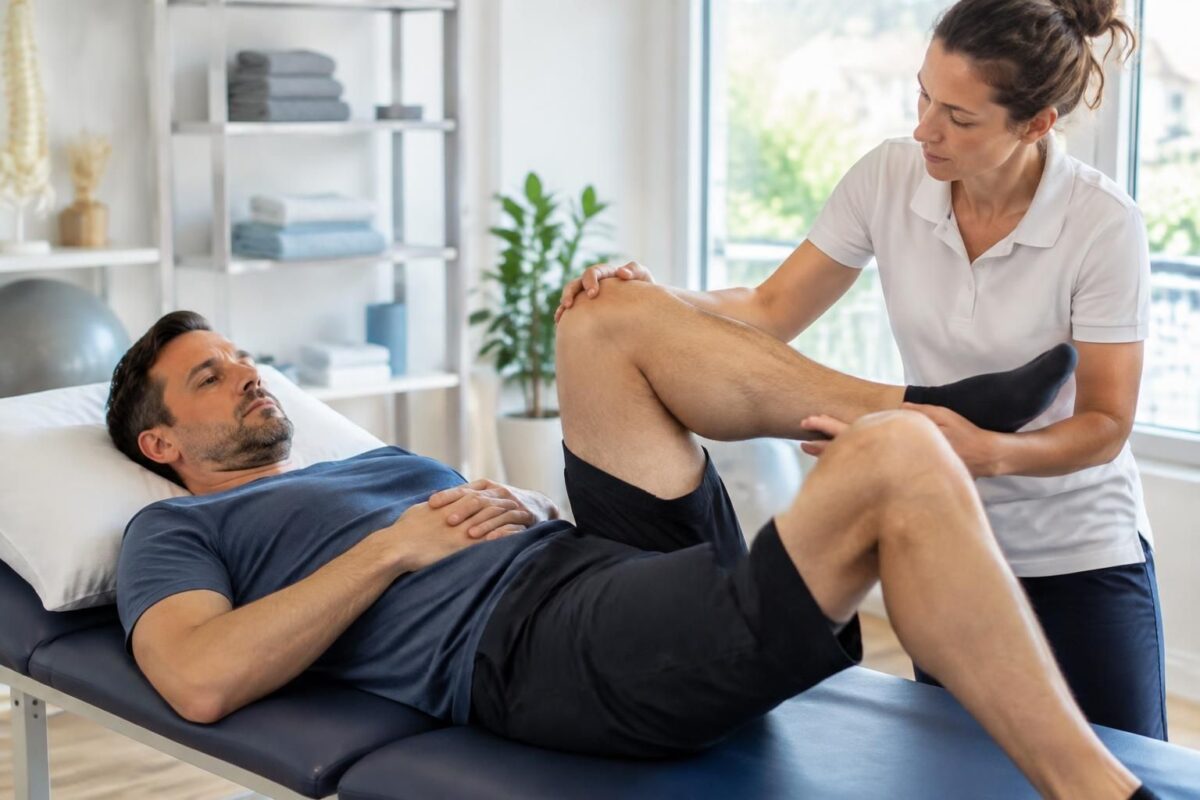
Sciatica and piriformis stretching: useful or worsening depending on the case
IN BRIEF Piriformis-related sciatica can cause deep pain in the buttock, sometimes radiating down the back of the thigh. A gentle stretch can loosen the hip and relieve discomfort if the muscle is involved, but it can worsen symptoms if…

Sciatica and popular stretches: why to stay cautious
IN BRIEF Sciatica causes pain that radiates from the lower back down the leg. Popular stretches, such as the pigeon pose or hamstring stretches, are not always suitable: pulling on an irritated nerve can worsen the symptoms. Favor gentle movements,…
Sciatica and movement: is temporary relief enough?
Illustrative Testimonials: the situations below are fictional examples inspired by common symptoms. They do not replace medical advice.
“When my sciatica flares up after a long period sitting, a short walk helps me get moving again. The pain sometimes decreases, but it returns if I stay still too long afterward. I’ve realized that moving gently gives me relief, without necessarily addressing the cause.” — Claire, 42 years old
“At first, I thought I had to stay lying down until everything faded away. Eventually, a few gentle movements throughout the day help me more than complete rest. I stop if a movement triggers a sharp pain that goes down my leg.” — Marc, 51 years old
“Lying down with my legs on a chair calms my lower back. The relief is real, but it doesn’t always last. I use it to take a break, then I resume small movements based on what I can tolerate.” — Samira, 36 years old
A movement that temporarily soothes may be helpful, but relief alone is not enough to determine the cause or progression of sciatica. Staying gently active, changing positions regularly, and avoiding movements that significantly worsen the pain can help maintain mobility. There is no need to push: if the pain radiates more, stop the movement and choose a more comfortable position.
Avoid prolonged strict bed rest, vigorous stretching, and heavy lifting during a flare-up. If the pain persists, worsens, or returns frequently, seek advice from a healthcare professional. Progressive weakness in the leg, loss of sensation in the perineum, or difficulties controlling the bladder or bowels require urgent consultation.
Sciatica and Movement That Temporarily Relieves: Sylvain Desforges’ Perspective
Sylvain Desforges is an expert in osteopathy, naturopathy, and manual medicine. Throughout his career, he has dedicated himself to innovation in healthcare and the management of persistent pain. He is the founding president of the TAGMED clinics and the ACMA association, two organizations associated with his commitment to evolving health and wellness approaches.
His journey reflects a desire to better support individuals whose pain complicates daily activities. Sciatica, for example, can cause pain that starts in the lower back or buttock and travels down the leg. Walking, sitting, or sleeping can then become challenging. Some people find that a change in posture or a few steps provides them with temporary relief. For Dr. Desforges, this respite can be useful, but it does not suffice to identify the root of the problem or ensure lasting improvement.
Gentle movement often helps preserve mobility and prevent stiffness associated with prolonged rest. A short walk, regular position changes, or movements performed within a comfortable range can aid in coping during a painful period. The objective is not to force or try to eliminate every symptom immediately, but to remain active as much as possible. If a movement triggers a sharp pain that intensifies or travels further down the leg, it is better to stop and seek advice from a healthcare professional.
The relief obtained from movement may sometimes be temporary. It can indicate that one position is tolerated better than another, without correcting the cause of the pain. Sciatica may be related to nerve irritation or compression, but pain resembling sciatica can also arise from muscles or other structures. Assessing symptoms, their progression, and functional abilities helps guide management. Imaging tests are not routine, and their relevance depends on the clinical context.
In his practice, Dr. Desforges focuses particularly on the management of chronic pain and the integration of advanced healthcare technologies. Among the approaches associated with his field are spinal decompression, laser therapy, and shockwave therapy. These tools may be considered based on the individual’s situation, but they do not replace a diagnosis or appropriate management. A method useful for one patient may not necessarily be for another: objectives, expected benefits, and limitations should be discussed with a qualified professional.
His approach emphasizes data-driven care and optimizing patients’ health and wellness. In the case of sciatica, this means considering pain, mobility, daily habits, and tolerance to activity. Movement can be part of comfort strategies, but it must be adjusted to the evolution of symptoms rather than pursued at all costs.
Progressive weakness in the leg, loss of sensation in the perineum, or difficulties controlling the bladder or bowels require urgent medical evaluation. Apart from these warning signs, persistent, recurrent, or significantly activity-limiting pain also deserves professional advice. The temporary relief provided by movement is therefore useful information to share during this evaluation, not proof that the cause of sciatica is resolved.
Gentle movement can temporarily alleviate sciatica pain and limit stiffness, but relief during walking or after stretching does not necessarily mean the cause has been resolved. The goal is to remain active without provoking intensifying pain or further travel down the leg, while monitoring the evolution of symptoms.
Sciatica and Movement: Is Temporary Relief Enough?
Often, moving cautiously is preferred over prolonged strict rest. Short walks, regular position changes, and gentle mobility can help preserve the back’s capabilities and avoid stiffness. However, movement primarily addresses comfort and mobility: it does not, by itself, determine or correct any potential nerve compression. To adapt effort, observe your reaction during activity and in the hours following.
A mild discomfort that returns to its usual level after exercise can be tolerable. On the other hand, if walking triggers sharp pain, significantly increases radiation, or leaves more intense symptoms afterwards, reduce the duration or stop the activity concerned. Additional guidelines are presented in this article on sciatic pain that worsens when walking and in the guide to positions to avoid in case of sciatica.
Exercises must also be adapted. A stretch that seems to provide relief at the moment may not be indicated if it then causes pain to drop lower in the leg. Avoid pulling hard on the painful limb and favor gentle movements, without trying to force the range of motion. You can consult the advice regarding pain that descends further after a stretch, or the adaptations proposed for Pilates during sciatica.
Walking is not the only way to find a more comfortable position. Lying on your back, with your legs supported and knees bent, or lying on your side with a cushion between your knees, you can sometimes reduce lumbar tension. Keep only the positions that relieve you: there is no mandatory posture. If the pain is especially pronounced upon waking, these indications on sciatica and pain when getting out of bed can also help you organize your initial movements.
Home remedies — resting position, heat or cold according to your tolerance, and moderate activity — can complement these adjustments, without replacing an assessment if symptoms persist. Find other gestures to try at home to relieve sciatica. Promises of relief in seconds should, however, be approached with caution: a technique may provide momentary respite but does not guarantee a cure. In this regard, consult the explanations about relief from sciatica in 60 seconds, as well as these tips presented as emergency techniques and this guide for relieving sciatica.
The trajectory of the pain can guide the assessment but is not sufficient to establish a diagnosis. Pain radiating down to the foot may in particular be associated with nerve root involvement, often at the L5-S1 level; details are available on the frequent involvement of L5-S1 in certain sciatic cases. Only a healthcare professional can interpret the symptoms and decide if an examination is necessary.
Seek medical advice quickly in case of progressive weakness of the leg or foot, loss of sensitivity in the perineum, difficulties urinating or holding in stool, or fever associated with pain. In the absence of warning signs, make an appointment if pain remains strong despite suitable measures, worsens, or returns frequently. Movement can be part of recovery, but it is its adaptation to your symptoms — and their evolution — that allows you to know if it is truly helping you.

Sylvain Desforges, B.Sc., D.O., N.D., docteur en ostéopathie
Dr Sylvain Desforges, B.Sc., D.O., N.D., osteopath, is the founding president of TAGMED and of the ACMA association. He dedicates his practice to chronic spinal pain, low back pain and symptoms compatible with sciatica, particularly when pain radiates toward the buttock, leg, calf, foot or toes.
Through SOS Sciatique, he publishes educational content on sciatica symptoms, possible causes such as disc herniation, disc narrowing, foraminal stenosis or irritation of a lumbar nerve root, as well as non-surgical approaches that may be considered according to the evaluation. At Clinique TAGMED, care may include, depending on the case, motorized neurovertebral decompression, specific osteopathic care or precision percussion.
For an evaluation related to sciatica treatment in Montreal / Mount Royal or sciatica treatment in Terrebonne, please consult the services available at Clinique TAGMED.
Medical disclaimer
The information published on SOS Sciatique is provided for educational purposes only and does not replace a consultation, diagnosis, opinion or treatment provided by a physician or another authorized healthcare professional. The author of this article is neither a medical doctor nor a specialist in a medical specialty recognized by the Collège des médecins du Québec. The osteopathic, manual medicine or functional support approaches described on this site do not constitute medical acts and are not intended to replace medical follow-up.
Consult a physician or emergency service in cases of loss of bladder or bowel control, anesthesia in the saddle area, significant or progressive weakness in the leg or foot, fever, recent trauma, severe pain or rapid worsening of symptoms. For more details, please read our Legal Notice.