Sciatica and difficulty sitting
18/09/2026
Sciatica and fast walking: why stay cautious
18/09/2026
IN BRIEF
| In short, a herniated disc is a partial rupture of the disc ring that can compress a nerve root and cause a neurological sign such as decreased reflexes. This condition presents as pain, often in the lower back or neck, radiating into the limb and possibly accompanied by paresthesias or weakness. Key benefits include enabling early detection of nerve damage and quick referral to effective non-surgical treatments, reducing the risk of complications. The mechanism is based on pressure or displacement of the nucleus pulposus pressing on the nerve, with typical management including physiotherapy, medication management, and patient education, with surgery considered if treatment fails or progressive neurological signs occur. In Montreal, this service supports patients suffering from lower back pain and decreased reflexes by promoting a patient-centered approach and preventing recurrences. |
The herniated disc is the partial protrusion of an intervertebral disc that can compress a nerve root, most commonly at the lumbar level, causing radiating lower back pain down the leg.
A possible neurological sign is decreased reflexes in the territory of the affected nerve, which may be associated with paresthesias or muscle weakness.
The diagnosis is based on clinical evaluation and, in cases of marked neurological signs or uncertain progression, imaging may be necessary. Treatment generally includes a tailored return to activity, analgesics, and physiotherapy; surgery is rare and considered if symptoms progress despite appropriate management.
Written by Dr Sylvain Desforges, osteopath.
This text explains how a herniated disc can be associated with a decreased reflex, a potential neurological sign. It describes signs to monitor, necessary evaluation, emergency situations, and available management options in Montreal and Terrebonne.
Clinical signs and reflexes
The herniated disc can cause pain that runs down a nerve and sensory disturbances. The physician may observe a decreased reflex when the nerve root is affected. Other typical symptoms include lower back pain, tingling or loss of sensitivity in the leg or foot, and muscle weakness in certain muscles.
Reflexes may be weaker in the affected limb, such as the patellar reflex or Achilles reflex. This decrease may be associated with pain that worsens with coughing, exertion, or prolonged sitting. Persistent or rapidly evolving neurological signs require thorough medical evaluation.
For additional resources, you can consult information on Herniated disc and pain stronger in the leg than in the back and Disc pinch and different mechanisms.
Clinical evaluation and imaging
The diagnosis is primarily based on clinical examination. The physician looks for signs of irradiation, motor or sensory deficits, and tests the reflexes. Imaging is not systematic initially, but lumbar MRI becomes the key examination if significant neurological signs arise or if the progression is unfavorable.
In cases of doubt, or when motor disturbances progress, imaging and a specialized consultation help clarify the cause and plan appropriate management. For general information, you can also consult the resources from RIS17.
Emergency signs and when to consult
Certain signs require immediate consultation or even emergency management. These include rapid motor deficit, sphincter disturbances (incontinence or urinary retention), or anesthesia at the saddle level. These elements may indicate severe nerve compression and necessitate rapid evaluation.
Signs such as pain that worsens rapidly or weakness that progresses in the leg or foot justify prompt management with a healthcare professional. To learn more about warning signs, consult resources on pain and disc signs.
Management options
The management aims to relieve pain, restore function, and prevent recurrences. A clinical evaluation is necessary to determine the appropriate treatment. In non-urgent cases, medical options may be considered after medical advice. Some refractory situations may require targeted interventions, such as an epidural injection in specific cases, or specialized evaluation.
Alternatives and follow-up can be offered at the TAGMED Clinic in Montreal or Terrebonne. For individuals concerned about symptom recurrence, it can be helpful to discuss this with a professional to consider an appropriate and safe approach.
To further explore options and information surrounding the herniated disc and associated pain, refer to the following resources: two different mechanisms and leg pain vs back, as well as the page of TAGMED Clinic.
For general information on the neurovertebral decompression framework and other associated conditions, you can consult the following resources: neurovertebral decompression and sosherniediscale.
Medical disclaimer: The information and advice provided on this site do not replace the opinion, diagnosis, or treatment of a healthcare professional. Please note that Dr. Sylvain Desforges, osteopath, is neither a doctor of medicine nor a physician, and is not a specialist in a medical specialty as defined by the Collège des médecins du Québec. Manual medicine, functional medicine, and sports medicine as described on this site exclude any medical treatment or diagnosis made by a physician or specialist doctor. Always consult your doctor for any medical questions. For more details, please read our full Legal Notice.
References and additional resources accessible via authorized domains: sossciatique.com, cliniquetagmed.com, sosherniediscale.com, sosherniateddisc.com, sostunnelcarpien.com.
Herniated disc and decreased reflexes: possible neurological sign
- Decreased Achilles reflex → lower lumbar involvement (S1-S2)
- Decreased patellar reflex → mid/lower lumbar involvement (L3-L4)
- Unilateral hyporeflexia → suspected radiculopathy
- Paresthesia or radiating pain → sign of radicular compression
- Targeted muscle weakness → deficit according to the root (e.g., dorsiflexion)
- Pain worsened by coughing/straining → sign of disc pressure
- Quick evaluation → neurosensitive and motor examination, straight leg raise tests
- Relative urgency → marked motor deficit, sphincter disturbances, or saddle anesthesia require prompt management
- Management plan → active physiotherapy, adapted activity, analgesics
- Imaging → MRI recommended in the presence of neurological signs or progression
- Surgical option → microdiscectomy considered if medical treatment fails or worsens
- Prevention → regular physical activity, strengthening abdominal muscles, maintaining weight

Quick Introduction
This article offers practical recommendations regarding herniated discs and decreased reflexes, a potential neurological sign of nerve damage. It details what these signs mean, when they require prompt management, and how to optimize non-surgical treatment to facilitate a return to normal and prevent recurrences.
Understanding Decreased Reflexes in the Presence of a Herniated Disc
A herniated disc can compress a nearby nerve root, which can alter the signals transmitted by motor and sensory nerves. This compression may result in decreased or lost muscle reflexes, particularly those controlled by the lumbar roots (for example, the Achilles tendon reflex or patellar reflex depending on the location). A decreased reflex is not systematic but serves as an important indication of neurological damage associated with lower back pain and sciatica.
Neurological Signs to Monitor
In addition to decreased reflexes, other signs may suggest radiculopathy: pain radiating down the leg (or the arm if the herniation is cervical), paresthesia or loss of sensation in the area corresponding to the affected nerve, and sometimes muscle weakness in certain muscle groups. The pain may worsen with coughing, straining, or prolonged sitting, and symptoms may appear in a fluctuating manner depending on activities and postures.
Urgency or Quick Consultation: Signs Not to Ignore
Certain signals necessitate a quick consultation, even urgent care. Among them are a progressive motor deficit, sphincter disturbances (urinary retention or incontinence), saddle anesthesia, or very intense pain associated with marked weakness. The presence of a cauda equina syndrome requires immediate medical evaluation. In any case, any new or worsening neurological sign warrants a prompt consultation with a healthcare professional.
Diagnosis and Initial Approach
The diagnosis primarily relies on the clinical examination and the history of symptoms. Imaging is not systematically the first-line approach but may become necessary in the presence of neurological signs, unfavorable evolution, or before a potential surgical intervention. Lumbar MRI is the reference examination when neurological impairments are suspected. In the absence of contraindications, CT may be used if MRI is not accessible.
Non-Surgical Management and Practical Recommendations
Most cases of pain related to a herniated disc progress favorably with appropriate medical management and physiotherapy. Recommended approaches include: adapted physical activity rather than strict rest, use of analgesics according to doctor-recommended levels, and active physiotherapy coupled with therapeutic education. In certain refractory cases, epidural injections may be considered. Gradual return to effort and strengthening of deep muscles (abdominal belt and lumbar muscles) play a key role in preventing recurrences.
Prevention and Daily Tips
To reduce the risk of recurrence and support healing, prioritize regular physical activity and maintaining a stable weight. Strengthen the abdominal muscles and adopt good postural habits at work and during manual handling tasks. Learn effective lifting techniques and avoid sudden movements or heavy loads during the painful phase. Consult a healthcare professional quickly if there are concerning symptoms or a progression of neurological signs.
| Element | Description |
|---|---|
| Definition of the sign | Decreased reflexes suggest possible nerve damage; assess quickly. |
| Common location | Lower back and/or lower limbs depending on the affected nerve (e.g., L5-S1). |
| Associated signs | Low back pain radiating into the leg, paresthesia, and slight weakness. |
| Causes and triggers | Radicular compression due to a hernia; effort, posture, and sedentariness may worsen. |
| Relative urgency | Significant motor deficit or sphincter disturbances require quick assessment. |
| Useful diagnosis | Neurological examination and reflex tests; MRI if neurological signs or progression. |
| Initial management | Medical treatment and active physiotherapy; adapted activity and analgesia according to protocol. |
| Prognosis | 80-90% of sciatica related to a hernia evolve favorably without surgery. |
| Note | A decreased reflex alone is not specific; medical follow-up is necessary. |
Testimonials: Disc Herniation and Decreased Reflexes, Possible Neurological Sign
“I am Claire, 42 years old, and my low back pain initially felt like just a simple backache. It was the onset of a decreased reflex that changed everything: it directed me toward a suspicion of disc herniation and a quick assessment allowed for the implementation of an appropriate care plan. Today, the pain is much less present and my mobility has returned.”
“My name is Romain, 36 years old. Pain that started in the lower back and radiated into my thigh, accompanied by decreased reflexes on the right side, made me realize that it could be a neurological sign related to a disc herniation. Thanks to targeted care, physiotherapy, and osteopathy, I regained comfort and returned to my daily activities.”
“Marine here, 29 years old. In addition to low back pain, I experienced tingling and a sensation of weakness with decreased reflexes in my leg. The doctor suggested a disc herniation and I followed a care path that prevented worsening and helped me resume my movements without fear.”
“Émilie, 55 years old. After intense back pain and signs of nerve irritation, a decreased reflex confirmed the suspicion of a neurological sign associated with nerve compression. Referral to multidisciplinary treatment allowed for notable improvement without surgical intervention.”
“Théo, 60 years old. Low back pain was accompanied by weakness and a decreased reflex in ankle extension, suspected to be a neurological sign due to a disc herniation. Quick and appropriate care stabilized the situation and allowed for a gradual return to activities.”
“Chloé, 33 years old. Pain in the lower back with irradiation and decreased reflexes led me to a precise assessment. The diagnosis of disc herniation was made, and the physiotherapy/osteopathy program facilitated a return to my activities without recurring pain.”
This text relies on the approach of a recognized practitioner in osteopathy, naturopathy, and manual medicine, founding president of the TAGMED clinics and the ACMA association. With a career focused on innovation in care, he specializes in the management of chronic pain and the integration of advanced technologies such as spinal decompression, laser, and shockwave therapy. His approach aims for evidence-based care to optimize the health and well-being of patients, especially when a disc herniation and decreased reflexes present themselves as possible neurological signs.
The disc herniation corresponds to the partial rupture of the fibrous ring surrounding the intervertebral disc, allowing a portion of the pulpy nucleus to migrate into the spinal canal. This dissociation is favored by degenerative mechanisms related to age, as well as by sedentariness, certain repeated efforts, and carrying heavy loads. Compression of an adjacent nerve root is the main trigger of symptoms, which typically manifest as low back pain radiating into the leg (sciatica) or into the thigh (femoral pain), accompanied by paresthesia or decreased sensitivity in the affected nerve territory, and sometimes by muscle weakness.
Among the neurological signs, the decrease in osteotendinous reflexes can be observed when the nerve root is compressed. These decreased reflexes constitute a key element in clinical reasoning, especially when associated with radicular pain and motor or sensory symptoms in a certain region. However, it is important to keep in mind that not all hernias produce clear neurological signs and that imaging is not systematically necessary if the clinical examination is clear and the evolution is favorable.
From a diagnostic perspective, the evaluation first relies on the clinical examination: questionnaire on the origin of symptoms, their irradiation, and motor integrity, supplemented by specific tests such as those that highlight the painful reflex and Lasègue’s signs. Imaging is reserved for when marked neurological signs, unfavorable evolution, or surgical suspicion appear. In suitable cases, lumbar MRI remains the reference examination; a CT scan may be useful when MRI is not accessible.
Initial management prioritizes a conservative approach for 4 to 6 weeks, focused on adapted activity rather than strict rest. Treatment includes appropriate analgesics and anti-inflammatory medications, active physiotherapy, and therapeutic education. In some refractory cases, an epidural injection may be considered. Surgery, particularly microdiscectomy, is contemplated in cases of failure of appropriate medical treatment or in the presence of worsening neurological signs. It is emphasized that most sciatica related to a disc herniation evolves favorably without surgery.
In daily life, preventing recurrences involves regular physical activity, strengthening the abdominal belt, and maintaining a stable weight, complemented by good ergonomic practices at work and during domestic activities. Any modification of treatment or the addition of complementary therapies should be discussed with a healthcare professional to tailor the advice to each situation.
As part of a holistic approach, this practitioner emphasizes personalized care, patient education, and the reasoned use of advanced technologies to optimize outcomes while remaining vigilant for signs that may indicate more significant neurological impairment and require rapid specialized evaluation.
Quick summary: Herniated disc can be associated with decreased reflexes, a potential neurological sign indicating nerve root compression. This condition is common in the lumbar region and can manifest as low back pain with radiation, paresthesia, and sometimes muscle weakness. The diagnosis mainly relies on clinical evaluation; imaging may confirm the diagnosis in some cases but does not replace a physical examination. The initial treatment is generally medical and functional, with a focus on appropriate activity, physiotherapy, and symptomatic management, while surgery is considered if neurological signs progress or persist despite appropriate follow-up. To explore the mechanisms and manifestations, here are additional resources that describe the mechanisms, signs, and management options.
Decreased reflexes are a key aspect of the neurological assessment in cases of herniated disc. They can reflect an impairment of the nerve roots corresponding to the disc location, most often in the lumbar region. However, their decrease is not systematic and may coexist with other clinical presentations. Signs such as low back pain with radiation, paresthesia in the territory of a nerve, and sometimes motor weakness support the diagnosis when associated with sensory or motor deficits. To delve deeper into the links between herniated disc and radicular symptoms, you may consult the following resources: Sciatica and lumbar herniated disc, and Herniated disc and annular tear.
The diagnosis primarily relies on the clinical examination, with tests such as the Lasègue sign and the assessment of motor or sensory deficits. Imaging is not systematic as a first step but becomes useful when neurological signs remain present, evolve, or when surgical intervention is considered. To understand the mechanisms and implications of neurological signs, you can consult the following resources: chemical irritation of the nerve root, and Neurological signs.
The therapeutic framework generally favors a non-surgical approach for 4 to 6 weeks: maintaining appropriate activity rather than prolonged rest, suitable pain management, active physiotherapy, and therapeutic education. Targeted approaches such as neurovertebral decompression may be considered in certain refractory situations. For a general presentation of options and mechanisms, see in particular: neurovertebral decompression and herniated disc, and Symptoms and complications.
Preventing recurrences relies on regular physical activity, strengthening the abdominal belt, and maintaining a stable weight, while adopting suitable ergonomic advice for daily life and work. In case of marked neurological signs, persistent motor deficits, sphincter disturbances, or rapid worsening of pain, rapid medical evaluation is recommended. For details on the mechanisms and clinical implications, consult in particular: Herniated disc and spondylolisthesis and Neurological signs.

Disc herniation and tingling in the toes
IN BRIEF A disc herniation is a disc that bulges beyond its contour; tingling in the toes can sometimes be related to irritation of a lumbar nerve, without MRI sufficiently confirming the cause. An examination connects the image, symptoms, and…

Disc herniation and numbness in the foot
IN BRIEF A disc protrusion is a bulging of a spinal disc; it does not always cause symptoms. If it irritates or compresses a lumbar nerve root, it may lead to tingling or numbness in the foot. An evaluation helps…
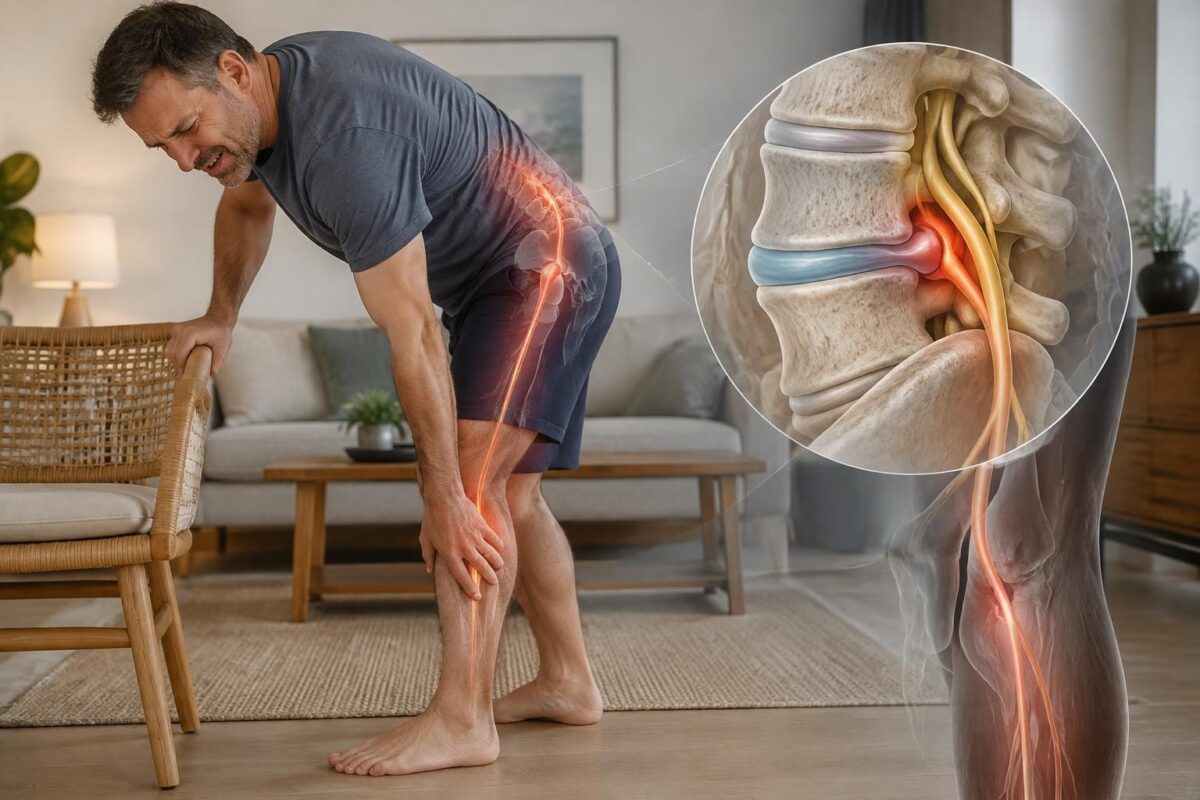
IN BRIEF A disc protrusion is a bulging of a disc that can irritate a nerve root and cause pain radiating down into the buttock and the calf, sometimes with tingling. However, it does not always cause symptoms. Evaluation helps…

Disc herniation and pain behind the thigh
IN BRIEF A disc protrusion is a bulging of a spinal disc, often without symptoms. A pain behind the thigh can be muscular or, if it originates from the back and is accompanied by tingling or numbness, related to nerve…

Disc herniation and pain in the buttock
IN SHORT A disc protrusion is a disc that bulges without its outer layer being ruptured. If it irritates a nerve root, it can contribute to buttock pain, sometimes accompanied by radiation down the leg, tingling, or numbness. It can…

L5-S1 protrusion and sciatic pain: pathway to the foot
IN BRIEF A L5-S1 disc protrusion is a disc that slightly bulges between the lumbar and sacral vertebrae. If it irritates a nerve root, pain may radiate from the lower back or buttock down the back of the leg to…

L4-L5 protrusion and sciatic pain: possible signs
IN BRIEF A L4-L5 disc protrusion is a bulging of the disc between two lumbar vertebrae. If it irritates the L5 nerve root, it can cause sciatica radiating from the buttock to the side of the leg and the top…
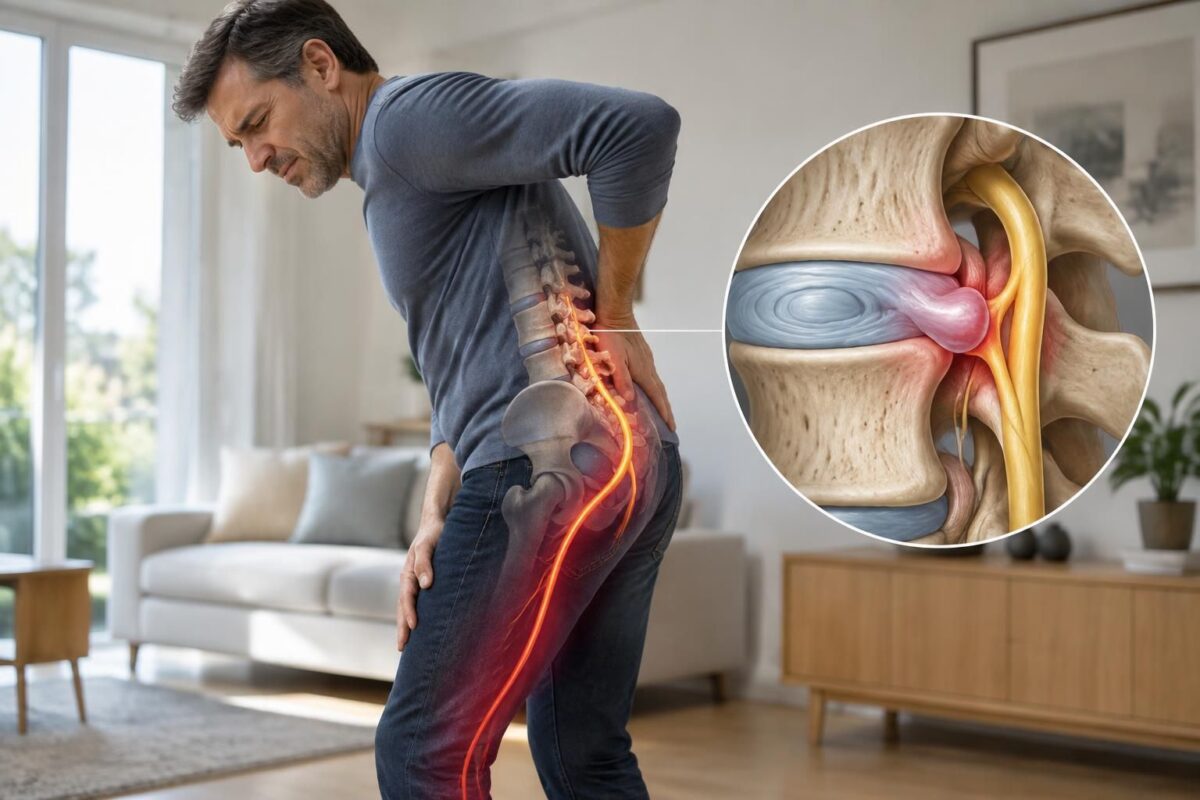
Disc protrusion and sciatica: when the disc touches a nerve root
IN BRIEF A disc protrusion is a disc that extends beyond its usual contour. If it irritates a nerve root, it can contribute to sciatica, with pain radiating into the buttock or leg, sometimes accompanied by tingling or weakness. An…

Dr Sylvain Desforges, B.Sc., D.O., N.D., osteopath, is the founding president of TAGMED and of the ACMA association. He dedicates his practice to chronic spinal pain, low back pain and symptoms compatible with sciatica, particularly when pain radiates toward the buttock, leg, calf, foot or toes.
Through SOS Sciatique, he publishes educational content on sciatica symptoms, possible causes such as disc herniation, disc narrowing, foraminal stenosis or irritation of a lumbar nerve root, as well as non-surgical approaches that may be considered according to the evaluation. At Clinique TAGMED, care may include, depending on the case, motorized neurovertebral decompression, specific osteopathic care or precision percussion.
For an evaluation related to sciatica treatment in Montreal / Mount Royal or sciatica treatment in Terrebonne, please consult the services available at Clinique TAGMED.
Medical disclaimer
The information published on SOS Sciatique is provided for educational purposes only and does not replace a consultation, diagnosis, opinion or treatment provided by a physician or another authorized healthcare professional. The author of this article is neither a medical doctor nor a specialist in a medical specialty recognized by the Collège des médecins du Québec. The osteopathic, manual medicine or functional support approaches described on this site do not constitute medical acts and are not intended to replace medical follow-up.
Consult a physician or emergency service in cases of loss of bladder or bowel control, anesthesia in the saddle area, significant or progressive weakness in the leg or foot, fever, recent trauma, severe pain or rapid worsening of symptoms. For more details, please read our Legal Notice.