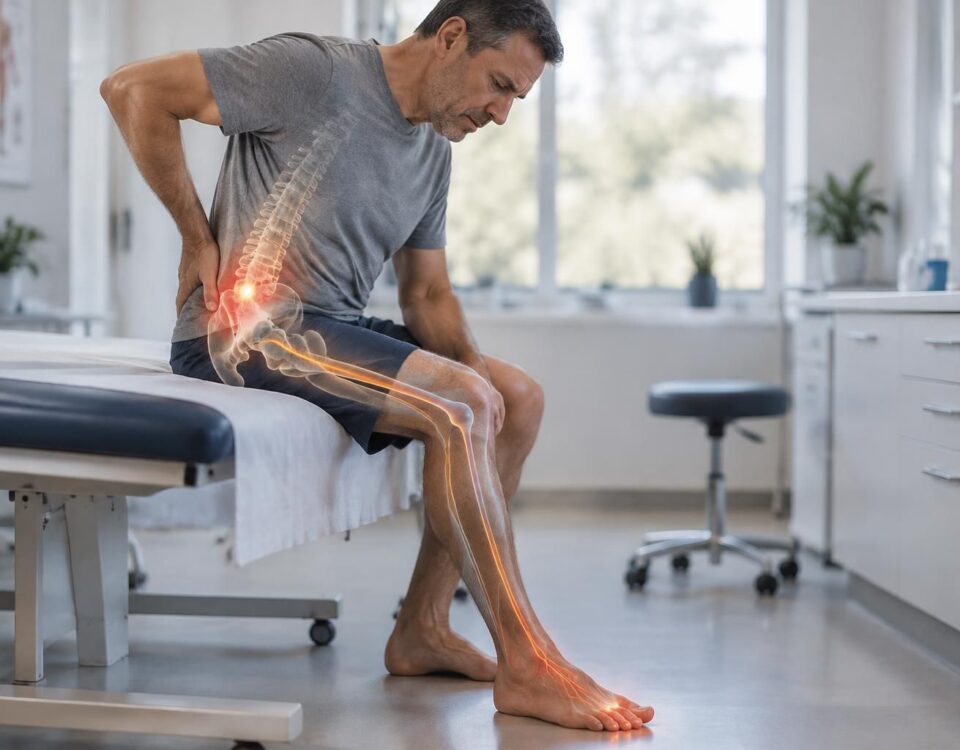
Sciatica and pain when going up stairs
15/09/2026
Sciatica and heavy legs while walking
15/09/2026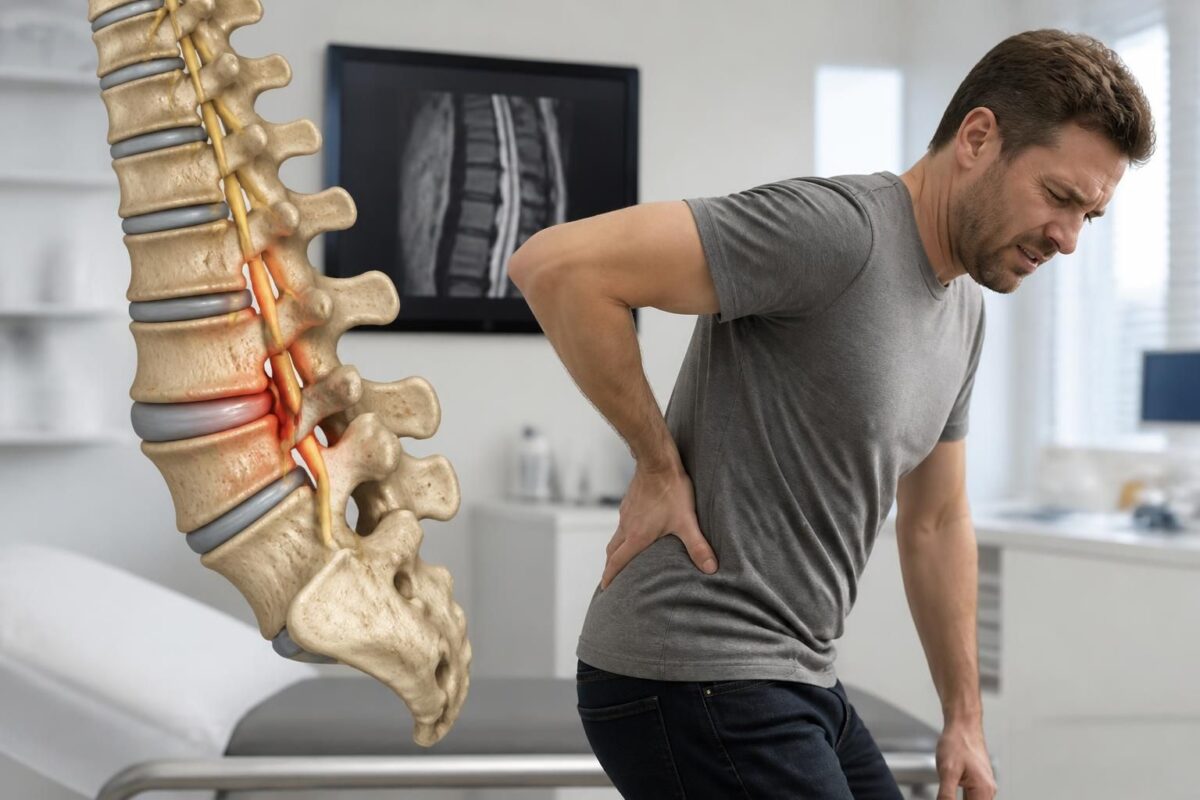
IN BRIEF
| The lumbar disc herniation and spondylolisthesis refer to a possible compression of the nerve roots leading to sciatic pain and sometimes paresthesia or muscle weakness. This nerve irritation can mostly be managed through conservative measures and medication, providing improvement in most cases without surgery. If necessary, non-surgical options or targeted interventions exist to relieve the nerve root and reduce pain. In Montreal, this service offers personalized support and a quick return to activity tailored to your needs. |
The disc herniation occurs when the gel-like core of an intervertebral disc pushes through the fibrous ring. This protrusion can compress a nerve root and cause lower back pain accompanied by radiating pain in the leg (sciatica) or thigh, sometimes with paresthesia or weakness.
Spondylolisthesis corresponds to the slipping of a vertebra relative to the one below it. This can reduce the space for the nerve roots and lead to nerve irritation with pain in the lower limb, sometimes associated with tingling or weakness.
The diagnosis is based on clinical examination and imaging; treatments most often start with conservative measures (rest, anti-inflammatories, physiotherapy) and may evolve towards intervention if the pain persists or if there is a neurological deficit.
Quick summary: This article, written by a healthcare professional specializing in osteopathy, explains how a lumbar disc herniation and a spondylolisthesis can cause nerve irritation. It describes possible mechanisms, clinical manifestations, the diagnostic process, and management options suited to the medical evaluation, without recommending specific exercises for decompression.
About the author
Dr. Sylvain Desforges, B.Sc., D.O., N.D., osteopath, is the founding president of
TAGMED
and the ACMA association. He dedicates his practice to chronic pain of the spine, lumbar pain, and pain compatible with sciatica, particularly when the pain radiates down to the buttocks, leg, calf, foot, or toes.
Through SOS Sciatique, he publishes educational content on the symptoms of sciatica, possible causes such as disc herniation, disc pinching, foraminal stenosis, or irritation of a lumbar nerve root, as well as non-surgical approaches that may be considered based on the evaluation. At the TAGMED Clinic, care may include, depending on the case, motorized neurovertebral decompression, specific osteopathy, or precision hammer.
For an evaluation related to
sciatica treatment in Montreal / Mont-Royal
or to
sciatica treatment in Terrebonne,
please consult the available services at the
TAGMED Clinic.
Medical disclaimer
The information published on SOS Sciatique is provided for educational purposes and does not replace a consultation, diagnosis, advice, or treatment performed by a physician or other licensed healthcare professional. The author of this article is neither a physician nor a specialist in a medical specialty recognized by the Collège des médecins du Québec. The osteopathic, manual medicine, or functional support approaches described on this site do not constitute medical acts and are not intended to replace medical follow-up.
Consult a doctor or emergency service in case of loss of bladder or bowel control, anesthesia in the saddle area, significant or progressive weakness of the leg or foot, fever, recent trauma, severe pain, or rapid deterioration. For more details, please read our
Legal Notice.
The lumbar disc herniation is a migration of the internal nucleus of the disc through the fibrous ring. This migration can compress one or more nerve roots near the disc, causing lower back pain and pain that may radiate into the leg. The spondylolisthesis describes the slipping of one vertebra relative to the neighboring one. This slipping can increase pressure on the nerve roots and exacerbate irritation.
Understanding the mechanisms
The intervertebral disc functions as a shock absorber. Over time, and sometimes after episodes of dehydration of the disc, cracks form in the fibrous ring. The nucleus can gradually migrate within the thickness of the ring, leading to acute or chronic lower back pain. If the nucleus crosses the ring and distorts the back of the disc, a disc herniation may occur and compress the nerve roots.
Possible clinical manifestations
The signs depend on the affected nerve roots. One may feel pain that follows the path of the nerves, burning sensations, tingling, or muscle weakness in the lower limb. The pain can vary according to the extent of compression and the duration of the problem. Pain that centers behind the thigh is typical of sciatic radiculopathy, while pain in the front of the thigh may suggest other radicular issues.
Diagnosis and imaging
The diagnosis is based on medical history, clinical examination, and appropriate imaging. Information resources and diagnostic tools can be consulted on specialized online sources such as the information resources on MSD Manual and symptom analyses on SOS Sciatique.
Management options
The management is tailored to each patient and is based on clinical evaluation and imaging results. The initial treatment is most often medical and may include relative rest, anti-inflammatories, and analgesics. Interventions such as injections may be considered if relief is insufficient after a period of 4 to 8 weeks, while avoiding inappropriate treatments.
A gentle and tailored approach may integrate osteopathic methods or functional support, rather than generalized exercises. For an osteopathic perspective and non-aggressive approaches, see the resources on Osteopathy and Disc Herniation.
If symptoms persist despite appropriate treatment, surgical evaluation may be discussed. An intervention is considered when relief is insufficient after a reasonable time or in the presence of acute motor deficit. The goal is to free the compressed nerve root and reduce radicular pain, with favorable results in the majority of cases, while acknowledging that some sensitive or motor symptoms may partially persist.
For a review of the different perspectives and technical aspects, you can consult specialized resources on disc herniation and nerve compression mechanisms, including the following resources: Complex Spine Institute, along with information pages on Disc Herniation and Pain Below the Knee and Chu Poitiers – Pathologies. Other useful resources address the links between disc herniation and pain and osteopathic approaches, notably:
Disc Herniation and Centralizing Pain,
Disc Herniation and Pain Without Back Pain.
When to Consider Surgical Intervention
An intervention may be considered if medical treatment does not provide sufficient relief within a reasonable timeframe or if urgent signs appear. Emergency cases include severe motor deficit, unacceptable pain despite treatment, or a sphincter inhibition syndrome. A surgical approach does not guarantee the complete disappearance of all sensory or motor disorders, as some nerve damage may be irreversible.
For additional sources on mechanisms and approaches, see the following pages: Disc Herniation and Centralizing Pain, Centre Orthopédique Santy.
For more general information on neurovertebral decompression and associated approaches, consult the following specialized resources: Neurovertebral Decompression, SOS Disc Herniation, SOS Herniated Disc. For additional information on spinal properties, see MSD Manual.
To deepen the training aspects and osteopathic expertise, only recognized institutions in this field include NUMSS and NAO (National University of Medical Sciences and National Academy of Osteopathy). Possible professional references are limited to ACMA, College of Canadian Osteopaths, and Collège des Ostéopathes Canadiens.
Useful links and authorized domains for related information and treatments:
SOS Sciatica,
Clinique TAGMED,
Neurovertebral Decompression,
SOS Hernie Discale,
SOS Herniated Disc,
Sostunnelcarpien,
SOS Sciatica.
The information published here is based on clinical sources and common practices in specialized clinics, and aims to help the patient understand the available options after medical evaluation. For any medical concerns, consult your primary care physician.
Medical Disclaimer: The information and advice provided on this site do not replace the opinion, diagnosis or treatment of a healthcare professional. Please note that Dr. Sylvain Desforges, osteopath, is neither a medical doctor nor a physician, and is not specialized in a medical specialty as defined by the Collège des médecins du Québec. Manual medicine, functional medicine, and sports medicine as described on this site exclude any treatment or medical diagnosis made by a physician or medical specialist. Always consult your doctor for any medical questions. For more details, please read our full Legal Notice.
Analysis Focus: Localization and mechanisms of irritation of nerve roots
Lumbar Disc Herniation
- Localization: displacement of the nucleus through the fibrous ring with possible radicular compression.
- Nerve Irritation: radicular pain that follows the path of the nerve root and may be accompanied by paresthesias.
- Signs: low back pain associated with symptoms in the lower limb; possible muscle weakness.
- Diagnosis: imaging targeting the presence of the herniation and its impact on the root.
- Treatment Approaches: the majority of cases respond to a conservative treatment (appropriate rest, analgesics, anti-inflammatories); complementary options depending on the case.
Spondylolisthesis
- Definition: sliding of one vertebra over the previous one which can cause nerve irritation due to foraminal compression.
- Nerve irritation: lumbar radiculopathy with pain radiating to the leg and sometimes paresthesias.
- Signs: recurrent low back pain; pain worsened by movement and, sometimes, symptoms in the lower limb.
- Diagnosis: dynamic X-rays and MRI to assess the integrity of the roots and the degree of slippage.
- Therapeutic approaches: strengthening and stretching program; preferred non-surgical treatment; surgery considered in case of instability or refractory pain.

This article provides clear recommendations regarding nerve irritation associated with disc herniation and spondylolisthesis, with practical insights for management and follow-up. It emphasizes the mechanisms, signs to monitor, and non-surgical options before considering specialized assessment if necessary.
Understanding nerve irritation related to disc herniation and spondylolisthesis
Nerve irritation often stems from a displacement of the disc nucleus that can compress a nerve root or cause local inflammation. In the context of spondylolisthesis, a vertebra may slightly slip relative to the one below it, altering the opening through which the nerves exit the spinal canal. This irritation can manifest as low back pain that radiates into the buttock, thigh, or leg, accompanied by paresthesias and sometimes muscle weakness. The key symptom is pain that follows the path of a nerve root, highlighting the importance of an accurate diagnosis to target appropriate treatment.

Disc herniation and tingling in the toes
IN BRIEF A disc herniation is a disc that bulges beyond its contour; tingling in the toes can sometimes be related to irritation of a lumbar nerve, without MRI sufficiently confirming the cause. An examination connects the image, symptoms, and…

Disc herniation and numbness in the foot
IN BRIEF A disc protrusion is a bulging of a spinal disc; it does not always cause symptoms. If it irritates or compresses a lumbar nerve root, it may lead to tingling or numbness in the foot. An evaluation helps…
Clinical signs and diagnosis
Typical signs include pain that intensifies with certain movements, referred pain in the lower limb, and sensations of tingling or burning (paresthesias). A radiculopathy may be present when pain and sensory disturbances follow the territory of a nerve root. Clinical evaluation is supplemented by imaging if necessary, to confirm the presence of a disc herniation and/or a spondylolisthesis, and to specify the exact locations of the affected nerves. A doctor will also assess for any signs of neuro-urological or motor emergencies requiring prompt intervention.
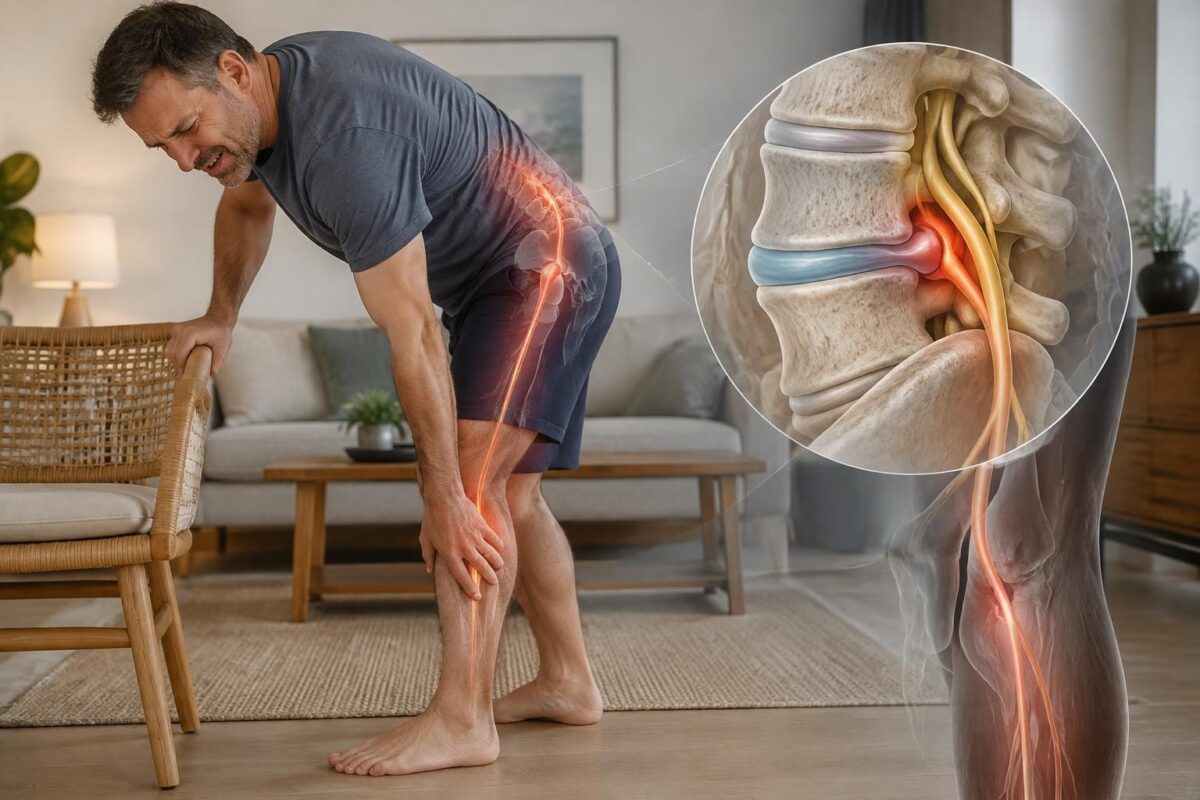
IN BRIEF A disc protrusion is a bulging of a disc that can irritate a nerve root and cause pain radiating down into the buttock and the calf, sometimes with tingling. However, it does not always cause symptoms. Evaluation helps…

Disc herniation and pain behind the thigh
IN BRIEF A disc protrusion is a bulging of a spinal disc, often without symptoms. A pain behind the thigh can be muscular or, if it originates from the back and is accompanied by tingling or numbness, related to nerve…
Management recommendations
To optimize relief and minimize risks, prioritizing a structured and gradual approach is key. Well-conducted conservative management can significantly reduce symptoms and improve functionality.
Conservative approaches
Adopt pain-relieving and anti-inflammatory measures when appropriate, combined with a period of relative rest and a gradual return to activities. Implementing a functional rehabilitation program focused on core strengthening, improving mobility, and lumbar stability can reduce pressure on the nerve roots and limit painful episodes. Injury prevention exercises and gentle stretching can help restore flexibility and support the back in daily activities. In parallel, postural advice and regular physical activity (walking, light swimming) foster sustainable recovery.
Medication, when prescribed, aims to quickly relieve pain and muscle spasms, thus facilitating participation in physiotherapy sessions. Options such as injections or targeted measures may be considered if the initial plan does not provide sufficient relief over an appropriate period.
When to consider specialized assessment or intervention
An intervention is considered only if pain persists after a period of 4 to 8 weeks of optimized treatment or if there is progressive motor deficit, signs of cauda equina syndrome, or unbearable pain unmanageable with medication. The goal remains to relieve compressed structures and restore function, while recognizing that outcomes vary and no intervention can “restore the disc to new”. A decision is made jointly with the patient, taking into account preferences, pain levels, and functional implications.
For lasting optimization, it is essential to maintain an appropriate activity routine, avoid excessive loads, and incorporate targeted exercises that reinforce lumbar stability. Regular adherence to the rehabilitation plan and follow-up appointments allows for quick adjustments based on symptom evolution.
| Origin and mechanism | Disc herniation: tear of the fibrous ring and migration of the nucleus that can compress a nerve root. Spondylolisthesis: sliding of a vertebra that can reduce the foramen and irritate a root. |
| Location and pain | Disc herniation: radicular pain following the path of the affected nerve (sciatic pain or cruralgia). Spondylolisthesis: low back pain and sometimes radicular pain depending on the degree of foraminal compression. |
| Neurological signs | Paresthesias and possible weakness with each nerve involvement; severity depending on the location and extent of compression. |
| Diagnosis | MRI or CT scanning looking for disc herniation and foraminal narrowing; in the case of spondylolisthesis, highlighting the slippage and canal. |
| Conservative treatment | Relative rest, anti-inflammatories, and analgesics; possible lumbar infiltration for herniated disc; physiotherapy and adapted activity for spondylolisthesis. |
| Surgical indications | Surgery considered if persistent pain after 4–8 weeks or motor deficit; emergency in case of cauda equina syndrome. For spondylolisthesis: progression of slippage with refractory nerve symptoms. |
| Expected benefit | Relief of the root and reduction of radicular pain in most cases; does not restore the disc and does not eliminate all low back pain. |
| Risks and limitations | Standard operative risks: infection, nerve injury, cerebrospinal fluid leak; results not guaranteed and dependent on the context. |
| Recovery and rehabilitation | Awakening and quick walking possible; targeted rehabilitation and gradual return to activities under medical supervision. |

Disc herniation and pain in the buttock
IN SHORT A disc protrusion is a disc that bulges without its outer layer being ruptured. If it irritates a nerve root, it can contribute to buttock pain, sometimes accompanied by radiation down the leg, tingling, or numbness. It can…

L5-S1 protrusion and sciatic pain: pathway to the foot
IN BRIEF A L5-S1 disc protrusion is a disc that slightly bulges between the lumbar and sacral vertebrae. If it irritates a nerve root, pain may radiate from the lower back or buttock down the back of the leg to…
Testimonials on Disc Herniation and Spondylolisthesis: Possible Nerve Irritation
“After months of lower back pain radiating to the buttock and leg, the diagnosis showed a lumbar disc herniation associated with spondylolisthesis. The nerve irritation was palpable, and the paresthesias made every step painful.”
“I experienced a lumbar disc herniation and spondylolisthesis with persistent lower back pain and pain that radiated into my thigh. The nerve irritation manifested as sensations of cold and tingling along the nerve. After a comprehensive assessment and a conservative treatment plan, the symptoms significantly decreased, and mobility returned.”
“When the confirmation of lumbar disc herniation and spondylolisthesis came, I was explained that the nerve could become irritated and trigger leg pain due to the proximity of the roots. With targeted exercises and non-surgical adjustments, the nerve irritation subsided, and the lower back pain became more bearable.”
“My doctor mentioned a possible nerve irritation related to a spondylolisthesis and a lumbar disc herniation. After appropriate management, the sciatic pain diminished, and daily life returned to normal without immediately resorting to surgery.”
Dr. Sylvain Desforges, osteopath and expert in manual medicine, offers a detailed analysis of the mechanisms and therapeutic options around disc herniation and spondylolisthesis, two situations that may cause significant nerve irritation. In his practice, he observes that these conditions can alter the integrity of the spinal canal and disrupt the nerve roots emerging from the foramina, with manifestations ranging from lower back pain to radiating pain in the buttock, thigh, or leg. The goal is to clearly explain the stakes to guide patients toward informed therapeutic choices.
Anatomically, the spine is composed of vertebrae separated by intervertebral discs. The jelly-like nucleus of the disc (nucleus pulposus) is surrounded by a fibrous ring. In case of dehydration and progressive cracking of the ring, the nucleus can migrate and exert pressure on the adjacent nerve roots. When a fragment progresses and forms a disc herniation, the compression can be posterior or posterolateral, explaining the typical symptoms such as pain following the path of the affected nerve and sometimes paresthesias or decreased sensitivity in the lower limb.
Spondylolisthesis is characterized by the slipping of one vertebra relative to its neighbor. This displacement can change the available space for the roots and increase the risk of nerve compression, particularly during repeated movements or unusual loads. Even a modest slip can be enough to generate radiculopathy or recurrent lower back pain. The associated nerve irritation may manifest as sensations of tingling, muscle weakness, or sensory disturbances, which vary according to the affected level and the patient’s activity.
The diagnosis relies on the combination of medical history, clinical examination, and imaging, in order to distinguish origins and assess degrees of compression. In many cases, a conservative approach is sufficient: activity modification, anti-inflammatory treatment, analgesics, and a physiotherapy program focused on strengthening, flexibility, and posture. When symptoms persist beyond several weeks or are accompanied by neurological deficits, targeted injections or surgical intervention may be considered after thorough evaluation.
In practice, the objective of any intervention is to free the compressed nerve root and reduce radicular pain. The choice between conservative treatment and surgery depends on the severity of pain, the functional impact, and the patient’s pain tolerance. The intervention may involve decompression procedures and, if necessary, minor structural adjustments; postoperative progress varies among cases and requires careful and gradual monitoring of daily activities.
In an integrated approach, Dr. Sylvain Desforges offers evidence-based management, combining osteopathy, manual medicine, and complementary approaches tailored to each patient. His approach prioritizes individualized assessment, transparent communication, and the use of advanced technologies when relevant, particularly regarding lumbar decompression, laser therapies, and shock wave treatment. The goal is to improve function, reduce pain, and facilitate a smooth return to activities.
In summary, the association of disc herniation and spondylolisthesis can lead to complex but manageable nerve irritation through a multidisciplinary and personalized approach. Dr. Sylvain Desforges is committed to supporting his patients at every stage, relying on rigorous assessments and the gradual implementation of solutions tailored to their specific situation.
This conclusion summarizes the links between lumbar disc herniation and spondylolisthesis, and explains how nerve irritation can arise when the disc or vertebra slips and compresses a nerve root. It discusses the mechanism, typical symptoms, diagnosis, and treatment options, from conservative measures to interventions when necessary.
The duo of lumbar disc herniation and spondylolisthesis can cause nerve irritation when a disc fragment or a moving vertebra compresses a spinal nerve root. The process often starts with cracks in the fibrous ring and migration of the nucleus within the disc, and can progress to a disc herniation that compresses one or more roots. This compression is responsible for radicular pain, frequently felt as pain radiating down the leg and may be accompanied by paresthesias, sensory disturbances, or muscle weakness. Similar symptoms may arise when the foramen at the periphery of the disc is affected, contributing to pain following a foraminal pathway.
Typical clinical manifestations include lower back pain associated with pain radiating into the buttock and leg, sometimes with burning or numb sensations. The pain can present as sciatica when the pathway is posterior to the thigh, or as femoral pain if the pathway is anterior to the thigh. To delve deeper into the mechanisms and pathways, you can consult dedicated resources on disc herniation and spondylolisthesis, as well as cases where the pain extends to the foot and toes in specific references.
Diagnostically, the combination of a targeted clinical examination and imaging (MRI or CT scan) allows for the identification of a herniated disc and/or a spondylolisthesis, to assess the extent of compression and to explore nerve radiation pathways. In some cases, mild to moderate pain may decrease with conservative treatments and rehabilitation protocols, even if the structural element persists. For additional information on mechanisms and non-surgical options, refer to specialized resources such as articles on neuro-vertebral decompression and recovery steps after a herniated disc.
Non-surgical therapeutic options aim to relieve inflammation and restore mobility, with measures such as anti-inflammatories, muscle relaxants, and tailored physical therapy. These approaches can be supplemented by decompression techniques and targeted interventions when necessary. For some patients, these measures can lead to a lasting improvement in symptoms without resorting to surgery. Online resources detail the mechanisms of decompression and the results perceived by patients, particularly in the context of chronic or severe herniated discs.
When conservative treatments do not provide the sought relief and in the presence of significant motor deficits or refractory pain, surgical intervention may be considered to free the compressed root and alleviate radicular pain, with success rates around 80–85% depending on the cases. It is important to note that outcomes vary, and some pain or sensory tremors may persist after the procedure. The surgical decision is based on an individual assessment of the patient, symptoms, and impact on quality of life, as well as potential risks associated with any spine surgery. To better understand the mechanisms and associated options, you can consult additional resources on herniated discs, foraminality, and decompression pathways.
To enhance your understanding, here are some additional resources: Herniated disc and pain that radiates lower after movement, Foraminal herniated disc and sciatica, Neurovertebral decompression and chronic herniated discs, and Recovery after a severe herniated disc. Other complementary resources explore spinal pathologies and the mechanisms of spondylolisthesis for a comprehensive understanding.

L4-L5 protrusion and sciatic pain: possible signs
IN BRIEF A L4-L5 disc protrusion is a bulging of the disc between two lumbar vertebrae. If it irritates the L5 nerve root, it can cause sciatica radiating from the buttock to the side of the leg and the top…
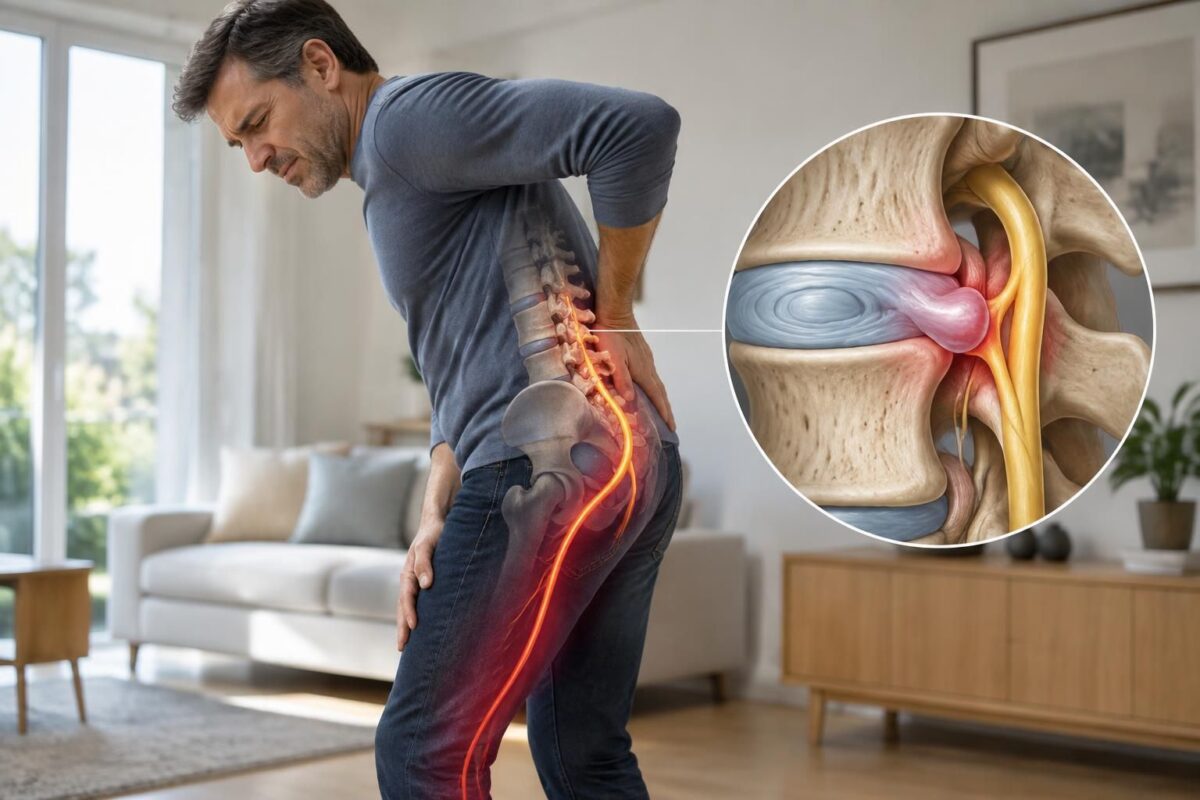
Disc protrusion and sciatica: when the disc touches a nerve root
IN BRIEF A disc protrusion is a disc that extends beyond its usual contour. If it irritates a nerve root, it can contribute to sciatica, with pain radiating into the buttock or leg, sometimes accompanied by tingling or weakness. An…

Dr Sylvain Desforges, B.Sc., D.O., N.D., osteopath, is the founding president of TAGMED and of the ACMA association. He dedicates his practice to chronic spinal pain, low back pain and symptoms compatible with sciatica, particularly when pain radiates toward the buttock, leg, calf, foot or toes.
Through SOS Sciatique, he publishes educational content on sciatica symptoms, possible causes such as disc herniation, disc narrowing, foraminal stenosis or irritation of a lumbar nerve root, as well as non-surgical approaches that may be considered according to the evaluation. At Clinique TAGMED, care may include, depending on the case, motorized neurovertebral decompression, specific osteopathic care or precision percussion.
For an evaluation related to sciatica treatment in Montreal / Mount Royal or sciatica treatment in Terrebonne, please consult the services available at Clinique TAGMED.
Medical disclaimer
The information published on SOS Sciatique is provided for educational purposes only and does not replace a consultation, diagnosis, opinion or treatment provided by a physician or another authorized healthcare professional. The author of this article is neither a medical doctor nor a specialist in a medical specialty recognized by the Collège des médecins du Québec. The osteopathic, manual medicine or functional support approaches described on this site do not constitute medical acts and are not intended to replace medical follow-up.
Consult a physician or emergency service in cases of loss of bladder or bowel control, anesthesia in the saddle area, significant or progressive weakness in the leg or foot, fever, recent trauma, severe pain or rapid worsening of symptoms. For more details, please read our Legal Notice.