Sciatica in Montreal: irritation L5 or S1, why the clinical examination matters
31/10/2026
Sciatica and pain that varies with activity
31/10/2026
IN BRIEF Sciatica is pain related to the irritation of a nerve root, often L5 or S1. The pathway of symptoms, strength, sensitivity, and walking provide clues, but the territories may overlap: the clinical examination therefore helps guide the assessment without relying solely on MRI. In Terrebonne, an appropriate analysis allows for a better understanding of the problem and guides the next steps according to the evolution. |
Sciatica in Terrebonne: L5 or S1 irritation
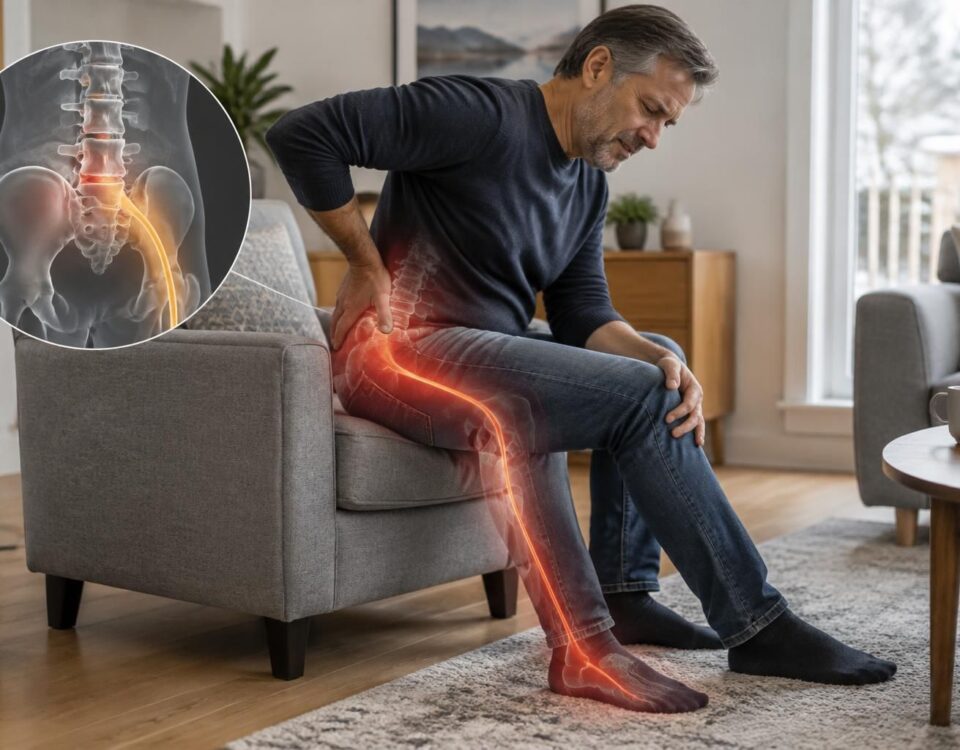
A pain that radiates down to the top of the foot and the big toe may indicate irritation of the L5 root; pain toward the heel or the outer edge of the foot may suggest S1. However, these pathways overlap and vary from person to person.
In Terrebonne, the clinical examination helps to interpret these symptoms by comparing strength, sensitivity, reflexes, and walking. An MRI image alone is not sufficient to identify the cause of the symptoms or to determine the appropriate management. In cases of new or progressive weakness, urinary or bowel disturbances, or numbness in the saddle area, consult a healthcare professional promptly.
A pain that radiates down the leg may be related to irritation of the L5 or S1 root, but its pathway alone is not enough to establish a diagnosis. In Terrebonne and elsewhere, the clinical examination compares pain, sensitivity, strength, and reflexes. It helps the professional determine if the signs match a nerve root and then decide if imaging or another evaluation is necessary.
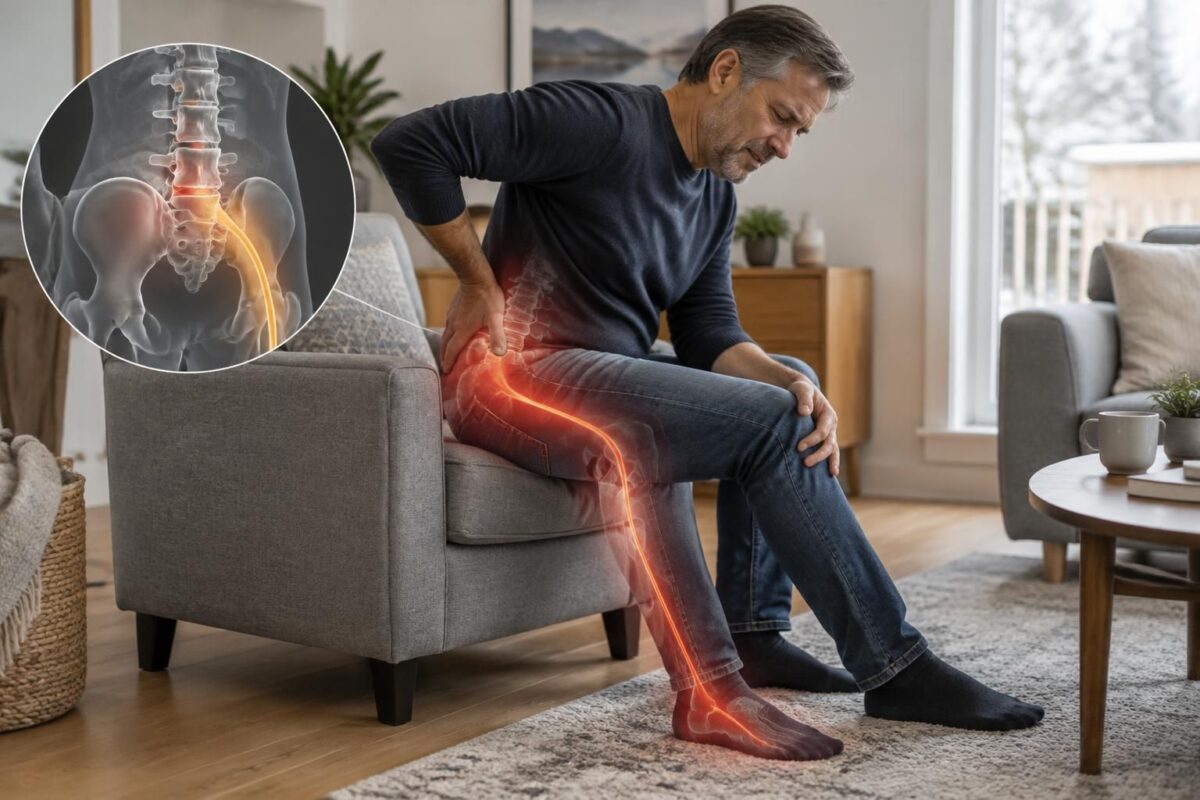
Sciatica in Terrebonne: L5-S1 Herniation and Pain Towards the Foot
IN BRIEF A sciatica related to a possible L5-S1 herniation can cause pain from the lower back or buttock down to the calf, heel, or foot. The path of the symptoms alone is not enough to confirm the cause: the…

Sciatica in Terrebonne: L4-L5 protrusion and leg pain
IN BRIEF A L4-L5 disc protrusion is a bulging of a lumbar disc that may, depending on its relationship with the nerves, contribute to sciatica, with pain, tingling, or numbness in the leg. In Terrebonne, an assessment helps relate symptoms,…
Understanding the difference between L5 and S1
L5 and S1 are nerve roots that contribute to the sensation and movement of the leg and foot. They are part of the roots that help form the sciatic nerve. Irritation near the spine can therefore cause symptoms felt further down, sometimes even into the toes.
The levels L4-L5 and L5-S1 refer to spaces between the vertebrae and discs. The terms L5 and S1 refer more specifically to nerve roots. An injury at the L4-L5 disc often affects the L5 root, while an injury at the L5-S1 level often affects the S1 root. However, this relationship is not automatic: anatomical variations and examination results must also be taken into account.
To learn more about these levels, refer to this guide on the difference between L4-L5 and L5-S1, as well as this explanation on nerve roots, discs, and foramens.
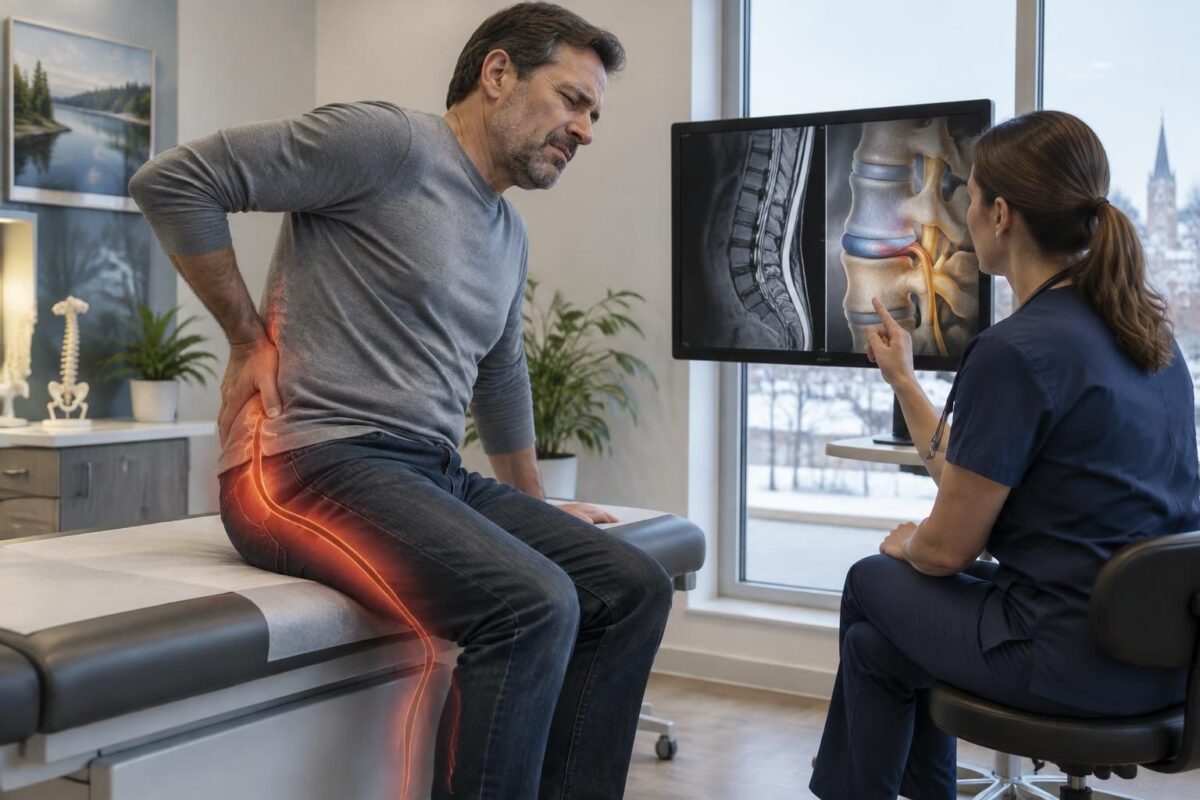
Sciatica in Terrebonne: what “disc-root conflict” means
IN BRIEF A disc-root conflict occurs when an intervertebral disc irritates or compresses a nerve root in the lower back. It can cause sciatica: lower back pain that radiates down into the buttock and leg, sometimes accompanied by sensory disturbances…
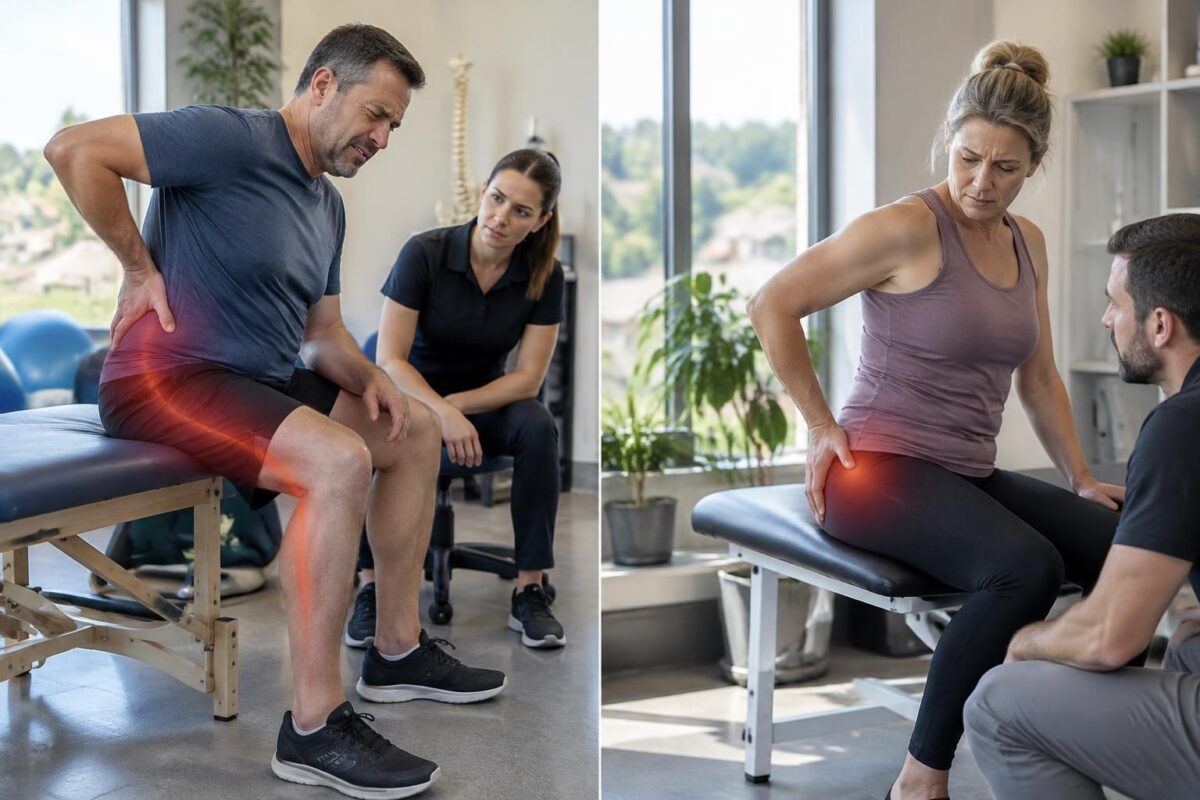
Sciatica in Terrebonne: radicular pain versus referred pain
IN BRIEF Sciatica refers to pain that radiates into the buttock and sometimes the leg. A radicular pain comes from the irritation of a nerve root and may be accompanied by tingling, numbness, or weakness; a referred pain spreads from…
The pathway of pain provides clues, not a diagnosis
Irritation of L5 can cause pain or numbness on the outside of the leg and on the top of the foot, sometimes extending to the big toe. Irritation of S1 may affect the back of the thigh and calf, the heel, or the outer edge of the foot, sometimes extending to the little toe.
These descriptions are general guidelines. The territories of L5 and S1 overlap, and symptoms do not always follow a precise map. Therefore, the big toe or the outer edge of the foot alone cannot confirm which root is irritated. A guide on the sensory territories associated with sciatica can help understand these references, but it does not replace an examination.
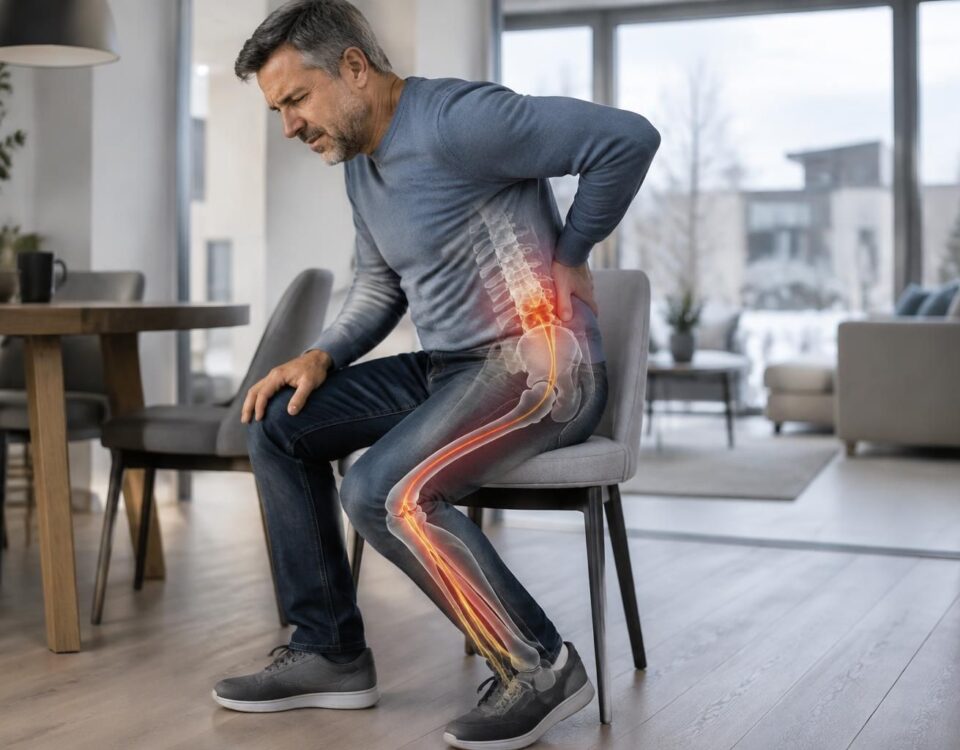
Pain can also start in the lower back, in the buttocks, or in the leg. To better describe its progression, note where it begins, how far it radiates, the areas of numbness, and the activities that modify it. Pain that radiates from the lower back to the calf may be compatible with nerve irritation, but other causes remain possible.

Sciatica in Terrebonne: nerve root, disc, and foramen explained simply
IN BRIEF Sciatica is pain that occurs when a nerve root in the lower back is irritated or compressed, sometimes by a disk or a narrowed foramen. Understanding these structures helps better locate the possible cause of symptoms and guide…
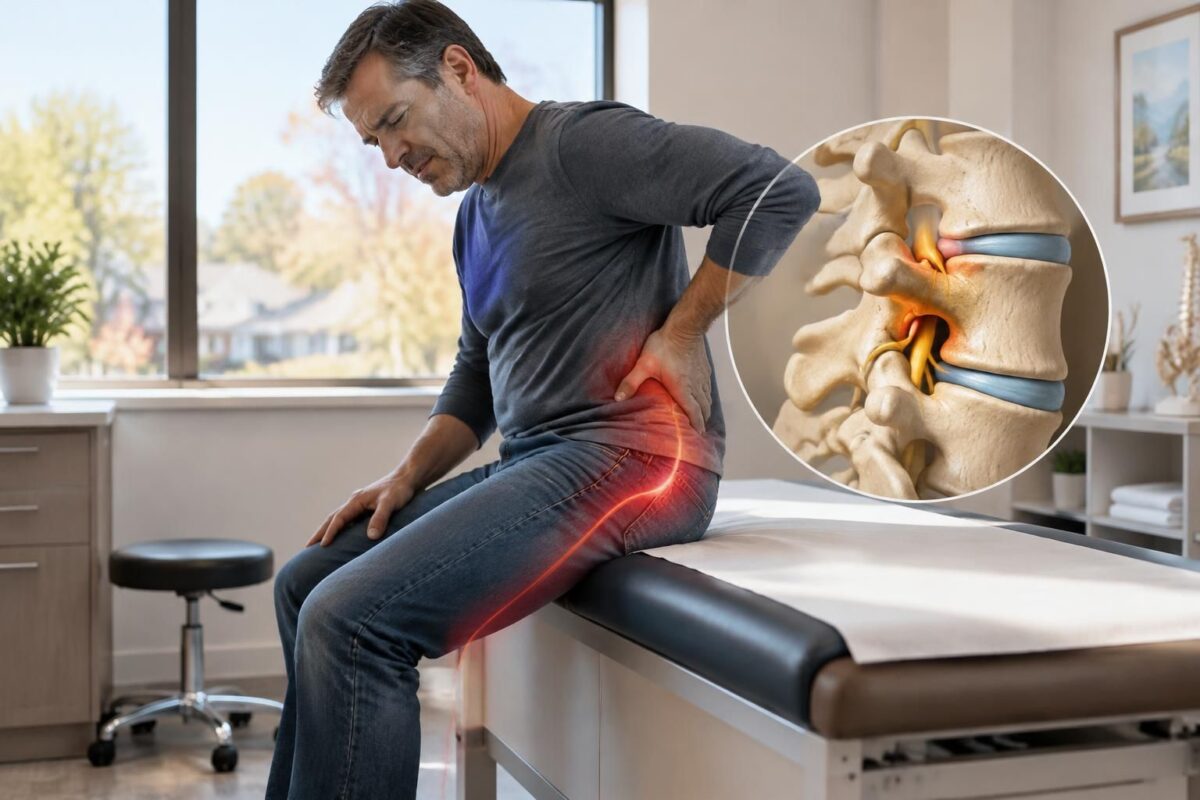
Sciatica in Terrebonne: understanding the L5-S1 foraminal compression
IN BRIEF The L5-S1 foraminal compression corresponds to a narrowing of the opening through which a nerve root passes, potentially contributing to sciatica. In Terrebonne, the assessment compares the side and course of the symptoms, neurological examination, imaging, and limited…
Why the clinical examination matters
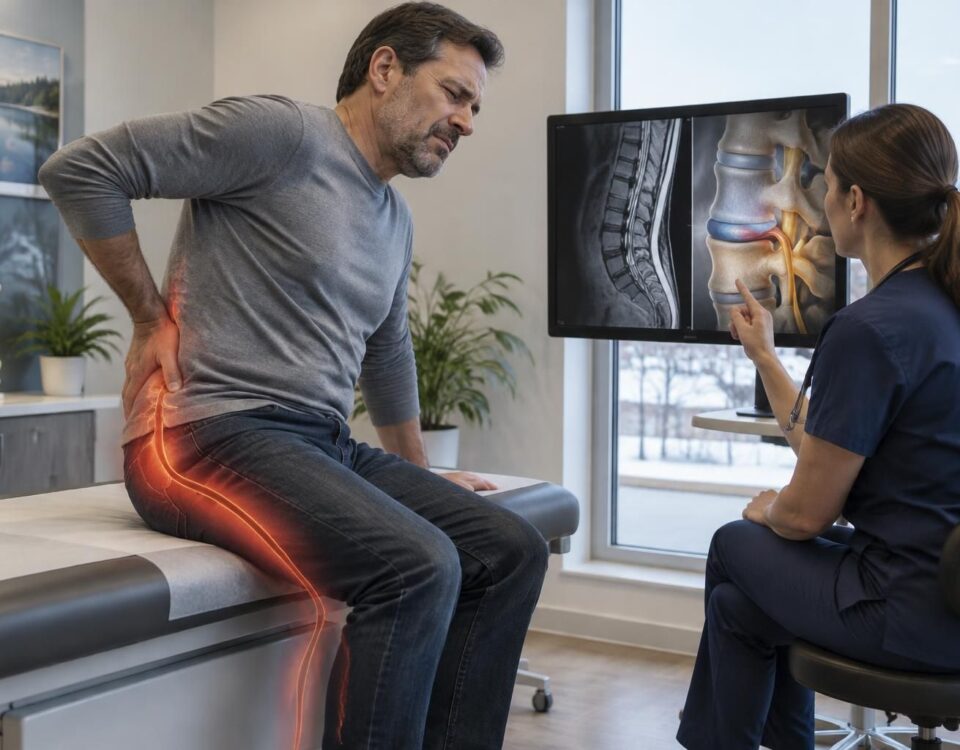
The clinical examination allows for the comparison of several elements instead of relying on a single symptom. The professional can assess the strength of certain foot movements, sensitivity in different areas, reflexes, and walking patterns. The professional also checks if signs appear on one side only or bilaterally.
For L5, the examination may focus on the ability to lift the foot and the big toe. For S1, it may check the strength used to push the foot down and the response of the Achilles reflex. These observations must be interpreted together. Difficulty walking on the heels or on tiptoes requires appropriate evaluation; these maneuvers alone do not allow for a diagnosis.
The professional also considers the duration of symptoms, their progression, medical history, and affected activities. For instance, pain that developed after a long period of standing should be placed in context. It may be associated with several mechanisms, including narrowing of the canal or foramen. See also the information on pain in the leg after prolonged standing.
Sciatica in Terrebonne: why L5-S1 is often involved
IN BRIEF Sciatica corresponds to pain related to the irritation of a nerve root, which can extend from the buttock down to the leg. The L5-S1 level is often involved, as a disc herniation or irritation at this location can…

Sciatica in Terrebonne: L5 and difficulty lifting the foot
IN SHORT The L5 sciatica can cause pain or numbness on the side of the leg, the top of the foot, and the big toe, sometimes with difficulty lifting the foot. In Terrebonne, an evaluation compares strength, sensitivity, reflexes, and…
Imaging must be interpreted with the symptoms
An X-ray or MRI may show disc or joint changes. However, a visible abnormality does not prove that it causes the pain. The result must correspond to the affected side, the pathway of symptoms, and the findings of the clinical examination.
The professional may consider imaging when the result is likely to modify management, especially if symptoms persist, if a neurological deficit appears, or if warning signs are present. Therefore, an MRI is not necessary in every case of sciatic pain. To understand another term that may sometimes be present in reports, refer to the explanation on disc herniation of the protrusion type.
Choosing management according to assessment
Management depends on the probable cause, the stability of strength and sensitivity, as well as the person’s objectives. When neurological signs remain stable, the professional may discuss a non-surgical approach and plan a reassessment. Manual therapies or technologies, including motorized neurovertebral decompression, are not suitable for every situation and do not replace a medical diagnosis.
At the TAGMED Clinic, options are discussed after an assessment and based on the individual’s file. Progress should be monitored using functional measures, such as walking, sleep, strength, and ability to resume important activities. If symptoms change or function declines, the plan should be reassessed rather than automatically repeated.
For an assessment in Terrebonne, consult the information on sciatica treatment in Terrebonne. A general resource on sciatica is also available in the recommendations dedicated to sciatica.
When to Seek a Rapid Evaluation
A new or progressive weakness, a foot drop, worsening gait, or numbness that spreads requires prompt medical evaluation. Significant pain accompanied by fever or occurring after trauma should also be assessed without delay.
New urinary or bowel issues, loss of sensation in the perineal area, or pain associated with significant weakness in both legs may signal an emergency. In these situations, contact an emergency service immediately.
Frequently Asked Questions
Does pain in the big toe confirm L5 irritation?
No. Pain or numbness in the big toe may guide the examination towards L5, but this sign does not confirm the cause. The professional compares the symptom pathways with strength, sensitivity, and reflexes.
Does heel or little toe pain confirm S1 irritation?
No. These areas may correspond to the territory of S1, but sensations overlap between roots. The clinical examination must relate several signs.
Does sciatica always mean a herniated disc is present?
No. A herniated disc may irritate a root, but other causes can produce similar symptoms. Examination and, when indicated, imaging help clarify the situation.
What should be prepared before a consultation?
Note the start date, changes in the pain pathway, numb areas, affected activities, and any treatments already tried. Bring imaging reports and a list of your medications, if you have any.
About the Author
Sylvain Desforges, B.Sc., D.O., N.D., Doctor of Osteopathy and Naturopath, is the founding president of TAGMED and the ACMA association. His practice focuses on chronic pain in the spine, lower back pain, and pain consistent with sciatica, especially when it radiates down toward the buttock, leg, calf, foot, or toes.
Through SOS Sciatica, he publishes educational content on sciatica symptoms, possible causes — such as a herniated disc, disc compression, foraminal stenosis, or irritation of a lumbar nerve root — and non-surgical approaches that may be considered based on the assessment. At the TAGMED Clinic, care may include, as appropriate, motorized neurovertebral decompression, specific osteopathy, or precision percussion.
For an evaluation related to sciatica treatment in Montreal or Mont-Royal, or to sciatica treatment in Terrebonne, consult the available services at the TAGMED Clinic.
Medical Disclaimer
Medical disclaimer: The information and advice provided on this site do not replace the opinion, diagnosis, or treatment of a healthcare professional. Please note that Sylvain Desforges, B.Sc., D.O., N.D., Doctor of osteopathy, is neither a medical doctor nor a physician, and is not a specialist in a medical specialty as defined by the Collège des médecins du Québec. Manual medicine, functional medicine, and sports medicine as described on this site exclude any treatment or medical diagnosis made by a doctor or specialist physician. Always consult your doctor for any medical questions. For more details, please read our complete legal notice.
L5 or S1 Signs
- L5: possible pain on the top of the foot, sometimes extending to the big toe.
- S1: possible pain in the heel or on the outer edge of the foot.
- These pathways overlap: they are not sufficient to confirm the irritated root.
Why Clinical Examination Matters
- It compares strength, sensitivity, reflexes, and gait.
- Walking on heels and toes provides functional clues.
- A new or progressive weakness requires prompt medical assessment.

In Terrebonne, pain that radiates down the leg may be consistent with irritation of the nerve root L5 or S1, but its pathway is not enough to establish a diagnosis. The clinical examination compares pain, sensitivity, strength, reflexes, and gait to better understand the problem, assess its evolution, and choose an appropriate management plan.
Recognizing Possible Signs of L5 or S1 Irritation
The root L5 may be associated with pain or numbness on the side of the leg and the top of the foot, sometimes extending to the big toe. Difficulty in raising the toes or the big toe may also be noteworthy. The root S1 may instead be linked to symptoms in the back of the thigh and calf, in the heel or on the outer edge of the foot, extending to the little toe. Weakness in standing on tiptoes may then be assessed.
These markers remain indicative. The sensory territories of L5 and S1 overlap, and they are not identical for everyone. Moreover, the disc levels L4-L5 and L5-S1 do not themselves refer to nerve roots: an anomaly on imaging does not, by itself, determine which root explains the symptoms. The affected side, the progression, and the examination results must be considered together.
Why the clinical examination is essential
Comparing strength, sensitivity, and walking
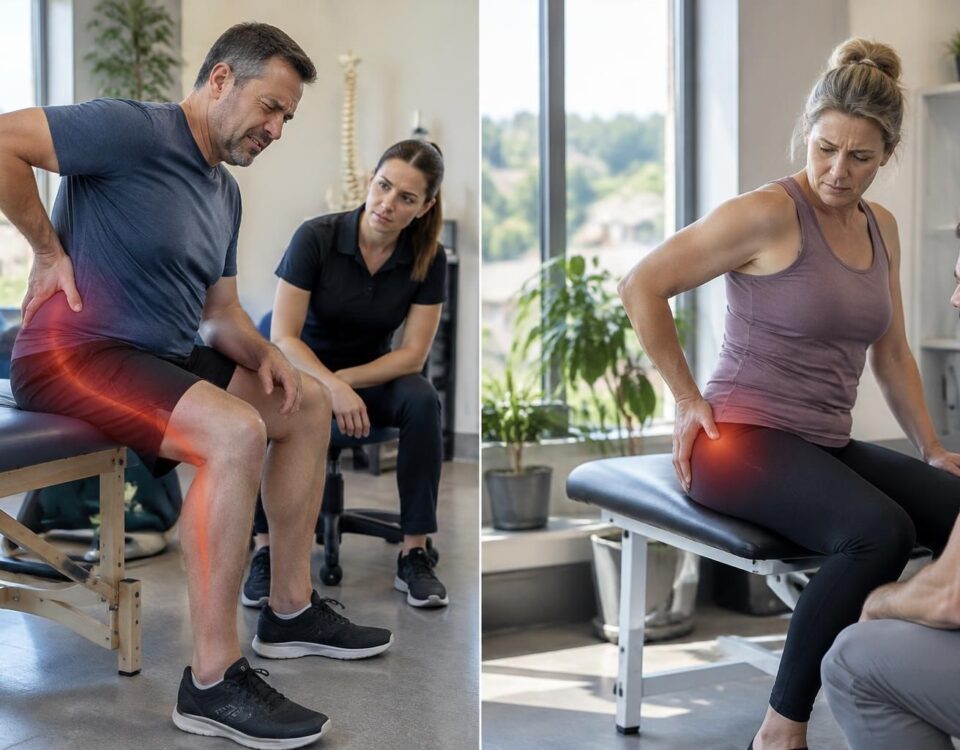
During an evaluation, the professional can compare both legs, check the sensitivity areas, and observe functional movements. Walking on the heels can provide a clue about the ability to lift the foot; walking on tiptoes allows observation of plantar flexion. These actions do not diagnose in isolation, but they complement other observations, notably reflexes and the response to movements of the back.
It is useful to precisely describe where the pain starts, how far it descends, which toes are affected, and which positions modify it. Also note the changes in strength, walking distance, tolerance to sitting, and activities that have become difficult. This information facilitates monitoring and helps determine if the situation remains stable.
Deciding if imaging is useful
An X-ray or MRI is not automatically necessary at the outset. Disc anomalies may be visible in people who have no pain. Imaging is especially relevant when its result can change the management, in the presence of concerning signs or when persistent symptoms warrant investigation. The clinical examination helps interpret the images without automatically attributing the symptoms to an observed anomaly.
Recommendations for ongoing management
If symptoms are stable, discuss a graduated plan with an authorized professional, tailored to your condition and activities. Define measurable goals — walking more, sleeping better, or resuming a daily task — and a date for re-evaluation. If the pain changes direction, if sensitivity decreases or if walking deteriorates, have the situation reassessed rather than automatically continuing the same care.
Consult quickly in case of new or progressive weakness, or if the foot drops. New urinary or bowel issues, loss of sensitivity in the saddle area, fever, or significant trauma require urgent evaluation. This article is educational and does not replace a consultation, diagnosis, or medical advice.
| Clinical marker | L5 or S1 |
|---|---|
| Sensitivity | L5: top of the foot, sometimes the big toe. S1: heel and outer edge of the foot. |
| Strength | L5: lifting the foot or the big toe. S1: pushing on the forefoot. |
| Walking | Walking on the heels primarily evaluates L5; on tiptoes, primarily S1. |
| Symptom boundary | The territories L5 and S1 overlap: pain alone does not always localize the root. |
| Why examine | Comparing strength, sensitivity, reflexes, and walking helps guide the evaluation and follow-up. |
| Link with MRI | A visible disc level does not confirm on its own the responsible root; results must correspond to the examination. |
| Warning sign | New or progressive weakness, foot drop or urinary and bowel issues: urgent medical evaluation. |
Sciatica in Terrebonne: illustrative testimonies on L5 or S1 irritation and the importance of clinical examination
The testimonials below are fictitious and composite. They illustrate possible situations and do not report the experiences of real patients. Pain that radiates down the leg can have various causes; these examples do not allow for a remote diagnosis.
“The pain went down to my big toe” — example consistent with L5 irritation
In this scenario, a person from Terrebonne describes pain starting from the lower back and radiating down the side of the leg to the top of the foot and the big toe. This path may be consistent with irritation of the L5 root. Difficulty in lifting the foot or the big toe may also be assessed during the examination.
The path gives a clue but does not alone confirm which root is affected. The professional compares notably the strength of both sides, sensitivity, walking on heels and the response to movements. Symptoms may overlap between several nerve territories.
“I mainly felt the pain in the heel and edge of the foot” — example consistent with S1 irritation
In another fictitious case, the pain extends from the buttock toward the back of the thigh and calf, then to the heel or outer edge of the foot. This profile may point towards the S1 root. The ability to walk on tiptoes and the Achilles reflex may be part of the assessed elements.
A path towards the little toe or heel is a useful marker, but it is not enough to establish a diagnosis. The signs of L5 and S1 can overlap; therefore, the examination must relate pain, sensitivity, strength, reflexes, and function.
Why the clinical examination matters
The disc levels L4-L5 and L5-S1 refer to the location between two vertebrae. The roots L5 and S1 refer to nerves that can be irritated. A visible anomaly on imaging does not automatically prove it explains the symptoms: it must correspond to the side, the painful path, and the examination results.
During an evaluation, the professional can compare walking on heels and on tiptoes, lifting the foot and the big toe, sensitivity, reflexes, and the reaction to lumbar movements. They also consider the evolution of the symptoms and their effects on walking, sleeping, working, or driving.
In Terrebonne, as elsewhere, the choice of care should take into account the working diagnosis, neurological stability, the person’s goals, and their tolerance. A serious plan includes initial measures and a re-evaluation; if strength decreases or function deteriorates, priorities may change.
Imaging is not always necessary from the start. It is especially pertinent when its result can change management, particularly with concerning neurological signs, persistent symptoms, or a progression that requires further analysis. An image must always be interpreted with the history and clinical examination.
Signs that require rapid evaluation
Quickly consult in case of new or progressive weakness, foot drop, spreading numbness, or increasing difficulty walking. A loss of bowel or bladder control, insensitivity in the saddle region, or bilateral sciatica may require urgent assessment. Pain accompanied by fever or occurring after significant trauma should also be taken seriously.
About the Author
Sylvain Desforges, B.Sc., D.O., N.D., Doctor of Osteopathy and Naturopath, is the founding president of TAGMED and the ACMA. His practice is dedicated to chronic spinal pain, low back pain, and pain consistent with sciatica, particularly when the pain radiates to the buttock, leg, calf, foot, or toes.
Through SOS Sciatique, he publishes educational content on sciatica symptoms, possible causes — including herniated disks, disk compression, foraminal stenosis, or irritation of a lumbar nerve root — and non-surgical approaches that may be considered based on evaluation. At the TAGMED Clinic, care may include, depending on the case, motorized neurovertebral decompression, specific osteopathy, or precision percussion.
Medical Warning
The information published on SOS Sciatique is provided for educational purposes and does not replace a consultation, diagnosis, advice, or treatment performed by a physician or other authorized health care professional. The author of this article is neither a physician nor a specialist in a medical specialty recognized by the Collège des médecins du Québec. The osteopathy, manual medicine, or functional support approaches described on this site do not constitute medical acts and are not intended to replace medical follow-up.
In case of loss of bowel or bladder control, anesthesia in the saddle region, significant or progressive weakness of the leg or foot, fever, recent trauma, severe pain, or rapid worsening, consult a doctor or emergency service.
Sciatica in Terrebonne: Irritation of L5 or S1, Why the Clinical Exam Matters
Pain that originates from the lower back or buttock and radiates down the leg may be consistent with sciatica. In Terrebonne, as elsewhere, understanding its course is a useful first step, but is not sufficient to definitively determine which nerve root is irritated. The clinical exam correlates symptoms, strength, sensitivity, reflexes, and movements in order to establish a coherent hypothesis and guide the next decisions.
The L5 and S1 roots contribute to the sciatic nerve, which descends from the lumbar region to the buttock and leg. Irritation of L5 may be accompanied by symptoms on the side of the leg and the top of the foot, sometimes extending to the big toe. Irritation of S1 may instead manifest in the back of the thigh and calf, the heel, or the outer edge of the foot. However, these landmarks are variable: the territories overlap and are not identical for everyone.
It is also important to distinguish the disc levels from the nerve roots. L4-L5 and L5-S1 refer to spaces between vertebrae, while L5 and S1 refer to roots. A visible abnormality on imaging does not, by itself, affirm which structure explains the pain. The affected side, the trajectory of the symptoms, and the results of the exam must correspond as closely as possible.
What the Clinical Exam Allows to Verify
The evaluation can compare the strength and sensitivity of both legs, examine certain reflexes, and observe the gait. The ability to walk on the heels, walk on the toes, or lift the big toe provides clues about motor function. The professional may also examine the hip and lower back, then check whether certain movements reproduce, move, or lessen the symptoms. No isolated test confirms a cause or a specific level on its own.
This approach helps distinguish pain compatible with root irritation from other possible causes. A herniated disc, narrowing of the canal, or irritation in the buttock region may produce similar symptoms. Imaging, particularly MRI, may be relevant if it is likely to modify management in the presence of concerning signs or when symptoms persist. It is not automatically necessary from the outset: disc abnormalities can also be observed in individuals without pain.
Choosing a Proportionate and Measurable Approach
When neurological function is stable, non-surgical options may be considered based on the evaluation, the person’s goals, and tolerance. A serious plan specifies what will be monitored: walking, sleeping, ability to remain seated, strength, sensitivity, or resuming activities. It also includes a reassessment. A temporary improvement in pain does not necessarily prove that the cause is confirmed; functional and neurological evolution also matters.
At the TAGMED Clinic, Sylvain Desforges, osteopath and naturopath, founder of TAGMED clinics and the ACMA, dedicates his practice to managing chronic pain and innovating in care. Depending on the evaluation, services may include specific osteopathy or motorized neurovertebral decompression. These approaches do not replace a medical diagnosis or follow-up by an authorized health care professional. An evaluation in Terrebonne can help clarify the available options, without promising a result or imposing a predetermined number of sessions.
Consult quickly in case of new or progressive weakness, foot drop, spreading numbness, or deteriorating walking. New bowel or bladder issues, loss of sensitivity in the saddle region, fever, or significant trauma require urgent medical evaluation.
About the Author: Sylvain Desforges, B.Sc., D.O., N.D., is a Doctor of Osteopathy and Naturopath. He is the founding president of TAGMED and the ACMA. His educational content focuses on chronic spinal pain, low back pain, and symptoms consistent with sciatica. The information presented is educational and does not replace a consultation, diagnosis, or treatment by an authorized health care professional. The author is neither a physician nor a specialist in a medical specialty recognized by the Collège des médecins du Québec.
In Terrebonne, pain that radiates down the leg may be consistent with irritation of the L5 or S1 root, but its trajectory alone is not sufficient to establish a diagnosis. The clinical exam compares symptoms, strength, sensitivity, reflexes, and gait to determine if the clues align and if a more detailed medical evaluation is necessary.
Differentiating L5 and S1 Clues
Irritation of L5 can notably be accompanied by symptoms on the top of the foot or towards the big toe, as well as difficulty lifting the foot. An involvement of S1 may rather affect the back of the calf, the heel, or the outer edge of the foot, sometimes with difficulty standing on tiptoe. These landmarks are useful, but sensory territories overlap and vary from person to person: no toe, taken in isolation, allows confirmation of the concerned root.
It is also important to distinguish the level of the disc from the nerve root. An abnormality at L4-L5 may affect L5, while an involvement at L5-S1 may affect S1, but this correspondence is not automatic. To explore this distinction further, consult the guide on sciatica L4-L5 and L5-S1 in Terrebonne, as well as the resource from TAGMED Clinic on nerve roots. Educational materials on sciatica are also available in this course dedicated to sciatica and in this presentation of lumbosciatica.
Why Clinical Examination Matters
The examination allows symptoms to be related to nerve function and daily activities. The professional can compare both sides, check the strength of the foot and big toe, examine sensitivity and reflexes, and then observe walking on heels and toes. They can also assess responses to movements of the back and hip. It is this entire set of elements, rather than a pain map alone, that helps guide the working diagnosis and next steps.
Imaging is not always the first necessary examination: it is mainly useful when its result can change the approach, especially if symptoms persist, if the diagnosis remains uncertain, or if a neurological deficit is present. An image must be interpreted along with clinical signs and the affected side, as a visible disc abnormality alone does not prove it is the cause of the pain. The page on disc-root conflict in Terrebonne presents this relationship between disc and nerve root.
Describing Symptoms and Tracking Their Evolution
To facilitate assessment, note where the pain starts, how far it radiates down, any areas of numbness, and any positions that worsen or relieve it. Specify whether sitting becomes difficult, whether the pain is present upon waking, or whether walking changes. This information can be useful during a consultation, particularly in the presence of pain that prevents sitting, pain that radiates down the leg upon waking, or weakness in the leg affecting walking confidence.
Follow-up should focus on both pain and functional measures: ability to walk on heels or toes, foot strength, tolerance to sitting position, and accomplishment of important activities. A change in trajectory, loss of strength, or progressing numbness warrants reevaluation. Seek prompt consultation in case of new or progressive weakness, foot drop, numbness in the saddle region, or urinary or bowel issues; these signs require urgent medical evaluation. To identify other nerve symptoms not to be taken lightly, consult a licensed health professional.
Resources Based on Your Situation
Clinical criteria remain the same, whether you are in Terrebonne or Montreal: the plan should take into account the working diagnosis, neurological function, progress, and your goals. To compare references regarding disc levels and roots in another area, consult the guide on sciatica L4-L5 and L5-S1 in Montreal. Educational resources do not replace individual assessment and do not confirm the cause of symptoms on their own.

Sylvain Desforges, B.Sc., D.O., N.D., docteur en ostéopathie
Dr Sylvain Desforges, B.Sc., D.O., N.D., osteopath, is the founding president of TAGMED and of the ACMA association. He dedicates his practice to chronic spinal pain, low back pain and symptoms compatible with sciatica, particularly when pain radiates toward the buttock, leg, calf, foot or toes.
Through SOS Sciatique, he publishes educational content on sciatica symptoms, possible causes such as disc herniation, disc narrowing, foraminal stenosis or irritation of a lumbar nerve root, as well as non-surgical approaches that may be considered according to the evaluation. At Clinique TAGMED, care may include, depending on the case, motorized neurovertebral decompression, specific osteopathic care or precision percussion.
For an evaluation related to sciatica treatment in Montreal / Mount Royal or sciatica treatment in Terrebonne, please consult the services available at Clinique TAGMED.
Medical disclaimer
The information published on SOS Sciatique is provided for educational purposes only and does not replace a consultation, diagnosis, opinion or treatment provided by a physician or another authorized healthcare professional. The author of this article is neither a medical doctor nor a specialist in a medical specialty recognized by the Collège des médecins du Québec. The osteopathic, manual medicine or functional support approaches described on this site do not constitute medical acts and are not intended to replace medical follow-up.
Consult a physician or emergency service in cases of loss of bladder or bowel control, anesthesia in the saddle area, significant or progressive weakness in the leg or foot, fever, recent trauma, severe pain or rapid worsening of symptoms. For more details, please read our Legal Notice.