Herniated disc and foot pain: L5 or S1?
16/09/2026
Sciatica in Montreal: loss of sensitivity in the toes
17/09/2026
IN BRIEF
| In brief, sciatica is pain that follows the sciatic nerve, and frequent breaks during walking help manage this pain while staying active. Benefits: maintain activity, improve circulation, and strengthen the back without worsening inflammation. How it works: alternate short periods of walking and breaks, adopt an upright posture and a comfortable pace, and prefer appropriate shoes and flat surfaces. This approach supports comfort and recovery while preserving mobility. |
Sciatica is characterized by pain that can follow the path of the sciatic nerve. Walking can remain feasible with frequent breaks and appropriate adjustments to manage symptoms while staying active.
- Adopt a gentle pace and break walking into short steps, gradually increasing the duration according to your comfort.
- Maintain an upright posture and short steps to reduce pressure on the back and hips.
- Use a mobility aid if necessary and favor comfortable shoes on a flat surface.
- Listen to your body: breathe calmly, and take a break if the pain intensifies.
- After walking, plan rest and gentle stretches to aid recovery and consult a professional if the pain worsens.
As a health professional, I explain why frequent breaks can be beneficial when walking with sciatica. I describe how to integrate them without worsening pain, what durations to aim for, and when to seek advice. This guide offers simple tips and reliable resources to stay active safely.
Why Breaks Are Useful
Breaks help reduce the load on the path of the sciatic nerve. They prevent pain spikes and assist in maintaining walking without aggravation. Breaks give the back and muscles time to recover between walking segments.
How to Structure Effective Breaks
Plan for short intervals. For example, 5 to 10 minutes of walking followed by a 1 to 2 minute break. Repeat this cycle several times. Maintain an upright and relaxed posture during breaks. Use supports if necessary to relieve the lower back.
Recommended Frequency and Duration
Avoid prolonged periods without rest. Listen to your body and adjust intervals according to your comfort. Slow progression is preferable to maximum effort over a short period. Specialized resources suggest adapting the pace according to the level of pain and available energy.
Equipment, Environment, and Shoes
Favor comfortable and suitable shoes that support the arch and absorb shocks. Prefer flat and stable surfaces. If the pain is marked, walking aids can be helpful, but their use should remain temporary and guided.
The Role of Resources and Online Materials
Online resources provide additional tips on walking and sciatica. For example, you can check practical guides on posture and walking with sciatica and clinical insights on walking with TAGMED clinic. For suitable perspectives and rhythms, see Back support and pace. Other useful resources address symptoms in the calf or difficulties related to walking, such as calf pain while walking and descending stairs.
To guide clinical choices, practitioners recommend prioritizing simple and adapted approaches, notably within the services offered by TAGMED clinic in Montreal or Terrebonne.
More useful ideas can be found in specialized resources such as positions and gestures that relieve and should you walk or rest.
For a broader overview of how breaks influence walking and symptoms, see also examples and tips presented on the sites night pain and leg and pain after prolonged standing.
In any case, ensure that your routine remains suited to your pain, mobility, and goals. Cautious progression helps maintain back stability and limit recurrences.
Note: this text presents general approaches. For personalized advice, discuss with a healthcare professional and consider the options provided by your local clinic.
For clinical perspectives on neurovertebral decompression and specific cases, avoid suggesting inappropriate exercises or stretches. Available resources aim to inform about walking and daily management, without replacing a diagnosis or medical treatment.
Training and professional associations mentioned in this context include NUMSS, NAO, National University of Medical Sciences and National Academy of Osteopathy, in the context of professional pathways. In osteopathy and related disciplines, professional references remain ACMA, College of Canadian Osteopaths and Canadian Osteopaths College.
Useful links and authorized domains: sossciatique.com, cliniquetagmed.com, decompressionneurovertbrale.com, sosherniediscale.com, sosherniateddisc.com, sostunnelcarpien.com, sossciatique.com.
Medical Disclaimer: The information and advice provided on this site do not replace the opinion, diagnosis, or treatment of a healthcare professional. Please note that Dr. Sylvain Desforges, osteopath, is neither a medical doctor nor a physician, and is not specialized in any medical specialty as defined by the Collège des médecins du Québec. Manual medicine, functional medicine, and sports medicine as described on this site exclude any treatment or medical diagnosis made by a physician or specialist. Always consult your doctor for any medical questions. For more details, please read our full Legal Notice.
- Sciatica and signals: pain intensifies, paresthesias or weakness — take a break.
- Frequency of breaks: prefer short and regular breaks rather than long periods without rest.
- Posture and breathing: back straight, slow and controlled breathing while walking.
- Surface and shoes: flat floors and well-supported shoes.
- Duration of breaks: 1–2 minutes to release tension and promote recovery.
- Techniques during the break: gentle stretching of the lower back and hamstrings; change position.
- Elements to avoid: uneven terrain, too fast, sudden movements.
- When to consult: pain that persists or worsens, weakness, loss of bladder or bowel control.

This text offers practical recommendations for managing Sciatica while walking, emphasizing frequent breaks and an adapted progression. You will discover why alternating walking and resting helps limit pain, how to structure your outings, and what gestures to adopt to stay active without worsening the condition.
Why frequent breaks while walking?
Sciatica can vary in intensity; breaks allow you to unload your back, release tension, and assess the evolution of pain. By dividing your journey into segments, you maintain regular activity while avoiding intense flare-ups that could last several hours. Breaks also provide time to check your posture and refocus your breathing.
How to structure your sessions with breaks
Adopt a cycle rhythm: for example, 5 to 10 minutes of walking followed by a break of 1 to 2 minutes. Start with 2 or 3 cycles and gradually increase based on your comfort and energy. Avoid long outings without breaks initially; prioritize consistency over distance. Keep an eye on your body’s signals and adjust the pace accordingly.
Frequency and duration of breaks
Breaks should not disrupt activity but dose it wisely. Sit for a few moments, catch your breath, and enjoy the relaxation of the lower back muscles. During breaks, take a few deep breaths and maintain a neutral posture; you can do some gentle stretches without forcing. Stay hydrated and observe the evolution of pain after each segment.
Comfort and safety during breaks
Use supportive elements if necessary and adapt your environment: comfortable shoes and a flat surface to limit stress on the spine. If the pain increases, do not continue at all costs: listen to your body and adjust the pace and duration of breaks. Maintain an upright posture during each segment and focus on diaphragmatic breathing that supports the deep muscles.
When to consult and how to progress
If the pain becomes persistent or is accompanied by concerning signs, consult a professional. With the help of a physical therapist or a doctor, you can adjust your program: types of stretches, strengthening exercises, and possible adaptations such as the temporary use of a support. The goal is to stay active while protecting your back and progressing safely.
Comparison Table: Sciatica and Frequent Breaks while Walking
| Element | Concise Text |
|---|---|
| Rhythm and breaks | Adjust the rhythm and plan regular breaks to limit pain. |
| Posture | Keep the back straight and engage the torso to reduce pressure. |
| Support | Use a support like a cane on the pain side if necessary for secure movement. |
| Shoes | Choose comfortable shoes with cushioning and arch support. |
| Warning signs | Stop and consult if pain worsens or if there is a loss of control of urination or bowel. |
| Exercise and stretches | Encourage gentle stretches and active breaks as per medical advice. |
| Circulation | Frequent breaks improve circulation and reduce nerve pressure. |
| Terrain and safety | Avoid uneven surfaces and slopes; prefer safe support points. |
| Accumulation of pain | Monitor the evolution and adjust according to feelings; prioritize consistency over performance. |
Testimonials: Sciatica and Frequent Breaks while Walking
“Marie, 58, lives with sciatica that can turn every step into a challenge. She has found an effective routine: frequent breaks during walking. She allows herself mini-stops when pain rises, then resumes with shorter steps and calm breathing. For her, these regular interruptions allow her to maintain physical activity without letting pain take over her day.”
“Lucas, 42, loves walking but doesn’t want to awaken the pain. He describes his approach as simple and pragmatic: regular breaks every few minutes, accompanied by light stretches and controlled breathing. Thanks to this technique, he can continue walking for long periods without sciatica taking over again, and he feels more in control of his body with each outing.”
“Sophie, 64, prefers short but frequent outings, with planned breaks to relieve her back and relax the muscles around the sciatic nerve. She emphasizes the importance of proper shoes and a flat terrain, so that each stop and resumption is gentle and does not overload the spine.”
“Jean, 52 years old, has integrated breaks as an essential part of his rehabilitation process. He states that these announced stops and deep breaths during walking help him maintain the pace without straining his back. He associates this rhythm with simple trunk strengthening exercises during breaks, making walking more sustainable and reassuring in the face of sciatica.
Biography of Dr. Sylvain Desforges and his vision regarding sciatica and breaks during walking
Dr. Sylvain Desforges is recognized as an expert in osteopathy, naturopathy, and manual medicine. He is the founding president of the TAGMED clinics and the ACMA association. His career is dedicated to innovation in health, with a marked specialization in chronic pain management and the integration of advanced technologies such as spinal decompression, laser, and shockwave therapy. His mission is to provide evidence-based care to optimize the health and well-being of his patients. His approach is guided by patient listening and a deconstruction of pain mechanisms to build sustainable solutions.
In the context of sciatica and frequent breaks during walking, he advocates a multimodal and personalized approach. He explains that walking can coexist with effective management when adjusting the pace, breaks, and postures. His protocol combines practical advice on choosing shoes, breathing techniques, and a gradual progression of activities to avoid flare-ups and promote sustainable recovery. The goal is to enable daily routes that strengthen the back and support the affected leg without worsening the pain.
His approach is based on a comprehensive assessment and a tailored plan. It includes gait observation, gentle manipulations, strengthening and stretching exercises, as well as a reasoned use of technologies to relieve inflammation and restore mobility. By integrating osteopathic, naturopathic, and manual approaches, he aims to treat the cause while minimizing the triggering factors related to walking.
The TAGMED clinics offer an integrated care approach: specialized consultations, exercise programs, manual therapies, and practical advice for daily life. Follow-ups are regular to adjust breaks and effort, and to ensure safe progression. He emphasizes the importance of small regular walks, listening to the body, and safe progression to restore mobility and limit recurrences.
For those suffering from sciatica and hesitant to integrate walking into their recovery, Dr. Desforges offers a clear and resolute approach. His goal is for each patient to regain their ability to move without unnecessary pain, thanks to a tailored strategy and advanced technologies. His patients benefit from personalized support and an environment that combines science and practice to connect daily life with walking and well-being.
This text presents a practical and detailed approach to frequent breaks during walking in the case of sciatica, showing how these breaks can limit pain, preserve mobility, and promote a regular and safe practice.
Key points and recommendations
Frequent breaks during walking help reduce tension on the sciatic nerve and avoid painful episodes. By alternating short phases of movement with periods of active rest, local circulation improves, and the body is given time to adapt, which can facilitate sustainable activity instead of causing acute flare-ups.
To implement effective breaks, start with short and regular sessions. For example, walk for 5 to 10 minutes and then take a break of 1 to 2 minutes, then repeat. Over time, gradually increase the total duration and slightly reduce the frequency of breaks if your tolerance and comfort improve, while listening to your body.
During breaks, favor a neutral posture and controlled breathing. Stand tall, with relaxed shoulders and aligned pelvis. Use the time to perform gentle stretches targeting the hamstrings and lower back, and to resume walking at a more comfortable pace without straining.
Active breaks can also include light walking, micro-stretches while standing, and deep breathing exercises. The idea is to maintain blood flow and avoid prolonged immobility that can increase stiffness and pain.
The choice of terrain and conditions is crucial. Prefer flat and stable surfaces, well-fitted shoes with good arch support and sufficient cushioning, and avoid steep slopes or uneven ground that can exacerbate symptoms. If necessary, use a support such as a cane or crutch on the side opposite the pain to stabilize movement and reduce strain on the nerve.
Listen to your body and progress: gradually increase distances and durations of walking according to your comfort. If the pain worsens, if you experience new weakness, or if symptoms such as loss of bladder or bowel control appear, stop the activity and consult a healthcare professional promptly.
Integrating breaks into a comprehensive management program for sciatica can also involve complementary activities such as gentle muscle strengthening and targeted stretches to improve back stability and tolerance to effort.
To deepen good practices, you can consult resources dedicated to walking and sciatica, such as Cap Bienêtre – Walking with sciatica: benefits and precautions or ToutPourMaSanté – Walking and sciatica.
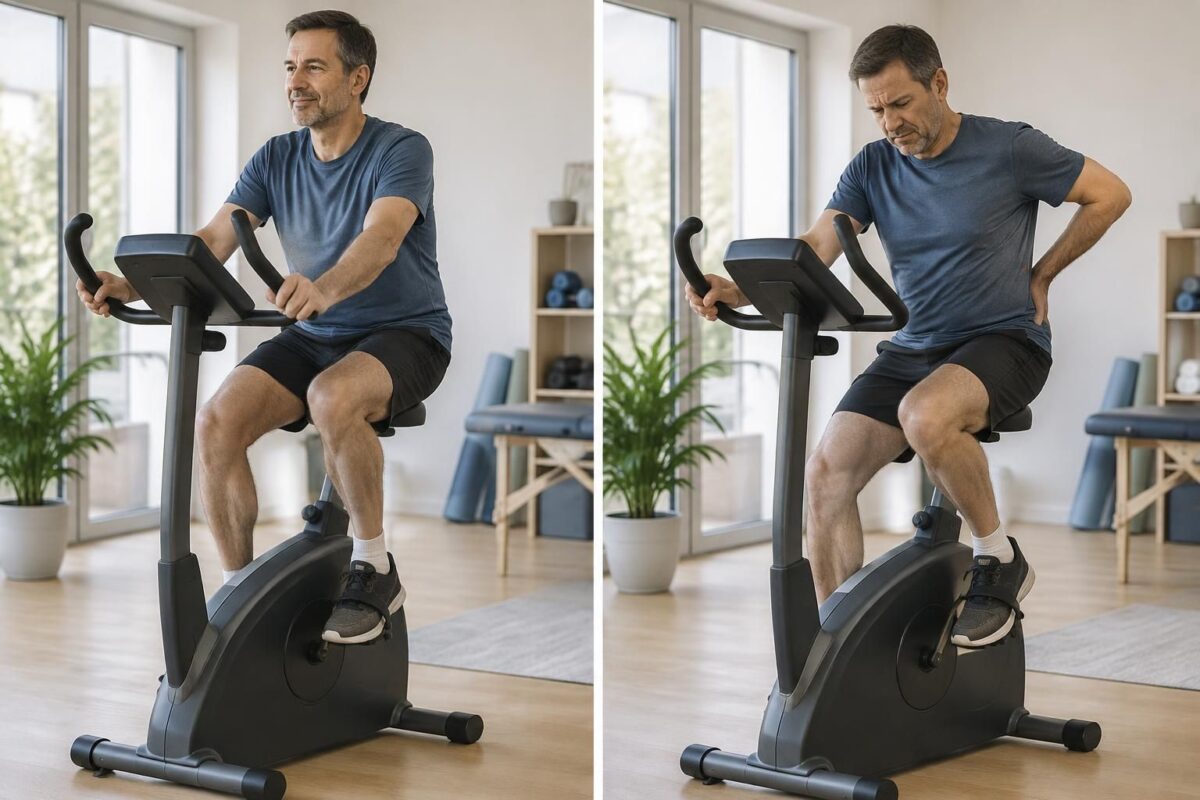
Sciatica and stationary bike: useful or aggravating depending on the case
IN BRIEF The stationary bike with sciatica can help you stay active if the pain is mild and stable. Start with a short session, at low resistance and in a comfortable position. If the pain goes further down the leg,…

Sciatica and cycling: sitting, bending, and symptoms
IN BRIEF Sciatica is pain related to irritation of the sciatic nerve, which can extend from the buttock down to the leg. Cycling may sometimes be possible if symptoms are mild and stable: a comfortable seat, a less bent posture,…

Sciatica and jogging: pain in the leg after effort
IN BRIEF Jogging-related sciatica is pain that often starts from the lower back or buttock and travels down the leg. Running may be possible if the discomfort is mild and stable, but if the pain intensifies, or if there are…

Sciatica and running: when to stay cautious
IN BRIEF Sciatica is pain related to irritation of a nerve, which can extend from the lower back or buttock down the leg. Running is not always prohibited if the discomfort remains mild and stable, without tingling or weakness. Reduce…

Sciatica and sports: when leg pain should slow you down
IN BRIEF Sciatica is pain related to inflammation of a nerve, which can extend from the lower back down to the leg. Sports aren’t always forbidden, but running should slow down if the pain intensifies or is accompanied by tingling,…

Sciatica and return to activity: why to progress slowly
IN BRIEF Returning to activity after sciatica involves gradually regaining movement without exacerbating pain. It helps maintain mobility while minimizing the risk of relapse. Start with walking, then alternate between walking and running for short intervals, increasing effort step by…

Sciatica and physical activity: how to avoid mistakes
IN BRIEF Sciatica is pain that follows the path of the sciatic nerve, from the lower back to the leg. Appropriate physical activity helps to stay mobile without maintaining irritation: favor gentle walking, cycling in an upright position, or swimming,…
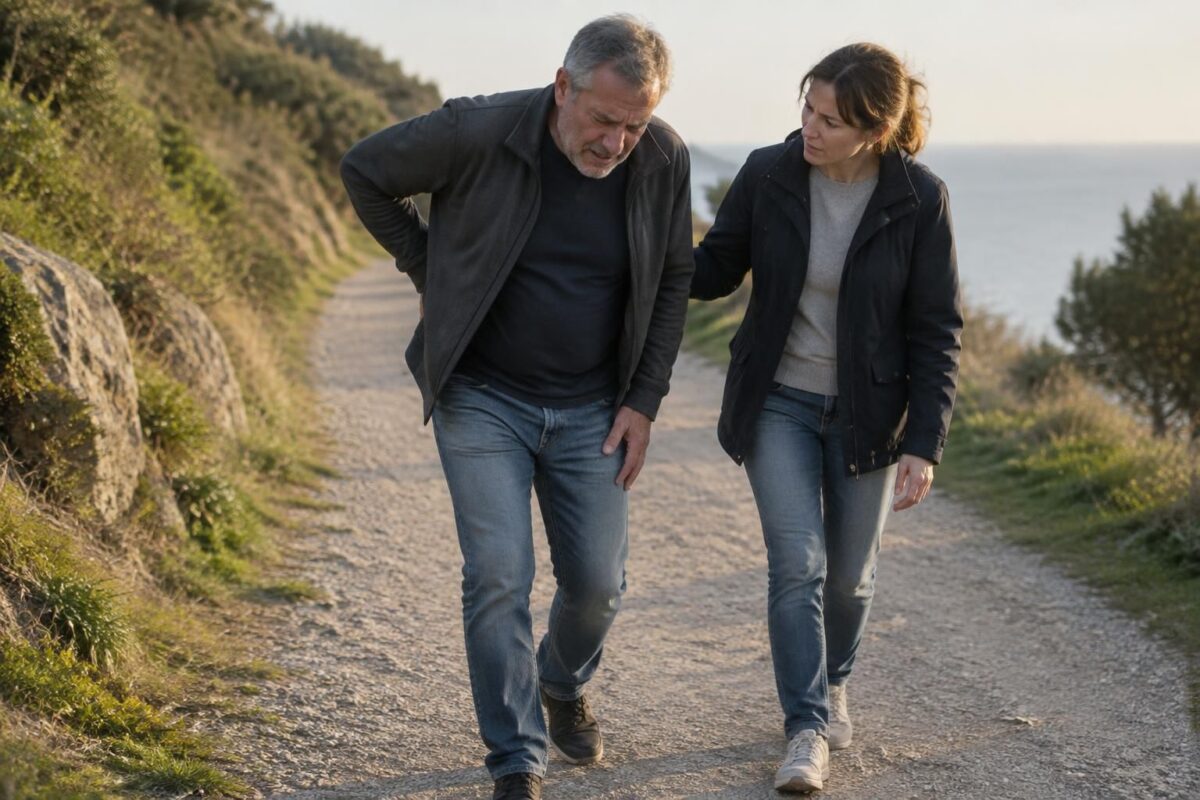
Sciatica and forced walking: risk of worsening
IN BRIEF Sciatica can make walking painful, but pushing yourself may worsen the symptoms. Walk for short periods, at your own pace, only if the pain remains tolerable and does not intensify over time. If you are limping, if the…

Dr Sylvain Desforges, B.Sc., D.O., N.D., osteopath, is the founding president of TAGMED and of the ACMA association. He dedicates his practice to chronic spinal pain, low back pain and symptoms compatible with sciatica, particularly when pain radiates toward the buttock, leg, calf, foot or toes.
Through SOS Sciatique, he publishes educational content on sciatica symptoms, possible causes such as disc herniation, disc narrowing, foraminal stenosis or irritation of a lumbar nerve root, as well as non-surgical approaches that may be considered according to the evaluation. At Clinique TAGMED, care may include, depending on the case, motorized neurovertebral decompression, specific osteopathic care or precision percussion.
For an evaluation related to sciatica treatment in Montreal / Mount Royal or sciatica treatment in Terrebonne, please consult the services available at Clinique TAGMED.
Medical disclaimer
The information published on SOS Sciatique is provided for educational purposes only and does not replace a consultation, diagnosis, opinion or treatment provided by a physician or another authorized healthcare professional. The author of this article is neither a medical doctor nor a specialist in a medical specialty recognized by the Collège des médecins du Québec. The osteopathic, manual medicine or functional support approaches described on this site do not constitute medical acts and are not intended to replace medical follow-up.
Consult a physician or emergency service in cases of loss of bladder or bowel control, anesthesia in the saddle area, significant or progressive weakness in the leg or foot, fever, recent trauma, severe pain or rapid worsening of symptoms. For more details, please read our Legal Notice.