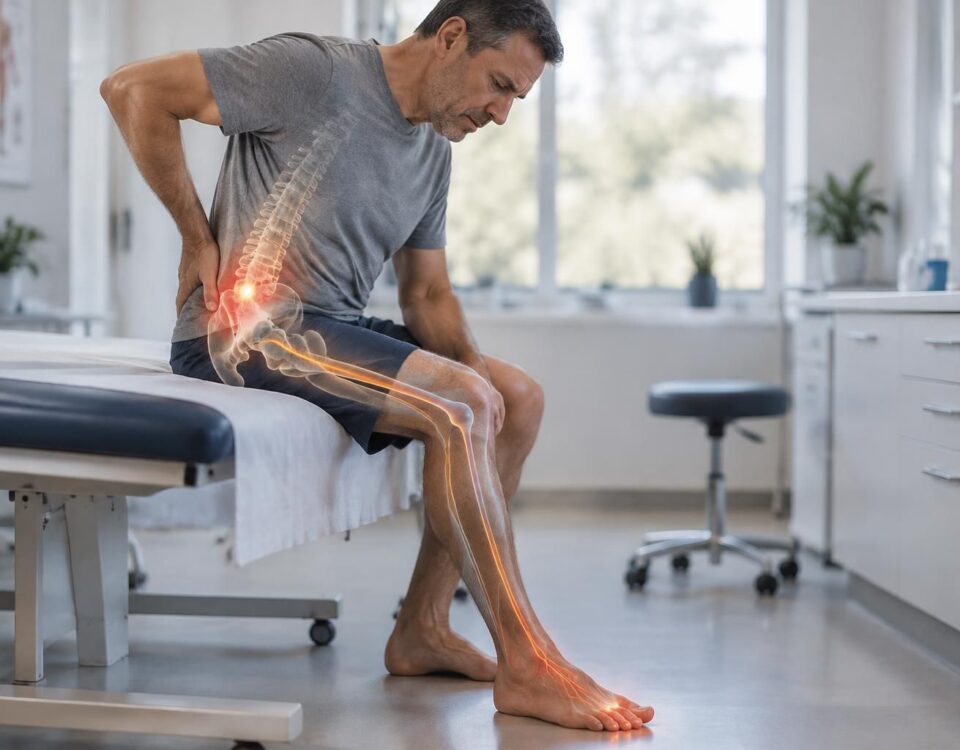
Sciatica and pain when going down the stairs
16/09/2026
Sciatica and frequent breaks while walking
16/09/2026
IN BRIEF
| In brief, Disc herniation and foot pain related to the L5-S1 level explain how a hernia can irradiate towards the foot and how to determine if the pain originates from L5 or S1. This approach aims for a clear diagnosis and effective conservative treatments to reduce pain and promote a return to activity. Benefits include a better understanding of the nerve pathway, targeted exercises, and tailored advice on sports and daily life, while avoiding surgery when possible. The operation relies on exercises and adapted physical activity, inflammation management, and a progressive approach that can allow for rapid and lasting improvement, especially when surgical intervention is not necessary. Accessible in Montreal and the region, this framework helps quickly guide towards local and safe solutions to regain mobility and comfort. |
Disc herniation and foot pain: L5 or S1?
A disc herniation at the L5-S1 level can cause pain that radiates down to the foot, depending on the affected nerve root.
– L5 radicular: pain and tingling sensations on the top of the foot and the big toe; possible weakness during dorsiflexion (lifting the forefoot).
– S1 radicular: pain on the sole of the foot and heel; weakness in plantar flexion and toe extension; pain that may radiate along the outer side of the foot and leg.
In practice, symptoms often improve with conservative treatment and targeted exercises. Spontaneous resorption of the hernia may occur and contribute to a reduction in pain within weeks.
To support healing: prioritize regular and appropriate physical activity, aim for 7 to 9 hours of sleep per night, adopt an anti-inflammatory diet, practice relaxation techniques, and avoid activities that increase pain.
If the pain is severe, persists despite exercises, or is accompanied by loss of strength or sensation, consult promptly for a suitable evaluation.
This fact sheet explains how a foot pain can stem from a L5-S1 disc herniation and how to differentiate whether the issue pertains to the L5 nerve or the S1 nerve. It presents clinical signs, the evaluation process, and management options, without resorting to specific exercises in this context.
Clinical markers for L5 and S1
The L5 nerve can cause pain and abnormal sensations on the top of the foot and on the big toe. Weakness in dorsiflexion of the foot may appear. The S1 nerve is more associated with pain on the sole and outer edge of the foot, with weakness in plantar flexion and ankle eversion, and possible reduction in the Achilles reflex. The painful pattern and sensory distribution help guide the evaluation, but neurological examination and imaging allow for precise confirmation.
Evaluation and imaging
The diagnosis relies on medical history and examination, supplemented if necessary by targeted imaging. An L5-S1 hernia can compress the L5 or S1 roots, explaining the foot symptoms. An MRI is the key exam to confirm the level and impact on the nerve root. In the presence of emergency signs, rapid management is essential. For a comprehensive evaluation and tailored options, contact Clinique TAGMED.
Management options
In practice, conservative approaches aim to manage pain and support the natural process of potential hernia resorption. Strict rest is generally not recommended, in order to promote mobility and circulation. Specialized care such as neurovertebral decompression and other osteopathic interventions may be considered after a detailed evaluation at the Clinique TAGMED, as appropriate. Surgery is only considered when conservative treatment fails or in the presence of severe or persistent neurologic signs.
Resources and useful links
To learn more, here are some relevant resources:
Sciatica and lumbar disc herniation
Paramedian disc herniation and possible painful path
Disc herniation and annular tear – possible pain
Central disc herniation – pain and sciatica
L5-S1 disc herniation – symptoms and treatments
Neurovertebral decompression
Associated resources
For more information, you can consult the information related to sciatica and disc herniation on the following pages: Sciatica and lumbar disc herniation, Paramedian disc herniation and painful path, Details on lumbosciatica.
Additional resources and training in osteopathy mentioned in this context: NUMSS, NAO, National University of Medical Sciences, National Academy of Osteopathy. For approaches and management in Montreal or Terrebonne, prioritize the services of Clinique TAGMED through the options presented on their site.
Medical disclaimer: The information and advice provided on this site do not replace the opinion, diagnosis, or treatment of a health professional. Please note that Dr. Sylvain Desforges, osteopath, is neither a doctor of medicine nor a physician, and is not a specialist in a medical specialty as defined by the Quebec College of Physicians. Manual medicine, functional medicine, and sports medicine as described on this site exclude any medical treatment or diagnosis made by a physician or medical specialist. Always consult your doctor for any medical questions. For more details, please read our complete Legal Notice.
- Axis: differentiate L5 and S1 according to symptoms and functional implications.
- L5 radiculopathy: pain on the dorsum of the foot and the big toe; weakness of the dorsiflexion and sensitivity on the back of the foot.
- S1 radiculopathy: pain along the outer edge of the foot and heel; weakness of plantar flexion and diminished Achilles reflex.
- Radiating pain: L5 — dorsum of the foot; S1 — sole of the foot and heel.
- Actions: medical evaluation and targeted imaging to confirm the origin.
- Conservative treatment: adapted activities, stability exercises, and pain management to regain mobility.
- Physical activity: stay active and prefer exercises that do not increase pain (walking, swimming, light cycling).
- When to operate: rare surgery, only after failure of conservative treatment or severe neurological signs.
- Prognosis: frequent improvement in weeks; spontaneous resolution possible depending on the context.

This sheet helps you distinguish and treat foot pain related to a disc herniation at L5 or S1. You will find markers on the location of pains, effective conservative treatments, and signs that should prompt you to consult. The goal is to rapidly relieve pain, avoid aggravations, and support healing through adapted exercises and comprehensive management of inflammation.
Understanding the Origin: L5 vs S1
A foot pain of radicular origin may stem from a disc herniation impinging on a nerve root. The location and type of symptoms guide the identification of the affected root. When L5 is affected, the pain and disorders frequently involve the dorsum of the foot and the big toe, with possible weakness of the muscles that lift the big toe. In cases of S1 involvement, pain often extends towards the calf and the arch of the foot, with potential difficulties in plantar flexion and sensitivity on the outer edge of the foot. Sensitivity and motor signs help differentiate the two roots and guide treatment.

Disc herniation and tingling in the toes
IN BRIEF A disc herniation is a disc that bulges beyond its contour; tingling in the toes can sometimes be related to irritation of a lumbar nerve, without MRI sufficiently confirming the cause. An examination connects the image, symptoms, and…
Treatment Strategy
Adapted Activity and Exercises
Maintaining an adapted physical activity is essential. Avoid prolonged rest and prioritize progressive exercises aimed at strengthening the trunk and stabilizing the spine. Activities like walking, light cycling, or swimming can be practiced depending on the intensity of the pain. Short and repeated sessions (for example, 10 to 20 minutes, 2 to 3 times a day) stimulate recovery without overloading the nerve.
Management of Inflammation and Pain
To promote natural healing, support your immune system and adopt habits that reduce stress and tension. Consume anti-inflammatory foods, sleep between 7 and 9 hours per night, and prioritize relaxation techniques. Avoid activities that directly worsen the pain and listen to your body’s signals. The goal is to allow inflammation to play its prognostic role in tissue resorption and realignment.
When to Consider Exams or a Consultation
If symptoms worsen, or if concerning signs appear (very intense pain, perceived weakness in the leg, walking difficulties, loss of urinary control, or febrile pain), consult promptly. In cases with no improvement after a few weeks of targeted effort and conservative management, further evaluation may be considered.

Disc herniation and numbness in the foot
IN BRIEF A disc protrusion is a bulging of a spinal disc; it does not always cause symptoms. If it irritates or compresses a lumbar nerve root, it may lead to tingling or numbness in the foot. An evaluation helps…
When Does Surgery Become Considerable?
Surgery is rare for a lumbar disc herniation associated with foot pain. It is considered after repeated failure of conservative treatment or in the presence of significant and persistent neurological signs. A spine specialist surgeon can then suggest options tailored to your situation and functional goals.
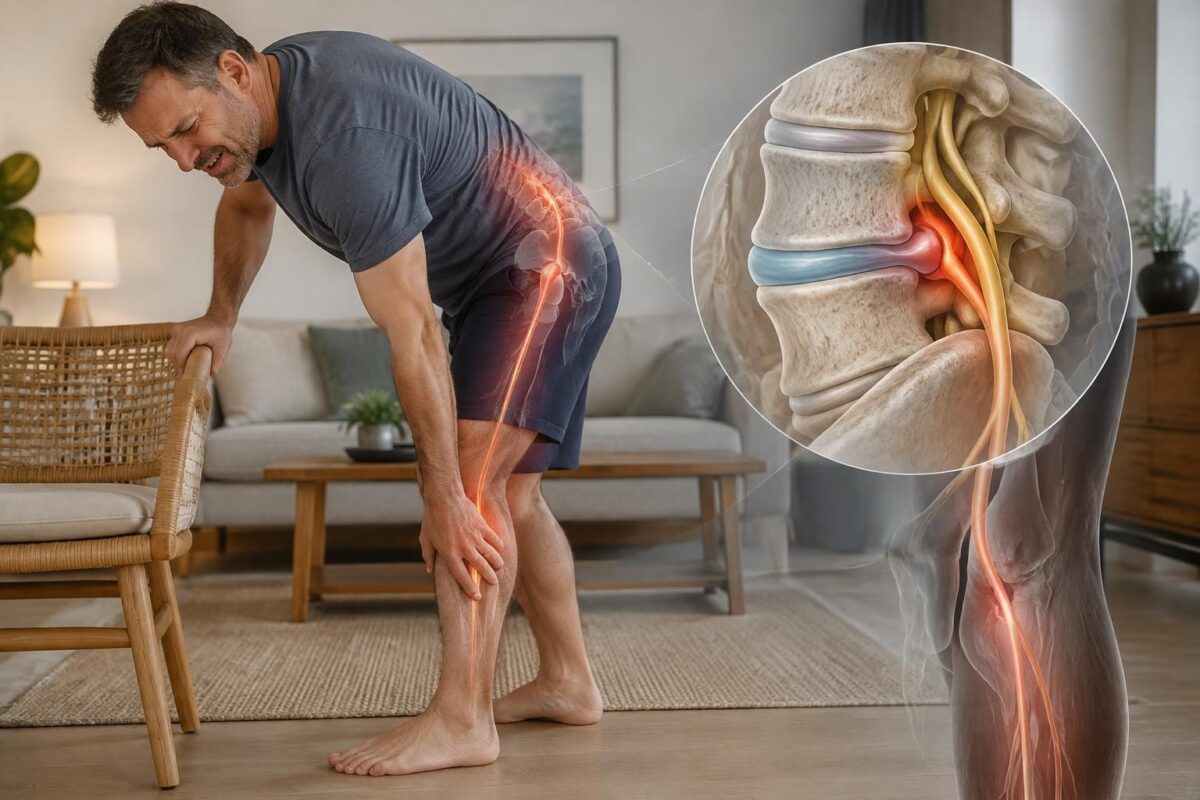
IN BRIEF A disc protrusion is a bulging of a disc that can irritate a nerve root and cause pain radiating down into the buttock and the calf, sometimes with tingling. However, it does not always cause symptoms. Evaluation helps…
Quick FAQ
Practical answers tailored to your situation help gain clarity and safety. If you wish to ask a personalized question, I invite you to do so for a targeted response aligned with your profile.
| Aspect | Impact on Foot Pain |
|---|---|
| Radicular Location in the Foot | L5 → pain on the dorsum of the foot and toe; S1 → pain on the sole and heel. |
| Typical Clinical Signs | L5 → possible difficulty in dorsiflexion; S1 → plantar pain and possible weakness. |
| Impact on Walking and Function | With L5, difficulty walking on heels; with S1, difficulty walking on toes. |
| Diagnosis and Imaging | Clinical evaluation combined with imaging clarifies the affected root and guides treatment and prognosis. |
| Response to Conservative Treatment | Both cases may respond; inflammation promotes resorption and pain decreases with exercises and adapted activity. |
| Expected Recovery Time | Often 4 to 6 weeks for improvement of symptoms with activity and exercises. |
| Recommended Activity and Sport | During pain: light cardio (walking, cycling, swimming); after improvement, activities without pain while avoiding painful movements. |
| Signs of Urgency or Red Flags | Progressive weakness, loss of urinary control, saddle anesthesia, febrile pain → urgent management. |
| Surgical Decision | Rare option; surgery considered only after failure of conservative treatment or in the presence of severe neurological signs. |

Disc herniation and pain behind the thigh
IN BRIEF A disc protrusion is a bulging of a spinal disc, often without symptoms. A pain behind the thigh can be muscular or, if it originates from the back and is accompanied by tingling or numbness, related to nerve…
Testimonials on Disc Herniation and Foot Pain: L5-S1
Here are some testimonials from people facing a herniated disc at the L5-S1 level and foot pain. They describe their journey and the results achieved through a conservative approach and regular exercises.
“Before, the foot pain originated from my lower back and radiated down to my foot due to a herniated disc at L5-S1. After following the recommended exercises, I felt a gradual improvement and my walking became fluid again.”
“The diagnosis mentioned a herniated disc at L5-S1 with foot pain and paresthesia. Osteopathy sessions and tailored exercises led to a significant reduction in symptoms within a few weeks.”
“I was severely limited by a herniated disc at L5-S1 and foot pain. The conservative treatment, combining advice, exercise, and follow-up, allowed me to resume my daily activities without pain after a few weeks.”
“During acute periods, the foot pain associated with a herniated disc at L5-S1 prevented me from moving properly. Through tailored activity and progressive exercises, I regained mobility and significant reduction of discomfort.”
“The symptoms in my foot decreased over time as I maintained regular physical activity and targeted exercises to strengthen my back. My L5-S1 remains a source of manageable pain rather than a permanent obstacle, and I am capable of staying active without surgery.”
“Today, after several weeks, my herniated disc at L5-S1 and its foot pain have evolved towards a lasting improvement thanks to a results-oriented approach and adapted exercises. I highly recommend this program to those wanting to avoid surgery and prioritize conservative treatment.”

Disc herniation and pain in the buttock
IN SHORT A disc protrusion is a disc that bulges without its outer layer being ruptured. If it irritates a nerve root, it can contribute to buttock pain, sometimes accompanied by radiation down the leg, tingling, or numbness. It can…
Herniated disc and foot pain: L5 or S1? An approach by Dr. Sylvain Desforges
Dr. Sylvain Desforges is recognized as an osteopath, specializing in naturopathy and manual medicine, whose career is dedicated to health innovation. As the founding president of TAGMED clinics and the ACMA association, he dedicates his work to managing chronic pain of the spine and supporting patients suffering from pain that migrates to the feet, legs, and lower back. His commitment is to provide evidence-based care to optimize the health and well-being of his patients.
In the context of lumbar pathologies, he pays particular attention to the phenomenon of herniated discs and the pain that can extend to the foot, often under the perspective of lumbar radiculopathy. His approach relies on precise evaluation of the affected nerve, in order to determine whether the origin is rather L5 or S1, which guides the personalized therapeutic plan. Depending on symptoms — pain radiating towards the top of the foot, weakness in foot movements, or numbness — he prioritizes a non-surgical approach when possible, while remaining vigilant for signs requiring specialist intervention.
The management pathway first emphasizes non-invasive techniques, combining osteopathy and manual approaches with targeted rehabilitation programs. The goal is to decrease pain and restore function while modulating inflammation factors that play a key role in the natural resorption of part of the disc material in some patients. This inflammatory dynamic is viewed as a positive prognostic indicator when the therapeutic framework allows it, rather than as a barrier to healing.
To support healing, Dr. Desforges integrates advanced technologies, such as motorized spinal decompression, laser applications, and shockwave therapies. These tools complement rehabilitation exercises and functional advice to improve disc nutrition, promote mobility, and optimize nerve recovery. His approach is resolutely evidence-based, adaptable to each patient and continuously adjusted as symptoms evolve.
Regarding lifestyle habits, Dr. Desforges advises a comprehensive strategy that includes an anti-inflammatory diet, restorative sleep of 7 to 9 hours per night, and daily physical activity. Stress and tension management is also integrated into the protocol, as stress can amplify pain and influence the inflammatory process. To foster sustainable healing, he pays particular attention to activities that exacerbate pain and prioritizes maintaining regular and progressive movement.
Concerning more complex scenarios, surgery is only considered when conservative treatments do not provide sufficient improvement or when significant neurological signs arise. Dr. Desforges prefers a focus on non-surgical solutions when possible, while remaining cautious and informed about specific indications requiring the intervention of a spine specialist.
In summary, Dr. Desforges’ approach for cases of herniated discs with foot pain, especially when uncertainty exists about L5 or S1, combines expertise, advanced technologies, and a patient-centered philosophy. His goal is to quickly restore mobility, reduce pain, and improve quality of life while preserving nerve and joint structures in the long term.
Quick summary: a lumbar herniated disc at the L5-S1 level can cause pain that radiates to the foot, reflecting radiculopathy depending on the affected nerve (L5 or S1). The diagnosis clarifies whether symptoms pertain to localized sensory and motor affects at L5 or S1, and management primarily relies on a conservative approach, with exercises, adapted activity, and anti-inflammatory measures. Pain can improve within weeks due to spontaneous resorption and beneficial inflammatory response; surgery remains rare and reserved for resistant cases or those with significant neurological deficits. For further information, here are useful resources.

L5-S1 protrusion and sciatic pain: pathway to the foot
IN BRIEF A L5-S1 disc protrusion is a disc that slightly bulges between the lumbar and sacral vertebrae. If it irritates a nerve root, pain may radiate from the lower back or buttock down the back of the leg to…
Diagnosis and differentiation between L5 and S1
Post-disc herniation pain can manifest differently depending on the affected nerve. L5 radiculopathy tends to affect the back of the foot and the big toe, with possible difficulties in foot extension. S1 radiculopathy is more likely to manifest on the sole of the foot and the arch, with signs of weakness during plantar flexion. Clinical examination and motor/sensory symptoms help to locate the affected nerve and determine the treatment plan. For additional information, see particularly the resources on the subject.
To enrich your understanding, consult specialized sources on the subject, for example the following articles: Lumbar disc herniation L4-L5, Disc herniation and peripheral pain – signs to watch, and Disc herniation and painful cough – disc pressure and nerve irritation.

L4-L5 protrusion and sciatic pain: possible signs
IN BRIEF A L4-L5 disc protrusion is a bulging of the disc between two lumbar vertebrae. If it irritates the L5 nerve root, it can cause sciatica radiating from the buttock to the side of the leg and the top…
Evolution, resolution, and foot pain
The spontaneous resolution of disc herniation is common and can occur regardless of the size of the herniation. This process is guided by an inflammatory reaction that promotes tissue remodeling and angiogenesis, helping to dehydrate and reduce the volume of the herniation. Symptom relief, particularly pain, is often observed even if the volume of the herniation may fluctuate during activity or exercise. The useful prognosis relies more on the evolution of symptoms than merely the size of the herniation. For more details, refer to the cited resources.
For further insights, also consult resources dedicated to L5-S1 and their symptoms: Herniation L5-S1 symptoms, Herniation L5-S1 – rheumatology-lunion, and Herniation L5-S1: symptoms and treatments.
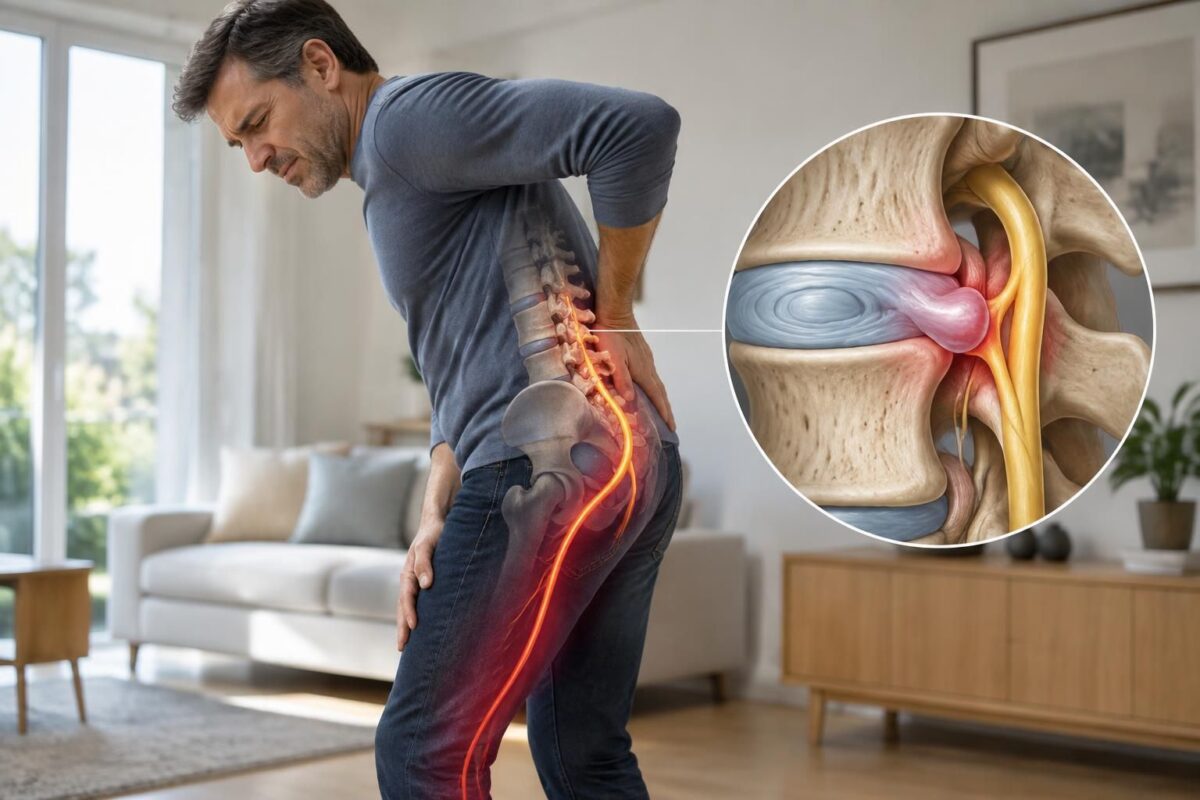
Disc protrusion and sciatica: when the disc touches a nerve root
IN BRIEF A disc protrusion is a disc that extends beyond its usual contour. If it irritates a nerve root, it can contribute to sciatica, with pain radiating into the buttock or leg, sometimes accompanied by tingling or weakness. An…
Impact on the foot and sports
Pain in the foot associated with L5-S1 disc herniation often reflects radicular nerve irritation and may be accompanied by numbness or weakness in the foot. Regular physical activities remain essential, but the intensity should be adjusted based on the pain: light to moderate cardio (brisk walking, cycling, swimming) is favored during painful flare-ups, whereas in remission one can gradually return to other sports while avoiding those that worsen the pain. For more examples and practical steps, you can consult additional resources like those below.
Further details on sports choices during a painful period and after recovery are also available in the following resources: Neurovertebral decompression and recovery after a recurrent disc herniation, and Disc herniation with numbness – sign of nerve irritation.
Warning signs and when to consult
Alarm signs such as progressive motor deficit, pain accompanied by loss of urinary or fecal control, or lower back pain associated with high fever require urgent medical evaluation. The published information reminds that surgery is rare and considered after the failure of conservative treatments or in the presence of major neuro-signaling. For cases where pain is persistent or worsens despite conservative measures, discussing with a specialist remains recommended. Additional details and guides are available via the following resources.
To deepen and diversify your references, consult particularly: Disc herniation with foot weakness – cause to watch, Disc herniation and peripheral pain – signs to watch, and Lumbar disc herniation L4-L5.

Dr Sylvain Desforges, B.Sc., D.O., N.D., osteopath, is the founding president of TAGMED and of the ACMA association. He dedicates his practice to chronic spinal pain, low back pain and symptoms compatible with sciatica, particularly when pain radiates toward the buttock, leg, calf, foot or toes.
Through SOS Sciatique, he publishes educational content on sciatica symptoms, possible causes such as disc herniation, disc narrowing, foraminal stenosis or irritation of a lumbar nerve root, as well as non-surgical approaches that may be considered according to the evaluation. At Clinique TAGMED, care may include, depending on the case, motorized neurovertebral decompression, specific osteopathic care or precision percussion.
For an evaluation related to sciatica treatment in Montreal / Mount Royal or sciatica treatment in Terrebonne, please consult the services available at Clinique TAGMED.
Medical disclaimer
The information published on SOS Sciatique is provided for educational purposes only and does not replace a consultation, diagnosis, opinion or treatment provided by a physician or another authorized healthcare professional. The author of this article is neither a medical doctor nor a specialist in a medical specialty recognized by the Collège des médecins du Québec. The osteopathic, manual medicine or functional support approaches described on this site do not constitute medical acts and are not intended to replace medical follow-up.
Consult a physician or emergency service in cases of loss of bladder or bowel control, anesthesia in the saddle area, significant or progressive weakness in the leg or foot, fever, recent trauma, severe pain or rapid worsening of symptoms. For more details, please read our Legal Notice.