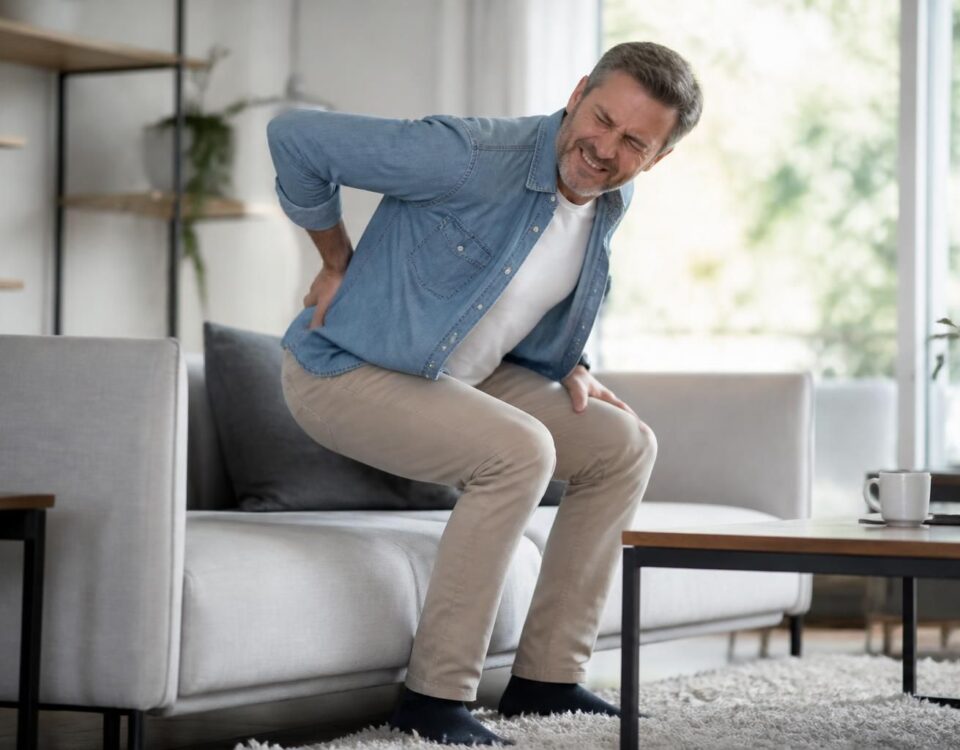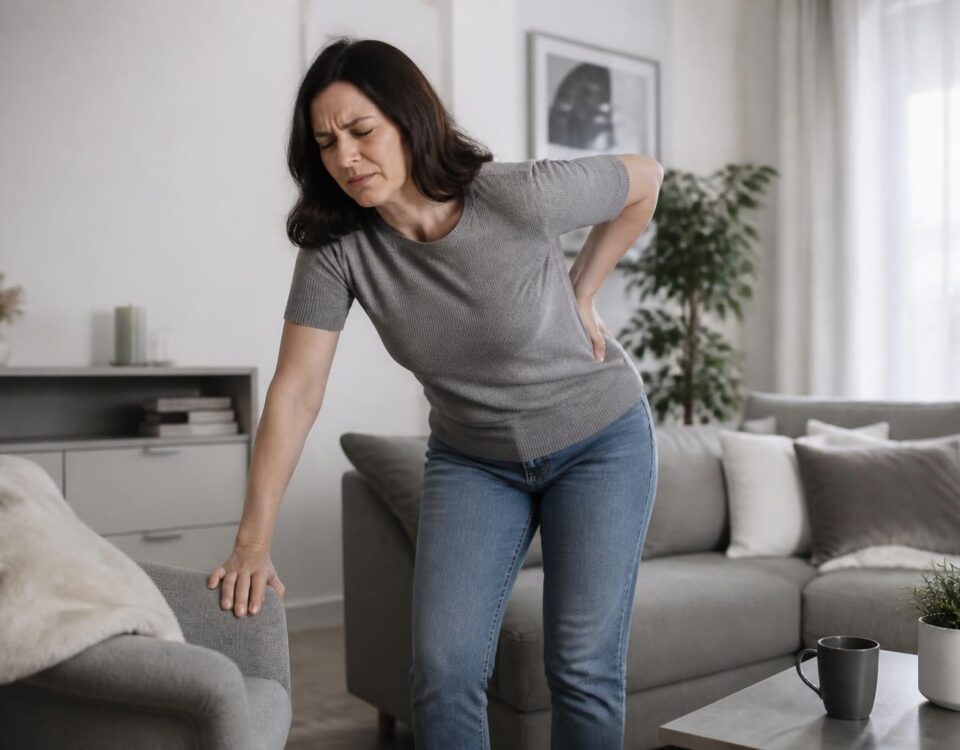
Sciatica in Terrebonne: pain while sitting with tingling in the foot
16/09/2026
Herniated disc and foot pain: L5 or S1?
16/09/2026
IN SHORT |
| Sciatica and the pain felt when going down the stairs is a pain that radiates along the path of the sciatic nerve and can be triggered by descending steps. This condition may be related to causes such as a herniated disc, a disc pinching, or irritation of a lumbar nerve root. The benefits of a non-surgical approach include a reduction in pain and restored mobility when going down the stairs, thanks to specialized care (e.g., osteopathy and targeted exercises) tailored to the assessment. In practice, this translates into improved stability and comfort while descending, with a gradual return to activity. Available in Montreal and its surroundings, this treatment aims to allow descending stairs with less pain and more safety. |
Sciatica is a pain that follows the path of the sciatic nerve, often related to irritation or compression of the lumbar structures. It can manifest as discomfort in the lower back and buttock with radiation towards the leg and sometimes down to the foot.
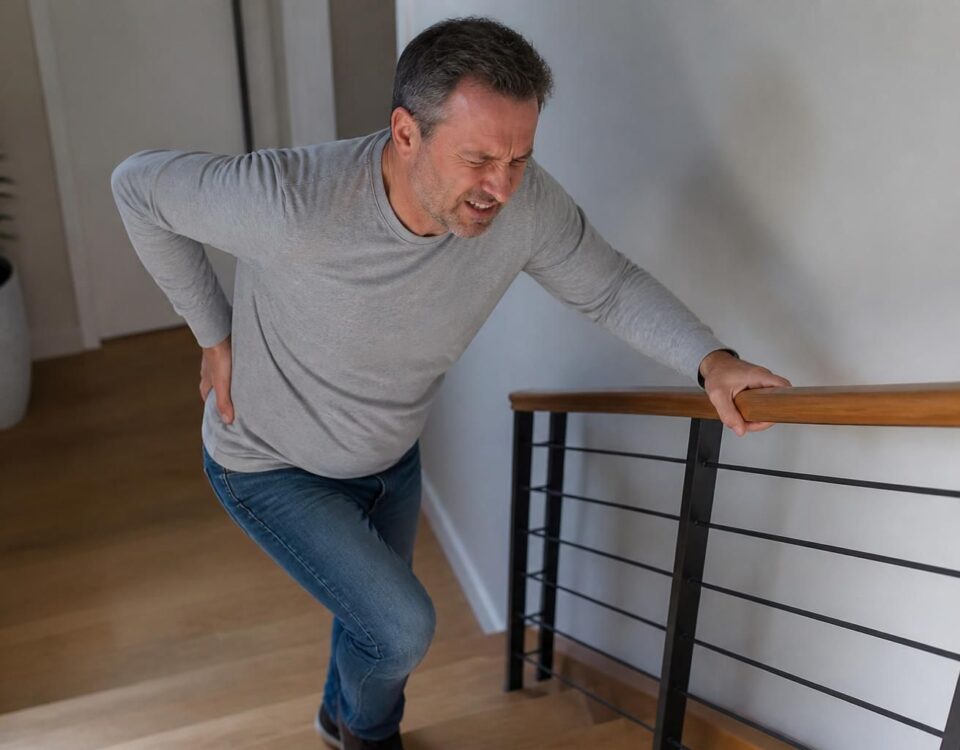
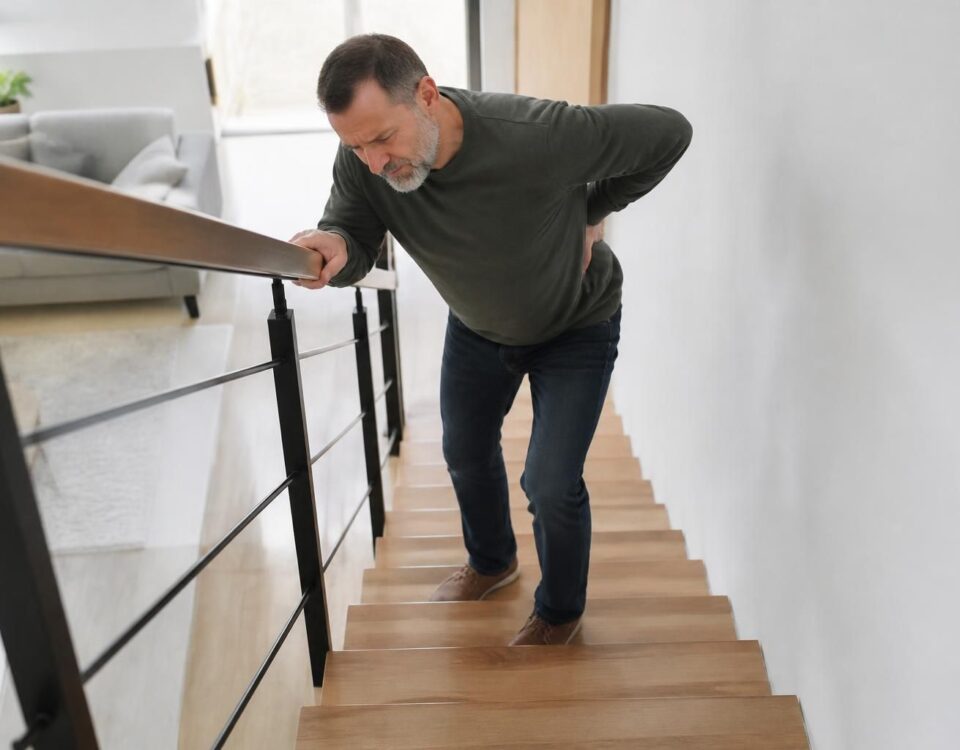
Going down the stairs can amplify this pain: the bending movement and the transfer of weight on the lumbar spine increase tension on the nerve roots, causing a pain radiating down the leg and a burning or tingling sensation that travels downward.
Non-surgical approaches, focused on strengthening, mobility, and correcting postures, can help reduce the intensity and frequency of episodes and achieve a more comfortable descent down the stairs. For a reliable diagnosis and a personalized plan, consult a healthcare professional.
Written by Dr. Sylvain Desforges, osteopath, this text explains why sciatica may manifest or worsen when going down the stairs, the possible mechanisms involved, and the non-surgical approaches that may be considered during an evaluation at the TAGMED Clinic.
Going down the stairs can trigger pain that spreads into the when the lumbar nerve root is irritated by a disc-related cause or stenosis. Factors like a herniated disc, a disc pinching, or a foraminal stenosis can amplify the pain when the foot makes contact with each step. In some cases, the pain may be more pronounced when the step is heavy or the movement is fast. To better understand these mechanisms, consult dedicated resources on the subject, such as this article: Sciatica and pain that descends into the leg while returning from travel.
Aggravating Factors and Context
Several factors can influence pain when descending, including pelvic alignment, lumbar muscle control, and the ability to modulate the load on each step. Factors such as prolonged walking, uneven terrain, or nighttime pain can also increase the significance of symptoms. To understand why pain may increase after activities like walking, see: Sciatica and prolonged walking — why pain increases.
Assessment and Diagnosis
During an osteopathic assessment at the TAGMED Clinic, the osteopath studies the relationship between movement, posture, and pain. The examination may include assessing lumbar and pelvic alignment, joint mobility, and response to different loads during walking and descending. Radicular signs or persistent pain that does not subside require additional medical consultation and, if necessary, appropriate investigations. For an overview of the factors that can influence pain when descending after long walking, see: Sciatica and pain that increases after long walking.
Sciatica and pain when getting up from a chair
IN BRIEF In brief, sciatica and pain when getting up from a chair refer to lower back discomfort triggered by the transition from sitting to standing, often related to irritation of a lumbar nerve root or poor posture. What is…
Management and Therapeutic Options at the TAGMED Clinic
At the TAGMED Clinic, the approach is based on an individualized assessment and non-surgical modalities tailored to the present case. Depending on the evaluation, options may include specific osteopathy, the use of a precision pusher, and when relevant, the motorized neurovertebral decompression. These approaches aim to optimize mobility and reduce nerve irritations without resorting to surgical treatments. To learn more about the services offered, visit TAGMED Clinic.
When a movement triggers sciatic pain, it may be helpful to apply general management strategies and activity planning. The goal is to maintain a safe and gradual descent down the stairs, avoid movements that aggravate the pain, and organize regular breaks throughout the day. For additional information on aspects related to pain and mobility, you can consult resources such as: Sciatica in Terrebonne — nighttime pain in the leg and Sciatica in Montreal — persistent pain in the heel.

Sciatica and Pain with Position Change
IN BRIEF In brief, sciatica and pain during position change is pain radiating along the sciatic nerve triggered or worsened by postural changes and prolonged postures. Benefits: identifying positions to avoid and adopting ergonomic adjustments helps reduce pain, improve comfort,…
Practical Tips for Safe Stair Descending
To descend stairs more safely, adopt a controlled and cautious approach. Use the handrail, carefully step forward with one foot, and move one foot at a time on each step. Avoid fast descents and take breaks if the pain intensifies. Maintain a neutral posture of the torso and slightly bend the knees to absorb the load without causing abrupt movements. If the pain persists despite these adjustments, make an appointment for a complete assessment at the TAGMED Clinic.
Comparative table of therapeutic approaches
| Therapy | Typical Effectiveness |
|---|---|
| Physiotherapy | Variable evidence; may be useful as a complement but does not replace other specialized approaches offered at TAGMED. |
| Osteopathy and neurovertebral decompression (as indicated) | Non-surgical approaches tailored after individual assessment; clear and non-invasive messages. |
| Other non-surgical modalities at TAGMED | Specific approaches based on diagnosis and clinical evaluation. |
Useful links and resources
- Sciatica and pain radiating down the leg during return from travel
- Sciatica and prolonged walking — why pain increases
- Sciatica in Terrebonne — night pain in the leg
- Sciatica and pain that increases after a long walk
- Sciatica in Montreal — persistent pain in the heel
Warning: For an accurate assessment and diagnosis, contact TAGMED Clinic or your referring doctor.
Medical disclaimer: The information and advice provided on this site do not replace the opinion, diagnosis, or treatment of a healthcare professional. Please note that Dr. Sylvain Desforges, osteopath, is neither a medical doctor nor a physician, and is not a specialist in a medical specialty as defined by the Collège des médecins du Québec. Manual therapy, functional medicine, and sports medicine as described on this site exclude any treatment or medical diagnosis made by a physician or medical specialist. Always consult your doctor for any medical questions. For more details, please read our full Legal Notice.
- Sciatica triggered when descending stairs.
- Pain radiating to the buttock, leg, calf, or foot.
- Intensity that intensifies with each step.
- Character sharp, burning, or heavy.
- Warning signs: weakness, numbness, or loss of control.
- Quick management: slow down, use the railing, take breaks.
- Safe posture: controlled descent, avoid excessive lumbar flexion.
- Assessment: quick screening and action plan during a visit.
- Prevention: gentle mobility and stability exercises.
- Management: osteopathy and decompression to optimize movement.

This article provides practical recommendations for managing sciatica and pain when descending stairs. You will discover possible causes, warning signs, and simple and safe techniques to gradually descend while protecting your back and hips. The goal is to improve your safety and autonomy in daily life, with realistic and gradual advice.
Sciatica and difficulty sitting
IN BRIEF In brief, Sciatica and difficulty sitting describes pain that follows the path of the sciatic nerve, often worsened by prolonged sitting. This approach aims to break up sitting periods and adjust posture to reduce pressure on the lumbar…
Understanding pain and triggers when descending stairs
Sciatica often results from irritation or compression of a lumbar nerve root. The descent movement stresses the back and buttocks, and can worsen the pain radiating down the leg. Watch for signals such as pain extending to the buttock or leg, tingling or weakness. Seek immediate consultation in case of urinary control loss, very intense pain, or sudden onset after trauma.
Sciatica and difficulty standing upright
IN BRIEF In brief, sciatica and difficulty standing refer to painful radiation starting from the lower back down the leg, which can significantly hinder standing. What is it? A pain that may radiate into the buttock and leg, with sensations…
Safety and technique for descending stairs
To limit stress and protect the nerve, opt for a slow and controlled approach. Hold the railing firmly, look straight ahead, and keep your torso stable. Descend one step at a time and avoid sudden movements. If pain increases on a particular step, take a break and adjust your pace.
Preparing your descent
Adjust your pace based on pain on a 0–10 scale and favor non-slip shoes. Ensure that the railing is clear and use your hands to stabilize your torso and hips before each step.
Movement and pace
Avoid excessive back bending and maintain a neutral posture. Inhale before each step and exhale when moving from one step to another. Favor a step-to technique or adjust according to your comfort, without forcing.

Sciatica and pain when going up stairs
IN BRIEF In brief, sciatica is a pain that follows the path of the lumbosacral nerves, starting from the lower back and going down to the back of the leg. It can be related to a herniated disc, stenosis, or…
Self-care program and exercises
Mobility and stability exercises
Incorporate gentle lumbar flexion movements, targeted glute stretches, and pelvic floor exercises. Work on transverse abdominal strength and torso stability, with short and regular sets (e.g., three times a week), gradually increasing duration and intensity according to your tolerance.
Targeted strengthening
Strengthen the muscles that support the back and hips: glutes, thighs, and lower back. Incorporate bridges, modified squats, and stability exercises on a flat surface. Progress slowly and listen to your body to avoid overload.
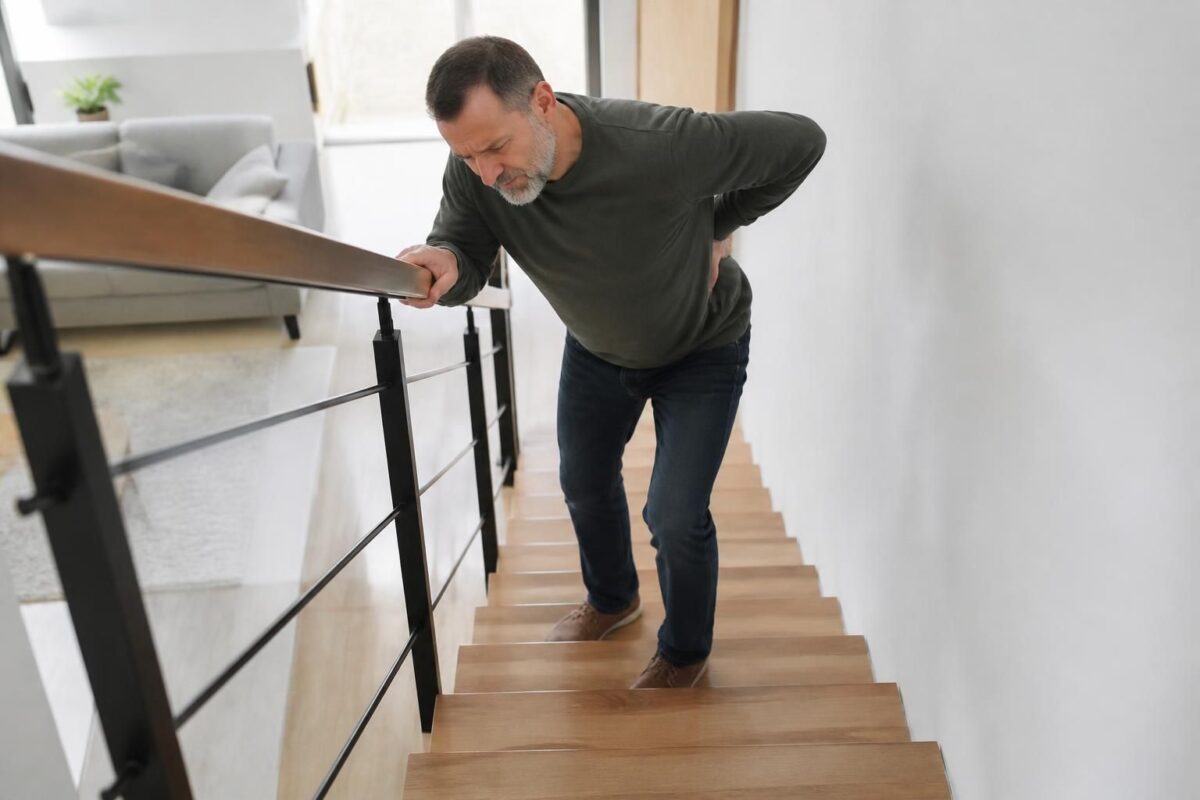
Sciatica and difficulty going down stairs
IN BRIEF In brief, sciatica associated with d difficulty descending stairs is pain that follows the path of a nerve root and intensifies when going down steps, often due to the eccentric effort of the quadriceps and pressure on joint…
Daily habits and prevention of flare-ups
Maintain suitable activity and avoid sudden twists. Alternate sitting and standing periods, plan for active breaks, and do a light warm-up before activities. Adopt a correct posture when doing household chores and when going up and down stairs to limit recurring irritations.
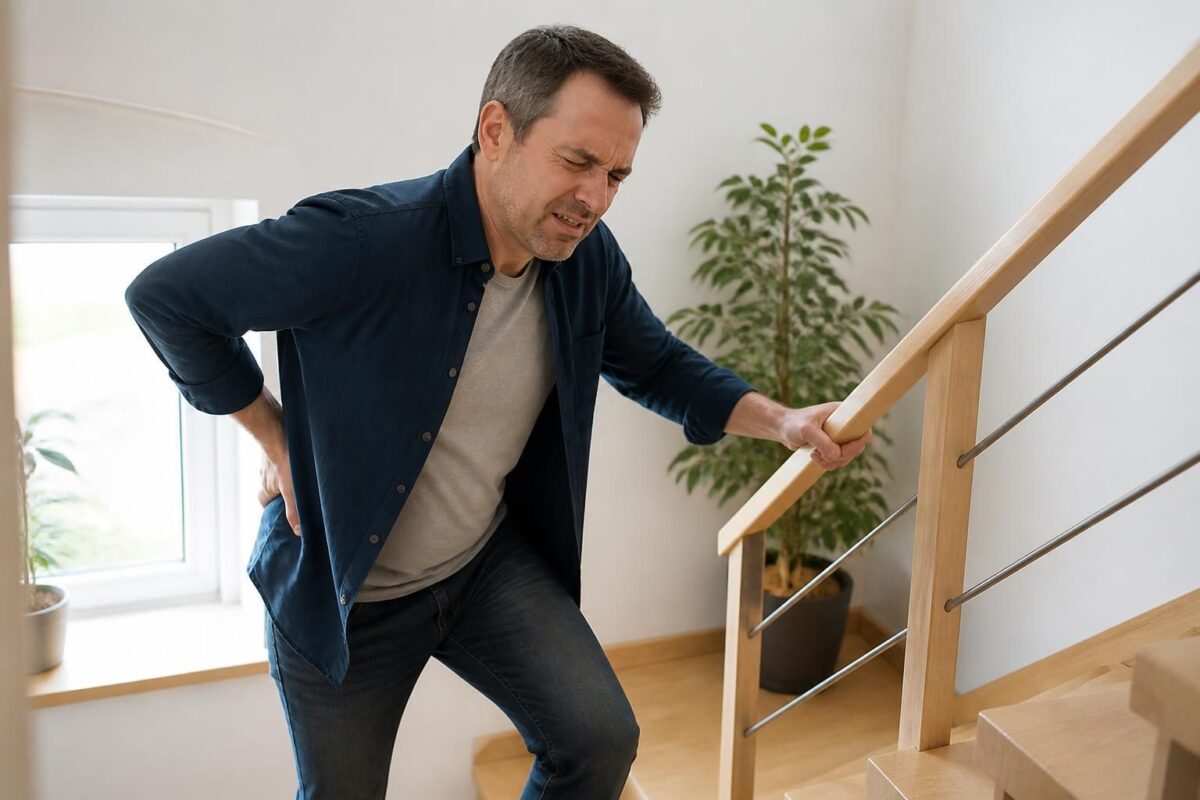
Sciatica and difficulty climbing stairs
IN BRIEF In brief, sciatica and difficulties in climbing stairs refer to pain that follows the course of the sciatic nerve: lower back, buttock, back of the thigh, down to the calf and sometimes to the foot. The main mechanism…
When to consult
If pain persists despite adjustments, shows signs of rapid deterioration, or is accompanied by fever, marked weakness, or loss of control, contact a healthcare professional promptly. A personalized assessment can tailor exercises and techniques to your specific situation.
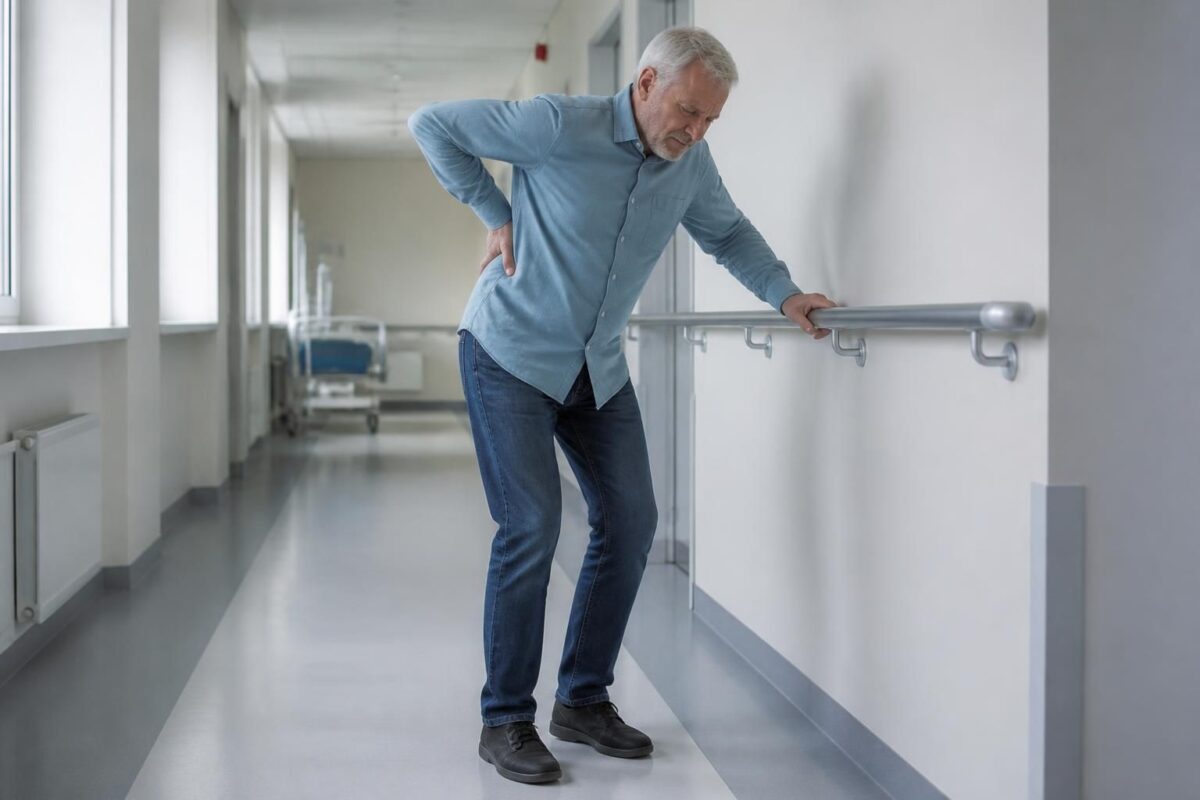
Sciatica and loss of balance: symptom to assess
IN SHORT In short, sciatica associated with a loss of balance is a signal that deserves a quick assessment to rule out neurological impairment and prevent complications. Sciatica refers to pain related to compression or irritation of the sciatic nerve;…
Comparison: Sciatica and pain when going down stairs
| Axis | Concise element |
|---|---|
| Location and trigger | Pain that radiates into the buttock and leg, worsened by going down stairs and bending the trunk. |
| Mechanism and variation | Irritation or root compression worsened by load and bending; varying intensity depending on the position. |
| Mobility and range | Decreased range when going down; requires breaks and support. |
| Associated symptoms | Numbness or weakness in the leg; possible paresthesias. |
| Warning signs | Night pain, progressive loss of strength, incontinence, or severe pain: consult. |
| Non-surgical options | Osteopathy and manual therapies with targeted strengthening and stretching exercises. |
| Practical measures | Avoid prolonged descents; favor ascents and supports, maintain a neutral posture. |
| When to consult quickly | Pain persisting for 2–4 weeks or worsening despite treatment: consult. |
Testimonials on sciatica and pain when going down stairs
Previously, my sciatica and the pain when going down stairs plagued me every day. Each step was accompanied by a pulling sensation in my leg and stiffness in my lower back. After a few sessions with Dr Sylvain, the pain significantly decreased, and I can now go down the stairs without hesitation thanks to simple exercises and better posture.
For months, the sciatica woke me up with intense pain whenever I went down the steps. Osteopathy sessions changed the game: less pain, improved mobility, and a smoother descent down the stairs, without fear of tingling in my leg.
Lumbar pain and sciatica made climbing down the stairs painful and exhausting. Dr Sylvain assessed my body as a whole and proposed a personalized plan combining gentle manipulations and exercises to do at home. The result: a more natural descent down the stairs and almost pain-free.
At first, each descent down the stairs caused a pain that forced me to stop on the previous step. After osteopathic treatment, things changed: less discomfort, better range, and the ability to go down the stairs without fear or discomfort.
Daily life was disturbed by a sciatica that extended to my knee when going down. With personalized guidance, I learned to manage the symptoms and prevent flare-ups. Today, going down the stairs has become a simple and safe action once again.
Sciatica and pain when going down stairs: clinical portrait and support pathway
Dr Sylvain Desforges, an osteopath and recognized expert, places managing pain related to sciatica and painful incidents that arise when going down stairs at the core of his practice. With his multidisciplinary experience, he understands how a simple step can trigger or amplify radiating pain, starting from the lower back and reaching the buttock, thigh, leg, and sometimes the foot. His approach is centered on listening to the body, precise diagnosis, and implementing a personalized care plan aimed at restoring function and preventing relapses.
In his role as a clinician, he pays particular attention to both active and passive stair mechanics, as stairs expose the back and hips to repeated loads and ranges that can aggravate nerve irritation or disc compression. He rigorously distinguishes between manifestations related to lumbar root irritation and true non-root-related pain. His approach is based on functional tests and clinical evaluations that identify positions and movements that reproduce the pain, allowing for tailored treatment priorities.
Therapeutically, Dr Desforges favors a combination of proven techniques and advanced technologies. Specialized osteopathy, motorized neurovertebral decompression, laser, and shock wave therapies are part of his arsenal when appropriate after evaluation. Each session aims to alleviate pain, improve key joint mobility (hip, knee, lumbar spine), and restore effective coordination during descent and ascent of stairs. The goal is to establish a stable and fluid movement base so that stairs become again an element of daily life rather than an obstacle.
At the heart of his work lies a philosophy based on evidence. Dr Desforges offers personalized care that integrates the latest advancements, while remaining attentive to safety and anticipating individual needs. He combines patient education, a progressive exercise plan, and ergonomic strategies to promote better effort tolerance and sustainable recovery. His role is also to assist his patients in making informed decisions by explaining non-surgical options and situations where an intervention might be considered with caution and foresight.
For those suffering from symptoms that worsen when going down steps or seeking to understand the mechanisms of sciatic pain, the approach proposed by Dr Desforges aims to transform a painful experience into a realistic and sustainable healing trajectory. By working together, the patient gradually regains walking and standing habits that respect their body and preserve their quality of life.
About the author
About the author
Dr Sylvain Desforges, B.Sc., D.O., N.D., osteopath, is the founding president of TAGMED and the ACMA association. He dedicates his practice to chronic pain of the spine, lumbar pain, and pain compatible with sciatica, particularly when the pain radiates down towards the buttock, leg, calf, foot, or toes.
Through SOS Sciatique, he publishes educational content on the symptoms of sciatica, possible causes such as herniated discs, disc compression, foraminal stenosis, or irritation of a lumbar nerve root, as well as non-surgical approaches that may be considered based on the evaluation. At TAGMED Clinic, care may include, as applicable, motorized neurovertebral decompression, specific osteopathy, or precision impactors.
For an evaluation related to the sciatica treatment in Montreal / Mount Royal or Terrebonne, please consult the services available at TAGMED Clinic.
Medical disclaimer
The information published on SOS Sciatique is provided for educational purposes and does not replace a consultation, diagnosis, opinion, or treatment by a doctor or other licensed healthcare professional. The author of this article is neither a doctor nor a specialist in a medical specialty recognized by the Collège des médecins du Québec. The osteopathic, manual medicine, or functional support approaches described on this site do not constitute medical acts and are not intended to replace medical follow-up.
Consult a doctor or emergency service in case of loss of urinary or bowel control, anesthesia in the saddle area, significant or progressive weakness of the leg or foot, fever, recent trauma, severe pain, or rapid deterioration. For more details, please read our Legal Notice.
This quick summary explains how sciatic pain may manifest when descending stairs, the mechanisms involved, and non-surgical approaches to assess and relieve it. It offers practical advice and useful resources for safe and effective management.
Sciatic pain when descending stairs often results from irritation or pressure on a lumbar nerve root due to a herniated disc, disc compression, or foraminal stenosis. The movement of descending involves bending the knee and leaning the trunk, which can intensify pain along the leg and down to the foot. In some cases, this pain can radiate down and then back up towards the buttock, a pattern described in cases observed in Terrebonne: this example in Terrebonne.
To manage this pain when descending, prioritize simple measures: use supports, descend slowly with short and controlled steps, and bring the center of gravity closer to stabilize movement. Coordinated activation of the trunk muscles and regular breathing can also help limit irritation. After evaluation, non-surgical approaches such as osteopathy or tailored exercises may be considered to improve mobility and reduce pain without invasive intervention. To understand why the pain may release the leg and why one should consult quickly, see: this article on the leg that gives way and why to consult quickly.
Warning signs require urgent medical evaluation: loss of urinary or bowel control, anesthesia in the saddle area, significant or progressive weakness of a leg, fever, or severe pain after trauma. A professional evaluation will help identify the causes and propose suitable options, including non-surgical treatments and practical advice. For details on pain that appears after a few minutes of walking, the following article may be useful: pain appearing after a few minutes of walking.
For specific scenarios in Montreal and elsewhere, you can consult content on local manifestations and non-surgical approaches: pain towards the little toe and the S1 root in Montreal and foot pain while walking.
For a more general view and practical advice, explore dedicated resources on the mechanisms and non-surgical management options provided by SOS Sciatique. Mastery of movements and appropriate evaluation often help reduce the impact of pain when descending stairs and improve quality of life without invasive means.

Dr Sylvain Desforges, B.Sc., D.O., N.D., osteopath, is the founding president of TAGMED and of the ACMA association. He dedicates his practice to chronic spinal pain, low back pain and symptoms compatible with sciatica, particularly when pain radiates toward the buttock, leg, calf, foot or toes.
Through SOS Sciatique, he publishes educational content on sciatica symptoms, possible causes such as disc herniation, disc narrowing, foraminal stenosis or irritation of a lumbar nerve root, as well as non-surgical approaches that may be considered according to the evaluation. At Clinique TAGMED, care may include, depending on the case, motorized neurovertebral decompression, specific osteopathic care or precision percussion.
For an evaluation related to sciatica treatment in Montreal / Mount Royal or sciatica treatment in Terrebonne, please consult the services available at Clinique TAGMED.
Medical disclaimer
The information published on SOS Sciatique is provided for educational purposes only and does not replace a consultation, diagnosis, opinion or treatment provided by a physician or another authorized healthcare professional. The author of this article is neither a medical doctor nor a specialist in a medical specialty recognized by the Collège des médecins du Québec. The osteopathic, manual medicine or functional support approaches described on this site do not constitute medical acts and are not intended to replace medical follow-up.
Consult a physician or emergency service in cases of loss of bladder or bowel control, anesthesia in the saddle area, significant or progressive weakness in the leg or foot, fever, recent trauma, severe pain or rapid worsening of symptoms. For more details, please read our Legal Notice.