

Sciatica in Montreal: reflexes, strength, and sensitivity in evaluation
04/11/2026
Sciatica and Chronic Pain: When to Reassess?
04/11/2026
IN BRIEF In Terrebonne, the assessment of sciatica checks the reflexes, strength, and sensitivity of the legs to identify possible nerve damage. These observations, combined with the pain’s pathway and its evolution, help to guide the next steps and recognize signs that require prompt medical evaluation. |
Sciatica in Terrebonne: reflexes, strength, and sensitivity
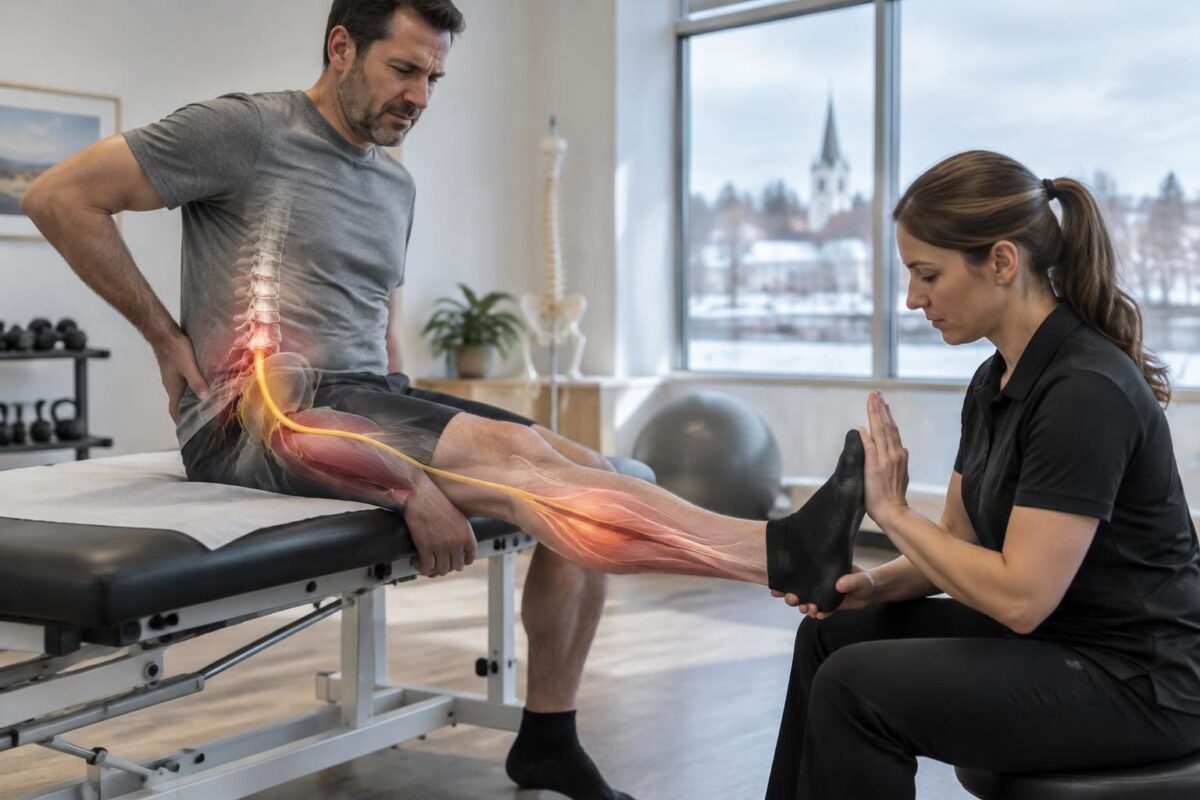
The assessment of sciatica does not rely solely on pain. The professional specifically checks reflexes, the strength of the legs and feet, as well as sensitivity, considering the symptoms’ pathway and their evolution. These observations help to identify potential neurological damage and determine if tests or a medical referral are necessary. New or progressive weakness, urinary or bowel issues, or numbness in the saddle area require urgent medical evaluation.
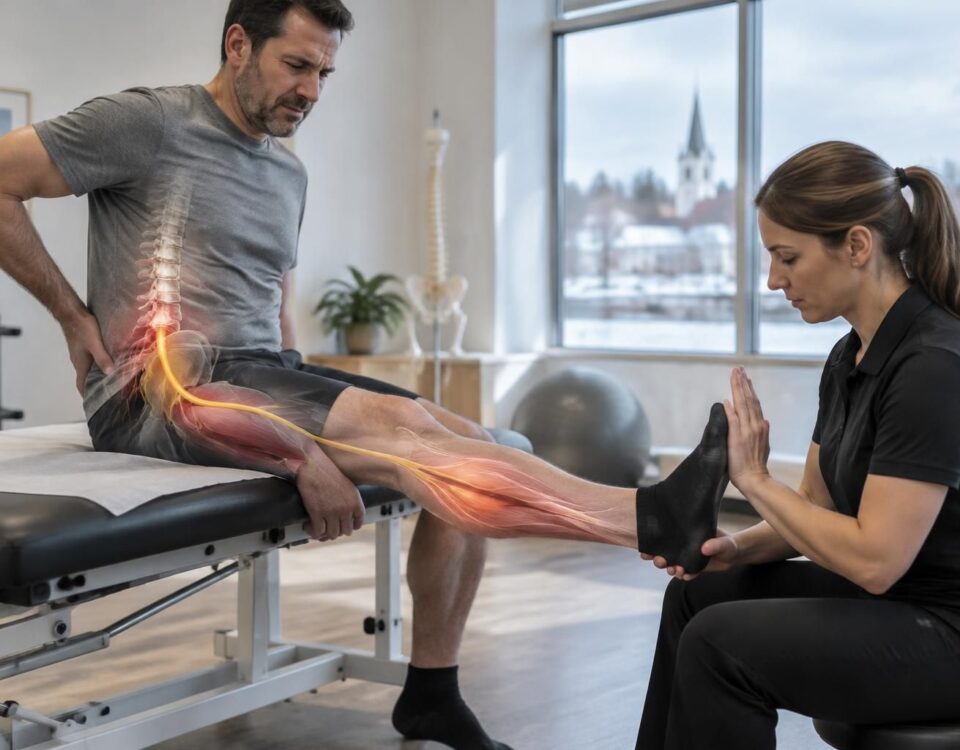
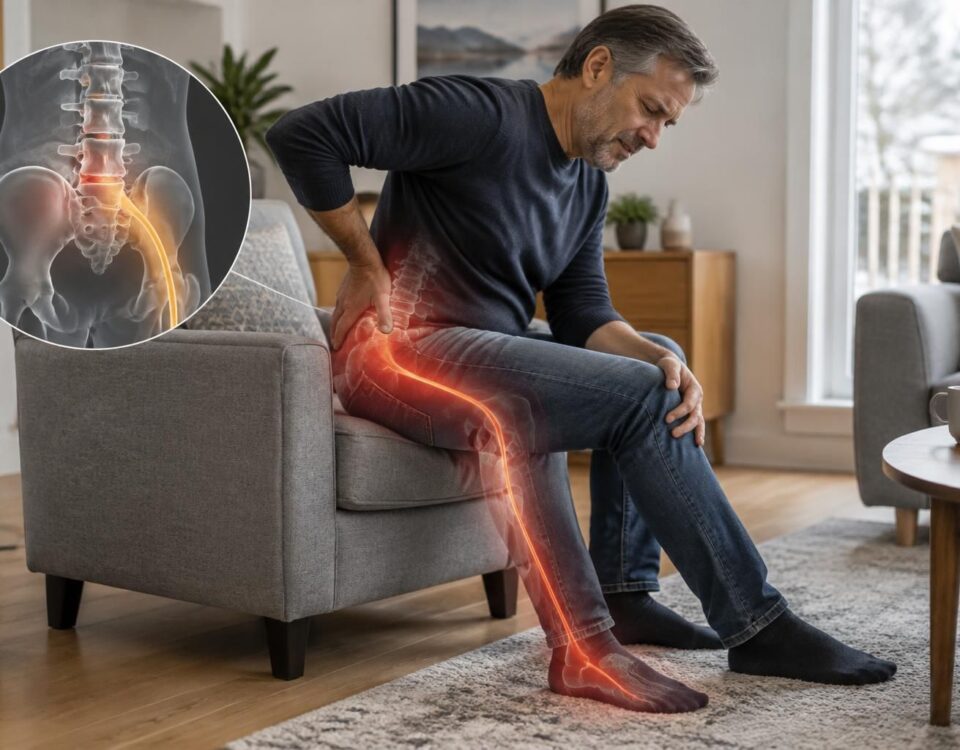
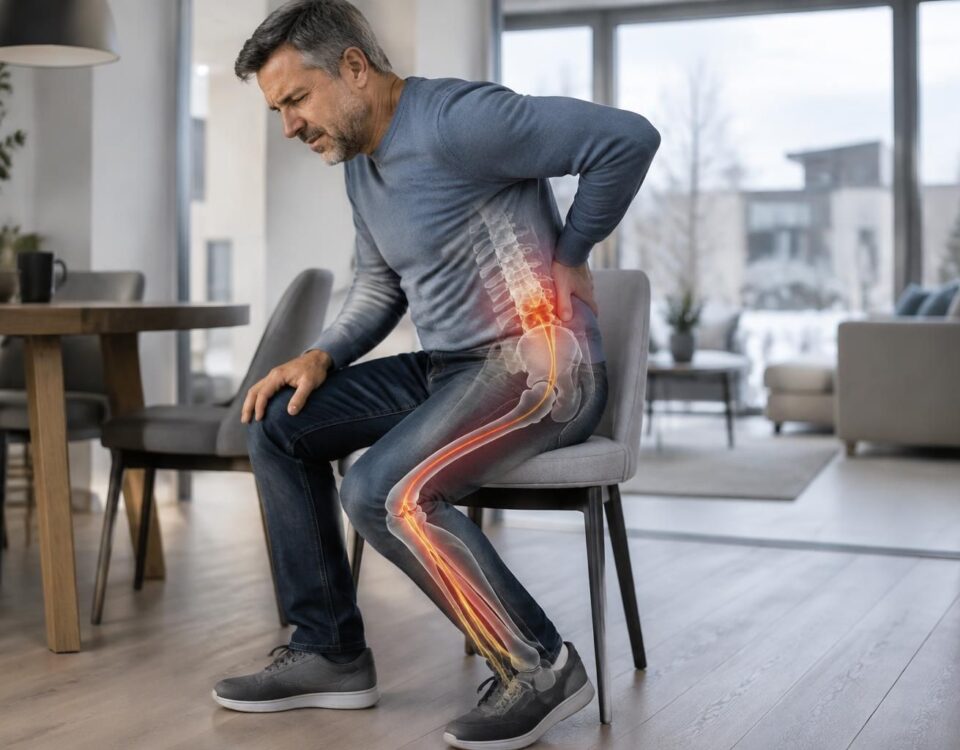
The assessment of sciatica in Terrebonne does not rely solely on the intensity of the pain. The professional also examines the pathway of symptoms, reflexes, leg strength, and skin sensitivity. These elements help to identify possible nerve damage, decide if medical advice is needed, and cautiously choose the next steps. The term sciatica describes pain that may follow the pathway of a lumbar nerve root to the buttock and leg. A herniated disc, narrowing of the space around a nerve, or another cause can produce similar symptoms. The examination should therefore check if the pain, weakness, or sensitivity changes correspond with the observed results. Pain that radiates down the leg does not, by itself, confirm nerve compression. The professional asks where the symptoms start, how far they spread, and what positions modify them. Pain that goes down to the calf may present a different profile than pain that travels up to the buttock. To better understand these variations, consult the pages on lower back pain radiating down to the calf and pain that descends and then ascends to the buttock. The professional can compare the reflexes of both legs using a medical hammer. The knee and ankle reflexes provide clues about the functioning of certain nerve pathways. A difference between sides may warrant further evaluation, but it is not sufficient to establish a diagnosis on its own. The knee reflex primarily depends on nerve pathways located in the lumbar region. The ankle reflex gives information about a pathway associated with the lower part of the spine and the calf. A decreased, absent, or different reflex on one side must be interpreted alongside symptoms and other examination results. Reflexes vary from person to person. The professional takes into account age, history, medications, and other observed signs. They avoid drawing conclusions based on a single test. The strength examination compares both legs and checks several movements of the foot and ankle. The professional may ask to lift the foot, lift the big toe, or push the foot down against resistance. They also observe walking and the ability to maintain balance, depending on the situation. Weakness can make certain actions more difficult. A person may drag their toes on the ground, struggle to lift their foot, or feel less stable while walking. The location of the weakness can guide the examination but does not always pinpoint the cause. For more information, consult this page on muscle weakness based on the possibly irritated nerve root. A new or progressive weakness requires prompt medical evaluation. A foot that drops, significant loss of strength, or increasing difficulty walking should not be treated as a mere transient pain. The professional compares the sensitivity of different areas of the legs and feet. They may check if touch is perceived similarly on both sides and ask if the person feels tingling, numbness, or a burning sensation. The map of symptoms can help distinguish nerve irritation from other possible causes. Sensitive areas overlap. Numbness in the toes does not automatically indicate a specific root. The result must be correlated with strength, reflexes, the pain’s pathway, and history. Also, consult the information on loss of sensitivity in the toes. Sitting position can sometimes modify symptoms. Pain or tingling in the foot while sitting should be noted and explained to the professional. They are not sufficient, by themselves, to confirm sciatica. You can read the page dedicated to pain while sitting with tingling in the foot. A useful evaluation starts with questions about the onset of symptoms, their evolution, the activities affected, and treatments already tried. The professional then clarifies the pain’s pathway and checks strength, reflexes, and sensitivity. They may also assess mobility and consider other causes, such as a hip problem or irritation of a peripheral nerve. The Lasègue test may be included in the examination. It seeks to determine if a position that stretches the nerve structures reproduces the symptoms. The result must be interpreted within the overall evaluation and does not confirm, by itself, the origin of the pain. An evaluation of sciatica in Terrebonne should also specify what will be followed: walking, sleep, strength, sensitivity, time spent sitting, and important activities. These measures facilitate comparison during re-evaluation. X-rays or magnetic resonance imaging are not necessary for every pain that radiates down the leg. The doctor chooses tests based on observed signs, the duration of symptoms, and the likelihood that the result will change management. Imaging may be considered in the presence of certain warning signs, weakness, persistent symptoms, or when an intervention is being discussed. An image must correspond to the affected side, the pathway of the symptoms, and the results of the examination. A visible abnormality does not automatically explain the pain. An electromyogram may be considered in certain situations to examine the functioning of nerves and muscles. The professional determines if this test is useful for the case in question. When the signs remain stable, the plan can start with explanations of the problem, activity adjustments, and monitoring of functional capacities. Manual care or non-surgical technology may be discussed depending on the evaluation, contraindications, and the person’s expectations. These approaches do not suit all causes and do not replace a medical examination when necessary. At TAGMED Clinic, options may include, depending on the assessed profile, specific osteopathy or motorized neurovertebral decompression. The professional must explain the possible benefits, limitations, risks, and criteria that would lead to interrupting or modifying the plan. To consult the services offered, visit the page on sciatica treatment in Terrebonne. A scheduled reevaluation helps to check if walking, strength, sensitivity, or sleep are improving. If no functional improvement appears, the plan should be reviewed. An increase in weakness or a change in walking requires special attention, even if pain varies. Consult a doctor or emergency service quickly in case of loss of bladder or bowel control, numbness in the saddle area, significant or progressive weakness, fever, or pain following a major trauma. These signs may require urgent evaluation. Do not delay this evaluation to complete a care program. Sylvain Desforges, B.Sc., D.O., N.D., Doctor of Osteopathy and naturopath, is the founding president of TAGMED and the ACMA association. His practice focuses particularly on chronic pain of the spine, lumbar pain, and pain consistent with sciatica. Through SOS Sciatique, he publishes educational content on sciatica symptoms, possible causes, and non-surgical approaches that may be considered after an evaluation. The services of TAGMED Clinic may include, depending on the case, motorized neurovertebral decompression, specific osteopathy, or precision percussion. For information about services in Montreal or Mont-Royal, check the page dedicated to sciatica treatment in Montreal and Mont-Royal. Medical disclaimer: The information and advice provided on this site do not replace the opinion, diagnosis, or treatment of a healthcare professional. Please note that Sylvain Desforges, B.Sc., D.O., N.D., doctor of osteopathy, is neither a medical doctor nor a physician, and is not a specialist in a medical specialty as defined by the College of Physicians of Quebec. Manual medicine, functional medicine, and sports medicine as described on this site exclude any treatment or medical diagnosis made by a physician or medical specialist. Always consult your doctor for any medical questions. For more details, please read our full Legal Notice.Reflexes help examine the nerve roots
What the reflex examination can show
Muscle strength specifies the level of difficulty
Sensitivity helps map symptoms
A comprehensive exam connects the signs together
When imaging or a medical opinion becomes relevant
Choosing a graduated management in Terrebonne
Signs that require urgent evaluation
About the author
Medical disclaimer
Sciatica in Terrebonne: muscle weakness according to the irritated nerve root
IN BRIEF Sciatica with muscle weakness can occur when a lumbar nerve root is irritated; affected movements, such as raising the foot or walking on tiptoes, provide clues but are not sufficient for a diagnosis. In Terrebonne, an evaluation can…
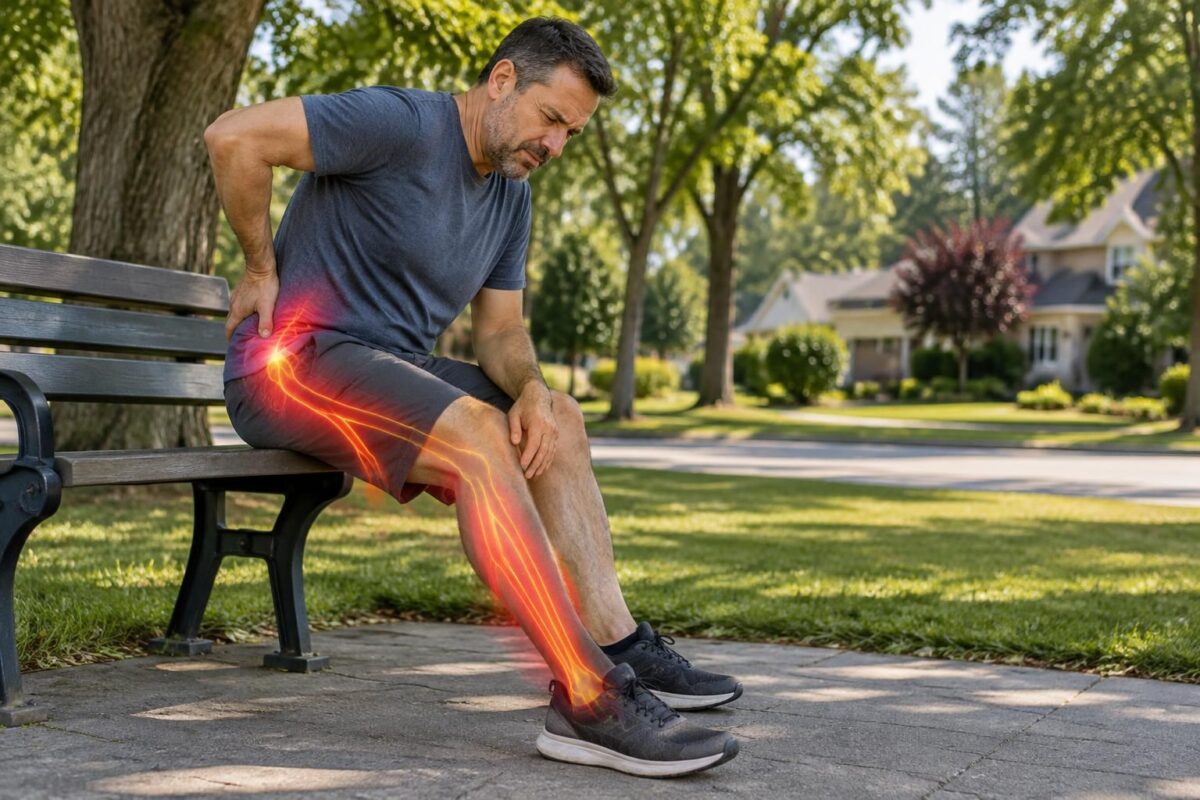
Sciatica in Terrebonne: nerve pain and sensory territory
IN BRIEF Sciatica is a nerve pain that can start from the lower back and radiate into the buttock and leg, sometimes down to the foot, with tingling or numbness. In Terrebonne, identifying the affected sensory territory helps guide the…
Sciatica in Terrebonne: three markers to check
Evaluated element
- Knee reflexes
- Strength of the foot and leg
- Sensitivity to touch
What it helps to identify
- A possible nerve injury
- A weakness or asymmetry
- The need for prompt medical follow-up
A new or progressive weakness, or significant loss of sensitivity, justifies prompt medical evaluation.

In Terrebonne, the evaluation of pain radiating into the buttock or leg should check reflexes, muscle strength, and sensitivity, in addition to specifying the symptom pathway. These elements help the professional estimate whether a nerve root may be irritated, identify a neurological change, and determine if medical reevaluation or additional testing is indicated.
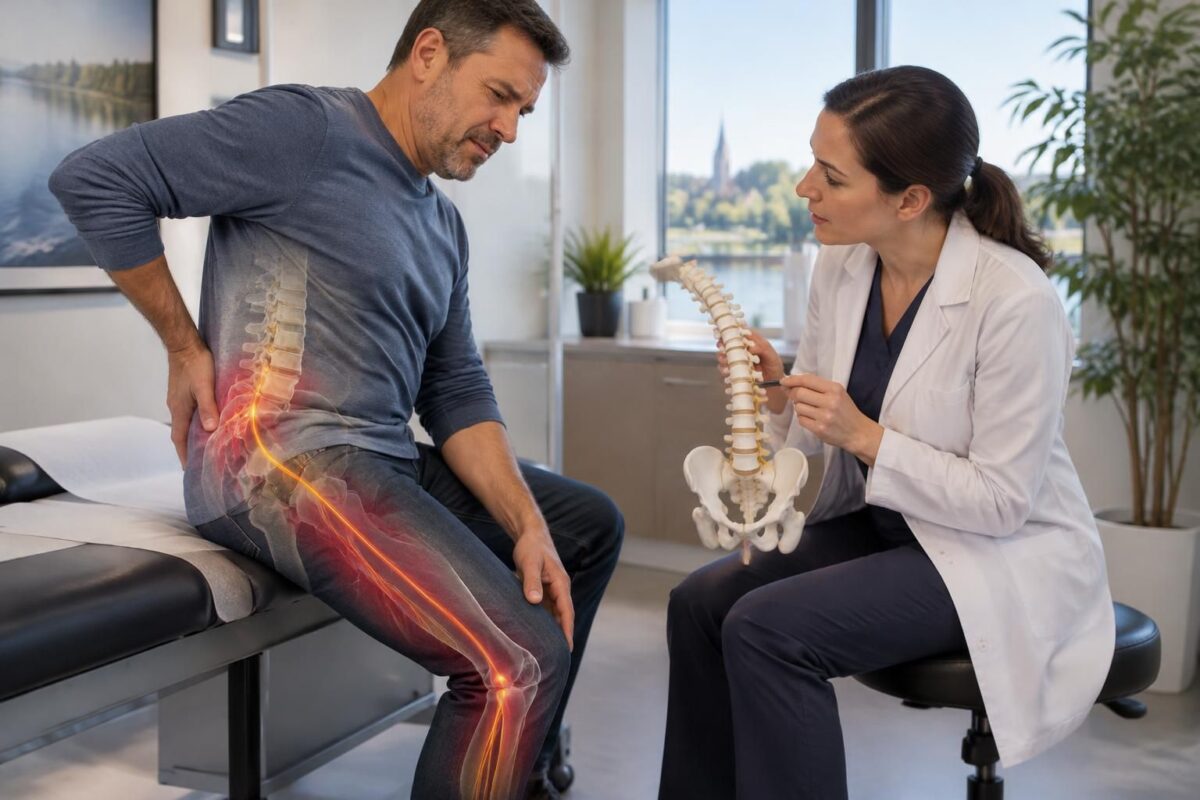
Sciatica in Terrebonne: L4, L5, S1, how to find your way?
IN SHORT Sciatica is a pain that can radiate from the buttock down the leg when a nerve root is irritated. The levels L4, L5, and S1 can produce overlapping symptoms; therefore, the pathway of the pain alone is not…

Sciatica in Terrebonne: L5 or S1 irritation, why the clinical examination matters
IN BRIEF Sciatica is pain related to the irritation of a nerve root, often L5 or S1. The pathway of symptoms, strength, sensitivity, and walking provide clues, but the territories may overlap: the clinical examination therefore helps guide the assessment…
Start with a complete clinical examination
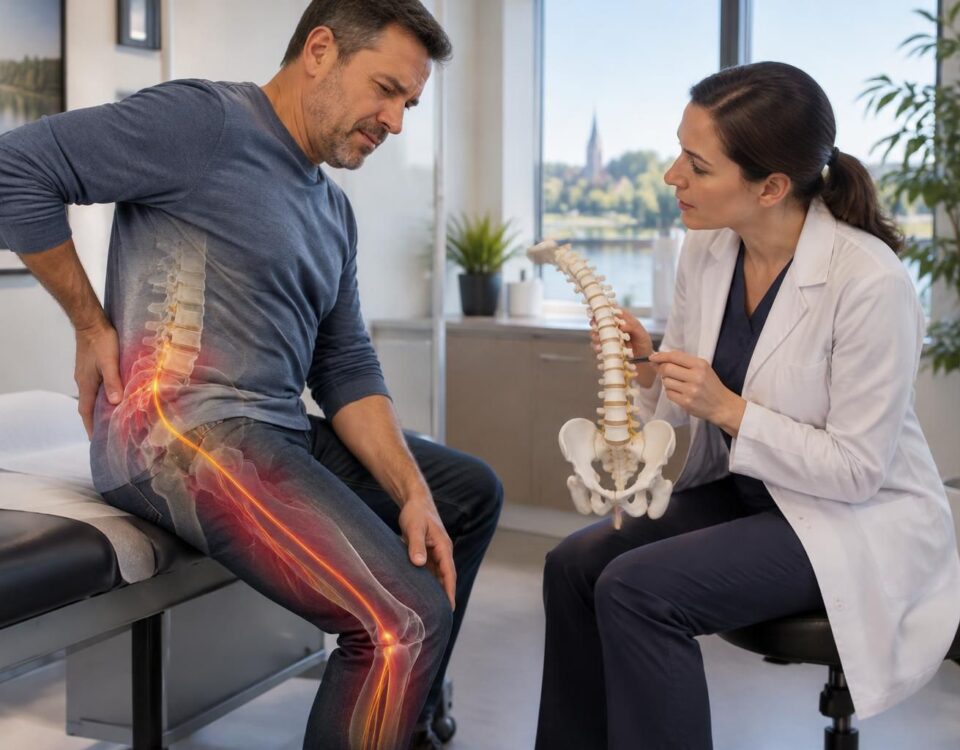
Pain radiating into the leg does not confirm sciatica or a herniated disc by itself. The evaluation starts with questions about the onset of symptoms, their progression, the affected areas, the positions that worsen or relieve them, and the activities that have become difficult. Also mention any numbness, changes in gait, and any feelings of weakness.
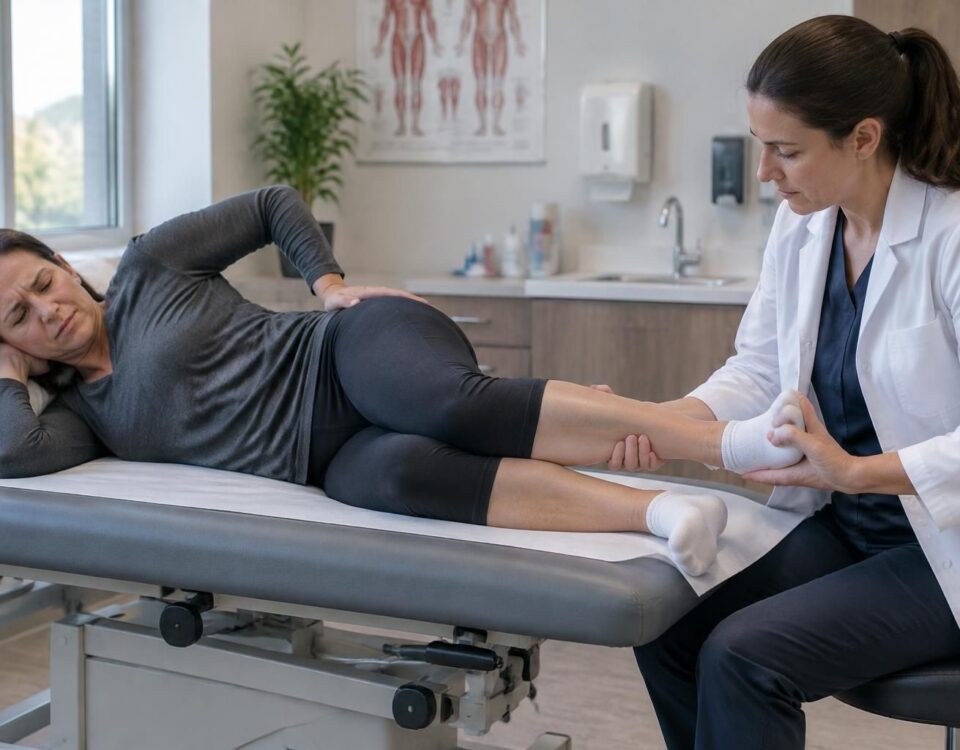
The professional can then compare the two legs and examine mobility, walking, and certain back positions. The Lasègue test, when relevant, can help assess sensitivity to stretching of a nerve root. However, no isolated test can, by itself, confirm the cause or severity of the problem.
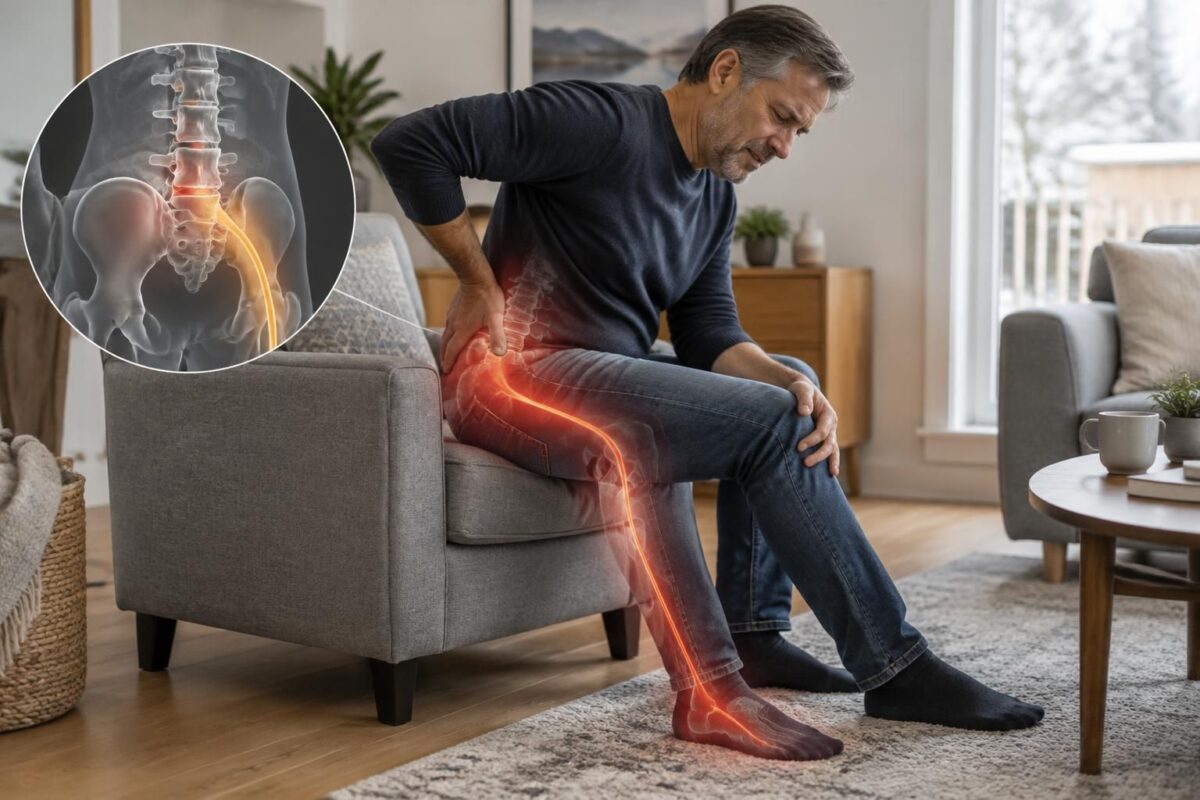
Sciatica in Terrebonne: L5-S1 Herniation and Pain Towards the Foot
IN BRIEF A sciatica related to a possible L5-S1 herniation can cause pain from the lower back or buttock down to the calf, heel, or foot. The path of the symptoms alone is not enough to confirm the cause: the…

Sciatica in Terrebonne: L4-L5 protrusion and leg pain
IN BRIEF A L4-L5 disc protrusion is a bulging of a lumbar disc that may, depending on its relationship with the nerves, contribute to sciatica, with pain, tingling, or numbness in the leg. In Terrebonne, an assessment helps relate symptoms,…
Check reflexes and strength
Reflexes of the lower limbs
Knee and ankle reflexes can be tested and compared from one side to the other. A difference may provide a clue about neurological functioning, but it must be interpreted with the symptoms and other examination results. A diminished reflex does not automatically mean that a particular intervention is necessary.
Strength and movements of the foot
Strength can be assessed during simple actions: lifting the foot and toes, pushing the foot down, walking on heels or tips of toes. Report any new difficulty in climbing stairs, keeping the foot raised, or walking normally. A right-left comparison and monitoring over time can help identify an evolving deficit.
Do not attempt to conclude on your own based on a test done at home. Pain, fatigue, or fear of movement can distort the effort made. The examination must be placed in the overall context and, if weakness is suspected, assessed by a licensed healthcare professional.
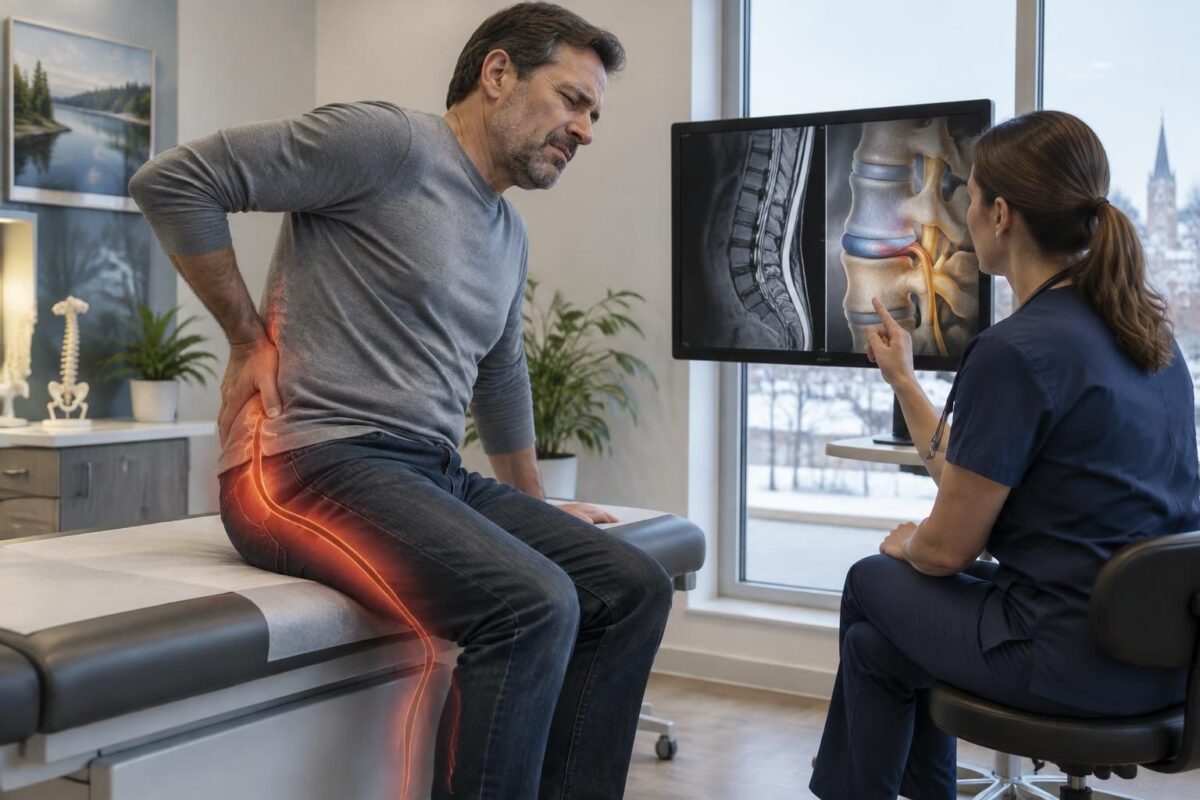
Sciatica in Terrebonne: what “disc-root conflict” means
IN BRIEF A disc-root conflict occurs when an intervertebral disc irritates or compresses a nerve root in the lower back. It can cause sciatica: lower back pain that radiates down into the buttock and leg, sometimes accompanied by sensory disturbances…
Sciatica in Terrebonne: radicular pain versus referred pain
IN BRIEF Sciatica refers to pain that radiates into the buttock and sometimes the leg. A radicular pain comes from the irritation of a nerve root and may be accompanied by tingling, numbness, or weakness; a referred pain spreads from…
Map sensitivity and painful pathways
Describe exactly where the pain and unusual sensations manifest: buttock, thigh, calf, top or sole of the foot, toes. The professional can compare sensitivity to touch in different areas of the legs. Note whether the numbness remains stable, spreads, or is accompanied by tingling. The distribution of symptoms can guide the examination, but does not establish a diagnosis on its own.
Deciding on the next steps based on the results
For stable symptoms without significant loss of strength, a graded management approach and functional follow-up may be considered. Note concrete benchmarks, such as walking distance, duration spent sitting, or quality of sleep, and then plan for a reevaluation. Imaging is not systematic: it is discussed when the results may alter the course of action, particularly if symptoms persist or if a deficit is observed.
Quickly consult a doctor or emergency service in cases of significant or progressive weakness, foot drop, numbness in the saddle area, loss of bladder or bowel control, fever, or recent trauma. These signs require immediate medical evaluation and should not be delayed by a planned care program.
| Evaluated Element | What it Indicates |
|---|---|
| Reflexes | An asymmetry may indicate nerve damage. |
| Strength | Comparison of legs identifies weakness or its progression. |
| Sensitivity | Mapping of numbness helps locate symptoms. |
| Walking and Foot | Difficulties walking or lifting the foot are important in triage. |
| Interpretation | These signs are examined alongside the painful pathway and history. |
| Next Steps | A new or progressive weakness requires rapid medical evaluation. |
Illustrative Testimonials: Reflexes, Strength, and Sensitivity in the Assessment of Sciatica in Terrebonne
Transparency Note: The testimonials below are fictional examples created for educational purposes. They do not correspond to real patients and do not constitute a guarantee of results.
“My pain started in the buttock and radiated down to the calf. During the assessment, I was explained why it was important to check more than just the intensity of the pain. Comparing the strength of the legs, reflexes, and sensitivity helped me understand what the professional was trying to document.” — Fictional example
“I mostly had tingling in my foot and was worried I wouldn’t know if my condition was serious. The exam allowed for discussion about the distribution of sensitivity and to check certain foot movements. I was told that a result should be interpreted with my symptoms and my evolution, not in isolation.” — Fictional example
“What I appreciated was that I was asked if my leg seemed weaker, if my walking had changed, and if the symptoms were progressing. The tests of muscle strength and mobility complemented the questions about pain. I understood that follow-up should also consider my daily activities.” — Fictional example
“I thought that pain radiating down the leg necessarily meant a herniated disc. The evaluation helped me understand that we need to examine the pathway of symptoms, reflexes, strength, and sensitivity, while considering other possible causes.” — Fictional example
During an evaluation for pain consistent with sciatica in Terrebonne, the examination may particularly focus on the distribution of pain, lower limb strength, skin sensitivity, certain reflexes, and walking. These observations help guide the next steps, but they do not always suffice to establish the exact cause. The need for imaging or a medical referral depends on the clinical picture and evolution.
A new or progressive weakness, a foot that becomes difficult to lift, a spreading loss of sensitivity, or a significant change in walking requires rapid medical evaluation. New urinary or bowel dysfunctions, or loss of sensitivity in the saddle area, necessitate urgent care.
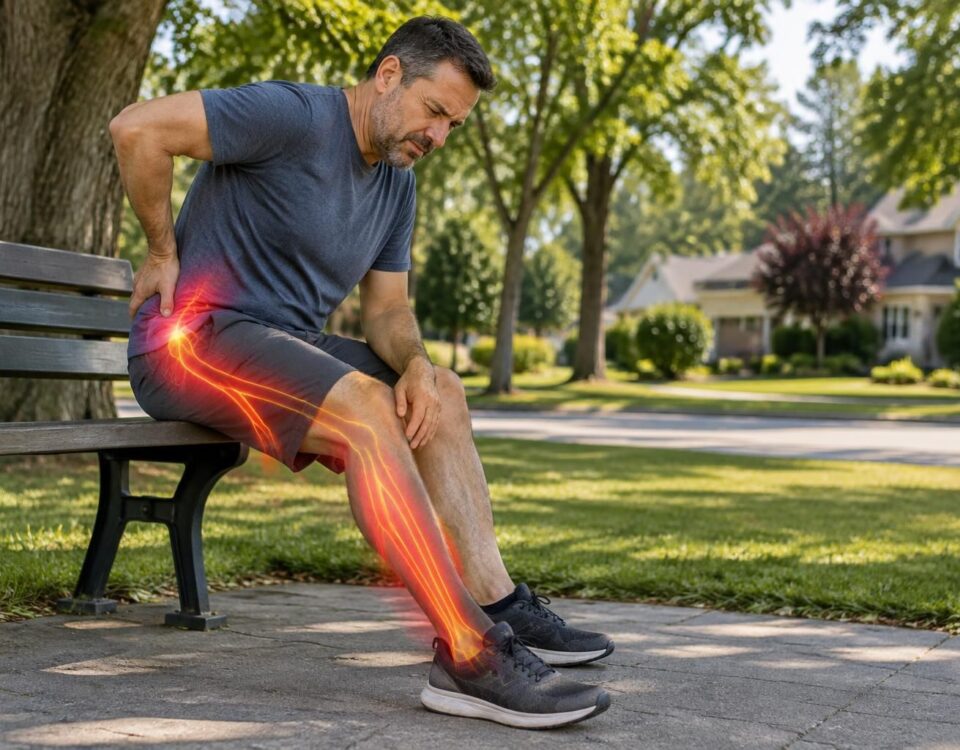
Pain that starts in the lower back or buttock and radiates down the leg may be consistent with sciatica, but its pathway alone is not enough to determine its cause. In Terrebonne, a careful evaluation seeks to determine whether the symptoms correspond to irritation of a lumbar nerve root, another neurological issue, or a problem originating from the hip. Examination of muscle strength, reflexes, and sensitivity provides guidance for the next steps.
The evaluation begins with the history of symptoms: their onset date, progression, painful areas, positions that aggravate or relieve them, as well as activities that have become difficult. Pain can be described as burning, electric, or sharp and may extend down to the calf or foot. It is also important to report any numbness, weakness, or changes in walking. This information helps the professional contextualize the results of the examination.
Checking strength generally compares both sides and focuses on useful movements, such as lifting the foot and toes, pushing the foot down, or walking on heels and toes. A difference may direct the examination towards certain nerve roots, but it must be interpreted with caution: pain, fatigue, and other factors can also influence effort. A new or progressive weakness warrants quick medical attention.
Deep tendon reflexes, particularly at the knee and ankle, are evaluated to check for asymmetry or reduction. They provide an indication of the functioning of certain nerve circuits, but do not alone confirm sciatica or specify its cause. The professional correlates these observations with the distribution of pain, strength, and other collected signs. An isolated result should therefore not automatically dictate treatment or imaging examination.
The examination of sensitivity involves comparing sensations in different areas of the legs and feet, often on both sides. The patient may be asked to report any difference in touch or a numb area. Mapping these changes helps verify whether symptoms follow a coherent nerve territory. Mobility or nerve tension tests, including the Lasègue test, may complete the evaluation based on the observed clinical picture.
Imaging, such as MRI or CT scans, is not systematic for every pain radiating in the leg. It is considered by a qualified professional when warning signs, symptom progression, or a therapeutic decision makes it relevant. An image must be correlated with the affected side, the painful pathway, and clinical findings: a visible anomaly does not, on its own, prove that it explains the symptoms. An electromyogram may be discussed in certain situations when the origin or level of nerve impairment remains uncertain.
Sylvain Desforges, B.Sc., D.O., N.D., Doctor of Osteopathy and Naturopath, is the founding president of TAGMED clinics and the ACMA association. His practice particularly focuses on chronic spinal pain and non-surgical support. Depending on the assessment and the individual’s profile, options such as education, adapted activity, progressive exercise, specific osteopathy, or certain technologies may be discussed. They do not replace a medical diagnosis and may not necessarily be suitable for all causes of sciatica.
To track progress, it is useful to document walking, sleep, tolerance to positions, strength, and important activities, and then plan for a reevaluation. Loss of urinary or bowel control, numbness in the saddle region, significant or progressive weakness, fever, or rapidly worsening pain require urgent medical evaluation.
In Terrebonne, the evaluation of pain suggesting sciatica is not solely based on its intensity: the pathway of symptoms, reflexes, muscle strength, and sensitivity help guide the examination and identify signs that need prompt medical attention. These observations must be related to the history of symptoms and the ability to walk, sit, or perform usual activities.
Reflexes, Strength, and Sensitivity in Evaluation
During the clinical examination, a healthcare professional may compare the two legs to search for changes in osteotendinous reflexes, strength, and sensitivity. These checks help assess the functioning of the nerves but are not sufficient on their own to establish the cause of the pain. To understand the role of these tests, consult the guide on the clinical examination of sciatica and the information on the diagnosis of sciatica.
Strength is observed in functional movements, such as lifting the foot or standing on tiptoes. A new difficulty in performing these actions may warrant a medical evaluation, especially if it worsens. Difficulty in standing on tiptoe is addressed in this overview of sciatica associated with difficulty on tiptoe.
The sensitivity examination consists of searching for areas of numbness, tingling, or different perceptions between sides. The professional also considers the location of symptoms: pain radiating down the leg may follow different pathways, without allowing for a certain identification of the affected nerve root. To learn more, consult the guidelines on the painful pathway corresponding to the L4, L5, and S1 roots.
Reflexes, strength, and sensitivity are interpreted together, along with other elements of the examination and the progression of symptoms. The Lasègue test and mobility assessment can complement this approach. Practical resources on possible examinations are provided by Ameli and this guide dedicated to investigations and the diagnosis of sciatica.
A medical imaging is not systematic: the doctor considers it especially when symptoms persist, a neurological sign is observed, or the result could alter management. MRI, X-ray, or CT scans do not answer the same questions; their relevance depends on the clinical situation. A local overview of options is available in the guide on managing sciatica in Terrebonne.
The duration spent sitting, walking, sleeping, and activities that trigger or modify the pain complement the collected information. These guidelines can be useful when pain prevents sitting or appears after physical effort, as explained in these resources on pain in a seated position and radiation in the leg after physical effort.
A new or progressive weakness, a dropped foot, a loss of sensitivity that extends, numbness in the saddle region, or changes in urinary or bowel control require prompt or urgent medical evaluation. These signs should not be trivialized, even if pain varies or decreases temporarily; also consult the guidelines on nerve symptoms not to be trivialized.

Sylvain Desforges, B.Sc., D.O., N.D., docteur en ostéopathie
Dr Sylvain Desforges, B.Sc., D.O., N.D., osteopath, is the founding president of TAGMED and of the ACMA association. He dedicates his practice to chronic spinal pain, low back pain and symptoms compatible with sciatica, particularly when pain radiates toward the buttock, leg, calf, foot or toes.
Through SOS Sciatique, he publishes educational content on sciatica symptoms, possible causes such as disc herniation, disc narrowing, foraminal stenosis or irritation of a lumbar nerve root, as well as non-surgical approaches that may be considered according to the evaluation. At Clinique TAGMED, care may include, depending on the case, motorized neurovertebral decompression, specific osteopathic care or precision percussion.
For an evaluation related to sciatica treatment in Montreal / Mount Royal or sciatica treatment in Terrebonne, please consult the services available at Clinique TAGMED.
Medical disclaimer
The information published on SOS Sciatique is provided for educational purposes only and does not replace a consultation, diagnosis, opinion or treatment provided by a physician or another authorized healthcare professional. The author of this article is neither a medical doctor nor a specialist in a medical specialty recognized by the Collège des médecins du Québec. The osteopathic, manual medicine or functional support approaches described on this site do not constitute medical acts and are not intended to replace medical follow-up.
Consult a physician or emergency service in cases of loss of bladder or bowel control, anesthesia in the saddle area, significant or progressive weakness in the leg or foot, fever, recent trauma, severe pain or rapid worsening of symptoms. For more details, please read our Legal Notice.