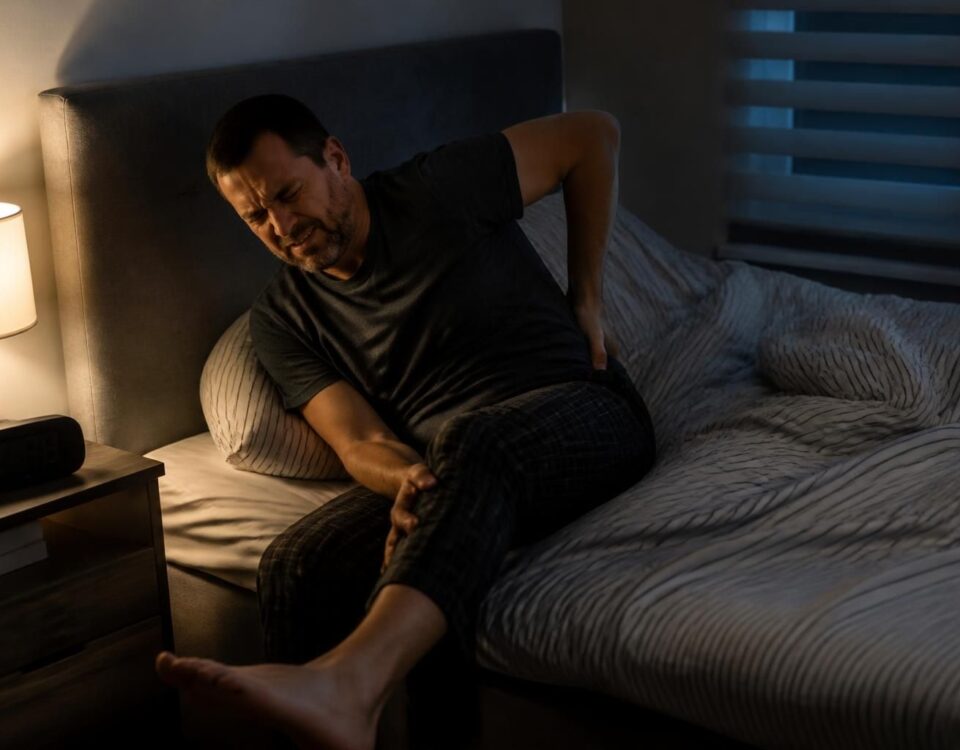
Sciatica in Montreal: Symptoms Worsening in the Evening
21/09/2026
Sciatica and pain when leaning forward
21/09/2026
IN BRIEF
| In brief, sciatica is pain associated with the sciatic nerve that starts in the lower back and can radiate down into the buttock and leg. In Terrebonne, it can worsen at the end of the day after prolonged sitting. This text helps you understand the symptoms and typical causes (herniated disc, piriformis syndrome, postural imbalance), and discover simple actions to relieve it quickly (gentle pain-relief postures, heat, light walking, and stretching). It also specifies when to consult a professional near Terrebonne for appropriate and effective management. |
Quick summary about Sciatica in Terrebonne and symptoms that worsen in the evening:
- Pain follows the path of the sciatic nerve: it starts from the lower back and can radiate into the buttock and leg.
- Common symptoms: lower back pain, burning sensation, tingling or numbness, and discomfort while walking or sitting.
- Often at the end of the day, symptoms worsen after a day spent sitting or during repeated efforts.
- Simple actions and an appropriate approach can provide temporary relief; a local consultation can help identify the causes and suggest personalized solutions.
This article, written by an expert osteopath, explains why sciatica can worsen at the end of the day in Terrebonne, what signs to watch for, and how appropriate management can help restore comfort in daily activities.
Understanding Why Symptoms Worsen at the End of the Day
Sciatica corresponds to irritation or compression of the sciatic nerve. The nerve starts from the lower back and descends along the leg. The worsening at the end of the day may result from a prolonged posture, repeated effort, or accumulated muscle fatigue. The pain may be more pronounced after a day of work or after a long car ride.
Common factors include a poor position at work, intense physical activity without recovery, or tension in the muscles around the nerve, especially near the pelvis and buttock. These elements can amplify pressure on the nerve and intensify the pain.
Typical Symptoms that Appear or Worsen at the End of the Day
Pain may start in the lumbosacral region and radiate toward the buttock, thigh, or leg. A burning sensation or tingling may be felt. Numbness and discomfort while walking or sitting are possible. The pain may be more pronounced when sitting for extended periods or when climbing stairs.
The exact localization depends on the affected nerve root. Pain can affect different areas along the lumbar pathway to the foot. To better understand these mechanisms, refer to dedicated resources on the SOS Sciatica website and its specific sections.
To delve deeper into the links between movement and pain, you can consult targeted resources such as dedicated pages for Terrebonne and the pain mechanisms that often accompany variations throughout the day.
When to Consult and What Signs to Watch For
Consult if pain persists despite simple actions and if it spreads or recurs during the day. Request an evaluation when pain interferes with work, driving, or sleep. Warning signs require prompt medical consultation.
Contact a professional if you observe progressive weakness in the leg, marked numbness, urinary issues, or very intense pain that does not subside. When in doubt, seek rapid medical advice.
Professional Approaches and Management in Terrebonne
In Terrebonne, osteopathy can help reduce tensions and improve mobility in the pelvis and spine. The goal is to limit repeated mechanical constraints and promote more comfortable everyday movements. Intervention may include a comprehensive assessment, suitable manual techniques, and practical advice to reduce irritations around the nerve.
For tailored management, you may consider the TAGMED Clinic in Terrebonne, which offers a multidisciplinary approach focused on mobility and well-being. Additional resources and information can be found on the TAGMED Clinic website.
Additional useful resources on the mechanisms and pathways of sciatic pain can be found on the dedicated SOS Sciatica sites, especially when pain is associated with episodes of walking or variations depending on positions.
Useful links:
Sciatica in Terrebonne – intermittent or constant pain
Sciatica and pain while climbing stairs
Sciatica and pain during position changes
Sciatica and frequent pauses while walking
Sciatica in Terrebonne – intermittent or constant pain
Sciatica and weakness in the thigh – possible lumbar cause
Sciatica while climbing stairs
Sciatica and pain during position changes
For general information and additional resources, also visit Clinique TAGMED.
Medical disclaimer: The information and advice provided on this site do not replace the opinion, diagnosis, or treatment of a healthcare professional. Please note that Dr. Sylvain Desforges, osteopath, is neither a medical doctor nor a physician and is not a specialist in a medical specialty as defined by the Collège des médecins du Québec. Manual therapy, functional medicine, and sports medicine as described on this site exclude any medical treatment or diagnosis made by a physician or specialist doctor. Always consult your doctor for any medical questions. For more details, please read our full Legal Notice.
- Prolonged sitting leads to increased irritation of the sciatic nerve.
- Uncomfortable postures and lumbar twists at the end of the day.
- Car rides or prolonged travel that increases lumbar pressure.
- Muscle fatigue accumulated in the glutes and hamstrings.
- Lack of nighttime rest that amplifies tensions.
- Pain radiating to the buttock and leg at the end of the day.
- Increased lumbar stiffness when straightening up or moving.
- Tingling or electric shocks intensifying while sitting.
- Driving and getting up from the couch becoming painful and difficult.
- Limited walking and more frequent necessary breaks.

This article focuses on sciatica in Terrebonne and the signs that gradually worsen at the end of the day. It provides clear markers to understand why the pain intensifies, along with simple and appropriate actions to relieve symptoms at the end of the day, without replacing a medical consultation if necessary.
Understanding the dynamics of sciatica at the end of the day
Sciatica is related to irritation or compression of the sciatic nerve, the longest in the body. At the end of the day, prolonged activities, repeated postures, and muscle fatigue can increase pressure on this nerve and surrounding structures. In this context, pain can shift from lumbar sources to radiate to the buttock, thigh, and sometimes leg. Typical trigger factors at the end of the day include prolonged sitting, repetitive movements at work, and occasionally limited mobility after a busy day.
Common triggers at the end of the day
• Continuous sitting posture at the office or in a vehicle. Sedentary behavior and non-ergonomic positions increase tension on the lower back and sciatic nerve.
• Muscle fatigue and tension. The muscles around the pelvis and lower back become fatigued, accentuating local compression.
• Lack of micro-movement. Not moving enough can lead to progressive stiffness and an increased perception of pain at bedtime.
Typical signs and symptoms that worsen at the end of the day
At the end of the day, certain symptoms become more bothersome and limiting in usual activities: lumbar pain radiating to the buttock and leg, sensation of heat or electric shock, and sometimes numbness or slight weakness. Pain may also intensify during bending, walking, or transitioning from sitting to standing. Discomfort may make daily activities more challenging, especially driving or sitting for long periods.
How to differentiate the phases of the day
In the morning, pain may be milder after a night of rest, but it can intensify throughout the day with repeated movements. In the evening, fatigue and accumulated efforts often amplify nerve irritation and stiffness, presenting a different picture of pain compared to the morning.
Practical recommendations to alleviate pain at the end of the day
Here are some simple and repeatable actions to quickly alleviate pain when the day comes to an end, without trying to force painful movements.
Recommended actions and positions
• Lie on your back with a small cushion under your knees to relax the lumbar curve and reduce pressure on the sciatic nerve.
• Lie on your side with a cushion between your knees to maintain a gentle opening of the hips and limit lower back tension.
• Engage in light and regular walking for 10 to 15 minutes to maintain mobility without overloading the lumbar structures.
• Use local heat (hot water bottle or heating pad) for 15 to 20 minutes to relax the muscles and release tension around the nerve.
Gentle exercises to prioritize
• Light stretching of the piriformis muscle and pelvic tilting while lying down, gentle mobilizations of the lower back and calm breathing to avoid tension.
• Sufficient hydration and taking regular breaks to limit stiffness and promote recovery.
When to consult in Terrebonne
If the pain persists despite these measures, worsens at the end of the day, or is accompanied by alarming signs (marked weakness, significant numbness, urinary or fecal disorders, pain in both legs), it is important to seek a professional evaluation quickly. An osteopath or physician can assess the mechanical, postural, and functional factors and propose an approach suitable for your local situation in Terrebonne.
| Lower back pain that worsens at the end of the day | The sciatic nerve is irritated by a prolonged posture and fatigue, which increases pain in the evening. |
| Pain radiating to the buttock and thigh in the evening | The nerve pathway stretches; accumulated tension during the day worsens the radiation into the buttock and thigh. |
| Pain extending to the calf or foot at the end of the day | The irritation can extend to the foot; fatigue and posture worsen the pain at the end of the day. |
| Numbness or tingling worsening in the evening | Signs of persistent nerve irritation; breaks and gentle movements can help. |
| Discomfort while walking after a day standing or sitting | Pain and stiffness limit walking when the body is fatigued; prioritize micro-breaks and gentle mobility. |
| Pain while driving for long periods | The sitting posture and lack of movement increase pressure on the nerve; adjustments and frequent breaks relieve. |
| Electric shock sensation in the evening | Sudden manifestation of irritation; returning to neutral positions and moving slightly can help. |
| Stiffness and limited movement at the end of the day | Muscle tension and inactivity reinforce rigidity; prioritize gentle stretching and controlled mobility. |
Testimonials on Sciatica in Terrebonne: Symptoms Worsening at the End of the Day
In Terrebonne, my sciatica worsens mainly at the end of the day. The lower part of my back burns and then the pain rises into my buttock and leg after work, and I have to constantly adjust to find some relief.
“At the end of the day, the sciatica becomes unbearable when I am at my computer or after a long trip. The pain radiates down my leg and prevents me from sitting comfortably.”
“I noticed that in the evening, the numbness and tingling intensify and walking becomes difficult. Since Terrebonne, I’ve followed simple advice and gentle exercises that have reduced the intensity.”
“After a few osteopathy sessions in Terrebonne, the symptoms at the end of the day fatigue less quickly and my mobility improves. I can finally enjoy the evening without holding my breath with every movement.”
“My days were dominated by pain at the end of the day: I came home exhausted and had trouble sleeping. Today, with an adapted program and simple gestures, I feel a real difference and I’m finding my evenings calmer.”
“If the pain increases at the end of the day, consult quickly. In cases of recurrent episodes in Terrebonne, a personalized approach may help prevent recurrences and improve your quality of life.”
Dr. Sylvain Desforges is recognized as an expert in osteopathy, naturopathy, and manual medicine. Based on an approach that combines know-how and rigor, he runs the TAGMED clinics and works within the ACMA association. His journey is driven by a quest for innovation in care, with particular attention to fact-based evaluation and optimizing the quality of life of his patients suffering from chronic pain, especially regarding sciatica.
In Terrebonne, he observes a frequent correlation among people with sciatica: symptoms may worsen at the end of the day. This increase in pain can be explained by a combination of factors, such as prolonged posture, accumulated tension in the muscles surrounding the sciatic nerve, and mechanical constraints related to daily activities. Dr. Desforges emphasizes identifying the triggers precisely and understanding how pain evolves throughout the day to tailor care to each patient profile.
His therapeutic approach is based on a comprehensive assessment that scrutinizes lower back mobility, muscle condition, and lifestyle habits that may contribute to nerve irritation. In practice, this translates into gentle manual techniques, pragmatic advice, and simple exercises to be done at home. The goal is to reduce pressure on the sciatic nerve and prevent recurrences, especially when pain intensifies at the end of the day after a long workday or commute.
To complement the care, Dr. Desforges incorporates cutting-edge technologies adapted to each case. Among them are motorized spinal decompression, laser, and shockwave therapy. These approaches aim to reduce tension, accelerate recovery, and support better posture throughout the day to limit symptom worsening in the evening and improve the ability to resume daily activities without fear.
At the heart of his practice, the goal is not only temporary relief but a lasting improvement in functionality and daily comfort. Dr. Desforges favors a evidence-based approach, combining postural advice, tailored exercise programs, and readjustment of lifestyle habits. This philosophy allows patients in Terrebonne to move through their days with fewer restrictions and maintain their mobility as the sun sets and tension returns at the end of the day.
For residents of Terrebonne and surrounding areas seeking to understand and treat sciatica symptoms that intensify at the end of the day, Dr. Desforges offers a personalized pathway adapted to daily life. Each consultation focuses on identifying the mechanical, inflammatory, or functional factors that fuel the pain and proposing a concrete and progressive approach to sustainably improve daily life.
This brief summary outlines the key points about sciatica in Terrebonne, focusing on symptoms worsening at the end of the day and simple measures to relieve pain and maintain mobility in daily life.
In the context of Terrebonne, a sciatica that worsens in the evening often reflects a combination of mechanical factors and muscle tensions around the sciatic nerve. Accumulated fatigue and prolonged positions can amplify the pain, which usually radiates down into the buttock and leg, making daily activities more difficult.
To quickly limit the impact of these symptoms in the evening, prioritizing simple and safe actions is effective: favoring periods of gentle mobility, active breaks, and positions that relieve pressure on the lower back and nerve. Activities such as light walking, gentle stretches, and applying heat to the lower back or buttock can promote muscle relaxation and reduce pain within minutes, without straining.
A structured approach can also help prevent recurrences: adapting posture at work and home, integrating regular tailored exercises, and avoiding movements that worsen pain by the end of the day. For individuals living in Terrebonne or the surrounding area, support from a professional can complement these simple measures, especially when pain persists or recurs regularly.
If pain persists despite daily measures or is accompanied by signs such as significant weakness, serious numbness, or urinary issues, it is advisable to seek specialized evaluation. Resources dedicated to managing sciatica offer advice and solutions tailored to daily life and mobility, particularly in a local context. To further explore these situations and find additional information, you can consult the following pages: persistent pain in the heel, pain that descends then rises to the buttock, and difficulty climbing stairs. For general resources and signs to watch for, also check the following links: Nocturnal sciatic pain, Symptoms to monitor, Causes and treatments.
For practical aspects related to walking and pain during exertion, other useful resources include: foot pain while walking, pain and numbness after walking, and symptoms.
Sciatica in Terrebonne: pain that wakes you up at night
IN BRIEF In brief, nocturnal sciatica is pain from the sciatic nerve that occurs at rest and can wake you up at night. In Terrebonne, simple adjustments to posture and sleep environment allow for quick relief, notably by sleeping on…

Sciatica in Terrebonne: intermittent pain or constant pain?
IN BRIEF Sciatica is pain that follows the path of the sciatic nerve, starting from the lower back to the buttock and leg. In this context, we distinguish between intermittent pain and constant pain, depending on the episodes and causes…

Sciatica in Terrebonne: burning pain behind the thigh
IN BRIEF In brief, sciatica in Terrebonne, pain described as a burning sensation behind the thigh, is a nerve irradiation due to irritation or compression of a lumbar root that follows the pathway of the sciatic nerve. Benefits: precise local…

Sciatica in Terrebonne: numbness of the big toe and lower back pain
IN BRIEF In brief, sciatica associated with numbness in the big toe and lower back pain is pain that radiates along the sciatic nerve, starting from the lower back and spreading to the buttock, the back of the thigh, and…

Sciatica in Terrebonne: loss of sensation in the toes
IN BRIEF In brief, Sciatica with loss of sensation in the toes describes a compression of the sciatic nerve that runs from the lower back to the feet, causing numbness and tingling. In Terrebonne, non-surgical approaches aim to identify the…
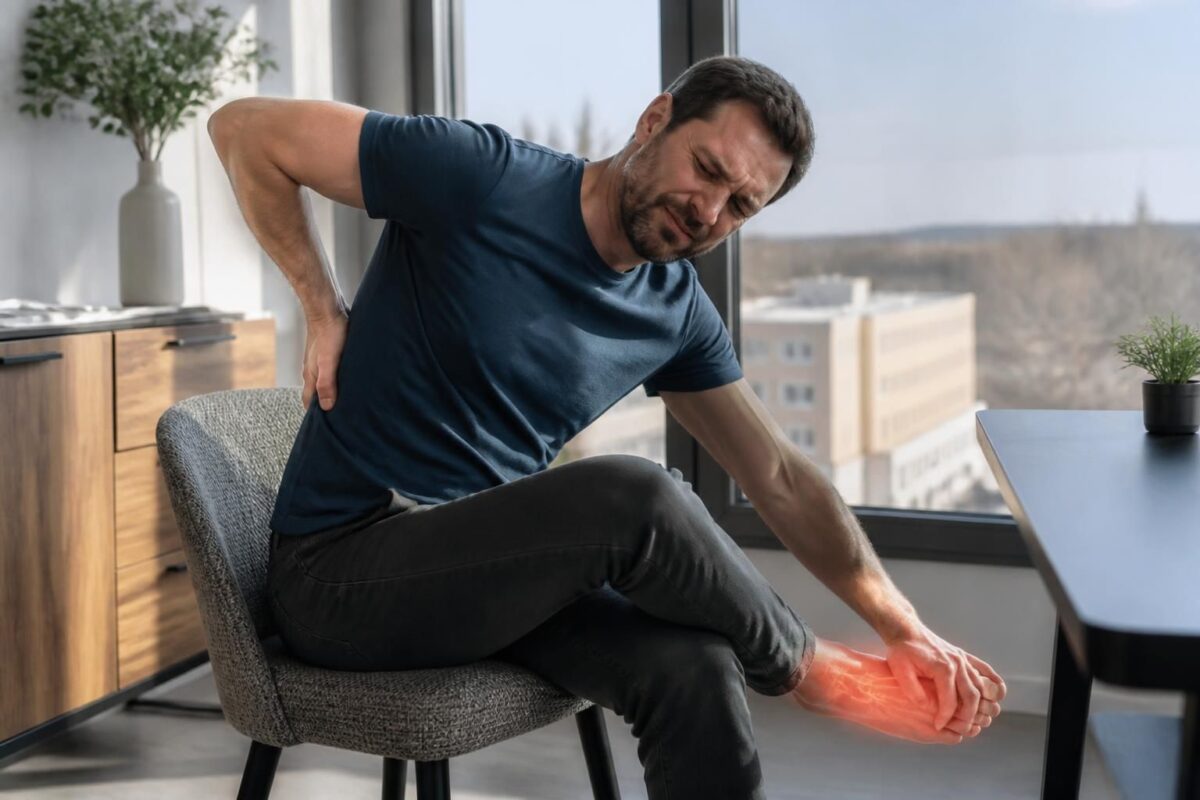
Sciatica in Terrebonne: pain while sitting with tingling in the foot
IN BRIEF In brief, sciatica in Terrebonne is characterized by a pain radiating from the buttock to the leg and foot, triggered or worsened by the sitting position and sometimes accompanied by tingling. This approach suggests sitting adjustments and regular…

Sciatica in Terrebonne: leg pain after prolonged standing
IN BRIEF In brief, Sciatica in Terrebonne is pain that starts in the lower back and radiates to the leg after a prolonged standing due to irritation or compression of the sciatic nerve. The key benefits of appropriate support include…

Sciatica in Terrebonne: pain and numbness after walking
IN BRIEF In brief, sciatica in Terrebonne is pain and numbness that follow the path of the sciatic nerve after walking, which may affect the buttock, the back of the thigh, the calf, and the foot. This condition is mainly…

Dr Sylvain Desforges, B.Sc., D.O., N.D., osteopath, is the founding president of TAGMED and of the ACMA association. He dedicates his practice to chronic spinal pain, low back pain and symptoms compatible with sciatica, particularly when pain radiates toward the buttock, leg, calf, foot or toes.
Through SOS Sciatique, he publishes educational content on sciatica symptoms, possible causes such as disc herniation, disc narrowing, foraminal stenosis or irritation of a lumbar nerve root, as well as non-surgical approaches that may be considered according to the evaluation. At Clinique TAGMED, care may include, depending on the case, motorized neurovertebral decompression, specific osteopathic care or precision percussion.
For an evaluation related to sciatica treatment in Montreal / Mount Royal or sciatica treatment in Terrebonne, please consult the services available at Clinique TAGMED.
Medical disclaimer
The information published on SOS Sciatique is provided for educational purposes only and does not replace a consultation, diagnosis, opinion or treatment provided by a physician or another authorized healthcare professional. The author of this article is neither a medical doctor nor a specialist in a medical specialty recognized by the Collège des médecins du Québec. The osteopathic, manual medicine or functional support approaches described on this site do not constitute medical acts and are not intended to replace medical follow-up.
Consult a physician or emergency service in cases of loss of bladder or bowel control, anesthesia in the saddle area, significant or progressive weakness in the leg or foot, fever, recent trauma, severe pain or rapid worsening of symptoms. For more details, please read our Legal Notice.