Sciatica in Terrebonne: symptoms that worsen at the end of the day
21/09/2026
Herniated disc and sciatica: when the cause is mechanical
21/09/2026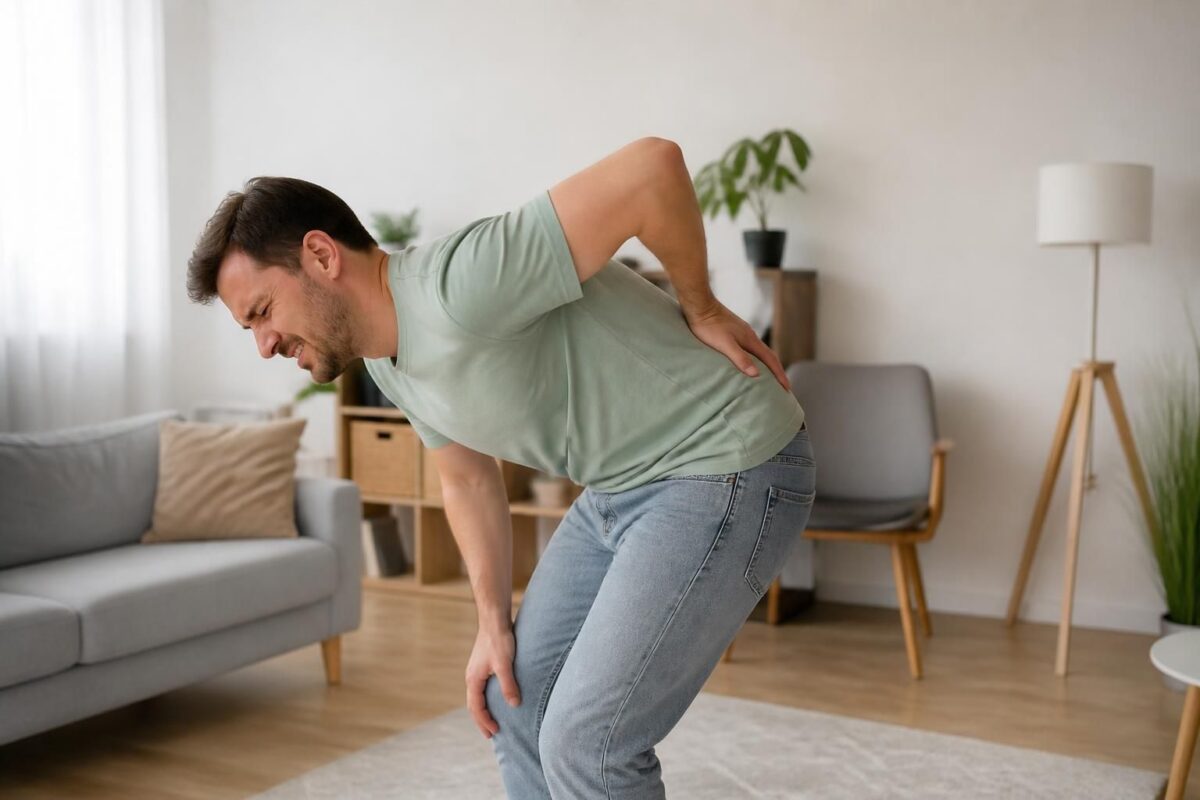
IN BRIEF
| In brief, Sciatica and pain when bending forward describe lower back pain that radiates into the leg when flexing, often due to irritation of a nerve root or disc compression. This page offers a clear definition, common causes, and practical gestures for relief, along with progressive exercises and ergonomic advice to prevent recurrences. Key benefits: rapid understanding, non-surgical approaches, improved mobility, and prevention of relapses. Accessible in Montreal and surrounding areas, with a personalized action plan to safely resume daily activities and sports. |
Sciatica can manifest as pain in the lower back when bending forward, often a source of discomfort and limitation. This pain can stem from muscle injuries, disc issues (like a hernia), or postural factors that increase pressure on the discs and nerve roots, potentially radiating to the buttock or leg. An evaluation can identify the cause and apply non-surgical solutions: ergonomics, targeted exercises, and maintaining progressive activity to quickly relieve pain and prevent recurrences.
This article, written by an expert health professional, explains the relationship between sciatica and pain when bending forward. It describes possible mechanisms, factors influencing pain, safe movements, and elements to watch for. It provides clear advice for temporarily relieving pain and preventing recurrences while guiding toward specialized assessment when necessary.
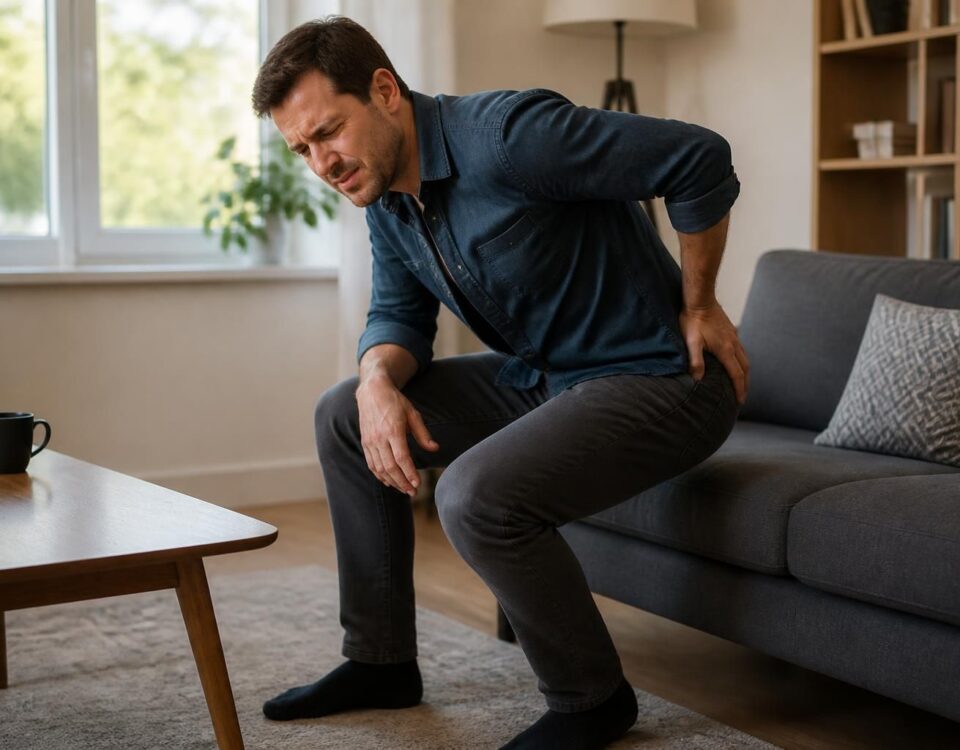
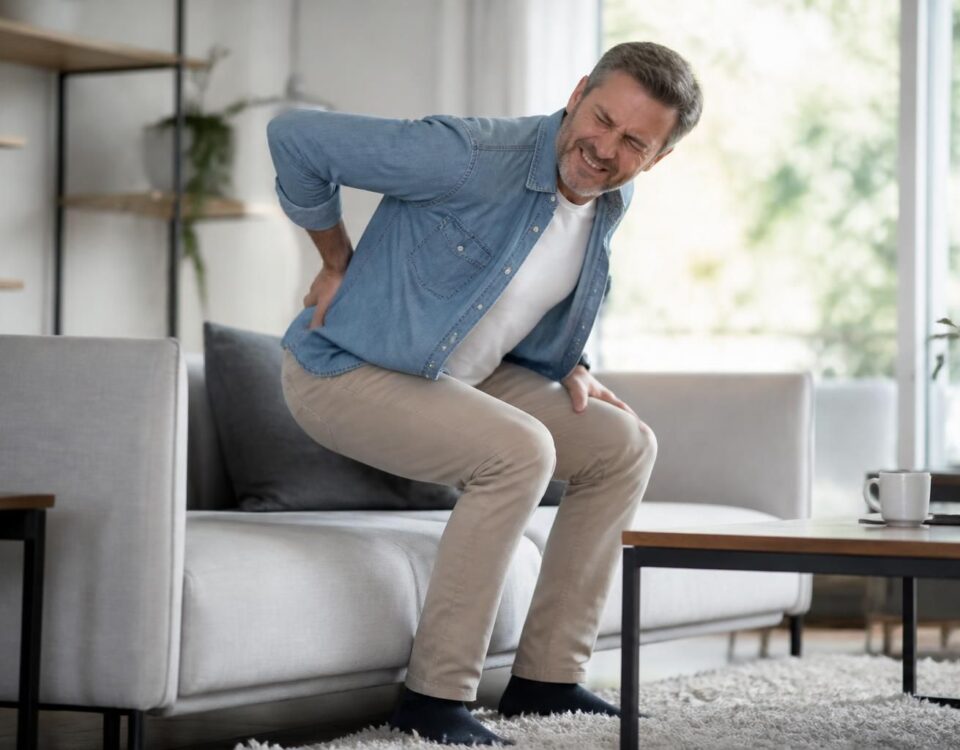
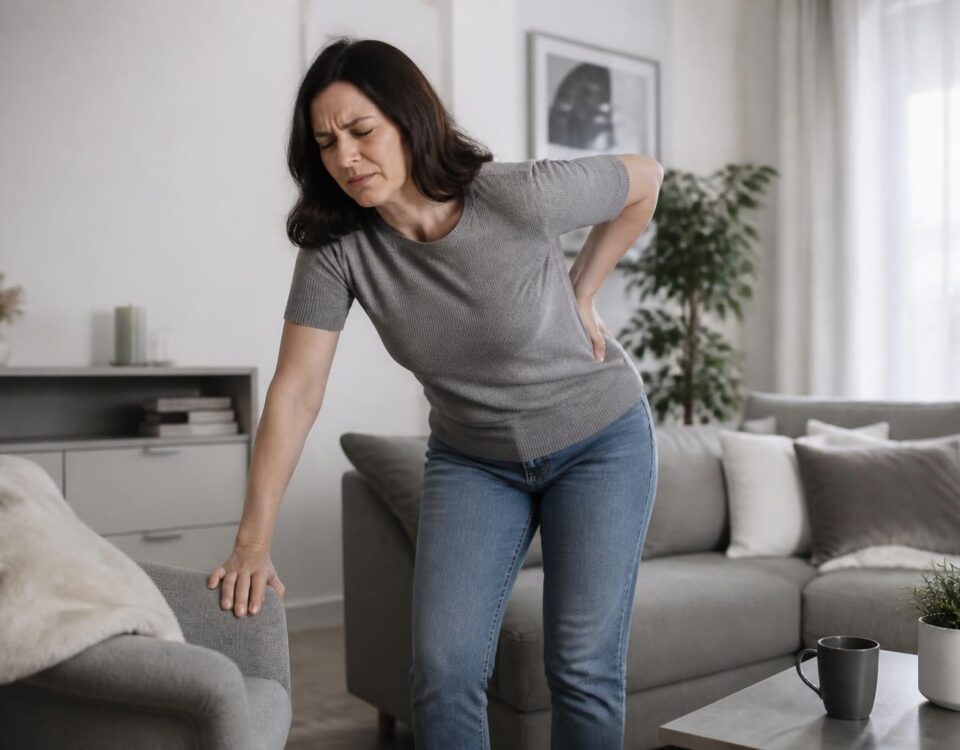
The bending movement of the trunk heavily engages the lumbar spine. In this context, pain may arise or intensify. The pain may remain localized in the lower back or radiate to the buttock, thigh, calf, foot, or toes. This radiation is typical of nerve involvement along the path of the sciatic nerve.
Common mechanisms include irritation or compression of the nerve roots, muscle or joint tension, and postural factors. Symptoms may vary according to the affected nerve root and underlying cause. For some patients, the pain is primarily mechanical and related to movement; for others, it may be associated with a burning sensation or electric shock that follows the path of the leg. Recognizing the signs and the painful path helps direct evaluation and management.
Context and Clinical Implications
Lower back pain associated with bending may limit daily and professional activities. It can influence sleep and mobility. A clinical examination helps assess the exact localization, presence of tender points, and any associated muscle weaknesses. Symptoms such as significant numbness, loss of strength, or sphincter disturbances require rapid and specialized evaluation.
Postural Factors and Daily Movements
Movement habits and posture play a major role. Rounding the back while bending and primarily using the trunk rather than the hips increases the load on the lumbar structures. Sitting for long periods in the same position can also amplify pain. Simple adjustments can reduce nerve irritation and improve daily comfort. For practical advice and adaptations, consult dedicated resources and services from TAGMED.
To delve deeper into the mechanisms and general approaches, you can consult resources dedicated to sciatica and lower back pain on reliable sites such as Sciatica in Montreal or Sciatica in Terrebonne, which describe the characteristics of the pains and the factors that worsen them. You can also consult numbness and lower back pain for similar clinical scenarios. For a practical clinical approach, the TAGMED Clinic offers assessments and tailored options.
Warning Signs and When to Consult
Consult promptly in case of lower back pain that persists beyond a few weeks despite self-care measures, or if you experience signs such as pain strongly radiating into the leg with progressive weakness, loss of sensitivity in the perineum, or urinary and bowel disturbances. These signs require immediate medical evaluation and may indicate a situation that needs specialized management.
Immediate Management and Safe Approach
Immediate measures may include maintaining an appropriate activity level and avoiding gestures that sharply trigger pain. Applying heat or cold can be useful for relieving tense muscles or reducing inflammation depending on the painful phase. Avoid prolonged bed rest and favor gradual movements and activities within the limits of pain. For personalized advice, make an appointment at the TAGMED Clinic.
Useful online resources for better understanding symptoms and safety gestures can be found on specialized sites and pages dedicated to sciatica. For example, pain in the leg after prolonged standing can illustrate the relationship between prolonged standing and pain. Other pages like burning pain behind the thigh help identify radiation patterns, and TAGMED Clinic can offer an evaluation suited to your situation.
Posture and Preferred Movements
Adopt a gentle bending technique led by the hips and knees. Bend your knees and keep your back straight when you lean to lift an object. Use your leg muscles and keep the load close to your body. Avoid repeated bends and sudden twists of the trunk when pain is present.
Prevention Elements and Ergonomics in Daily Life
To prevent recurrences, work on the ergonomics of your workspace and general back hygiene. Adjust the height of your chair and desk to promote a neutral back posture. Use ergonomic aids when possible and vary positions throughout the day. Regular movement and appropriate activity reduce the risks of recurrence and support recovery.
Resources and professional references
For practical guidance on treatments and available resources, see the following pages:
TAGMED Clinic TAGMED Clinic.
Specialized solutions available at TAGMED Clinic and in collaboration with local professionals. For information on non-pharmacological approaches and care options, you can consult neurovertebral decompression, or resources dedicated to disc issues on sosherniediscale.com and sosherniatedisc.com. For general information on sciatica and symptoms, explore sossciatique.com.
To learn more about links to back pain associated with bending and coping strategies, you can also consult thematic resources on sites dedicated to muscular and spinal health within a clinical approach.
Medical disclaimer: The information and advice provided on this site do not replace the opinion, diagnosis, or treatment of a healthcare professional. Please note that Dr. Sylvain Desforges, osteopath, is neither a medical doctor nor a physician and is not a specialist in a medical specialty as defined by the Collège des médecins du Québec. Manual medicine, functional medicine, and sports medicine as described on this site exclude any medical treatment or diagnosis made by a doctor or specialist. Always consult your doctor for any medical questions. For more details, please read our full Legal Notice.
For more information or to schedule an evaluation, contact TAGMED Clinic or consult the associated resources on the websites mentioned above.
Medical disclaimer: The information and advice provided on this site do not replace the opinion, diagnosis, or treatment of a healthcare professional. Please note that Dr. Sylvain Desforges, osteopath, is neither a medical doctor nor a physician and is not a specialist in a medical specialty as defined by the Collège des médecins du Québec. Manual medicine, functional medicine, and sports medicine as described on this site exclude any medical treatment or diagnosis made by a doctor or specialist. Always consult your doctor for any medical questions. For more details, please read our full Legal Notice.
- Sciatica: pain following the lumbar nerve root, which may radiate down the leg.
- Common causes: muscle / ligament injuries, disc damage (hernia), acute low back pain.
- Triggers in bending: sudden movements, lifting heavy loads, rounded posture.
- Quick management: favor hip hinge (straight back, bent knees) and activate the legs.
- Posture and ergonomics: avoid repeated bends and loads away from the body; adjust chair and desk; use ergonomic aids.
- Key exercises: gradual walking, gentle movements of the back and pelvis, strengthening deep abdominal muscles.
- Rest and therapies: stay active, apply heat or cold depending on the phase; avoid prolonged rest; physiotherapy if symptoms persist.
- When to seek help: pain that persists > 2–6 weeks or warning signs (weakness, numbness, bowel or bladder issues, fever).

Quick summary: this article provides practical recommendations on low back pain associated with bending forward. You will discover possible causes, recommended movements, immediate relief tips, simple exercises, and criteria for when to consult. The goal is to adopt an active, ergonomic, and gradual approach to regain comfort and prevent recurrences.
Understanding Pain When Bending
Low back pain during bending occurs when the torso leans forward and the lumbar spine is stressed. This area bears much of the weight and responds poorly to sudden or uncontrolled movements. Pain may remain localized or radiate to the buttock, thigh, or calf if a nerve root is affected. Depending on the case, it may be referred to as acute low back pain, disc pain, or postural pain.
Sciatica and pain when straightening up
IN BRIEF In brief, Sciatica and pain when standing up is a pain radiating along the sciatic nerve, often triggered or worsened by the effort of standing up and maintaining an upright posture. It most often results from a nerve…
Sciatica and pain when getting up from a chair
IN BRIEF In brief, sciatica and pain when getting up from a chair refer to lower back discomfort triggered by the transition from sitting to standing, often related to irritation of a lumbar nerve root or poor posture. What is…
Common Causes
Muscles and Ligaments
A minor trauma or poorly managed effort can trigger acute pain and stiffness, especially during sustained or repeated bending movements.
Discs and Radiculopathy
A disc may deform under the effect of bending, causing pain that may radiate along the path of a nerve root. This pain may be accompanied by tingling or an episode of weakness in the leg.

Sciatica and Pain with Position Change
IN BRIEF In brief, sciatica and pain during position change is pain radiating along the sciatic nerve triggered or worsened by postural changes and prolonged postures. Benefits: identifying positions to avoid and adopting ergonomic adjustments helps reduce pain, improve comfort,…
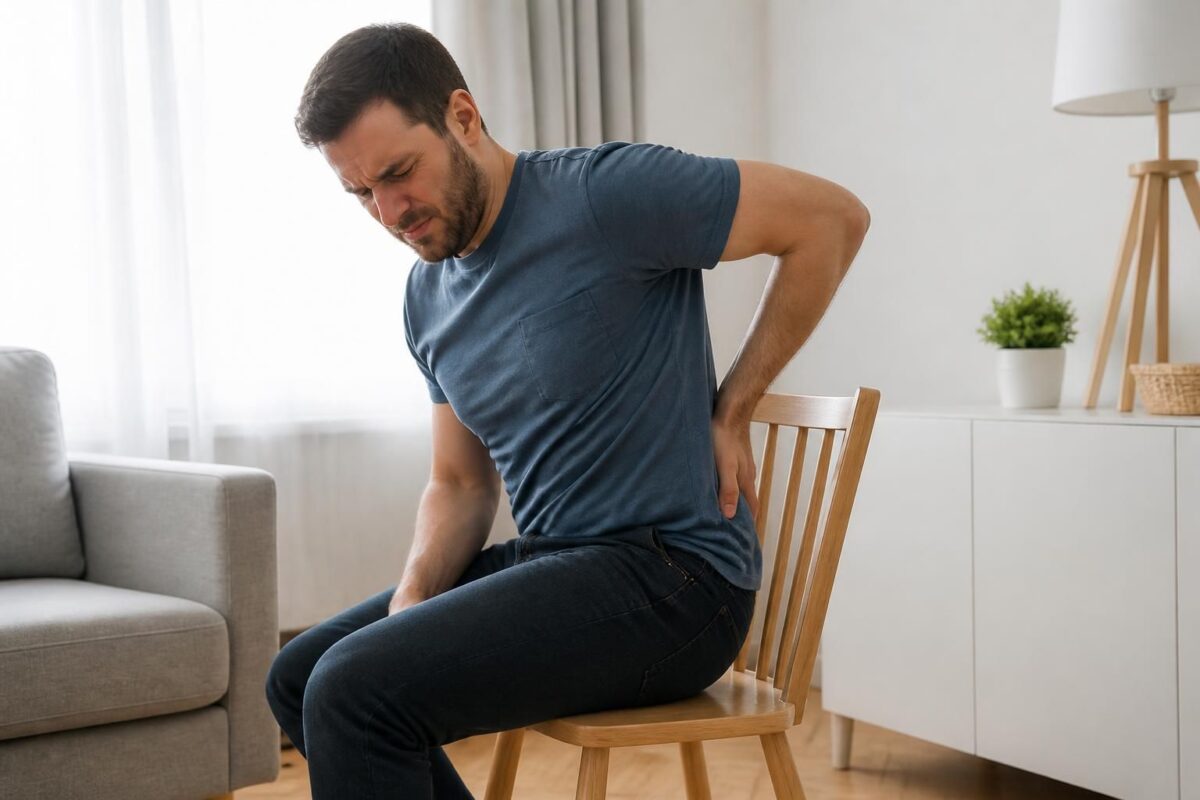
Sciatica and difficulty sitting
IN BRIEF In brief, Sciatica and difficulty sitting describes pain that follows the path of the sciatic nerve, often worsened by prolonged sitting. This approach aims to break up sitting periods and adjust posture to reduce pressure on the lumbar…
Recommended Movements and Postures During Bending
To limit the load on your back, favor the hip hinge: bend your knees and keep your back straight when bending. Keep loads close to your body and avoid sudden twisting or painful repeated bends. Alternate positions and use ergonomic aids when possible.
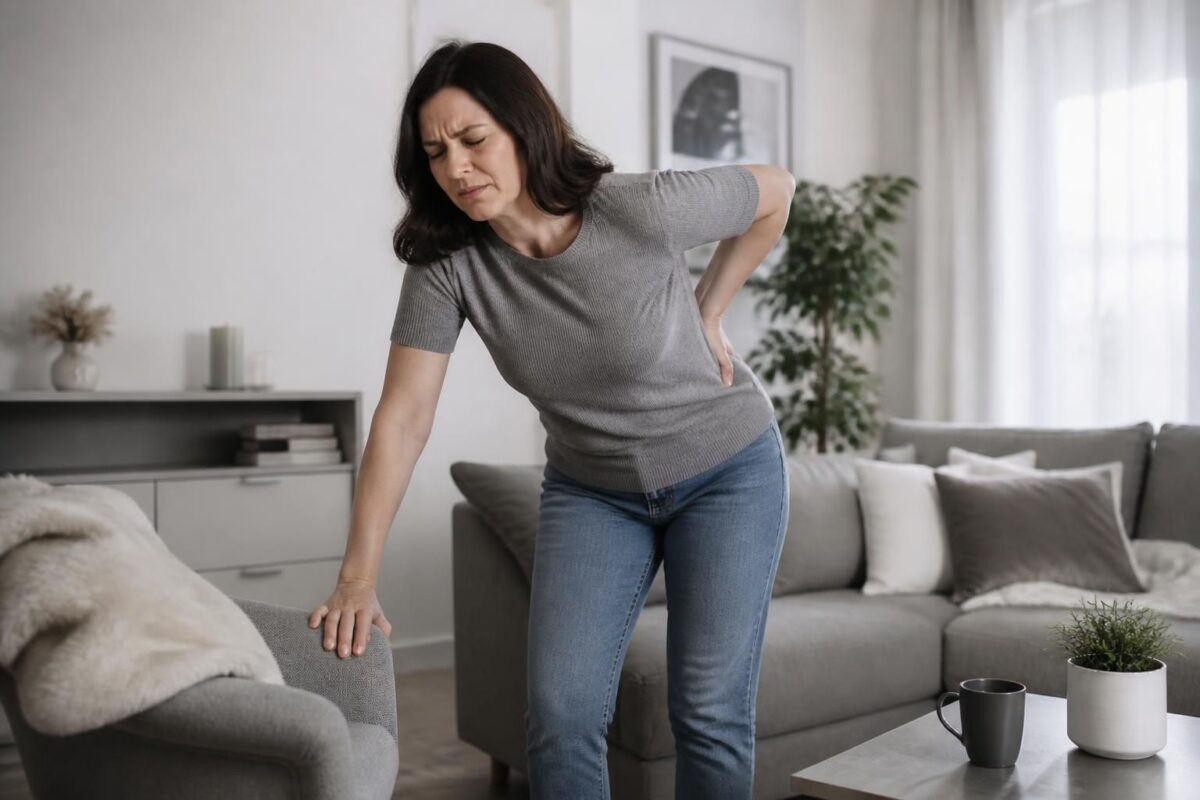
Sciatica and difficulty standing upright
IN BRIEF In brief, sciatica and difficulty standing refer to painful radiation starting from the lower back down the leg, which can significantly hinder standing. What is it? A pain that may radiate into the buttock and leg, with sensations…

Sciatica and pain when going down the stairs
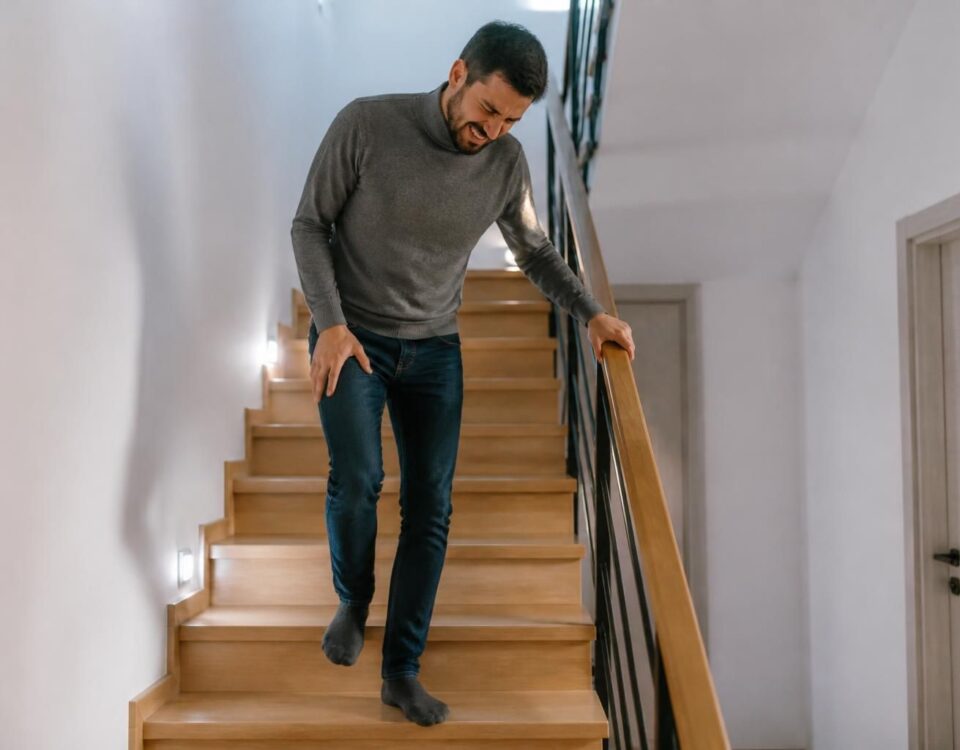
IN SHORT Sciatica and the pain felt when going down the stairs is a pain that radiates along the path of the sciatic nerve and can be triggered by descending steps. This condition may be related to causes such as…
Immediate Recommendations for Relief
Adopt positions that alleviate pain and remain as active as tolerated. Apply either heat to relax the muscles or cold during the acute phase to reduce inflammation. Avoid prolonged bed rest; prefer light and progressive activities. In case of intense pain, consult a professional to adjust the treatment plan and avoid the pitfalls between rest and activity.

Sciatica and pain when going up stairs
IN BRIEF In brief, sciatica is a pain that follows the path of the lumbosacral nerves, starting from the lower back and going down to the back of the leg. It can be related to a herniated disc, stenosis, or…
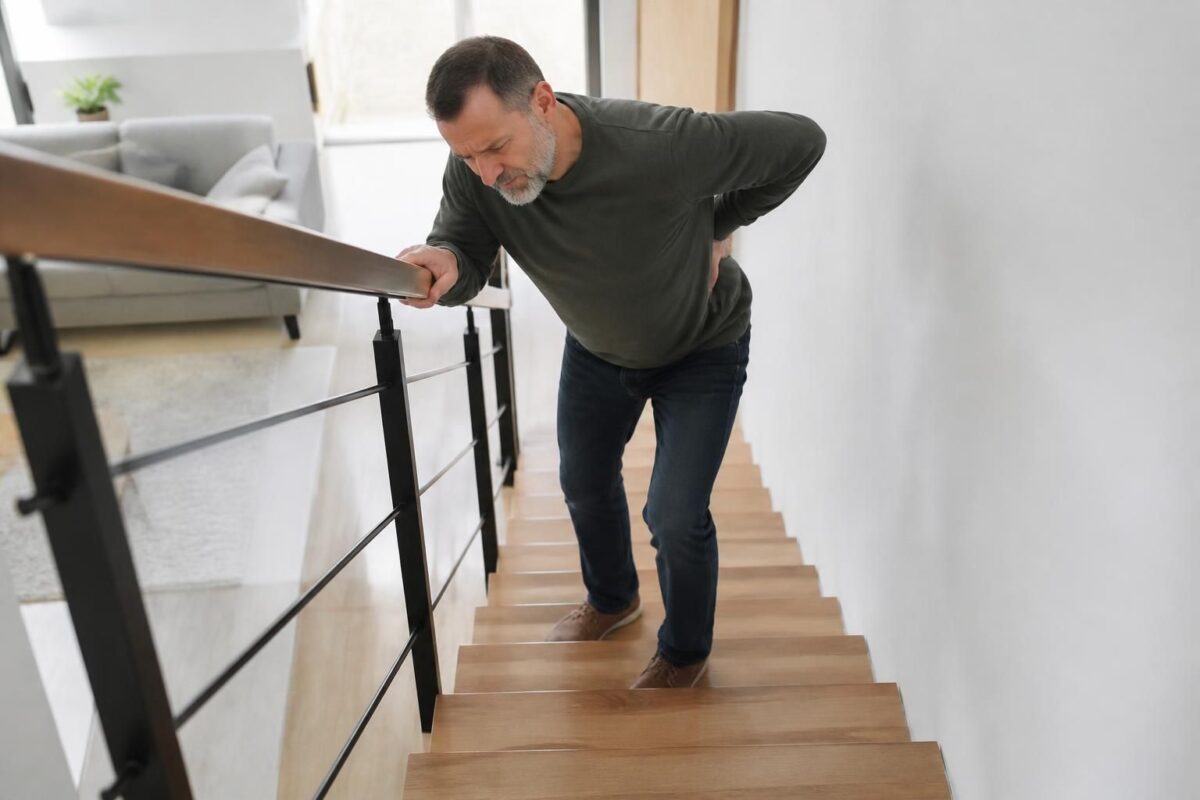
Sciatica and difficulty going down stairs
IN BRIEF In brief, sciatica associated with d difficulty descending stairs is pain that follows the path of a nerve root and intensifies when going down steps, often due to the eccentric effort of the quadriceps and pressure on joint…
Simple Exercises and Rehabilitation
Incorporate gentle trunk mobilization and strengthening exercises. Movements like the cat-camel and light lumbar stretches improve mobility without overloading the spine. Maintaining light core stability and regular walking supports lumbar stability. Progress gradually and avoid any activity that significantly increases pain.
Preventing Recurrences and Ergonomics
To prevent recurrences, adopt regular physical activity and progressive strengthening of the trunk muscles. Arrange your workstation ensuring a good seat and desk height, and take regular breaks to move. Use aids for lifting tasks and favor movements that promote lumbar stability rather than sudden movements.
When to Consult
Consult if pain persists despite self-management measures for more than a few weeks, if accompanied by marked weakness, significant numbness, urinary or bowel issues, or if there is very intense pain at rest. An evaluation can assess potential radiculopathy, adapt treatment, and determine if additional tests are necessary.
Quick Comparison: Sciatica vs Pain When Bending Forward
| Category | Concise Elements |
|---|---|
| Definition | Sciatica is pain following a nerve root with possible irradiation in the buttock or leg; pain when bending is localized lumbar pain in the lower back during flexion. |
| Origin / Causes | Sciatica: causes such as disc herniation, foraminal stenosis, or neuralgia; pain when bending related to effort or poor posture. |
| Typical Symptoms | Sciatica: pain radiating in the leg with burning or paresthesia; pain when bending: localized lumbar pain during flexion. |
| Area of Irradiation | Sciatica: buttock, thigh, calf, foot; pain when bending: lumbar area. |
| Triggering During Flexion | Sciatica: aggravating movement and posture; pain when bending: triggered by back flexion. |
| Preferred Activity and Posture | Sciatica: moderate activity, physical therapy; pain when bending: stay active without straining, gentle trunk exercises. |
| Imaging and Diagnosis | Sciatica: imaging indicated if persistence or neurological deficit; pain when bending: not systematic without neurological signs. |
| Initial Management | Sciatica: physical therapy and anti-inflammatories under supervision; pain when bending: short rest and heat or cold depending on the phase. |
| Urgent Signs to Watch For | Emergency: loss of strength, very severe pain, or signs of cauda equina syndrome; pain when bending: fever, nighttime pain, or urinary issues require quick consultation. |
Testimonials on Sciatica and Pain When Bending Forward
Marie, 41: “Every time I bent down to tie my shoes, a sharp pain shot from my lower back and radiated into my buttock and leg. It felt like my body was telling me to stop all movement. After a few sessions, I regained proper mobility and the pain when bending has greatly decreased. I can take care of my children again without fear and without limiting my daily movements.”
Thomas, 50: “My job as a driver required me to bend regularly to secure the seatbelts and check the loading. A sharp lumbar pain took hold as soon as I bent over, preventing me from moving normally. Osteopathic support helped reduce inflammation and taught me simple movements for lifting objects. Today, I maintain better posture and manage long driving days more comfortably.”
Claire, 33: “Picking up a toy or bending to grab something higher triggered a pain that prevented me from enjoying moments with my children. After the care pathway, I learned to adopt more protective movements and introduced gentle exercises. I rediscover the joy of playing without limiting my movements and without fearing a sudden crisis.”
Nicolas, 28: “At the office, the worst pain came when I sat down and leaned slightly forward. My sciatica seemed to intensify with every work posture. Thanks to appropriate management, I regained better stability and an increased ability to sit without pain. I also learned hip hinge techniques for daily movements.”
Jeanne, 68: “After a fall, the pain when bending was hard to bear and I was afraid to move. The sessions gave me tools to gradually improve my mobility and simple ergonomic advice to implement at home. Little by little, I am regaining autonomy and better confidence in my daily movements.”
Lucie, 55: “Picking up a heavy bag at the supermarket could trigger a shooting pain and limit my options at work. The exercises and postural adjustments learned during the sessions allowed me to work longer without pain and to resume my usual activities with more safety. I feel more aware of my movements and posture.”
Biography and Approach to Sciatica and Pain When Bending Forward
Dr Sylvain Desforges is a recognized practitioner in the fields of osteopathy, naturopathy, and manual medicine. A pioneer in the world of healthcare, he is the founding president of TAGMED clinics and the ACMA association. His path is driven by a strong belief: every patient deserves a personalized approach, based on evidence and focused on the sustainable restoration of function.
In his practice focused on lumbar pain and pain related to sciatica, Dr. Desforges will pay particular attention to the pain that occurs when bending forward. This posture, which puts intense strain on the lumbar region and nerve roots, can reveal various mechanisms ranging from muscle tension to disc injuries, including postural imbalances. His approach aims to differentiate causes and propose non-surgical solutions tailored to each situation.
The diagnostic approach favors a comprehensive evaluation of movement and posture. Dr. Desforges explores how flexion, repetitive movements, and daily habits influence pain, in order to distinguish the muscular, discal, or joint origins. In this logic, treatments are part of a non-invasive and progressive therapeutic arc, including mobilization techniques, ergonomic advice, and a personalized exercise program.
To support patients in managing sciatica and pain during flexion, the practitioner integrates advanced technologies when appropriate. Motorized spinal decompression may be considered to improve the space around nerve structures, while options such as laser therapies and shockwave therapy can assist in reducing inflammation and restoring mobility. The goal is to combine effectiveness and safety, to avoid the systematic resort to more invasive interventions.
At the heart of his approach, Dr Desforges emphasizes patient education and autonomy. He strives to provide practical tools to live with pain while preventing recurrences. The focus is on daily ergonomics, preferred movements, and habits that protect the back during work and home activities. The ultimate aim is to restore freedom of movement and improve quality of life by reducing painful episodes and strengthening the body’s resilience mechanisms.
For individuals facing worsening lower back pain when bending forward, a specialized evaluation helps determine if a multidisciplinary approach is necessary. Dr Desforges is committed to offering a tailored and progressive approach focused on pain reduction, improving mobility, and preventing recurrences. His approach is aimed at anyone wishing to return to their activities without compromise and reconnect with an active and serene life.
His mission is to provide evidence-based care to optimize the health and well-being of his patients. For more information on his approach and the available services, contact the TAGMED Clinic.
In this article, we explored sciatica and the pain associated with forward flexion, highlighting possible mechanisms (muscle injuries, disc damage, postural stresses) and practical approaches to alleviate and prevent recurrences. You will find guidelines on assessment, daily movements, targeted exercises, ergonomics, and non-surgical management options to quickly regain mobility and quality of life.
Assessment and Recommendations
Lower back pain during flexion is the result of a mix of mechanical and postural factors. A clear description of the movements that trigger the pain, combined with a clinical examination, allows for identifying whether the cause is muscular, discal, or related to the spine. From there, a tailored and progressive strategy can be implemented, incorporating ergonomic adjustments, mobilization and strengthening exercises, and daily behavioral advice. For further exploration of specific situations related to mobility and lumbar involvement, you can consult practical resources such as Sciatica and difficulty going down stairs and Sciatica in Montreal – intermittent pain or constant pain.
To take action today, prioritize an active approach over prolonged rest. Adopt postures that emphasize hip hinges during flexion, use ergonomic aids when necessary, and integrate suitable physical activity periods into your day. Additional resources can shed light on the nuances of pain and care choices, notably on Sciatica – medical overview and Causes and signs related to flexion.
Prevention involves appropriate ergonomics and a progressive rehabilitation program. Gentle mobilization exercises and strengthening of the deep trunk muscles, performed under supervision if necessary, can reduce sensitivity and improve lumbar stability. For practical guidance and examples of exercises, consult resources such as Sciatica – heavy or painful leg and Sciatica – electric shock sensation in the calf, while integrating principles described in MSD Manuals and Sciatica cruralgia.
With a view to concrete and tailored care, be attentive to signs that necessitate prompt consultation, such as pain that worsens despite usual measures, loss of strength, or signs indicating a more serious syndrome. For certain situations, specialized resources may offer additional insights on practical aspects and obstacles encountered in daily life, including issues related to symptom location and progression. For instance, detailed situations such as pain when getting up and the implications of radiating pain towards the leg can be consulted on dedicated pages, while remaining aligned with a management focused on movement and function.
Finally, managing pain during flexion should remain centered on an individualized and progressive approach, prioritizing appropriate rehabilitation and clear information on painful mechanisms. To enrich your understanding and find solutions tailored to your specific circumstances, you can explore resources such as Sciatica – heavy or painful leg, Sciatica – electric shock sensation in the calf, and the specialized resources listed to deepen understanding of diagnostic and therapeutic aspects.

Dr Sylvain Desforges, B.Sc., D.O., N.D., osteopath, is the founding president of TAGMED and of the ACMA association. He dedicates his practice to chronic spinal pain, low back pain and symptoms compatible with sciatica, particularly when pain radiates toward the buttock, leg, calf, foot or toes.
Through SOS Sciatique, he publishes educational content on sciatica symptoms, possible causes such as disc herniation, disc narrowing, foraminal stenosis or irritation of a lumbar nerve root, as well as non-surgical approaches that may be considered according to the evaluation. At Clinique TAGMED, care may include, depending on the case, motorized neurovertebral decompression, specific osteopathic care or precision percussion.
For an evaluation related to sciatica treatment in Montreal / Mount Royal or sciatica treatment in Terrebonne, please consult the services available at Clinique TAGMED.
Medical disclaimer
The information published on SOS Sciatique is provided for educational purposes only and does not replace a consultation, diagnosis, opinion or treatment provided by a physician or another authorized healthcare professional. The author of this article is neither a medical doctor nor a specialist in a medical specialty recognized by the Collège des médecins du Québec. The osteopathic, manual medicine or functional support approaches described on this site do not constitute medical acts and are not intended to replace medical follow-up.
Consult a physician or emergency service in cases of loss of bladder or bowel control, anesthesia in the saddle area, significant or progressive weakness in the leg or foot, fever, recent trauma, severe pain or rapid worsening of symptoms. For more details, please read our Legal Notice.