

Sciatica in Terrebonne: lumbar roots and the choice of a cautious treatment
08/11/2026
Disc bulge and mild nerve compression
08/11/2026
IN BRIEF Recurrent sciatica refers to the return of pain that starts from the lower back or buttock and radiates down one leg, sometimes all the way to the foot. Tingling or numbness may also reappear. A herniated disc or another lumbar condition may be involved. An evaluation helps to determine the origin of the episodes and customize the management plan. In cases of significant weakness, urinary or bowel issues, or numbness in the perineum, consult urgently. |
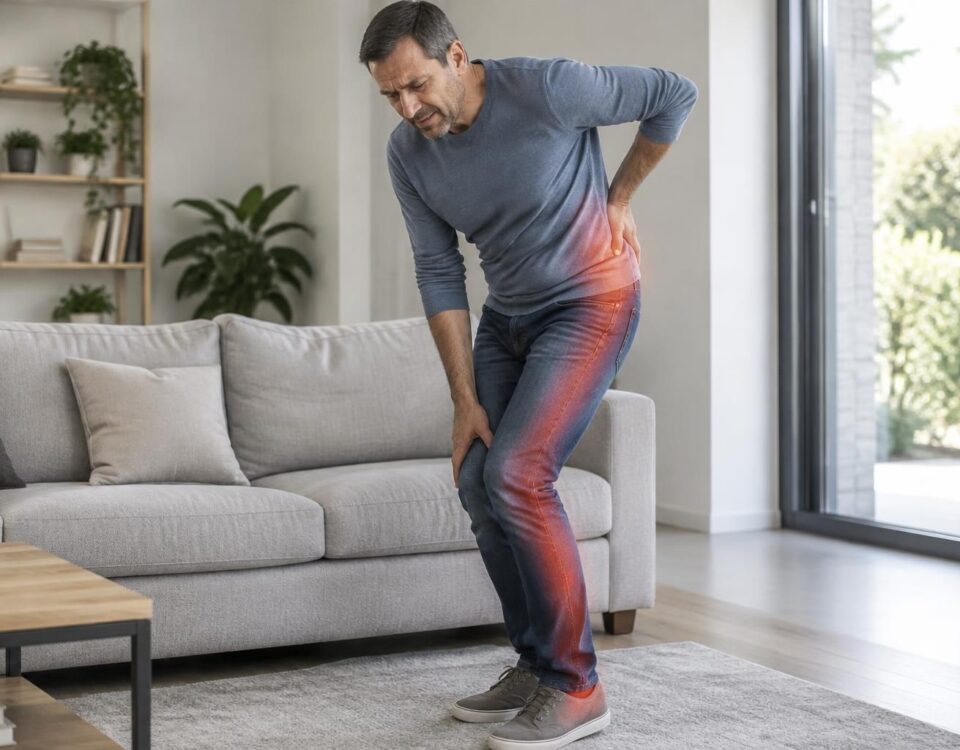
A recurrent sciatica is characterized by repeated episodes of pain that radiate from the lower back or buttock into a leg, sometimes all the way to the foot. Tingling, numbness, or weakness can also occur. A herniated disc is a possible cause, but other spinal issues may also be at play.
If symptoms return frequently, worsen, or persist, an evaluation by a healthcare professional can help in identifying the cause and determining the appropriate management. Significant or progressive weakness, loss of sensation in the saddle area, or urinary or bowel problems require urgent consultation.
Medical warning: this information is educational and does not replace a consultation, diagnosis, or treatment by a licensed healthcare professional.
A recurrent sciatica refers to episodes of pain that return after a period of improvement. The pain usually originates in the lower back or buttock and extends down one leg, sometimes to the foot. Tingling, numbness, or weakness can also occur. Recurring symptoms warrant evaluation to identify the cause and choose the appropriate management.
What does it mean for sciatica to return?
The term “sciatica” generally describes pain associated with irritation of a nerve root in the lower back. This pain can follow the path of the sciatic nerve, from the buttock down the back or side of the leg. It often affects one side, but the path and intensity vary from person to person.
A new episode does not necessarily indicate that the spine has deteriorated further. Symptoms can fluctuate and return depending on the cause, the stress placed on the back, and the evolution of nerve irritation. To learn more about the causes, signs, and possible treatments, refer to this presentation on sciatica, its causes, and its symptoms.
What symptoms may reappear?
Recurring episodes may cause pain in the lower back, buttock, thigh, or calf. Some people experience a burning sensation, an electric shock, or sharp pain. Others report tingling, reduced skin sensitivity, or discomfort that radiates to the toes.
Symptoms may vary with position or certain movements. Coughing or sneezing can sometimes exacerbate the pain. Weakness in the leg or foot may also make walking more difficult. You can check our page on sciatica symptoms to monitor for better identification of significant changes.
Pain extending towards the foot may sometimes be associated with a disc issue, but symptoms alone do not allow for a diagnosis. The article on L5-S1 disc bulge and pain towards the foot explains this possible link. Sensory loss must also be assessed: discover why in our content on herniated discs and sensory loss.
Why do sciatica symptoms return?
A herniated disc is a common cause, but it does not explain all episodes. Wear and tear of the lumbar joints, narrowing of the canal or a nerve passage, vertebral slippage, or trauma may also contribute to the irritation of a nerve root. The presence of an abnormality on an image does not always prove it causes the pain. A healthcare professional must interpret the results alongside the symptoms and clinical examination.
The reappearance of pain may also be linked to incomplete recovery or a new strain on the lumbar region. Work habits, prolonged positions, or repeated efforts may be part of the factors to consider, without necessarily being the sole cause. Also, check our articles on the reasons for recurrent sciatica and ways to limit recurrences and on the reasons why sciatica returns.

Chronic sciatica: symptoms to watch for
IN BRIEF Chronic sciatica is a persistent pain that starts from the lower back or buttock and radiates down the leg, sometimes to the foot. Burning, tingling, numbness, or weakness may also occur. Identifying these symptoms helps obtain an evaluation…

Subacute sciatica: persistent symptoms
IN SHORT Subacute sciatica refers to pain that follows the path of the sciatic nerve and persists for several weeks, often between 4 and 12 weeks. It may be accompanied by tingling, numbness, or pain in the buttock and leg.…

Acute sciatica: typical symptoms to recognize
IN BRIEF Acute sciatica is pain related to the irritation of a nerve root, often starting from the lower back and extending into one buttock and then one leg. It may be accompanied by burning, electric shocks, tingling, numbness or…
When should you consult?
If the pain frequently returns, lasts longer, or is accompanied by new symptoms, schedule an appointment with a physician or a licensed healthcare professional. An evaluation may include an examination of strength, sensation, and reflexes. Depending on the situation, the physician may request imaging tests or other examinations. The duration of an episode varies; our article explains how long sciatica can last.
Consult promptly in the case of significant or progressive weakness in the leg or foot, loss of sensation in the saddle area, difficulty urinating, urinary leakage, or loss of bowel control. Fever, recent trauma, or severe pain worsening rapidly also warrant quick medical advice. For guidance, consult when to consult for sciatica and our tool for signs of urgency. This tool does not replace a medical evaluation.

Sciatica and Chronic Pain: When to Reassess?
IN BRIEF Chronic sciatica refers to pain that persists or recurs for more than three months. It is helpful to reassess the situation if the pain worsens, limits activities, or is accompanied by numbness or weakness. A professional can review…

Sciatica and recurrent pain: why does it come back?
IN BRIEF Recurrent sciatica refers to pain that recurs from the lower back or buttock and may extend down the leg. It can be maintained by nerve irritation, a lumbar cause, or a too-rapid return to activities. An evaluation helps…

Sciatica and recurring pain episodes
IN BRIEF Recurrent sciatica is pain that follows the path of the sciatic nerve and comes in episodes. It may be linked to nerve irritation and factors such as posture or lack of movement. An evaluation helps guide management; moving…
What management options should be considered?
The management depends on the cause, the intensity of the symptoms, and the clinical examination. The physician may recommend pain or anti-inflammatory medications if appropriate for your health condition. Prolonged bed rest is generally not recommended; consult a professional to adapt your activities to your situation.
At the TAGMED Clinic, an evaluation can help determine if care such as specific osteopathy or motorized neurovertebral decompression can be considered. Their relevance depends on the medical history and contraindications; no results can be guaranteed, and these approaches do not replace a medical diagnosis. To learn about services related to recurring sciatica, consult the TAGMED Clinic. You can also inquire about sciatica treatment in Montreal and Mont-Royal or sciatica treatment in Terrebonne.
A care plan must take into account your symptoms, general state, and the results of the evaluation. If the pain changes, if weakness appears, or if episodes become more frequent, inform your doctor and have the situation reassessed.
About the author
Sylvain Desforges, B.Sc., D.O., N.D., Doctor of Osteopathy and naturopath, is the founding president of TAGMED and the ACMA association. His practice focuses on chronic pain of the spine, lower back pain, and pain compatible with sciatica, particularly when it radiates down to the buttock, leg, or foot.
Through SOS Sciatique, he publishes educational content on the symptoms of sciatica and possible causes such as herniated discs, disc compression, foraminal stenosis, or irritation of a lumbar nerve root. At the TAGMED Clinic, care may include, depending on the evaluation, motorized neurovertebral decompression, specific osteopathy, or a precision impactor.
Medical disclaimer: The information and advice provided on this site do not replace the opinion, diagnosis, or treatment of a healthcare professional. Please note that Sylvain Desforges, B.Sc., D.O., N.D., doctor of osteopathy, is neither a medical doctor nor a physician, and is not a specialist in a medical specialty as defined by the Collège des médecins du Québec. Manual medicine, functional medicine, and sports medicine as described on this site exclude any treatment or medical diagnosis made by a doctor or medical specialist. Always consult your doctor for any medical questions. For more details, please read our Complete Legal Notice.
Symptom
Recurring manifestation
- Radiating painFrom the lower back or buttock down to a leg, sometimes as far as the foot.
- Burning or shockReappears in episodes, often on one side.
- Tingling or numbnessIn the leg or foot, intermittently or persistently.
- WeaknessLeg or foot feeling weaker, making it difficult to walk or climb stairs.
- Aggravated painMay increase when sitting, coughing, or during certain movements.
Emergency: consult immediately in case of significant or progressive weakness, loss of urinary or bowel control, or numbness in the saddle area.

A recurring sciatica refers to pain that reappears in the lower back, buttock, or along a leg after a period of improvement. To better manage these episodes, it is beneficial to evaluate their cause, stay appropriately active, and identify signs that require urgent consultation.
Recognizing recurring symptoms
Sciatic pain often affects one side. It may start from the lower back or buttock, then travel down the back of the thigh and sometimes down to the calf, foot, or toes. It is sometimes described as a burning sensation, shock, or sharp pain. Tingling, numbness, or a sensation of weakness may also occur.
Symptoms may fluctuate and be exacerbated by certain positions or activities, such as sitting for long periods, lifting a load, or coughing. Their return does not necessarily mean that an injury has worsened. However, frequent episodes, more intense or different from previous ones, warrant an evaluation by a healthcare professional.
Evaluating repeated episodes
Seeking the cause with a professional
A herniated disc can irritate a nerve root, but other changes in the lumbar spine may contribute to symptoms, including arthritis or narrowing of the spinal canal. The presence of an abnormality on imaging is not sufficient, on its own, to establish the cause of the pain. The professional considers your symptoms, history, and physical examination; additional tests may be considered based on the situation.
Note the dates of episodes, their duration, activities preceding their onset, and affected areas. These observations can help guide the consultation and tailor recommendations to your daily life.
Adopting appropriate actions during a flare-up
In most cases, prolonged bed rest is discouraged. Try to maintain light and tolerable activities, while temporarily adjusting movements that markedly increase pain. Alternate positions and gradually resume activities rather than forcing through significant pain.
A doctor or pharmacist can advise you on appropriate medications, taking into account your other health issues and possible contraindications. When symptoms allow, a personalized rehabilitation program can help regain mobility and gradually strengthen muscles. Avoid starting painful exercises or manipulations without guidance tailored to your situation.
Reducing the risk of recurrence
Between episodes, prioritize a gradual return to physical activity, such as walking or another well-tolerated activity. A professional can guide you in improving endurance, strength, and mobility without triggering a flare-up. To lift a load, bring it close to your body, bend your knees if possible, and avoid twisting your trunk while carrying a heavy object.
Also, try to avoid prolonged periods in the same position and respect your limits during a return to activity. These measures do not guarantee the absence of recurrence, but they can encourage a more consistent management of your activities.
When to seek urgent help
Quickly consult an emergency service in case of significant or gradual weakness in a leg or foot, loss of sensation in the saddle area, difficulty urinating, urinary leakage, or loss of bowel control. A fever, recent trauma, severe pain, or a rapid deterioration also require immediate medical evaluation.
About the author
Sylvain Desforges, B.Sc., D.O., N.D., Doctor of Osteopathy and naturopath, is the founding president of TAGMED and the ACMA association. His practice focuses particularly on chronic spinal pain, lower back pain, and pain compatible with sciatica. The treatments offered at the TAGMED Clinic may include, depending on the assessment, motorized neurovertebral decompression, specific osteopathy, or precision impact therapy.
Medical warning
This information is provided for educational purposes and does not substitute for a consultation, diagnosis, or treatment by a licensed health professional. The author is neither a physician nor a specialist in a medical discipline recognized by the Collège des médecins du Québec. Osteopathy, manual medicine, or functional support approaches do not replace medical follow-up.
| Recurring symptom | Useful reference |
|---|---|
| Lower back pain radiating to the buttock and leg | Often on one side; it can extend down to the foot. |
| Burning or shooting pain | May reappear in episodes and limit activities. |
| Tingling or numbness | Can accompany pain along the leg. |
| Pain intensified by certain movements | Coughing, stretching, or certain positions can exacerbate it. |
| Persistent or frequently recurring symptoms | An evaluation by a health professional is indicated. |
| Significant or progressive weakness of the leg or foot | Quickly consult a medical service. |
| Urinary or bowel issues, or loss of sensation in the perineum | Urgent situation: go to the emergency room immediately. |
Illustrative testimonies on recurrent sciatica
Note: The below accounts are fictional examples intended to illustrate possible experiences. They do not correspond to identifiable patient testimonies and do not replace an evaluation by a health professional.
“The pain returns after a few weeks of respite”
For several months, my pain starts in the lower back and radiates to the buttock, then down the back of the thigh. It sometimes subsides but returns after long periods of sitting or a more active day. I also have episodes of tingling in my leg. I’m now trying to note when the symptoms appear to discuss them with a health professional.
“The flare-ups don’t always feel the same”
During some recurrences, I mainly feel sharp pain in my buttock and thigh. Other times, the discomfort extends down to the calf or foot, with transient numbness. Since the intensity and path vary, I don’t assume each episode has the same cause and seek advice when symptoms persist or change.
“After an improvement, I returned to my activities too quickly”
When the pain decreased, I resumed my usual activities without gradually adjusting. A new flare-up occurred after repeated efforts. I realized it’s helpful to maintain tolerable movement without forcing through significant pain and to discuss an appropriate return plan.
“I pay more attention to associated signs”
My episodes sometimes come with a tingling sensation and a feeling of stiffness. I keep in mind that the onset of marked or worsening weakness, loss of sensation in the saddle area, or issues controlling the bladder or bowel requires urgent assessment.
A recurring pain in the leg can have various causes, including irritation of a nerve root. A doctor or another licensed health professional can evaluate the symptoms and determine if any examinations or treatments are indicated. Maintaining appropriate activity and possible treatments depend on each individual’s situation.
About the author
Sylvain Desforges, B.Sc., D.O., N.D., Doctor of Osteopathy and naturopath, is the founding president of TAGMED and the ACMA association. His practice focuses particularly on chronic spinal pain, lower back pain, and pain compatible with sciatica.
Medical warning
This content is provided for educational purposes and does not substitute for a consultation, diagnosis, or treatment by a physician or another licensed health professional. The author is neither a physician nor a specialist in a medical discipline recognized by the Collège des médecins du Québec. Osteopathy, manual medicine, or functional support approaches do not replace medical follow-up.
Quickly consult a doctor or emergency service in case of loss of urinary or bowel control, anesthesia in the saddle area, significant or progressive weakness of the leg or foot, fever, recent trauma, severe pain, or rapid deterioration.
Recurrent sciatica: understanding frequently recurring symptoms
A recurrent sciatica refers to episodes of pain that reappear after a period of improvement. It is generally linked to irritation or compression of a nerve root in the lower back. The pain may start in the lumbar region or the buttock, then travel down the back of the thigh and sometimes to the calf, foot, or toes. It often affects one side, but symptoms and their intensity vary depending on the cause.
During an episode, the pain can be burning, electric, or stabbing. Some people also experience tingling, numbness, or weakness in the leg or foot. Coughing, sneezing, certain positions, or exertion may exacerbate the symptoms. Between episodes, the pain may completely disappear or leave a persistent discomfort. However, the recurrence of episodes alone does not allow for the identification of the cause or measurement of the severity of the problem.
A herniated disc is a possible cause, but it does not explain all cases. Wear and tear on the lumbar joints, narrowing of the canal or openings through which the nerves pass, vertebral slippage, or trauma may also be involved. Sometimes, movement habits, a too-rapid return to activities, or a period of unusual strain seem to precede a recurrence. Since symptoms can have multiple origins, a professional evaluation is useful when episodes repeat, change, or limit daily activities.
The healthcare professional may inquire about the history of pain and examine mobility, strength, sensitivity, and certain reflexes. Imaging is not routine; it may be considered based on observed signs, progression, and history. The goal is to determine whether the pain corresponds to nerve irritation and to check that no other issue requires specific management.
Management depends on the situation. It may include advice to maintain appropriate activity, medications recommended by a professional, and, when appropriate, exercises or physiotherapy. Prolonged bed rest is generally discouraged. Manual or functional approaches may be discussed after evaluation, taking into account symptoms and contraindications. At the TAGMED Clinic, proposed options may include specific osteopathy, motorized neurovertebral decompression, or precision impactor; their relevance should be determined on a case-by-case basis and they do not replace medical follow-up.
To reduce the risk of new episodes, it may be helpful to gradually resume activities, work on mobility and strengthening according to one’s abilities, and adopt proper lifting techniques. However, there is no method that guarantees the absence of recurrence. An individualized plan can help better manage symptoms and recognize the factors that worsen them.
Consult a doctor or emergency service immediately in case of significant or progressive weakness of the leg or foot, loss of sensitivity in the saddle region, difficulty urinating, urinary or bowel incontinence, fever, recent trauma, or rapid worsening. These signs require urgent evaluation.
About the author
Sylvain Desforges, B.Sc., D.O., N.D., Doctor of Osteopathy and naturopath, is the founding president of TAGMED and the ACMA association. His practice focuses particularly on chronic spinal pain, lower back pain, and symptoms consistent with sciatica. He publishes educational content on the possible causes of radiating pain and non-surgical approaches that may be considered based on evaluation.
Medical disclaimer
This content is provided for educational purposes and does not replace consultation, diagnosis, or treatment by a physician or other licensed healthcare professional. The author is neither a physician nor a specialist in a medical specialty recognized by the Collège des médecins du Québec. Osteopathy, manual medicine, or functional support approaches do not constitute medical acts and do not replace medical follow-up.
A recurrent sciatica manifests as the return of pain that generally starts in the lower back or buttock and travels down one leg. Tingling, numbness, or weakness may also reappear. These episodes warrant reevaluating symptoms, their progression, and the factors that trigger them, as the cause and management vary from person to person.
Sciatica describes pain consistent with irritation or compression of a lumbar nerve root. It often affects one side and may extend into the thigh, calf, down to the foot or toes. The pain can be burning, stabbing, or accompanied by tingling. To better distinguish possible manifestations, consult these resources on the causes, symptoms, and definition of sciatica and on associated symptoms.
The return of symptoms does not necessarily mean a new injury has occurred. A herniated disc may be involved, but other changes to the lumbar spine or different mechanical factors can contribute to the pain. The frequency of episodes, their duration, their path, and any changes in sensitivity or strength are useful elements to communicate to the healthcare professional. To further explore possible reasons, see also why sciatic pain can return, explanations on frequent recurrence, and information devoted to recurring sciatica.
An improvement followed by a too-rapid return to activities may sometimes coincide with the return of pain. However, this alone does not establish the cause of the recurrence. Returning to exertion should be adapted to the symptoms and advice from a professional. Additional guidelines are offered on the too-rapid return after sciatica.
When episodes repeat, an evaluation allows for a review of symptoms, limitations, and history. Diagnosis is the responsibility of a licensed healthcare professional; imaging studies or other tests are only considered when the clinical context justifies it. Management depends on the cause and severity. It may include maintaining appropriate activity and, according to the evaluation, care or exercises recommended by a professional. Referral options are presented in this guide on the referral for sciatica treatment.
The motorized neurovertebral decompression is a non-surgical approach that may be considered in certain contexts after an evaluation; it is not suitable for all situations and does not guarantee a result. To learn more, consult the information about the objectives of neurovertebral decompression and its possible use after an accident.
In case of recurrent pain, avoid prolonging bed rest without clinical advice and do not automatically resume your activities at the same pace as before the episode. A doctor or another authorized health professional can help you determine the appropriate measures for your situation. Consult promptly if the pain becomes severe, worsens, or is accompanied by new symptoms.
Consult an emergency service without delay in case of loss of urinary or bowel control, numbness in the saddle area, or significant or progressive weakness of the leg or foot. A fever, recent trauma, or rapid worsening also require urgent medical advice.
About the author
Sylvain Desforges, B.Sc., D.O., N.D., Doctor of Osteopathy and Naturopath, is the founding president of TAGMED and the ACMA association. He devotes his practice to chronic spinal pain, low back pain, and pain compatible with sciatica, especially when pain radiates to the buttock, leg, calf, foot, or toes.
Through SOS Sciatique, he publishes educational content on the symptoms of sciatica, possible causes such as disc herniation, disc pinching, foraminal stenosis, or irritation of a lumbar nerve root, as well as non-surgical approaches that may be considered based on the evaluation. At the TAGMED Clinic, care may include, depending on the case, motorized neurovertebral decompression, specific osteopathy, or precision impactor.
For an assessment related to sciatica treatment in Montreal / Mont-Royal or sciatica treatment in Terrebonne, consult the services available at the TAGMED Clinic.
Medical warning
The information published on SOS Sciatique is provided for educational purposes and does not substitute for a consultation, diagnosis, opinion, or treatment performed by a doctor or another authorized health professional. The author of this article is neither a doctor nor a specialist in a medical specialty recognized by the College of Physicians of Quebec. The approaches in osteopathy, manual medicine, or functional support described on this site do not constitute medical acts and do not aim to replace medical follow-up.
Consult a doctor or emergency service in case of loss of urinary or bowel control, numbness in the saddle area, significant or progressive weakness of the leg or foot, fever, recent trauma, severe pain, or rapid worsening. For more details, please read our Legal Notice.

Sciatica and pain that varies from day to day
IN BRIEF Sciatica can vary from day to day depending on fatigue, activities, and the sensitivity of the nervous system. These fluctuations are common and do not necessarily mean that the situation is worsening. A gradual return to movement and…

Sciatica and pain that varies with activity
IN BRIEF Sciatica is pain related to irritation of a lumbar nerve root; it can vary with movements and activities. Gentle mobility, such as walking, and adapted exercises can help maintain flexibility and strength, while prolonged rest can increase stiffness.…

Sylvain Desforges, B.Sc., D.O., N.D., docteur en ostéopathie
Dr Sylvain Desforges, B.Sc., D.O., N.D., osteopath, is the founding president of TAGMED and of the ACMA association. He dedicates his practice to chronic spinal pain, low back pain and symptoms compatible with sciatica, particularly when pain radiates toward the buttock, leg, calf, foot or toes.
Through SOS Sciatique, he publishes educational content on sciatica symptoms, possible causes such as disc herniation, disc narrowing, foraminal stenosis or irritation of a lumbar nerve root, as well as non-surgical approaches that may be considered according to the evaluation. At Clinique TAGMED, care may include, depending on the case, motorized neurovertebral decompression, specific osteopathic care or precision percussion.
For an evaluation related to sciatica treatment in Montreal / Mount Royal or sciatica treatment in Terrebonne, please consult the services available at Clinique TAGMED.
Medical disclaimer
The information published on SOS Sciatique is provided for educational purposes only and does not replace a consultation, diagnosis, opinion or treatment provided by a physician or another authorized healthcare professional. The author of this article is neither a medical doctor nor a specialist in a medical specialty recognized by the Collège des médecins du Québec. The osteopathic, manual medicine or functional support approaches described on this site do not constitute medical acts and are not intended to replace medical follow-up.
Consult a physician or emergency service in cases of loss of bladder or bowel control, anesthesia in the saddle area, significant or progressive weakness in the leg or foot, fever, recent trauma, severe pain or rapid worsening of symptoms. For more details, please read our Legal Notice.