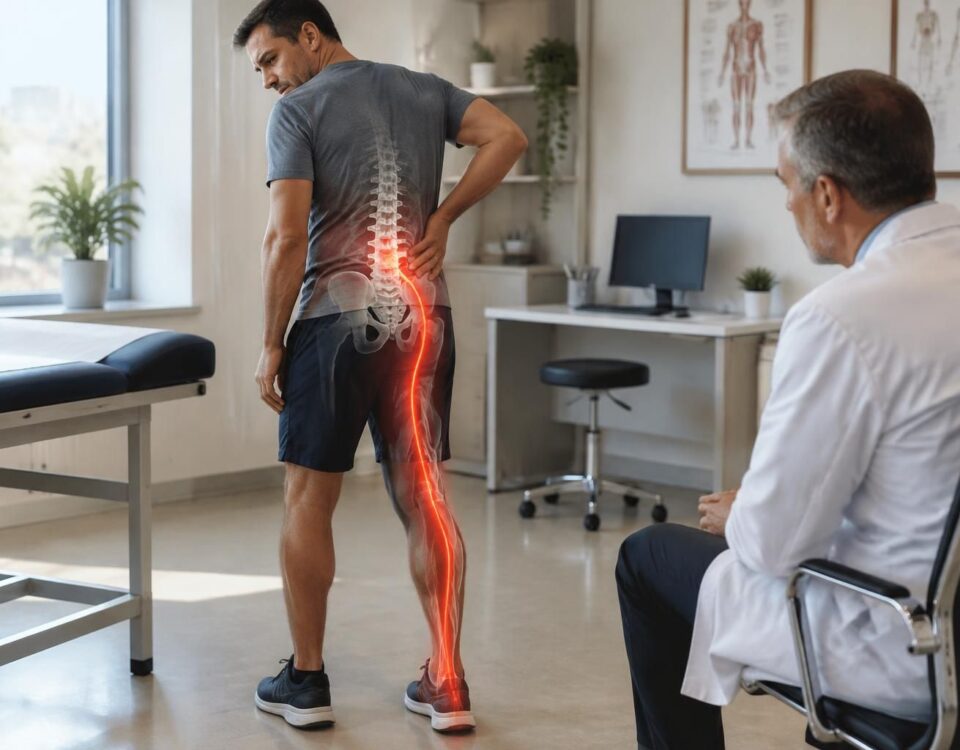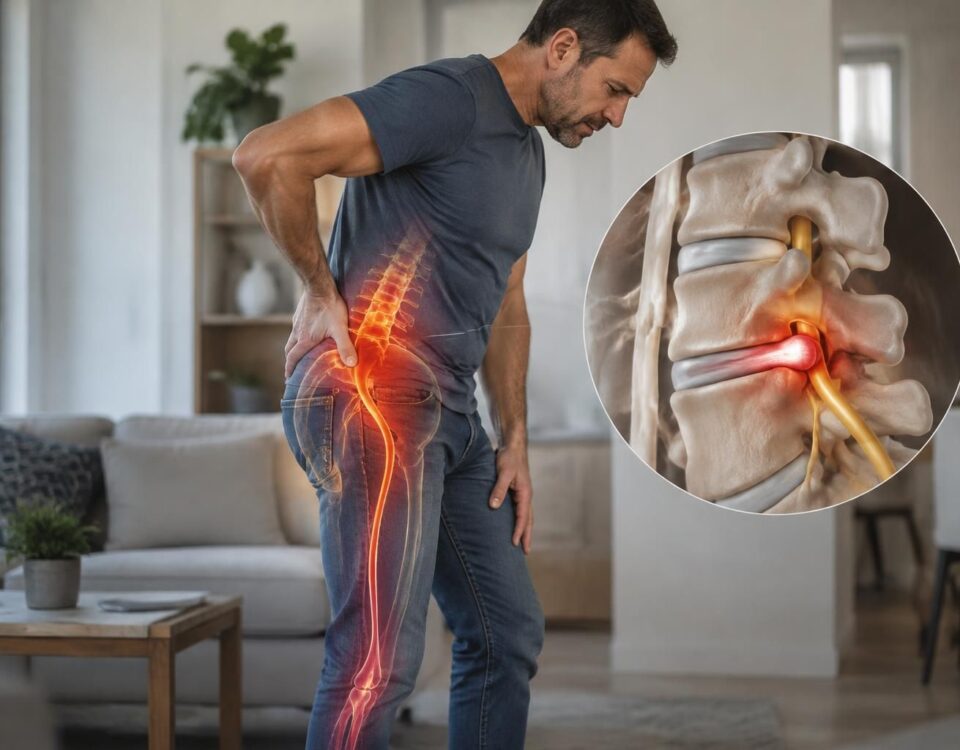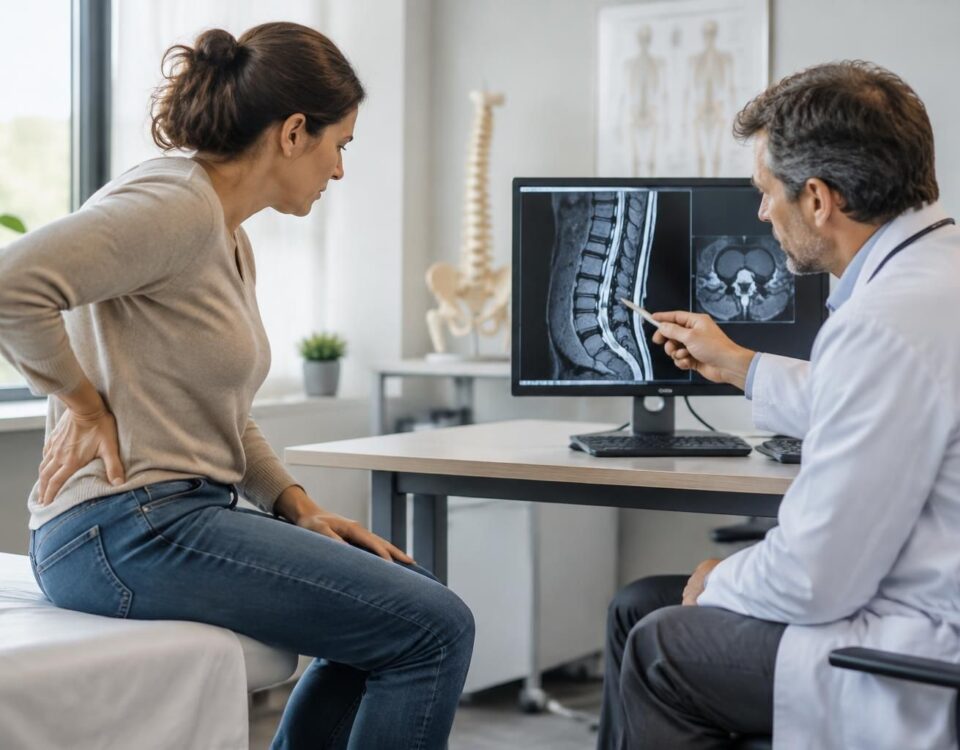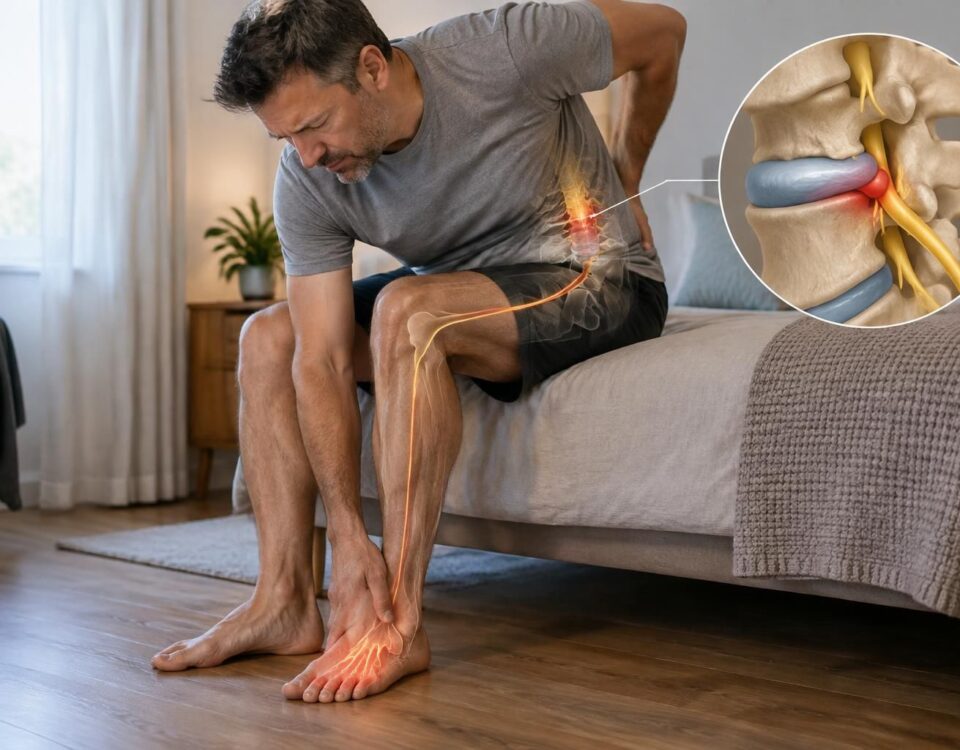


Recurrent sciatica: symptoms that often come back
08/11/2026
Sciatica and bed rest: why to be cautious
08/11/2026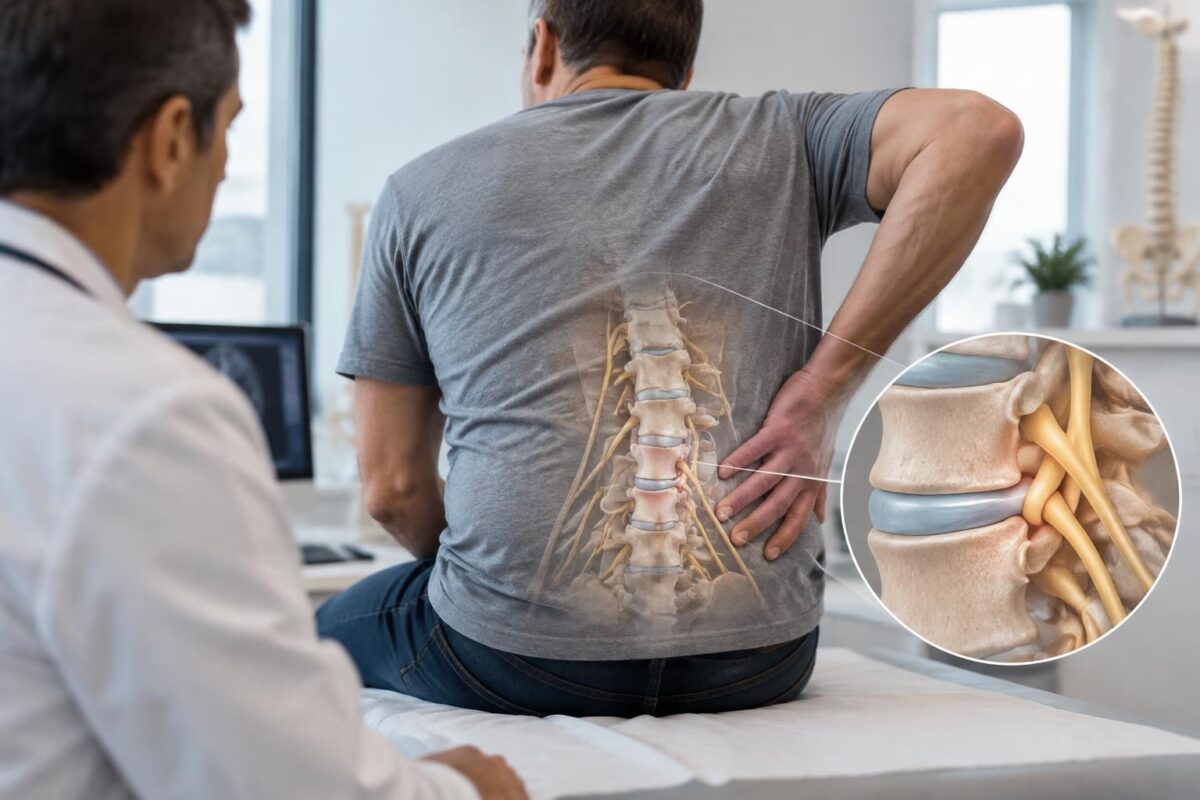
IN BRIEF
| A disc bulge with mild nerve compression occurs when a disc slightly protrudes and may irritate a nerve, sometimes causing pain, tingling, or numbness. Symptoms and imaging do not always align: the assessment takes into account your movements and abilities. Appropriate management may aim to reduce irritation and gradually resume activities; disc decompression may be considered depending on the case. Progressive weakness or urinary issues require prompt medical evaluation. |
A disc bulge can sometimes reduce the space around a nerve root and cause mild compression. Symptoms may include pain in the lower back radiating to the buttock or leg, tingling, or numbness. Severity cannot solely be determined from imaging: the evaluation also considers symptoms, strength, and affected activities. Appropriate management can facilitate a gradual return to movement. If significant or progressive weakness, urinary issues, or numbness in the saddle area occur, consult without delay.
A disc bulge can sometimes irritate or mildly compress a nerve, causing pain in the lower back, buttock, or leg. However, the presence of a bulge on imaging does not alone explain the symptoms: the assessment must also consider pain, sensitivity, strength, and the activities that have become difficult. Appropriate management aims to reduce irritation and gradually improve function. A disc is located between two vertebrae. It helps distribute stress and consists of a fibrous outer ring and a softer center. A disc bulge describes a disc that slightly and widely extends beyond its usual contour. It can reduce the available space around a nerve root, without necessarily causing symptoms. Mild nerve compression is said to occur when the nerve appears irritated or slightly compressed, without significant loss of strength or marked deficit. The term describes a situation to be assessed: it does not allow for predicting pain or its progression on its own. To better understand this difference, consult our page on the meaning of a disc bulge and this overview of disc bulge and protrusion. The bulge and herniated disc do not exactly refer to the same form. The bulge is generally more diffuse; a herniation corresponds to a more localized protrusion of the disc. These imaging terms do not alone determine the treatment. The link between examination results, symptoms, and the person’s abilities remains essential. A lumbar bulge may be accompanied by pain in the lower back, stiffness, or discomfort when the person sits or bends. Some people experience pain in the buttock or along the leg. Tingling, numbness, or a burning sensation may also appear if a nerve root is irritated. Symptoms vary depending on the level of the disc and the nerve involved. For example, an L4-L5 protrusion may be associated with pain that radiates down the leg, as explained in this article on L4-L5 protrusion and leg pain. Another example describes possible symptoms of pain, numbness, or weakness associated with L4-L5. Pain may also shift areas or extend further down the leg. This progression warrants monitoring, especially if accompanied by loss of sensitivity or strength. To learn more about this change, see the signs of peripheralization of pain and the possible neurological symptoms of a disc protrusion. Persistent pain or tingling warrants evaluation by a health professional, especially if symptoms limit walking, sleeping, working, or driving. New or progressive weakness in a leg or foot requires immediate attention. The same applies for significant loss of sensitivity or pain that worsens sharply. Consult urgently in case of loss of bowel or bladder control, loss of sensation in the saddle area, or significant or rapidly progressive weakness. Fever, recent trauma, or rapid aggravation also warrant prompt medical advice. The evaluation begins with the history of symptoms: their location, duration, situations that worsen or relieve them, and their effects on activities. The professional may then examine mobility, sensitivity, strength, and, when indicated, reflexes. These elements help determine if the signs align with nerve irritation. X-rays, MRIs, or other examinations are not necessary in all cases. A health professional may consider imaging when symptoms justify it, especially if there is a neurological deficit, persistent pain, or diagnostic uncertainty. An image must always be interpreted in conjunction with the results of the clinical evaluation. The plan depends on symptoms, their duration, and functional limitations. It may aim to reduce factors aggravating irritation, improve comfort, and gradually resume tolerated activities. Prolonged complete rest and abrupt returns can be difficult to manage; adjustments should therefore take into account the individual’s response. Neurovertebral decompression may be considered as a non-surgical option in certain cases of disc issues. It is not suitable for everyone and does not guarantee a result. A prior evaluation helps determine if this approach can fit into a comprehensive plan. To learn more about criteria and non-surgical approaches, refer to the pages dedicated to choosing a non-surgical approach for a protrusion and lumbar disc bulge. The TAGMED Clinic offers evaluations and non-surgical care in Montreal and Terrebonne. Depending on the case, services may include motorized neurovertebral decompression, specific osteopathy, or precision percussion. Consult the information on symptoms associated with disc bulge and on disc bulge, its symptoms, and management options. Evolution is not measured solely by the intensity of pain. A person can also observe if they sit longer, walk more easily, sleep better, or resume certain activities with less apprehension. These concrete changes help assess whether the treatment meets their needs. The duration of improvement varies depending on how long the symptoms have been present, nerve irritation, and daily constraints. If pain persists, worsens, or is accompanied by new neurological signs, the plan must be reassessed by a healthcare professional. Sylvain Desforges, B.Sc., D.O., N.D., Doctor of Osteopathy and Naturopath, is the founding president of TAGMED and the ACMA association. He dedicates his practice to chronic pain of the spine, lower back pain, and pain compatible with sciatica, especially when the pain radiates down to the buttock, leg, calf, foot, or toes. Through SOS Sciatique, he publishes educational content on sciatica symptoms, possible causes such as disc herniation, disc pinching, foraminal stenosis, or irritation of a lumbar nerve root, as well as on non-surgical approaches that may be considered based on the evaluation. At TAGMED Clinic, care may include, depending on the case, motorized neurovertebral decompression, specific osteopathy, or precision percussion. For an evaluation related to sciatica treatment in Montreal / Mont-Royal or sciatica treatment in Terrebonne, consult the services available at TAGMED Clinic. The information published on SOS Sciatique is provided for educational purposes and does not replace a consultation, diagnosis, opinion, or treatment performed by a physician or other licensed healthcare professional. The author of this article is neither a doctor nor a specialist in a medical specialty recognized by the Collège des médecins du Québec. The osteopathy, manual therapy, or functional support approaches described on this site do not constitute medical acts and are not intended to replace medical follow-up. Consult a doctor or emergency service in case of loss of bladder or bowel control, anesthesia in the saddle region, significant or progressive weakness of the leg or foot, fever, recent trauma, severe pain, or rapid aggravation. For more details, please read our Legal Notice. Medical Disclaimer: The information and advice provided on this site do not replace the opinion, diagnosis, or treatment of a healthcare professional. Please note that Sylvain Desforges, B.Sc., D.O., N.D., Doctor of osteopathy, is neither a medical doctor nor a physician, and is not a specialist in a medical specialty as defined by the Collège des médecins du Québec. Manual therapy, functional medicine, and sports medicine as described on this site exclude any treatment or medical diagnosis made by a physician or specialist. Always consult your doctor for any medical questions. For more details, please read our complete Legal Notice.Disc Bulge and Mild Nerve Compression: What Are We Talking About?
Possible Symptoms of Mild Nerve Irritation
When Should You Seek a Prompt Evaluation?
How Does the Evaluation Help Understand the Symptoms?
Disc Bulge and Mild Nerve Compression: Management Options
What Progress to Monitor Daily?
About the Author
Medical Disclaimer
What this may lead to
- Lower back pain or discomfort while sitting.
- Pain, tingling, or numbness in the buttock or leg.
- A visible bulging on imaging does not alone prove that it causes the symptoms.
Recommended Actions
- Temporarily adjust activities that worsen symptoms.
- Gradually resume movement according to tolerance.
- Seek evaluation if symptoms persist or limit activities.
- Consult urgently in case of significant or progressive weakness, loss of bladder or bowel control, or anesthesia in the saddle area.

A disc bulge can sometimes irritate or mildly compress a nerve root, leading to lower back pain that radiates to the buttock or leg, sometimes with tingling. The recommended approach is to have the symptoms evaluated, remain active according to tolerance, and gradually resume activities, while monitoring for signs that require prompt consultation.
Understanding Symptoms and Their Evolution
A disc bulge describes a disc that protrudes more or less diffusely from its usual contour. Its presence on imaging does not necessarily mean it is the cause of pain: results must be correlated with symptoms and clinical examination. Mild nerve compression can provoke irradiation, tingling, or altered sensitivity, without necessarily causing significant loss of strength.
Identifying Activities That Worsen Pain
For a few days, note positions and activities that accentuate or relieve symptoms. Long periods of sitting, driving, or repeated bending can be difficult for some people, while others tolerate these movements well. These observations help adjust habits without systematically avoiding all movement.
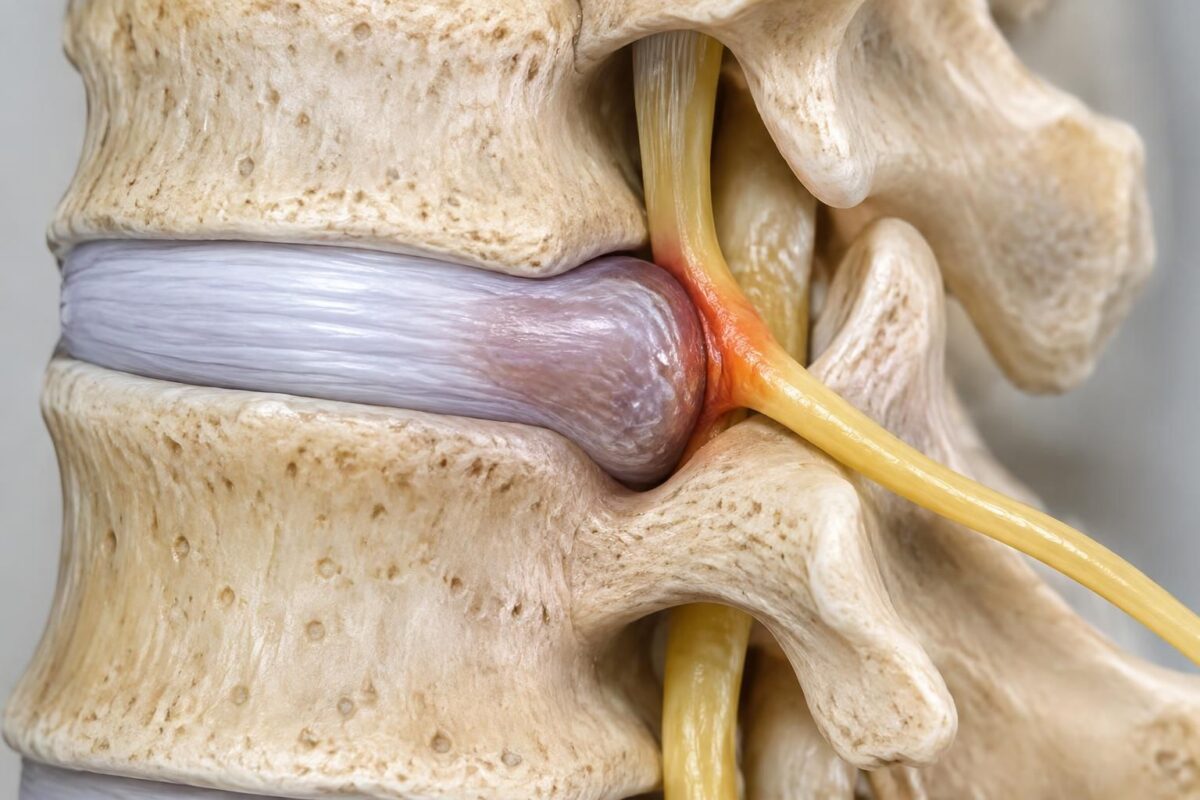
Disc herniation and foraminal irritation
IN BRIEF A disc bulge can reduce the space of the foramen, the opening through which a nerve exits, and contribute to its irritation. This can cause lower back pain radiating into the buttock or leg, tingling, or numbness. An…
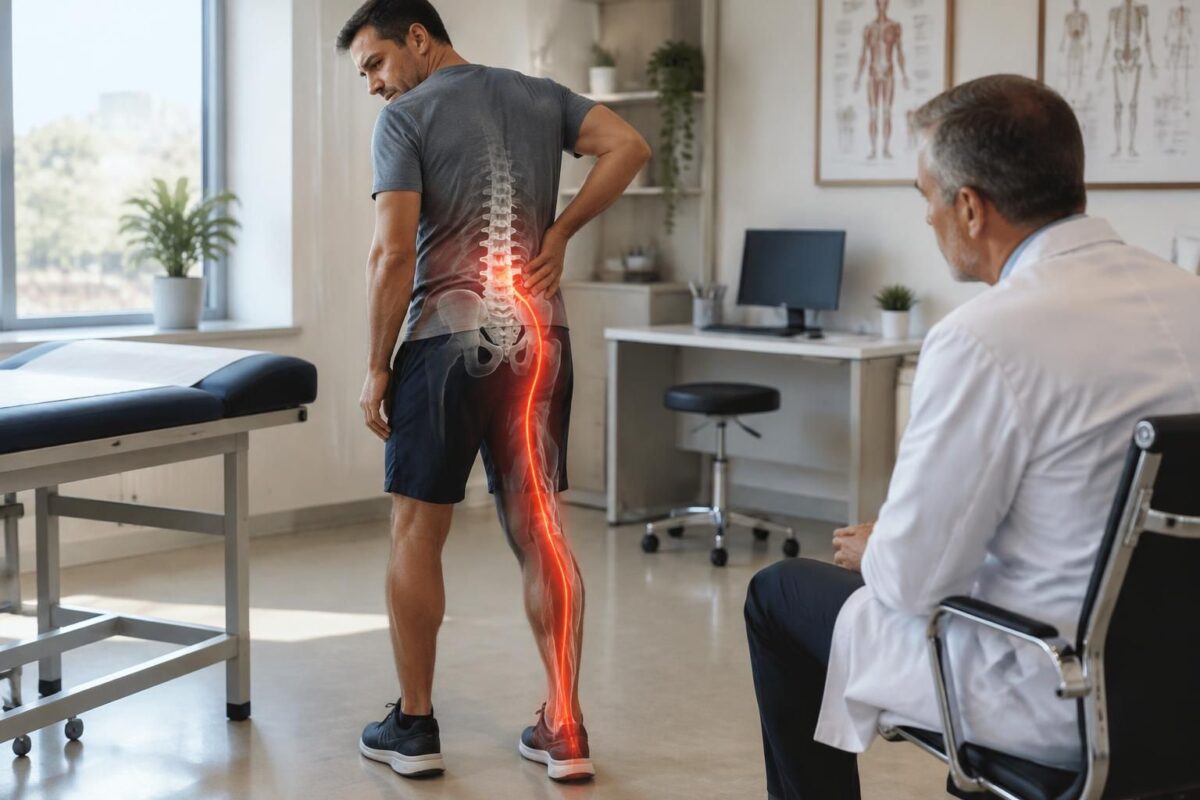
Disc bulge L5-S1 and pain toward the foot
IN SHORT A L5-S1 disc bulge corresponds to a disc that slightly overruns between the last lumbar vertebra and the sacrum. It can irritate a nerve root and cause pain resembling sciatica down to the foot, but this anomaly visible…
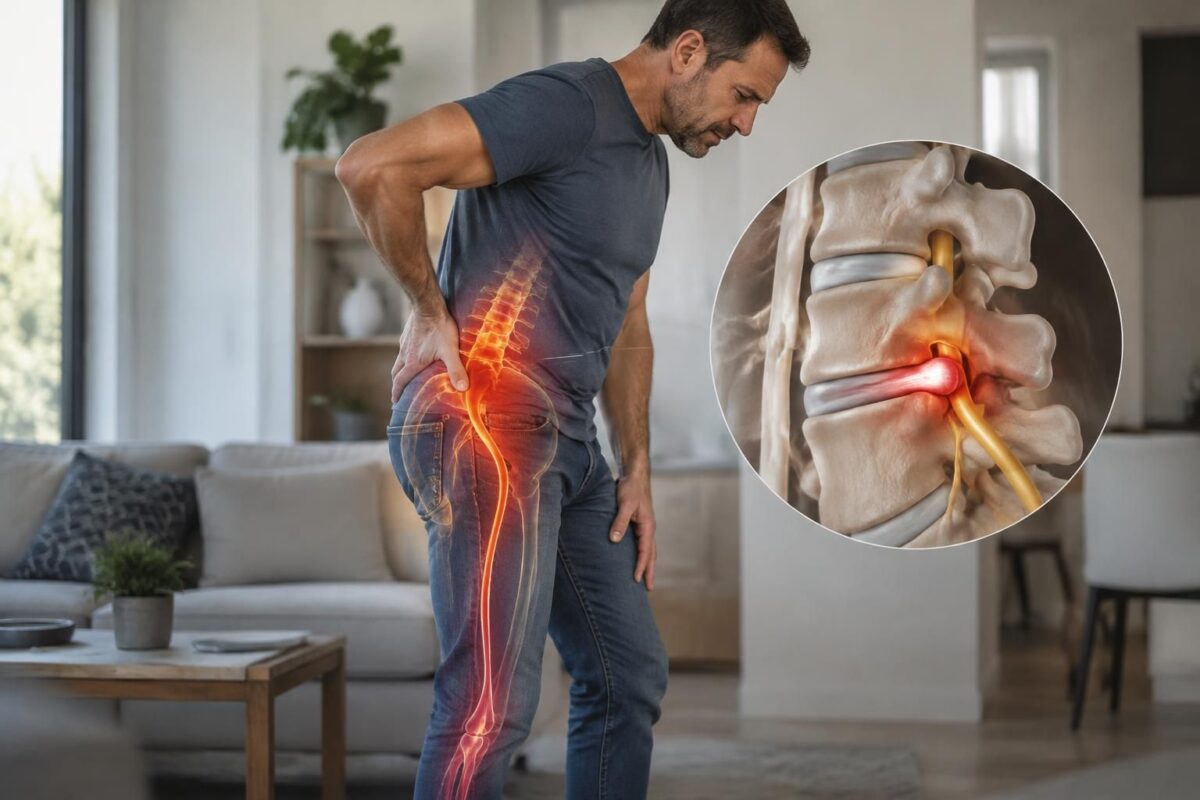
Disc herniation L4-L5 and leg pain
IN BRIEF A L4-L5 disc bulge is a protrusion of the lumbar disc that can contribute to pain in the buttock or leg if a nerve root is irritated. An MRI in a neutral position does not always show what…
Staying Active Without Overexerting
Prolonged complete rest can maintain stiffness and reduce physical capacity. Favor light and regular movements, such as short walks, adjusting the duration to your tolerance. If symptoms significantly increase or extend further down the leg, temporarily reduce effort and seek advice from a healthcare professional.
Break up sitting periods by getting up regularly. To lift an object, bring it close to your body and avoid, if possible, combining a strong bend with a sudden twist. It’s not about protecting your back from all movement, but rather about resuming actions gradually and limiting efforts that trigger marked aggravation.
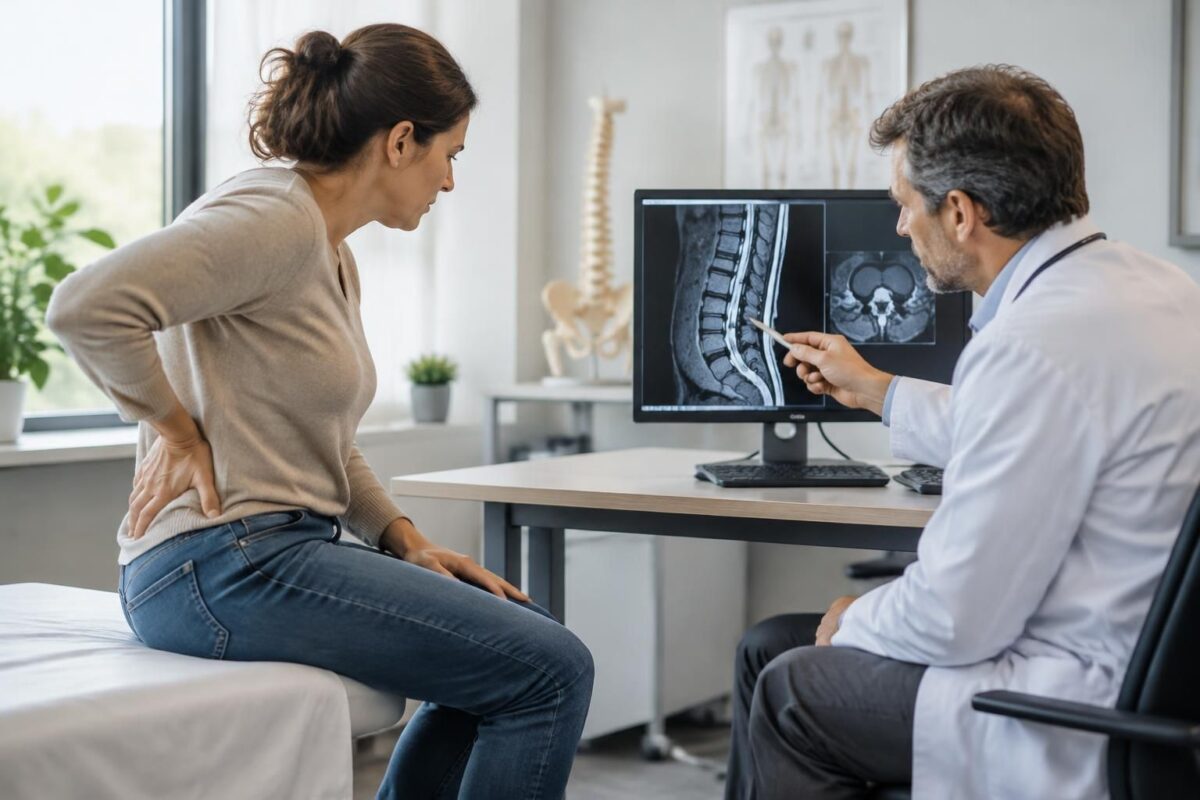
Disc bulge and sciatica: possible cause or simple discovery?
IN SHORT A disc bulge is a diffuse protrusion of a disc, sometimes associated with sciatica, but often discovered incidentally on imaging. To determine if it explains symptoms, one must compare the image to their path, the neurological examination, and…

Lumbar Disc Protrusion and the Choice of a Non-Surgical Approach
IN SHORT A disc protrusion is a bulging of a disc between the vertebrae; it often does not cause any symptoms. If it is accompanied by pain, a non-surgical approach may include appropriate activity, prescribed medications, and progressive rehabilitation. It…
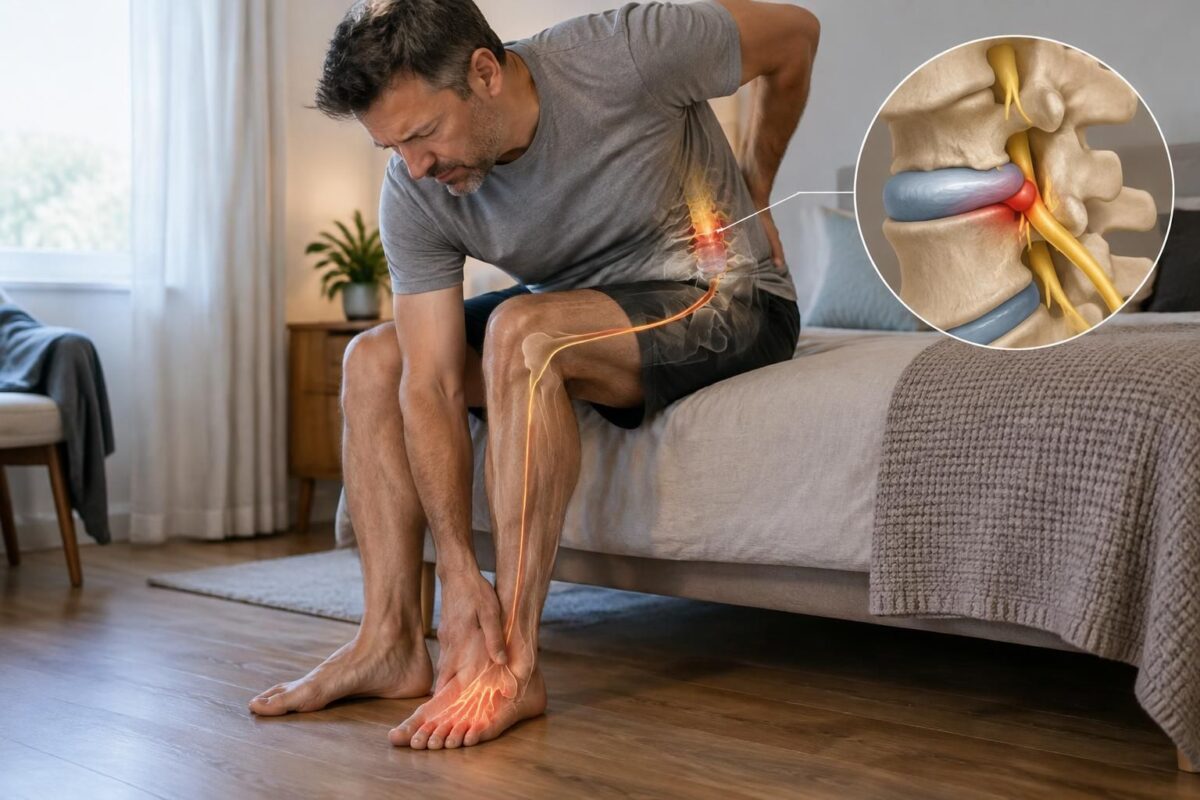
Disc herniation and pain on the top of the foot
IN BRIEF A disc protrusion is an intervertebral disc that bulges without necessarily rupturing. Pain on the top of the foot may sometimes be related to irritation of a lumbar nerve, but it does not alone confirm disc involvement. An…
Getting a Mild Nerve Compression Evaluated
A professional evaluation can check mobility, sensitivity, strength, and reflexes, as well as movements that reproduce or alleviate symptoms. Imaging is not always necessary from the outset. A doctor can determine if it is relevant, especially in cases of persistent, severe symptoms or those accompanied by neurological deficits.
According to the assessment, the plan may include activity advice, adapted exercises, and conservative care. Exercises should be progressive and individualized: useful movements are not the same for everyone. Neurovertebral decompression or manual approaches can be discussed with a qualified professional, but they are not suitable for every situation and do not replace a medical diagnosis or appropriate rehabilitation.
Progress and Monitor Warning Signs
Gradually increase walking, daily tasks, and exercises, guided by function: getting up more easily, sitting a bit longer, or sleeping better are useful progress markers. Avoid alternating between complete immobility and abrupt returns to activity. If improvement stalls or pain worsens, seek reevaluation rather than multiplying painful exercises.
Consult quickly if a new or progressive weakness appears in a leg or foot, or if numbness spreads. In cases of loss of bladder or bowel control, numbness in the saddle area, or significant weakness, go to the emergency room. These recommendations are educational and do not replace a consultation or medical advice.
| Disc Bulge Alone | With Mild Nerve Compression |
|---|---|
| Disc slightly protruding beyond its limits | Disc potentially narrowing the space around a nerve |
| Pain often localized in the back or neck | Pain that may radiate into a buttock, a leg, a shoulder, or an arm |
| Stiffness or discomfort depending on movement | Tingling or numbness sometimes present |
| The imaging result does not predict symptoms by itself | Symptoms and clinical examination help assess nerve irritation |
| Management guided by pain and abilities | Monitoring of sensitivity, strength, and function |
| Gradual return to activities according to tolerance | Progression adapted to the evolution of nerve symptoms |
| Consult if pain persists or worsens | Rapid evaluation if new or progressive weakness; emergency for urinary or bowel issues |
Illustrative Testimonials on Disc Bulge and Mild Nerve Compression
Note: The testimonials below are fictional examples, written for educational purposes. They do not correspond to real patients and do not predict outcomes of care. Symptoms and their evolution vary from person to person.
Marc, 46 years old — pain after long periods of sitting
“After several weeks of working at the computer, I had pain in my lower back and sometimes a pulling pain in my buttock. My examination suggested a disc bulge with mild nerve irritation. I started alternating my positions more and gradually resumed walking. With an adapted plan and tolerated exercises, I gradually felt more comfortable sitting and driving.”
Émilie, 38 years old — tingling in the leg
“What worried me most was not just the lower back pain, but the tingling that descended my thigh. I was told that a MRI image had to be interpreted with my symptoms and examination, rather than being considered in isolation. I learned to identify positions that aggravated my symptoms and to resume my activities step by step. The tingling gradually decreased, even though my progress was not perfectly linear.”
André, 57 years old — stiffness upon waking and discomfort bending
“Bending to put on my shoes had become uncomfortable, and I sometimes stood up with a feeling of blockage. At first, I tried to avoid everything, but this strategy made me stiffer. By adjusting my activities without becoming completely immobile, and then gradually resuming certain movements, I regained more ease in my daily life.”
Nadia, 42 years old — gradual return to physical activity
“Mild nerve compression was mentioned because I had pain radiating towards my leg, without significant loss of strength. I was afraid to start training again. Resuming with measured efforts, monitoring symptom evolution, helped me regain confidence. I understood that I needed to progress according to my tolerance rather than immediately return to the same pace as before.”
Luc, 51 years old — fluctuating pain and anxiety related to imaging
“The report mentioned a disc bulge and I thought my back must be very damaged. A more nuanced explanation helped me understand that imaging alone is not sufficient to determine the cause of each pain. My evaluation also focused on my mobility, sensitivity, and the activities that triggered my symptoms. This approach allowed me to track my progress based on concrete actions, such as walking longer and getting up more easily.”
A new or progressive weakness, significant loss of sensitivity, urinary or bowel issues, or numbness in the saddle area require rapid medical evaluation. These examples do not replace professional advice tailored to your situation.
Disc Bulge and Mild Nerve Compression: Understanding Symptoms and Management Options
A disc bulge refers to a diffuse protrusion of the intervertebral disc beyond its usual contour. Located between two vertebrae, the disc helps absorb stress and allows for movement of the spine. Over time, after repeated efforts or for other reasons, it may change shape. If this bulge slightly reduces the space around a nerve root or irritates neighboring tissues, mild nerve compression may be suggested. However, imaging alone cannot determine if the disc is the cause of symptoms: it must be correlated with examination findings and activities that trigger or relieve pain.
In the lower back, possible signs include lower back pain, stiffness or discomfort during bending, after a period of sitting or when standing up. Some people also experience pain that radiates to the buttock or thigh. When a nerve root is irritated, tingling, a sensation of numbness, or pain that descends the leg may occur. The intensity varies: a bulge visible on an MRI may be mildly symptomatic, while moderate irritation can disrupt walking, sleep, or driving.
An evaluation aims to understand the overall picture: how long symptoms have been present, which positions alter them, and which tasks have become difficult. The professional may examine mobility, strength, sensitivity, and tolerance to certain movements. Medical imaging is not always necessary at the outset; its relevance particularly depends on symptom evolution, severity, and clinical observations. Diagnosis and medical decisions are the responsibility of a licensed healthcare professional.
Care is generally tailored to the person’s abilities and goals. When pain is severe, it may be helpful to temporarily reduce activities that significantly exacerbate it while avoiding prolonged immobility. Gentle movements and a gradual return to activities can help restore confidence and effort tolerance. Subsequently, an individualized program may focus on mobility, trunk and hip endurance, as well as a gradual return to daily activities. Exercises should be adjusted if pain, numbness, or weakness increases.
Motorized neurovertebral decompression and certain manual approaches may be considered in specific contexts, following an assessment and based on the person’s needs. They are not suitable for everyone and do not replace a medical diagnosis or a comprehensive rehabilitation program. At TAGMED Clinic, specific osteopathy and technological options can be discussed when their relevance is established. The goal is to choose a cautious strategy, monitor functional changes, and revise the plan if symptoms evolve.
Consult a doctor promptly if significant or progressive weakness appears, or if the pain significantly worsens. Loss of control of the bladder or bowels, or numbness in the saddle area, requires urgent assessment. These signs should not be attributed without examination to a simple disc bulge.
About the author
Sylvain Desforges, B.Sc., D.O., N.D., Doctor of Osteopathy and Naturopath, is the founding president of TAGMED and the ACMA association. His practice focuses, in particular, on chronic spinal pain and symptoms compatible with nerve irritation. He is interested in integrating manual care and technologies, including motorized neurovertebral decompression, when these options are appropriate after evaluation.
Medical Disclaimer
This content is provided for educational purposes and does not replace a consultation, diagnosis, or treatment by a physician or other authorized healthcare professional. The author is neither a doctor nor a specialist in a medical specialty recognized by the Collège des médecins du Québec. The approaches described do not constitute medical acts and do not replace medical follow-up.
A disc bulge accompanied by mild nerve compression does not necessarily mean that serious or permanent damage is present. However, it may contribute to lower back or cervical pain, sometimes accompanied by symptoms in a buttock, leg, shoulder, or arm. Assessment should consider symptoms, function, and clinical examination, as an MRI image alone is not sufficient to determine the cause of the pain or the appropriate treatment.
What mild nerve compression means
An intervertebral disc is located between two vertebrae and helps distribute stress. When it slightly exceeds its usual limits, it is referred to as a disc bulge. If this bulge reduces the space around a nerve root, there may be compression or irritation, sometimes described as mild on imaging.
The term “mild” generally describes the observed appearance but does not, by itself, predict the intensity of symptoms. Some people have a visible bulge without significant pain; others experience marked discomfort. Therefore, interpretation gains from correlating the imaging with symptoms and examination results. To better understand the significance of small bulges observed on MRI, consult this overview of mild disc bulges on imaging.
Possible symptoms when the nerve is irritated
In the lumbar region, symptoms may include lower back pain, stiffness, or discomfort when sitting, bending, or standing up. If a nerve root is irritated, the pain may also radiate to the buttock and leg, sometimes with tingling, numbness, or a burning sensation. Pain felt in the buttock deserves careful assessment, as it may have various origins; this article discusses the possible link between disc protrusion and buttock pain.
A twisting of the trunk can also trigger or worsen pain in some individuals, but this does not prove that a disc is the cause. To distinguish pain after a twisting movement from other possibilities, you can read the information on disc protrusion and pain after a back twist.
In the neck, a bulge may be associated with neck pain or pain between the shoulder blades, sometimes accompanied by radiation to the shoulder, arm, or hand. Tingling, decreased sensitivity, or weakness require appropriate evaluation, especially if these signs are new or worsening.
Why symptoms do not always match the MRI
An MRI shows the shape of discs and nearby structures but does not directly measure pain or the ability to move. A bulge may be present without being the primary source of symptoms. Conversely, irritation of tissues or a nerve root may be painful even if the image appears unremarkable. The location of symptoms, their progression, movements that modify them, and clinical examination all help determine whether the imaging findings are relevant.
The assessment may specifically address mobility, tolerance to sitting and standing positions, strength, sensitivity, and, when indicated, reflexes. To delve deeper into the elements to consider when a bulge is observed, consult these resources on disc bulges and understanding pathways and on symptoms associated with disc injuries.
Adapting movements without immobilizing the back
When certain movements significantly exacerbate symptoms, it may be helpful to temporarily modify them and break activities into smaller tasks. This does not mean avoiding all movement. A gradual return, guided by tolerance and symptom evolution, can help maintain abilities and reduce the fear of movement.
lumbar flexion — for example, bending forward — is not automatically harmful, but it can be poorly tolerated during a period of irritation. The importance is to recognize your response to movement rather than applying a uniform rule to everyone. To better understand why caution may be useful in certain situations, see the information on disc protrusion and lumbar flexion. General advice on disc bulging and postural habits can also inform your thoughts, without replacing an individualized assessment.
The exercises found on the Internet are not necessarily suitable for every cause of pain. A movement that relieves one person may irritate another’s symptoms, especially when pain radiates into the leg or arm. Before trying exercises aimed at sciatica, take into account the warning regarding online exercises and the importance of the cause.
Management Options and Realistic Goals
Management depends on the examination, the intensity of the symptoms, and the activities that have become difficult. It may include a temporary adjustment of tasks, graded exercises, and support aimed at improving mobility and exercise tolerance. The goal is to reduce limitations and facilitate a gradual return to concrete activities, such as walking, driving, sleeping more comfortably, or resuming certain daily tasks.
Motorized neurovertebral decompression may be considered in certain non-surgical pathways, after evaluation and when it seems appropriate. It is not suitable for all situations and does not guarantee a result; the choice of care must take into account the symptoms, possible contraindications, and other potential causes. You can refer to the guidelines on when to consult for disc bulging and on nerve irritation or inflammation associated with disc protrusion.
At TAGMED Clinic, the assessment may lead to different approaches, depending on the situation, including specific osteopathy or motorized neurovertebral decompression. To learn about available services, consult the TAGMED Clinic in Montreal and Terrebonne. Management related to pain radiating into the leg can also be explored in Montreal / Mont-Royal or Terrebonne, depending on available services.
When to Seek an Evaluation Quickly
Quickly consult a healthcare professional if you notice significant or progressive weakness in a leg, foot, arm, or hand, marked loss of sensation, or rapid worsening of symptoms. Loss of bladder or bowel control, or numbness in the saddle area, constitutes a medical emergency. It is also advisable to seek advice in case of fever, recent trauma, or severe pain that is worsening.
About the Author
Sylvain Desforges, B.Sc., D.O., N.D., Doctor of Osteopathy and Naturopath is the founding president of TAGMED and the ACMA association. He dedicates his practice to chronic spinal pain, lower back pain, and pain consistent with sciatica, particularly when the pain radiates to the buttock, leg, calf, foot, or toes.
Through SOS Sciatique, he publishes educational content on sciatica symptoms, possible causes such as herniated discs, disc pinching, foraminal stenosis, or irritation of a lumbar nerve root, as well as non-surgical approaches that may be considered based on evaluation. At TAGMED Clinic, care may include, depending on the case, motorized neurovertebral decompression, specific osteopathy, or precision percussion.
For an evaluation related to sciatica treatment in Montreal / Mont-Royal or sciatica treatment in Terrebonne, consult the available services at the TAGMED Clinic.
Medical Disclaimer
The information published on SOS Sciatique is provided for educational purposes and does not replace a consultation, diagnosis, advice, or treatment performed by a physician or other authorized healthcare professional. The author of this article is neither a physician nor a specialist in a medical specialty recognized by the Collège des médecins du Québec. The osteopathy, manual therapy, or functional support approaches described on this site do not constitute medical acts and are not intended to replace medical follow-up.
Consult a physician or emergency service in case of loss of bladder or bowel control, numbness in the saddle area, significant or progressive weakness in the leg or foot, fever, recent trauma, severe pain, or rapid worsening. For more details, please read our Legal Notice.
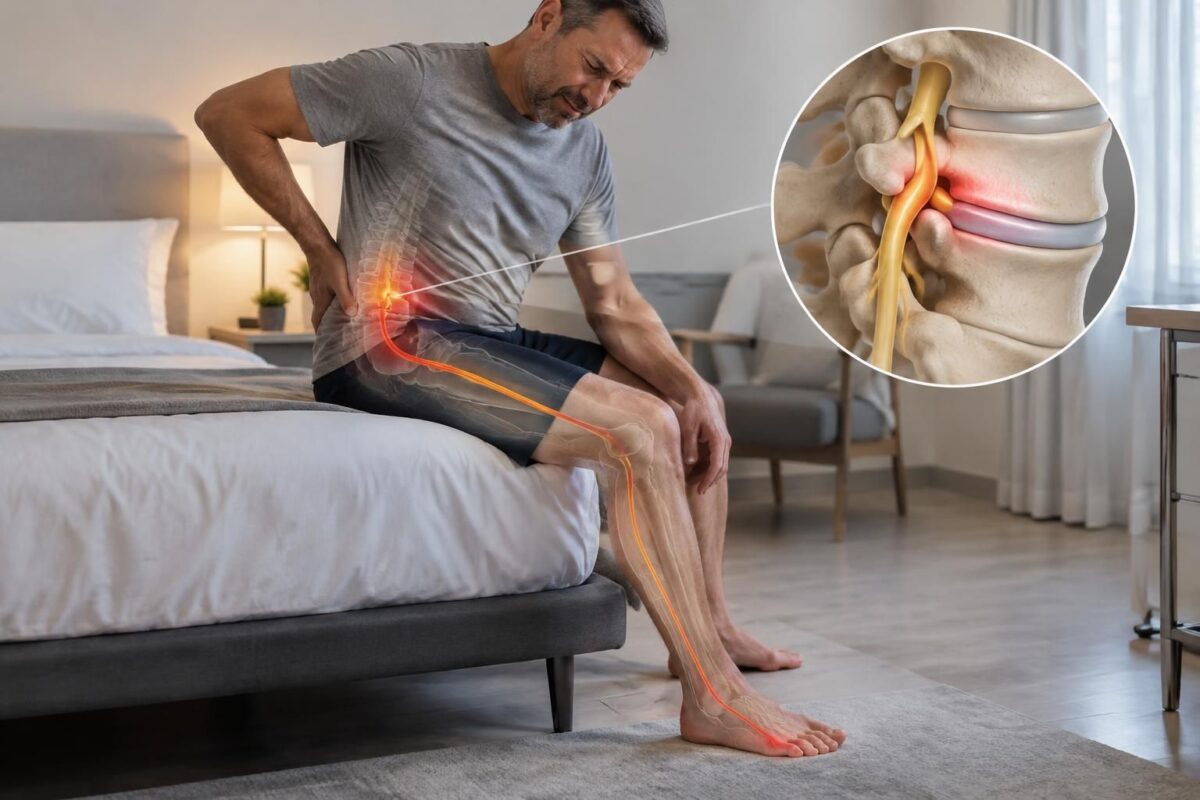
Disc protrusion and pain on the outer edge of the foot
IN BRIEF A disc bulge is a bulging of the disc that can sometimes irritate a nerve root and cause pain down to the outer edge of the foot. However, this pain is not always related to the disc: a…
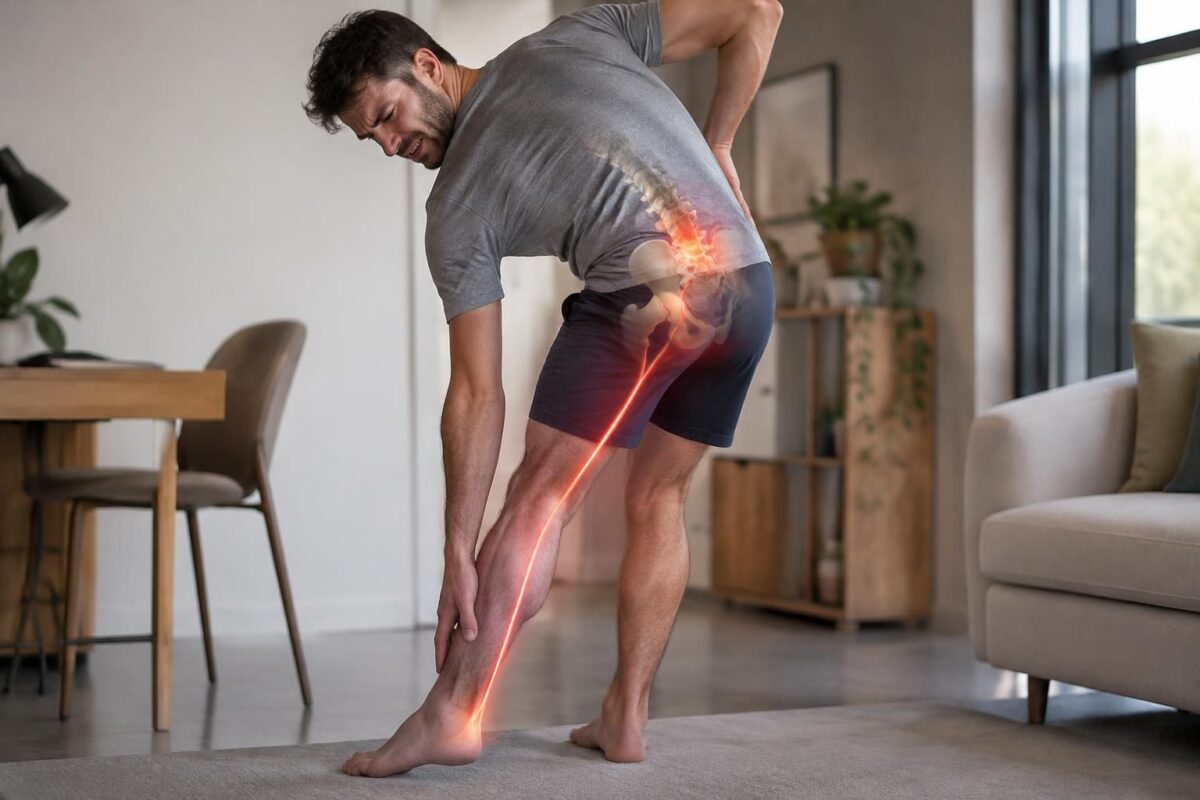
IN BRIEF A disc herniation is a bulging of a disc in the spine, often without symptoms. If it irritates a lumbar nerve root, the pain may radiate down the leg to the foot and sometimes be felt in the…

Sylvain Desforges, B.Sc., D.O., N.D., docteur en ostéopathie
Dr Sylvain Desforges, B.Sc., D.O., N.D., osteopath, is the founding president of TAGMED and of the ACMA association. He dedicates his practice to chronic spinal pain, low back pain and symptoms compatible with sciatica, particularly when pain radiates toward the buttock, leg, calf, foot or toes.
Through SOS Sciatique, he publishes educational content on sciatica symptoms, possible causes such as disc herniation, disc narrowing, foraminal stenosis or irritation of a lumbar nerve root, as well as non-surgical approaches that may be considered according to the evaluation. At Clinique TAGMED, care may include, depending on the case, motorized neurovertebral decompression, specific osteopathic care or precision percussion.
For an evaluation related to sciatica treatment in Montreal / Mount Royal or sciatica treatment in Terrebonne, please consult the services available at Clinique TAGMED.
Medical disclaimer
The information published on SOS Sciatique is provided for educational purposes only and does not replace a consultation, diagnosis, opinion or treatment provided by a physician or another authorized healthcare professional. The author of this article is neither a medical doctor nor a specialist in a medical specialty recognized by the Collège des médecins du Québec. The osteopathic, manual medicine or functional support approaches described on this site do not constitute medical acts and are not intended to replace medical follow-up.
Consult a physician or emergency service in cases of loss of bladder or bowel control, anesthesia in the saddle area, significant or progressive weakness in the leg or foot, fever, recent trauma, severe pain or rapid worsening of symptoms. For more details, please read our Legal Notice.