
Disc bulge and mild nerve compression
08/11/2026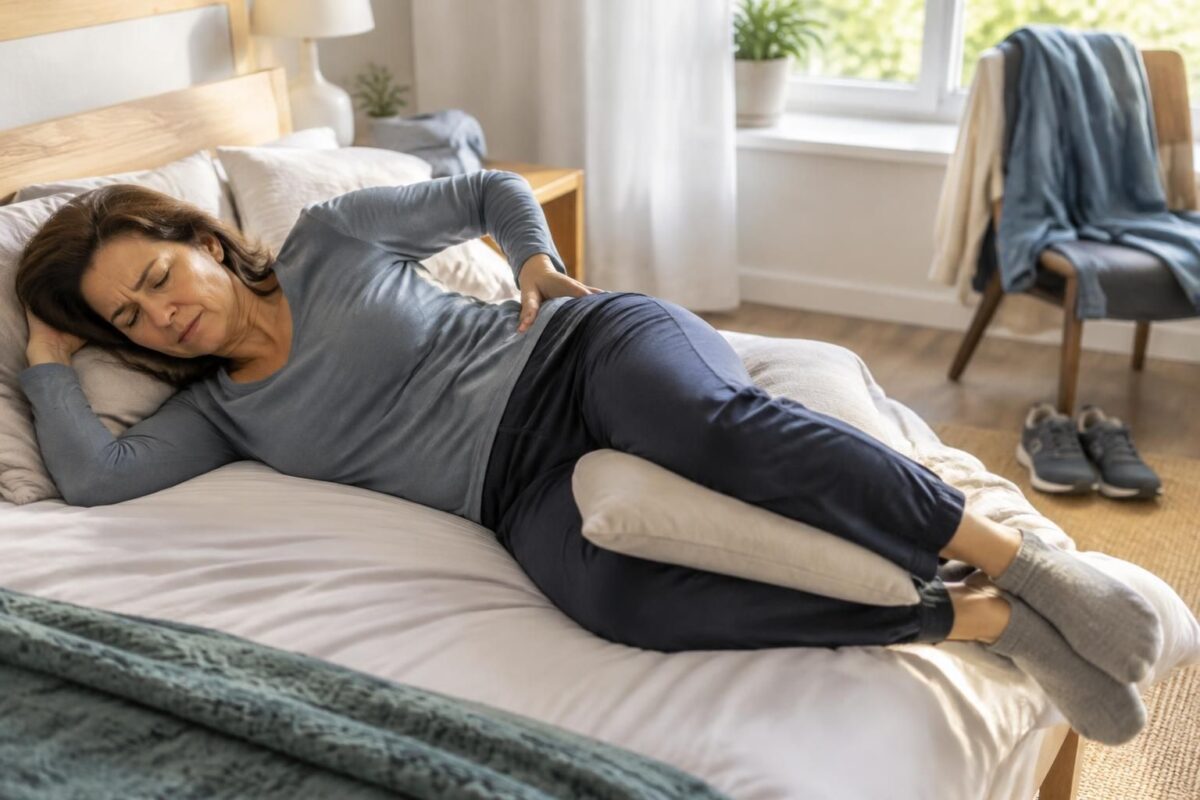
IN BRIEF
| Sciatica is pain that radiates from the lower back down to the leg. Prolonged bed rest is generally not recommended: it can increase stiffness and delay the return to activities. It is better to remain active as tolerated, adapt movements, and rest occasionally in a comfortable position. A loss of strength or urinary issues require urgent medical advice. |
In case of sciatica, some moments of rest may help when the pain is intense. However, staying in bed for a long time may exacerbate stiffness and loss of strength. Prefer a gradual return to activities, such as short walks, adapting your movements to the pain. Consult quickly in case of significant loss of strength, urinary or intestinal issues, or loss of sensation in the perineum.
In the event of sciatica, some periods of rest may help during a painful flare-up, but staying in bed for a long time can slow down the return to activities. The safest approach is to avoid movements that clearly aggravate symptoms, change positions regularly, and gradually resume tolerated activities. Significant weakness, urinary issues, or loss of sensation in the perineum require urgent medical evaluation.
What is sciatica?
Sciatica refers to pain related to irritation or compression of a nerve root in the lower back. It can extend into the buttock, thigh, calf, or down to the foot. Some people also experience burning sensations, electric shocks, tingling, or numbness.
A herniated disc is a possible cause, but lumbar osteoarthritis and other back issues can also be involved. The pathway of the pain may provide clues, but is not sufficient to establish a diagnosis. For example, pain towards the foot may be associated with an L5-S1 condition: discover the indicators presented in this article about L5-S1 sciatica and pain towards the foot.

Sciatica and complete rest: helpful or counterproductive?
IN BRIEF Complete rest in case of sciatica consists of interrupting activities and staying in bed. It can help briefly if the pain is very intense, but prolonged rest is generally counterproductive: it is better to gradually resume movement and…

Sciatica and too quick a return: why the pain comes back
IN SHORT Sciatica is pain related to irritation of the sciatic nerve, which can recur when returning to activities too quickly. To limit recurrences, gradually resume movement and exertion, taking into account pain and hip and pelvic mobility. The goal:…
Why prolonged bed rest requires caution
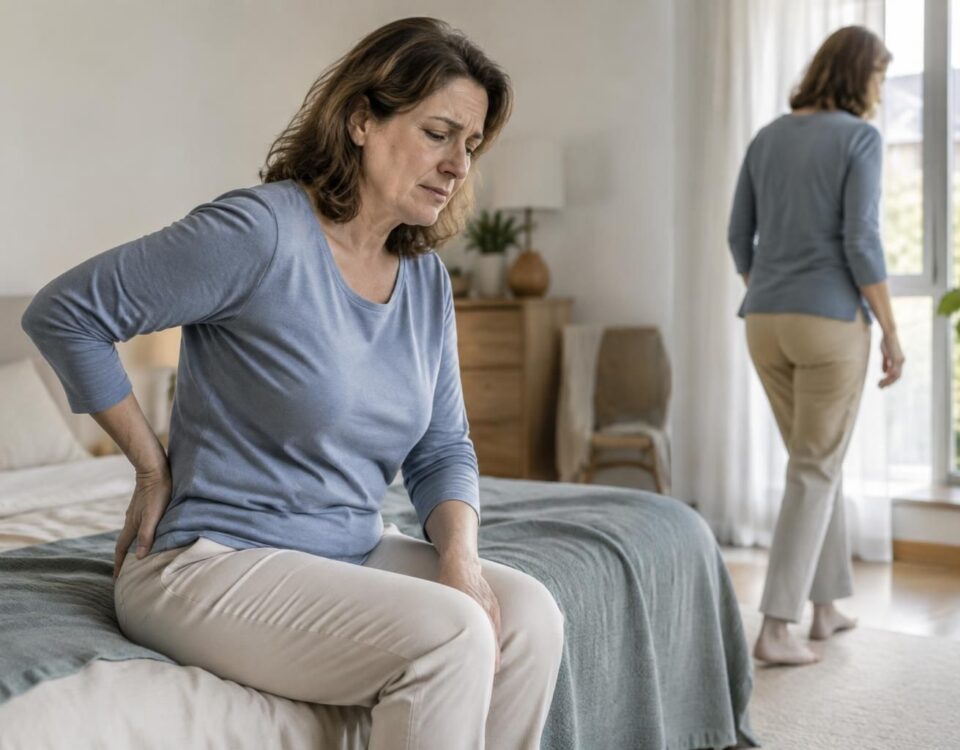
When the pain is strong, lying down may provide temporary relief. However, staying in bed for several days can increase stiffness, reduce muscle endurance, and make it more difficult to resume activities. Bed rest does not necessarily treat the cause of the pain.
It is often best to alternate positions and periods of rest with movements adapted to one’s capabilities. There is no need to force through intense pain. It is also preferable not to wait for the complete disappearance of symptoms before resuming each activity: a gradual return can be discussed with a healthcare professional.
To better understand the difference between rest and movement, check out these tips on walking and resting in cases of sciatica, as well as this article on movements that aggravate pain and reasons to adapt them.
Sciatica and pain during exercise: sign to watch out for
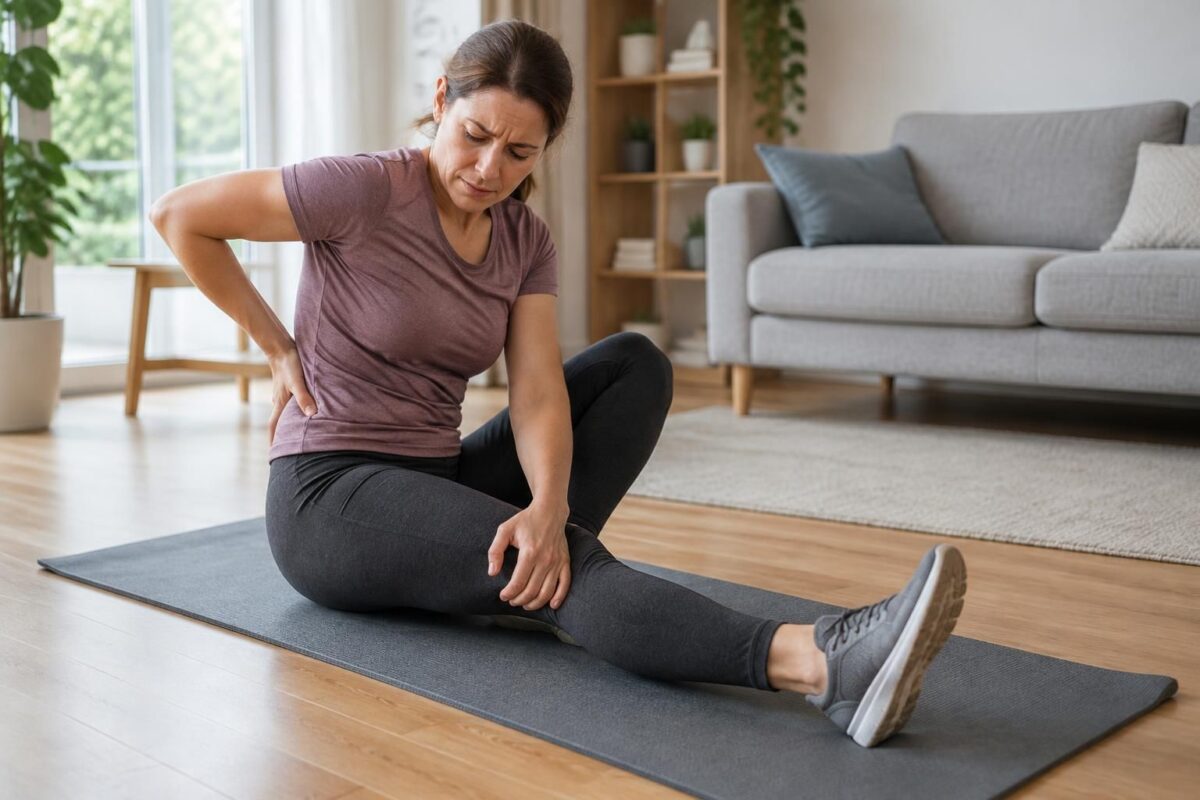
IN BRIEF Sciatica causes pain that radiates from the lower back or buttock down the leg. During exercise, stop the movement if it worsens the pain or causes discomfort: gentle, adapted activities can help you stay active without guaranteeing recovery.…

Sciatica and pain after exercise: muscle soreness or nerve irritation?
IN BRIEF Pain after exercise can be muscle soreness or the sign of sciatic nerve irritation. Soreness primarily affects the muscles used and usually subsides within a few days; sciatica can radiate from the buttocks down the leg, sometimes with…
How to adapt activities during a flare-up
Change positions regularly
One position may relieve one person and increase pain in another. If sitting for long periods increases symptoms, get up regularly and change posture. If standing becomes difficult, take a break in a more comfortable position. The goal is to identify the positions that clearly aggravate the pain in the leg and temporarily limit them.
Especially avoid sudden or repeated movements that trigger severe pain. There is no need to maintain a perfect posture at all times. Opt for controlled movements and bring objects closer to your body before lifting them.
Walk only if it remains tolerable
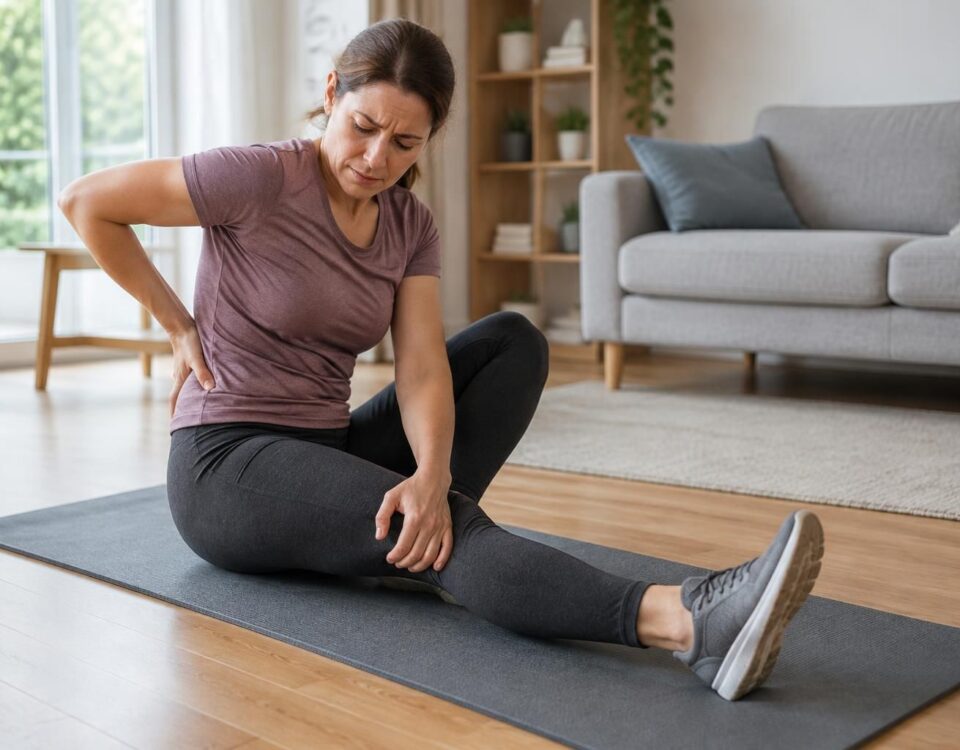
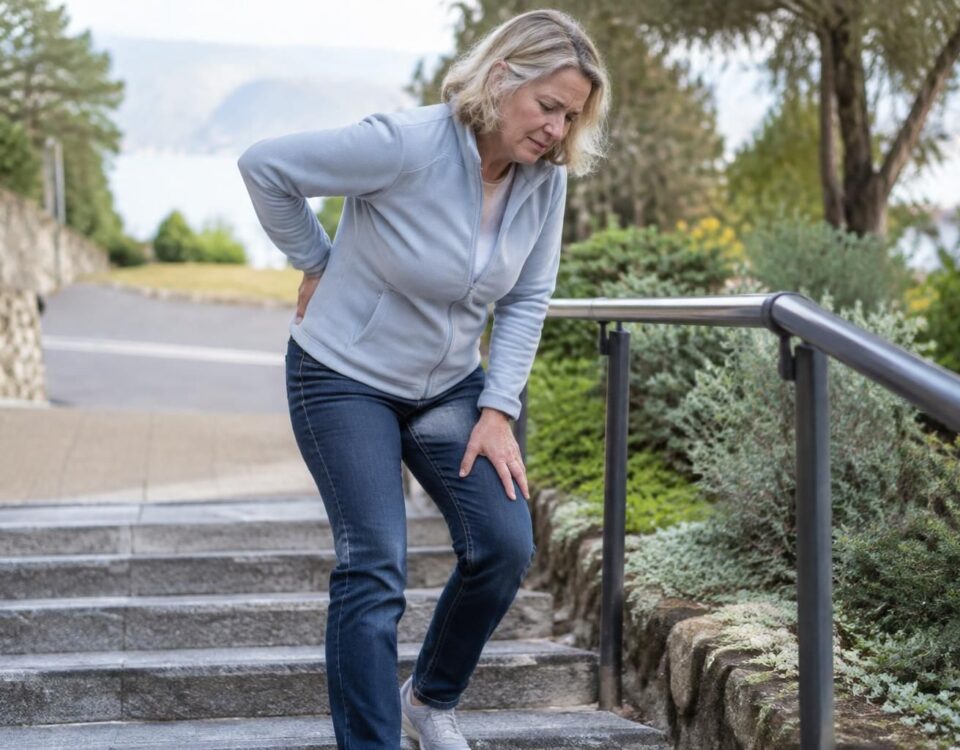
Walking can be maintained if it does not significantly worsen symptoms. Start with short distances and a comfortable pace. Stop if the pain increases sharply or if the leg becomes weak. Walking should not become a trial to endure at all costs.
Reserve the bed for necessary rest periods
You can lie down when the pain or fatigue demands it, then get up when it becomes bearable. If you have difficulty getting out of bed, turn onto your side, dangle your legs down, and push up with your arms to lift your torso. Proceed slowly, without abrupt movements.
A pain that recurs often also deserves evaluation of its evolution and triggers. This article on recurrent sciatica and recurring symptoms presents elements to monitor.
Sciatica and poorly tolerated activity: how to recognize it
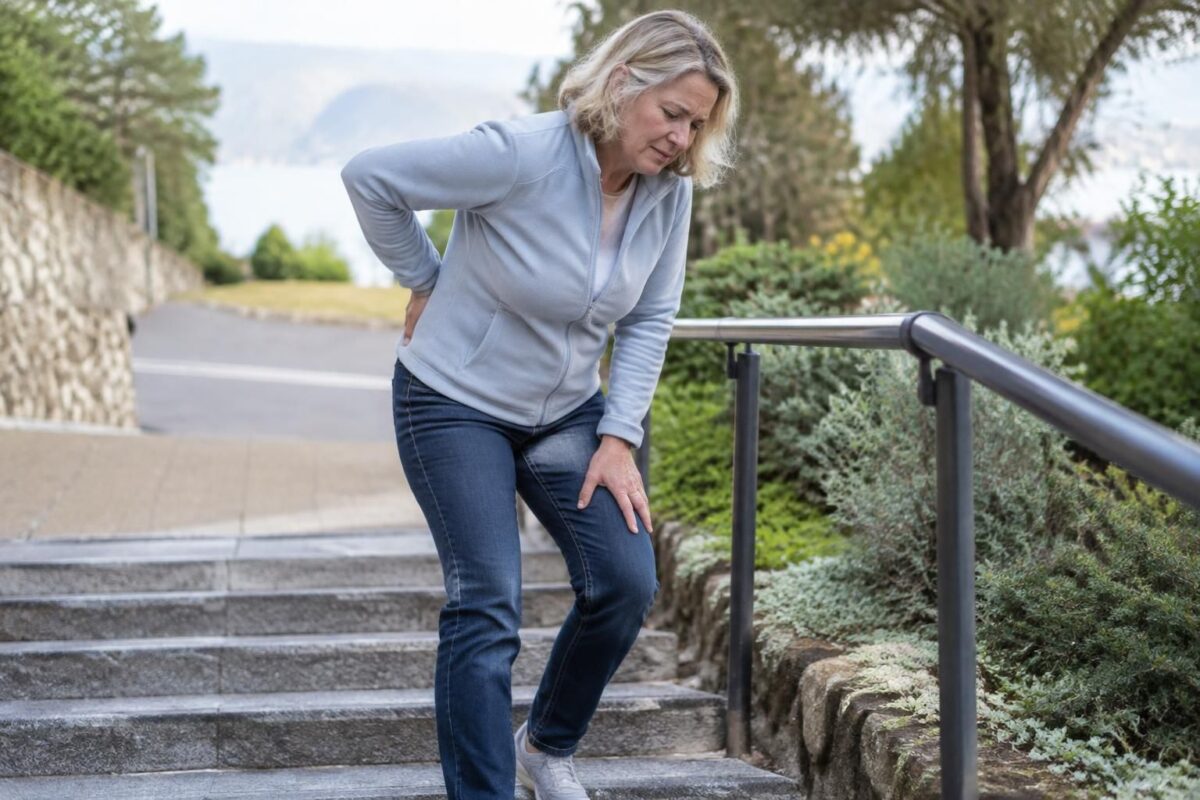
IN BRIEF An activity poorly tolerated with sciatica significantly worsens the pain that radiates down the buttock and leg, or causes more tingling and discomfort. Reduce or adapt effort, without remaining bedridden, and gradually resume based on your symptoms. A…

Sciatica and exercises to avoid according to the symptoms
IN BRIEF Sciatica is pain related to irritation or compression of the sciatic nerve. Exercises can help maintain mobility and reduce tension, but avoid those that intensify leg pain, as well as sudden twists, forced bends, and carrying heavy loads.…
What position to choose for resting or sleeping?
There is no universal position to relieve sciatica. On the back, some people feel better with a pillow under their knees. On the side, a pillow between the knees can make the position more comfortable. Choose the posture that does not significantly increase pain in the leg.
It is not necessary to sleep exclusively on the painful side or the opposite side. Change position if discomfort increases. To discover other options, check out these resources on sleeping positions with sciatica, nighttime pain and sleep, position for sleeping with sciatica, and arrangements for better sleep.
If the pain often wakes you at night, prevents sleep, or worsens despite position changes, seek advice from a healthcare professional. Persistent pain may require evaluation to check its cause and determine appropriate management.
Sciatica and movement that worsens: why stop it
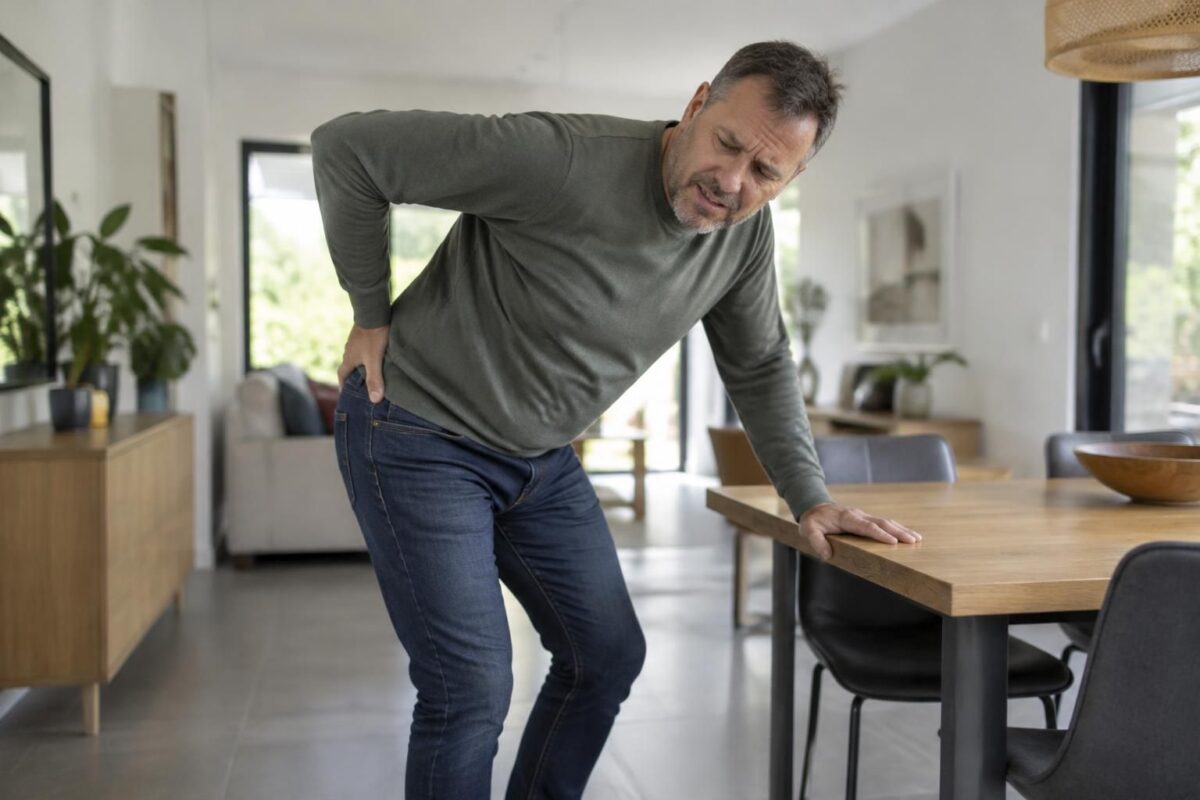
IN BRIEF Sciatica is a pain related to the irritation of a nerve, which can extend from the lower back to the leg. If a movement or exercise increases the radiation, tingling, or weakness, stop it: this helps to avoid…
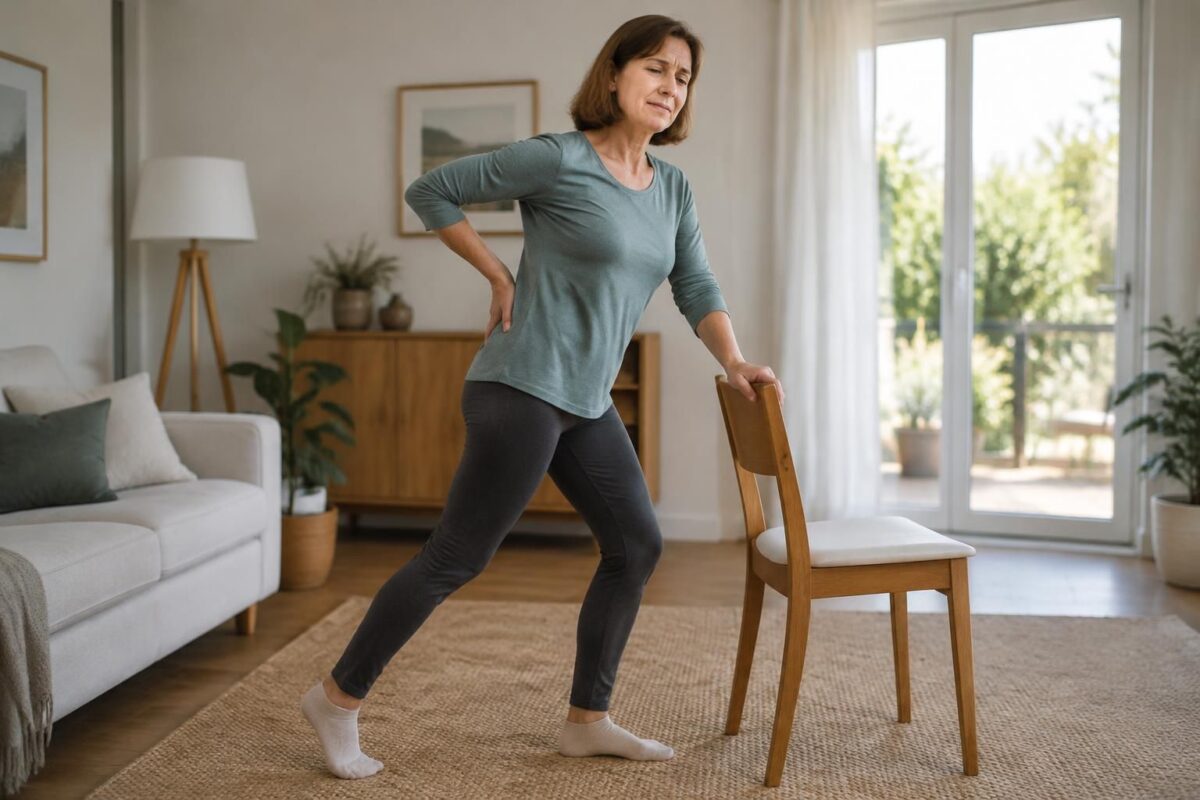
Sciatica and movement that provides temporary relief: is it enough?
IN BRIEF Sciatica is pain related to the irritation of the sciatic nerve, often felt from the lower back down to the leg. Gentle movement, walking for a few minutes, and changing positions regularly can provide temporary relief and limit…
When to seek medical advice
Consult a healthcare professional if the pain intensifies, persists, or significantly limits your activities. Medical advice is also important if numbness progresses or if you notice a decrease in strength in the leg or foot.
An imaging, such as an MRI, is not necessary in all cases. The healthcare professional recommends it based on symptoms and examination results. Images must be interpreted alongside clinical signs: the articles on the correlation between an MRI and symptoms and on this same issue in Terrebonne explain this principle.
Signs that require urgent attention
Seek urgent medical help if you experience a significant or sudden loss of strength, new difficulty in lifting your foot, loss of sensation around the genital area or anus, or difficulties urinating. A loss of control over the bladder or bowels is also an emergency.
Extreme pain that does not decrease, fever associated with pain, or rapid worsening of symptoms also warrants prompt medical advice. Do not stay in bed waiting for these signs to pass.
Medical disclaimer: The information and advice provided on this site do not replace the opinion, diagnosis, or treatment of a healthcare professional. Please note that Sylvain Desforges, B.Sc., D.O., N.D., doctor of osteopathy, is neither a medical doctor nor a physician, and is not a specialist in a medical specialty as defined by the Collège des médecins du Québec. Manual therapy, functional medicine, and sports medicine as described on this site exclude any treatment or medical diagnosis made by a doctor or specialist. Always consult your physician for any medical questions. For more details, please read our full Legal Notice.
To prioritize
- Rest occasionally if the pain is strong.
- Gradually resume walking and tolerated activities.
- Change positions regularly.
To avoid
- Staying bedridden for several days without medical advice.
- Ceasing all movement for fear of worsening the sciatica.
- Pushing through despite pain that markedly increases in the leg.

In the case of sciatica, a few moments of rest can help when the pain is sharp, but staying in bed for long periods is generally not recommended. Prolonged inactivity can increase stiffness and make it harder to return to activities. It is better to prioritize occasional rest, movements suited to your tolerance, and medical advice if symptoms worsen or are accompanied by concerning signs.
Sciatica: rest should remain occasional
More often than not, sciatica causes pain that starts in the lower back or buttock and radiates down one leg. It may be accompanied by burning sensations, electrical jolts, tingling, or numbness. During an episode, lying down for a while can provide comfort and help calm the pain. This respite is helpful if it aids your recovery, but it does not mean you should lie down all day.
Prolonged bed rest can lead to increased stiffness and decreased muscle strength. It can also make daily activities more difficult to resume. Unless advised by a healthcare professional, it is better to avoid complete immobility and maintain gentle activity, adjusting effort according to symptoms.
Gradually resume movements
Alternate positions
If sitting or standing for long periods increases the pain, change positions regularly. Get up for a few moments, walk a bit, or lie down briefly if it relieves you. There is no perfect posture for everyone: mainly stick to those that do not significantly increase pain in the leg.
Choose a tolerable activity
Gentle walking may be an option when you can move without significantly worsening symptoms. Start with short distances on a flat surface, then gradually increase if it remains well-tolerated. If the pain becomes sharper or radiates further down the leg, take a break and adjust the duration of the activity.
Avoid forcing stretches or movements that trigger painful jolts. During a sensitive period, temporarily limit sudden movements, twisting with a load, and repeated bending that clearly worsen your symptoms. The goal is not to avoid all movement, but to resume activities cautiously.
Rest without remaining immobilized
For sleeping or relaxing, try the position that brings you the most comfort. On your back, a cushion under the knees may help some people. On your side, a cushion between the knees can be pleasant. If a position increases the pain, change it rather than forcing yourself to stay in it.
To get out of bed, turn onto your side, let your legs drop down, then push up with your arms to raise your torso. This approach can prevent a sudden effort during a painful episode. Heat or cold, applied carefully and through a cloth, can also contribute to comfort, without replacing treatment or professional advice.
Recognize signs requiring medical advice
Consult a healthcare professional if the pain persists, intensifies, or significantly disrupts your sleep and activities despite adjustments. Request an urgent evaluation in the event of a significant or recent decrease in strength in a leg, difficulty lifting your foot, or worsening numbness.
A loss of sensitivity in the perineum, difficulties in urinating, urinary leaks, or a loss of bowel control are also warning signs. In these situations, do not try to manage the problem through rest alone: contact an emergency medical service without delay.
| Situation | Why to remain cautious |
|---|---|
| Prolonged bed rest | Can increase stiffness and loss of strength. |
| Some moments of rest | Can help during intense pain, without lasting immobilization. |
| Resuming activities | Gradual return limits deconditioning. |
| Tolerable walking | Short outings can support mobility. |
| Movement that significantly worsens pain | Temporarily adapt the gesture or activity. |
| Loss of strength or urinary problems | Consult urgently, without waiting. |
When a sciatica hurts, the desire to stay lying down may seem natural. However, unless advised otherwise by a medical professional, prolonged bed rest is generally not recommended. These fictional testimonials illustrate common situations: pain and its evolution vary from person to person.
“At first, every movement scared me. I stayed in bed almost all day, thinking my back needed rest. But I felt increasingly stiff. My doctor advised me to take small walks at my own pace and to alternate positions.” — Marc, 46 years old
This experience reminds us that a short period of rest can help during a painful peak, but that prolonged immobility can encourage stiffness and make resuming activities more difficult. The goal is not to force but to remain as active as the pain allows.
“I thought I had to wait until the pain was gone before moving. I started by walking a few minutes in the house, then gradually more each day. Some days, I had to slow down, but I gradually regained confidence in my movements.” — Sophie, 38 years old
A gradual and adapted activity, such as short walks or tolerated daily gestures, is often preferable to strict rest. If a movement significantly increases the pain that radiates down the leg, adapt it or temporarily interrupt it, without forcing yourself to stay in bed.
“At night, I mainly sought a less painful position. A cushion under my knees when I lay on my back sometimes helped. The next day, I moved gently instead of lying down all morning.” — Nadia, 52 years old
To sleep or rest, try the positions that truly improve your comfort: on your back with your knees supported, or on your side with a cushion between your knees. There is no ideal posture for everyone. The right option is the one that does not exacerbate your symptoms.
“I wanted to get back to gardening too quickly, and my pain flared up. I understood that being active didn’t mean doing everything like before. I reduced my efforts, avoided lifting heavy things, and resumed gradually.” — Alain, 61 years old
Remaining cautious is thus about finding a balance: avoiding prolonged bed rest but not forcing despite significant pain. In case of persistent symptoms, a doctor or physiotherapist can help you adjust the resumption of activities.
A significant loss of strength, a new difficulty in lifting the foot, insensitivity of the perineum, or urinary or intestinal problems require urgent medical evaluation. Do not hesitate to seek help if any of these signs appear.
Sylvain Desforges and sciatica: why to remain cautious with bed rest
Sylvain Desforges is a health professional specialized in osteopathy, naturopathy, and manual medicine. He is the founding president of TAGMED clinics and the ACMA association. Throughout his career, he has focused on innovations in health and the management of chronic pain, with the goal of guiding patients towards better health and well-being.
His approach is set in a context where back pain and sciatica can disrupt daily activities, work, and sleep. Sciatica refers to pain that radiates from the lower back or buttock down a leg, sometimes accompanied by tingling, numbness, or a decrease in strength. Its origin and evolution vary from person to person: a professional opinion allows for the evaluation of symptoms and guides management.
During a painful flare-up, resting may seem like the most reassuring solution. Lying down occasionally can help find a more comfortable position, especially when certain movements intensify the pain. However, staying in bed for a prolonged time is generally not recommended in uncomplicated sciatica. Inactivity can lead to stiffness, gradually decrease muscle strength, and make resuming activities more difficult.
Therefore, caution involves avoiding both extremes: forcing despite significant pain or completely immobilizing due to fear of movement. A gentle and adapted activity, such as short walks or regular movements, can be resumed according to tolerance. It is also useful to change positions throughout the day and temporarily limit gestures that significantly increase pain or cause it to radiate further down the leg. Movement should remain gradual and not be imposed at all costs.
In his practice, Dr. Desforges focuses on managing persistent pain and integrating advanced technologies, including spinal decompression, laser, and shockwave therapy. These tools can be considered in a care pathway when appropriate, but they do not necessarily suit everyone. The choice of treatment depends on clinical evaluation, symptoms, medical history, and individual goals. Evidence-based care also involves explaining options, their limits, and associated precautions.
For sleep, some people feel more comfortable on their side with a cushion between their knees, while others prefer lying on their back with their legs slightly elevated. There is no universal ideal posture: the comfort felt and the evolution of symptoms guide adjustments. Heat or cold can also provide temporary relief, provided that the skin is protected and that any excessive application is avoided, particularly in cases of reduced sensitivity.
A quick evaluation is necessary in the presence of a significant loss of strength, a new difficulty in lifting the foot, numbness in the perineum, or urinary or intestinal issues. If the pain persists, worsens, or greatly limits activities, a healthcare professional can help clarify the course of action and organize a gradual return to movement.
In the case of sciatica, rest can provide relief when the pain is sharp, but staying in bed for extended periods may prolong stiffness and make it more difficult to resume activities. The safest course of action generally involves adapting movements, avoiding efforts that clearly worsen symptoms, and gradually returning to tolerable activities.
During a painful flare-up, lying down for a while may help recover and find a more comfortable position. However, prolonged bed rest is generally not recommended for uncomplicated sciatica. Inactivity can promote stiffness, decrease muscle strength, and complicate the return to daily tasks. Rest has its place, but it is better to avoid it becoming the only strategy. To better understand this balance, consult this guide on movement and rest in relation to sciatica.
It is not a matter of pushing through intense pain. The goal is to remain as active as possible without significantly worsening symptoms: change positions regularly, make short movements, and gradually resume tolerated activities. Walking can be considered if it remains bearable, starting with short distances and a comfortable pace. Practical tips are available on walking with sciatica.
Reactions to movements vary among individuals and the cause of the pain. Some positions or movements may exacerbate symptoms, while others can relieve them. For example, pain worsened by arching the back or, conversely, relieved by bending forward can guide evaluation, though it alone cannot provide a diagnosis. You can learn more about pain worsened in lumbar extension and pain relieved by bending.
The most suitable position for resting is one that reduces discomfort without imposing a painful posture. While lying on your back, a cushion under the knees may be tried; on your side, a cushion between the knees may improve comfort. These adjustments do not suit everyone: change position if symptoms increase. Other suggestions are provided in this guide on sleeping positions with sciatica.
caution is particularly important if pain persists, worsens, or is accompanied by unusual symptoms. A loss of strength in the leg, a new difficulty in lifting the foot, or worsening numbness warrant prompt medical advice. A loss of sensitivity in the perineum, difficulties urinating, or loss of bowel control require urgent care. For persistent symptoms, also refer to the guidelines on chronic sciatica and the signs to watch for.

Sylvain Desforges, B.Sc., D.O., N.D., docteur en ostéopathie
Dr Sylvain Desforges, B.Sc., D.O., N.D., osteopath, is the founding president of TAGMED and of the ACMA association. He dedicates his practice to chronic spinal pain, low back pain and symptoms compatible with sciatica, particularly when pain radiates toward the buttock, leg, calf, foot or toes.
Through SOS Sciatique, he publishes educational content on sciatica symptoms, possible causes such as disc herniation, disc narrowing, foraminal stenosis or irritation of a lumbar nerve root, as well as non-surgical approaches that may be considered according to the evaluation. At Clinique TAGMED, care may include, depending on the case, motorized neurovertebral decompression, specific osteopathic care or precision percussion.
For an evaluation related to sciatica treatment in Montreal / Mount Royal or sciatica treatment in Terrebonne, please consult the services available at Clinique TAGMED.
Medical disclaimer
The information published on SOS Sciatique is provided for educational purposes only and does not replace a consultation, diagnosis, opinion or treatment provided by a physician or another authorized healthcare professional. The author of this article is neither a medical doctor nor a specialist in a medical specialty recognized by the Collège des médecins du Québec. The osteopathic, manual medicine or functional support approaches described on this site do not constitute medical acts and are not intended to replace medical follow-up.
Consult a physician or emergency service in cases of loss of bladder or bowel control, anesthesia in the saddle area, significant or progressive weakness in the leg or foot, fever, recent trauma, severe pain or rapid worsening of symptoms. For more details, please read our Legal Notice.