

Disc bulge and lumbar osteoarthritis
22/11/2026
IN BRIEF Sciatica can be aggravated by bending, twisting, and carrying loads while doing housework. Breaking tasks into smaller parts, taking breaks, and adjusting movements help manage effort without necessarily stopping everything. In Montreal, an assessment can help tailor activity resumption according to symptoms and function. |
Housework often involves bends, twists, and carrying loads, which can irritate the sciatic nerve when repeated or prolonged. Break tasks into smaller parts, take breaks, and adjust their duration based on your reaction during the activity and the next day. A fluctuation in pain does not necessarily mean a relapse, but a new or progressive weakness requires prompt assessment.
Housework can trigger sciatica when bending, rotating, moving loads, or repeated actions exceed your current tolerance. It’s not always necessary to stop all tasks: break them down, adjust their duration, and monitor your response during and after the activity and the following day. A new weakness or persistent deterioration demands quicker evaluation. Vacuuming, making a bed, or moving a basket often involves several movements. You might bend, pivot, reach out, and carry a load in the same sequence. Repetition and duration can matter as much as the effort of an isolated action. A task may also seem tolerable at first, then cause more symptoms afterward. The accumulated load might exceed your current capacity before discomfort clearly increases. Symptoms and positions that trigger them vary from person to person. To better understand the positions that may irritate symptoms, consult this article on sciatica and positions to avoid, as well as these explanations on trunk flexion and pain during position changes. If possible, avoid chaining all tasks in one session. Do one activity at a time and take a break before symptoms become hard to manage. You can also spread tasks over different times of the day or week. Breaks are particularly helpful for long or repetitive tasks. They allow you to check if discomfort stabilizes and to decide whether to continue, reduce duration, or postpone part of the task. When vacuuming or cleaning a surface, avoid rotating multiple times while keeping your feet stationary if that movement increases your symptoms. Move closer to the area to be cleaned and move your feet with the motion when it suits you. Slowing down can also help you control the task better. There is no single posture that suits everyone. Choose a position that you can maintain without significant or persistent symptom increases. To learn more about the link between possible disc injury and nerve irritation, check this page on disc bulging and sciatica. Bending is not automatically prohibited. However, some people may poorly tolerate a bend, especially if it is deep, prolonged, or repeated. Move closer to the object rather than reaching far in front of you, and temporarily modify the task if bending triggers significant aggravation. The goal is to preserve movements you can tolerate, then adjust those that irritate your symptoms. Avoid repetitive attempts if a movement results in clear deterioration. Resources on sciatica and activities to monitor can also help you think about movements that bother you; this information does not replace a personalized assessment. A laundry basket, bag, or bucket can make a task more demanding, especially if carried for long or on one side. Reduce the weight, make several trips, or bring the load closer to your body if it decreases discomfort. Prepare products and tools before starting to limit unnecessary movements. You can also adjust the handle of the vacuum or mop to limit prolonged bending. This change does not guarantee the absence of pain, but it may make certain movements easier to tolerate. Assess your reaction at three points: during the task, in the hours that follow, and the next day. Note the activities performed, their duration, observed symptoms, and the time taken to return to your usual level. A one-time variation does not automatically indicate a relapse. Also observe your function over several days. Walking, sleeping, working, and daily tasks provide useful benchmarks, in addition to pain intensity. If these activities gradually become more difficult or if aggravation persists, request a reevaluation. Symptoms that arise at night or while sitting can also affect recovery. To delve deeper into these topics, check the information on night pain in the leg and difficulty sitting with sciatica. A new, significant, or rapidly progressing weakness requires evaluation without waiting for a routine appointment. The same applies if a foot starts to drop or a leg increasingly gives way. New urinary or bowel issues, loss of sensation around the perineum or the so-called “saddle” area, marked symptoms in both legs, fever, or general deterioration require urgent attention. In the presence of these signs, contact emergency services or go to the emergency room. An evaluation can link your symptoms to the tasks that trouble you and examine notably strength, sensitivity, and your functional abilities. The TAGMED Clinic in Montreal / Mont-Royal can help you assess your situation and determine the appropriate next steps. You can check the page dedicated to sciatica and housework, or its English version. Yes, for some people, especially if vacuuming is long or repetitive. Reduce duration, take breaks, and monitor symptoms after the task and the next day. Not necessarily. You can often maintain tolerated tasks and adapt those that trigger aggravation, for example by breaking them down or reducing their duration and difficulty. No. Their tolerance depends on the person and the situation. A bending that strongly or persistently increases your symptoms deserves an adjustment and, if the problem persists, a professional opinion. Repeated motions and duration can add up. Symptoms may increase after the activity, even if each movement seemed tolerable at the moment. New urinary or intestinal issues, a loss of sensation in the perineum, or significant weakness that progresses rapidly require urgent evaluation. Medical disclaimer: The information and advice provided on this site do not replace the opinion, diagnosis, or treatment of a healthcare professional. Please note that Sylvain Desforges, B.Sc., D.O., N.D., doctor of osteopathy, is neither a medical doctor nor a physician, and is not specialized in a medical specialty as defined by the Collège des médecins du Québec. Manual medicine, functional medicine, and sports medicine as described on this site exclude any treatment or medical diagnosis made by a physician or specialist doctor. Always consult your doctor for any medical questions. For more details, please read our full Legal Notice.Why can housework irritate sciatica?
Adjust tasks without stopping everything
Break housework into shorter sequences
Limit repeated twists
Manage bends according to your tolerance
Reduce constraints related to carrying loads
Monitor your body’s response
When to seek prompt evaluation?
Assess your progress in Montreal or Mont-Royal
Frequently Asked Questions
Can vacuuming worsen sciatica?
Should I stop all housework?
Are bends forbidden?
Why can pain increase after the task?
What signs require urgent help?
To Watch For
- Repeated twists
- Prolonged bends
- Loads carried on one side
- Long tasks without breaks
To Better Tolerate Cleaning
- Turn with your feet
- Break tasks into smaller parts
- Bring loads closer to your body
- Adjust effort according to symptoms

With sciatica, vacuuming, making the bed, or carrying laundry can irritate symptoms when bends, twists, and loads accumulate. It is not always necessary to stop cleaning: breaking tasks, adjusting movements, and observing the reaction during the activity, after it, and the next day often allows you to better gauge effort. Progression should consider your function and neurological safety rather than follow the same rule for everyone.
Why can cleaning aggravate sciatica?
Household tasks often combine multiple movements: bending to pick up an object, pivoting to move a basket, pushing the vacuum cleaner, or repeating the same motion. A light task can become more irritating when prolonged without breaks or done in a position that is difficult to tolerate. The reaction may also appear after cleaning, as the cumulative load sometimes exceeds the tolerance threshold before symptoms clearly increase.
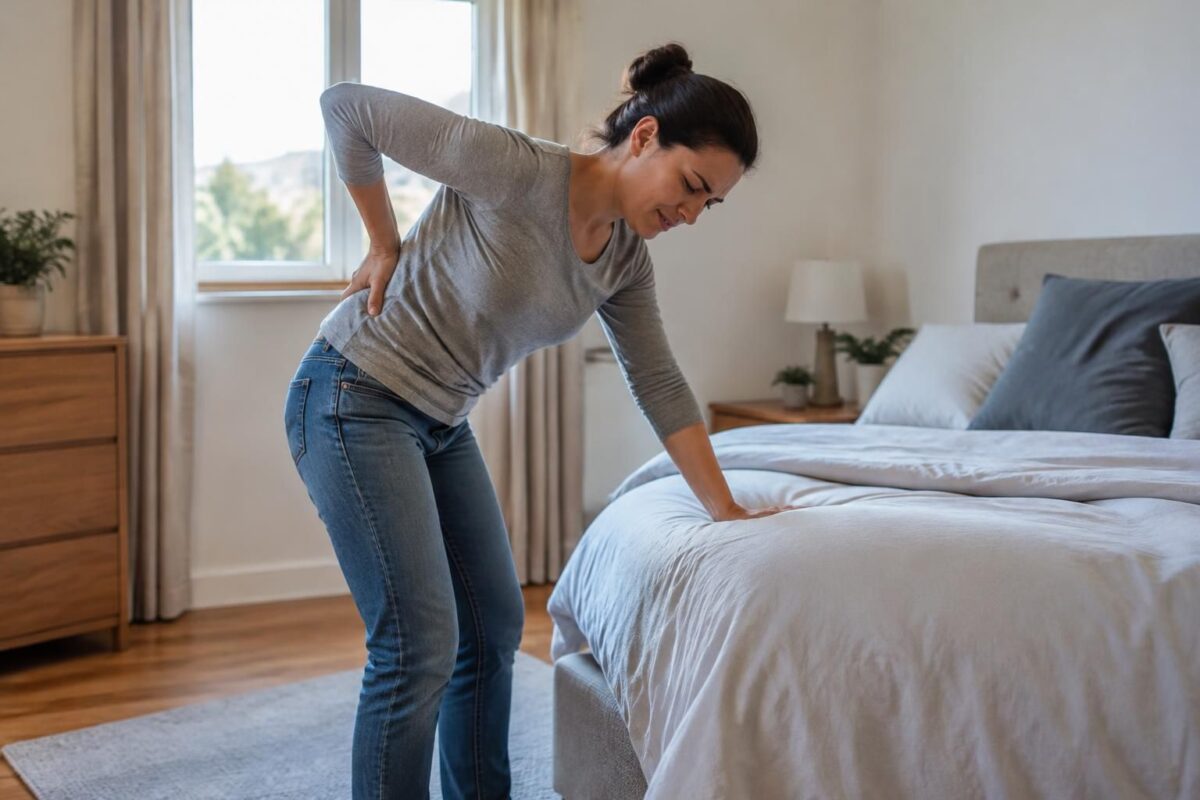
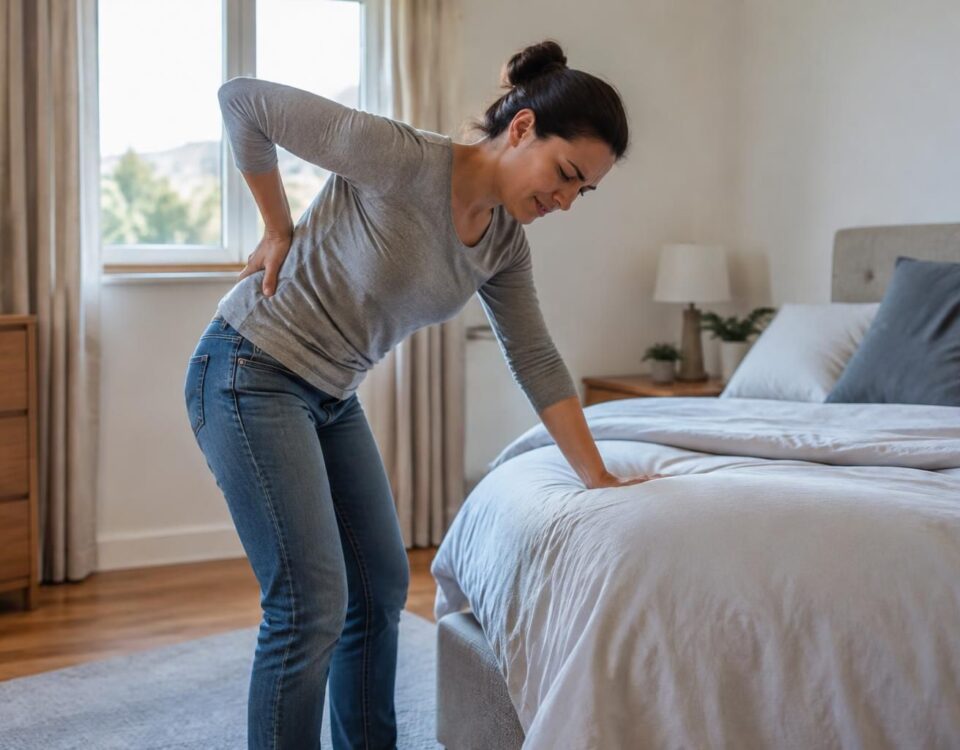
Sciatica and Making the Bed: Repeated Flexion and Lumbar Irritation
IN SHORT Sciatica is pain related to irritation or compression of the sciatic nerve. Making your bed can strain the lower back if bending is repeated, especially when rounding the back or twisting the torso. To limit lumbar irritation, bend…
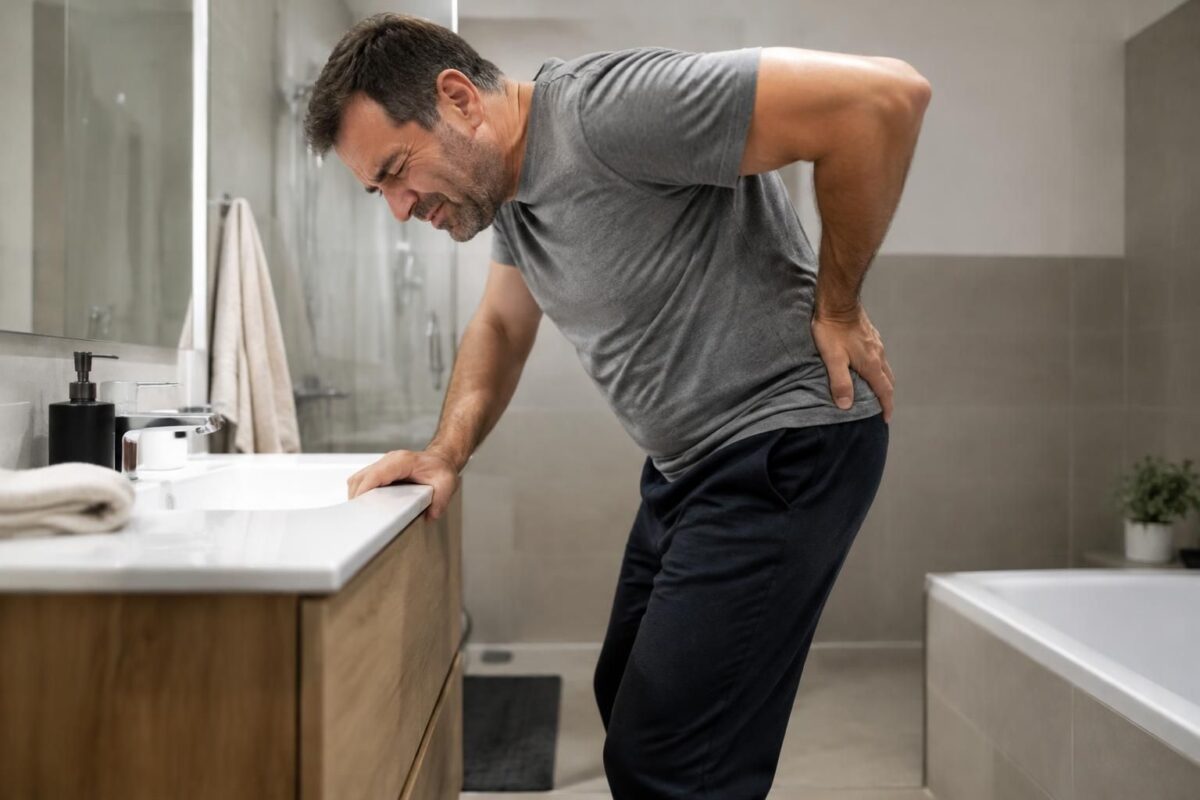
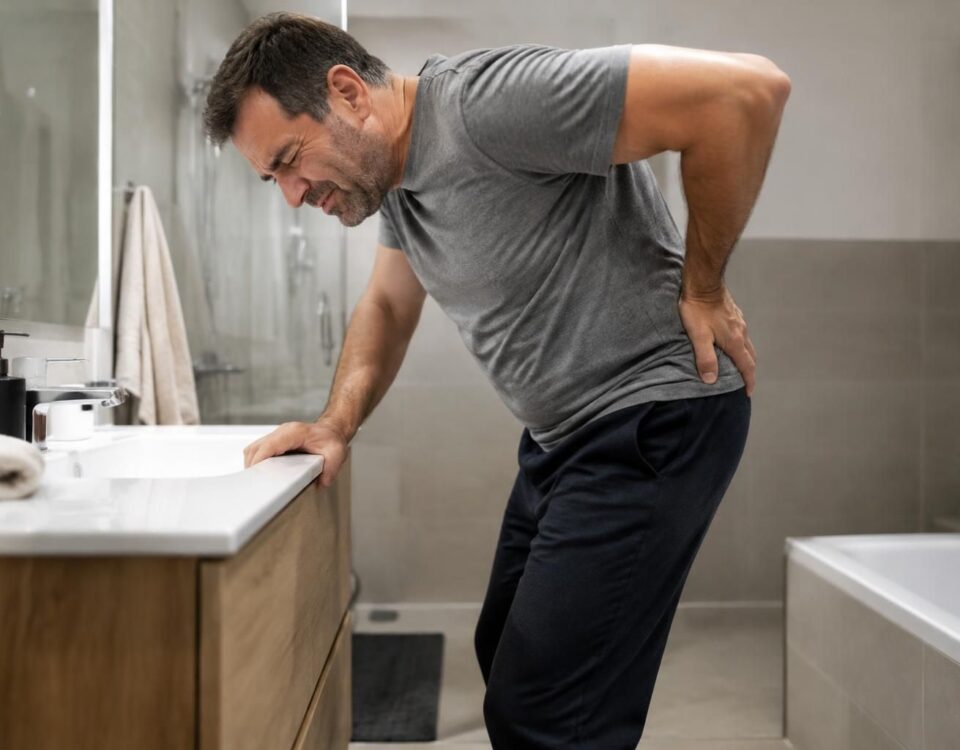
Sciatica and bending over the sink: pain in the leg
IN BRIEF Sciatica is pain related to irritation or compression of the sciatic nerve, which can extend from the lower back down to the leg. Bending over the sink can exacerbate the pain, especially if this position increases pressure on…
Adjusting movements without stopping everything
Reduce unnecessary twists
When changing direction, try to move your feet with the motion rather than twisting your trunk while keeping your legs still. Get closer to the area to be cleaned and place objects within reach. The goal is not to avoid all rotation, but to limit repeated or uncomfortable rotations over a long period.
Vary bends
Bends are not automatically prohibited. However, staying bent for a long time to clean, empty a bin, or remake a bed can irritate some people. Alternate positions, get closer to the work, and use suitably long-handled tools when possible. You can also spread out tasks that require bending instead of doing them all at once.
Manage loads and time
A laundry basket or a bucket can become more difficult to carry when heavy or held far from the body. Reduce the load, take multiple trips, or use a convenient means of transport. For the vacuum cleaner and repetitive tasks, plan for breaks and work in short sequences. A break before a significant increase in symptoms may be more helpful than pushing through to exhaustion.
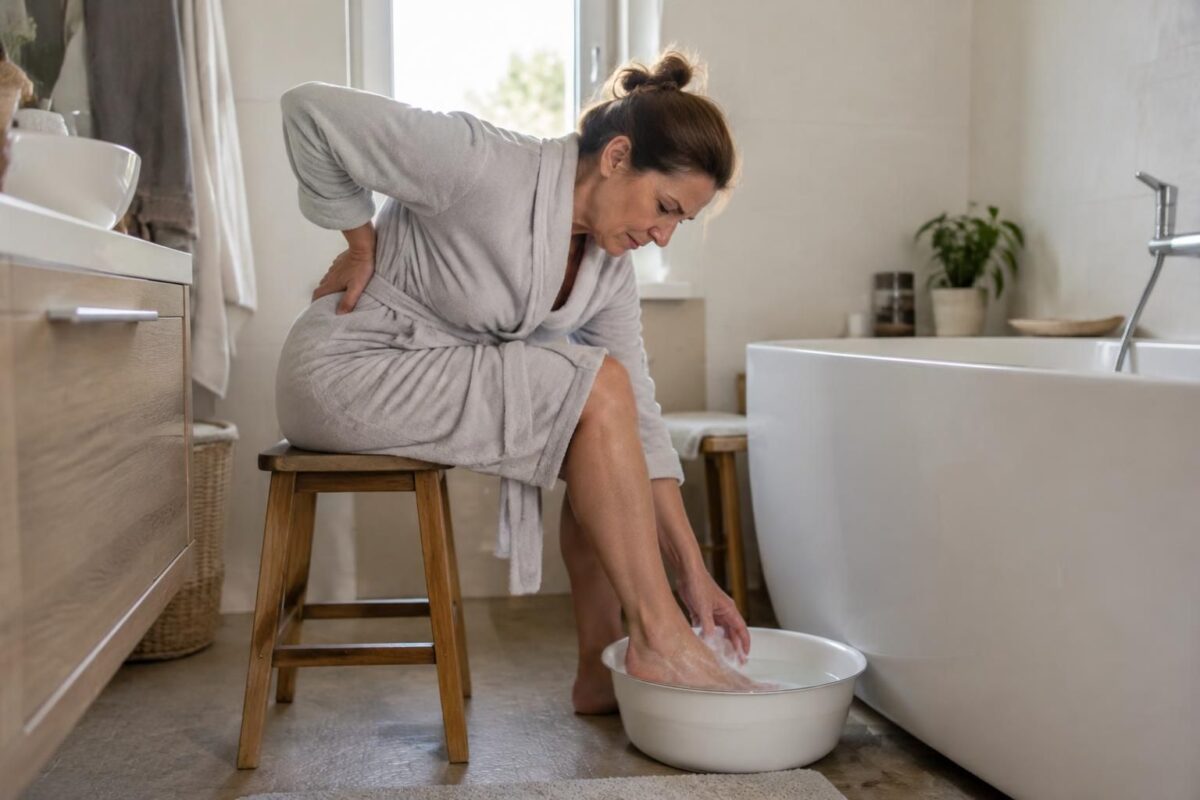
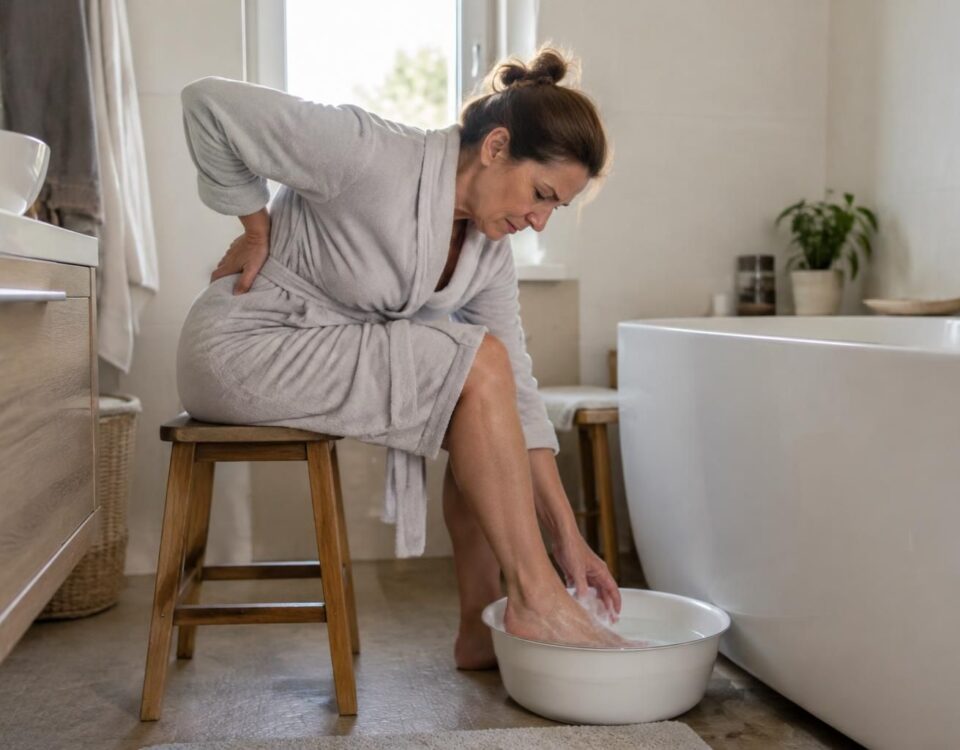
Sciatica and washing feet: lumbar flexion to monitor
IN BRIEF Sciatica can make washing your feet uncomfortable, as bending forward accentuates lumbar flexion and may trigger pain. To limit strain, sit down, bring your foot closer to you, or use a long-handled aid. These adjustments make personal hygiene…

Sciatica and dressing: daily gestures to adapt
IN BRIEF Sciatica can make dressing uncomfortable, but a few simple gestures help limit tension. Sit down to put on pants, socks, and shoes, choose easy-to-wear clothing, and avoid bending or twisting suddenly. These adjustments make daily dressing easier without…
Follow your response to activity
Note which tasks cause the most discomfort and how long it takes for symptoms to return to their usual level. Also assess concrete benchmarks: walking, sleeping, working, and ability to carry out daily activities. A more difficult hour does not necessarily mean a relapse; however, a persistent deterioration in function deserves reevaluation.
Keep the activities you tolerate and temporarily adjust the duration, volume, or difficulty of those that irritate your symptoms. If pain increases during the task, slow down or stop it and observe recovery. Then gradually resume, based on your response and the advice of a professional.
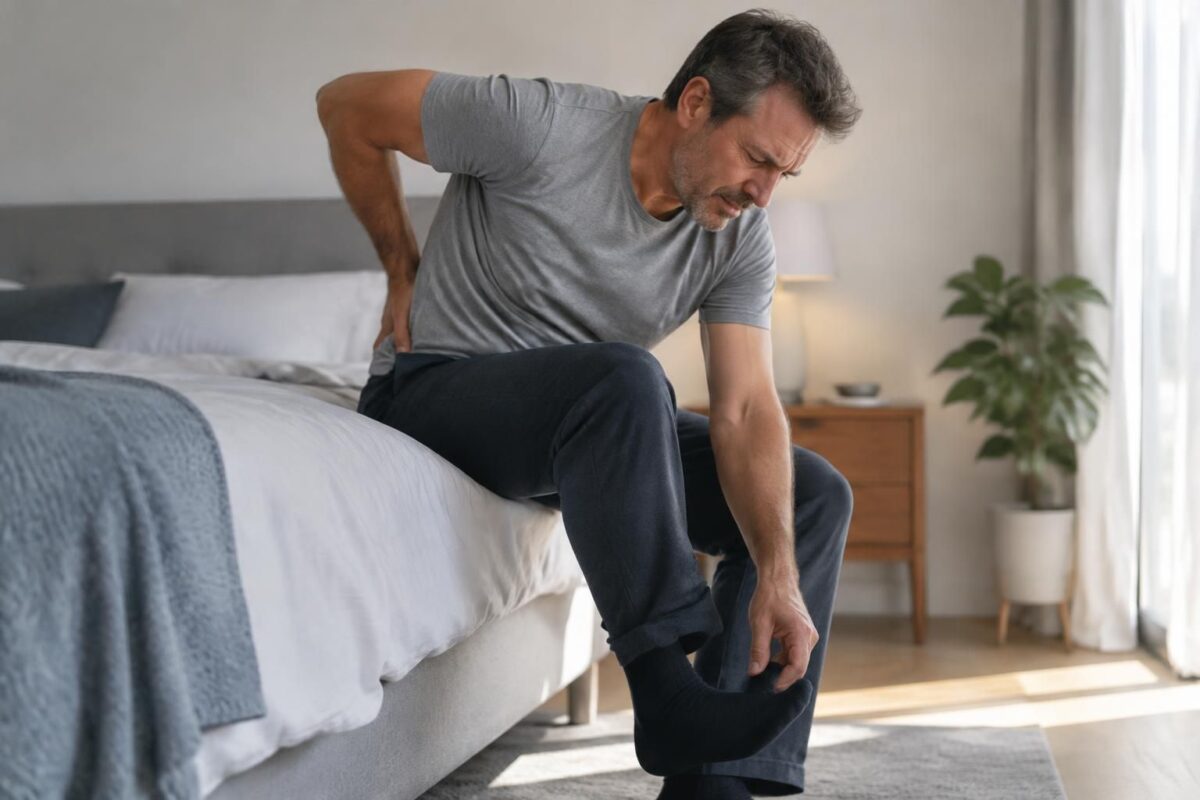
Sciatica and putting on socks: bending and pain in the leg
IN BRIEF Sciatica can make it difficult to put on your socks: bending over can increase the pain that radiates down the leg. Sitting down, using a sock aid, or avoiding painful bends can make this daily task easier. If…

Sciatica and tying your shoes: why the pain can radiate down
IN BRIEF Sciatica is pain related to the irritation of a nerve in the lower back, which can radiate into the buttock and leg. Leaning down to tie your shoes may accentuate the pain or cause it to descend further.…
When to seek quick evaluation?
Consult quickly if basic activities become increasingly difficult or if new weakness appears. Significant or rapidly progressing weakness, a foot drop, a leg giving way increasingly, new urinary or intestinal issues, or numbness in the saddle region require urgent evaluation. Significant symptoms in both legs, fever, major trauma, or general deterioration also warrant prompt attention.
At the TAGMED Montreal / Mont-Royal Clinic, a consultation can help connect your symptoms, strength, sensitivity, and capacities to the activities you wish to resume. Recommendations are tailored to your situation and do not replace a medical diagnosis.
| Household Gesture | Cautious Adjustment |
|---|---|
| Repeated twists | Move your feet rather than pivot your back. |
| Prolonged bends | Get closer to the area and break the task into smaller parts. |
| Carrying loads | Keep the load close to your body and distribute the weight. |
| Vacuuming or mopping | Alternate sequences and take breaks as needed. |
| Symptoms after activity | Observe their evolution until the next day and adjust effort. |
| New or progressive weakness | Seek medical evaluation quickly. |
Note: The testimonials below are fictional examples for informative purposes. They do not correspond to real patients and do not predict the progression for each individual.
“The vacuum cleaner woke up my pain after cleaning.” In this example, the person mainly noticed discomfort after vacuuming for a long time, bending over and repeating the same movements. They tried to shorten the sessions, take breaks, and move their feet forward rather than pivoting in place. They also observed whether the symptoms returned to their usual level after the activity and the next day.
“Making the bed required more effort than I thought.” Repeated bending and twisting to reach the other side of the bed made the task difficult. The person chose to break it down into small steps, getting closer to the mattress and changing position rather than staying bent for long periods. The goal was not to avoid all bending, but to adjust the duration and pace according to their tolerance.
“Carrying the laundry basket increased my symptoms in my leg.” In this fictional situation, transporting a load on one side seemed more irritating than distributing the laundry into several small trips. The person brought the basket closer, reduced its weight, and avoided turning abruptly with the load. They also paid attention to their walking and recovery after the task.
“A more difficult day did not necessarily mean that everything was getting worse.” After a cleaning session that was longer than usual, the symptoms were temporarily more present. Instead of giving up all activities, the person reduced the volume of irritating tasks and compared their condition over several days. A brief fluctuation can occur; however, a persistent decrease in abilities warrants reevaluation.
To adjust cleaning in the presence of sciatica, observe the symptoms durning the activity, after it, and the next day. You can break tasks down, alternate efforts, and temporarily modify their duration or difficulty. Bending and rotating are not automatically prohibited: their resumption should take into account your response and your situation.
A new or progressive weakness, a foot drop, new urinary or bowel issues, or numbness in the perineum require prompt evaluation. These signs should not wait for a routine appointment.
At the TAGMED Clinic in Montreal / Mont-Royal, a consultation can help connect your symptoms, abilities, and the tasks you wish to resume in order to evaluate the appropriate next steps.
Sciatica and cleaning: twists, bends, and loads in daily life
Sylvain Desforges is an osteopath, naturopath, and practitioner of manual medicine. Founder and president of TAGMED clinics and the ACMA association, he dedicates his career to innovation in health and supporting individuals living with persistent pain. His work is part of an approach aimed at better understanding the impact of symptoms on daily activities, especially when sciatica makes cleaning more difficult.
Vacuuming, cleaning a bathtub, making a bed, or transporting a laundry basket can strain the back and leg in several ways. These tasks often combine bending, trunk rotations, load shifts, and repeated movements. An action that is easy to tolerate once can become irritating when prolonged or accumulated without breaks. However, there is no universal rule: the reaction depends on the person, their symptoms, and their momentary capacity.
When sciatica accompanies household chores, Dr. Desforges emphasizes observing function and symptom evolution, rather than imposing a general prohibition on movement. The question is not just whether a movement causes immediate pain, but also how the person feels after the activity and the next day. Walking, sleeping, working, and the ability to resume usual tasks provide useful markers for assessing progress.
To reduce unnecessary strain, it may be relevant to break up cleaning, alternate activities, and take a break before discomfort significantly increases. Getting closer to the surface being cleaned, moving feet instead of pivoting in place, and keeping objects close to the body can also facilitate certain movements. An appropriate handle, a less full basket, or several small trips instead of one heavy load are practical adjustments to consider based on tolerance.
The goal is not to maintain a perfect posture or avoid every bend. Rather, it is about choosing a dose of activity that the person can recover from, then adjusting it gradually. If a task leads to a transient flare-up, it does not automatically mean that there is a relapse. In contrast, a persistent decrease in abilities or prolonged aggravation warrants reevaluation. A professional can examine strength, sensitivity, and the relevant movements to connect these results with activities important for the person.
In his commitment to evidence-based care, Dr. Desforges is interested in managing chronic pain and integrating advanced technologies, including spinal decompression, laser therapy, and shockwave therapy. However, the choice of any treatment must take into account the evaluation, individual needs, and the skills of the professional providing it. Mentioning a technology does not imply that it is suitable for every situation or that it is performed by a particular person.
A new or rapidly progressing weakness, a foot drop, new urinary or bowel issues, or perineum numbness require urgent evaluation rather than a routine appointment. For sciatica that complicates cleaning without urgent signs, a consultation at the TAGMED Clinic can help clarify the next steps, adjust irritating tasks, and organize a gradual return to activities based on examination and symptom evolution.
With sciatica, cleaning can become uncomfortable when bending, twisting, or carrying loads accumulate. It is not always necessary to stop everything: breaking tasks down, adjusting movements, and monitoring the evolution of symptoms can help preserve tolerated activities while remaining attentive to neurological signs that require prompt evaluation.
Sciatica and cleaning: adapting movements and loads
Vacuuming, making a bed, or moving a laundry basket often involves multiple movements: bending, pivoting, pushing, or pulling, then starting over. A task that seems light can become irritating if it lasts a long time without a break. The reaction can also manifest after the activity or the next day, as the effort gradually accumulates. A stronger pain for a short time does not automatically mean a relapse; rather, observe the trend over several days and the effect on your usual capacities.
To limit unnecessary constraints, get close to what you are cleaning, move your feet instead of pivoting with a blocked trunk, and avoid staying bent over for long periods. Adjust tool handles when possible and prepare materials before starting. For laundry or household products, bring the load closer to your body, reduce its weight, or carry it in several trips. Generally, the risk depends on the context, the load, and each person’s tolerance; additional guidelines are provided on lifting loads and sciatica and on carrying loads when experiencing sciatica.
You do not necessarily have to eliminate bending or twisting. It is often more useful to temporarily reduce their duration, frequency, or difficulty, then gradually resume according to your body’s response. Alternate tasks, take breaks before discomfort becomes pronounced, and maintain activities that remain well tolerated. To reflect on the movements and positions to adjust at the beginning, also consult these guidelines on movements to adapt at the start of discal sciatica and the positions that can sometimes be irritating.
However, avoid forcing yourself into a single position or complete immobility without proper advice. Comfortable positions vary from person to person, and prolonged rest is not necessarily the best response for everyone. Discover information on positions that can avoid irritating symptoms or sometimes relieve them, as well as on choosing positions in case of sciatica and complete rest and its possible limits.
Identify tasks that regularly cause an increase in symptoms: vacuuming, bathing, bed, or laundry basket, for instance. Note what happens during the activity, in the hours that follow, and the next day, as well as the time needed to return to your usual level. This tracking allows for adjusting the effort dosage more precisely than pain felt at a single moment. General recommendations on the management of sciatica can complement these guidelines, without replacing an individual assessment.
Request an evaluation if basic activities gradually become more difficult, if walking or sleeping deteriorates persistently, or if new weakness appears. Significant or rapidly progressive weakness, a foot that starts to drop, new urinary or intestinal issues, or numbness in the saddle area justify urgent referral. Pain that radiates down to the foot may also warrant examination, especially if accompanied by a loss of sensation or strength; explanations concerning pain towards the top of the foot and L5 root are available in this resource on sciatica and symptoms in the foot.
A consultation can help connect the trajectory of the pain, strength, and sensitivity to the tasks you wish to resume. The assessment takes into account your current abilities and the symptom trend to determine which actions to maintain, which to temporarily modify, and how to progress cautiously. If your work also involves long periods of sitting or driving, these signs not to trivialize in professional driving may also help recognize when to seek advice.

Sciatica and picking up an object from the ground: movement to watch out for
IN BRIEF Sciatica is pain that follows the path of the sciatic nerve. To pick up an object from the ground, avoid bending abruptly while rounding your back or twisting: bend your knees, tilt your hips, and keep the object…

Sciatica and bending forward: lumbar disc or nerve tension?
IN BRIEF Forward-bending sciatica may be related to irritation of the lumbar disc or tension on the sciatic nerve. This movement alone does not allow for determining the cause. Identifying the movements that trigger the pain helps guide the evaluation…

Sylvain Desforges, B.Sc., D.O., N.D., docteur en ostéopathie
Dr Sylvain Desforges, B.Sc., D.O., N.D., osteopath, is the founding president of TAGMED and of the ACMA association. He dedicates his practice to chronic spinal pain, low back pain and symptoms compatible with sciatica, particularly when pain radiates toward the buttock, leg, calf, foot or toes.
Through SOS Sciatique, he publishes educational content on sciatica symptoms, possible causes such as disc herniation, disc narrowing, foraminal stenosis or irritation of a lumbar nerve root, as well as non-surgical approaches that may be considered according to the evaluation. At Clinique TAGMED, care may include, depending on the case, motorized neurovertebral decompression, specific osteopathic care or precision percussion.
For an evaluation related to sciatica treatment in Montreal / Mount Royal or sciatica treatment in Terrebonne, please consult the services available at Clinique TAGMED.
Medical disclaimer
The information published on SOS Sciatique is provided for educational purposes only and does not replace a consultation, diagnosis, opinion or treatment provided by a physician or another authorized healthcare professional. The author of this article is neither a medical doctor nor a specialist in a medical specialty recognized by the Collège des médecins du Québec. The osteopathic, manual medicine or functional support approaches described on this site do not constitute medical acts and are not intended to replace medical follow-up.
Consult a physician or emergency service in cases of loss of bladder or bowel control, anesthesia in the saddle area, significant or progressive weakness in the leg or foot, fever, recent trauma, severe pain or rapid worsening of symptoms. For more details, please read our Legal Notice.