Sciatica in Terrebonne: possible annular tear and nerve irritation
26/11/2026Disc herniation L4-L5 and irritation of the L5 root
26/11/2026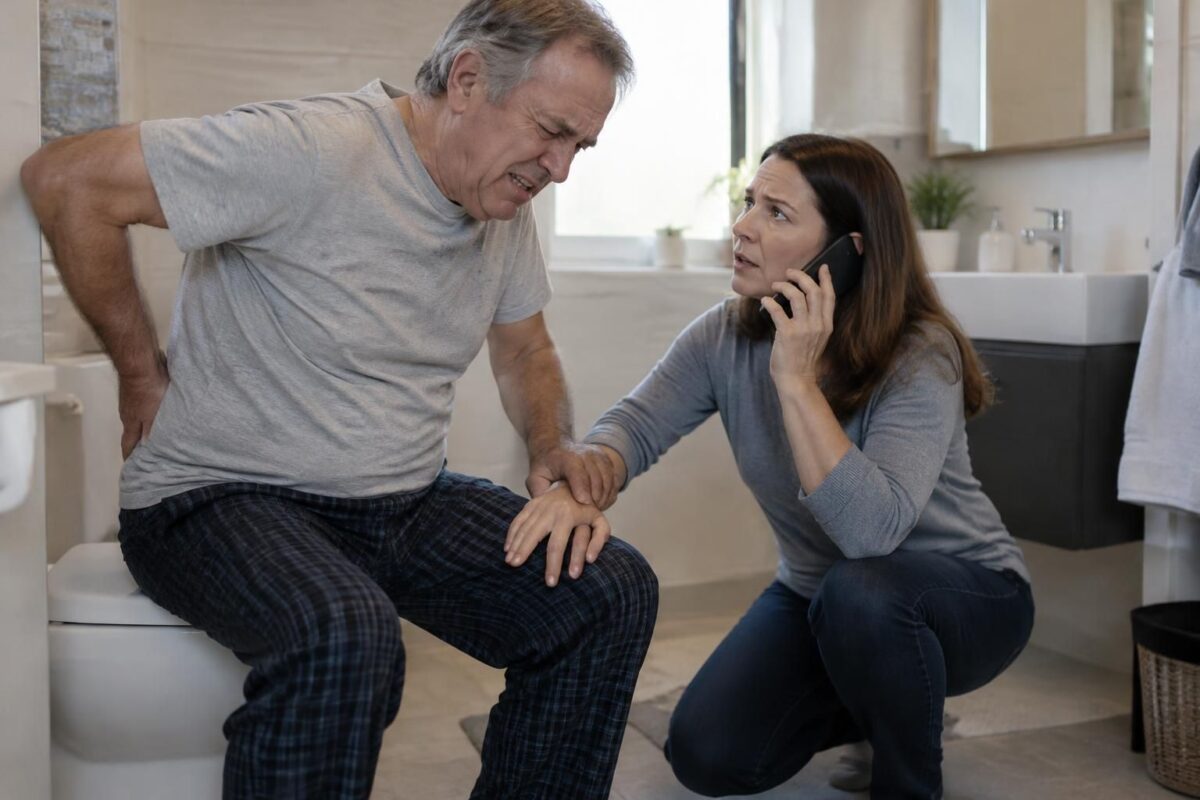
IN BRIEF Bowel control loss with sciatica is an alarming sign that may indicate severe nerve compression. This is not a symptom to treat at home: go to the emergency room immediately or call emergency services, especially if there is numbness between the legs or progressive weakness. A quick evaluation is essential. |
Sciatica and bowel control loss: a medical emergency
Bowel control loss associated with sciatica can signal severe compression of the lower back nerves. Immediate medical evaluation is required: go to the emergency room or call 911 in Quebec. Do not wait for symptoms to improve and do not delay treatment to try manual therapy. This information does not replace medical advice.
Bowel control loss associated with sciatica can signal severe nerve compression in the lower back. This situation requires an immediate emergency evaluation. Call 911 or go to the hospital without delay, even if the pain seems tolerable or if symptoms have just begun. Sciatica often causes pain that radiates from the lower back to the buttock and leg. It may also lead to tingling, numbness, or weakness. However, bowel control loss is not a typical symptom of uncomplicated sciatica. This sign may indicate significant pressure on the nerves that control the bladder, bowel, and legs. A possible cause is cauda equina syndrome. A herniated disc may sometimes compress these nerves. A professional must quickly assess the situation to determine the cause and necessary treatment. Delayed management can lead to complications, including persistent bowel or urinary control disorders, loss of sensation, or leg weakness. Do not wait for a clinic appointment and do not attempt to treat this symptom solely with manual therapy. Call 911 or request an immediate evaluation if leg pain is accompanied by one or more of the following signs: A leg that gives out or worsening weakness also deserves quick evaluation. To better understand this sign, consult our article on sciatica and the giving out leg. Pain in both legs with sciatica also requires particular attention: see when to consult for pain in both legs. Contact 911 or go to the emergency room immediately. If you have significant weakness, loss of sensation, or difficulty moving, do not drive. Ask someone to accompany you or call an ambulance. Inform the medical staff when the bowel control loss began, if it is worsening, and if you also have urinary issues, numbness in the saddle area, or leg weakness. Mention any lower back pain and specify whether it radiates into one or both legs. Pain below the knee can also help describe the symptom pattern. Our article explains why pain below the knee associated with a herniated disc should be reported during evaluation. A herniated disc can compress a nerve root or, in rare cases, a bundle of nerves in the lower back. Lumbar osteoarthritis, narrowing of the canal, or other issues can also contribute to symptoms. Several causes may sometimes be present simultaneously. To learn more, read our article on combined causes of sciatica related to herniated disc and lumbar osteoarthritis. In the hospital, the team evaluates strength, sensation, and urinary and bowel functions. They may request imaging tests based on symptoms and examination results. Tingling in the big toe can direct the evaluation towards a lumbar nerve root, such as root L5, but does not alone establish a diagnosis. Consult our page on sciatica and tingling in the big toe. Non-surgical approaches can be considered only after medical evaluation and the exclusion of an emergency. Bowel control loss should not be initially addressed with osteopathy, neurovertebral decompression, or another clinical treatment. After evaluation and based on the recommendations received, a consultation at Clinique TAGMED in Montreal or Terrebonne may allow discussion of non-surgical support options. The choice of care depends on the cause, symptoms, and input from the professionals involved. Sylvain Desforges, B.Sc., D.O., N.D., Doctor of Osteopathy and Naturopath, is the founding president of TAGMED and the ACMA association. He devotes his practice to chronic pain of the spine, lower back pain, and pain associated with sciatica, especially when pain radiates down to the buttock, leg, calf, foot, or toes. Through SOS Sciatique, he publishes educational content about sciatica symptoms, possible causes such as herniated discs, disc pinching, foraminal stenosis, or irritation of a lumbar nerve root, as well as non-surgical approaches that may be considered based on evaluation. At Clinique TAGMED, treatments may include, depending on the case, motorized neurovertebral decompression, specific osteopathy, or precision impact therapy. For an evaluation related to sciatica treatment in Montreal / Mont-Royal or sciatica treatment in Terrebonne, consult the available services at Clinique TAGMED. Medical disclaimer: The information and advice provided on this site do not replace the opinion, diagnosis, or treatment of a healthcare professional. Please note that Sylvain Desforges, B.Sc., D.O., N.D., Doctor of Osteopathy, is neither a medical doctor nor a physician, and is not a specialist in a medical specialty as defined by the Collège des médecins du Québec. Manual therapy, functional medicine, and sports medicine as described on this site exclude any medical treatment or diagnosis made by a physician or medical specialist. Always consult your doctor for any medical questions. For more details, please read our Full Legal Notice. The information published on SOS Sciatique is provided for educational purposes and does not replace a consultation, diagnosis, advice, or treatment performed by a physician or another authorized healthcare professional. The author of this article is neither a physician nor a specialist in a medical specialty recognized by the Collège des médecins du Québec. The approaches of osteopathy, manual therapy, or functional support described on this site do not constitute medical acts and are not intended to replace medical follow-up. Consult a doctor or an emergency service in case of loss of bowel or bladder control, anesthesia in the saddle area, significant or progressive weakness of a leg or foot, fever, recent trauma, severe pain, or rapid worsening.Why this symptom requires prompt intervention
What signs to recognize
What to do in case of bowel control loss
Call emergency services without waiting
Clearly describe your symptoms
Possible causes and medical evaluation
The role of non-surgical care
About the author
Medical disclaimer
Signs of Emergency
What to do without delay

A sciatica accompanied by loss of bowel control is a medical emergency. This symptom may signal significant nerve compression at the lower spine, including cauda equina syndrome. Go to the emergency room immediately or call emergency services: do not wait to see if the situation improves and do not attempt to treat it through manipulations or exercises.
Sciatica and loss of urinary control: medical emergency
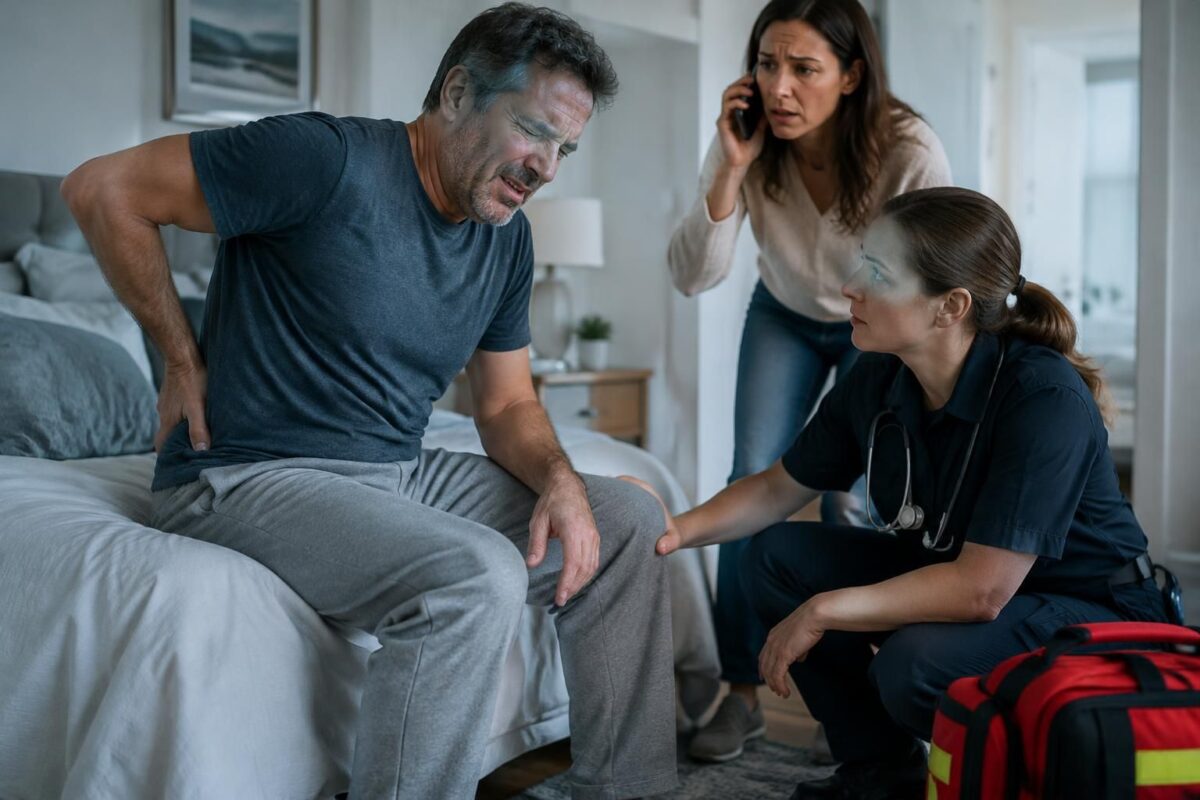
IN BRIEF Sciatica with loss of urinary control can indicate serious nerve compression, notably cauda equina syndrome. Sudden difficulty urinating, incontinence, loss of sensation in the perineum, or weakness in the leg require immediate evaluation in the emergency department. Prompt…
Why this combination of symptoms is concerning
Sciatica usually causes pain that starts from the lower back or buttock and radiates down one leg. However, if it is accompanied by a new difficulty in retaining bowel movements or involuntary loss of them, nerve damage requiring immediate evaluation should be considered. Compression of the nerves that control the legs, bladder, and bowel can lead to complications if care is delayed.
The loss of bowel control does not confirm, by itself, a specific cause. It may also be related to other health issues. But when it occurs with low back pain or sciatica, it is safer to consider it an emergency until a healthcare professional has evaluated the situation.
Sciatica and pain with saddle numbness
IN BRIEF Cauda Equina Syndrome refers to pain radiating down the leg accompanied by a loss of sensation around the genitals, anus, or inner thighs. This symptom may indicate severe nerve compression: it is not discomfort to treat at home.…
Signs that reinforce the urgency
Call emergency services or go to the hospital without delay if the loss of bowel control is new, especially if it is accompanied by one or more of the following signs:
Difficulty urinating, inability to empty the bladder, or loss of urinary control;
Numbness between the legs, around the genitals or anus, in the so-called “saddle” area;
Significant or progressive weakness of a leg or foot, difficulty walking;
Symptoms affecting both legs or rapidly worsening.
Do not wait for all these signs to appear. The presence of loss of bowel control associated with sciatica is sufficient to justify an urgent evaluation.

Sciatica and pain with progressive weakness
IN BRIEF Sciatica causes pain that radiates from the lower back down the leg; however, progressive muscle weakness is not a symptom to be taken lightly. It requires quick medical evaluation to search for the cause and determine the appropriate…
What to do now
Get an immediate assessment
Call your region’s emergency number or have someone take you to the emergency room. If you have marked weakness, difficulty walking, or if your condition is worsening, do not drive yourself. Do not postpone the consultation to make a routine appointment, try home treatment, or wait for the next business day.
Clearly describe the symptoms
Specify to the healthcare staff when the pain started, where it radiates, and when bowel control changed. Mention any urinary issues, numbness in the saddle area, weakness, fall, or recent trauma. Also, indicate your medications and known health issues. This information can help the team quickly decide on the necessary tests and care.

Sciatica and pain with general discomfort
IN BRIEF A sciatica causes pain that starts in the lower back or buttock and radiates down the leg. A general discomfort, especially if accompanied by fever or rapid worsening, should not be automatically attributed to sciatica: consult a healthcare…
To avoid before evaluation
Do not try to delay the evaluation by limiting yourself to stretching, exercises, massages, or manual therapy. Also, avoid requesting spinal manipulation before being examined for this emergency. These approaches do not rule out significant nerve compression and should not delay hospital care.
This content is provided for educational purposes and does not replace medical evaluation. In case of loss of bowel control associated with sciatica, the priority is to obtain emergency care immediately.
| Situation | What to do |
|---|---|
| Sciatica with loss of bowel control | Medical emergency: call emergency services or go to the emergency room immediately. |
| Numbness around the genitals or anus | Consult immediately at the emergency room. |
| Significant or progressive weakness in a leg or foot | Get urgent medical evaluation. |
| New, severe, or rapidly worsening symptoms | Do not delay in seeking urgent care. |
| While waiting for care | Do not drive if your condition jeopardizes your safety; ask for help to get to the emergency room. |

Sciatica and pain with a history of cancer: caution
IN BRIEF Sciatica causes pain that can radiate from the lower back down to the leg. With a history of cancer, new, persistent, or worsening pain should be quickly evaluated by a healthcare professional: its cause must be identified before…
Sciatica and loss of bowel control: illustrative testimonials of a medical emergency
Important: the stories below are fictional examples for educational purposes and not testimonials from real patients. A loss of bowel control associated with sciatica-like pain should be considered a medical emergency. It requires immediate assessment, without waiting for an osteopathy appointment or home treatment.
Fictional example — “I thought my sciatica was simply getting worse”
“The pain traveled from my lower back down to my leg. When I lost control of my bowels, I realized that the situation had changed. I called emergency services instead of waiting for the pain to pass.”
Fictional example — “I asked for help right away”
“In addition to my lower back pain and numbness, I was no longer able to control my bowels. I went to the emergency room immediately. I didn’t want to take the risk of delaying a medical assessment.”
Fictional example — “This symptom wasn’t something to monitor at home”
“I thought I could wait for my next appointment, but the loss of bowel control alarmed me. I contacted emergency services. I was quickly assessed to determine the cause of these symptoms.”
A sciatica accompanied by a loss of bowel control, difficulty urinating, numbness around the genitals or anus, or significant or progressive weakness in one leg can signal serious nerve damage, including cauda equina syndrome. Only a healthcare professional can determine the cause.
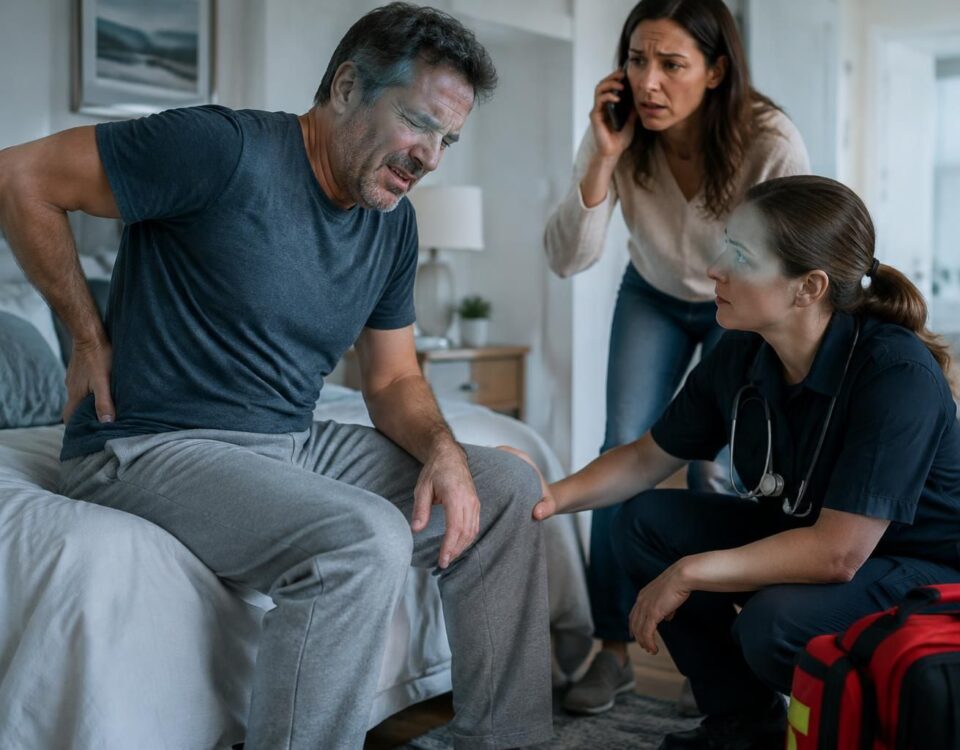
If this is happening to you right now, call emergency services or go to the emergency room immediately. In Quebec, dial 911 in case of an urgent situation. Do not drive yourself if you are weak, numb, or in distress; ask for help. Do not wait for a routine consultation and do not seek to treat these symptoms solely with manual therapy.
Medical warning: this information is educational and does not replace a consultation, diagnosis, or treatment by a licensed healthcare professional. The author is neither a doctor nor a specialist in a medical specialty recognized by the College of Physicians of Quebec. Osteopathic, manual medicine, or functional support approaches do not replace medical follow-up.
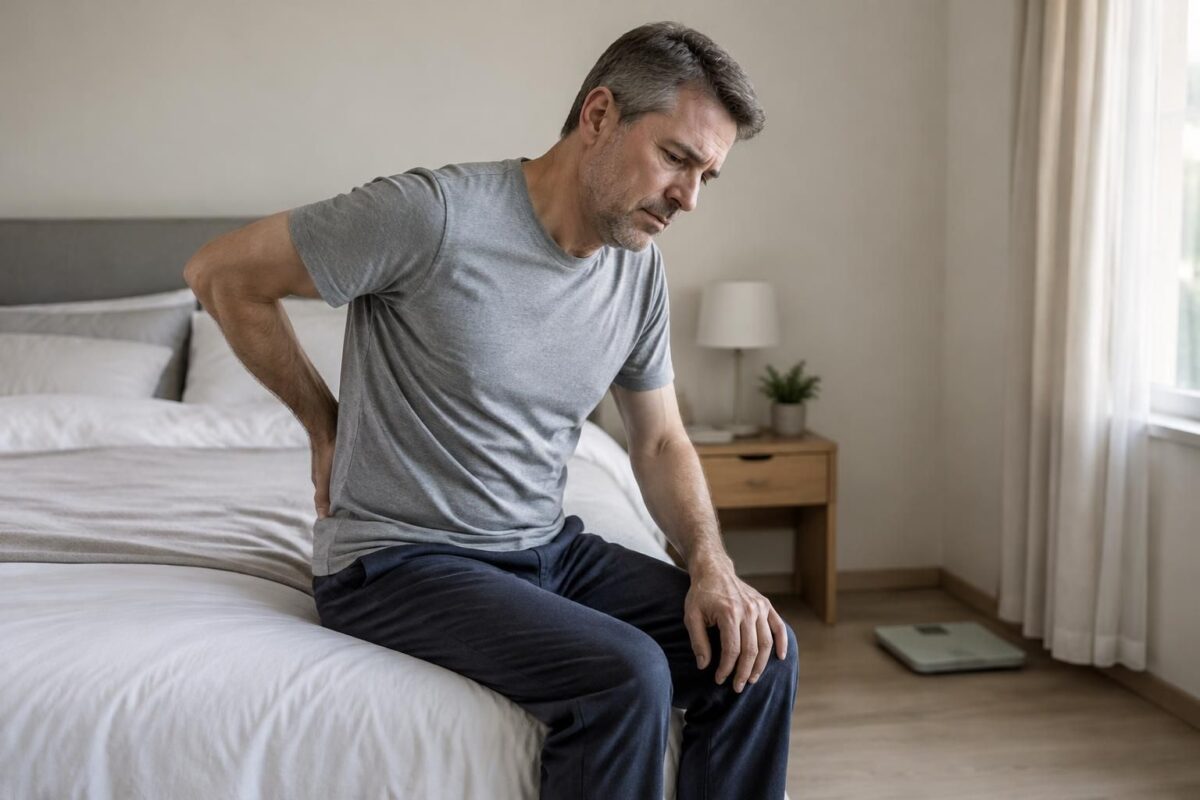
Sciatica and pain with unexplained weight loss
IN BRIEF Sciatica causes pain that can radiate from the lower back to the buttock and leg. Associated with unexplained weight loss, it requires medical evaluation to investigate the cause: this sign alone does not confirm a precise diagnosis. Consult…
Sciatica and loss of bowel control: a medical emergency
Sciatica refers to pain that follows the path of an irritated or compressed nerve in the lower back. It can travel from the buttock down to the thigh, calf, or foot, sometimes with tingling, numbness, or weakness. Sciatica generally does not cause loss of bowel control. However, if this loss appears alongside lower back pain or pain radiating down the leg, it should be considered a warning sign.
New difficulty in retaining stool, fecal incontinence, or loss of sensation during evacuation can signal serious nerve damage located at the base of the spine. Possible causes include cauda equina syndrome, a rare condition that may be associated with significant nerve compression, for example, in connection with a herniated disc. Only a medical examination can determine the cause; do not attempt to establish it yourself.
An urgent evaluation is particularly important if the loss of bowel control is accompanied by difficulty urinating or urinary retention, numbness around the genitals or anus—sometimes described as “saddle anesthesia”—or new or progressive weakness in one leg. Pain that escalates rapidly, involvement of both legs, or loss of sensitivity in the perineal area are also concerning.
If you lose control of your bowels with back or leg pain, go to the emergency room immediately or call emergency services. Do not wait to see if the symptom goes away, and do not make an appointment for manual therapy instead of seeking urgent medical assessment. If possible, inform the medical staff when the symptoms began, whether they are progressing, and if there are any urinary changes or weakness present. This information can help guide the evaluation.
Management depends on the cause and severity of the symptoms. The medical team may perform a neurological examination and decide if further tests are necessary. A recent loss of bowel control is not a symptom to be treated solely through exercises, manipulations, or home measures. After a medical evaluation, the relevant professionals can discuss the next steps and care appropriate to the situation.
Sylvain Desforges is an osteopath and naturopath, and the founding president of the TAGMED clinics and the ACMA association. His practice focuses particularly on managing chronic pain and integrating technologies such as spinal decompression, laser therapy, and shockwaves. His approach aims to support health and well-being through care tailored to each individual’s assessment. These approaches do not replace a medical evaluation when a warning sign is present.
About the author
Sylvain Desforges, B.Sc., D.O., N.D., Doctor of Osteopathy and Naturopath, is the founding president of TAGMED and the ACMA association. He dedicates his practice to chronic spinal pain, lower back pain, and pain associated with sciatica. At TAGMED Clinic, care may include, depending on the case, motorized neurovertebral decompression, specific osteopathy, or precision impact therapy.
Medical warning
The information published is provided for educational purposes and does not replace a consultation, diagnosis, advice, or treatment performed by a physician or another licensed healthcare professional. The author is neither a doctor nor a specialist in a medical specialty recognized by the College of Physicians of Quebec. In the event of loss of urinary or bowel control, anesthesia in the saddle area, significant or progressive weakness, fever, recent trauma, or rapid worsening, consult a physician or an emergency service without delay.

Sciatica and pain with fever: why consult?
IN BRIEF Sciatica with pain and fever deserves a medical evaluation: fever is not usual in simple sciatica and may signal an infection or another problem requiring care. Consult promptly, especially if the pain is intense or worsening. In cases…
Loss of bowel control: a medical emergency
A sciatica accompanied by a loss of bowel control can signal serious nerve compression in the lower back. This is a situation that requires immediate medical evaluation: go to the emergency room or call 911, without waiting for symptoms to improve.
If you have pain that radiates from the lower back down to the leg, a new difficulty in controlling bowel movements, or a loss of sensation around the genitals and anus, it could be a cauda equina syndrome. This rare nerve impairment can also cause urinary issues, numbness in the so-called “saddle” area, or significant weakness in the legs. Do not attempt to manage these signs solely at home and do not delay care to make an appointment at the clinic.
Sciatic pain can have several causes, including a lumbar disc herniation that may irritate a nerve root. To understand these mechanisms, you can consult the articles on the link between sciatica and lumbar disc herniation and on chemical irritation of a nerve root. However, this information does not rule out an emergency: loss of bowel control requires immediate evaluation.
A pain that wakes you up at night, pain that radiates from the lower back to the leg, or numbness in the foot also deserve appropriate attention, especially if they worsen or are accompanied by weakness. Additional information is available on sciatica and pain that wakes you up, pain radiating from the lower back to the leg in Terrebonne, and numbness in the foot associated with sciatica. In the presence of loss of bowel control, the priority remains emergency services.
About the author
Sylvain Desforges, B.Sc., D.O., N.D., Doctor of Osteopathy and naturopath, is the founding president of TAGMED and of the ACMA association. He dedicates his practice to chronic spinal pain, low back pain, and pain consistent with sciatica, especially when the pain radiates down to the buttock, leg, calf, foot, or toes.
Through SOS Sciatique, he publishes educational content on the symptoms of sciatica, possible causes such as disc herniation, disc pinching, foraminal stenosis, or irritation of a lumbar nerve root, as well as on non-surgical approaches that may be considered based on the evaluation. At the TAGMED Clinic, care may include, depending on the case, motorized neurovertebral decompression, specific osteopathy, or precision impactor.
For an assessment related to sciatica treatment in Montreal / Mont-Royal or sciatica treatment in Terrebonne, consult the services available at the TAGMED Clinic. In case of loss of bowel control, significant or progressive weakness, or numbness in the saddle area, first contact emergency services.
Medical disclaimer
The information published on SOS Sciatique is provided for educational purposes and does not replace a consultation, diagnosis, opinion, or treatment performed by a physician or another licensed healthcare professional. The author of this article is neither a physician nor a specialist in a medical specialty recognized by the Collège des médecins du Québec. The approaches of osteopathy, manual medicine, or functional support described on this site do not constitute medical acts and are not intended to replace medical follow-up.
Consult a physician or emergency service in case of loss of urinary or bowel control, anesthesia in the saddle area, significant or progressive weakness of the leg or foot, fever, recent trauma, severe pain, or rapid worsening. For more details, please read our Legal notice.

Sciatica and pain after trauma: warning sign
IN BRIEF A sciatica after trauma is pain that starts from the lower back or buttock and can radiate down the leg after a fall or impact. An assessment helps to investigate the cause and determine the appropriate course of…

Sylvain Desforges, B.Sc., D.O., N.D., docteur en ostéopathie
Dr Sylvain Desforges, B.Sc., D.O., N.D., osteopath, is the founding president of TAGMED and of the ACMA association. He dedicates his practice to chronic spinal pain, low back pain and symptoms compatible with sciatica, particularly when pain radiates toward the buttock, leg, calf, foot or toes.
Through SOS Sciatique, he publishes educational content on sciatica symptoms, possible causes such as disc herniation, disc narrowing, foraminal stenosis or irritation of a lumbar nerve root, as well as non-surgical approaches that may be considered according to the evaluation. At Clinique TAGMED, care may include, depending on the case, motorized neurovertebral decompression, specific osteopathic care or precision percussion.
For an evaluation related to sciatica treatment in Montreal / Mount Royal or sciatica treatment in Terrebonne, please consult the services available at Clinique TAGMED.
Medical disclaimer
The information published on SOS Sciatique is provided for educational purposes only and does not replace a consultation, diagnosis, opinion or treatment provided by a physician or another authorized healthcare professional. The author of this article is neither a medical doctor nor a specialist in a medical specialty recognized by the Collège des médecins du Québec. The osteopathic, manual medicine or functional support approaches described on this site do not constitute medical acts and are not intended to replace medical follow-up.
Consult a physician or emergency service in cases of loss of bladder or bowel control, anesthesia in the saddle area, significant or progressive weakness in the leg or foot, fever, recent trauma, severe pain or rapid worsening of symptoms. For more details, please read our Legal Notice.