


Sciatica in Terrebonne: pain worsened by flexion and disc-related cause
21/11/2026
Disc bulge and narrowed foramen
21/11/2026
IN BRIEF Sciatica causes pain that can radiate from the lower back down to the leg. With a history of cancer, new, persistent, or worsening pain should be quickly evaluated by a healthcare professional: its cause must be identified before considering treatment. Consult immediately in case of progressive weakness, fever, or urinary or bowel issues. |
Pain resembling sciatica in a person with a history of cancer warrants <strong careful medical evaluation. It can have various causes: do not assume it is related to cancer, but promptly inform a healthcare professional of this history, especially if the pain is new, persistent, worsening, or occurs at rest or at night.
Consult immediately in case of progressive weakness in the leg, loss of bladder or bowel control, or numbness in the saddle area. This information is educational and does not replace a medical evaluation.
A sciatica that appears in a person with a history of cancer requires a rapid medical evaluation. The pain may have a common cause, such as nerve irritation, but a history of cancer requires checking that it is not related to bone or spinal injury. Certain signs, such as progressing weakness or loss of bladder control, necessitate urgent care.
Sciatica refers to pain that follows the path of the sciatic nerve, often from the lower back to the buttock and leg. Irritation of a nerve root can be the cause. However, in a person with a history of cancer, new or different pain should be reported to a healthcare professional, even if it resembles previously experienced sciatica.
A history of cancer does not mean the pain is cancer-related. However, it is an essential factor for evaluation. The healthcare professional will consider the type of cancer, treatments received, date of diagnosis, and progression of symptoms. They will decide if tests, such as imaging, are necessary.
Why a Medical Evaluation is Important
Some cancers can affect the bones or structures near the spine. An injury in this area can sometimes irritate or compress a nerve root. Only a qualified professional can diagnose the cause of pain and select appropriate tests.
Inform the professional of any history of cancer before beginning manual treatment or other approaches. It is particularly important to consult them if the pain is new, persistent, worsens, or does not resemble previous episodes. Do not delay a medical evaluation to try a treatment intended for routine sciatica.
Signs that Require Prompt Attention
Seek medical advice promptly if back or leg pain is accompanied by unexplained weight loss, constant pain at rest or during the night, or gradual worsening. These signs do not confirm a cancer-related injury but should be evaluated. You can refer to our article on sciatica and pain with unexplained weight loss.
Consult an emergency service immediately in case of difficulty controlling the bladder or bowels, numbness in the saddle area, or significant or progressive weakness in a leg or foot. Foot weakness may require rapid evaluation; also see the information regarding foot weakness and sciatica in Terrebonne.
To better recognize situations needing urgent care, refer to the urgent sciatica test. This educational content does not replace a medical evaluation and does not allow for diagnosis.

Sciatica and pain with general discomfort
IN BRIEF A sciatica causes pain that starts in the lower back or buttock and radiates down the leg. A general discomfort, especially if accompanied by fever or rapid worsening, should not be automatically attributed to sciatica: consult a healthcare…

Sciatica and pain with unexplained weight loss
IN BRIEF Sciatica causes pain that can radiate from the lower back to the buttock and leg. Associated with unexplained weight loss, it requires medical evaluation to investigate the cause: this sign alone does not confirm a precise diagnosis. Consult…

Sciatica and pain with fever: why consult?
IN BRIEF Sciatica with pain and fever deserves a medical evaluation: fever is not usual in simple sciatica and may signal an infection or another problem requiring care. Consult promptly, especially if the pain is intense or worsening. In cases…
What to Do Before Starting Treatment
Contact your doctor or the team overseeing your cancer follow-up. Describe the onset of the pain, its path, intensity, and any changes in strength or sensitivity. Also mention the cancer treatments you have received and any medications you are taking.
If the pain is acute or worsening, seek advice instead of waiting for it to pass. Our article on neurovertebral decompression and acute pain explains when a consultation is necessary. In the presence of a cancer history, a medical evaluation must precede any decision regarding a decompression or manual therapy approach.
The Role of Non-Surgical Approaches
A non-surgical approach may sometimes be considered after evaluating the cause of the pain and with the agreement of the relevant professionals. Neurovertebral decompression, for example, does not replace a medical assessment or the care prescribed by the cancer care team. It is not suitable for everyone or for all situations.
Neurovertebral decompression is sometimes presented as an option to discuss to limit opioid use in certain situations. This does not mean it can replace a prescribed medication or be suitable for pain related to cancer injury. Refer to our article on neurovertebral decompression and alternatives to opioids, and then discuss any treatment changes with a healthcare professional.
At the TAGMED Clinic, evaluation and care can be offered in Montreal or Terrebonne when the context permits. In case of a cancer history, any approach must consider medical advice and the individual’s health situation. The available services are presented on the TAGMED Clinic website.

Sciatica and pain after trauma: warning sign
IN BRIEF A sciatica after trauma is pain that starts from the lower back or buttock and can radiate down the leg after a fall or impact. An assessment helps to investigate the cause and determine the appropriate course of…
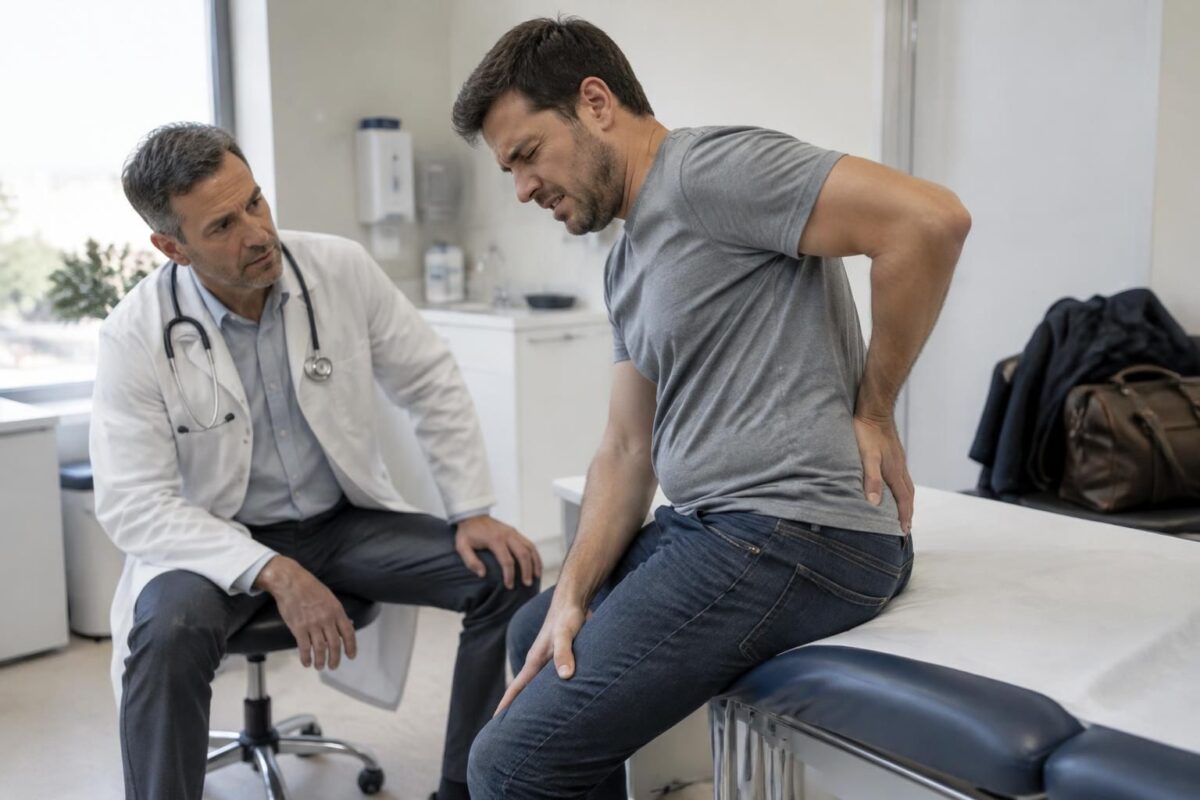
Sciatica and pain that appeared after an accident
IN BRIEF Sciatica after an accident is pain related to irritation or compression of the sciatic nerve, sometimes triggered or revealed by a fall or impact. It can start from the lower back or buttock and radiate down the leg.…

Sciatica and pain appeared after a fall
IN BRIEF A sciatic pain after a fall may stem from nerve irritation or an injury to the hip, buttock, or lower back. It can radiate down the leg and be accompanied by tingling or numbness. Rest, avoid movements that…
About the Author
Sylvain Desforges, B.Sc., D.O., N.D., Doctor of Osteopathy and Naturopath, is the founding president of TAGMED and the ACMA association. He dedicates his practice to chronic pain of the spine, lower back pain, and pain consistent with sciatica, notably when the pain radiates to the buttock, leg, calf, foot, or toes.
Through SOS Sciatique, he publishes educational content on the symptoms of sciatica, possible causes such as herniated discs, disc pinching, foraminal stenosis, or irritation of a lumbar nerve root, as well as non-surgical approaches that may be considered based on the evaluation. At the TAGMED Clinic, care may include, depending on the case, motorized neurovertebral decompression, specific osteopathy, or precision impact therapy.
For an evaluation related to sciatica treatment in Montreal or Mont-Royal or sciatica treatment in Terrebonne, consult the available services at the TAGMED Clinic.
Medical Warning
The information published on SOS Sciatique is provided for educational purposes and does not replace a consultation, diagnosis, opinion, or treatment performed by a physician or another licensed healthcare professional. The author of this article is neither a physician nor a specialist in a medical specialty recognized by the Collège des médecins du Québec. The approaches of osteopathy, manual medicine, or functional support described on this site do not constitute medical acts and are not intended to replace medical follow-up.
Consult a physician or an emergency service in case of loss of bladder or bowel control, anesthesia in the saddle region, significant or progressive weakness of the leg or foot, fever, recent trauma, severe pain, or rapid deterioration. For more details, please read our Legal Notice.
Medical disclaimer: The information and advice provided on this site do not replace the opinion, diagnosis, or treatment of a healthcare professional. Please note that Sylvain Desforges, B.Sc., D.O., N.D., doctor of osteopathy, is neither a doctor of medicine nor a physician, and is not a specialist in a medical specialty as defined by the Collège des médecins du Québec. Manual medicine, functional medicine, and sports medicine as described on this site exclude any medical treatment or diagnosis made by a physician or medical specialist. Always consult your doctor for any medical questions. For more details, please read our Complete Legal Notice.
To report quickly
- History of cancer and new pain in the back or leg.
- Persistent, unusual pain that worsens or disrupts sleep.
- Unexplained weight loss or marked fatigue associated.
- New symptoms despite usual management.
When to seek urgent help
- Significant or progressive weakness of the leg or foot.
- Loss of bladder or bowel control, or numbness in the saddle region.
- Fever, severely altered general condition, or rapid worsening of pain.
- If you experience these signs, contact a healthcare professional or emergency service quickly.

Any pain resembling sciatica in a person with a history of cancer warrants careful medical evaluation, especially if it is new, persistent, or different from usual pain. Nerve irritation or a disc problem remains possible, but the oncological history must be reported to the healthcare professional so they can determine if further examinations are necessary before any treatment.
Why a history of cancer changes the approach
Sciatica generally refers to pain that starts in the lower back or buttock and radiates down the leg, sometimes to the foot. It can be associated with irritation of a nerve root, particularly in the presence of a herniated disc or stenosis. However, in a person with a history of cancer, it is essential not to automatically attribute these symptoms to a mechanical cause.
In some cases, spinal pain may require investigation to rule out involvement related to cancer or its treatment. This does not mean that every case of sciatica indicates a recurrence: common causes remain possible. It is the complete medical history, clinical examination, and, if necessary, the examinations prescribed by a physician that guide the decision.
When to seek medical advice quickly
Signs that require immediate evaluation
Contact a physician quickly if the pain is new, progressive, constant, or particularly intense, if it regularly wakes you at night, or if it does not vary with movements and positions. Also report unexplained weight loss, unusual fatigue, fever, or pain that appears after trauma, even modest.
Worsening weakness in the leg or foot, new difficulty walking, significant loss of sensation, or pain associated with active or recently treated cancer also require special attention. In case of loss of bladder or bowel control, numbness in the saddle region, or severe and rapidly progressive weakness, go to the emergency room.
Useful steps before considering treatment
During the consultation, provide information about the type of cancer, the diagnosis period, treatments received, and relevant dates. Mention ongoing treatments, recent examinations, and any changes in symptoms. Specify where the pain starts, how far it radiates, what exacerbates or relieves it, as well as the presence of tingling or numbness.
The healthcare professional will decide whether a clinical examination is sufficient or if imaging or other investigations are indicated. This step helps to choose an appropriate management approach and avoid inappropriate interventions. Do not delay evaluation by only trying exercises, manipulations, or self-treatments when the pain is new or unusual.
Caution with non-surgical approaches
Once the causes requiring medical attention are evaluated, appropriate measures can be considered based on your situation. Manual care or functional support should take into account your history, current state, and the recommendations of your healthcare team. A serious approach begins with an assessment and does not promise guaranteed results.
Medical warning: this content is provided for educational purposes and does not replace a consultation, diagnosis, or treatment by a doctor or other licensed healthcare professional. The author is neither a doctor nor a specialist in a recognized medical specialty. Osteopathy or manual therapy approaches do not replace medical follow-up.
| Marker | Cautious conduct |
|---|---|
| History of cancer | Report it to the healthcare professional, even if it’s old. |
| New or unusual pain | Request a quick medical evaluation. |
| Pain that worsens or persists at rest | Do not assume it is ordinary sciatica. |
| Persistent nighttime pain | Report it quickly to a doctor. |
| Progressive weakness or numbness | Consult without delay. |
| Loss of bladder or bowel control, or saddle anesthesia | Go to the emergency room immediately. |
| Before any manual therapy | First clarify the cause of the pain. |
Illustrative testimonies: sciatica and history of cancer, caution above all
The stories below are fictitious and serve only to illustrate possible situations. They do not represent real patients and do not allow for a diagnosis. When pain reminiscent of sciatica occurs in a person who has had cancer, it is important not to assume that it is simply muscular or related to a disc issue: a medical evaluation is necessary.
“The pain was radiating down my leg, and I had already had cancer.” In this fictitious example, a person notes lower back pain radiating to the buttock and leg. Due to their history, they quickly communicate with their medical team rather than beginning care without professional advice. This approach allows for determining the appropriate tests or follow-up before considering a relief approach.
“I thought it was usual sciatica, but the pain had changed.” This fictitious account illustrates the importance of reporting new, persistent, or different pain from previous symptoms, especially after cancer. A healthcare professional can consider the medical history, symptom progression, and associated signs to decide on the course of action.
“I sought advice before resuming my exercises.” In this fictitious example, a person who had cancer feels sharp pains in the lower back and leg after a period of activity. Before modifying their exercises or receiving manual treatment, they check with their doctor if an evaluation is necessary. Exercises and care must be tailored to the situation and do not replace medical follow-up.
A history of cancer does not automatically mean that the pain is related to cancer. However, lower back pain or pain that radiates down the leg should be evaluated carefully in this context. Mention your previous diagnosis, treatments received, medications taken, and any recent changes in your symptoms to your healthcare professional.
Consult a doctor quickly if the pain is severe, worsens rapidly, or is accompanied by new or progressive weakness in the leg, loss of bladder or bowel control, numbness in the saddle area, fever, or unusual general condition. In the case of severe or sudden symptoms, contact emergency services.
About the author
Sylvain Desforges, B.Sc., D.O., N.D., is a Doctor of Osteopathy and Naturopath. His practice focuses on chronic spinal pain and pain that may suggest sciatica.
Medical warning: this content is provided for educational purposes and does not replace a consultation, diagnosis, or treatment by a doctor or other licensed healthcare professional. The author is neither a doctor nor a specialist in a recognized medical specialty. Osteopathy, manual therapy, or functional support approaches do not replace medical follow-up.
Sciatica and pain with a history of cancer: essential caution
Sylvain Desforges, B.Sc., D.O., N.D., Doctor of Osteopathy and Naturopath, is the founding president of TAGMED clinics and the ACMA association. His career is dedicated to innovation in health and supporting individuals living with persistent pain, particularly in the spinal area. His practice focuses on manual and functional approaches as well as the integration, when appropriate, of technologies such as neurovertebral decompression, laser, or shock waves.
Pain radiating from the lower back into the buttock or leg may suggest sciatica, which refers to pain consistent with the irritation of a nerve root. However, this type of symptom alone does not determine the cause. A herniated disc, narrowing of nerve openings, or other musculoskeletal issues may be considered, but the evaluation must take the entire clinical picture into account.
Caution is particularly important when a person has previously received a cancer diagnosis. New, persistent, unusual, or worsening pain merits medical evaluation, even if it resembles previously known sciatica. One should not assume it is merely related to mechanical irritation or a disc issue. The healthcare professional can examine the symptoms, history, and treatments received, and then decide whether further examinations are necessary.
Certain factors should be reported quickly to the doctor: pain that does not improve or worsens, significant pain at rest or at night, unexplained weight loss, unusual fatigue, or any other concerning change. These signs do not confirm a specific cause, but they warrant appropriate clinical attention, especially in the presence of a cancer history. Cancer treatments and their effects can also influence sensitivity, strength, balance, or tolerance to certain interventions.
Before undertaking manual therapy, neurovertebral decompression, laser treatment, or shockwave therapy, it is essential to clarify the situation. A safe approach takes into account the known diagnosis, current or recent treatments, medications, and recommendations from the medical team. Interventions must be chosen on a case-by-case basis; they do not replace the investigation of unexplained pain or follow-up by a doctor or oncologist.
His approach prioritizes an individualized assessment and information based on available data. The goal is to help determine which non-surgical options may be considered, without promising results and without delaying necessary medical care. Collaboration with the professionals following the person is particularly important when pain occurs in the context of past or present cancer.
Medical warning: this content is provided for educational purposes and does not replace a consultation, diagnosis, or treatment by a doctor or other licensed health professional. The author is neither a physician nor a specialist in a medical specialty recognized by the Collège des médecins du Québec. In case of loss of bladder or bowel control, numbness in the saddle area, significant or progressive weakness, fever, recent trauma, severe pain, or rapid worsening, consult a doctor or emergency service without delay.
A pain that resembles sciatica warrants particular caution when there is a history of cancer. It may have a common cause, such as nerve irritation, but it is important to have any new, persistent, or unusual pain evaluated by a healthcare professional, who will determine if examinations are necessary.
History of cancer: do not trivialize new pain
A lower back pain that radiates into the buttock or leg does not, by itself, indicate a return of cancer. However, the medical history changes the context of the assessment. Inform the consulted professional of the type of cancer, treatments received, their dates, and any ongoing follow-up. Also mention if the pain is different from your previous episodes, worsening, or persisting despite usual measures.
A pain that appears at rest or at night, that progresses, or that is accompanied by unusual fatigue, unexplained weight loss, or other new symptoms should be reported without delay. These elements alone do not allow for a diagnosis, but they can guide the decision to proceed with an examination or further investigations. To better describe the activities that worsen the symptoms, see also how to recognize a poorly tolerated activity in cases of sciatica.
When to seek an evaluation
Seek medical advice quickly if the pain is new, unusual, persistent, or worsening, especially if your cancer has been diagnosed or treated recently. A sciatica that does not resolve also deserves reevaluation rather than prolonged management without clarification of its cause. Depending on your situation, the professional may coordinate the evaluation with the team providing your oncological follow-up.
Consult an emergency service immediately in case of loss of bladder or bowel control, numbness in the saddle area, significant or progressive weakness in a leg or foot, or rapid worsening. A new difficulty climbing on tiptoe, for example, should be reported quickly; the content on S1 sciatica and difficulty climbing on tiptoe describes this sign. A persistent sensation of a numb foot or one accompanied by weakness also warrants a consultation, as explained on the page regarding the numb foot sensation and when to consult.
If you reside in the area, a personalized evaluation in Terrebonne can help determine the next steps, but it does not replace a medical consultation when a history of cancer or warning signs make it necessary. Any care approach must be chosen after an assessment tailored to your health status and coordinated with the professionals who follow you.

Sciatica and pain that occurred after a wrong move
IN BRIEF A sciatica that appeared after a sudden movement corresponds to a lower back pain that can radiate into the buttock and leg, sometimes down to the foot. The movement may trigger or worsen the symptoms, without revealing the…
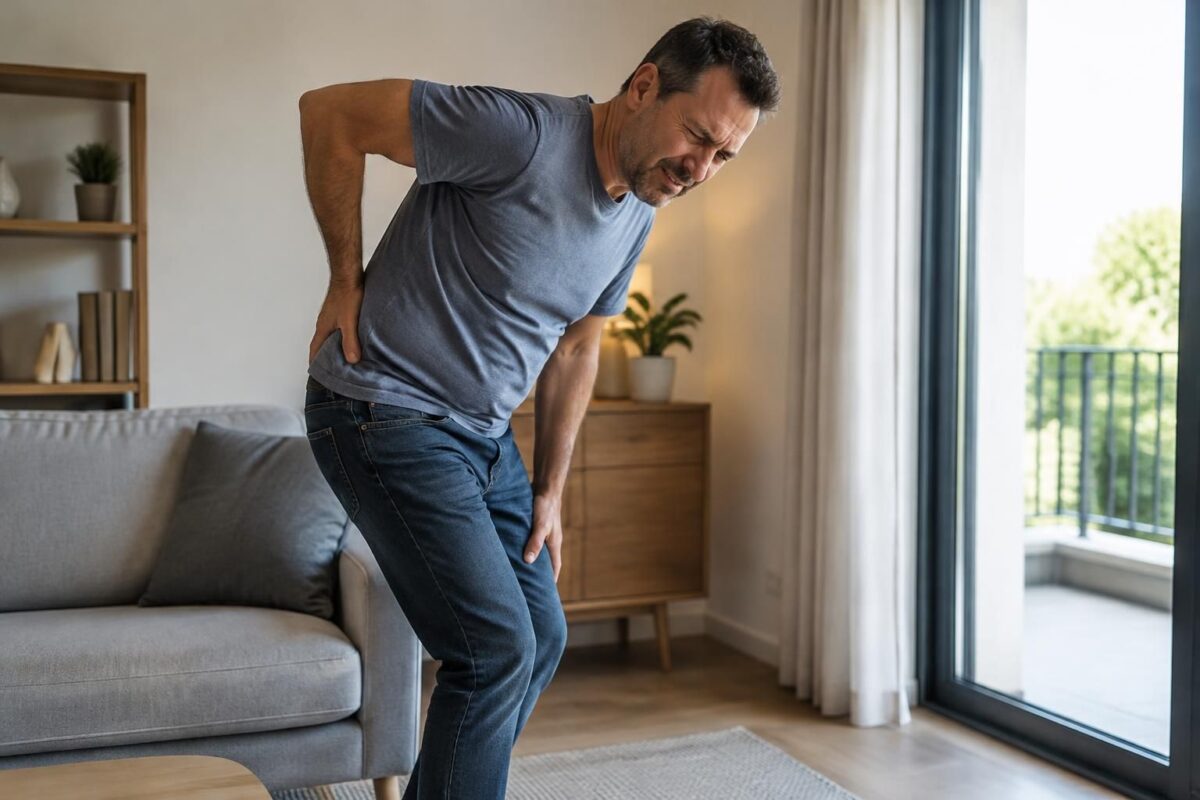
Sciatica and pain that appeared suddenly
IN BRIEF A sudden onset sciatica is pain that radiates from the buttock down the leg, sometimes to the foot, and may be accompanied by burning or tingling sensations. It can be related to lumbar nerve irritation or, at times,…

Sylvain Desforges, B.Sc., D.O., N.D., docteur en ostéopathie
Dr Sylvain Desforges, B.Sc., D.O., N.D., osteopath, is the founding president of TAGMED and of the ACMA association. He dedicates his practice to chronic spinal pain, low back pain and symptoms compatible with sciatica, particularly when pain radiates toward the buttock, leg, calf, foot or toes.
Through SOS Sciatique, he publishes educational content on sciatica symptoms, possible causes such as disc herniation, disc narrowing, foraminal stenosis or irritation of a lumbar nerve root, as well as non-surgical approaches that may be considered according to the evaluation. At Clinique TAGMED, care may include, depending on the case, motorized neurovertebral decompression, specific osteopathic care or precision percussion.
For an evaluation related to sciatica treatment in Montreal / Mount Royal or sciatica treatment in Terrebonne, please consult the services available at Clinique TAGMED.
Medical disclaimer
The information published on SOS Sciatique is provided for educational purposes only and does not replace a consultation, diagnosis, opinion or treatment provided by a physician or another authorized healthcare professional. The author of this article is neither a medical doctor nor a specialist in a medical specialty recognized by the Collège des médecins du Québec. The osteopathic, manual medicine or functional support approaches described on this site do not constitute medical acts and are not intended to replace medical follow-up.
Consult a physician or emergency service in cases of loss of bladder or bowel control, anesthesia in the saddle area, significant or progressive weakness in the leg or foot, fever, recent trauma, severe pain or rapid worsening of symptoms. For more details, please read our Legal Notice.