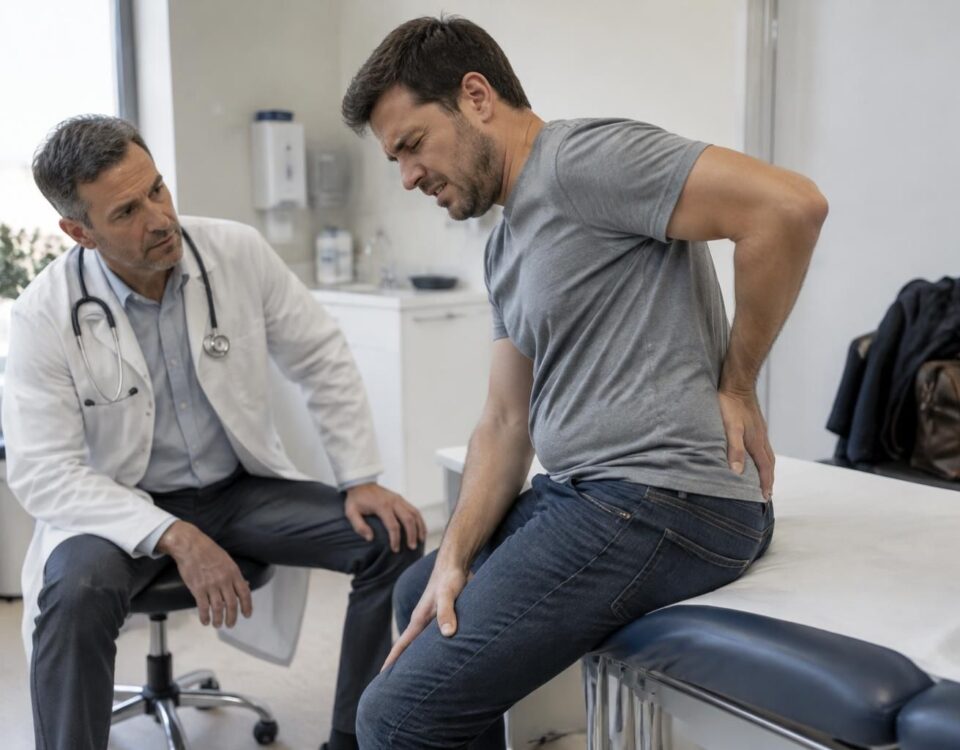


Sciatica in Terrebonne: disc herniation with leg weakness
18/11/2026
Sciatica and dressing: daily gestures to adapt
18/11/2026
IN BRIEF A sciatica after trauma is pain that starts from the lower back or buttock and can radiate down the leg after a fall or impact. An assessment helps to investigate the cause and determine the appropriate course of action. Consult a healthcare professional quickly; if there is significant or progressive weakness, loss of bowel or bladder control, or numbness in the saddle area, go to the emergency room. |
After a fall or accident, pain that radiates from the buttock down the leg may suggest sciatica, but trauma requires special attention. Consult a healthcare professional quickly, especially if the pain is intense or worsening, or if you have progressive weakness in the leg or foot. Loss of bowel or bladder control, numbness in the saddle area, or new difficulty walking warrant an urgent evaluation.
Medical Warning: this summary is informational and does not replace an assessment by a healthcare professional.
A type of sciatica pain that appears after a fall, car accident, or other trauma deserves special attention. The trauma may irritate a nerve root or cause another injury, but only an authorized professional can determine the cause. Rapid evaluation is necessary if the pain is intense, worsening, or accompanied by significant weakness, numbness, or changes in urinary or bowel habits.
Sciatica refers to pain that follows the path of a nerve root, often from the lower back or buttock down to the leg. After a traumatic event, this type of pain may appear immediately or develop in the hours or days following.
Pain radiating down the leg does not, by itself, confirm a specific injury. An impact may irritate a nerve root, but it can also cause a muscle injury, fracture, or another problem. A medical examination helps to assess the situation and decide if further tests are necessary.
When should you consult quickly after an impact?
Consult a doctor or emergency service quickly if the trauma was significant, if the pain is severe, or if it is worsening. An evaluation is also important after a fall or accident if you have osteoporosis, are taking anticoagulants, or have a condition that weakens the bones.
Seek urgent medical assistance in cases of loss of bowel or bladder control, numbness in the saddle area, significant or progressive weakness in the leg or foot, or new difficulty walking. These signs may indicate a condition that requires immediate evaluation.
A fever, recent trauma with significant pain, or rapid deterioration also warrant medical advice. To learn more about signs that require evaluation, refer to our article on severe sciatica and warning signs.
Why can pain radiate down the leg?
A lumbar nerve root can be irritated or compressed. The pain may then originate from the lower back or buttock and radiate down the thigh, calf, or foot. It may be accompanied by tingling, numbness, or a sense of weakness.
A herniated disc might be among the possible causes, but it is not the only explanation. The context of the trauma, symptoms, and examination guide the assessment. The article Sciatica from a herniated disc in Montreal: why the pain radiates down the leg explains the possible link between disc irritation and pain radiating down the leg.
Numbness and weakness of the foot
Numbness of the foot after trauma must be reported to the professional evaluating you. Weakness of the foot, difficulty lifting it, or a loss of strength that progresses requires quick attention. These symptoms alone do not identify the cause, but they help in guiding the examination.
You might also read this article on sciatica in Terrebonne and foot numbness associated with a herniated disc. It does not replace an evaluation, especially when symptoms began after an impact.

Sciatica and pain with general discomfort
IN BRIEF A sciatica causes pain that starts in the lower back or buttock and radiates down the leg. A general discomfort, especially if accompanied by fever or rapid worsening, should not be automatically attributed to sciatica: consult a healthcare…

Sciatica and pain with a history of cancer: caution
IN BRIEF Sciatica causes pain that can radiate from the lower back down to the leg. With a history of cancer, new, persistent, or worsening pain should be quickly evaluated by a healthcare professional: its cause must be identified before…
Sciatica and pain with unexplained weight loss
IN BRIEF Sciatica causes pain that can radiate from the lower back to the buttock and leg. Associated with unexplained weight loss, it requires medical evaluation to investigate the cause: this sign alone does not confirm a precise diagnosis. Consult…
How does the evaluation proceed after trauma?
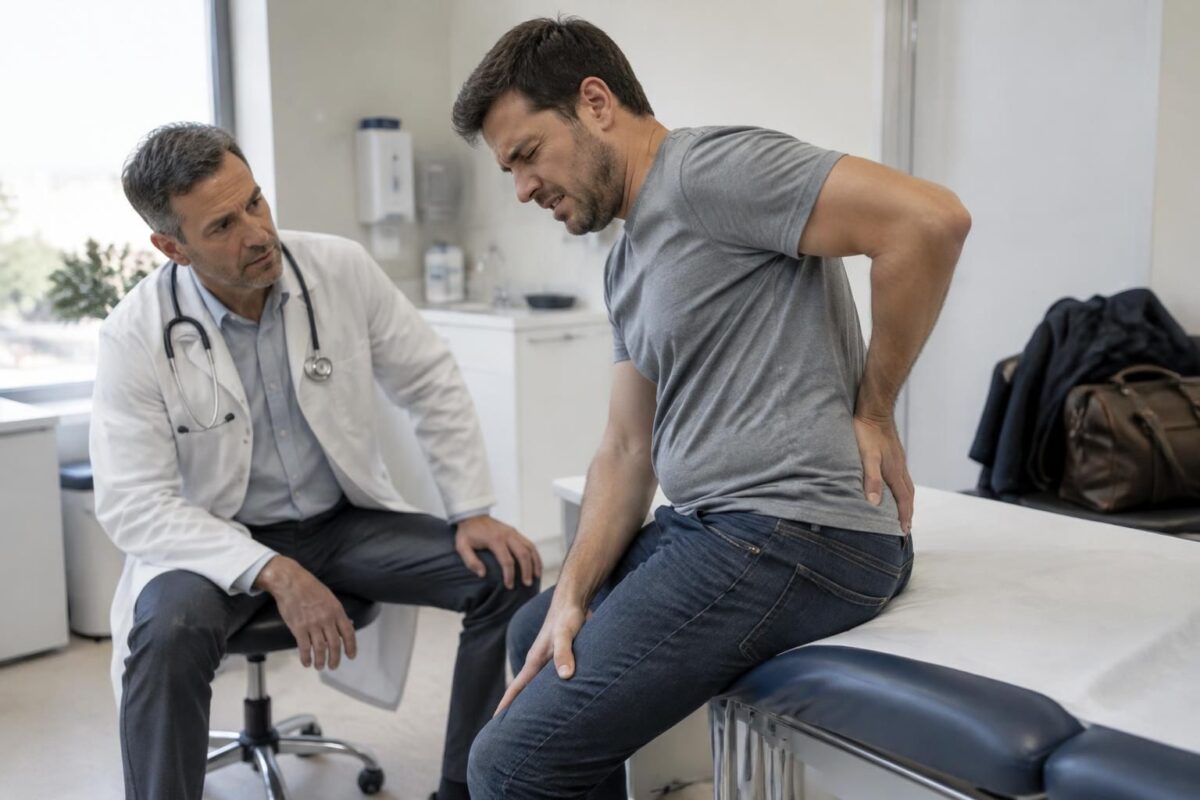
The healthcare professional will ask you about the mechanism of the impact, when the pain started, and its progression. They will also check symptoms in the leg, sensitivity, strength, and walking ability. Depending on the results and context, a doctor may request imaging tests.
Imaging is not necessary in all cases. The doctor assesses its usefulness based on the severity of the trauma, observed signs, and risk factors. Do not attempt to determine yourself whether pain is due to a herniated disc or another injury.
To understand the main issues related to lumbar roots and management options in Terrebonne, refer to Sciatica in Terrebonne: lumbar roots and choosing a cautious treatment.

Sciatica and pain with fever: why consult?
IN BRIEF Sciatica with pain and fever deserves a medical evaluation: fever is not usual in simple sciatica and may signal an infection or another problem requiring care. Consult promptly, especially if the pain is intense or worsening. In cases…
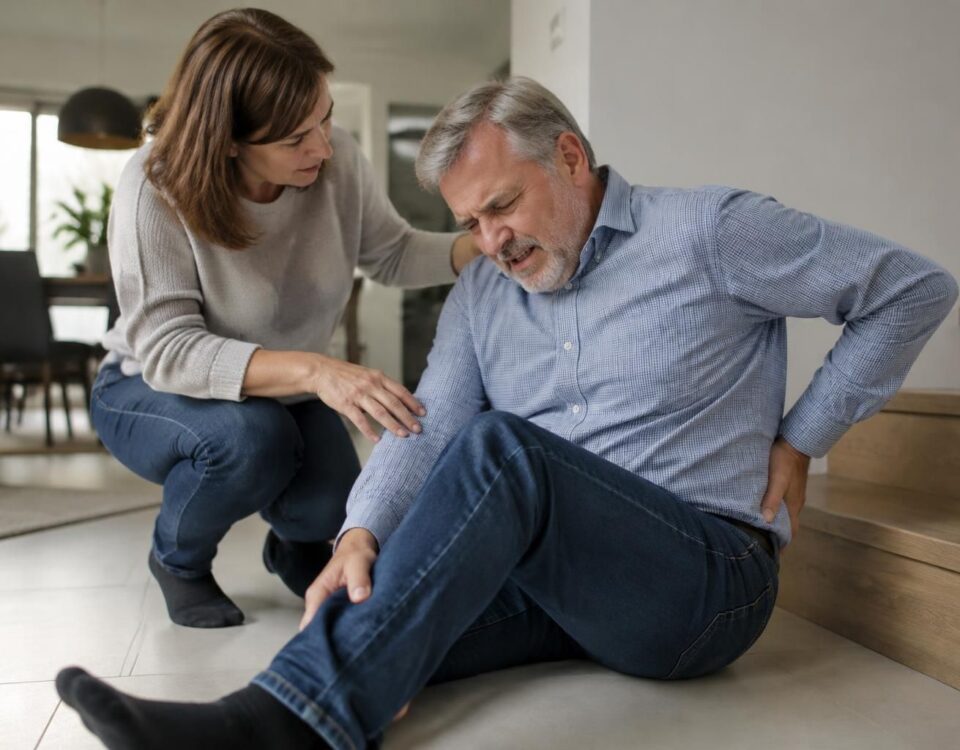
Sciatica and pain that appeared after an accident
IN BRIEF Sciatica after an accident is pain related to irritation or compression of the sciatic nerve, sometimes triggered or revealed by a fall or impact. It can start from the lower back or buttock and radiate down the leg.…
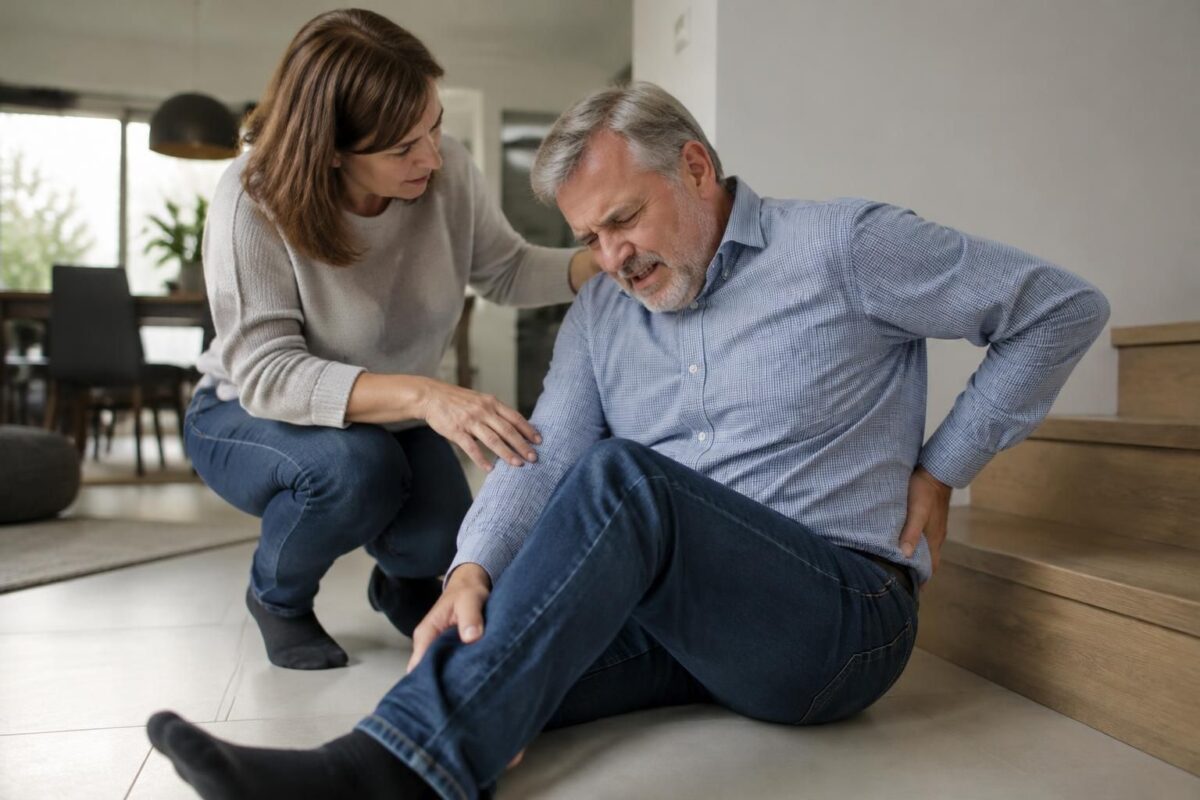
Sciatica and pain appeared after a fall
IN BRIEF A sciatic pain after a fall may stem from nerve irritation or an injury to the hip, buttock, or lower back. It can radiate down the leg and be accompanied by tingling or numbness. Rest, avoid movements that…
Choosing a cautious management approach
After trauma, the priority is to rule out an injury that requires medical care. Avoid resuming activities that significantly worsen the pain and do not start manipulation or treatment before receiving advice tailored to your situation.
Once the medical evaluation is done, management options depend on the cause, symptoms, and their progression. If a herniated disc is suspected, the article Sciatica and herniated disc in Terrebonne: understanding the connection presents general guidelines to consider.
The TAGMED Clinic offers services in Montreal and Terrebonne. Depending on the evaluation and the person’s history, care may include specific osteopathy or motorized neurovertebral decompression. These approaches do not replace a medical examination and are not suitable for all cases. After trauma, first seek medical advice if the pain is strong, if an injury is possible, or if a warning sign is present.
To consult the available services, visit the Clinique TAGMED, or inquire about sciatica treatment in Montreal / Mont-Royal and sciatica treatment in Terrebonne.
Medical Disclaimer: The information and advice provided on this site do not replace the opinion, diagnosis, or treatment of a healthcare professional. Please note that Sylvain Desforges, B.Sc., D.O., N.D., doctor of osteopathy, is neither a medical doctor nor a physician and is not a specialist in a medical specialty as defined by the Collège des médecins du Québec. Manual medicine, functional medicine, and sports medicine as described on this site exclude any medical treatment or diagnosis performed by a doctor or a medical specialist. Always consult your physician for any medical questions. For more details, please read our complete Legal Notice.
About the Author
Sylvain Desforges, B.Sc., D.O., N.D., Doctor of Osteopathy and naturopath, is the founding president of TAGMED and of the ACMA association. He dedicates his practice to chronic pain of the spine, lower back pain, and pain associated with sciatica, particularly when the pain radiates down to the buttock, leg, calf, foot, or toes.
Through SOS Sciatique, he publishes educational content on the symptoms of sciatica, its possible causes — such as disc herniation, disc bulging, foraminal stenosis, or irritation of a lumbar nerve root — and non-surgical approaches that may be considered depending on the assessment. At Clinique TAGMED, care may include, depending on the case, motorized neurovertebral decompression, specific osteopathy, or precision percussion therapy.
Medical Warning
The information published on SOS Sciatique is provided for educational purposes and does not replace a consultation, diagnosis, opinion, or treatment performed by a physician or another authorized healthcare professional. The author of this article is neither a physician nor a specialist in a medical specialty recognized by the Collège des médecins du Québec. The approaches of osteopathy, manual medicine, or functional support described on this site do not constitute medical acts and are not intended to replace medical follow-up.
Consult a physician or an emergency service in case of loss of bladder or bowel control, numbness in the saddle area, significant or progressive weakness in the leg or foot, fever, recent trauma, severe pain, or rapid deterioration. For more details, please read our Legal Notice.
Warning Signs
What to do

After a trauma, pain that radiates from the lower back to the buttock or leg may indicate nerve irritation, but it should not be automatically considered as simple sciatica. The nature of the impact, the intensity of the symptoms, and their evolution guide the course of action. Certain signs require urgent medical evaluation, while persistent pain warrants an appropriate assessment before considering care.
After a shock, rapidly assess the situation
A fall, a car accident, a sports impact, or lifting a load can cause lower back pain with radiation into the leg. A muscle strain or irritation of a nerve root is possible, but trauma can also lead to an injury requiring medical examinations. It is particularly important to seek advice quickly if the impact has been significant, if the pain is intense, or if the person has osteoporosis, is taking anticoagulant medications, or is of advanced age.
Signs that warrant an emergency
Go to the emergency room or contact emergency services in case of loss of bladder or bowel control, new difficulty urinating, or numbness in the saddle area — around the genital organs and inside the thighs. These symptoms may indicate significant nerve compression and require immediate attention.
Significant or worsening weakness in a leg or foot is also a warning sign, particularly if the person trips, cannot lift their foot, or has marked difficulty walking. After a trauma, very intense pain, deformity, inability to bear weight, or new loss of sensitivity also justify an immediate evaluation.
Monitor symptoms and their evolution
A quick medical consultation is recommended if the pain appears after a significant impact, increases instead of improving, or is accompanied by fever, general malaise, or unexplained weight loss. Pain radiating below the knee, tingling, and numbness may accompany sciatica, but their presence alone does not allow for determining the cause. A healthcare professional will clarify whether examinations or follow-up are necessary.
What is better to avoid
Do not attempt to force stretches, resume intense activity, or manipulate the painful area to “realign” the back. Also avoid masking severe pain with medications without first checking their relevance with a professional, especially in cases of medical history or taking other treatments. While waiting for advice, prioritize gentle movements only if they are tolerated and stop any activity that significantly worsens the symptoms.
Choose appropriate support
When emergency signs have been ruled out and appropriate advice has been obtained, support can help organize the resumption of activities based on the situation. An evaluation should consider the trauma, pain, strength, and sensitivity of the leg, as well as any treatments already received. Manual therapy or functional approaches do not replace a medical diagnosis and may not be suitable for all cases. If the pain persists or evolves, seek reassessment rather than continuing treatment without follow-up.
| Sign after trauma | Action to take |
|---|---|
| Loss of control over bladder or bowels | Medical emergency: go to the emergency room immediately. |
| Numbness between the legs or around the genitals | Medical emergency: get evaluated without delay. |
| Significant or worsening weakness in the leg or foot | Consult quickly; emergency if weakness progresses. |
| Intense pain after a fall or accident | Seek medical evaluation, especially if the pain worsens. |
| Fever, malaise or rapid worsening | Consult a healthcare professional quickly. |
| Recent trauma with pain radiating down the leg | Evaluate the pain to determine its cause and appropriate action. |
Sciatica and pain after trauma: warning signs to take seriously
The testimonials below are fictional examples for educational purposes. They do not describe real patients and do not allow for a diagnosis. After a fall, accident, or impact, pain radiating down the buttock or leg deserves special attention, especially if accompanied by unusual signs.
“After falling down the stairs, I felt pain in my lower back that radiated down my leg. I initially thought it was just normal sciatica. Since I also had difficulty bearing weight and the pain intensified, I quickly sought medical evaluation.”
A pain that appears after trauma, particularly if it is intense or worsening, should be evaluated by a healthcare professional. It is important to specify the circumstances of the accident, the painful area, and any new symptoms. Do not assume it is just irritation of the sciatic nerve.
“After a car accident, the pain traveled from my back down to my foot. Then I noticed my leg was getting weaker. I realized that this weakness was a sign to report immediately, and I contacted a medical service.”
Significant or progressive weakness in the leg or foot after an impact requires urgent medical evaluation. Also consult quickly if there is loss of sensation that extends, new difficulty in walking, or rapid worsening of pain.
“My lower back pain after a fall was accompanied by numbness in the area between my legs and difficulty urinating. I didn’t know if these symptoms were related, but I asked for help immediately.”
A loss of control over the bladder or bowels, sudden difficulty urinating, or numbness in the saddle area are signs of emergency. Go to the emergency room immediately or call emergency services. Do not wait for a follow-up appointment or a manual therapy session.
After trauma, pain accompanied by fever, significant malaise, deformity, severe pain, or rapid worsening should also be taken seriously. When in doubt, consult a doctor or emergency service before undertaking non-urgent care.
Educational information: this content does not replace a consultation, diagnosis, or treatment by a licensed healthcare professional. Manual approaches do not replace medical evaluation when a warning sign is present.
Sciatica and pain after trauma: warning signs to recognize
Sylvain Desforges, B.Sc., D.O., N.D., Doctor of Osteopathy and Naturopath, is the founding president of TAGMED clinics and the ACMA association. His career is dedicated to managing persistent pain and integrating approaches and technologies used in functional support. He is particularly interested in lower back pain and symptoms that may suggest sciatica when pain radiates to the buttock, leg, calf, or foot.
A pain that appears after a fall, a road accident, a sports impact, or lifting a load deserves special attention. It may be related to a bruise or muscle strain, but also to a spinal injury or irritation of a nerve root. Pain radiating down the leg may be compatible with sciatica, but it does not allow for determining the cause on its own. An examination by a healthcare professional is necessary to evaluate the situation.
After trauma, monitor the intensity and progression of symptoms. Severe pain, which worsens rapidly or significantly limits movement, warrants quick medical evaluation. The same applies when pain is accompanied by new or progressive weakness in the leg or foot, difficulty walking, or persistent loss of sensation. These signs may indicate a condition requiring immediate evaluation.
Some symptoms constitute an emergency. Loss of control over the bladder or bowels, new difficulty urinating, or loss of sensation in the saddle area—around the genitals and anus—should lead to immediate contact with emergency services. Significant or rapidly progressing weakness also requires urgent care. After an impact, the presence of fever, severe pain, or rapid deterioration of overall condition also calls for medical evaluation.
In his educational content, Sylvain Desforges discusses possible causes of pain compatible with sciatica, including a herniated disc, disc pinching, foraminal stenosis, or lumbar nerve irritation. These explanations do not replace a diagnosis. After trauma, it is preferable to obtain an evaluation before undertaking manipulations, intense exercises, or treatment. The professional will take into account the mechanism of the injury, history, clinical examination, and, when indicated, further investigations.
At TAGMED Clinic, the support options are determined according to the situation and assessment. They may include specific osteopathy, motorized neurovertebral decompression, laser or shock wave therapy, if these approaches are appropriate. They do not constitute medical acts and do not replace a diagnosis or follow-up by a doctor or another authorized professional. The goal is to offer tailored support without promising results and without delaying urgent care.
Medical warning: this information is provided for educational purposes and does not replace a consultation, diagnosis, opinion, or treatment by a doctor or another authorized health professional. Sylvain Desforges is neither a doctor nor a specialist in a medical specialty recognized by the Collège des médecins du Québec. In case of urinary or intestinal incontinence, anesthesia in the saddle area, significant or progressive weakness, fever, recent trauma, or severe pain, consult a doctor or an emergency service.
After a fall or another trauma, pain that radiates from the buttock down the leg may suggest nerve irritation, but it does not alone determine the cause. The intensity, progression of symptoms, and presence of warning signs are essential to deciding on the next steps: some symptoms require rapid medical evaluation, even an emergency consultation.
After a trauma: signs that justify an evaluation
A pain that appears after a fall should be taken seriously, especially if accompanied by new or progressive weakness in the leg or foot, difficulty walking, or significant loss of sensation. Pain that rapidly worsens, becomes severe, or does not improve also warrants evaluation by a health professional. To better understand possible situations, consult our article on sciatica and pain that appears after a fall.
Some signs require immediate attention: loss of bladder or bowel control, sudden difficulty urinating, numbness in the saddle area — around the genitals and anus — or marked weakness in one or both legs. In these circumstances, do not wait for a routine appointment: contact emergency services or go to the emergency room.
A trauma can coincide with several possible causes of pain, and symptoms alone are insufficient to confirm a herniated disc or nerve compression. Pain radiating down the leg may be associated with a lumbar disk or irritation of a nerve root. To learn more, read the resources on lumbar discs and nerve root inflammation and on disc pain that radiates down the leg.
The distinction between a disc protrusion and a herniated disc cannot be established solely from the description of the pain. Similarly, the affected area — for example, L5-S1, the canal, or the foramen — must be interpreted in light of symptoms and clinical examination. These concepts are explained in our articles on disc protrusion or herniated disc and on L5-S1, the canal, the foramen, and nerve compression.
In the absence of urgent signs, an evaluation allows for the clarification of symptoms, their progression, and options suitable for the situation. Non-surgical approaches, such as functional support or osteopathy, may be considered based on the evaluation, but they do not replace a medical examination when the trauma is significant, the pain worsens, or a warning sign appears.
Medical warning: this information is educational and does not replace a consultation, diagnosis, or treatment by an authorized health professional. Promptly consult a doctor or an emergency service in case of loss of urinary or intestinal control, anesthesia in the saddle area, significant or progressive weakness, fever, concerning recent trauma, severe pain, or rapid deterioration. For more details, please read our Legal Notice.

Sciatica and pain that occurred after a wrong move
IN BRIEF A sciatica that appeared after a sudden movement corresponds to a lower back pain that can radiate into the buttock and leg, sometimes down to the foot. The movement may trigger or worsen the symptoms, without revealing the…
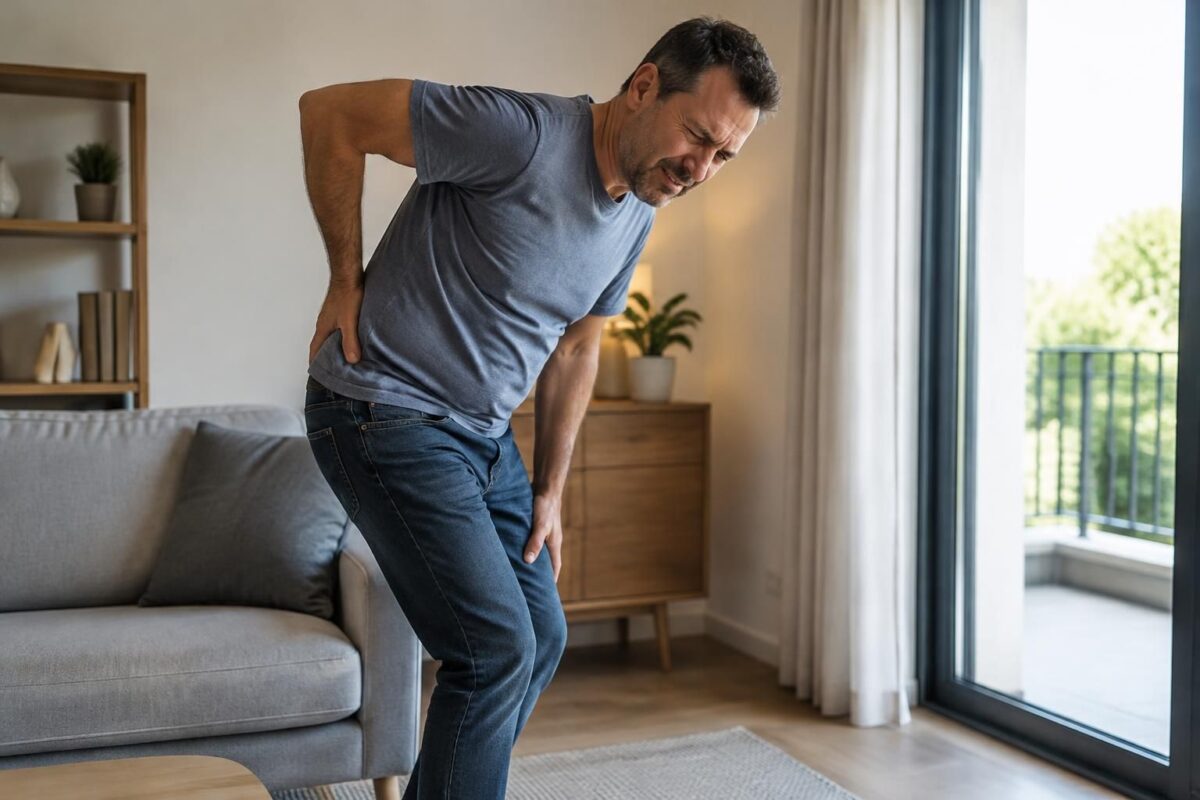
Sciatica and pain that appeared suddenly
IN BRIEF A sudden onset sciatica is pain that radiates from the buttock down the leg, sometimes to the foot, and may be accompanied by burning or tingling sensations. It can be related to lumbar nerve irritation or, at times,…

Sylvain Desforges, B.Sc., D.O., N.D., docteur en ostéopathie
Dr Sylvain Desforges, B.Sc., D.O., N.D., osteopath, is the founding president of TAGMED and of the ACMA association. He dedicates his practice to chronic spinal pain, low back pain and symptoms compatible with sciatica, particularly when pain radiates toward the buttock, leg, calf, foot or toes.
Through SOS Sciatique, he publishes educational content on sciatica symptoms, possible causes such as disc herniation, disc narrowing, foraminal stenosis or irritation of a lumbar nerve root, as well as non-surgical approaches that may be considered according to the evaluation. At Clinique TAGMED, care may include, depending on the case, motorized neurovertebral decompression, specific osteopathic care or precision percussion.
For an evaluation related to sciatica treatment in Montreal / Mount Royal or sciatica treatment in Terrebonne, please consult the services available at Clinique TAGMED.
Medical disclaimer
The information published on SOS Sciatique is provided for educational purposes only and does not replace a consultation, diagnosis, opinion or treatment provided by a physician or another authorized healthcare professional. The author of this article is neither a medical doctor nor a specialist in a medical specialty recognized by the Collège des médecins du Québec. The osteopathic, manual medicine or functional support approaches described on this site do not constitute medical acts and are not intended to replace medical follow-up.
Consult a physician or emergency service in cases of loss of bladder or bowel control, anesthesia in the saddle area, significant or progressive weakness in the leg or foot, fever, recent trauma, severe pain or rapid worsening of symptoms. For more details, please read our Legal Notice.