

Sciatica and disc herniation in Montreal: understanding the link
09/11/2026
Severe sciatica: what signs warrant an evaluation?
09/11/2026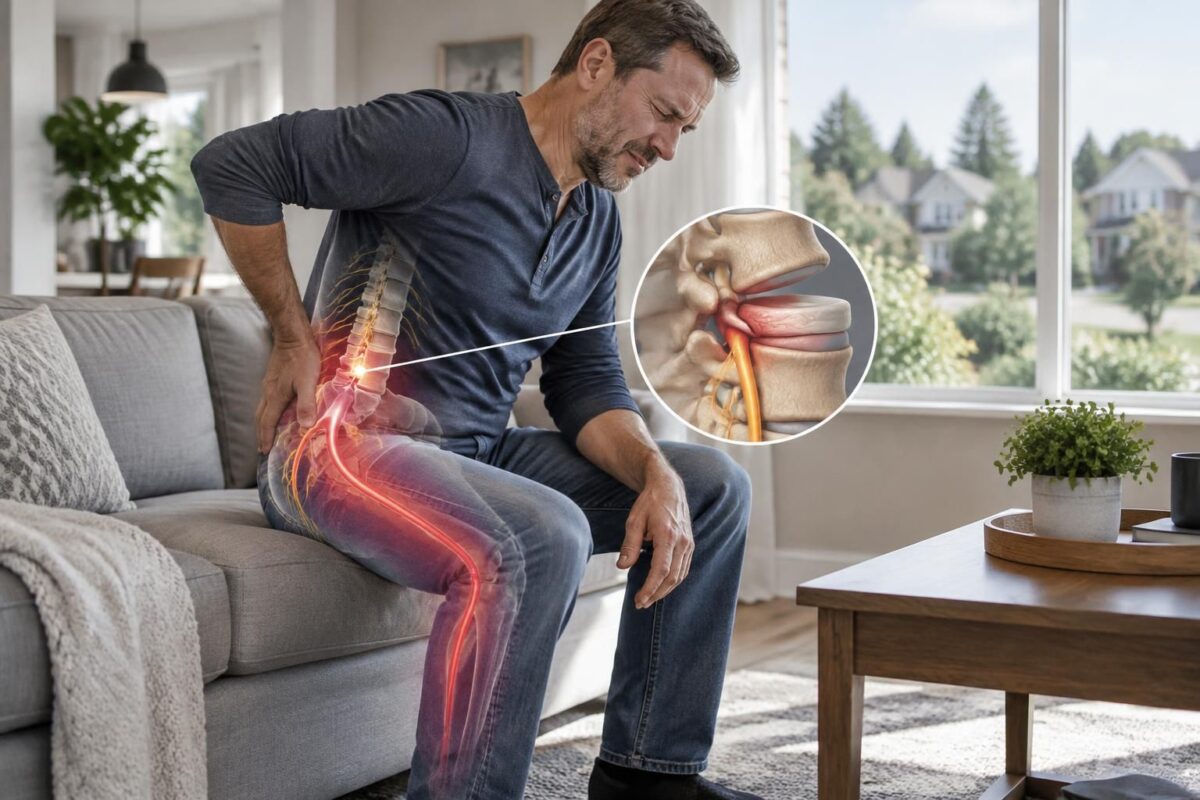
IN BRIEF
| Sciatica refers to pain that follows the path of the nerve in the buttock and leg; a herniated disc can irritate it, but an anomaly on the MRI is not sufficient to establish the cause. In Terrebonne, the evaluation correlates the symptoms, strength, sensitivity, function, and relevant imaging to guide management. Persistent pain does not necessarily mean that the hernia is worsening. In case of progressive weakness, foot drop, or urinary or bowel issues, consult without delay. |
A herniated disc can irritate a nerve root and cause sciatica, with pain, numbness, or weakness in the buttock and leg. However, a hernia observed on the MRI does not automatically explain the symptoms: its location must correspond to the path of the pain and the examination results.
In Terrebonne, an evaluation can help connect symptoms, strength, sensitivity, and function to guide next steps. Persistent pain does not necessarily mean that the hernia is worsening; several factors can prolong symptoms. In case of progressive weakness, foot drop, or urinary or bowel issues, consult a healthcare professional promptly.
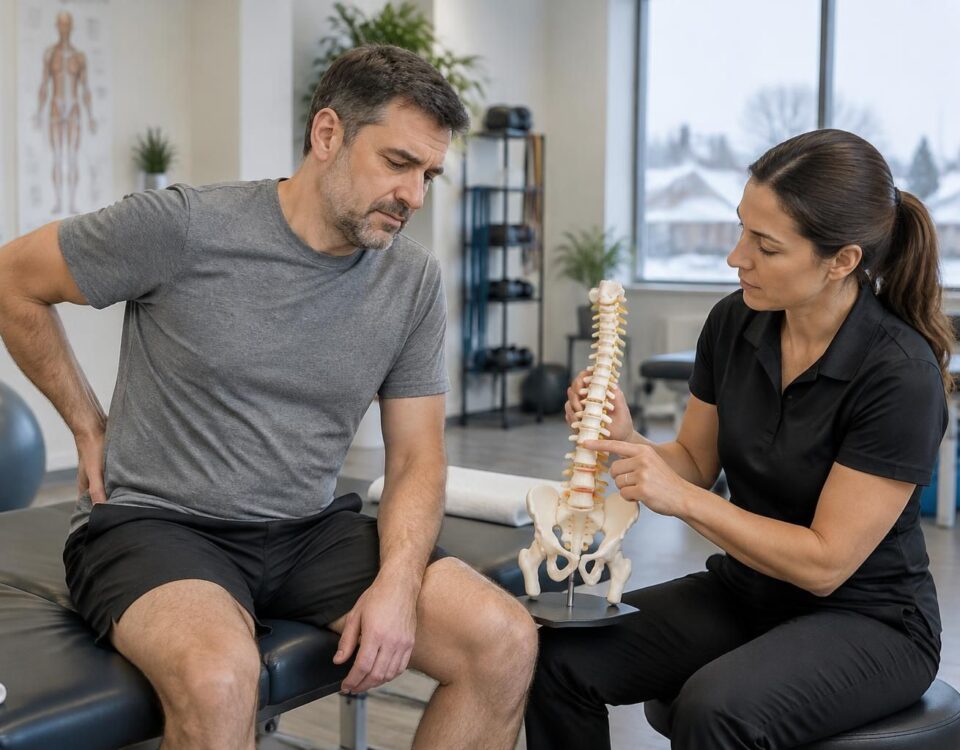
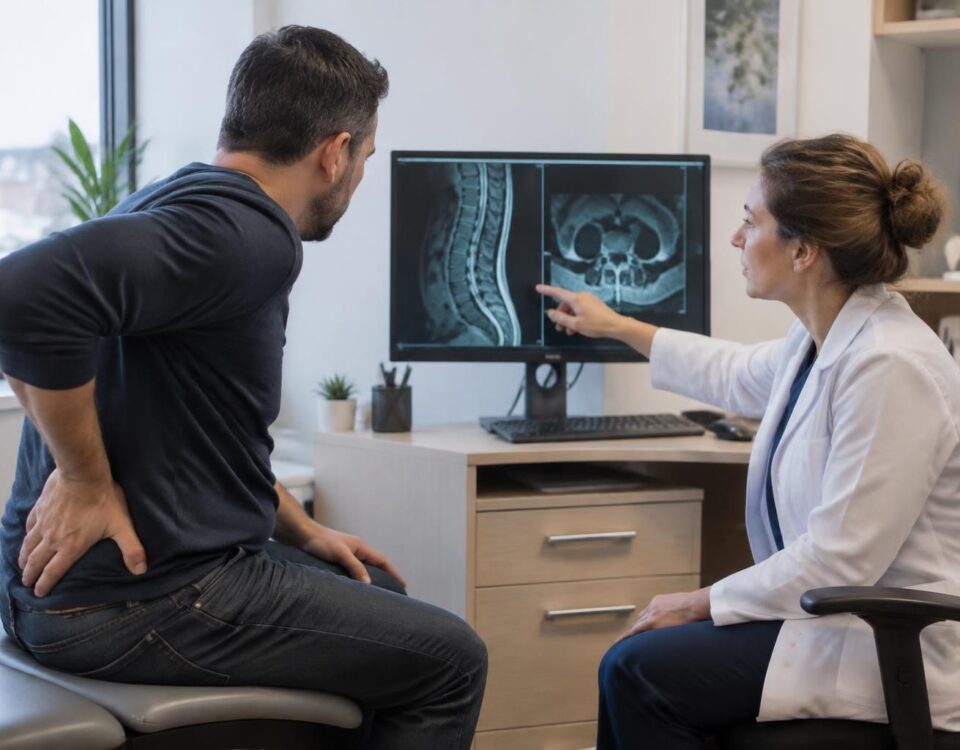
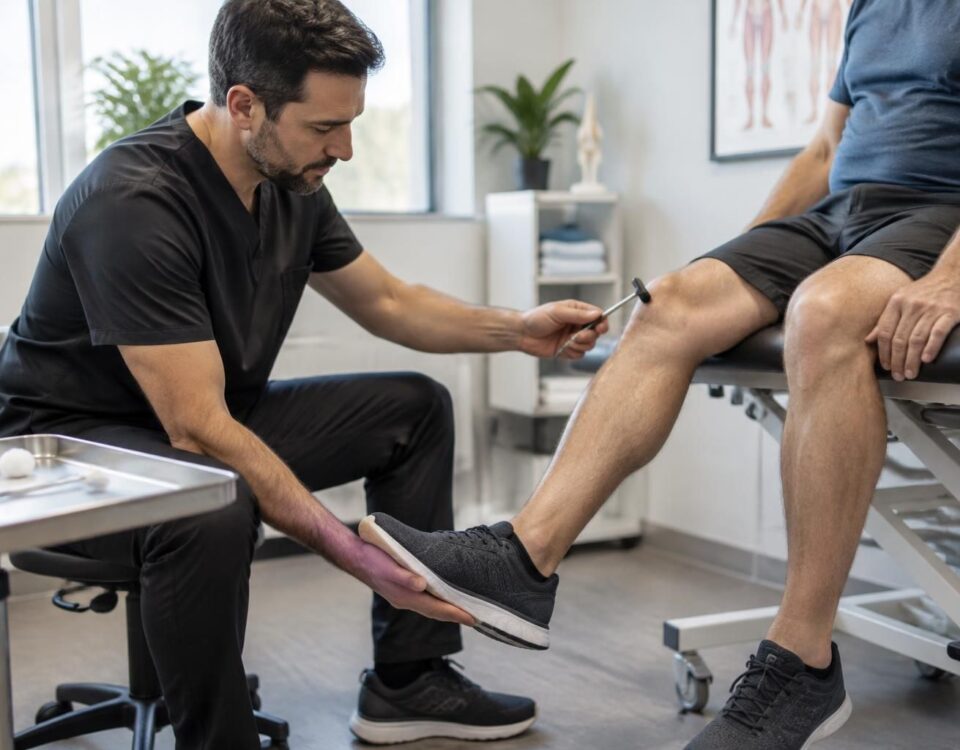
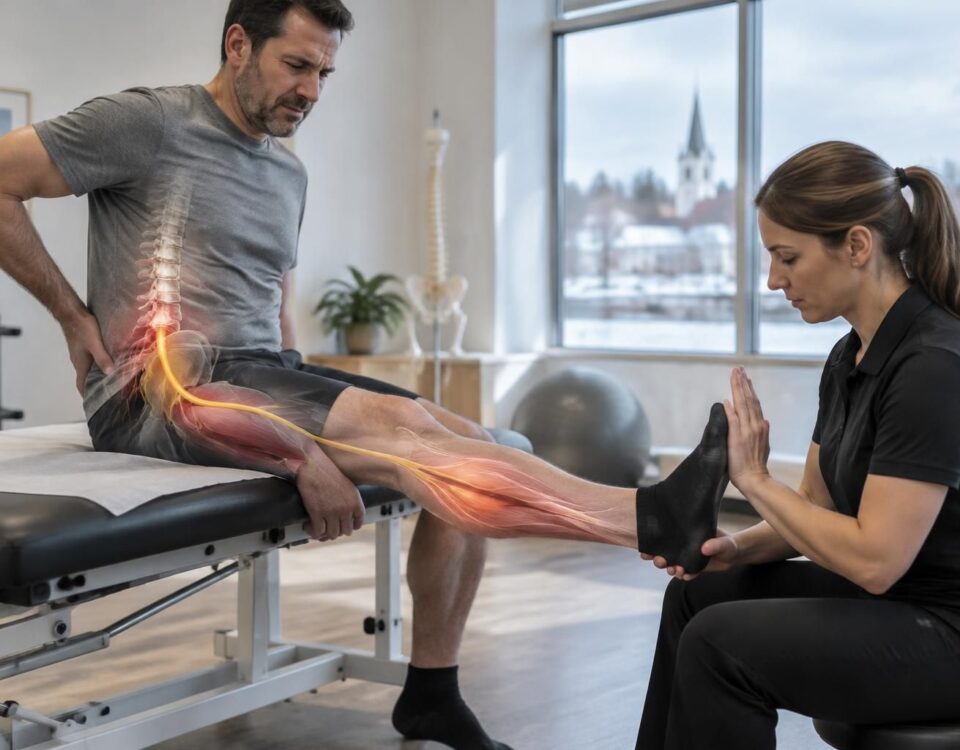
A herniated disc can irritate a nerve root and cause pain that radiates down the buttock or leg. However, a hernia visible in imaging does not automatically explain the symptoms. The evaluation compares the path of the pain, strength, sensitivity, function, and imaging results if relevant. In Terrebonne, this approach helps better understand the situation and determine the next step. Discs are located between the vertebrae. A part of the disc may protrude and irritate a nerve root. The pain may then follow the path of the sciatic nerve, from the lower back to the buttock and leg. Tingling, numbness, or weakness may also occur. The link between a herniated disc and sciatica depends on several factors. The side of the hernia, its level, and its location must correspond to the observed symptoms and signs during the examination. An image alone cannot therefore confirm the cause of the pain. To learn more, visit our page on the clinical correlation between herniated disc and sciatica. Changes in the discs can occur in people who do not have pain. The professional seeks correspondence between the imaging report and the clinical picture. They take into account the affected side, the symptom pathway, muscle strength, sensitivity, reflexes, and activities that have become difficult. Pain may start in the lower back or buttock and then radiate down the thigh, calf, or foot. Some people feel shocks, burning sensations, or tingling. Others notice a less sensitive area or difficulty moving the foot with the same strength as before. The numb area can guide the evaluation, but it cannot, on its own, identify a nerve root. The top of the foot or the big toe sometimes indicates an issue related to L5. The heel or the outer edge of the foot may indicate S1. These indicators vary from person to person and can overlap. A peripheral nerve or another condition may also explain numbness. Consult the page on numbness in the foot associated with a herniated disc. The evaluation begins with a history of the symptoms. The professional seeks to know where the pain starts, how far it radiates, how long it has been present, and how it evolves. They also inquire about affected tasks, such as walking, sleeping, or sitting. The examination may compare the strength of certain movements, sensitivity of different areas, reflexes, and gait. Imaging, such as an MRI, is interpreted based on the examination results. New imaging is not always necessary. It is mainly useful when its result may change a treatment decision. To better understand the evaluation of reflexes, strength, and sensitivity, visit our page dedicated to these clinical markers. A sciatica that lasts does not necessarily mean that the hernia continues to grow. Some hernias diminish over time, but symptoms may take longer to improve. Persistent nerve sensitivity, decreased physical condition, disturbed sleep, or fear of movement can also contribute to maintaining difficulties. A persistent pain is real. It can reflect several physical and contextual factors. Reevaluation allows for reviewing the initial hypothesis, checking neurological progression, and setting functional goals. Consult our articles on reevaluation of chronic pain and symptoms of chronic sciatica to monitor. Prolonged bed rest can reduce activities and promote deconditioning. Recommendations generally encourage maintaining usual activities as long as they remain tolerable, with adjustments based on symptoms and capabilities. This does not mean ignoring significant pain or new weakness. The course to follow depends on the person and the evolution of symptoms. To better understand why caution is advised regarding bed rest, read our page on sciatica and rest. Certain signs require immediate evaluation without waiting for a routine appointment. Contact a healthcare professional or emergency service quickly if you observe: Urinary or bowel issues associated with numbness in the saddle area may signal a neurological emergency. Progressive weakness may also change the evaluation priority. The choice of care depends on the probable cause, neurological signs, function, and evolution. TAGMED Clinic offers evaluations and care tailored to the scope of practice of the present professionals. Depending on the situation, approaches may include specific osteopathy or discussion about motorized neurovertebral decompression. Traction is not recommended as a standard treatment for low back pain with or without sciatica. Motorized decompression should not be presented as a guaranteed method. The data is uncertain, and its relevance must be discussed transparently after an evaluation. To learn about available services, visit the page on sciatica treatment in Terrebonne or discover TAGMED Clinic. No. A herniated disc is a possible cause, but other issues can irritate a nerve root or produce similar symptoms. The examination serves to compare possible causes. Yes, some herniations do regress. However, the evolution of pain and function may be slower than the visible changes in the disc. Yes. Nerve sensitivity, sleep, function, and other factors can contribute to the persistence of symptoms, even without an increase in the herniation. Not systematically. Further imaging is discussed if the result may modify management or if new signs justify a medical reevaluation. Yes. The persistence of symptoms does not mean that improvement is impossible. Follow-up also focuses on walking, activities, and function, not just on pain intensity. Sylvain Desforges, B.Sc., D.O., N.D., Doctor of Osteopathy and naturopath, is the founding president of TAGMED and the ACMA association. His practice focuses on chronic pains of the spine, low back pain, and symptoms compatible with sciatica, especially when pain radiates down to the buttock, leg, calf, foot, or toes. Through SOS Sciatique, he publishes educational content on sciatica symptoms, possible causes, and non-surgical approaches that can be considered after evaluation. At TAGMED Clinic, care may include, depending on the case and the responsible professional, motorized neurovertebral decompression, specific osteopathy, or precision percussion. For an evaluation, consult the services for sciatica treatment in Montreal / Mont-Royal or sciatica treatment in Terrebonne, offered at the TAGMED Clinic. Medical Disclaimer: The information and advice provided on this site do not replace the opinion, diagnosis, or treatment of a healthcare professional. Please note that Sylvain Desforges, B.Sc., D.O., N.D., doctor of osteopathy, is neither a medical doctor nor a physician, and is not specialized in a medical specialty as defined by the Collège des médecins du Québec. Manual medicine, functional medicine, and sports medicine as described on this site exclude any treatment or medical diagnosis performed by a physician or medical specialist. Always consult your doctor for any medical questions. For more details, please read our full legal notice. Consult a doctor or emergency service in case of loss of urinary or bowel control, anesthesia in the saddle area, significant or progressive weakness of the leg or foot, fever, recent trauma, severe pain, or rapid worsening. The information in this article is educational and does not replace a consultation, diagnosis, or treatment by a licensed healthcare professional.An MRI of a hernia is not sufficient to establish the cause
What symptoms can accompany sciatica?
How does the evaluation proceed?
Why can pain persist for several months?
Activity and rest: finding a cautious approach
When should a quick evaluation be sought?
What options to discuss in Terrebonne?
Frequently Asked Questions about Sciatica and Herniated Discs
Does sciatica always mean a herniation is present?
Can a herniation decrease over time?
Can pain persist even if the herniation has not increased?
Is a follow-up MRI necessary?
Is it possible to improve after several months?
About the Author
What the link can explain
- A lumbar herniated disc can irritate a nerve root and cause pain that radiates into the buttock or leg.
- Tingling or numbness in the foot may accompany sciatica; their path varies from person to person.
- Pain can persist even if the herniation has not increased: nerve sensitivity, sleep, and reduced activity can also play a role.
What to check in Terrebonne
- The concordance between the side and level of the herniation on imaging, symptoms, and neurological examination.
- Strength, sensitivity, walking, and the evolution of function—not just the intensity of pain.
- A new or progressive weakness, a dropped foot, or urinary or bowel issues require prompt medical evaluation.

A herniated disc can irritate a nerve root and cause sciatica, with pain radiating into the buttock and leg. However, a visible herniation on imaging does not automatically explain the symptoms. To guide management in Terrebonne, it is necessary to compare the pain trajectory with neurological signs, function, and the results of relevant examinations. Pain that persists for several months does not necessarily mean that the herniation continues to grow.
How can a herniation cause sciatica?
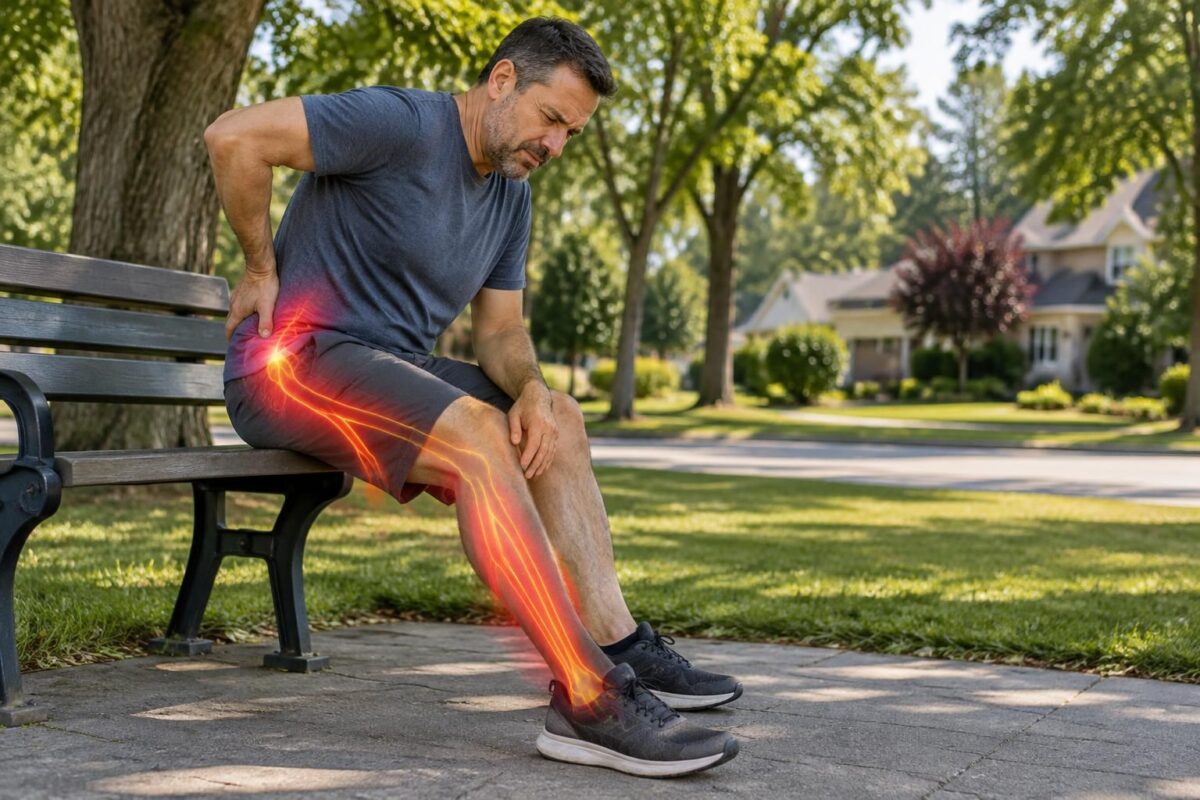
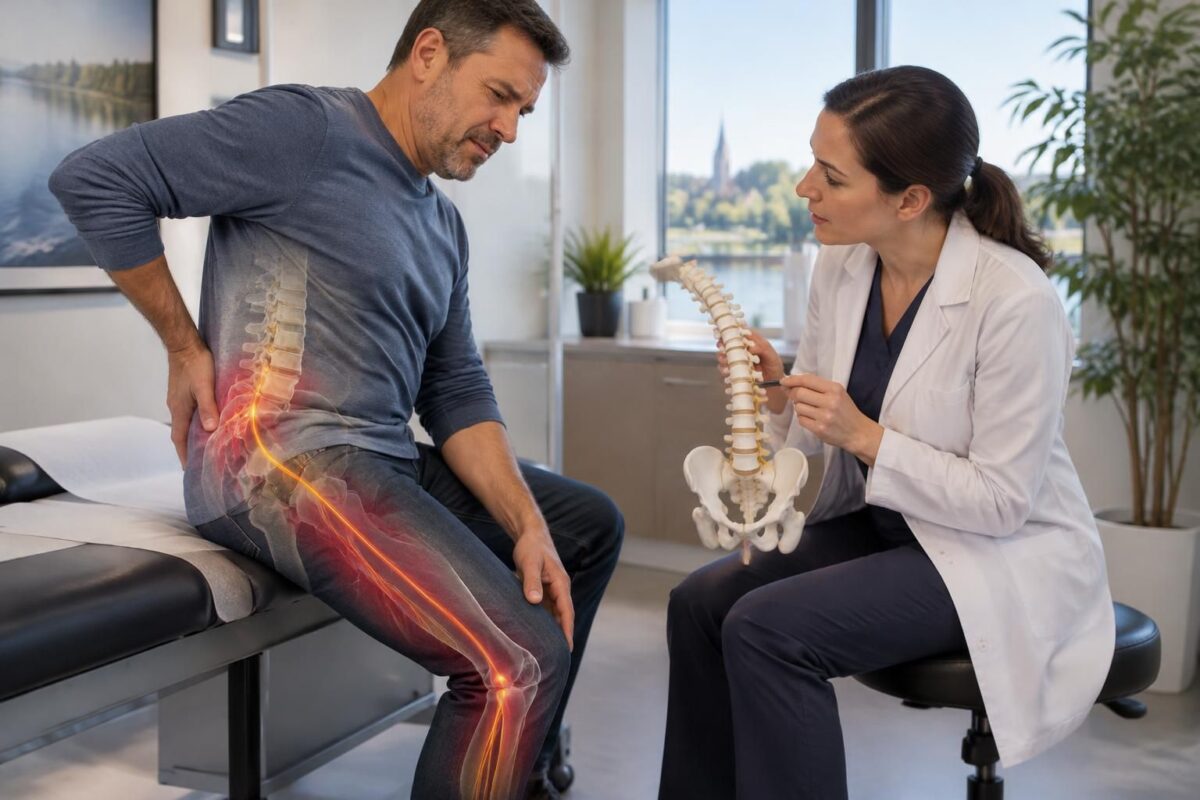
The discs located between the vertebrae act as shock absorbers. When a part of the disc bulges, it can, depending on its position, irritate or compress a lumbar nerve root. Symptoms may include electric or burning pain, tingling, numbness, or weakness in the leg or foot.
The location of sensations provides clues, but cannot alone diagnose. Numbness on the top of the foot or the big toe may suggest an issue with the L5 root; the heel or the outer edge of the foot may indicate S1. These territories vary and overlap. Other nerve issues might also produce similar symptoms.
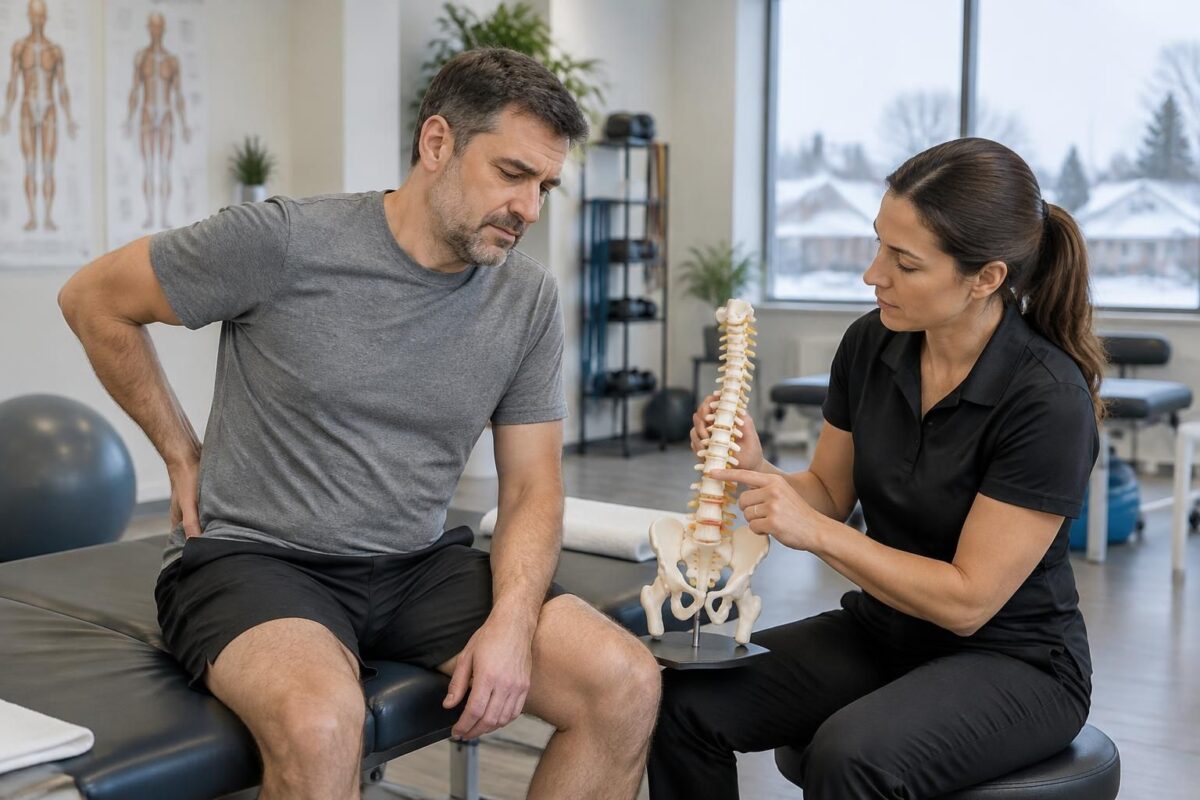
Sciatica in Terrebonne: lumbar roots and the choice of a cautious treatment
IN BRIEF Sciatica is pain related to the irritation or compression of a lumbar nerve root, which can radiate from the lower back to the buttock and leg. In Terrebonne, an evaluation allows for cautious treatment tailored to the cause…
Why is an MRI not sufficient?
Disc abnormalities can be observed in people with no pain. An image must therefore be interpreted cautiously, taking into account the affected side, vertebral level, and shape of the herniation, and then comparing them with the symptoms. The MRI report, isolated from other information, does not confirm the cause of sciatica or guide treatment selection.
Elements to check during the evaluation
- Symptom journey: specify painful areas, tingling, and numbness.
- Strength and function: examine certain movements, walking, and activities that seem difficult.
- Neurological signs: particularly compare sensitivity and, depending on the assessment, reflexes.
- Evolution: track changes and set realistic functional goals.

Sciatica in Terrebonne: how to interpret pain according to the leg path
IN BRIEF Sciatica is a pain that can start from the lower back or the buttock and travel down the leg to the foot. Its path, along with any tingling or weakness, helps guide the assessment but is not sufficient…
What to do when pain persists?
The duration of symptoms does not prove that the hernia is worsening. Some hernias decrease over time, while symptoms may take longer to settle. Persistent nerve sensitivity, decreased activity, disturbed sleep, or fear of movement can also contribute to pain. This does not mean that the pain is imaginary: chronicity can involve multiple factors.
In the absence of contraindications, it is generally preferable to maintain adapted daily activities rather than remaining inactive for long periods. Gradually resume movements according to your tolerance and seek advice from a healthcare professional if you are unsure how to adjust your activities. New imaging is particularly worth considering if its result could alter a clinical decision. NICE guidelines do not recommend traction for low back pain with or without sciatica; therefore, motorized decompression should not be presented as a guaranteed solution or standard treatment.

Sciatica in Terrebonne: L5-S1, canal, foramen and nerve compression
IN BRIEF The sciatica L5-S1 corresponds to irritation or compression of a nerve root, sometimes related to a disc herniation or narrowing of the lumbar canal or the foramen. The pain may radiate from the lower back to the buttock,…
When to seek a quick evaluation?
A new or progressive weakness, a dropped foot, or a worsening gait warrants a quick evaluation. Seek emergency care immediately in case of loss of bowel or bladder control, numbness in the saddle area, significant symptoms in both legs, or rapid deterioration. These signs should not wait for a routine appointment.
In Terrebonne, an evaluation related to sciatica can help clarify objectives and options tailored to your situation. At the TAGMED Clinic, the care provided depends on the assessment, available professionals, and their area of expertise; it does not replace a medical diagnosis or follow-up by a physician when indicated.
Medical Warning: This content is provided for educational purposes and does not replace a consultation, diagnosis, or treatment by a licensed healthcare professional. In case of severe pain, fever, or recent trauma, seek immediate attention.
| Clinical marker | What it may indicate |
|---|---|
| Pain radiating down the leg | May suggest irritation of a lumbar nerve root. |
| Hernia visible on MRI | Its connection to symptoms depends on the level, side, and examination. |
| Numbness or tingling | Their path helps guide the assessment, though it is not sufficient to establish a diagnosis. |
| Weakness in the leg or foot | A new or progressive deficit warrants a quick evaluation. |
| Persistent pain | Does not necessarily mean that the hernia continues to worsen. |
| Clinical evaluation | Links symptoms, strength, sensitivity, and function. |
| Imaging | To be considered if its result could modify management. |
| Care in Terrebonne | A reassessment can help clarify objectives and the next steps in care. |
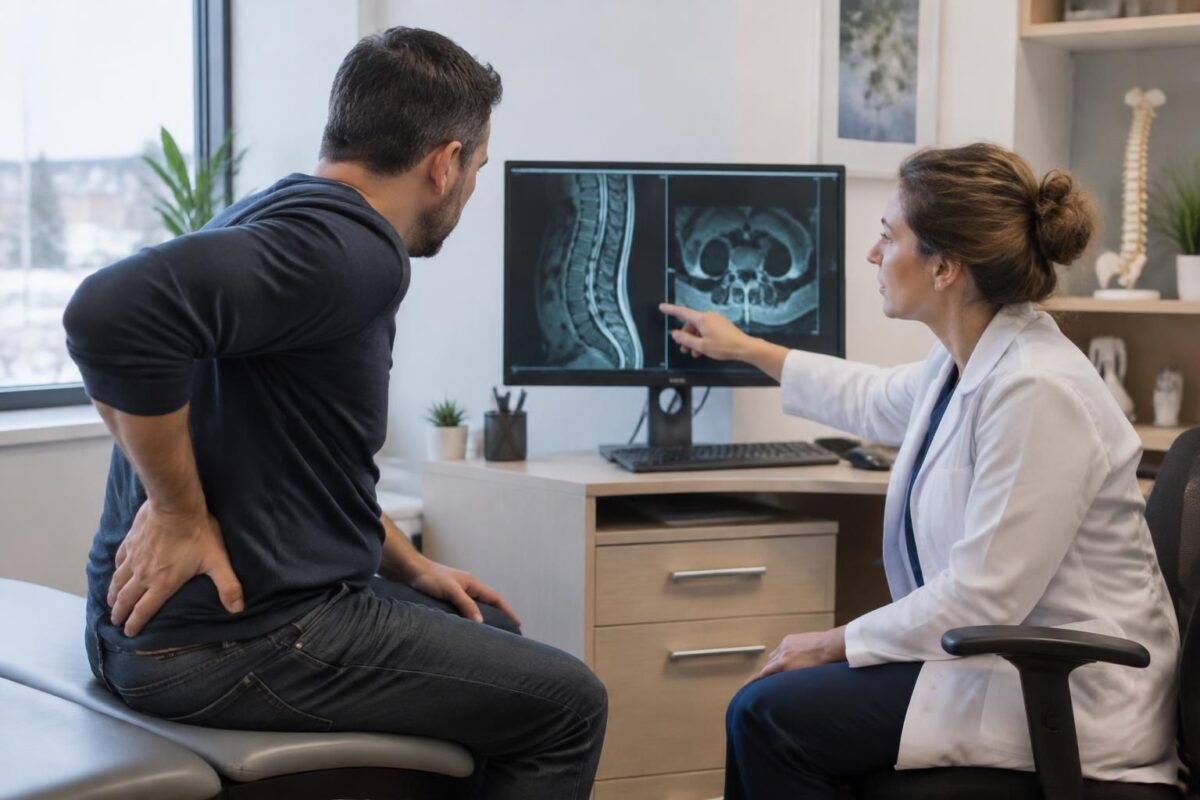
Sciatica in Terrebonne: why an MRI must be correlated with symptoms
IN BRIEF Sciatica is a pain that often radiates from the lower back to the buttock and leg. A lumbar MRI shows the structures of the spine, but its results must correspond to the symptoms and clinical examination: a visible…
Illustrative testimonials to better understand symptoms and management choices
Important: The testimonials below are composite and fictional examples, created for educational purposes. They do not describe real patients from the TAGMED Clinic and do not guarantee any outcomes. Pain radiating into the buttock or leg may be compatible with sciatica, but its causes must be evaluated on a case-by-case basis.

Sciatica in Terrebonne: reflexes, strength, and sensitivity in evaluation
IN BRIEF In Terrebonne, the assessment of sciatica checks the reflexes, strength, and sensitivity of the legs to identify possible nerve damage. These observations, combined with the pain’s pathway and its evolution, help to guide the next steps and recognize…
“The MRI showed a hernia, but I didn’t know if it explained my pain”
In this fictional scenario, a person from Terrebonne consults after seeing the mention of a disc hernia on their imaging report. Their pain starts from the lower back and radiates down one leg. They fear that the hernia continues to grow.
The takeaway is that an image alone does not establish the cause of symptoms. The evaluation particularly seeks to verify whether the level and side of the hernia correspond to the pain pathway, changes in sensitivity, muscle strength, and functional difficulties. Disc abnormalities may also be present in individuals who do not have pain.
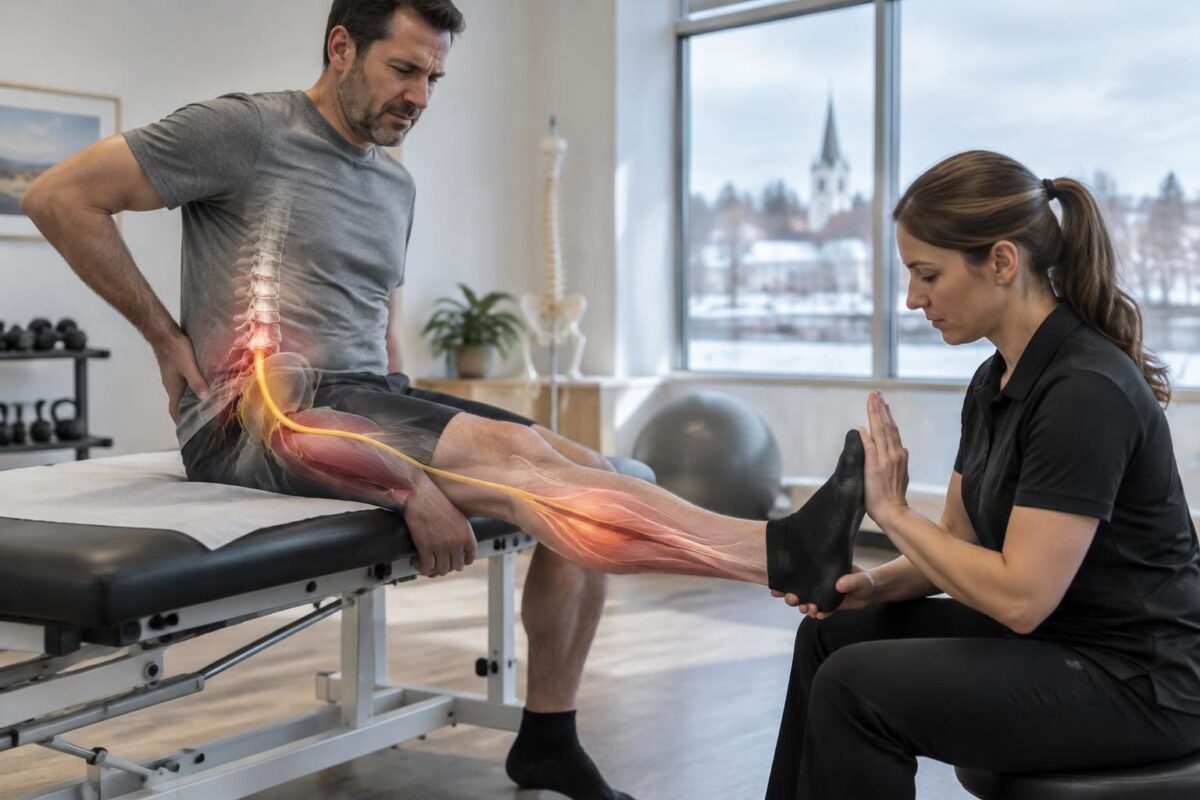
Sciatica in Terrebonne: muscle weakness according to the irritated nerve root
IN BRIEF Sciatica with muscle weakness can occur when a lumbar nerve root is irritated; affected movements, such as raising the foot or walking on tiptoes, provide clues but are not sufficient for a diagnosis. In Terrebonne, an evaluation can…
“My leg still hurt after several months”
In another composite example, the symptoms have persisted for several months. The person concludes that the hernia must necessarily have worsened. However, persistent pain does not automatically mean that the hernia continues to grow. Some hernias may decrease over time, while symptoms recover more slowly.
Nerve sensitivity, decreased activity, disturbed sleep, fear of movement, and other factors can also contribute to ongoing difficulties. This does not make the pain imaginary. A reassessment may help revisit initial hypotheses, track function, and determine if further examinations or a different referral are needed.
Sciatica in Terrebonne: nerve pain and sensory territory
IN BRIEF Sciatica is a nerve pain that can start from the lower back and radiate into the buttock and leg, sometimes down to the foot, with tingling or numbness. In Terrebonne, identifying the affected sensory territory helps guide the…
“My foot was numb: is it always related to sciatica?”
Numbness in the foot can accompany irritation of a lumbar nerve root, but its location is only an indication. The top of the foot or the big toe may guide the examination toward L5; the heel or the outer edge of the foot may more strongly suggest S1. However, these markers can vary from person to person and are not absolute boundaries.
Other causes, such as a peripheral nerve injury, can produce similar symptoms. The evaluation therefore considers the path of sensations, strength, walking, and tasks that become difficult, rather than relying on a single numb area or an MRI report.
Sciatica in Terrebonne: L4, L5, S1, how to find your way?
IN SHORT Sciatica is a pain that can radiate from the buttock down the leg when a nerve root is irritated. The levels L4, L5, and S1 can produce overlapping symptoms; therefore, the pathway of the pain alone is not…
What an evaluation seeks to clarify
In Terrebonne, an evaluation process can help organize useful information: where the pain radiates, what sensations have changed, if certain movements or activities are limited, and if weakness is present. When imaging examinations are available and relevant, their results are interpreted in conjunction with the examination and symptoms — not in isolation.
Goals may focus on a sustainable improvement in function: walking more easily, gradually resuming activities, or better tolerating certain positions. General recommendations encourage staying active as much as possible, adapting activities to capabilities and the evolution of symptoms. Imaging should primarily be considered when its result could modify a management decision.
Traction is not recommended by NICE for low back pain with or without sciatica. Motorized neurovertebral decompression, when proposed, should not be presented as a standard or guaranteed treatment. It is important to discuss the uncertainty of the data, possible options, and the relevance of this approach based on individual circumstances.
When to request a rapid assessment
A new or progressing weakness, a recent drop foot, or deteriorating gait requires a rapid evaluation. Significant symptoms in both legs, fever, major trauma, or general deterioration also justify immediate attention without waiting for a routine appointment.
In case of new urinary or intestinal disturbances, numbness in the saddle area or perineum, or significant rapidly progressive weakness, consult an emergency service immediately. These signs may indicate a situation requiring urgent management.
Frequently asked questions about sciatica and herniated discs
Does a herniated disc visible on MRI necessarily cause sciatica? No. It must be verified whether its location corresponds to the observed symptoms and signs during the examination.
Can pain persist even if the hernia has evolved? Yes. Nerve sensitivity, sleep, function, and other factors can influence the duration of symptoms.
Is it necessary to redo an MRI? Not systematically. It is primarily considered if the result could modify management, according to the evaluation of a licensed health professional.
Can one improve after several months? Prolonged progression does not exclude improvement. Timelines and outcomes vary according to the cause, neurological signs, function, and individual response.
At TAGMED Clinic in Terrebonne, are the care options identical for everyone? No. Services and approaches depend on the evaluation, available professionals, and their skills. Describing a care option does not mean it is suitable for everyone or that it will be performed by a specific professional.
About the author
Sylvain Desforges, B.Sc., D.O., N.D., Doctor of Osteopathy and Naturopath, is the founding president of TAGMED and the ACMA association. His practice focuses notably on chronic spinal pain and pain compatible with sciatica. The published content is educational and does not constitute a diagnosis.
Medical disclaimer
The information presented does not replace a consultation, diagnosis, opinion, or treatment provided by a doctor or another licensed health professional. The author is neither a doctor nor a specialist in a medical specialty recognized by the Ordre des médecins du Québec. Osteopathy, manual medicine, or functional support approaches do not constitute medical acts and do not replace medical follow-up.
Pain that starts from the lower back or buttock and extends down the leg may suggest sciatica. When imaging also reveals a herniated disc, it is tempting to immediately establish a cause-and-effect relationship. However, the presence of a hernia on an X-ray or MRI is not sufficient to prove it explains the symptoms. To guide management, imaging results need to be compared with the pain trajectory, sensations, strength, and functional difficulties.
A herniated disc occurs when a portion of the disc between two vertebrae protrudes. In some situations, it can irritate or compress a lumbar nerve root and cause pain radiating to the buttock, thigh, calf, or foot. Tingling, numbness, or weakness may also appear. However, disc anomalies are sometimes visible in people without any pain: it is the concordance between imaging and clinical presentation that matters.
In Terrebonne, a relevant assessment therefore considers multiple dimensions. The professional gathers symptoms and their evolution, identifies painful or numb areas, observes gait, and checks movements that could reveal a loss of strength. The level and side of the hernia are then related to these observations when imaging is available and useful. This approach helps distinguish radicular irritation from other possible causes of pain or numbness.
A sciatica that persists for several months does not necessarily mean that the hernia keeps growing. Some hernias shrink over time, while symptoms may resolve more slowly. Sensitivity of the nervous system, reduced activity, disturbed sleep, fear of movement, and life context can also contribute to maintaining pain. This does not make the pain imaginary: rather, it reminds us that a chronic situation can involve multiple factors.
Sylvain Desforges, B.Sc., D.O., N.D., is an osteopath and naturopath, as well as the founding president of TAGMED clinics and the ACMA association. His practice and educational content focus notably on chronic spinal pain, low back pain, and symptoms compatible with sciatica. His approach is interested in the evolution of function and the choice of options suitable for each situation, without presuming that one method suits everyone.
At TAGMED Clinic, the services and care available depend on the evaluation and the professionals involved. Specific osteopathy or motorized neurovertebral decompression may be discussed when appropriate, with clear information on their limits and the uncertainty of the data. Recommendations generally encourage maintaining ordinary activities within capacity limits. Imaging is not systematic: it is primarily considered when its result could modify a management decision.
A reevaluation is indicated if pain persists, functional goals are not met, or new symptoms appear. A new or progressive weakness, a drop foot, or a deteriorating gait justify a rapid assessment. New urinary or intestinal disturbances, numbness in the saddle area, fever, or significant trauma require urgent consultation; one should not wait for a routine appointment.
Medical Warning: this text provides educational information and does not replace a consultation, diagnosis, or treatment by a physician or another authorized healthcare professional. Sylvain Desforges is neither a doctor nor a specialist in a medical specialty recognized by the Collège des médecins du Québec. Osteopathy and functional support approaches do not replace medical follow-up.
In Terrebonne, sciatica associated with a disc herniation is assessed by linking the pain pathway, changes in sensitivity or strength, functional abilities, and, if relevant, imaging. A herniation identified on an MRI is not sufficient, on its own, to explain the symptoms: the level and side must match the clinical picture.
The link between disc herniation and sciatica is possible, but it cannot be confirmed solely by reading an imaging report. Some disc abnormalities also exist in people who do not have pain. To understand if they are involved, symptoms and their trajectory must be compared with strength, sensitivity, reflexes, and limited movements. To explore this correlation further, also consult our page on the interpretation of an MRI in relation to symptoms in Terrebonne.
A pain that persists for several weeks or months does not necessarily mean that the herniation continues to grow. Sensitivity of the nervous system, a decrease in physical condition, disrupted sleep, or fear of movement can contribute to maintaining difficulties. This does not make the pain imaginary. Reevaluation can help verify the initial hypothesis, track progress, and set realistic functional goals. Morning pain and stiffness, for example, may have various explanations; they should be placed in the general context, as detailed on the page about morning pain and lumbar stiffness.
The pathway of pain or numbness provides clues but does not allow for certain localization of a nerve root on its own. Symptoms on the top of the foot or near the big toe may sometimes point to L5, while the heel or the outer edge of the foot can suggest S1; these landmarks vary and overlap. Other causes, such as damage to a peripheral nerve, can also produce similar sensations. To better distinguish the possibilities, see the resources on the possible painful pathway of a paramedian herniation, the link between disc herniation and sciatica in Terrebonne, and the possible relationships between disc herniation and sciatica.
Management is determined by evolution, neurological signs, and impacts on walking, work, and daily activities. Maintaining tolerated activities, with a suitable progression, is generally preferable to prolonged inactivity. If pain increases after exercise, it may be useful to evaluate its intensity, duration, and associated symptoms rather than automatically concluding to a new injury; consult our article on the difference between muscle soreness and nerve irritation after effort. A too-rapid return can also rekindle symptoms: the page dedicated to pain that returns after a hasty return offers guidelines for better understanding this evolution.
New imaging is not automatically necessary because the pain lasts. It should mainly be considered in an appropriate clinical context when its result could alter a management decision. It is also important to transparently present the limits and uncertainties of the proposed interventions: traction is not recommended by NICE for low back pain with or without sciatica, and motorized decompression should not be presented as a standard or guaranteed treatment. For various educational resources, you can read the pages of RIS17 on MRI and alert signs, Posturea on disc herniation, and Doctissimo on sciatica; this general information does not replace an evaluation tailored to your situation.
A new or progressive weakness, a foot drop, a deteriorating gait, loss of control of the bladder or bowels, or numbness in the saddle area requires urgent medical evaluation. In the absence of such signs, if function remains limited or if symptoms persist, request a reevaluation to review the working diagnosis and next steps. At the TAGMED Clinic, in Montreal / Mont-Royal and Terrebonne, available services and proposed care depend on the evaluation, the qualifications of the professional, and your situation; contact the clinic for information on appointment options.

Sylvain Desforges, B.Sc., D.O., N.D., docteur en ostéopathie
Dr Sylvain Desforges, B.Sc., D.O., N.D., osteopath, is the founding president of TAGMED and of the ACMA association. He dedicates his practice to chronic spinal pain, low back pain and symptoms compatible with sciatica, particularly when pain radiates toward the buttock, leg, calf, foot or toes.
Through SOS Sciatique, he publishes educational content on sciatica symptoms, possible causes such as disc herniation, disc narrowing, foraminal stenosis or irritation of a lumbar nerve root, as well as non-surgical approaches that may be considered according to the evaluation. At Clinique TAGMED, care may include, depending on the case, motorized neurovertebral decompression, specific osteopathic care or precision percussion.
For an evaluation related to sciatica treatment in Montreal / Mount Royal or sciatica treatment in Terrebonne, please consult the services available at Clinique TAGMED.
Medical disclaimer
The information published on SOS Sciatique is provided for educational purposes only and does not replace a consultation, diagnosis, opinion or treatment provided by a physician or another authorized healthcare professional. The author of this article is neither a medical doctor nor a specialist in a medical specialty recognized by the Collège des médecins du Québec. The osteopathic, manual medicine or functional support approaches described on this site do not constitute medical acts and are not intended to replace medical follow-up.
Consult a physician or emergency service in cases of loss of bladder or bowel control, anesthesia in the saddle area, significant or progressive weakness in the leg or foot, fever, recent trauma, severe pain or rapid worsening of symptoms. For more details, please read our Legal Notice.