Lumbar disc herniation L5-S1 and sciatic pain
25/11/2026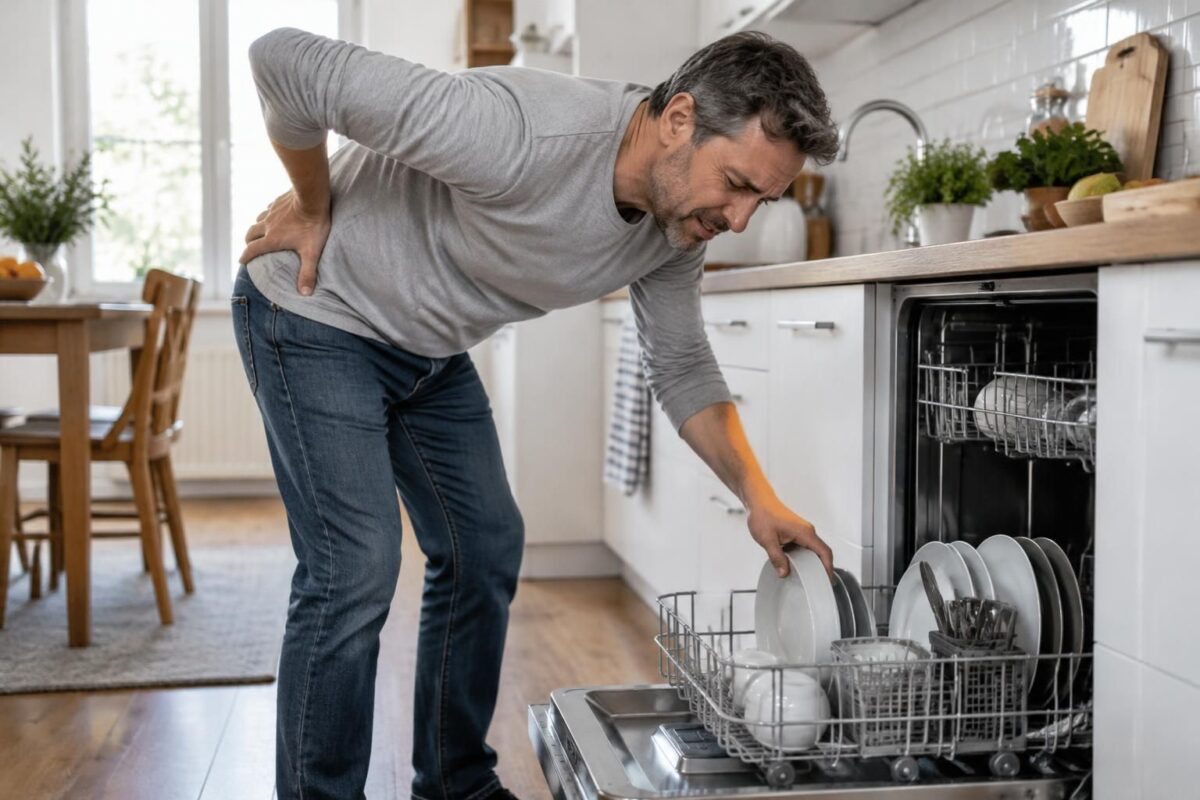
IN BRIEF Sciatica is pain that radiates along the sciatic nerve. Bending to empty the dishwasher can worsen symptoms, especially when turning or lifting a load. To limit discomfort, keep your back straight, bring items closer, and bend your knees. These actions can reduce strain, but do not replace medical advice if pain persists or intensifies. |
With sciatica, bending to empty the dishwasher can enhance pain, especially when turning or lifting dishes. Keep your back as straight as possible, get closer to the basket, and avoid movements that trigger your symptoms. If pain worsens or persists, seek advice from a healthcare professional.
Emptying the dishwasher can awaken sciatica pain, especially if you often lean forward or stay bent over. This position may increase symptoms in some people. Shorter movements, better organization of the task, and a professional assessment can help manage the situation better, without replacing medical advice.
Sciatica refers to pain that follows the path of the sciatic nerve, often from the buttocks down the leg. Some people also experience tingling, numbness, or a sense of weakness. Symptoms can vary depending on the cause and movements.
To empty the dishwasher, one often leans forward, twists the torso, and extends the arm to reach the baskets. These repeated actions can provoke or heighten pain in some people. The movement does not necessarily mean that an injury has worsened, but it can irritate an already sensitive area.
Why bending forward can trigger pain
Bending the torso can alter the strain on the lower back. If your pain increases when you bend, avoid repeating this action without a break. Pain can also arise during similar activities, such as bending over the sink. To learn more about this situation, consult our article on sciatica and leg pain when bending over the sink.
Pain that radiates down the leg can have multiple causes. A healthcare professional can assess your symptoms and determine if a medical consultation or other treatment is necessary.
How to empty the dishwasher while limiting irritating movements
To reduce repeated bending, place light and frequently used items at an accessible height. Empty a small amount of dishes at a time. You can also take a break if pain increases. These adaptations do not address the cause of sciatica, but they can make the task more bearable.
Change the way you pick up items
Get closer to the dishwasher before picking up an item. Avoid extending your arm too far in front of you or twisting your torso while holding a plate. If you feel sharp pain or a noticeable increase in your symptoms, stop the action and consult a healthcare professional.
Avoid starting stretches or exercises to self-treat pain related to a possible disc issue. The choice of movements depends on the cause and your condition. To better understand why certain stretches can worsen symptoms, consult this article on disc herniation and stretches that may worsen pain.
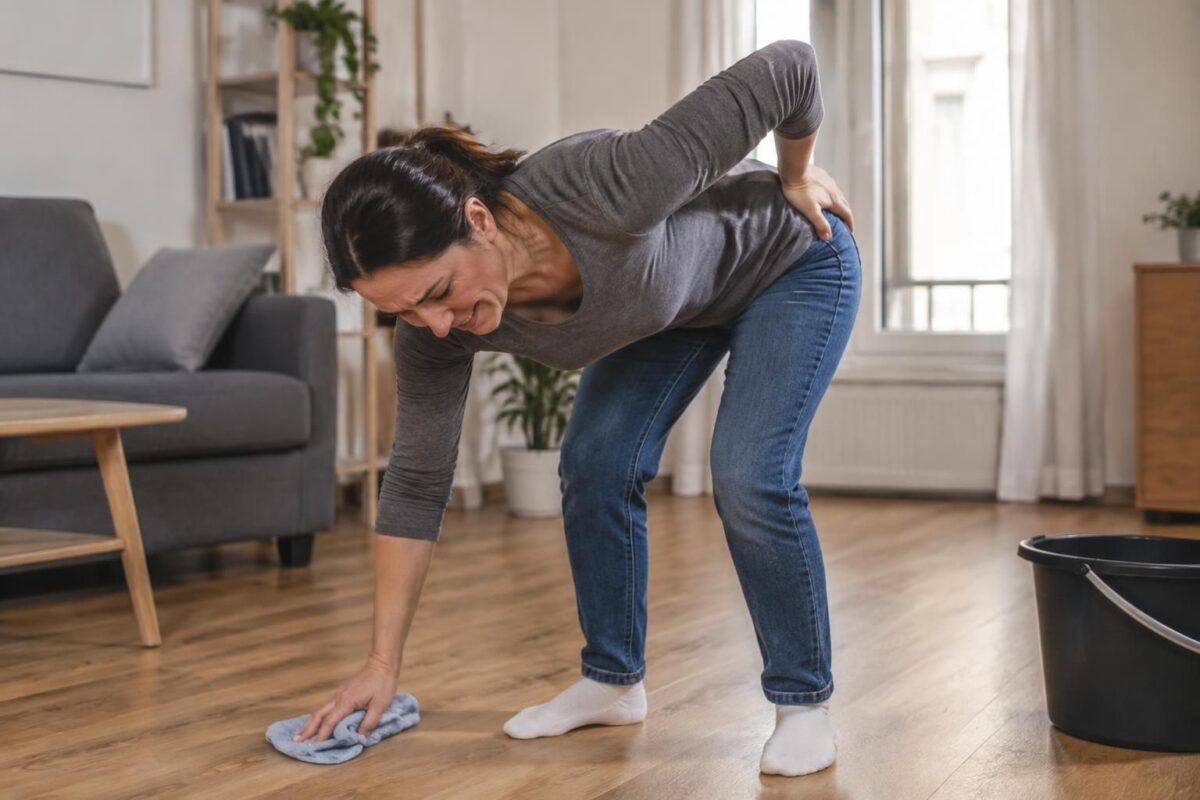
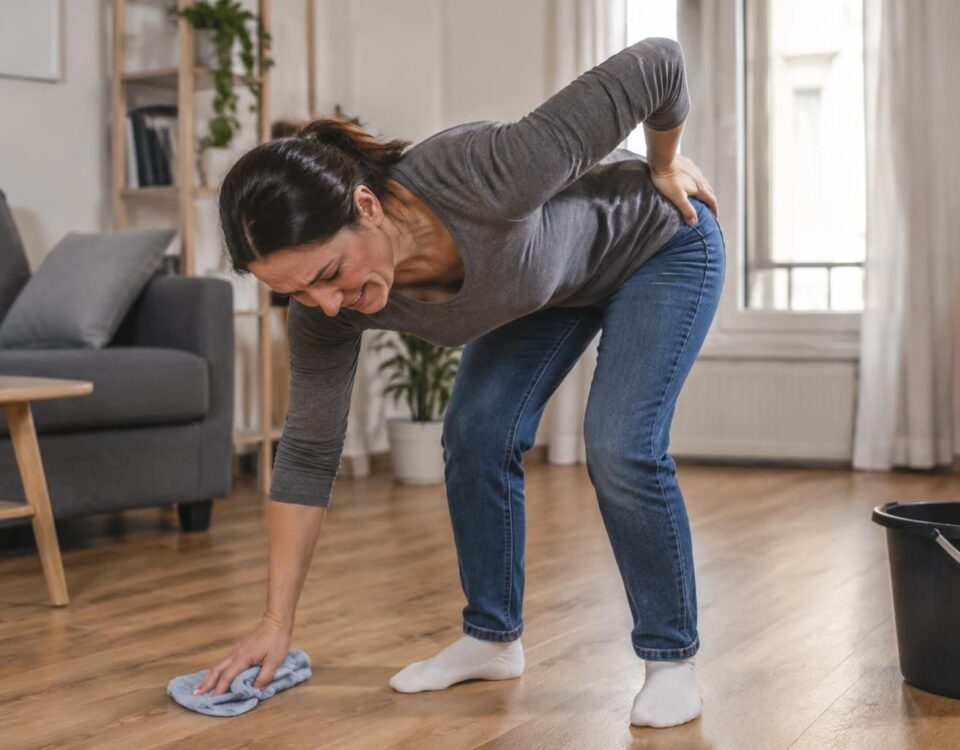
Sciatica and floor washing: prolonged bending and pain
IN BRIEF Sciatica is a pain related to irritation of the sciatic nerve; mopping the floor while remaining bent for a long time can worsen it. To limit discomfort, use a long handle, keep your back as neutral as possible,…
When to seek an evaluation
Consult a professional if the pain persists, recurs frequently, or limits your daily activities. An evaluation can help clarify the cause of the symptoms and discuss options tailored to your situation. If you have been diagnosed with disc compression, you can also read information about disc compression and the reduction of space between vertebrae.
A progressive weakness in one leg requires prompt medical evaluation. Consult the information on sciatica accompanied by progressive weakness. Sciatica pain with fever should also be taken seriously. Read why you should consult in case of sciatica and fever.
If you are seeking support for your pain, you can inquire about services offered by the TAGMED clinic in Montreal or Terrebonne. A professional can discuss your situation with you and guide you toward a medical evaluation when necessary.
Medical disclaimer: The information and advice provided on this site do not replace the opinion, diagnosis, or treatment of a healthcare professional. Please note that Sylvain Desforges, B.Sc., D.O., N.D., Doctor of osteopathy, is neither a medical doctor nor a physician and is not a specialist in a medical specialty as defined by the Collège des médecins du Québec. Manual medicine, functional medicine, and sports medicine as described on this site exclude any medical treatment or diagnosis made by a doctor or medical specialist. Always consult your physician for any medical questions. For more details, please read our full Legal Notice.
To avoid
- Bending deeply to grab dishes.
- Bending while twisting your back.
- Staying in a painful position for a long time.
To prefer
- Get closer to the dishwasher and bend your knees.
- Empty the bottom basket in several trips.
- Place the basket on a higher surface, if possible.

With sciatica, emptying the dishwasher can awaken or heighten pain, especially if you lean often, turn, or stay in the same position for long. A few simple adjustments — bringing dishes closer, bending your knees, and splitting the task — can make this action more comfortable. If the pain worsens or is accompanied by unusual signs, seek medical advice.
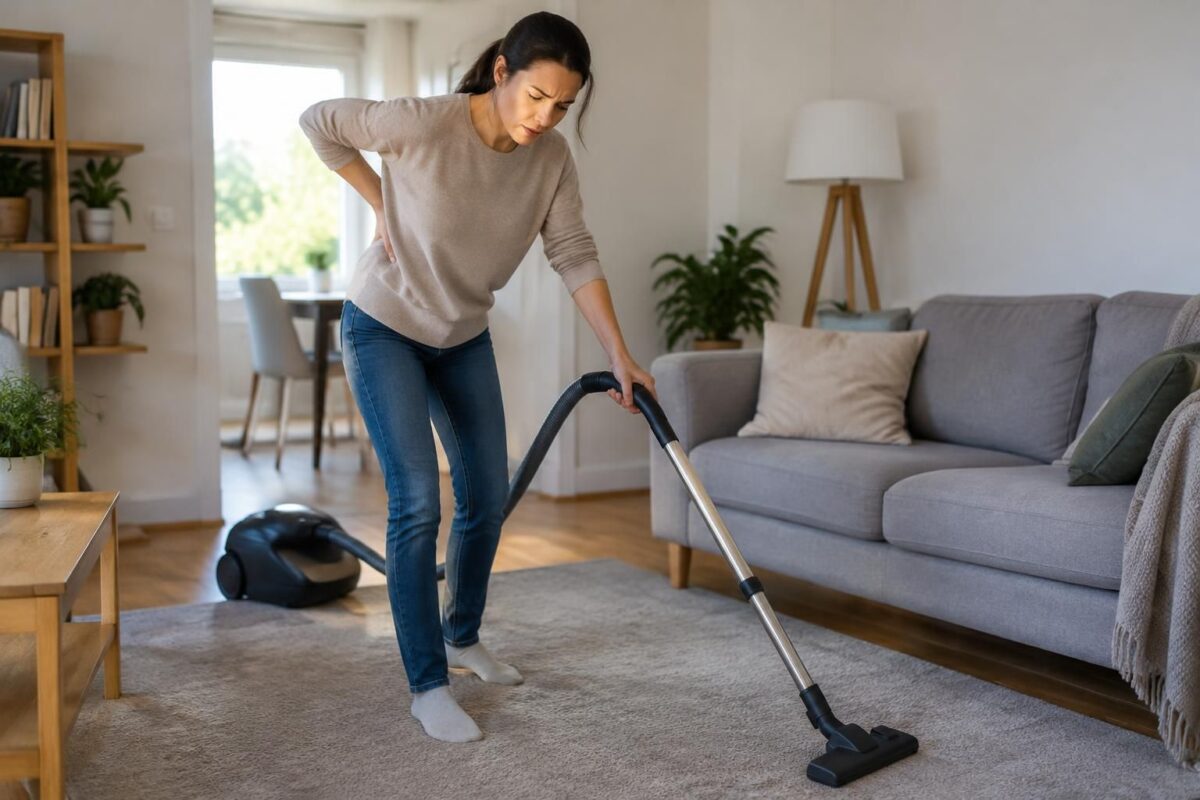
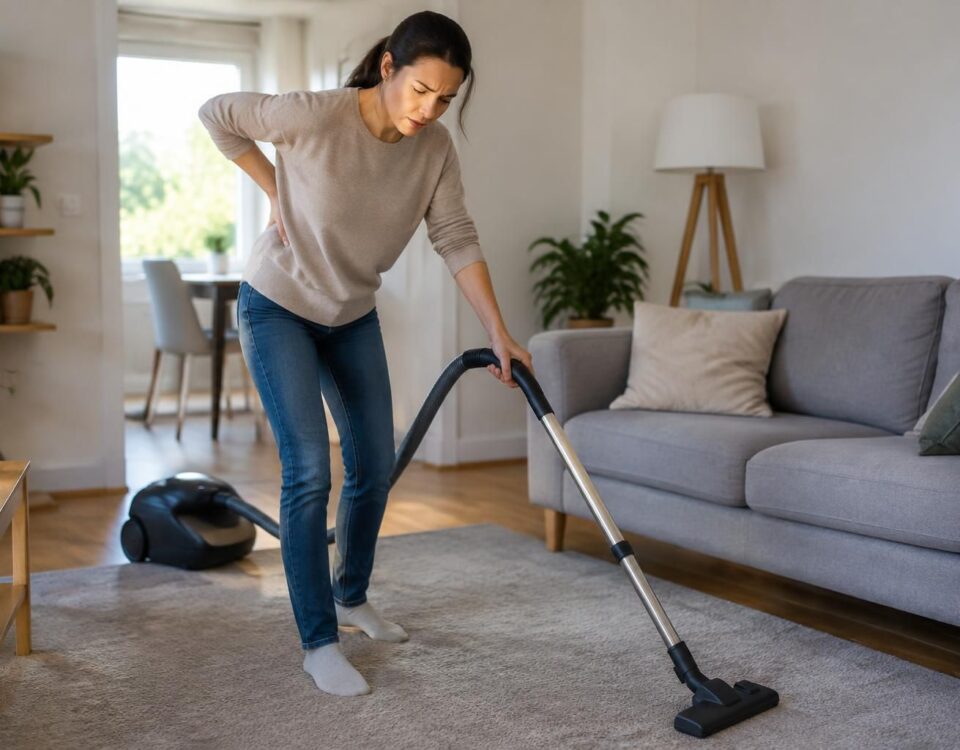
Sciatica and vacuuming: repetitive movement to watch out for
IN BRIEF Vacuuming with a sciatica can trigger pain because repeated bending and twisting strain the back. Break up the cleaning, keep the device close to you, and turn with your feet rather than twisting. Take a break if the…
Why emptying the dishwasher can trigger pain
Sciatica corresponds to pain that follows the path of the sciatic nerve, usually from the lower back to the buttock and leg. Bending forward repeatedly may increase discomfort in some people, especially when the movement is accompanied by twisting of the trunk or carrying a heavy object. However, the reaction varies from person to person: one should not assume that any bending movement is dangerous.
The dishwasher often requires leaning down to reach the lower baskets and then straightening up with a plate or pot in hand. Repeating this movement quickly can tire the back and make the task more burdensome. The goal is to limit straining gestures and respect what your body can tolerate.
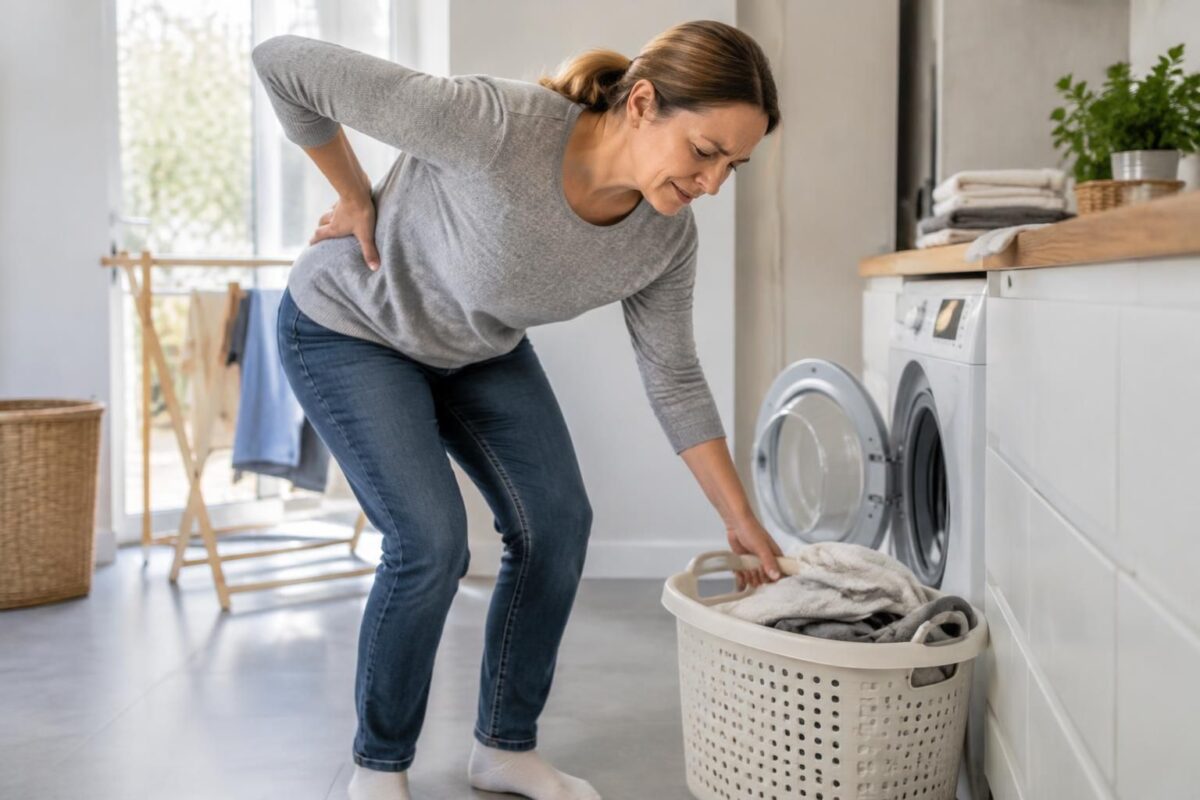
Sciatica and household chores: twists, bends, and loads
IN BRIEF Sciatica can be aggravated by bending, twisting, and carrying loads while doing housework. Breaking tasks into smaller parts, taking breaks, and adjusting movements help manage effort without necessarily stopping everything. In Montreal, an assessment can help tailor activity…
Adopt a more comfortable position
Get closer to the machine
Position yourself facing the dishwasher, as close as possible, rather than reaching from the side. Keep your feet spaced at a comfortable width and avoid twisting your back while grabbing dishes. To change direction, move your feet and turn your whole body.
Bend your knees and use support
To reach the bottom basket, try bending your knees and hips rather than rounding your back sharply. You can place one hand on the countertop or on the stable edge of the appliance to help maintain your balance. Only go as low as you can without causing sharp pain. Don’t force yourself into a posture that significantly increases your symptoms.
Avoid carrying away from the body
Keep plates and pots close to your chest and carry small loads. A large stack can be more difficult to stabilize and may encourage you to bend or twist. If an object is heavy or difficult to grasp, ask for help instead of risking worsening the pain.
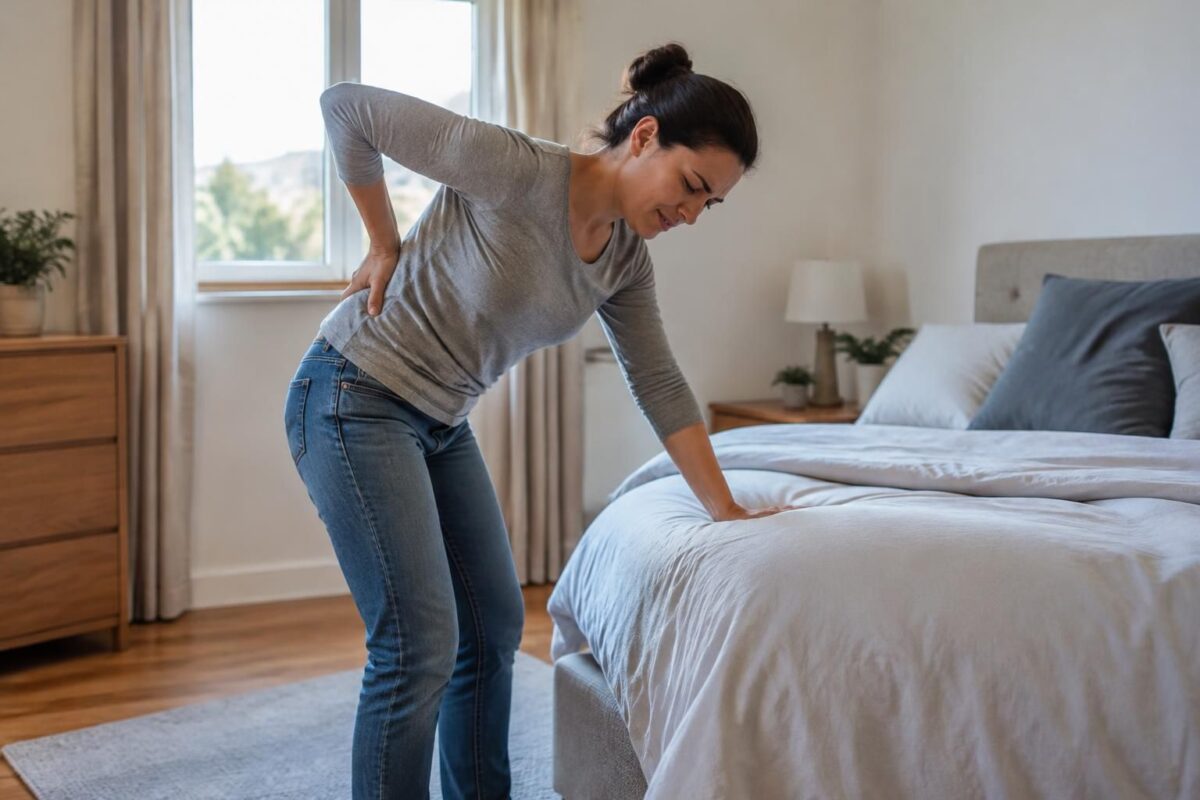
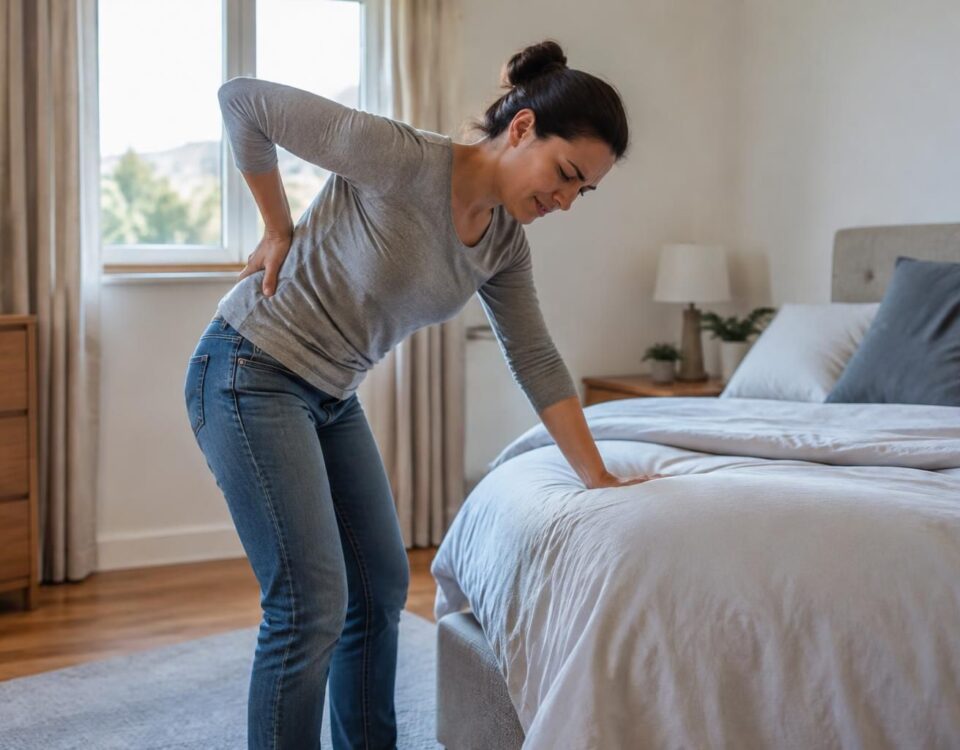
Sciatica and Making the Bed: Repeated Flexion and Lumbar Irritation
IN SHORT Sciatica is pain related to irritation or compression of the sciatic nerve. Making your bed can strain the lower back if bending is repeated, especially when rounding the back or twisting the torso. To limit lumbar irritation, bend…
Organize the task to reduce effort
You don’t have to empty the machine all at once. Start with easily accessible items, straighten up between movements, and take breaks as soon as fatigue or pain increases. Place the most frequently used items on accessible shelves to reduce repeated bending. If possible, ask a relative to temporarily put away items from the lower basket.
Stay active within your comfort limits: avoiding any movement for several days is not necessarily helpful. However, adapt the task according to your symptoms and follow the advice of a healthcare professional, especially if the sciatica is recent, persistent, or already being treated.
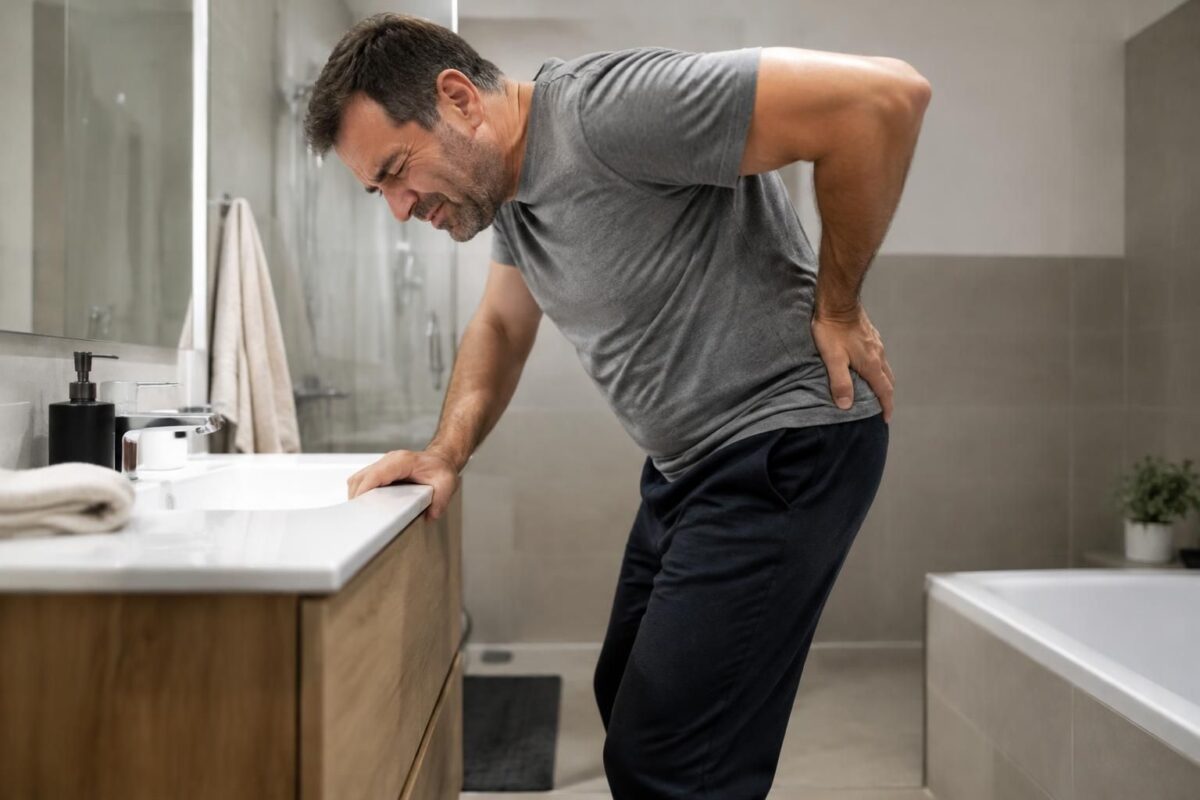
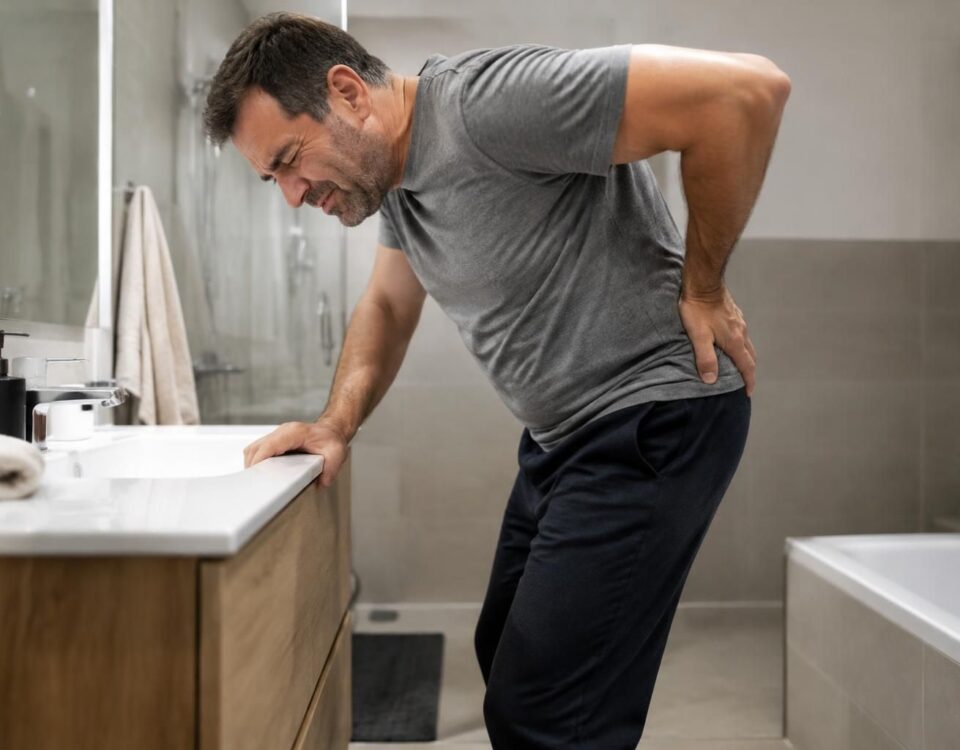
Sciatica and bending over the sink: pain in the leg
IN BRIEF Sciatica is pain related to irritation or compression of the sciatic nerve, which can extend from the lower back down to the leg. Bending over the sink can exacerbate the pain, especially if this position increases pressure on…
When to seek medical advice
Consult a doctor or healthcare professional if the pain intensifies, recurs frequently, interferes with your sleep, or limits your activities despite these adaptations. Seek urgent medical help in case of significant or increasing weakness in one leg, numbness around the genitals or anus, or new difficulties controlling the bladder or bowels.
| Action | Advice |
|---|---|
| Bending to empty the lower basket | May increase sciatic pain. |
| Keeping legs straight | Bend your knees and hips. |
| Turning while carrying dishes | Turn your whole body, avoiding sudden twisting. |
| Emptying the dishwasher all at once | Proceed in small loads and take breaks. |
| Staying bent for long | Alternate positions and straighten up regularly. |
| Pain worsened during the task | Stop and adjust the movement. |
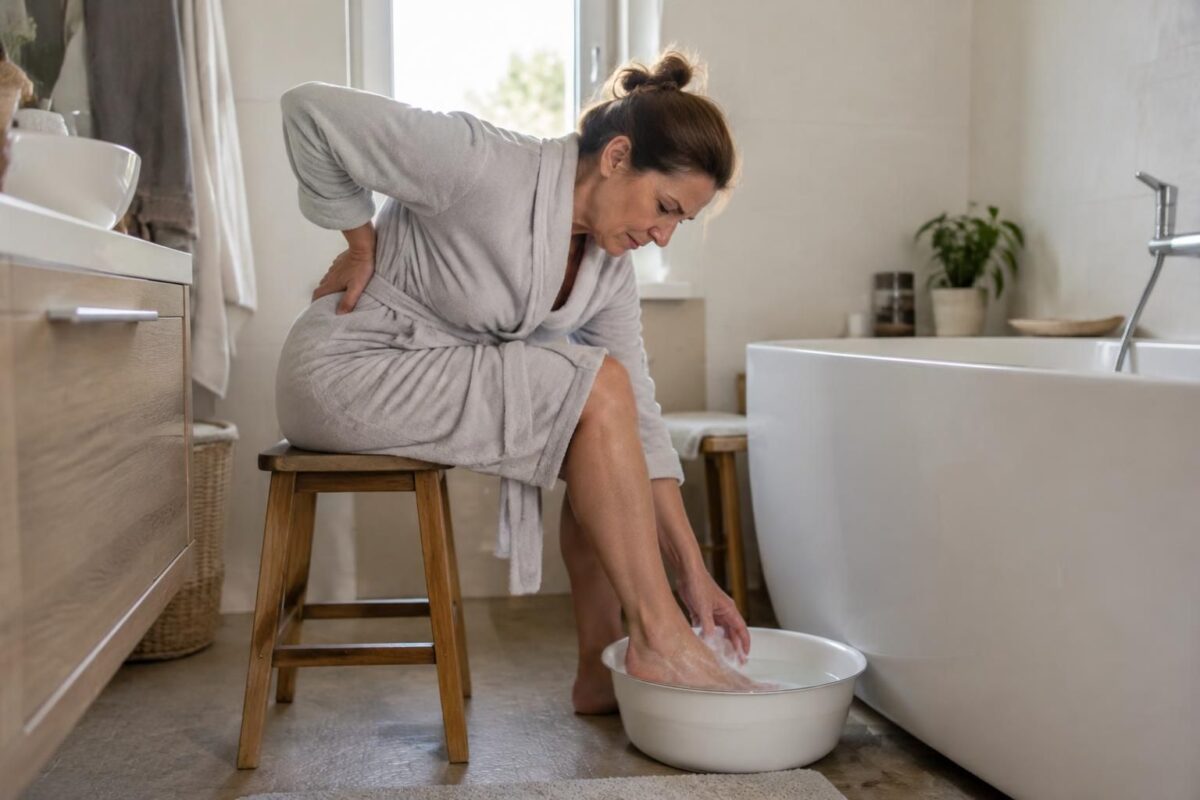
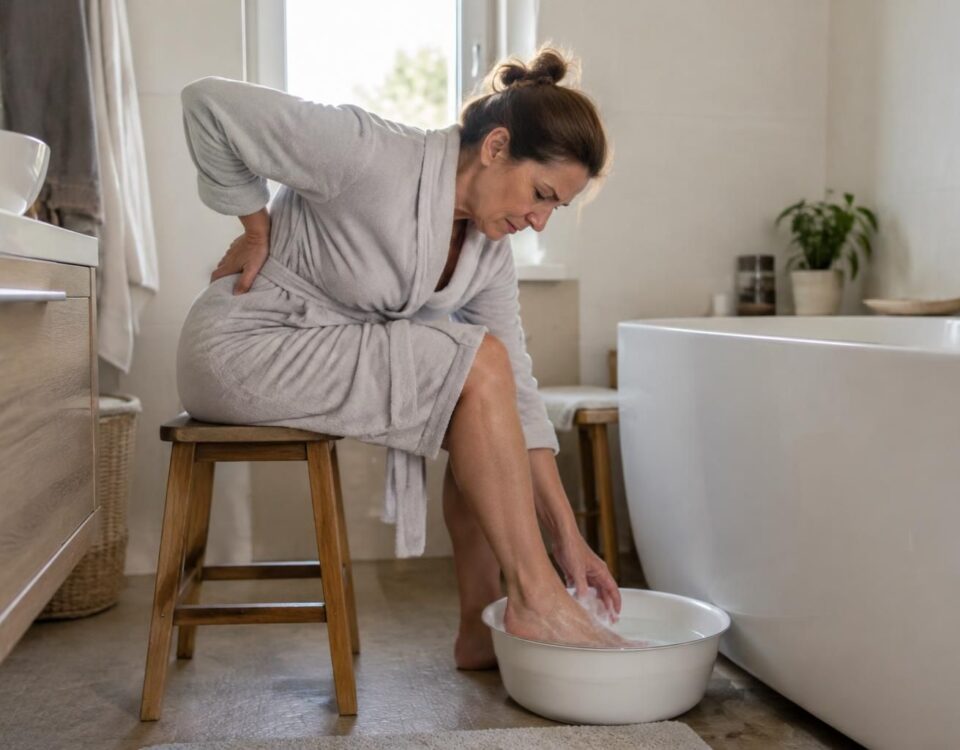
Sciatica and washing feet: lumbar flexion to monitor
IN BRIEF Sciatica can make washing your feet uncomfortable, as bending forward accentuates lumbar flexion and may trigger pain. To limit strain, sit down, bring your foot closer to you, or use a long-handled aid. These adjustments make personal hygiene…
When emptying the dishwasher becomes uncomfortable
Fictional testimony — Claire, 48 years old: “During my period of sciatica, bending to take out the plates from the lower basket sometimes increased my pain. I tried to place items at counter height and take breaks.”
Fictional testimony — Marc, 55 years old: “I didn’t think emptying the dishwasher could be so bothersome. Bending repeatedly triggered my pain in the lower back and leg. I learned to avoid gestures that triggered my symptoms and to ask for help when needed.”
Fictional testimony — Sophie, 39 years old: “With my sciatica, staying bent to put away the dishes made me uncomfortable. Breaking the task into smaller steps and keeping items close to me helped me manage it better.”
Takeaway: bending or lifting objects can worsen symptoms in some people, but reactions vary. If pain persists or intensifies, seek advice from a healthcare professional.

Sciatica and dressing: daily gestures to adapt
IN BRIEF Sciatica can make dressing uncomfortable, but a few simple gestures help limit tension. Sit down to put on pants, socks, and shoes, choose easy-to-wear clothing, and avoid bending or twisting suddenly. These adjustments make daily dressing easier without…
Sylvain Desforges: Supporting sciatica and daily actions
An expert in osteopathy, naturopathy, and manual medicine, Sylvain Desforges has dedicated his career to health innovation and supporting individuals living with persistent pain. Founder and president of the TAGMED clinics and the ACMA association, he is particularly interested in the management of chronic pain and evidence-based approaches.
Sciatica can make ordinary actions difficult. Emptying the dishwasher, for example, often requires leaning, twisting the trunk, or remaining in an uncomfortable position. These movements are not necessarily dangerous, but they can temporarily increase pain in some people, especially if the back is already sensitive. The pain may start from the lower back and extend into the buttock or leg, sometimes with sensations of burning, tingling, or numbness.
In his work, Dr. Desforges emphasizes individualized assessment: symptoms, their progression, and their effects on daily activities are taken into account to better guide support. A pain called “sciatica” can have different causes; therefore, it is useful not to presume its origin or rely solely on a general description. The goal is to offer care tailored to each patient’s situation and support their ability to gradually resume activities.
To empty the dishwasher, a few adjustments can sometimes reduce discomfort. It may be easier to bring items closer to you, bend your knees rather than hunching your back, and avoid twisting when lifting a plate or pot. Alternating movements, taking a short break, and placing the most frequently used items at an accessible height can also help limit prolonged positions. These tips do not replace a professional assessment, especially if the pain persists or intensifies.
Dr. Desforges’ approach combines knowledge of manual medicine with advanced technologies, including spinal decompression, laser, and shockwave therapy. These tools may be part of a care plan when deemed appropriate after evaluation. Their use aims to complement a thoughtful management approach rather than promising a one-size-fits-all solution for all forms of back pain or sciatica.
His approach emphasizes data-supported care and optimizing health and well-being. For individuals who hesitate to handle household chores for fear of triggering pain, guidance can also help them better understand their symptoms and adapt their movements. In cases of significant weakness in one leg, marked loss of sensation, or unusual changes in bladder or bowel control, urgent medical evaluation is necessary.
Emptying the dishwasher can strain the lower back due to repeated bending, twisting, and lifting loads. In the case of sciatica, these movements can temporarily exacerbate pain, especially if the activity irritates an already sensitive lumbar region. Adapting how you do tasks often helps reduce strain, but does not replace evaluation if symptoms persist or worsen.
Sciatica and Emptying the Dishwasher: Why Bending Can Worsen Pain
To reach plates or pots, people often lean forward, sometimes twisting the trunk or extending the arm. Repeated several times, this movement can increase discomfort in the lower back or buttock and, for some individuals, awaken pain that radiates down the leg. The reaction varies by person: a bend is not necessarily harmful, but it may be poorly tolerated during a painful episode.
The risk of discomfort increases especially when emptying the entire dishwasher all at once, carrying a heavy load with arms extended, or remaining bent for a long time. To limit these strains, get closer to the door, keep items close to your body, and avoid sudden twisting. You can also empty a small amount of items at a time and take a break if pain intensifies.
More Comfortable Everyday Movements
As much as possible, place frequently used items at an easily accessible height and alternate tasks that require bending with periods of standing. To reach the bottom basket, bend your knees or kneel rather than keeping your back rounded. Lean on the counter if it helps you maintain balance, and stop if a sharp or unusual pain occurs.
Household tasks can strain the back in various ways. For instance, making the bed and repeating bending movements can also irritate a sensitive lumbar region. Observing the movements that trigger your symptoms — and those you tolerate better — can help you adapt your routine without systematically avoiding all movement.
Understanding Symptoms Without Jumping to Conclusions
Pain present during or after a task does not, by itself, identify its cause. Sciatica may be accompanied by buttock pain, discomfort that radiates below the knee, or tingling sensations, but only a healthcare professional can assess your situation. Examples of pain that arose in different contexts are presented in these resources: pain after a fall, pain worsened in a seated position, and buttock pain associated with a disc bulge.
Pain can also manifest below the knee, as described on this page about disc protrusion and pain below the knee. These examples do not establish a diagnosis for your case: intensity, duration, and the evolution of symptoms must be taken into account by a professional.
When to Seek Professional Advice
If emptying the dishwasher regularly triggers pain that radiates down the leg, if your symptoms worsen, or if daily tasks become difficult, seek advice from a healthcare professional. Consult quickly in case of new or significant weakness in one leg. Loss of bladder or bowel control, or numbness in the area between the legs, requires urgent medical attention.
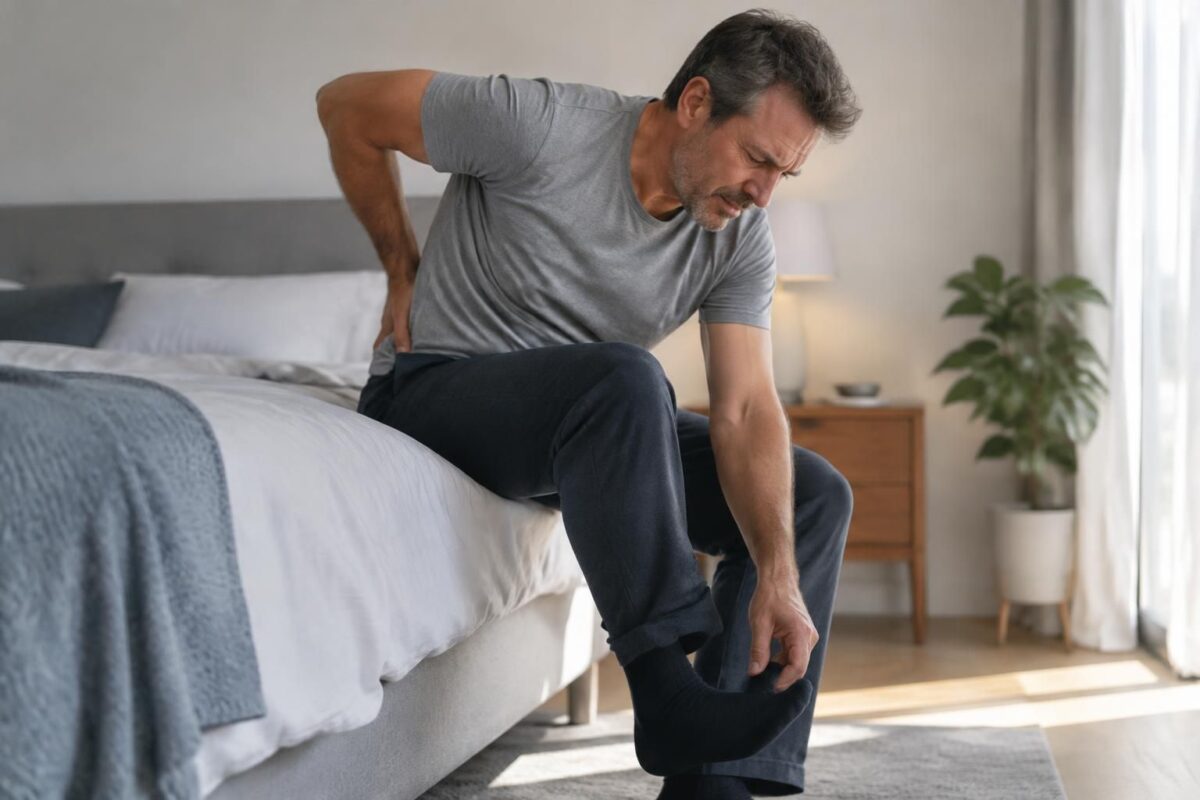
Sciatica and putting on socks: bending and pain in the leg
IN BRIEF Sciatica can make it difficult to put on your socks: bending over can increase the pain that radiates down the leg. Sitting down, using a sock aid, or avoiding painful bends can make this daily task easier. If…

Sylvain Desforges, B.Sc., D.O., N.D., docteur en ostéopathie
Dr Sylvain Desforges, B.Sc., D.O., N.D., osteopath, is the founding president of TAGMED and of the ACMA association. He dedicates his practice to chronic spinal pain, low back pain and symptoms compatible with sciatica, particularly when pain radiates toward the buttock, leg, calf, foot or toes.
Through SOS Sciatique, he publishes educational content on sciatica symptoms, possible causes such as disc herniation, disc narrowing, foraminal stenosis or irritation of a lumbar nerve root, as well as non-surgical approaches that may be considered according to the evaluation. At Clinique TAGMED, care may include, depending on the case, motorized neurovertebral decompression, specific osteopathic care or precision percussion.
For an evaluation related to sciatica treatment in Montreal / Mount Royal or sciatica treatment in Terrebonne, please consult the services available at Clinique TAGMED.
Medical disclaimer
The information published on SOS Sciatique is provided for educational purposes only and does not replace a consultation, diagnosis, opinion or treatment provided by a physician or another authorized healthcare professional. The author of this article is neither a medical doctor nor a specialist in a medical specialty recognized by the Collège des médecins du Québec. The osteopathic, manual medicine or functional support approaches described on this site do not constitute medical acts and are not intended to replace medical follow-up.
Consult a physician or emergency service in cases of loss of bladder or bowel control, anesthesia in the saddle area, significant or progressive weakness in the leg or foot, fever, recent trauma, severe pain or rapid worsening of symptoms. For more details, please read our Legal Notice.