Disc herniation and pain towards the big toe
28/11/2026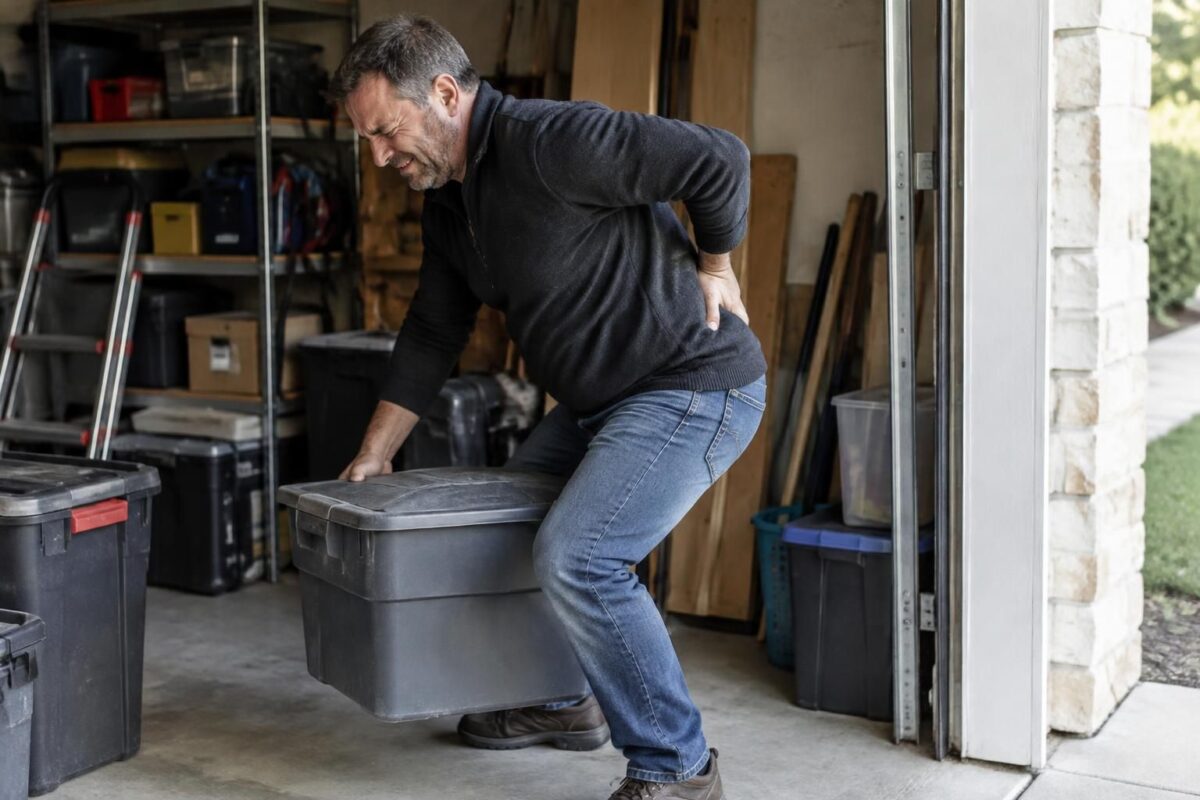
IN BRIEF
| Sciatica can make the nerve more sensitive: a good lifting technique is therefore not always enough to avoid pain. The risk also depends on the weight carried, the repetition, the duration of the effort, and your momentary tolerance. Gradually resuming the loads and observing the symptoms in the hours and days that follow helps to adapt the effort, without systematically avoiding any activity. |
Adopting a good lifting technique helps to distribute the effort better, but it is not always enough to avoid pain related to sciatica. The nerve can be more sensitive to constraints: the weight, repetition, and duration of carrying also matter. Adjust the loads to your momentary tolerance and gradually resume, observing the reaction in the hours and days that follow.
With sciatica, lifting a load with good technique does not guarantee the absence of pain. The weight, number of repetitions, duration of effort, and sensitivity of the nerve also count. A moderate load may be well tolerated one day and cause discomfort another day. The goal is therefore to adapt the effort to your momentary tolerance, then to gradually resume.
A good technique helps distribute the effort. It does not eliminate all the constraints exerted on the body. When you lift an object, your trunk muscles contract and your posture adjusts to maintain balance. This response is normal.
In the case of sciatica, the nerve may react more easily to certain constraints. It is not necessarily fragile or further damaged. It may simply be more sensitive. A correct posture therefore does not always prevent a temporary increase in pain.
Load, repetition, and duration matter
A light object lifted once does not require the same effort as several heavy loads moved consecutively. The time spent bent, the number of repetitions, and fatigue can also increase the demand. The risk therefore depends on the combination of these factors and your current capacity.
Discomfort after carrying an object does not automatically mean that an injury has worsened. It may indicate that the effort has temporarily exceeded your tolerance. To better understand the links between the discs and symptoms, consult this article on disc pinching and sciatica.
Why tolerance varies during sciatica
Tolerance corresponds to the amount of effort that your body can withstand without maintaining a lasting increase in symptoms. It can change based on pain, fatigue, recent activities, and the progression of sciatica.
A load that was well tolerated until now can therefore become uncomfortable when the nerve is more sensitive or when several efforts accumulate. This alone does not allow for a conclusion about worsening. It is necessary to observe the evolution of pain and abilities over time.
The reaction after effort provides benchmarks
A slight discomfort that disappears quickly may be compatible with a suitable resumption. A substantially stronger pain that persists the next day or worsens over several days suggests that the effort was too great for your current tolerance.
You can then temporarily reduce the weight, the number of repetitions, or the duration of the activity. Then resume step by step, checking how your body reacts in the hours and days that follow. Individual response is a better guide than a single rule about how to lift.

Sciatica and carrying groceries: pain in the leg
IN BRIEF Sciatica is pain related to the irritation of a nerve, which can extend from the lower back or buttock down into the leg. Carrying heavy grocery bags may exacerbate symptoms: distribute the loads, keep them close to your…

Sciatica and carrying grocery bags: load and twist
IN BRIEF Sciatica is pain related to irritation of the sciatic nerve; carrying heavy grocery bags while twisting the torso can exacerbate it. To limit strain, distribute the load among several bags, keep them close to your body, and turn…
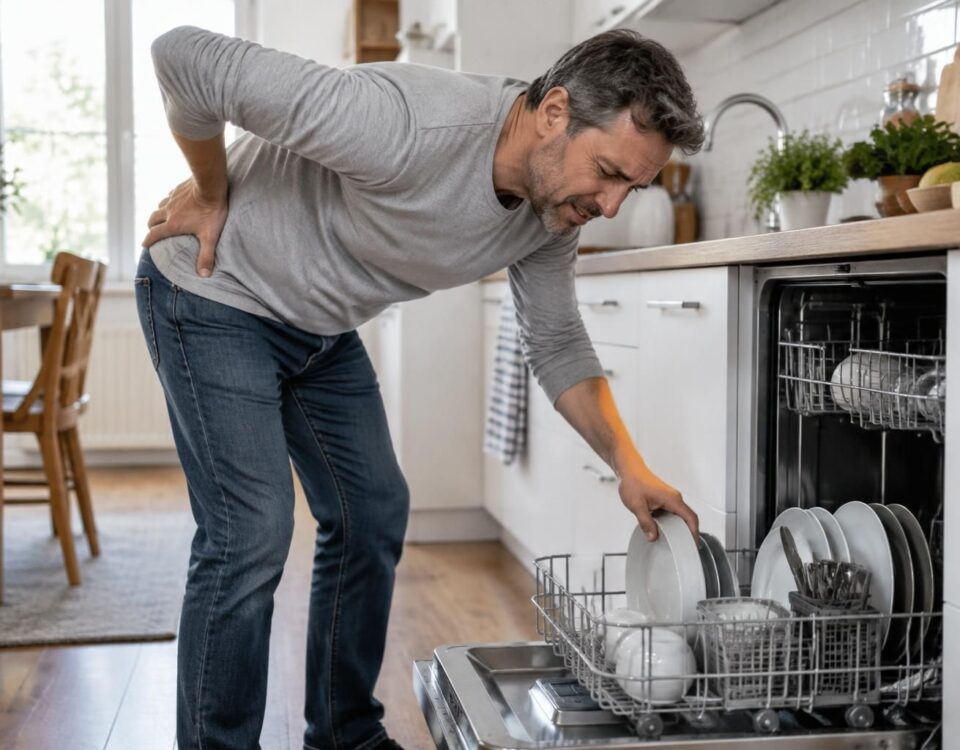
Sciatica and emptying the dishwasher: bending can worsen
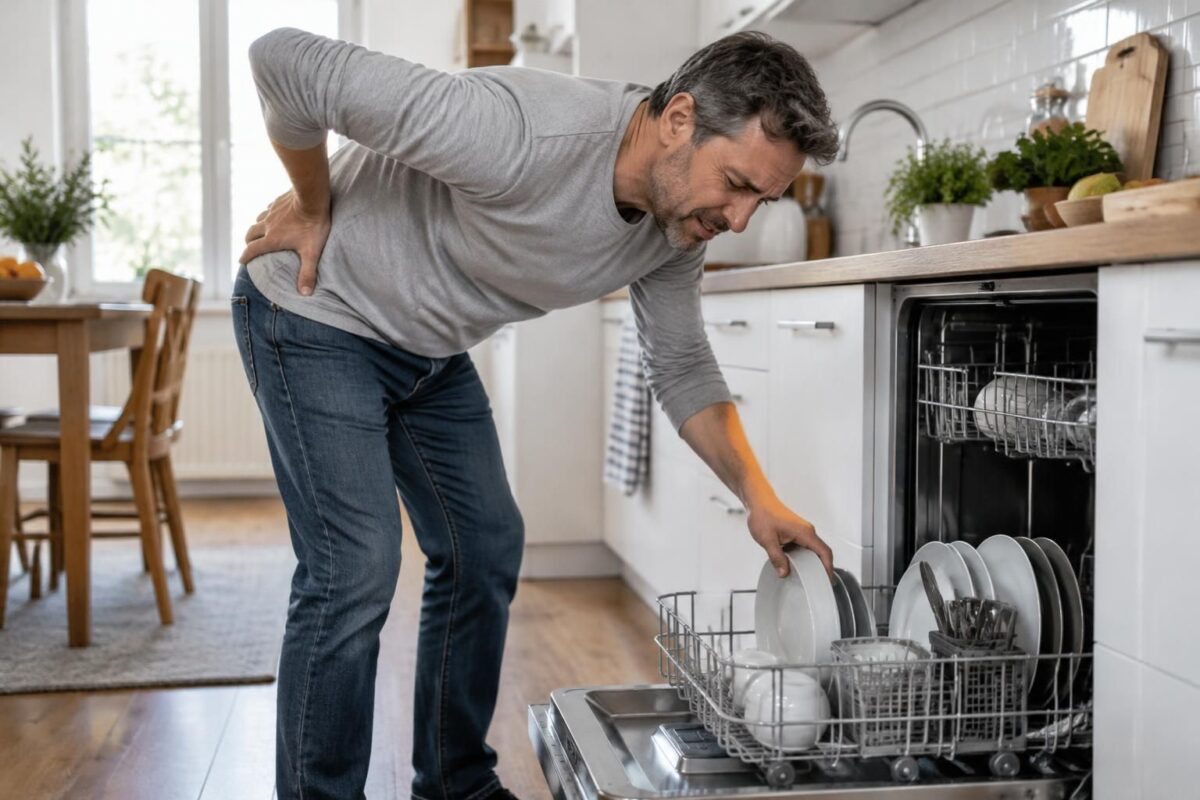
IN BRIEF Sciatica is pain that radiates along the sciatic nerve. Bending to empty the dishwasher can worsen symptoms, especially when turning or lifting a load. To limit discomfort, keep your back straight, bring items closer, and bend your knees.…
Avoiding all loads is not always the right answer
Avoiding efforts may provide short-term relief. However, a long period without solicitation can make resumption more difficult. The body adapts to the efforts it receives. A gradual resumption helps to regain better tolerance for daily tasks.
Start with light loads that you can carry without a lasting increase in symptoms. Then increase only one element at a time, such as the weight or the number of movements. If the pain remains significantly increased, return to an easier step and seek advice that is tailored to your situation.
For additional guidelines on managing activities, you can read the advice dedicated to sciatica and the carrying of loads, as well as the information from Assurance Maladie on sciatica and situations where consultation is necessary.
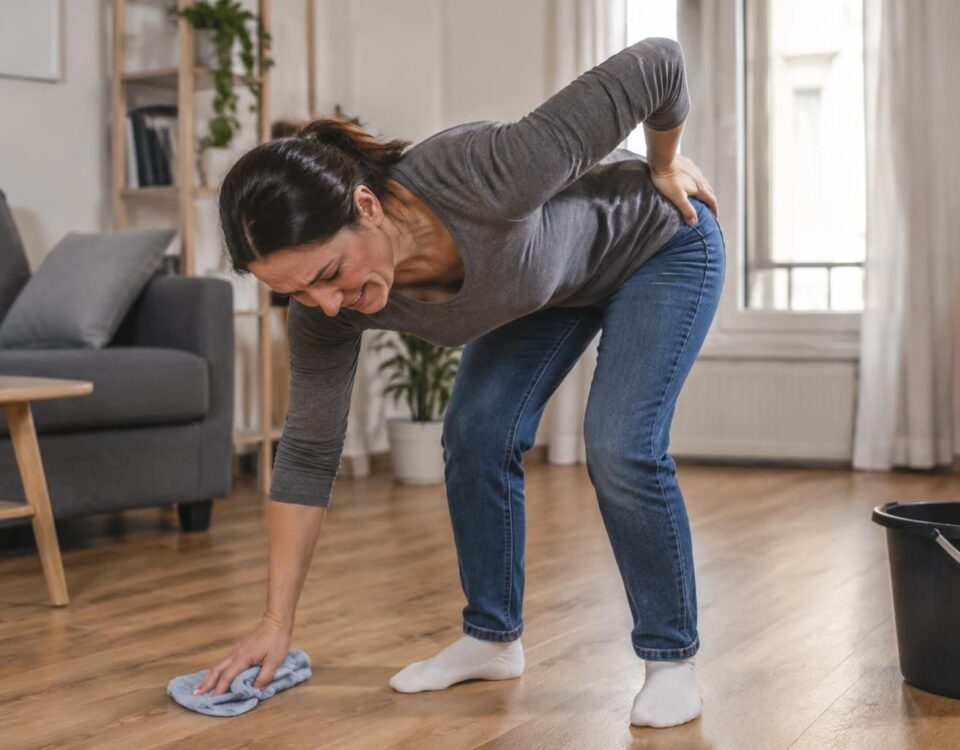
Sciatica and floor washing: prolonged bending and pain
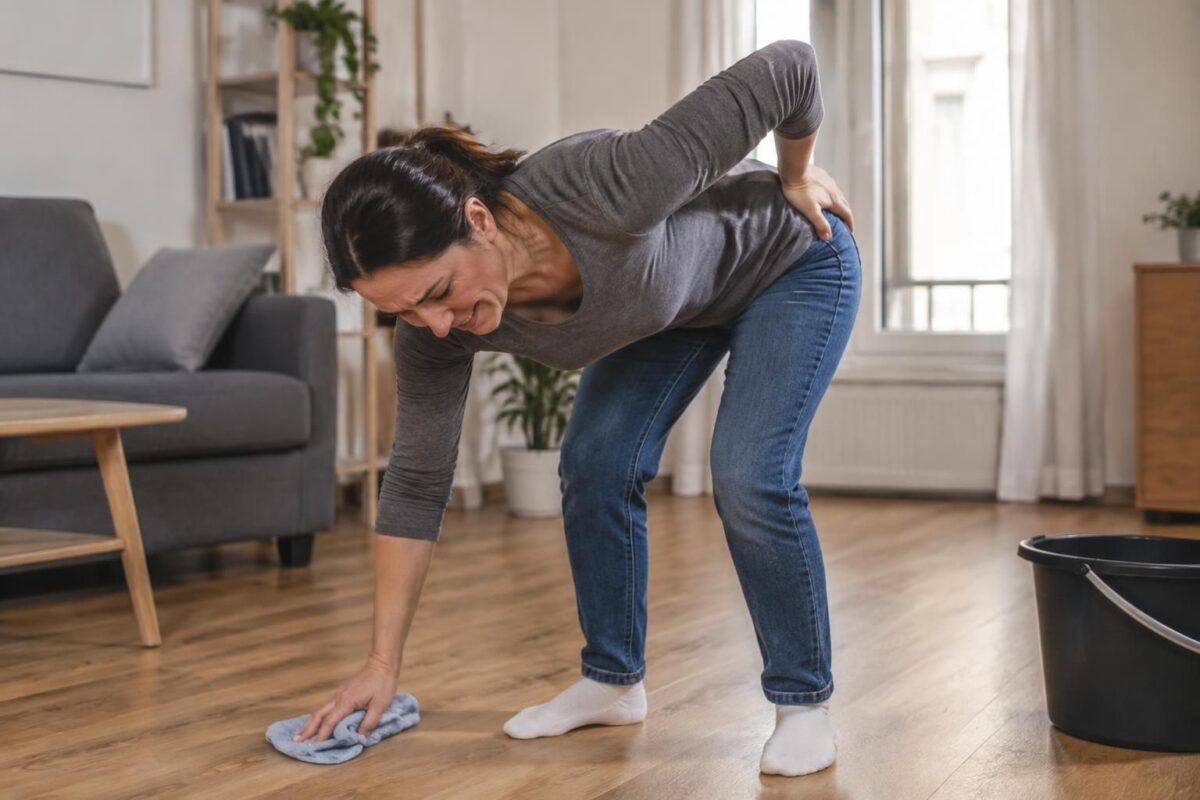
IN BRIEF Sciatica is a pain related to irritation of the sciatic nerve; mopping the floor while remaining bent for a long time can worsen it. To limit discomfort, use a long handle, keep your back as neutral as possible,…
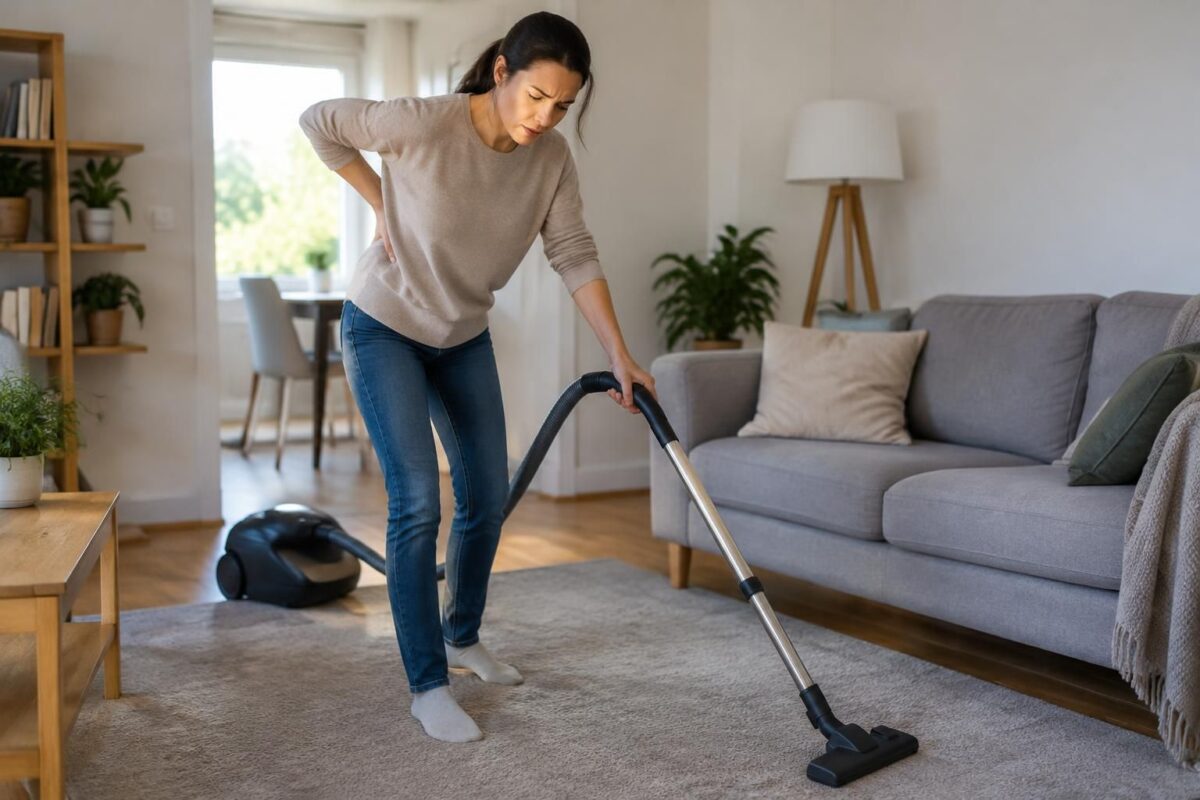
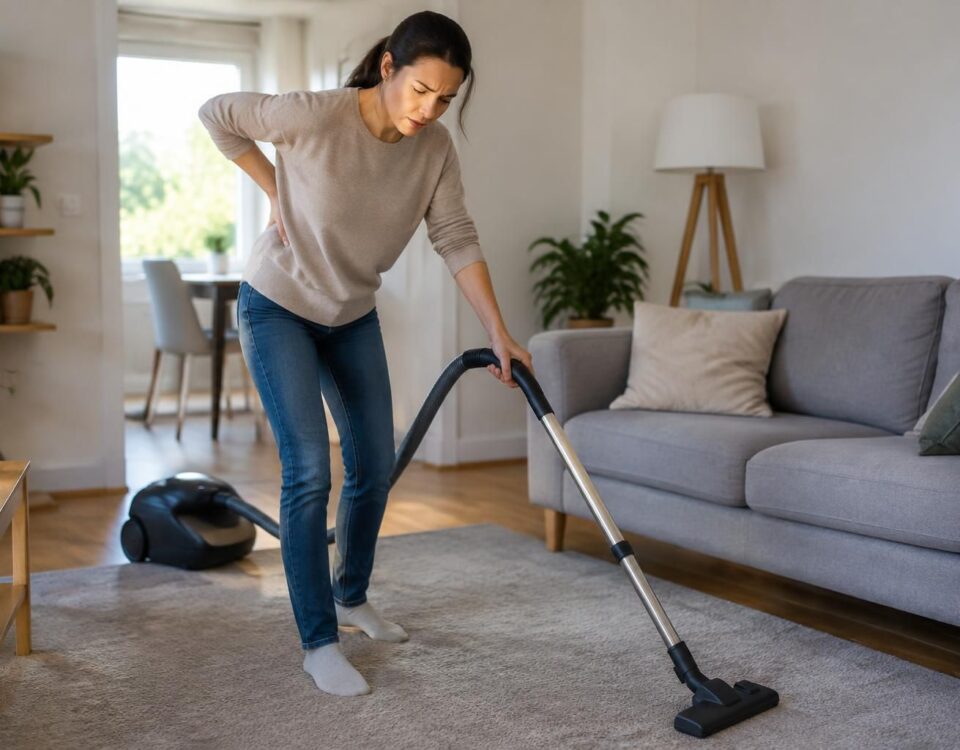
Sciatica and vacuuming: repetitive movement to watch out for
IN BRIEF Vacuuming with a sciatica can trigger pain because repeated bending and twisting strain the back. Break up the cleaning, keep the device close to you, and turn with your feet rather than twisting. Take a break if the…
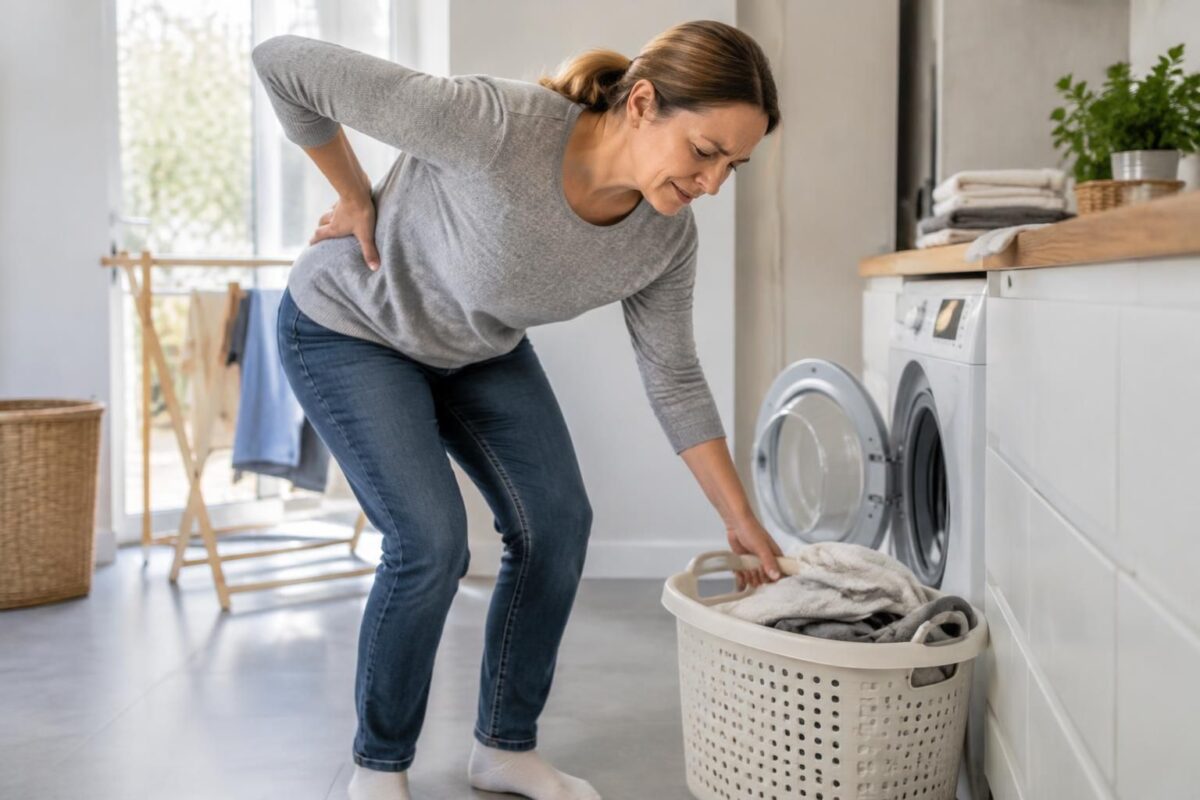
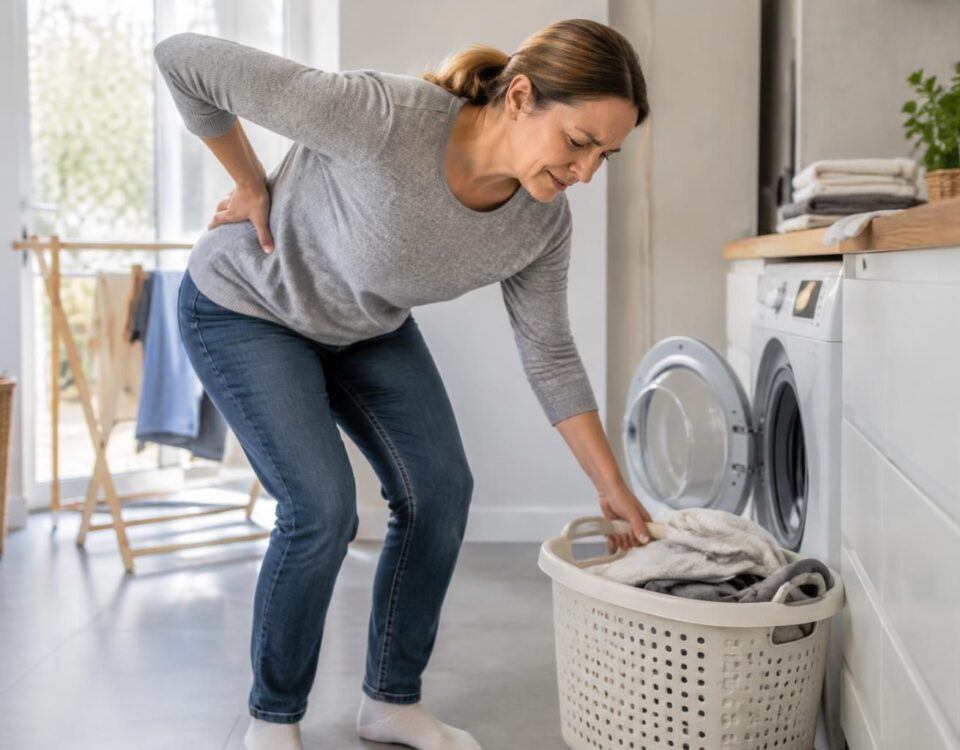
Sciatica and household chores: twists, bends, and loads
IN BRIEF Sciatica can be aggravated by bending, twisting, and carrying loads while doing housework. Breaking tasks into smaller parts, taking breaks, and adjusting movements help manage effort without necessarily stopping everything. In Montreal, an assessment can help tailor activity…
When pain persists or changes
Sciatica can evolve slowly. Its duration is not enough to indicate whether management is effective or not. Instead, look at the general trend: is the pain decreasing, are the episodes less frequent, and can you gradually resume certain activities?
If the symptoms do not improve over time, worsen, or change significantly, a healthcare professional may need to reevaluate the situation. The article on persistent sciatica despite rehabilitation presents elements to consider. You can also check the recommendations on sciatica.
A new or marked weakness in the leg requires medical attention. Case reports such as sciatica with leg weakness in Terrebonne and sciatica with leg weakness in Montreal do not replace an individual evaluation.
Signs that warrant medical advice
Consult promptly if pain occurs after an accident, if you have a fever, or if your condition significantly deteriorates. These situations require evaluation as they may necessitate a different management approach. To learn more, read the information on sciatic pain after an accident and on sciatica accompanied by fever.
If you have pain related to a herniated disc, seek advice from a professional before changing your efforts. Avoid relying solely on general lists of exercises or movements to avoid. This article on exercises sometimes discouraged in case of sciatica may provide additional information, but it does not replace advice tailored to your symptoms.
Key points for lifting a load with sciatica
The correct technique remains useful, but it is not enough to determine whether an effort will be well tolerated. The weight, repetition, duration, and the current sensitivity of the nerve also influence the reaction. Gradually adapting the load and observing symptoms after the effort allows for finding a more appropriate level, without imposing a systematic avoidance.
Medical disclaimer: The information and advice provided on this site do not replace the opinion, diagnosis, or treatment of a healthcare professional. Please note that Sylvain Desforges, B.Sc., D.O., N.D., doctor in osteopathy, is neither a medical doctor nor a physician, and is not a specialist in a medical specialty as defined by the Collège des médecins du Québec. Manual medicine, functional medicine, and sports medicine as described on this site exclude any medical treatment or diagnosis made by a physician or medical specialist. Always consult your doctor for any medical questions. For more details, please read our full Legal Notice.
- Technique helps distribute effort, but does not eliminate nerve sensitivity.
- A well-lifted load can still exceed the tolerance threshold at the moment.
- The risk also depends on the weight, repetitions, and duration of the effort.
- A lasting pain after exertion invites a reduction of the load and a gradual resumption.

In case of sciatica, adopting a good technique for lifting a load is useful, but it is not always enough to avoid pain. The weight, repetition, duration of effort, and your current sensitivity also matter. The goal is therefore not to avoid everything, but to adjust efforts and resume gradually while observing your body’s reactions.
Why doesn’t good technique guarantee the absence of pain?
Lifting an object mobilizes several parts of the body: trunk muscles contract to stabilize the spine, while the pelvis and posture adjust to maintain balance. These adaptations are usual. However, during sciatica, the nerve may be more reactive to stress. A well-mastered posture does not necessarily eliminate this sensitivity.
It is therefore possible to feel pain even when bending the knees and keeping the object close to the body. This does not automatically mean that damage worsens. Pain may signal that the strain temporarily exceeds your tolerance threshold, meaning the amount of effort your nervous system can endure without maintaining symptoms.
The dosage of effort matters as much as the gesture
A light load lifted once is not equivalent to several heavy objects lifted successively. Similarly, staying bent for a long time can be more demanding than a brief movement. To evaluate an effort, consider weight, frequency, and duration, but also your level of pain and recent activity.
Adapt load lifting to your sensitivity
When symptoms are sensitive, start with light loads and short efforts. Reduce the number of repetitions or break a task into several steps. If you need to move several objects, take breaks and avoid, when possible, staying in a bent position for long.
The technique remains a useful guideline: keep the load close to your body, take the time to settle, and avoid sudden movements. But do not seek a “perfect” posture that would guarantee the absence of pain. The most important thing is to choose a way to lift that you can do without excessive effort, and then adjust the amount of work to your current tolerance.
Resume gradually instead of avoiding everything
Avoiding all loads may seem protective at first. However, a prolonged absence of effort can make their resumption more difficult: a strain previously habitual may then seem too much. The body adapts to stresses when they are introduced gradually.
Therefore, reintroduce tasks step by step: try a light load, observe your reaction in the hours that follow, and then gradually increase if symptoms remain acceptable. Moderate and transient discomfort during the effort may be compatible with this adaptation. On the other hand, if the pain is significantly stronger and persists in the following days, reduce the load or the number of repetitions before trying again.
Follow the evolution rather than a single painful episode
Note whether the pain decreases overall, whether walking becomes easier, or whether episodes are less frequent. These trends help adjust the resumption. If symptoms do not improve over time or change significantly in nature, seek medical advice to reassess the situation. The physiotherapy team at the Kiné Sport Versailles office can assist you in adapting efforts to your recovery.
| Factor | Why technique is not enough |
|---|---|
| Nerve sensitivity | A sciatica can make the nerve more reactive, even if the movement is well executed. |
| Weight lifted | An excessively heavy load can exceed the tolerance threshold at the moment. |
| Repetition | Multiple successive lifts can accumulate stresses. |
| Duration of effort | Staying bent for a long time can exacerbate symptoms. |
| Reaction after effort | A lasting pain in the following days suggests excessive load. |
| Progression | Gradually reintroducing loads helps to restore the capacity to tolerate them. |
Illustrative testimonials: these situations are general examples and do not necessarily correspond to individuals followed by a practice.
“I had learned to bend my knees and keep my back straight to lift a bag. However, after several trips with loads, my leg pain flared up. I realized that my posture wasn’t everything: the number of repetitions and my level of sensitivity that day also mattered.”
An adapted technique can help distribute effort, but it doesn’t guarantee the absence of pain. During a sciatica, the nerve may react more to certain stresses. The weight carried, the repetition of movements, and the time spent in a bent position can thus influence symptoms.
“I thought one should avoid any load until there was no feeling left. After a period without effort, even carrying a few groceries seemed difficult to me. By starting with light objects and gradually increasing, I was better able to identify what I could tolerate.”
Systematically avoiding any effort can sometimes make resuming more challenging. A progressive reintroduction of loads, taking into account the response in the hours and days that follow, allows for activity adjustments. A mild and temporary discomfort does not hold the same significance as a significantly increased and persistent pain.
“I knew how to lift correctly, but I wanted to move several boxes in a row. The pain increased afterward. It wasn’t necessarily my technique that was the problem: the effort was too long and too intense compared to what I could do at that moment.”
The right method also involves dosing the effort: starting with a moderate load, limiting repetitions, and taking breaks if necessary. The technique remains useful, but it should be adjusted to the moment’s tolerance rather than considered an absolute protection.
“My symptoms varied from day to day. I could carry a bag with ease one morning, then feel more discomfort after an already tiring day. I learned to look at trends over several days instead of judging my recovery based on a single effort.”
A fluctuating pain does not automatically mean that the sciatica is worsening. If it decreases overall and activities gradually become easier, the evolution may remain compatible with an ongoing recovery. Conversely, a significantly increased pain or sharply changing symptoms justify seeking professional advice.
Lifting an object by bending the knees and keeping the back straight is often presented as the essential rule for protecting one’s back. This technique can help better distribute effort, but it does not guarantee the absence of pain on its own. In the case of sciatica, the reaction also depends on the nerve’s sensitivity, the weight carried, the number of repetitions, and the body’s ability to tolerate the strain at that specific moment.
Carrying a load forces the trunk and pelvis to adjust to maintain balance. The muscles contract to stabilize the spine and assist the movement. These adaptations are normal. However, when a nerve is irritated, it can become more reactive to stresses. A correctly executed posture can therefore still cause pain if the effort exceeds the temporary tolerance threshold.
This reaction does not necessarily mean that the nerve is fragile or that an injury is worsening. It rather indicates that the nervous system is more sensitive and that a given demand is temporarily less well tolerated. A load that was previously easy to carry can thus trigger symptoms, especially if it is heavy, lifted several times, or manipulated in a maintained bent position.
The technique remains useful: bringing the object closer to the body, avoiding abrupt movements, and distributing the load can make the action more comfortable. But it cannot entirely compensate for an accumulation of efforts or a reduced capacity at that moment. Intensity, repetition, and duration matter just as much as how one lifts. Carrying a light bag once does not impose the same strain as moving several heavy objects in succession.
Conversely, avoiding any load for a long time is not always the best solution. A temporary reduction in efforts can relieve symptoms, but a prolonged absence of demands may make resuming more challenging. The body gradually adapts to stresses: muscles improve their coordination, and the nervous system can modulate its reactivity when exposure is dosed.
A gradual return allows for evaluating this tolerance. It is possible to start with light objects, limit the number of repetitions, and then increase demands based on the observed reaction. A mild and brief discomfort during effort may be compatible with this adaptation. A significant increase that persists in the hours or days that follow suggests that the load was excessive and that the effort level needs adjusting.
This approach aligns with the vision of Sylvain Desforges, an expert in osteopathy, naturopathy, and manual medicine, founder of the TAGMED clinics and founding president of the ACMA association. His career is dedicated to innovation in health and the management of chronic pain, integrating technologies such as spinal decompression, laser, and shock waves. Personalization of care and reliance on available data are part of the principles associated with his mission.
When sciatica persists, assessment does not just involve checking posture during a lift. It is also useful to observe the general evolution: less intense pain, longer walking, or less frequent episodes. A slow improvement may remain compatible with an ongoing recovery. If symptoms do not progress over a prolonged period or change markedly, a reevaluation by a healthcare professional can help adapt management and daily activities.
With sciatica, lifting a load is not automatically dangerous, and good technique does not always suffice to prevent a painful spike. The weight, repetition, duration of effort, and sensitivity of the nerve at the moment in question also count. The challenge is therefore to adapt movements and resume efforts gradually while observing the body’s reaction.
Carrying a Load During Sciatica: Adjusting Effort
Lifting an object mobilizes the trunk muscles and temporarily alters the distribution of forces in the body. The pelvis and posture adjust to maintain balance: these adaptations are normal. However, during sciatica, the nerve may be more reactive to stresses. A load that was previously supported without difficulty can then awaken pain, without necessarily meaning that an injury has worsened.
The lifting technique can help distribute effort better, but it does not neutralize the sensitivity of the moment. A light object lifted once does not impose the same constraint as several heavy loads moved in sequence or a bent posture maintained for a long time. To better understand the gestures and positions that may vary the symptoms, consult these resources on positions to avoid in case of sciatica and the movements to limit at the beginning of a discal sciatica.
Avoiding any load can provide temporary relief, but a prolonged period without effort may also make recovery more difficult. A progressive approach allows the body to readjust: start with a light load, limit repetitions, and then gradually increase if the symptoms remain acceptable. A slight transient discomfort during effort may be tolerable; a significantly stronger and persistent pain in the hours or days that follow indicates that the strain was likely excessive. Additional advice on sciatica physiotherapy, neurodynamics, and ways to relieve pain can help better understand management options.
When symptoms vary, the general trend is more informative than an isolated day: does the pain decrease over time, do movements become easier, are episodes less frequent? A slow improvement can remain compatible with ongoing recovery. If the pain does not improve over an extended period or changes significantly in nature, a healthcare professional can reassess the situation. Information on pain aggravated in a sitting position, annular tear and nerve irritation, as well as disc degeneration and symptoms in the leg, provide general insights but do not replace an individual assessment.
If you are looking for additional insights, you can also consult these recommendations on what to do and what to avoid. In the presence of unusual or concerning signs, particularly a loss of sensation in the perineal area or new difficulties in controlling the bladder or bowels, seek medical advice promptly; the signs of cauda equina syndrome require urgent attention.
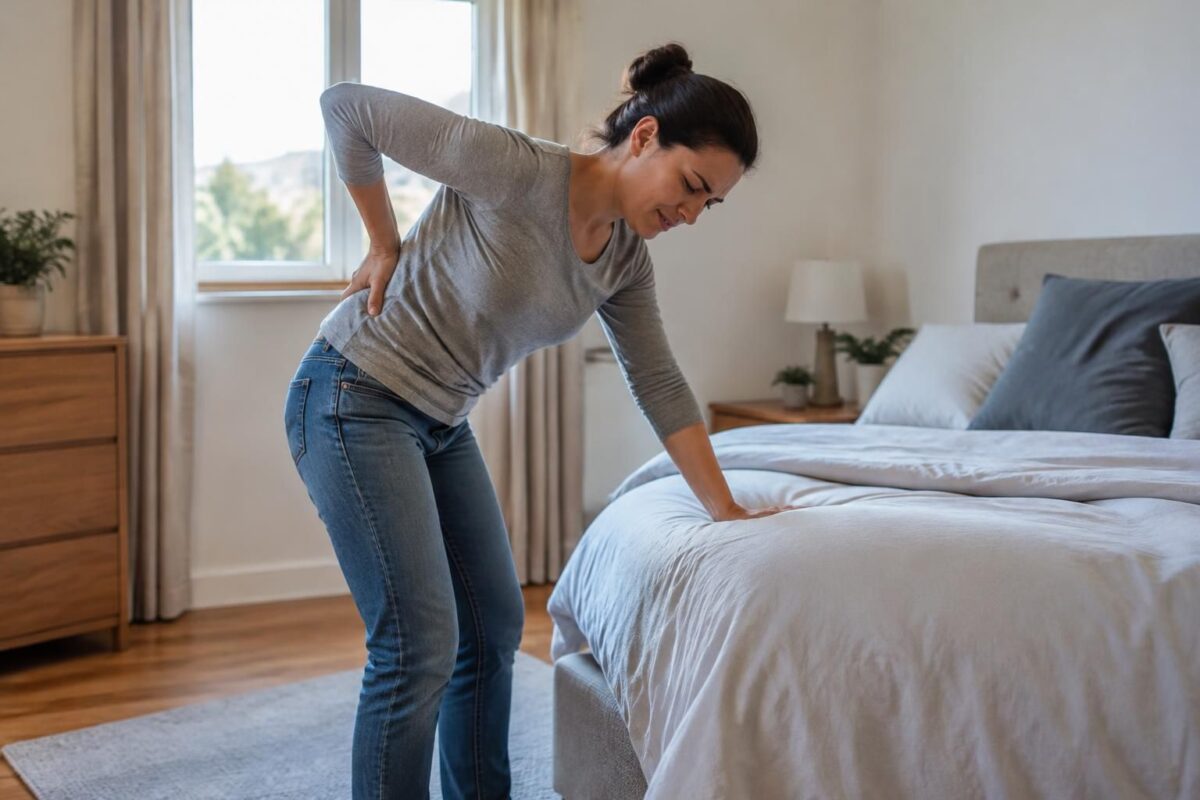
Sciatica and Making the Bed: Repeated Flexion and Lumbar Irritation
IN SHORT Sciatica is pain related to irritation or compression of the sciatic nerve. Making your bed can strain the lower back if bending is repeated, especially when rounding the back or twisting the torso. To limit lumbar irritation, bend…
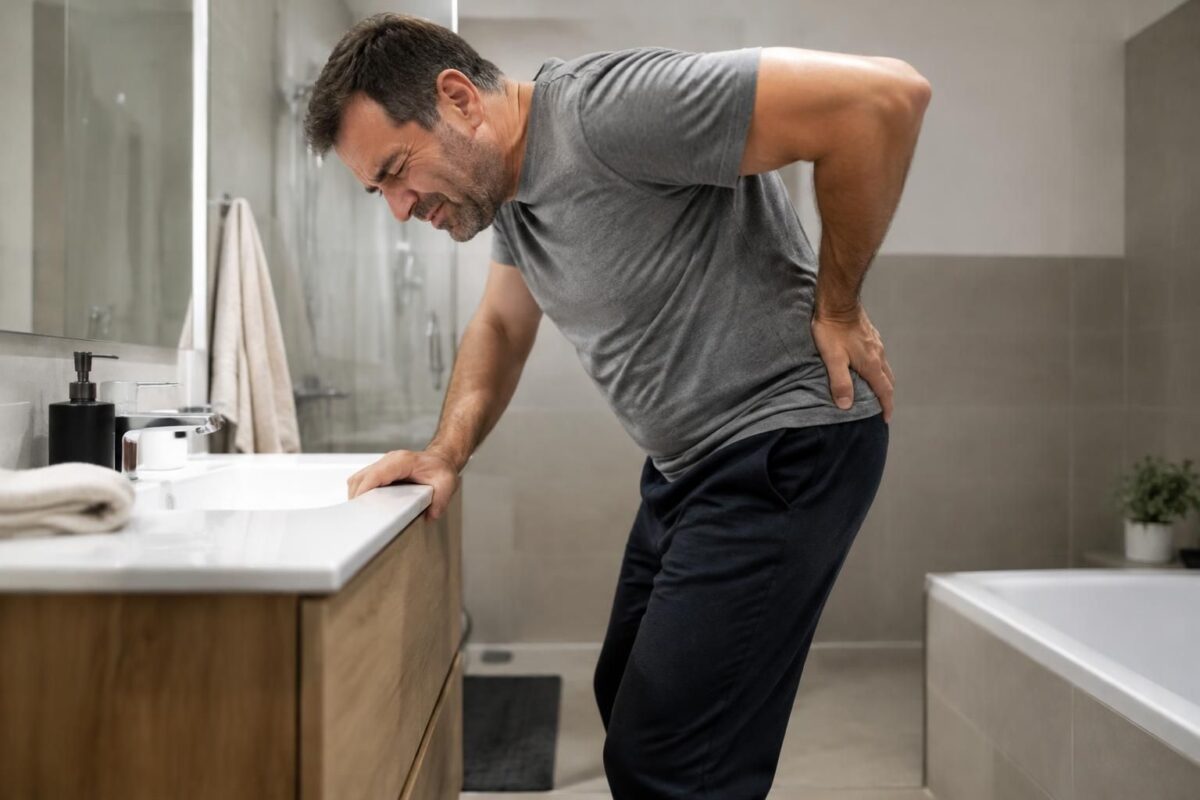
Sciatica and bending over the sink: pain in the leg
IN BRIEF Sciatica is pain related to irritation or compression of the sciatic nerve, which can extend from the lower back down to the leg. Bending over the sink can exacerbate the pain, especially if this position increases pressure on…

Sylvain Desforges, B.Sc., D.O., N.D., docteur en ostéopathie
Dr Sylvain Desforges, B.Sc., D.O., N.D., osteopath, is the founding president of TAGMED and of the ACMA association. He dedicates his practice to chronic spinal pain, low back pain and symptoms compatible with sciatica, particularly when pain radiates toward the buttock, leg, calf, foot or toes.
Through SOS Sciatique, he publishes educational content on sciatica symptoms, possible causes such as disc herniation, disc narrowing, foraminal stenosis or irritation of a lumbar nerve root, as well as non-surgical approaches that may be considered according to the evaluation. At Clinique TAGMED, care may include, depending on the case, motorized neurovertebral decompression, specific osteopathic care or precision percussion.
For an evaluation related to sciatica treatment in Montreal / Mount Royal or sciatica treatment in Terrebonne, please consult the services available at Clinique TAGMED.
Medical disclaimer
The information published on SOS Sciatique is provided for educational purposes only and does not replace a consultation, diagnosis, opinion or treatment provided by a physician or another authorized healthcare professional. The author of this article is neither a medical doctor nor a specialist in a medical specialty recognized by the Collège des médecins du Québec. The osteopathic, manual medicine or functional support approaches described on this site do not constitute medical acts and are not intended to replace medical follow-up.
Consult a physician or emergency service in cases of loss of bladder or bowel control, anesthesia in the saddle area, significant or progressive weakness in the leg or foot, fever, recent trauma, severe pain or rapid worsening of symptoms. For more details, please read our Legal Notice.