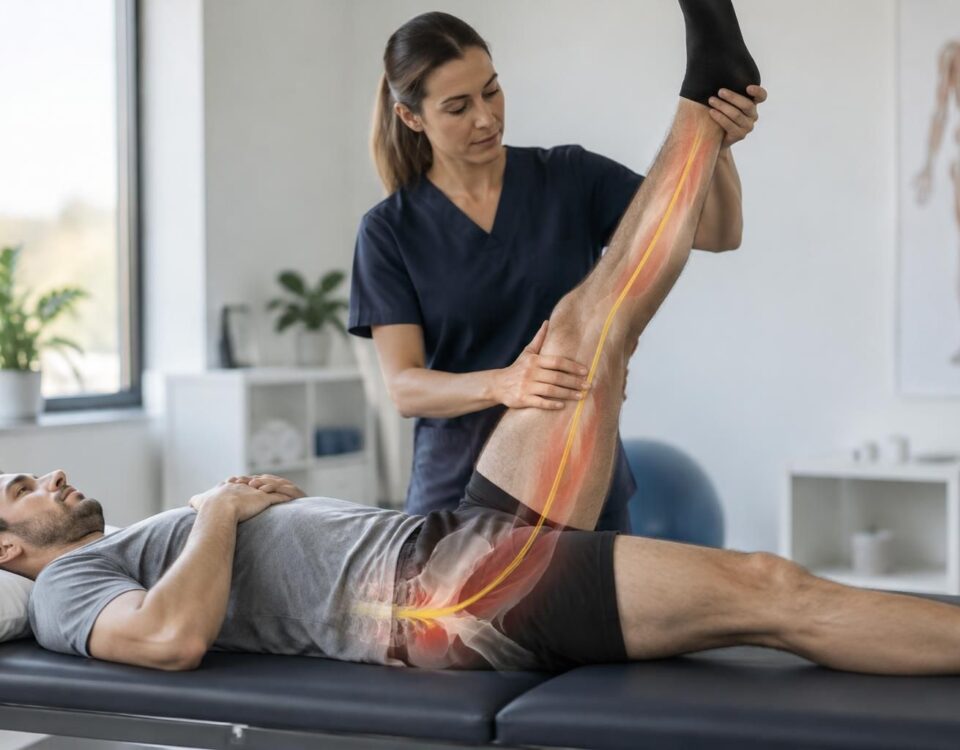
Sciatica and pain radiating to the buttock: what to understand?
09/08/2026
Toe pain and sciatica in Montreal: why think of L5?
10/08/2026
IN BRIEF |
| In brief, sciatica appearing after a long phone call while sitting is pain that starts from the lower back and can radiate into the leg. Benefits: practical ergonomic tips and simple exercises to prevent and relieve quickly, without delay. How it works: prioritize active breaks, adopt a proper posture, apply heat or cold, and resort to first-line treatments like anti-inflammatories and physiotherapy if necessary. The goal is to stay active and avoid chronicity. In Paris, these recommendations are particularly directed at professionals who spend long hours sitting during calls. |
Sciatica is a pain that follows the path of the sciatic nerve from the lower back to the leg, often described as burning or like an electric shock. After a long phone call while sitting, the pain may intensify due to posture and prolonged pressure on the spine. The pain can affect one leg and vary depending on the affected root. To relieve quickly, prioritize active breaks, walk, and adopt a ergonomic posture (chair with lumbar support, feet flat) and gentle stretches. If the pain lasts several weeks or is accompanied by signs like marked weakness or urinary issues, consult a doctor; treatment usually begins with NSAIDs and analgesics, complemented by physiotherapy and postural measures.
After a long phone call while sitting, you may experience pain that follows the path of the sciatic nerve. This pain can feel like an electric shock, a burning sensation, or a dull ache that extends into the buttock, thigh, or leg. This article explains why this may happen and what you can do to relieve it quickly and prevent recurrences, without systematically resorting to unsuitable exercises.
Sciatica can occur after a prolonged sitting period. The sitting position keeps the spine in rotation and increases pressure on the intervertebral discs, which can irritate the sciatic nerve. This mechanism is more frequent in individuals with existing nerve irritation, such as a herniated disc or spinal canal stenosis. For some people, simply sitting for a long time can trigger pain that radiates along the leg, especially when support is insufficient or posture is hunched.
Causes and Contributing Factors
Pain can result from a combination of factors. Poor posture, an unsuitable chair, and lack of active breaks contribute to the onset of sciatic pain after a long call. Age, overweight, and certain lumbar conditions also increase the risk. Repetitive movements or sudden exertion after a period of inactivity can trigger or worsen the symptom. To better understand these mechanisms, you can consult specialized resources on ergonomics and sciatic pain.
Useful resources for ergonomics and sitting position are available on various specialized sites. For example, advice on selecting chairs and sit-stand transitions delves into how to limit pressure on the sciatic nerve and improve posture throughout the day. To learn more, you can read dedicated guides on ergonomics and sciatic pain on the following pages: Sciatica and Ergonomic Chair and Sit-Stand Transitions. You can also find information on sitting position and mistakes to avoid on unibionor.fr.
Signs to Watch For and When to Consult
Watch for pain accompanied by tingling, numbness, weakness, or urinary/bowel issues. If the pain rapidly worsens or you experience significant loss of strength in the limb, you should consult quickly. In cases where the pain persists for several weeks or is accompanied by neurological signs, a doctor may propose a thorough evaluation, including imaging tests if necessary.
For general information, resources on the causes and treatments of sciatica can be consulted via specialized sites, including Medecindirect.fr and Le Médecin. These links provide additional insights into typical symptoms and general management options.
Practical Tips After a Long Phone Call
To reduce pain and prevent worsening, take regular breaks and allow your back to return to a neutral posture. Maintaining an ergonomic workspace can make a big difference: keep your feet flat on the floor, support your lower back, and avoid remaining still for too long. Adjust your seat so that your hips are slightly higher than your knees and your spine remains aligned. For concrete advice on ergonomics and sit-stand transitions, refer to the following resources: How to Choose an Ergonomic Chair and How to Manage Sit-Stand Transitions.
If the pain persists, it may be helpful to discuss treatment options with your doctor, including non-surgical approaches offered by specialized clinics. Clinical resources like TAGMED Clinic provide tailored alternatives based on your situation. For people experiencing pain related to a herniated disc or stenosis, information on mechanisms and management options can be found on SOS Herniated Disc and SOS Herniated Disc.
In some cases, approaches like neurovertebral decompression may be discussed with your doctor as a non-surgical option. To learn more, you can visit Neurovertebral Decompression.
Management Options and Resources
The initial treatment often relies on simple and targeted measures aimed at reducing nerve irritation and promoting a return to activity. If necessary, non-surgical treatments can be proposed by specialists or dedicated clinics, notably in Montreal or Terrebonne via TAGMED Clinic.
For questions related to specific conditions like decompression or structural causes, refer to specialized resources such as SOS Herniated Disc and SOS Sciatica.
If in doubt, always discuss with your treating physician. For a general presentation of sciatica, you can also consult official and professional resources on sites dedicated to osteopathy and pain, while being attentive to the use of non-invasive treatments and ergonomic advice provided by your doctor and therapist.
Medical disclaimer: The information and advice provided on this site do not replace the advice, diagnosis, or treatment of a healthcare professional. Please note that Dr. Sylvain Desforges, osteopath, is neither a medical doctor nor a physician, and is not specialized in a medical specialty as defined by the Collège des médecins du Québec. Manual therapy, functional medicine, and sports medicine as described on this site exclude any treatment or medical diagnosis made by a doctor or specialist. Always consult your physician for any medical questions. For more details, please read our full Legal Notice.
Answers to frequent questions and treatment options: public and professional resources recommend a progressive approach and appropriate activation rather than prolonged rest. To assess your situation and discuss a suitable plan, contact your doctor or a specialized clinic, like TAGMED, which can offer relevant options based on your context. Additional information on prevention and daily management is available through the links above.
Reference and safety: the information presented is based on common clinical practices and specialized resources, and aims to facilitate a clear and practical understanding of the situation after a long seated phone call.
- Sciatica: pain starting from the lower back and radiating to the buttock and leg (sometimes burning or electric shock).
- Trigger: prolonged sitting, especially during a long phone call.
- Associated symptoms: paresthesias or foot weakness.
- Pathway: follows the sciatic nerve, potentially reaching the foot according to L5/S1.
- Posture: chair and back supported, feet flat, regular breaks.
- Activity: light walking after the call and gentle stretching.
- Accessories: lumbar support and cushion to slightly elevate the legs.
- When to consult: pain persists > 2–3 days or motor deficit, contact.

This article provides practical recommendations for managing sciatica pain triggered or worsened by a long phone call while seated. You will find simple advice for adjusting your workstation, safe exercises to perform after a call, relief techniques, and signs that require consultation.
Understanding the issues of sciatica pain after a seated call
The pain follows the path of the sciatic nerve, the longest in the body, and can manifest as a burning sensation, an electric shock, or numbness along one leg. Sitting for long periods increases pressure on the spine and can amplify pain, especially if the back is poorly supported or if movements are limited. This phenomenon is common after prolonged periods of phone calls or working in front of a screen.
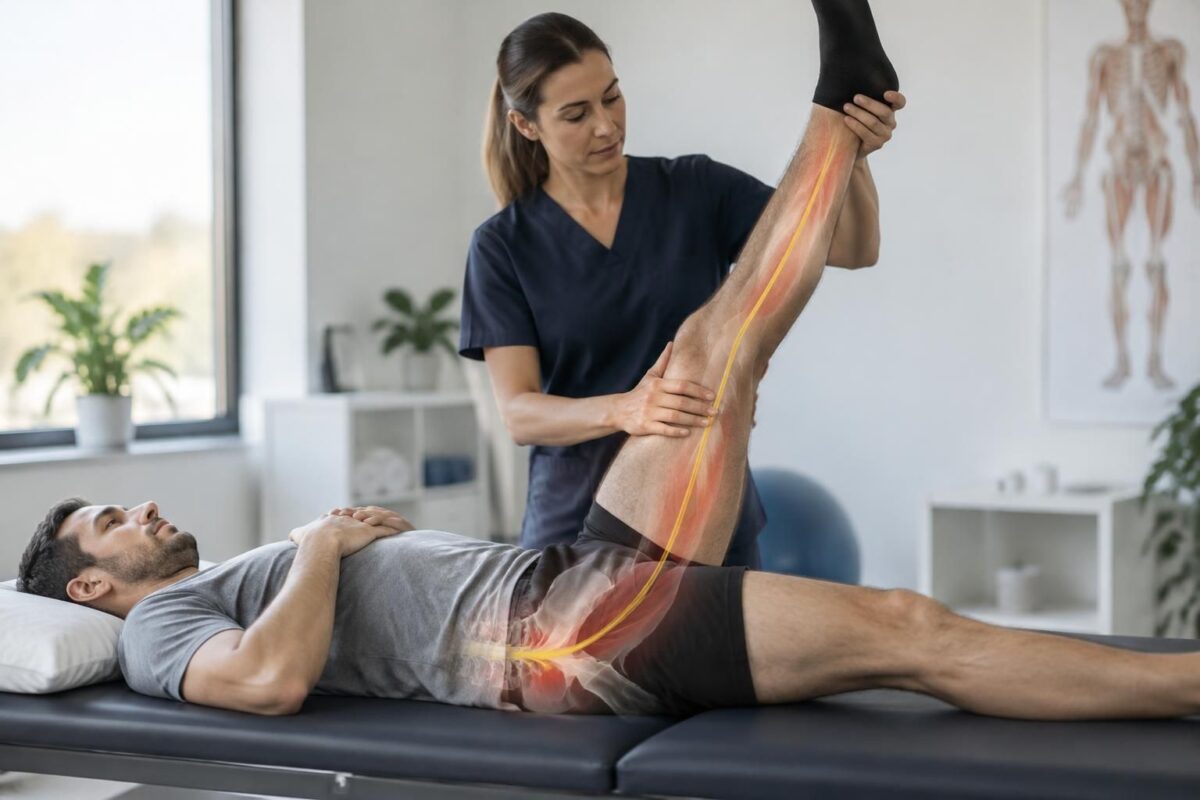
Sciatica and hamstring stretching: possible nerve tension
IN BRIEF Sciatica can make stretching the hamstrings uncomfortable, as the tension felt may come from the nerve rather than the muscle. A gentle stretch, with a straight back and without seeking maximum range, can help loosen the back of…
Arranging your workstation and posture
Ensure that your chair provides lumbar support and that your feet rest flat on the floor. Adjust the height of the screen to avoid tilting your head or curving your back. Avoid painful positions: favor those that provide relief and move as soon as possible between calls. For some people, adding a small cushion under the lower back can improve support and reduce tension on the discs.
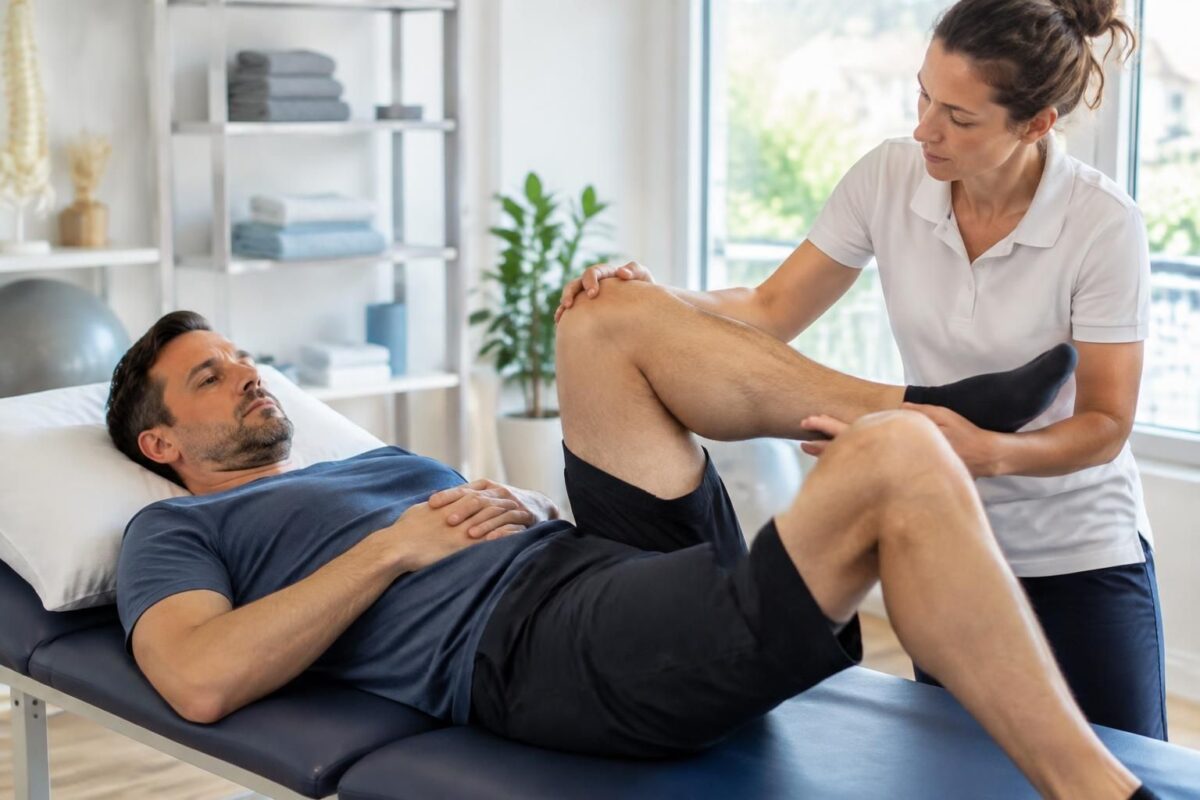
Sciatica and piriformis stretching: useful or worsening depending on the case
IN BRIEF Piriformis-related sciatica can cause deep pain in the buttock, sometimes radiating down the back of the thigh. A gentle stretch can loosen the hip and relieve discomfort if the muscle is involved, but it can worsen symptoms if…
Exercises and useful actions after a long call
Simple exercises to perform
Lie on your back, bring both knees towards your chest and hold for two minutes to relax the lower back. Then, while lying down, bend one leg and bring it across to the other side, crossing the other leg over it; hold for 30 seconds then switch sides. Finally, extend your legs and arms above your head, gently press your lower back against the floor, and hold for several minutes while breathing deeply.
Immediate pain management
If you experience acute pain after a call, alternate between warmth and short rest and listen to your body. Avoid movements that worsen the pain and prioritize gentle actions. If the pain persists despite these actions, seek advice from your doctor or pharmacist to consider appropriate pain relief options for your situation.

Sciatica and popular stretches: why to stay cautious
IN BRIEF Sciatica causes pain that radiates from the lower back down the leg. Popular stretches, such as the pigeon pose or hamstring stretches, are not always suitable: pulling on an irritated nerve can worsen the symptoms. Favor gentle movements,…
Pain management and non-drug treatments
Mobility is recommended rather than prolonged rest. Non-steroidal anti-inflammatory drugs (NSAIDs) and a simple pain reliever may be useful according to medical advice. Physiotherapy or osteopathy may complement the treatment with targeted exercises and mobilization techniques. In stubborn cases, injections or other specialized therapies may be considered after medical evaluation.

Sciatica and Pilates: movements to adapt
IN SHORT Sciatica causes pain that can radiate from the lower back down to the leg. The Pilates Reformer can promote a gradual return to movement and strengthen core control, provided that the movements, range, and resistance are adapted. Favor…
Warning signs and when to consult
Quickly contact a doctor if you notice significant loss of strength in the leg, urinary or fecal disturbances, or if the pain worsens rapidly despite rest and usual treatments. These signs may indicate a complication requiring urgent assessment.

Sciatica and core stability: variable tolerance depending on symptoms
IN BRIEF Core strengthening in case of sciatica consists of progressively strengthening the trunk muscles. Its tolerance varies depending on pain and symptoms: suitable without worsening the pain, it can support mobility and the resumption of activities, but does not,…
Prevent during future calls and daily
Schedule breaks every 30 to 60 minutes to stand up, walk briefly, and do gentle stretches. Regularly practice back and abdominal strengthening exercises, maintain a healthy weight, and prioritize gentle activities like walking, swimming, or cycling. Adopt a routine that combines proper posture, physical activity, and stress management to improve pain tolerance and prevent recurrences.
| Item | Concise Details |
|---|---|
| Typical symptoms while seated | Low back pain radiating along the sciatic pathway, sometimes with a burning sensation or electric shock, accompanied by tingling. |
| Main origin | Compression/irritation of the sciatic nerve due to poor posture and/or herniated disc or narrow lumbar canal. |
| Effect of prolonged sitting posture | The sitting position prolongs inflammation and may worsen symptoms. |
| Immediate tips during the call | Change position, stand up and move every 20–30 minutes; lumbar support if recommended. |
| Quick exercises during the day | Active micro-breaks and gentle stretches: pelvic tilts, trunk rotations, and walking in place. |
| Postures to prioritize / to avoid | Favor a upright sitting position with feet flat; avoid twisting and aggravating positions. |
| Activity after the call | Resume suitable physical activity: walking, swimming, or cycling to promote mobility. |
| Warning signs requiring urgent consultation | Motor deficit, urinary disturbances, or pain that worsens despite rest. |
| When to consult if pain persists | Medical evaluation if symptoms persist beyond 6 weeks. |

Sciatica and lunges: leg pain to watch out for
IN BRIEF Sciatica is pain that starts from the lower back or buttock and radiates down the leg. If a lunge triggers or worsens this pain, stop the movement and adjust your activity: this exercise does not address sciatica. Consult…
Testimonials on sciatic pain after a long phone call in a seated position
Marie, 46, shares her experience after a long phone call while sitting. She describes a sciatica that began as a dull pain in her lower back and quickly radiated down her leg, with a sensation of electric shock. “I felt like the pain would make me fall off my chair,” she recalls. After trying to hold the call, she had to stand up, walk, and do some stretches. Today, she prioritizes regular breaks and suitable physical activity to prevent flare-ups and recommends using a lumbar belt when pain returns.
Marc, 39, describes his daily life after several hours of sitting during an extended phone call. He felt lumbopelvic pain that progressed to the sciatic nerve, causing paresthesia in his leg and temporary weakness when trying to stand up. “The secret is not to stay frozen,” he explains. Initially, he took anti-inflammatories, then added physiotherapy sessions and micro-breaks to walk and stretch. He strongly advises staying active and focusing on back and abdominal strengthening exercises.
Nadia, 52, testifies after a long phone call while working from home, during which she experienced sciatic pain after sitting too long. She describes pain that extends from her lower back to the lower leg, sometimes accompanied by tingling in her foot. “I had to interrupt my conversation and stand up to move slowly,” she confides. Nadia found relief with stretching exercises and occasional heat application. She emphasizes the importance of creating active breaks and adapting her workspace ergonomics to limit the risk of recurrence.
Thomas, 63, recounts how a long call in a meeting room triggered a sciatica radiating from his lower back to the back of his leg. He describes pain that intensifies when he remains seated and decreases when he stands or walks slowly. For him, the key was integrating regular breaks, relief postures, and simple exercises done at his desk. He also appreciates the help of a physiotherapist and a lumbar belt during more painful periods. He strongly advises listening to one’s body and not waiting for the pain to worsen to take action.
Claire, 41, shares a similar experience after an inevitable long phone call while sitting. She felt sciatic pain that spread along her leg, with a sensation of heaviness in her back. “I initially tried to stay active during breaks,” she says. She then integrated mobility and strengthening exercises, along with relaxation techniques to better tolerate the pain. Claire asserts that arranging her workspace and taking regular micro-breaks helps her manage painful episodes better and prevent future flare-ups.

Sciatica and deadlifts: risk depending on the cause
IN BRIEF Sciatica and deadlifts are not always incompatible: the risk depends on the cause of the pain and its intensity. During acute episodes, it’s best to avoid heavy loads and seek medical or physiotherapy advice before resuming. A gradual…
Biography of Dr. Sylvain Desforges and his approach to sciatic pain after a long call in a seated position
Dr. Sylvain Desforges is a recognized practitioner in the fields of osteopathy, naturopathy, and manual medicine. At the helm of TAGMED clinics and founding president of the ACMA association, he has built a reputation as an innovator dedicated to chronic pain. His journey is guided by a simple conviction: to treat the patient as a whole, relying on evidence and advanced technologies to sustainably improve quality of life.
As part of his practice, Dr. Desforges has specialized in chronic pain management and the integration of innovative therapeutic solutions, notably spinal decompression, therapeutic laser, and shockwave therapy. This multidisciplinary approach enables concrete and personalized responses for patients suffering from conditions such as sciatica, whose symptoms can be exacerbated by prolonged postures and repetitive movements at work or in daily life.
Dr. Desforges is particularly interested in the situation where sciatica occurs after a long phone call in a seated position. He highlights the impact of static postures and stress on the spine: inflammation and compression of nerve roots can worsen when the back remains immobile for hours. His approach aims to combine ergonomic advice, manual therapies, and technological options to break the pain-weakness cycle and promote a return to normal activities.
His diagnostic approach relies on a rigorous clinical assessment, complemented when necessary by imaging tools and examination results that allow for targeted treatment without immediately resorting to surgery. He favors conservative and progressive measures, combining physiotherapy, osteopathy, and any targeted mechanistic treatments. The patient benefits from a personalized plan that may include spinal decompression sessions, laser modalities, and shockwave therapy, always in an evidence-based framework tailored to their profile.
At the heart of his philosophy lies prevention and active rehabilitation. Dr. Desforges promotes a routine of regular exercises, active micro-breaks, and simple yet effective postural adjustments for those who spend long hours sitting. He emphasizes the importance of a balanced lifestyle, suitable physical activity, and long-term therapeutic follow-up to reduce recurrences and sustainably improve daily comfort related to sciatica.
As a leader, he is committed to conveying a clear vision of patient care: listening, evaluating, treating with rigor, and monitoring results while remaining attentive to the overall impact of pain on autonomy and well-being. His contribution goes beyond individual care: he fosters a culture of responsible innovation accessible to all who suffer from pain related to prolonged posture, particularly after a long phone call in a seated position.
This summary highlights the key points of sciatica and the associated pain after a long phone call in a seated position. It recalls the mechanisms, signs to watch for, treatment options, and practical gestures to limit discomfort and prevent recurrences, while remaining accessible and action-oriented.
Summary and Recommendations
Sciatica manifests as pain that follows the path of the sciatic nerve, starting from the lower back and descending along the leg. When a prolonged seated position, as during a long phone call, compresses or irritates the nerve roots, the pain can intensify and be expressed as a burning sensation, tingling, or weakness in the foot. The affected segments may be L5 or S1, with variations in radiation that influence diagnosis and treatment.
The main cause is often a lumbosciatica related to compression or inflammation of the nerve, frequently associated with a disc herniation in those under 50 or lumbar canal stenosis in older individuals. The role of sedentary behavior and poor posture is also highlighted, especially in the recent context of increased sitting time and telecommuting. Pregnancy can also contribute to this phenomenon but usually resolves after childbirth.
To act today after a prolonged seated phone call, prioritize movements and positions that relieve pain rather than remaining still. Strict rest should be limited to a few days, after which one should resume suitable and progressive activity. A lumbar belt may be useful temporarily, and manual therapies or physiotherapy offer a safe framework for targeted exercises and a gradual return to movement.
First-line treatments are based on NSAIDs and a simple analgesic such as paracetamol. If pain persists, your doctor may propose stronger options or additional modalities, such as epidural injections or, in the most severe cases, surgery. The use of more potent medications is reserved for medical evaluation and for a limited duration, as risks and side effects must always be weighed. In case of persistent pain, a specialist can intervene to adjust the treatment and evaluate the necessity of an interventional procedure.
Beyond treatments, simple and suitable exercises can facilitate recovery. Stretching and mobilization movements, performed under supervision when necessary, help reduce compression and strengthen the stabilizing muscles of the back. Prioritize activities compatible with your pain: walking, swimming, and cycling are generally well tolerated and support rehabilitation without overloading the spine.
To prevent recurrences, adopt a holistic approach: regular physical activity, strengthening the back and abdominal muscles, ergonomics at work (workspace, screen height, lumbar support), and weight management. Learning proper lifting techniques and asking for help with heavy loads are part of simple but effective measures. Specialized resources and practical guides can accompany this approach, particularly articles dedicated to sciatic pain and advice on prolonged seated posture.
Practical resources and tailored advice exist to deepen understanding and management of pain caused by the location and irritation of the sciatic nerve. For example, analyses on how seated posture influences symptoms and explanations on pain extending to the foot can be consulted via dedicated websites. Additional information and concrete case examples are also accessible on specialized physiotherapy and back medicine pages to help you choose a suitable mechanical or postural approach for your situation.
As part of an information and support space, you can explore complementary resources and tools offered by professionals and dedicated associations. Some references discuss pain mechanisms, treatment options, and therapeutic education programs that promote self-rehabilitation and treatment adherence. To enrich your approach, you can consult links dedicated to prolonged seated posture, heel pain, and symptom location, which provide practical insights and concrete advice to apply in daily life.
Finally, it is crucial to remain attentive to warning signs. A marked loss of strength, urinary or fecal disturbances, or pain that worsens rapidly despite rest require urgent medical evaluation. If in doubt about the severity of your condition or if symptoms persist beyond a few weeks, make an appointment with your primary care physician to evaluate the necessity of imaging or referral to a specialist (rheumatologist, neurologist, or pain center).
For additional information and practical advice, you can consult recognized online resources and reference articles on the science and management of sciatica, including resources dedicated to sciatic pain and sitting posture. Examples of useful sites include specialized pages on back pathologies and practical guides on daily pain management.

Sciatica and squats: why caution is needed
IN BRIEF Sciatica does not always prohibit squats, but a deep or loaded squat can aggravate symptoms, especially during a flare-up. Gradually resume with a neutral back and a comfortable range of motion, and stop if the pain travels down…

Dr Sylvain Desforges, B.Sc., D.O., N.D., osteopath, is the founding president of TAGMED and of the ACMA association. He dedicates his practice to chronic spinal pain, low back pain and symptoms compatible with sciatica, particularly when pain radiates toward the buttock, leg, calf, foot or toes.
Through SOS Sciatique, he publishes educational content on sciatica symptoms, possible causes such as disc herniation, disc narrowing, foraminal stenosis or irritation of a lumbar nerve root, as well as non-surgical approaches that may be considered according to the evaluation. At Clinique TAGMED, care may include, depending on the case, motorized neurovertebral decompression, specific osteopathic care or precision percussion.
For an evaluation related to sciatica treatment in Montreal / Mount Royal or sciatica treatment in Terrebonne, please consult the services available at Clinique TAGMED.
Medical disclaimer
The information published on SOS Sciatique is provided for educational purposes only and does not replace a consultation, diagnosis, opinion or treatment provided by a physician or another authorized healthcare professional. The author of this article is neither a medical doctor nor a specialist in a medical specialty recognized by the Collège des médecins du Québec. The osteopathic, manual medicine or functional support approaches described on this site do not constitute medical acts and are not intended to replace medical follow-up.
Consult a physician or emergency service in cases of loss of bladder or bowel control, anesthesia in the saddle area, significant or progressive weakness in the leg or foot, fever, recent trauma, severe pain or rapid worsening of symptoms. For more details, please read our Legal Notice.