Herniated disc and big toe pain: possible L5 root
18/08/2026
Pain in one leg: possible sciatica in Montreal
19/08/2026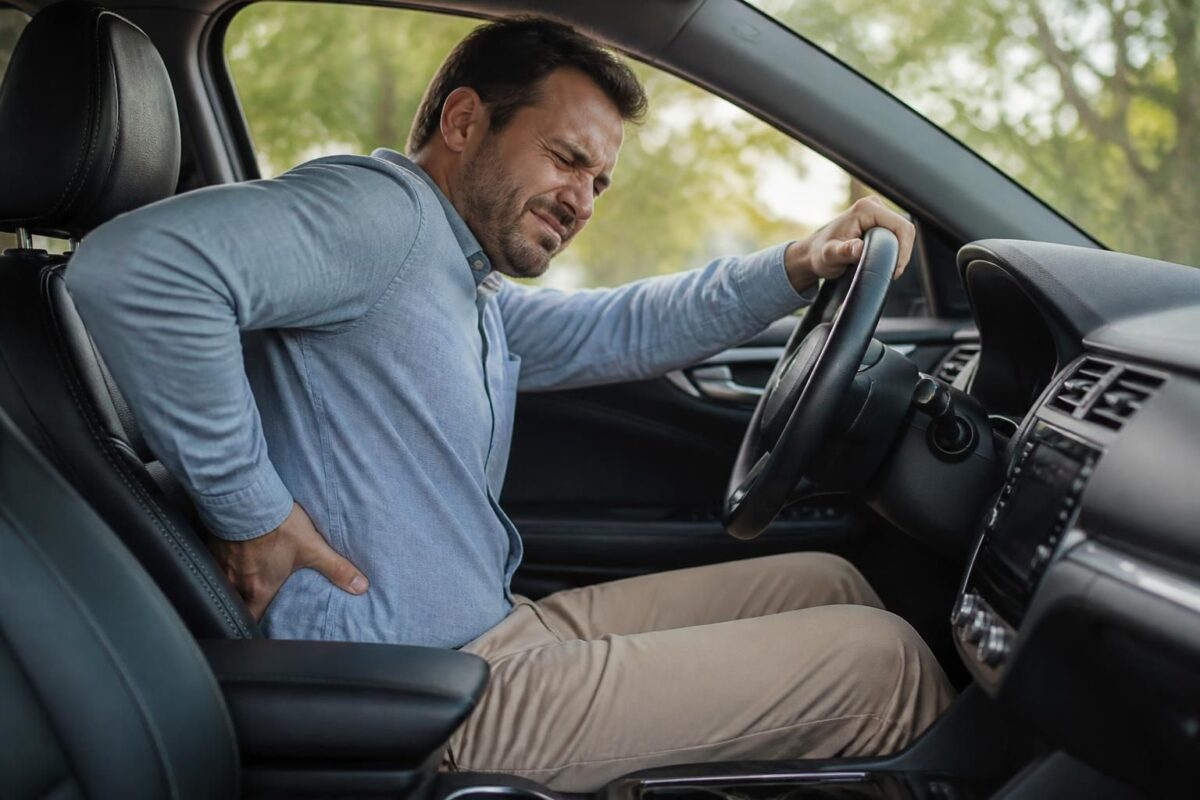
IN BRIEF Sciatica and the pain that radiates down the leg when driving is a pain caused by irritation or compression of the sciatic nerve, which intensifies in prolonged sitting in a confined space like a vehicle. It’s a discomfort that can make trips difficult but can be improved through comfort and proper posture. Key benefits come from using an ergonomic seat cushion and maintaining a good driving position, which help enhance comfort and limit pain flare-ups. To make this work, adopt a position where the hips remain slightly higher than the knees, place the cushion on the seat before starting, and schedule regular breaks to stretch and move, which also facilitates getting in and out without straining. This approach is accessible in your area and can be complemented with advice on how to enter and exit the vehicle without worsening the pain. |
Sciatica can manifest as a pain radiating down the leg and worsen during car trips, especially with a prolonged sitting position in a confined space.
To limit discomfort, plan regular breaks to stretch and use an ergonomic seat cushion to better distribute pressure. Adjust the seat so that the hips are slightly higher than the knees, as in an armchair, and prepare your space before leaving.
To get in and out of the car, lean towards the door frame and swing your legs while supporting yourself with your arms to limit twisting. If the pain persists or is accompanied by signs such as weakness, numbness, or urinary issues, consult a doctor.
This guide written by a healthcare professional explains why sciatica can radiate down the leg during driving and how to act to reduce discomfort. It offers simple and safe measures to drive with less pain, as well as tips for getting in and out of the vehicle without worsening the situation.
Sciatica is a pain related to irritation or compression of the sciatic nerve. In the car, prolonged sitting and limited space can promote the onset or worsening of pain radiating down the leg. The pain can be constant or occur during longer trips, especially if the position is compressive or poorly suited.
To limit discomfort, several action points are available. Firstly, regular breaks allow the body to stretch. Secondly, supportive equipment can distribute pressure on the seat. Finally, adjusting the seat aims to reposition the hips slightly higher than the knees to reproduce a more physiological and less taxing position for the sciatic nerve. To explore these elements further, you can consult dedicated resources on sossciatique.com.
Causes and Aggravating Factors While Driving
The pain may arise from an irritated or compressed sciatic nerve. Prolonged sitting in a confined space may increase tension on the nerve and trigger or amplify pain radiating down the leg. Symptoms can be stable or worsen after long periods of driving.
Practical Management During Driving
Plan frequent breaks to stand up and walk briefly. Integrate these stops with other necessities like refueling or hydration. Using an ergonomic seat cushion can relieve localized pressures and improve comfort. Adjust the seat so that the hips remain slightly higher than the knees. Find the most comfortable position through trial and error. For concrete advice and examples, refer to dedicated guides on sossciatique.com.
If the pain persists, worsens, or is accompanied by weakness in the leg, saddle numbness, or difficulties urinating, consult a doctor promptly.
For additional details on the mechanisms and signs, you can explore the following resources: standing-sitting transitions, progressive numbness, and other articles available on sossciatique.com.
To learn more about specialized options at TAGMED clinic and other approaches, you can visit TAGMED clinic.
Getting in and out of the car and safety
Park in a way that allows you to fully open the door and have enough space to move without straining your back. If possible, prioritize parking spots with few obstructions and clear space around the vehicle. Place your comfort cushion on the seat before entering to limit further adjustments.
Ensure that the cushion is well-positioned for your specific pain before starting. To enter and exit the car without twisting, begin by sitting with both feet outside, then slowly rotate your legs inward while using your arms for support.
Lean slightly towards the door frame when getting in and out to gain extra clearance and protect your spine. Maintain as neutral a posture as possible during movements to limit tension on the sciatic nerve.
Before hitting the road, readjust the cushion and the seat to achieve a comfortable and stable position. This step prevents readjustments during the trip and reduces the risk of worsening sciatica on busy routes or highways.
When to Consult and Warning Signs
Consult promptly if the pain persists after trips or is accompanied by leg weakness, significant numbness, difficulties urinating, or a noticeable change in sensitivity. These signs indicate the need for medical consultation.
Additional resources on transitions and pain associated with driving may be helpful. For example, you can consult guides on sossciatique.com and pages dedicated to foot pain and numbness. This information serves as complements and does not replace individual medical assessment.
Resources and Useful Links
For practical advice and examples of best practices, refer to these resources listed in our reference framework: foot pain when driving and intermittent numbness, how to interpret it. For general information on driving and pain, additional articles are available on pain that radiates down the leg and other related pages.
Note that some treatments and therapeutic options can be discussed during consultation. For approaches without engaging in physiotherapy or kinesitherapy, clinical choices may be presented during an evaluation at the TAGMED clinic in Montreal or Terrebonne.
To delve deeper into the topic, additional resources on neurovertebral decompression and other related conditions can be consulted on the following specialized domains: decompressionneurovertebrale.com and sosherniediscale.com. Dedicated pages for disc herniation and other spinal-related pathologies can provide further perspectives while remaining aligned with professional recommendations.
In case of doubt, always seek a personalized evaluation from your doctor or a qualified specialist.
Medical disclaimer: The information and advice provided on this site do not replace the opinion, diagnosis, or treatment of a health professional. Please note that Sylvain Desforges, B.Sc., D.O., N.D., Doctor of Osteopathy, is neither a medical doctor nor a physician, and is not a specialist in a medical specialty as defined by the Collège des médecins du Québec. Manual medicine, functional medicine, and sports medicine as described on this site exclude any medical treatment or diagnosis made by a physician or specialist physician. Always consult your doctor for any medical questions. For more details, please read our full Legal Notice.
- Symptom: pain radiating down the leg
- Causes: irritation or compression of the sciatic nerve
- Context: long-distance driving, confined space
- To monitor: persistent pain, weakness, numbness, urinary issues → consult
- Preparation: ergonomic seat cushion and adjusted seat
- Driving: breaks every 1–2 hours to stretch
- Entry/Exit: feet outside, leg rotation, and support from the frame
- Starting position: place the cushion before getting in and adjust before departure

This selection of recommendations helps you stay active and limit sciatica pain that may radiate down the leg while driving. The car journey often accentuates discomfort if one remains seated too long in a confined space. Three simple levers and safety gestures during entry and exit can improve comfort and safety on the road. Helpful reminder: these tips complement, and do not replace, medical advice. If pain persists or is accompanied by weakness in the leg, numbness in the saddle, or urinary problems, consult a doctor.
Understanding sciatica and the role of driving
Sciatica pain results from irritation or compression of the sciatic nerve. In a car, the confined space and prolonged sitting can increase pressure on this nerve, especially when the seat is not properly adjusted. The goal is not to cure sciatica right away but to improve comfort during the trip and limit pain triggers.

Sciatica and household chores: twists, bends, and loads
IN BRIEF Sciatica can be aggravated by bending, twisting, and carrying loads while doing housework. Breaking tasks into smaller parts, taking breaks, and adjusting movements help manage effort without necessarily stopping everything. In Montreal, an assessment can help tailor activity…
Three practical levers to relieve pain while driving
1. Take regular breaks
Plan stops every 1 to 2 hours to stretch and walk for a few minutes. Combine these breaks with refueling, restroom visits, or snacks to avoid unnecessarily prolonging the trip. If necessary, leave earlier to have enough time and avoid the rush that exacerbates pain.
2. Invest in supportive equipment
An ergonomic cushion designed for sciatica can determine comfort on long distances. These lightweight and portable products distribute pressure and relieve the tailbone. Consider this investment as a comfort tool for your trips without claiming to cure the condition.
3. Adjust the seat position
Aim for a position where the hips are slightly higher than the knees and where the back is well supported. Prefer a posture closer to a chair rather than a very enveloping seat. Take your time to experiment and adjust the seat until you find the angle that relieves you the best.
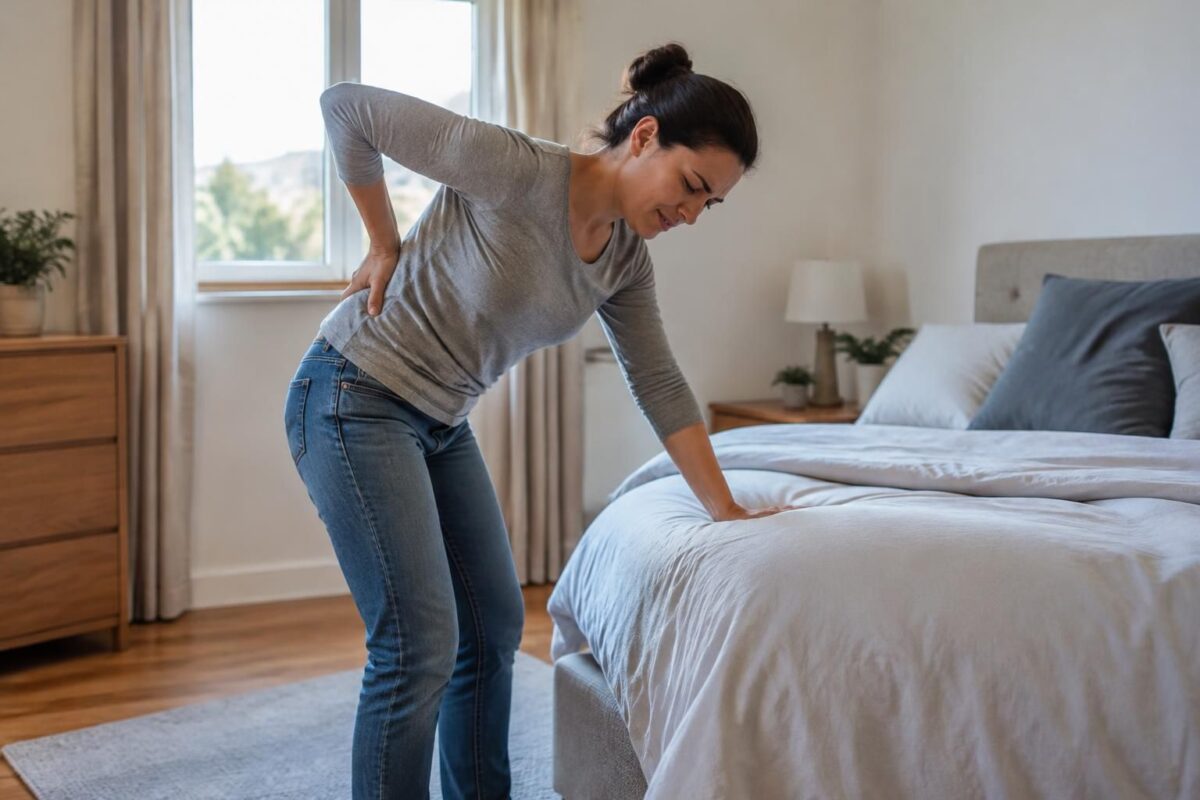
Sciatica and Making the Bed: Repeated Flexion and Lumbar Irritation
IN SHORT Sciatica is pain related to irritation or compression of the sciatic nerve. Making your bed can strain the lower back if bending is repeated, especially when rounding the back or twisting the torso. To limit lumbar irritation, bend…
Smooth entry and exit from the car
Park with enough space
Position your vehicle so that you can fully open the door. Prefer spots that offer space, even if it means parking a bit further away. The goal is to be able to move without twisting or making sudden movements that could aggravate your sciatica.
Prepare the seat before getting in
Place your cushion or support before entering the car. This limits adjustments to be made once seated and reduces strain on your sciatic nerve. Ensure that the cushion is oriented on the side where pain is most pronounced.
Techniques for entering and exiting
First sit with your feet outside, then rotate your legs into the cabin using your arms for support. Lean slightly towards the door frame during entry and exit to gain space and maintain a neutral spine, which reduces the risk of exacerbating pain.
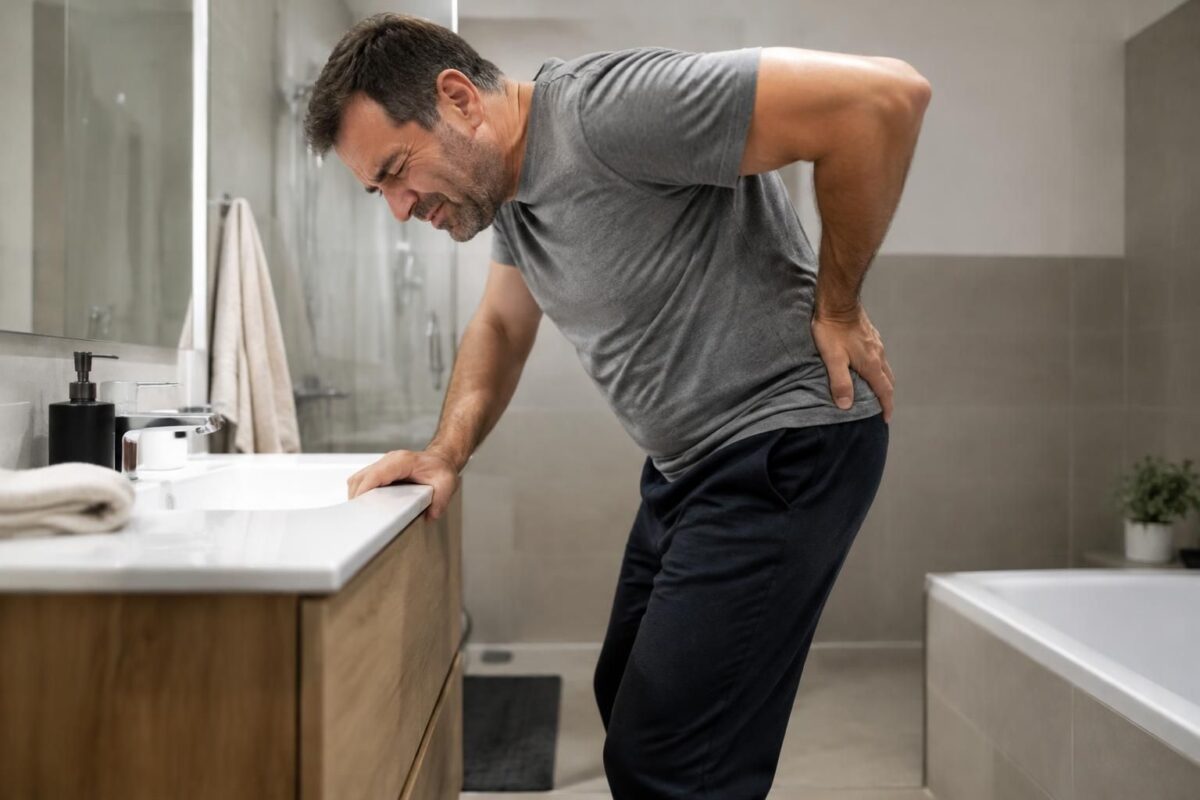
Sciatica and bending over the sink: pain in the leg
IN BRIEF Sciatica is pain related to irritation or compression of the sciatic nerve, which can extend from the lower back down to the leg. Bending over the sink can exacerbate the pain, especially if this position increases pressure on…
Preparations and adjustments before the trip
Before departure, you can test the available space and the settings of the seat and steering wheel to optimize your posture during the trip. If you are using a support cushion, make sure it is properly placed and positioned before fastening your seatbelt. A quick preparation can avoid readjustments during the trip and limit periods of pain, especially on long and winding roads.

Sciatica and washing feet: lumbar flexion to monitor
IN BRIEF Sciatica can make washing your feet uncomfortable, as bending forward accentuates lumbar flexion and may trigger pain. To limit strain, sit down, bring your foot closer to you, or use a long-handled aid. These adjustments make personal hygiene…
When to consult
If the pain persists, worsens, or is accompanied by weakness in the leg, numbness in the saddle, or problems with urination, consult a doctor quickly. Your safety and quality of life depend on it.

Sciatica and dressing: daily gestures to adapt
IN BRIEF Sciatica can make dressing uncomfortable, but a few simple gestures help limit tension. Sit down to put on pants, socks, and shoes, choose easy-to-wear clothing, and avoid bending or twisting suddenly. These adjustments make daily dressing easier without…
Comparison table: Sciatica and pain radiating down the leg while driving
| Aspect | Concise advice |
|---|---|
| Causes and triggers | Sciatic pain may worsen with prolonged sitting in the cabin. |
| Recommended posture | Keep your hips higher than your knees, back supported, and seat adjusted. |
| Useful accessories | Use an ergonomic seat cushion, lightweight and placed before sitting down. |
| Breaks and route | Plan for regular stops every 1–2 hours to stretch. |
| Getting in and out | Park so you can open the door and get in by pivoting your legs. |
| Cushion positioning | Position and adjust the cushion before departure to limit movement. |
| Managing long trips | For long trips, take breaks and use seat support to limit pain. |
| Warning signs | If pain persists or is accompanied by weakness or numbness, consult quickly. |
| Pro tip | Consult a doctor if symptoms worsen; this guide does not replace professional advice. |
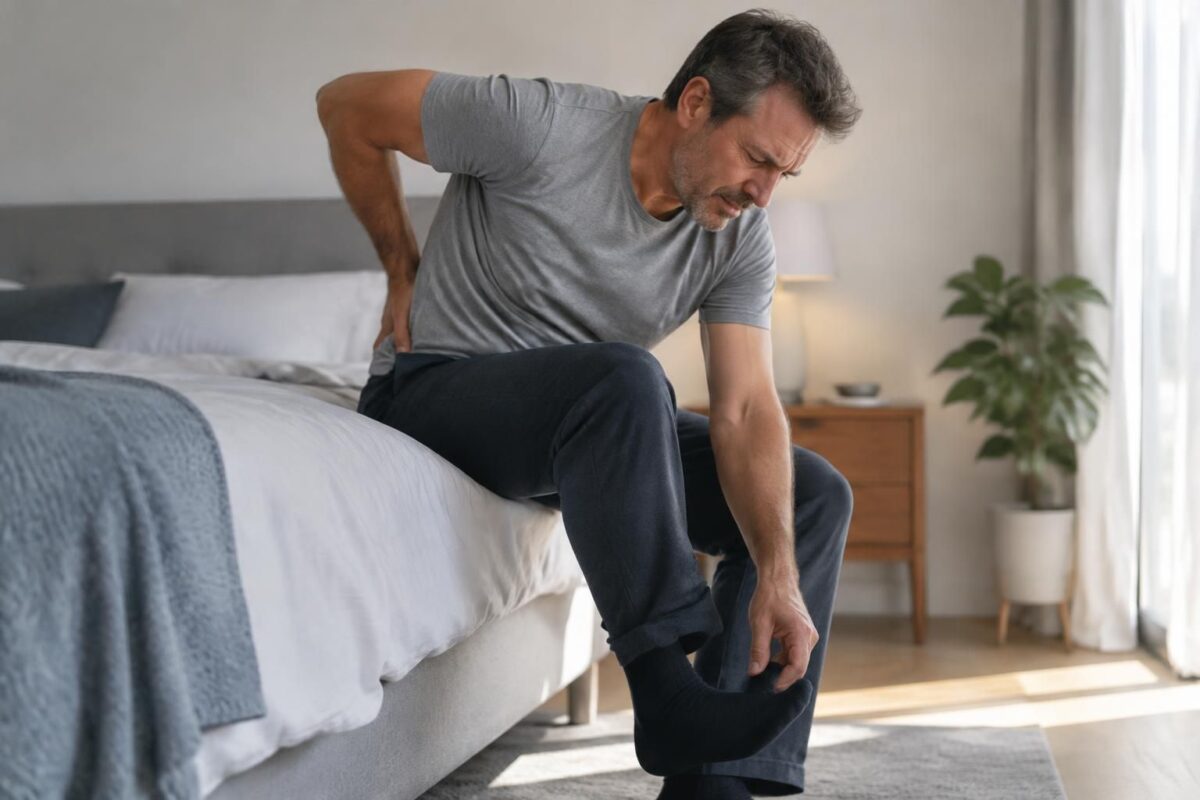
Sciatica and putting on socks: bending and pain in the leg
IN BRIEF Sciatica can make it difficult to put on your socks: bending over can increase the pain that radiates down the leg. Sitting down, using a sock aid, or avoiding painful bends can make this daily task easier. If…
Testimonials on sciatica and pain radiating down the leg while driving
My name is Marie, 42 years old, and I drive every day for work. When the sciatica flares up, the pain that radiates down my leg can appear after just half an hour and turn the trip into a trial. The most effective change I’ve found is to use an ergonomic seat cushion and adopt a driving position that slightly raises my hips compared to my knees. I also take regular breaks to stretch, and this makes my trips much more bearable.
Daniel, 56 years old, a delivery driver and trucker, says: after several hours in a confined space, the pain radiating down my leg becomes unbearable. With a seat cushion and a seat adjustment that places my hips higher than my knees, I have seen a noticeable improvement. Getting in and out is also smoother when I lean against the door frame and plan breaks to relieve my lower back.
Sophie, 38 years old, a dynamic mom and manager, shares: while driving the kids to school, the sciatica can seize me in the lower back and radiate down my leg. I’ve adopted a simple yet effective approach: placing the seat cushion before sitting down and keeping my hips slightly elevated, with short breaks every 60 to 90 minutes. These small considerations help me stay focused and drive without grimacing.
Jean, an experienced truck driver, also shares: the long weeks on the road can be challenging. With an appropriate seat and an ergonomic cushion, I’ve regained comfort. Entering and exiting the car becomes less painful when I pivot my legs inside and incline slightly towards the door frame for clearance. This helps to protect my leg and back.
Claire, a traveling executive, shares her experience: during business trips, I pay attention to the height of the seat and the space available to get in and out. By using an ergonomic cushion and adjusting the seat so that my hips remain slightly higher than my knees, my trips become much more comfortable. In case of pain that rises, I plan breaks and do a few simple stretches to relieve the affected area.

Sciatica and tying your shoes: why the pain can radiate down
IN BRIEF Sciatica is pain related to the irritation of a nerve in the lower back, which can radiate into the buttock and leg. Leaning down to tie your shoes may accentuate the pain or cause it to descend further.…
Sciatica and pain radiating down the leg while driving: profile of Sylvain Desforges
Dr. Sylvain Desforges, an expert in osteopathy, naturopathy, and manual medicine, is the founding president of the TAGMED clinics and the ACMA association. From the beginning of his career, he has been guided by innovation in the health field, with a particular focus on managing chronic pain and integrating advanced technologies to improve patients’ daily lives. His approach is based on a holistic vision of care, combining clinical competence with scientific rigor to provide measurable and lasting results.
In the context of sciatica, he observes that the pain can become particularly debilitating during car trips, where maintaining a prolonged posture may irritate the sciatic nerve. His practice emphasizes mobility and comfort while driving, incorporating postural assessment, vehicle ergonomics, and movement strategy. His aim is to reduce tension on the nerve and optimize body position so that every journey, even short, remains bearable and safe.
To support his patients, he relies on a range of advanced technologies, used in conjunction with manual techniques. Spinal decompression can help relieve nerve pressure, laser therapy helps reduce inflammation and promote recovery, while shockwave therapy supports tissue healing and improves musculoskeletal function. Combined with personalized protocols, these interventions fall within an approach based on evidence to optimize the health and well-being of patients.
Dr. Desforges’ work does not stop at the consultation room. He supports his patients in optimizing their daily journeys, advocating for regular breaks, postural adjustments, and practical advice for getting in and out of the vehicle while minimizing stress on the sciatic nerve. His method emphasizes proper preparation before each journey and seat adjustments that promote a neutral and comfortable spine, to preserve mobility and quality of life.
Ultimately, Dr. Desforges’ vision is to make each trip safer and more enjoyable through an integrated approach to care that combines clinical expertise, innovative technologies, and patient education. His mission is to provide care guided by evidence and to help each person regain their freedom of movement, even in the face of sciatic pain that radiates down the leg during car trips. To learn more about his approach and the services offered by TAGMED, feel free to inquire at the clinic.
Sciatica can radiate down the leg and complicate trips by car, especially when sitting for extended periods. By combining an appropriate seat position, an ergonomic seat cushion, and regular breaks, it is possible to limit discomfort and make driving more manageable. This article summarizes the mechanisms and offers simple and safe actions to get in and out of your vehicle without worsening the pain. For further information, you can consult additional resources such as Sciatica and Car – why driving can worsen the pain, or other guides on leg pain, including this type of pain and sciatica and Dokto file on leg pain.
When driving, prioritize a hip height that is slightly higher than the knees and ensure adequate lumbar support. An ergonomic cushion can redistribute pressure and decrease tension on the sciatic nerve during trips while remaining a comfort aid, not a treatment. Before departure, take the time to adjust the seat and cushion so that the spine remains aligned and the pain does not worsen on winding roads or at traffic lights. If the pain persists, worsens, or is accompanied by weakness in the leg, numbness in the saddle area, or urinary issues, consult a doctor without delay.
To facilitate movement and reduce the effort required, apply the following techniques: park in a way that allows you to fully open the door, place the cushion before entering the vehicle, sit with your feet outside and pivot your legs into the car using your arms to support your body, then lean slightly towards the door frame for sufficient clearance. Before the trip, prepare your seating area and check that the cushion is properly positioned for your specific pain, whether on the left or right side.
Additionally, you can explore further resources that detail tips and warning signs to watch for while driving with sciatica, including articles and guides available through these links: SosSciatique – lower back pain and painful leg, Driving and pain relief, and Signs to watch for during long-distance driving. These resources complement practical advice for more comfortable and safer driving.

Sciatica and picking up an object from the ground: movement to watch out for
IN BRIEF Sciatica is pain that follows the path of the sciatic nerve. To pick up an object from the ground, avoid bending abruptly while rounding your back or twisting: bend your knees, tilt your hips, and keep the object…

Sylvain Desforges, B.Sc., D.O., N.D., docteur en ostéopathie
Dr Sylvain Desforges, B.Sc., D.O., N.D., osteopath, is the founding president of TAGMED and of the ACMA association. He dedicates his practice to chronic spinal pain, low back pain and symptoms compatible with sciatica, particularly when pain radiates toward the buttock, leg, calf, foot or toes.
Through SOS Sciatique, he publishes educational content on sciatica symptoms, possible causes such as disc herniation, disc narrowing, foraminal stenosis or irritation of a lumbar nerve root, as well as non-surgical approaches that may be considered according to the evaluation. At Clinique TAGMED, care may include, depending on the case, motorized neurovertebral decompression, specific osteopathic care or precision percussion.
For an evaluation related to sciatica treatment in Montreal / Mount Royal or sciatica treatment in Terrebonne, please consult the services available at Clinique TAGMED.
Medical disclaimer
The information published on SOS Sciatique is provided for educational purposes only and does not replace a consultation, diagnosis, opinion or treatment provided by a physician or another authorized healthcare professional. The author of this article is neither a medical doctor nor a specialist in a medical specialty recognized by the Collège des médecins du Québec. The osteopathic, manual medicine or functional support approaches described on this site do not constitute medical acts and are not intended to replace medical follow-up.
Consult a physician or emergency service in cases of loss of bladder or bowel control, anesthesia in the saddle area, significant or progressive weakness in the leg or foot, fever, recent trauma, severe pain or rapid worsening of symptoms. For more details, please read our Legal Notice.