


Sciatica and car seat: why tilt matters
21/08/2026
Sciatica in Terrebonne: why the pain may be stronger in the leg
22/08/2026
IN BRIEF
| In brief, sciatica is a pain that radiates from the lower back down to the leg, sometimes as far as the foot, caused by compression or irritation of the sciatic nerve. In Montreal, this phenomenon is often related to mechanical causes and can be relieved quickly through a non-surgical approach focused on relief and improving mobility. Benefits include a return to activity, better posture, and prevention of recurrences, thanks to a personalized plan and adapted exercises, without systematic recourse to surgery. |
In Montreal, sciatic pain may be more intense in the leg than in the lower back. This amplification is explained by the path of the sciatic nerve, which originates from the lumbar roots and runs down to the foot. When a root is irritated or compressed (by herniated disc, foraminal stenosis, stenosis, or other radicular involvement), the pain follows this path and often manifests from the buttock down to the foot, favoring the leg. The exact location depends on the affected level, for example, L4-L5 or L5-S1. At the TAGMED Clinic in Montreal, a targeted osteopathic approach can help decompress the nerve root and provide quick relief without surgery, through mobilizations, releases, and personalized exercises. A quick assessment allows for treatment direction and promotes a return to activity.
This article, written by a health professional, explains why sciatica can cause more intense pain in the leg than in the lower back, and why non-surgical approaches are effective at the TAGMED Clinic in Montreal.
The pain often radiates along the path of the sciatic nerve, which runs from the lower back to the foot. The leg may be more painful when the nerve root is irritated at a certain level. In Montreal, patients benefit from approaches that directly target the mechanical cause rather than limiting themselves to general treatments.
Anatomy and Path of the Sciatic Nerve
The sciatic nerve is the longest and largest in the body. It originates from the lumbar and sacral roots, particularly L4, L5, and S1, and converges into a single nerve trunk. This trunk passes through the greater sciatic foramen, goes under the piriformis muscle in the buttock, descends at the back of the thigh, and then divides near the popliteal fossa into two branches that go towards the lower limb and the foot. This location explains why the pain can appear anywhere along this path, from the lumbar region down to the big toe, depending on the exact location of the compression.
Differences between L4-L5 and L5-S1 Roots
The precise location of the pain depends on the affected root. An L4-L5 involvement often results in pain that follows the side of the leg and the top of the foot. An L5-S1 involvement manifests more in the back of the thigh, in the calf, and under the foot. This distinction helps the osteopath in the initial assessment and choice of techniques used.
Femoral Neuralgia vs Sciatica
Femoral neuralgia is a pain related to compression of the femoral nerve and manifests at the front of the thigh. Sciatica produces pain that follows the path of the sciatic nerve. The osteopath differentiates the two during the initial evaluation, as the causes and treatments differ.
Common Causes and Symptoms
Sciatica is not a disease in itself, but a symptom. The most common causes include herniated disc, lumbar osteoarthritis, and narrowing of the passages through which the nerve roots exit. The typical symptom is a pain that starts in the lower back or buttock and descends into the leg. One may experience paresthesia or numbness, and sometimes muscle weakness. The pain may worsen when sitting, coughing, or during physical effort. For more information on this subject, see specialized resources.
To explore the causes and signs further, you can consult dedicated resources like Sciatica and Permanent Numbness: Sign to Monitor or Sciatica in Montreal – Electric Shock Sensation in the Leg.
Non-Surgical Causes and Montreal Context
Several causes can explain sciatica without necessitating surgery. The use of non-surgical approaches is preferred when the assessment shows a mechanical origin rather than acute structural issues. At the TAGMED Clinic, osteopathy and targeted manual techniques are part of the care plan, with options such as neurovertebral decompression with motorized support and pelvic rebalancing to reduce pressure on the nerve roots.
For more information on non-surgical options and care at TAGMED Clinic in Montreal, see the corresponding page on TAGMED Clinic.
When to Consult and How the Assessment is Prepared
When pain is accompanied by motor deficits, loss of urinary control, or rapidly progressive pain, it is important to consult quickly. The initial assessment includes observation of posture, tests of lumbar mobility, palpation of tension areas, and tests to locate the irritated root. Diagnosis may involve imaging studies depending on the severity and duration of symptoms.
In Montreal, the diagnosis and initial management prioritize non-surgical approaches tailored to each case. Patients can benefit from multidisciplinary support focused on reducing nerve irritation and restoring mobility.
For practical guidance and complementary resources, refer to information such as Sciatica and Pain on One Side — Possible Causes and Sciatica and Pain in Both Legs — When to Consult.
Practical Approach and Prevention at the TAGMED Clinic
The care aims to provide rapid relief and prevent recurrences. We focus on adapted osteopathic techniques and a rehabilitation program guided by evaluation, without systematically resorting to surgery. Posture advice and a gradual strengthening of stabilizing muscles complement the treatment.
To explore these options near you, check the services offered at Clinique TAGMED.
Resources and Useful Links
To enrich your information, you can consult the following resources in the authorized fields:
- Sciatica in Montreal – electric shock in the leg
- Sciatica and permanent numbness – warning signs to watch for
- Sciatica and pain in both legs – when to consult
- Sciatica and tingling while sitting – possible causes
- Neurovertebral Decompression
- Herniated disc and sciatica
- Herniated disc – additional information
- Carpal tunnel – general information
Medical disclaimer: The information and advice provided on this site do not replace the opinion, diagnosis, or treatment of a healthcare professional. Please note that Dr. Sylvain Desforges, osteopath, is neither a doctor of medicine nor a physician and is not a specialist in a medical field as defined by the Collège des médecins du Québec. Manual therapy, functional medicine, and sports medicine as described on this site exclude any treatment or medical diagnosis made by a physician or a specialist doctor. Always consult your physician for any medical questions. For more details, please read our full Legal Notice.
- Pathway of the sciatic nerve: originates from the lumbar roots, traverses the pelvis, and descends to the foot, explaining possible radiations.
- Location depending on the root: L4-L5 or L5-S1 cause pain that follows different patterns in the leg and foot.
- Main causes: herniated disc and foraminal stenosis remain the most frequent.
- Pain perception: pain often stronger in the leg than in the back, with burning or electric shock sensations.
- Montreal context: local approaches prioritize a quick return to activity and prevention of relapses.
- Quick assessment: targeted clinical examination (strength, reflexes, Lasègue) to specify the affected root.
- Non-surgical treatment: osteopathy and physiotherapy to relieve the irritated root without surgery.
- Aggravating factors: prolonged sitting and efforts that increase nerve irritation.
- Practical advice: stay active, local heat, and a tailored progressive exercise program.

This article of recommendations is addressed to those suffering from sciatica in Montreal, who find that the pain radiates more into the leg than into the lower back. You will understand why the sciatic nerve can cause more pronounced radiation in the leg, the common causes, and how a local osteopathic approach in Montreal can help you quickly, without automatically resorting to surgery.
Understanding the Pathway and Radiation of the Sciatic Nerve
The sciatic nerve is the longest and largest in the body. It originates from the lumbar and sacral roots (mainly L4, L5, and S1) and follows a pathway that takes it beneath the piriformis muscle, before descending along the back of the thigh and splitting at the popliteal fossa to innervate the lower leg and foot. This anatomy explains why irritation or compression can manifest at different levels, from the lower back to the toes, and why the pain may seem more intense in the leg than in the back.

Sciatica in Montreal: pain that wakes you up at night
IN SHORT In short, nocturnal sciatica is pain that follows the path of the sciatic nerve and intensifies at rest, disrupting sleep. In Montreal, it can be managed with simple advice on nighttime posture and bedding: sleeping on your side…
Differences Depending on the Compressed Root: L4-L5 and L5-S1
The location of the pain depends on the affected root. An L4-L5 involvement typically manifests as pain that follows the side of the leg and the top of the foot. In contrast, an L5-S1 involvement primarily radiates to the back of the thigh, down to the calf and foot. This mapping helps the osteopath to guide the assessment and choice of techniques, in order to precisely target the source of the irritation.

Sciatica in Montreal: Symptoms Worsening in the Evening
IN BRIEF In brief, sciatica is a pain that starts in the lower back and can extend to the buttock and leg, with symptoms that worsen at the end of the day potentially limiting daily activities. What is it? It…
Sciatica vs. Cruralgia: Do Not Confuse
Cruralgia corresponds to compression of the crural nerve and causes pain in the front of the thigh, sometimes extending to the knee. This is an essential distinction, as the causes and treatments differ. Initial screening allows for rapid orientation towards the most appropriate options, especially during a first consultation in Montreal.

Sciatica in Montreal: intermittent pain or constant pain?
IN BRIEF In brief, sciatica in Montreal refers to pain that starts in the lower back and follows the path of the buttock, thigh, and sometimes the foot, which can be intermittent or constant. It often reflects an underlying mechanical…
Common Causes and Signs to Watch For
The most common causes include a herniated disc, lumbar osteoarthritis, or conditions that narrow the passages through which the nerve roots exit. The piriformis syndrome, where a small deep muscle in the buttock compresses the sciatic nerve, is a frequent and often easily treatable cause with osteopathy. Sacroiliac blockage and spinal canal stenosis are other possible mechanisms. In practice, pain may be associated with paresthesias (tingling sensations) and mild to moderate weakness depending on the level of compression.

Sciatica in Montreal: burning pain behind the thigh
IN BRIEF Sciatica is a pain that starts from the lower back or buttock and radiates down the back of the thigh, sometimes to the calf or foot, described as a burning sensation or electric shock. In Montreal, an osteopathic…
How Osteopathy Can Help in Montreal
Evaluation and personalized assessment
The treatment begins with an in-depth assessment aimed at distinguishing a disc herniation from a piriformis syndrome, a sacroiliac blockage, or facet joint arthritis. This evaluation allows for the selection of the most suitable techniques and avoids inappropriate exercises.
Preferred techniques
Osteopathic techniques may include gentle mobilizations of the lumbar segments and sacrum, the release of the piriformis to free the nerve, and myofascial work on the back and hip muscles. Balancing the pelvis may reduce strain on the discs and nerve roots. The goal: to quickly relieve pain and restore mobility without surgery.
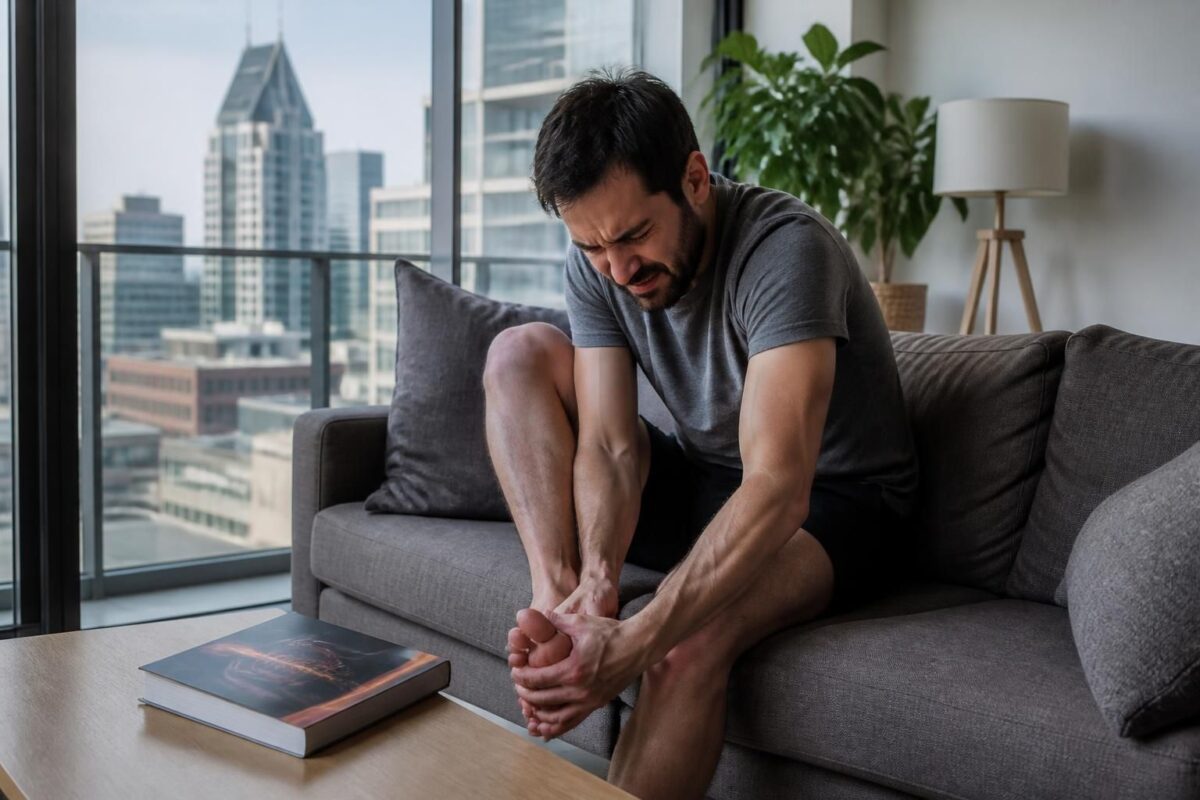
Sciatica in Montreal: numbness of the big toe and lower back pain
IN SHORT In short, sciatica associated with numbness of the big toe and lower back pain is a symptom resulting from compression or irritation of the sciatic nerve that extends from the lower back to the foot. In Montreal, this…
Exercises and practical advice
Simple and progressive exercises, under supervision, reinforce gains and prevent recurrences. Effective options include targeted stretches of the piriformis, neural glides, and trunk stability gains. Between sessions, prefer local heat and stay active while avoiding prolonged rest.
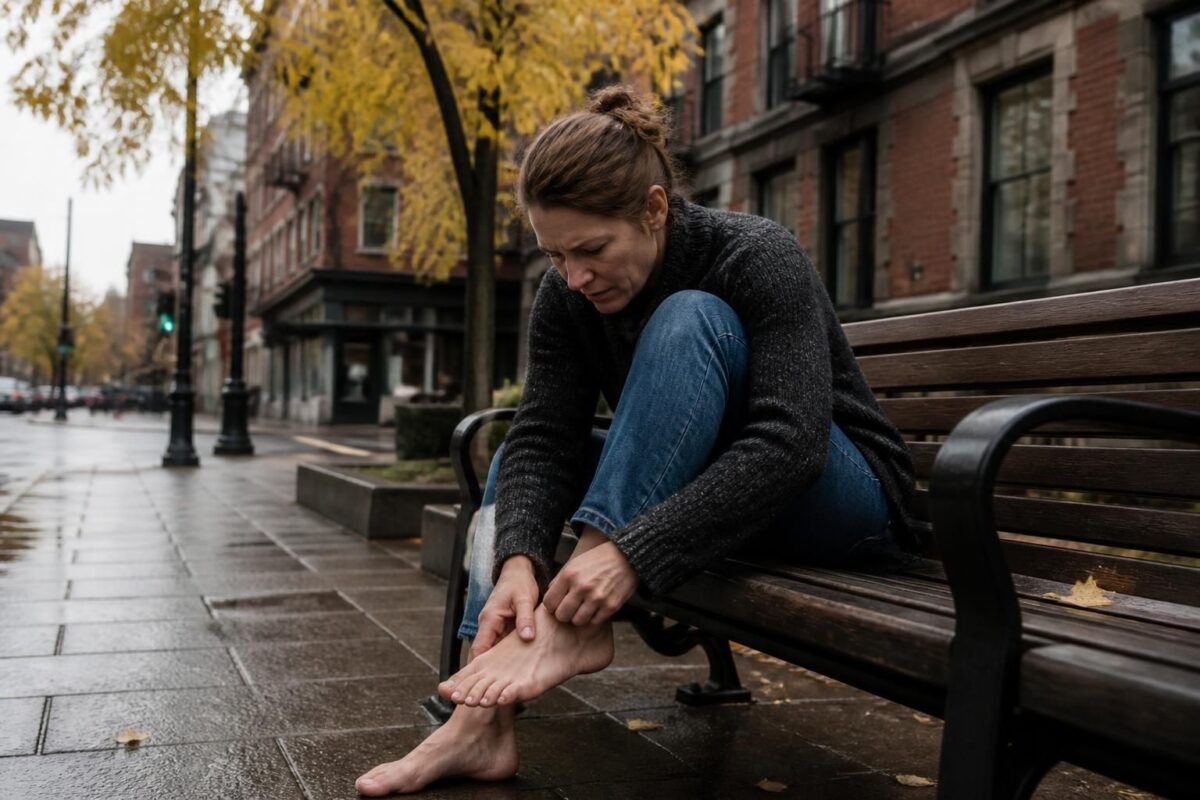
Sciatica in Montreal: loss of sensitivity in the toes
IN BRIEF In brief, sciatica associated with a loss of sensitivity in the toes is pain that starts in the lower back and can radiate down to the foot. In Montreal, this service offers an effective non-surgical approach based on…
When and where to consult in Montreal
For an approach tailored to your situation, consider a specialized assessment in Montreal. TAGMED Clinic offers services aimed at mechanical causes of sciatica and non-surgical protocols, including osteopathy and rehabilitation work. If the pain persists or worsens, or if it is accompanied by warning signs (loss of urinary control, marked weakness), consult promptly to adjust the treatment plan and prevent deterioration.
| Factor | Impact on pain in the leg |
|---|---|
| Path of the sciatic nerve | Pain radiates along the path to the leg, increasing perception in this area |
| Affected root | L4-L5 → pain on the side and top of the foot; L5-S1 → behind the thigh, calf, and bottom of the foot |
| Source of pain | Pain may come from other structures (piriformis, sacroiliac blockage), not just from a herniation |
| Disc herniation | Root compression inducing radicular pain; often treatable without surgery |
| Piriformis | Piriformis spasm that can mimic a herniation and be treated quickly with osteopathy |
| Sacroiliac blockage | Pelvic mobilizations effectively relieve radiating pain |
| Arthritis and stenosis | Canal or foraminal narrowing → pain when walking, often slow progression |
| Posture and activity | Prolonged sitting and aggressive movements worsen; appropriate activity and exercises help |
| Urgency and safety | Loss of urinary control or marked weakness → urgent consultation |

Sciatica in Montreal: pain when sitting with tingling in the foot
IN SHORT In short, sciatica in Montreal is a radicular pain that often worsens in sitting position and may be accompanied by tingling in the foot. This approach emphasizes an assessment that links symptoms to function and neurological signs, rather…
Testimonials about Sciatica in Montreal: why the pain may be stronger in the leg
Claire D., Montreal: “At first, I thought that back pain was the only source of pain. However, the pain in my leg was much stronger and debilitating: it radiated from the lower back, through the buttock, and down to the foot. This radiating pain led me to consult in Montreal. After a precise evaluation, I was informed that it was an irritation of the sciatic nerve which follows a long and complex path to the extremities. Thanks to a targeted osteopathic approach and progressive exercises, I regained mobility and comfort without surgery.”
Karim L., Montreal: “My pain quickly followed the path of the sciatic nerve, starting from the lower back and running down the back of the thigh to the foot. That’s why my leg hurt more than my back. The evaluation in Montreal helped to distinguish possible causes, such as piriformis syndrome or sacroiliac blockage, and guided effective gentle techniques. After a few sessions, the pulling sensations decreased, and walking became normal again.”
Sophie M., Montreal: “I felt a pain that appeared after my walks and that traveled down my leg. The practitioner explained to me that this is typical of sciatica when the nerve is irritated. By working on my pelvis and lumbar muscles, the team reduced inflammation and improved my mobility without surgery. Today, the pain in my leg is no longer as intense, and I can resume my daily activities without fear.”
Louis P., Montreal: “My story was longer: the pain often returned in my leg, and it was much stronger than the back pain. The evaluation highlighted a mechanical mechanism — lumbar arthritis or mild stenosis — that compresses the nerve roots. Thanks to a holistic approach including mobilizations, tension release, and personalized exercises, I resumed my activities in a few weeks without major pain.”
Élodie R., Montreal: “Active and sporty, I was afraid that the pain in my leg would take precedence over my back, especially after my pregnancy. The evaluation revealed a root irritation that caused radiating pain along the nerve path. With a tailored non-surgical approach — targeted osteopathy and a progressive exercise program — I regained a natural walk and my energy, without resorting to surgery.”

Sciatica in Montreal: pain in the leg after prolonged standing
IN BRIEF In brief, sciatica in Montreal is pain that radiates into the leg after prolonged standing, often related to nerve irritation or lumbar stenosis and may be accompanied by numbness, tingling, or weakness. The diagnosis relies on the agreement…
Detailed biography: Sciatica in Montreal — why the pain may be stronger in the leg
This expert in osteopathy, naturopathy, and manual medicine is the founding president of the TAGMED clinics and the ACMA association. His approach is based on innovation in healthcare and a practice focused on the management of chronic pain of the spine, particularly in the lumbar region and pain consistent with sciatica. In Montreal, he offers an integrated approach aimed at optimizing the function and well-being of patients, prioritizing rigorous clinical assessments and personalized treatment plans based on evidence.
To address the needs of patients suffering from pain radiating to the leg, it incorporates cutting-edge technologies such as motorized neurovertebral decompression, approaches of specific osteopathy, and, when relevant, the precision perceptron, laser and shockwaves. This combination aims to quickly relieve nerve compression, restore mobility, and prevent recurrences without systematically resorting to surgery. The goal is to offer an effective and tailored non-surgical care approach suitable for each pain profile.
In Montreal, the question “why can pain be stronger in the leg than in the back” relies on the course of the sciatic nerve and the radicular mechanism. When the L4-L5 or L5-S1 roots are irritated or compressed, the pain follows the course of the nerve: buttock, back of the thigh, calf, and sometimes the foot. This presentation can create the impression of increased intensity in the leg compared to the back, even when the triggering element originates from the lumbar region. Understanding this shift is essential for guiding the assessment and choosing the most relevant techniques.
The diagnosis is based on a comprehensive clinical evaluation: posture examination, lumbar mobility, palpation of muscular tensions and joint blockages, and specific tests to locate the irritated root (for example, radicular pain tests and strength checks). In cases of persistence or neurological signs, further investigations may be considered to clarify the origin (disc compression, foraminal stenosis, etc.). This approach clearly differentiates sciatica from cruralgia and guides treatment toward suitable options.
The proposed therapeutic plan in the Montreal area combines gentle spinal mobilizations, targeted release of the piriformis muscle, myofascial work, and pelvic rebalance. For acute sciatica associated with piriformis syndrome or sacroiliac blockage, 1 to 3 sessions spaced 1 to 2 weeks apart may be sufficient at the beginning of care. In the case of recent disc herniation, 3 to 5 sessions over 4 to 6 weeks are planned instead. For chronic pain lasting more than 3 months, a course of 5 to 8 sessions with preventive follow-up is considered. Exercises to be performed between sessions strengthen and accelerate recovery.
Home advice includes targeted stretching, neural gliding, and gentle stability exercises, complemented by occasional use of local heat and regular physical activity. The goal is to avoid absolute rest while protecting the back and gradually restoring mobility. Prevention is embedded in postural hygiene, strengthening stabilizing muscles, and daily active micro-breaks to reduce the risk of relapse and maintain gains.
In Montreal, the services offered by TAGMED provide an accurate assessment, joint treatment, and a personalized exercise program, with support tailored to each pain profile and every stage of lumbar sciatica. For more information on available options and care modalities, patients can inquire directly with TAGMED clinics in Montreal.
This conclusion summarizes why, in Montreal, pain related to sciatica can be more pronounced in the leg than in the lower back. The long and complex path of the sciatic nerve explains this radiation: pain that starts from the lower back or buttock and travels along the leg to the foot. In Montreal, understanding the course of the L4-L5 and L5-S1 roots and their irritation zones helps guide the evaluation and choices of non-surgical treatment, which are prioritized in most cases.
The fact that the pain is often more intense in the leg can be explained by the capacity of the sciatic nerve to transmit pain signals along its trajectory, especially when a root is compressed or irritated. This localization can vary depending on the affected root and the mechanisms at play (disc herniation, foraminal narrowing, sacroiliac blockage, etc.). For patients in Montreal, an accurate assessment allows targeting osteopathic techniques and appropriate exercises to release tensions, restore mobility, and promote a gradual return to activity.
In most cases, leg pain does not necessarily require surgery. A multidisciplinary and non-surgical approach, focused on functional assessment and correcting imbalances (posture, pelvis, lumbar mobility), can provide quick and lasting relief. For patients wondering where to begin in Montreal, resources like the Sciatica solution at TAGMED can guide them toward appropriate and non-invasive care.
Several typical situations illustrate why the leg can be more affected than the back, particularly when the pain follows the radicular path of a paramedian disc herniation or when the piriformis or a sacroiliac escape influences the sciatic nerve. To better understand these mechanisms and their clinical implications, consult specialized resources such as link on the paramedian disc herniation and painful pathway, or discover how pain can evolve based on causes and circumstances.
In practice, the approach in Montreal prioritizes osteopathy and manual techniques associated with targeted exercises and a strengthening program. For a local perspective and specific options, you can explore content such as Sciatica in Montreal: foot pain, numbness, and tingling or guides on actions to take while driving when pain occurs. These resources complement clinical assessment and help plan a gradual resumption of activities while preventing recurrences.
For a practical view of the signs and mechanisms that make the leg more painful than the back, you can refer to dedicated resources such as Sciatica in Montreal: when the pain becomes stronger in the leg than in the back and pain in one leg possible in Terrebonne. These resources illustrate the importance of an appropriate assessment and a personalized treatment plan to regain mobility and quality of life without systematically resorting to surgery.

Dr Sylvain Desforges, B.Sc., D.O., N.D., osteopath, is the founding president of TAGMED and of the ACMA association. He dedicates his practice to chronic spinal pain, low back pain and symptoms compatible with sciatica, particularly when pain radiates toward the buttock, leg, calf, foot or toes.
Through SOS Sciatique, he publishes educational content on sciatica symptoms, possible causes such as disc herniation, disc narrowing, foraminal stenosis or irritation of a lumbar nerve root, as well as non-surgical approaches that may be considered according to the evaluation. At Clinique TAGMED, care may include, depending on the case, motorized neurovertebral decompression, specific osteopathic care or precision percussion.
For an evaluation related to sciatica treatment in Montreal / Mount Royal or sciatica treatment in Terrebonne, please consult the services available at Clinique TAGMED.
Medical disclaimer
The information published on SOS Sciatique is provided for educational purposes only and does not replace a consultation, diagnosis, opinion or treatment provided by a physician or another authorized healthcare professional. The author of this article is neither a medical doctor nor a specialist in a medical specialty recognized by the Collège des médecins du Québec. The osteopathic, manual medicine or functional support approaches described on this site do not constitute medical acts and are not intended to replace medical follow-up.
Consult a physician or emergency service in cases of loss of bladder or bowel control, anesthesia in the saddle area, significant or progressive weakness in the leg or foot, fever, recent trauma, severe pain or rapid worsening of symptoms. For more details, please read our Legal Notice.